Leaving aside the fact that income inequality is neither high by historic standards nor rising, the main blame lies with those responsible for education and training.
The biggest factor is clear in the developed markets - financial returns to education. The wage premium of skilled over non skilled workers.
Then you have changing patterns In employment: (1) increase in families with no working adults and (2) increased female participation meaning increased number of dual income families. Households are now more like to,have either no earners or two earners than before. Harder to point to whose directly responsible there.
jambalaya - Member - Block User
We had/have a supermarket that didn't make profits, it was called the Co-op. Do we shop there ? Is it the most successful business model ? Is it even viable ?
The royal 'we'?
I shop there a few times a week. The one in my village is always busy (and is still called Co-op). Don't know what that proves though?
jambalaya - MemberWe had/have a supermarket that didn't make profits, it was called the Co-op. Do we shop there ? Is it the most successful business model ? Is it even viable ?
It's still the 5th largest UK food retailer, growing, and very influential- led the way on fairtrade, cruelty free, responsible fishing, locally and ethically sourced foods, excess food donations...
Is it the most succesful? Obviously they're not the biggest, but that's not the standard by which they should be judged. Is it viable? Obviously. Do we shop there? Yes, sales increased 7% last year in their key markets. (they were stagnant in the big box-shifter stores because that's a market they're gradually exiting)
@Lifer, I haven't seen one in the longest time I did wonder if they'd gone bust. The fact they are so rare suggests the business model isn't effective whereas the (German coincidently) budget supermarkets are thriving
@Yunki I think it's a collective problem, it is an example of how a government policy can result in a change of behaviour. If a business realises it can pay less and the government will make up the difference it's inevitable wages will decline or at least not rise.
jambalaya - MemberThe fact they are so rare suggests the business model isn't effective whereas the (German coincidently) budget supermarkets are thriving
There's almost 4 times as many co-operative outlets as there are lidls and aldis combined 😆 What they wouldn't give to be so rare.
There are loads round here too! Apart from the one in my village I pass two on the way to work. Confirmation bias again, you do have a problem with that.
Nuh uh, he says it's a "fact that they are so rare", therefore, they are now rare 😉
Jambalaya, what retail glapagos island do you live on? We have a full-on co-op supermarket near us with trolleys and everything. You can also buy a telly, fridge, laptop, and laydeez clothes etc there. Oh until recently a tax disc- there is a main post office inside it too. I have no idea how many smaller ones there are in our city of 270000, i can think of fifteen or so right off the top of my head and i don't even get out or around much.
In my opinion in this country this all comes back to housing + accommodation this is the main expenditure for almost all workers.
For a totally free market to work you'd need to be totally free to build as many houses as needed.
Workers would be free to build house, landlords, developers everyone, this would reduce the cost of accommodation considerably and therefore the wages would be appropriate.
The problem at the moment is there seems to be an inexhaustible supply of cheap labour with a very limited supply of housing.
Therefore for people to live a reasonable life the system needs to be managed some how.
Whether this is "tax credits" or a "minimum wage" is kinda besides the point.
The money either needs to be taken out of the company via tax and returned to the workers from the state or the government forces the companies to pay a reasonable amount in the first place.
This leads to much the same outcome and much the same results in terms of costs for the company.
Therefore which solution you support at the time needs to be ideological and this can change.
In the 80's the Right were dead against the minimum wage and noncompetitive nationalised companies and the power of unions, who helped keep workers wages high. So they were keen to privatise the companies and leave people on the dole.
Unfortunately they then realised that the large number's of unemployed or partly-employed people were dependent on the state for welfare + later tax credits. They felt like these people would naturally vote for a welfare government ie left wing.
So now the right wing are arguably even more in favour of a minimum wage than the left wing as they think people will see they wages coming from private enterprise rather than the government.
Its all about trying to control peoples attitudes really rather than anything else.
Hopefully in future the size of the Economy will continue to grow but the number of available workers will fall (which is what happened from about 1900 - 1970) this will give power back to the workers again.
Leaving aside the fact that income inequality is neither high by historic standards nor rising
You keep saying that, but the OECD statistics don't agree with you.
the main blame lies with those responsible for education and training.
This. Plus the lack of housing and transport infrastructure.
@Lifer, I haven't seen one in the longest time I did wonder if they'd gone bust. The fact they are so rare suggests the business model isn't effective whereas the (German coincidently) budget supermarkets are thriving
Never been to the North West of England then Jammers?
Round here, they're quite literally everywhere. There's about ten times, at least, as many as Aldi's or Lidl's. It surprises me really you hadn't noticed. From your posts, I'd presumed you lived in Rochdale. Which as we all know, is the birthplace of the co-operative movement. It says so on the big bridge
sorry Dco, but the stats do and have been linked on many occasions.
Old story "inequality" - the 80s revival! But makes good headlines....bit like "austerity" (sic)
Oh come on THM... even you've got to admit that it feels like we're having a proper 80's revival this week.
With the news showing all those frightful, mucky northerners, with their overalls and beer bellies, looks of weary resignation on their faces, being interviewed inside their grubby Labour Clubs, or standing in front of their newly closed plants, about how they won't be able to afford Christmas presents for their kids.....
While a bored Tory minister shrugs disinterestedly, stifles a yawn, wonders for a fleeting second where Redcar or S****horpe actually are, and totally unconvincingly says they'll support those workers made redundant, knowing full well that absolutely no-one believes that. What they are certain of is that those communities will be abandoned to their grim fate just the same as the miners in 84, by a government that genuinely [url= http://www.thedailymash.co.uk/news/business/government-powerless-to-intervene-in-non-banking-industry-20151020103119 ]couldn't give a shit[/url].
Its positively retro-tastic!!!!!
jambalaya - Member@Lifer, I haven't seen one in the longest time I did wonder if they'd gone bust. The fact they are so rare...
co-op, rare?
are you on crack?
'fact'?
FWIW, their salt and vinegar crisps are mind-blowing.
in some cases a 70s revival!!
or in the topic's case, the same issues were being discussed in the 18C with their version of taxt credits being described as a "universal system of pauperism"
History repeats itself again!
GO is treading on thin ice - whatever the facts over tax credits the Tories are losing the narrative here in the same way lost it over economic competency. It will be interesting to see if/how he responds. Tough enough externally but this is an internal Tory battleground too!!
Politics is entertaining if depressing at times!
I'd like to see a progression of the total tax credit bill since its introduction, to see where and when it started to explode.
Co-op. Clearly my food shopping isnt reflective of the national norm . I agent seen a co-op in SW London, Surrey or Hampshire for as long as I can remember. Plenty of Lidl and Aldi. I do visit the North Binners as I had 2 daughters living in Leeds over a 7 year period but most of the time I'm biking/hiking in the countryside and not doing too much shopping so must have missed the co-op. @awhile, it's a fact I haven't seen one for ages yes.
DrJ I must spend some time looking at the income inequality stats - I am very much of the view that the less well off are much better off on an absolutel and relative basis than they where 100 and 50 years ago. Rich people these days own a flat in central London whereas 50 years ago they'd have the whole house and staff. When I grew up having one family car was the norm now out of the middle class have two, foreign holidays etc. Everyone in the UK benefits from our welfare state provisions and our healthcare, I wonder how that's included (I expect it's not) We have he super rich now not least as a result of the tech boom, I imagine that skews the stats a lot. When it comes to global calculations we have countries like India who in 50 years hav added a billion people to their populations mostly very very poor.
Via full fact.
[img] 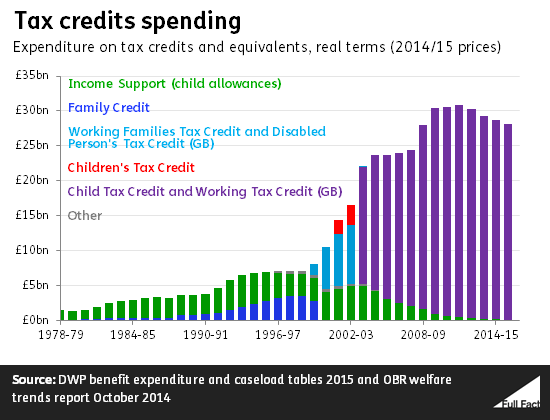 [/img]
I am very much of the view that the less well off are much better off on an absolutel and relative basis than they where 100 and 50 years ago.
Of course we are. Going back 80 years or more you can ask the people that were there. My father, still going strong at 87 grew up in a working class area of Glasgow (Maryhill). In the 1930s nobody in his street had a car. They didn't have a washing machine or even a fridge. The toilet was shared with other families.
Going back 35 yrs I worked in an area in Glasgow where there were whole streets with virtually no cars. Nowadays the streets look like anywhere else. Cars everywhere. Just less shiny than wealthier areas.
In the 70s many Glasgow streets were nearly car free.
[img]  [/img]
@ninfan, thanks that's perfect.
Totally forgot about Co-op convenience stores/corner shops, plenty of those inc one 200m away 😳 Not sure where the nearest large store is
The Ocado delivery driver probably notices it as he drives past with your Waitrose delivery 😆
😀
We don't do food delivery as they tend to give you stuff closer to the sell by date and we like to pick our fresh food ourselves anyway. Actually now you've jogged my memory the new Waitrose we just found nearby used to be a Co-op (so my local friend told me as I'd never been to that area before in 15 years) - just reinforcing the stereo types 😉
You can tell they're struggling though Jammers. Their new custom built corporate offices in Manchester city centre are a very modest understated affair...
[img]  [/img]
[url= https://en.wikipedia.org/wiki/One_Angel_Square ]Its a really interesting building[/url]. It runs on bio fuel/cooking oil. Handy when you own half the agricultural land in the north of England, growing the stuff