UPDATE: Reviews section refreshed, redesigned, searchable: Go take a look
The problem with hydrogen as discussed at length on here is that it's very difficult to make, store and transport, not to me tion also requiring a lot of energy in the process. We do this for fossil fuels because a barrel of crude is valuable for countless other industries and processes as well as transport fuel.
The main reason for battery EVs is that the infrastructure for energy distribution is already very mature and widespread. This means the cost of switching is much less.
Yes, they could be installed in petrol station forecourts but the point is they aren’t.
A lot are. Three on my route to my parents, one by my house all at filling stations. The one I used on the way back from Eton was in a filling station as well.
Also on longer trips there are enough on motorways and not of the time you're close enough to a motorway to be able to get from the motorway to your destination and back to the motorway network on one charge.
Having said that the one I used at Cobham was right in the back corner of that huge car park so wasn't particularly safe.
Hydrogen is a non starter for EVs for all the reasons above plus we'll need all the green hydrogen for industrial processes like steel making and fertiliser production. Volvo and Daimler are already trialling green steel in car production. https://www.theguardian.com/science/2021/aug/19/green-steel-swedish-company-ships-first-batch-made-without-using-coal
The inverter is “standard” 3.7 kW but I deliberately oversized the array to make the most of autumn and winter solar.
Yep, get that - but I really doubt that you'll get 5,000kwh/year I'm afraid (unless you're actually in Spain!)
My south facing system outputs pretty much exactly 1Mwh/Kw of panels based on data over the last 7 years. So realistically I think you'll be getting 4,000Kwh actual production.
I like using the West facing panels though as that gives you free power further into the evening in the summer.
I get 3200-3400 kWh from 13 x 225W 60 cell panels at 43°N facing south at a pretty much ideal angle.
So comparing my 2.9 kW system with Uponthedowns' 5.4kW system 5.4 x 3300/2.9 = 6144 then allowing for latitude and 4 west facing panels I reckon 5000kWh is about right, Sharkattack. Uponthedowns has unusually high output panels.
I’m not sure undersizing the inverter is a good idea. When a big cloud allows the panels to cool the inverter is going to get about 4.5 – 5kW when the sun comes out again mid afternnon. Is it going to trip out?
3.7kWh is the biggest inverter you can have in the UK on a single phase supply without getting special permission from the DNO and I didn't want to delay things. I have no idea about tripping the inverter on sunny days I just went with the installers design. Its a Solar Edge inverter which I think is a decent brand.
@sharkattack as Edukator says I've got high output panels plus panel efficiencies have probably improved since you've had yours installed. 5000kWh is what the installers software is predicting
H2 - my brother in law has a Mirai as a company car - he lives in Surrey so is fairly close to a couple of the very few H2 stations around the country. Even then, the filling stations are regularly out of order, meaning he's very limited in being able to take the car anywhere!
He says its a nice car, but that lack of infrastructure is too limiting currently, and that that exists is not reliable.
So whoever is operating the charging stations can't get even two to work reliably! Geez even BP Pulse and Geniepoint can do better than that.
Geez even BP Pulse and Geniepoint can do better than that.
Funny that EV chargers can be so unreliable, when they have fewer moving parts than a petrol pump! 😉
Funny that EV chargers can be so unreliable, when they have fewer moving parts than a petrol pump! 😉
That's why I find it hard to believe as well.
Apart from egits dropping the plugs on the ground and breaking them what else is there to go wrong?
I guess they are more dependent on software and internet comms than a petrol pump but in the age of 5g and Starlink should that be an issue?
Loss of revenue from a malfunctioning petrol pump is greater than a malfunctioning charger so petrol stations have better maintenance than chargepoints and there is always someone on site to flag up broken pumps.
All petrol pumps are under a canopy with some protection from the elements most chargers are not.
However Tesla seem to be able to run a reliable multinational chargepoint network so it can't be rocket science.............oh wait a minute.
Hydrogen fuel cell cars *are* electric cars. The wheels are driven by an electric motor. They need a battery to act as a buffer when demand is high (accelerating down a sliproad, say) but the fuel cell can't keep up - without it they'd be even more sluggish than they are. If you want one to be hot hatch bothering, let alone Tesla bothering, then it's going to need a much bigger battery.
Putting aside the inefficiencies of splitting water with electricity, the Mirai is not efficient with space either. It's basically E-class/5-series/A6 size, but with really cramped rear seats and less boot space than a Renault Zoe (no folding rear seats either). Between the big cylindrical tanks, fuel cell / motor stack and all the other gubbins, it's a challenge to package. You're just not going to get Golf/Focus sized hydrogen cars with range to match the average battery EVs.
As for petrol stations, you can't just stick hydrogen in great big tanks under the forecourt. Existing stuff like at Cobham services needs about 8 parking bays worth of kit including a 15ft high cylinder to service just one pump (capacity: 80kg/day, or 16 Mirais filling up). It can doubtless scale up, but it's at least as big a job as revamping petrol stations as rapid charging sites.
In the meantime, I drove up to Yorkshire and back for half term in my battery EV, and Shell's petrol stations at Buckden and Markham Moor both had a neat row of four 175kW rapid chargers that made it all very quick and easy. That's the transition happening right now.
You’re just not going to get Golf/Focus sized hydrogen cars with range to match the average battery EVs.
Why would they need to? Genuine question.
Funny that EV chargers can be so unreliable, when they have fewer moving parts than a petrol pump! 😉
As alluded to it would appear to be mostly software related, our locals seem to need rebooting rather frequently and seemingly don't play with MG's for whatever reason.
It's stuff like this that's sadly convinced me we're just not ready to go for it, without a dedicated charging space (ie. a driveway) I'm dependent on too many variables. It'll come, in time, but it's just not there yet.
@uponthedowns - I'm looking at a VERY similar installation for my place including in-roof and roof replacement - would you mind if I PM you for the approximate cost?
So comparing my 2.9 kW system with Uponthedowns’ 5.4kW system 5.4 x 3300/2.9 = 6144 then allowing for latitude and 4 west facing panels I reckon 5000kWh is about right, Sharkattack. Uponthedowns has unusually high output panels.
You seem to have ignored the fact that he has a 4Kwh inverter which will clip the output to that as a maximum - he could have 500 panels….. it will still output 4Kw max.
It will do a bit better in the shoulder months but not to that extent.
Why would they need to? Genuine question.
Because (as a broad generalisation) hydrogen advocates tend to consider existing EVs to be too short range for their needs, and assume hydrogen will give them a very similar experience to what they have today in a petrol or diesel car. 400+ mile range, quick 5 minute forecourt refuel in a Focus sized car with room for a family and their stuff in the boot. Just as with battery EVs, it's going to take some compromising on wants and needs.
Batteries have got denser over time, hydrogen won't. For hydrogen cars, if you have to compromise on acceleration, range, internal space AND it costs at least as much to run as your petrol or diesel, what's the point?
@uponthedowns – I’m looking at a VERY similar installation for my place including in-roof and roof replacement – would you mind if I PM you for the approximate cost?
@Daffy. Panels and inverter cost £8k and Powerwall and gateway £6.5k. I went for the gateway to island the system so it acts as backup if there's a power cut. I could have gone for a cheaper brand and smaller battery but the Powerwall system just seems more user friendly and configurable than the others. You won't be charged for scaffold as your roofer will have already have that in place but make sure its proper scaffold installed according to regs or the solar installer may not be prepared to use it.
I'd advise contacting at least 3-4 installers for quotes. I looked within a 50 mile radius but ended up with an installer just down the road who have been very responsive and worked well with my builder. Have a look round you neibourhood and if you spot a nice installation knock on their door and ask who their installler was. All installers should be able to give you an initial proposal and price indication without visiting just using Google maps. I don't think in-roof fitting is significantly more expensive than standard plus you'll save on tiles/slates
You seem to have ignored the fact that he has a 4Kwh inverter which will clip the output to that as a maximum
I haven't ignored it, he'll only get over 4kW momentarily when the sun comes out from behind a cloud. Most of the time he'll be running below 3.5kW even on the sunnist days - IME panels run at about 2/3 max when they are hot and saturated. So long as the inverter doesn't trip off completely when overloaded the undersizing will have a negligible impact on production.
One of the issues with in-roof is the waterproofing system used. My installer initially used a German plastic product which failed to cope with the thermal range here in SW France and split. It was replace under guarantee with steel.
I haven’t ignored it, he’ll only get over 4kW momentarily when the sun comes out from behind a cloud. Most of the time he’ll be running below 3.5kW even on the sunnist days – IME panels run at about 2/3 max when they are hot and saturated. So long as the inverter doesn’t trip off completely when overloaded the undersizing will have a negligible impact on production.
Ok place your bets and I'll report back my solar output this time next year.
Looks like Tesla are serious about opening up the Supercharger network. They've started a trial in The Netherlands. Pricy at 48p per kWh but cheaper than Ionity (what isn't) and 23p per kWh with a £11 per month subsciption.
https://www.tesla.com/en_GB/support/non-tesla-supercharging
My man maths makes that 176 miles per month at the tesla chargers (at an assumed 4 miles per Kw) to break even on the £11 sub. That's quite a lot of away from home charging and I wonder how long before tesla rage comes into play if you're found hogging "their" chargers!?
If you're a consultant or rep or something then you could easily get through far more away-from-home miles than that.
No objection to the price - just the ability to use them when necessary is great.
I'm looking to order a Polestar 2 as my next company car.
Can either go Long Range Single Motor + (very desirable!) Plus pack or Long Range Dual Motor no extras.
First world EV problems I'm acutely aware but curious as to what the general consensus is.
Or recommend me a similar alternative that isn't a Tesla 3 (purely based on looks!).
Wish there was an EV estate - I don't want an SUV type car.
Have you looked at the Kia EV6?
I’ve always liked the Polestar. When the actual models were released I found them expensive & low specced, on my work scheme at least.
Sorry for a dumb question... Answer probably in the previous 43 pages somewhere, but I can't quickly find it.
If you get a Tesla, does that limit you to where you can charge?
I live in a small town with two public charges. One is the Tesco PodPoint, the other is a ChargeMaster in a public car park. Can these charge a Tesla?
I'd taken a look at the Tesla website to see where I could get a local charge, and neither of the sites above are listed. Does this mean I'd only be able to use Tesla chargers, which are a long way away?
I know nothing of standards (AC/DC etc), so really is an ill-informed question, so apologies and thanks in advance.
So long as the inverter doesn’t trip off completely when overloaded the undersizing will have a negligible impact on production.
....Other than limiting it to 4kw.
Your calcs used a system size of 5kw which it can't output.
I put my 3kw system into the energy saving trust calculator and it came back with a pretty accurate figure of what production I could expect per annum.
It did the same for my 4kw system.
If I put in a 4kw system facing south with no shading in Hampshire or returns a production of just less than 4Mw.
Wish there was an EV estate – I don’t want an SUV type car.
There is ……..
https://www.carbuyer.co.uk/porsche/taycan/taycan-cross-turismo-estate
My man maths makes that 176 miles per month at the tesla chargers (at an assumed 4 miles per Kw) to break even on the £11 sub.
Its one decent 44kWh charge which isn't that much if you are travelling every week for business
Can either go Long Range Single Motor + (very desirable!) Plus pack or Long Range Dual Motor no extras.
Consensus at the moment I think is that for cars like the Polestar and Mach E the single motor long range versions are the best bang per buck unless you want to take on Model 3s
There is an EV estate.
They've just facelifted the MG5 and IMHO made it something you might be happy to have sitting on the drive
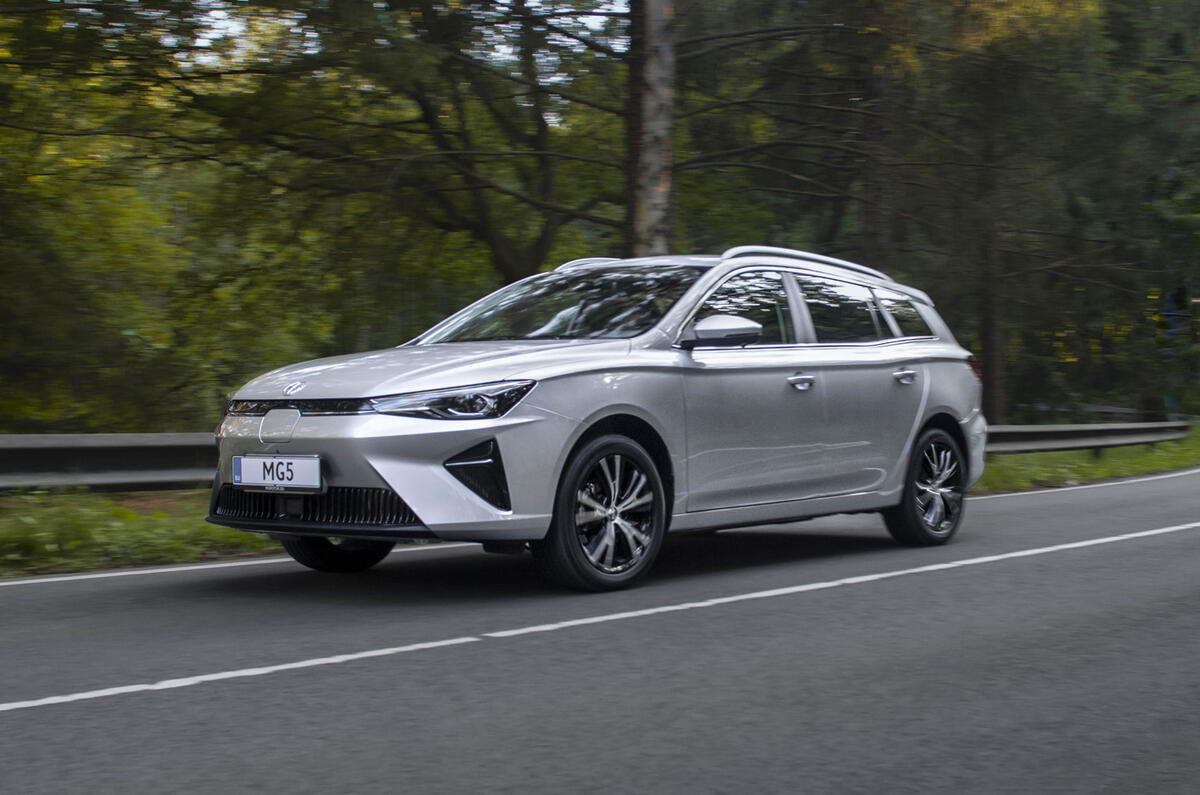
Hmm, thanks for the recommendations on ev estates! Both either end of the spectrum for my budget!
If you get a Tesla, does that limit you to where you can charge?
No, it uses the same interface as all modern EVs
Only a Tesla can charge at Tesla chargers(at the moment…), but Tesla’s can use any standard public charger
Yep, if you’re buying a Model 3 or Y then it has a standard CCS connector like almost all new EVs do in Europe. A new S or X will have a CCS adaptor that achieves the same and it can be retrofitted for a few hundred quid to older ones.
You get more flexibility because you can use Tesla chargers and the ones for everyone else.
you can use Tesla chargers and the ones for everyone else
Awesome. Thanks. It’s best of both then.
For hydrogen cars, if you have to compromise on acceleration, range, internal space AND it costs at least as much to run as your petrol or diesel, what’s the point?
Smaller range but still faster to refill than an EV. Cleaner than an ICE too. That's the point.
Anyway, I was looking at the Seat Moo/Mii/whatever the other night. 5 grand for a 60mph capable scooter with 82 mile range on an A1 ticket? Chargeable over a shift/overnight on a standard 3 pin socket?
That's more like it.
That Seat scooter (the Mó) looks great, the best thing would seem to be that you can remove the battery and bring it into your home or office to charge.
I think MG are doing a great job. Personally, I struggle to get over the rubbish ICEs they've produced in the past 10 years, but they are clearly doing it right in the EV market.
The local Honda garage has recently taken on the MG franchise and can't get them fast enough.
The face lifted estate up there looks decent.
FYI - Bjorn Nyland on youtube was saying that the tesla subscription can be turned on and off, so if you are on a road trip and are likely to use supercharger network then after a single ~40kwh charge you are quids in. That's really quite nice as for most of the year charging at home will be sufficient. Fingers crossed for a quick rollout across the UK and Europe.
FYI – Bjorn Nyland on youtube was saying that the tesla subscription can be turned on and off, so if you are on a road trip and are likely to use supercharger network then after a single ~40kwh charge you are quids in.
Yes I was wondering that until I saw Bjorn's vid. Very useful unlike the Ionity subscription which locks you in for a year. I think Ionity are going to have to have a rethink as all the eTron, Taycan and Merc EQC drivers will switch to Tesla.
Hertz [say they've] just signed a contract for 100,000 EVs from Tesla and according to Elon Musk they didn’t
get any discount.
I took an MG on a Roadtrip to Jotunheimen this year - it was quite simply a very good car. Drove well, charging and range a non issue. Not a massive, massive range but the roads are demanding enough that you need a break every few hours. The only thing I thought was a bit dodgy was the autopilot on twisty roads, but it worked perfectly where I needed it most, the big tunnels (up to 24 kms long..)
Have test driven a Polestar, really nice. :-). I'll buy a new car eventually, and it's going back up the list.
Toyota enter the fray
https://www.theguardian.com/environment/2021/nov/02/toyota-announces-the-bz4x-the-carmakers-first-mass-produced-electric-vehicle
The bZ4X is an SUV with optional rooftop solar panels that will be sold in both front-wheel or all-wheel-drive variants.
Well now at least they won't lying when they claim its self charging
Will be interesting to see their marketing department tying themselves up in knots after claiming hydrids were the answer and lobbying to delay EV legislation in the US and Japan
Hybrids were a good stop gap, particularly in the US where diesel wasn't an option for most. Bear in mind their first hybrid car came out in I think 1997.
I have the same solar set up as uponthedowns, but SSE facing. Cost 5k for 5.2kw and a 3.6kw inverter. I reckon I will get 4100 kWh from it in 12 months. Was installed 6 months ago and have 3100 over the summer. The clipping does impact it in April when it is cool and the panels are more efficient but I think the additional production on the shoulder outweighs that.
In Summer I can put over 30kWh into the car in a day and so can run for many weeks without charging the car from the grid for local journeys.
I calculated my payback to include money saved on diesel at year 5-6
In Summer I can put over 30kWh into the car in a day
As long as the car's at home, of course.
Re that Toyota - I applaud innovation in design generally and am very pleased that EVs are all so creative in terms of interiors; but the yoke steering wheel? I really don't think I'd like that.

