UPDATE: Reviews section refreshed, redesigned, searchable: Go take a look
https://www.tesla.com/en_GB/blog/master-plan-part-deux
article is worth a read but the tl;dr is
Create stunning solar roofs with seamlessly integrated battery storage
Expand the electric vehicle product line to address all major segments
Develop a self-driving capability that is 10X safer than manual via massive fleet learning
Enable your car to make money for you when you aren't using it
massive fleet learning
Cyberdyne Systems.
I need your clothes, your boots and your motorcycle.
The future...
[img] 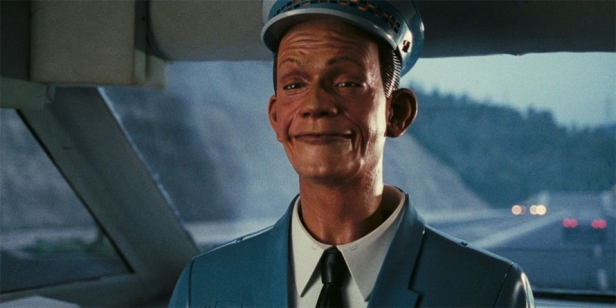 [/img]
Enable your car to make money for you when you aren't using it
That is clever, I guess like most people my car is idle 20-23hours a day, if it's self driving it could be out there doing the Uber thing for me whilst I'm in work or sleeping.
The day I have to drive to work with a back seat full of half digested kebab and lager though will be the last time I let it out of my sight though.
Or to use the battery to provide services to the grid when it's plugged in.Enable your car to make money for you when you aren't using it
Fine until it injures or kills someone and the Police turn up at your door.
Develop a self-driving capability that is 10X safer than manual via massive fleet learning
For anything other than motorways and dual carriage ways I can't see it.
Develop a self-driving capability that is 10X safer than manual
For anything other than motorways and dual carriage ways I can't see it.
You've not driven/cycled on a single carriageway road recently then?
pretty sure google's self drive already pisses all over their human counterparts safetywise no matter what road they're onFor anything other than motorways and dual carriage ways I can't see it.
considering the above, it's unlikely to happen, but no doubt there will be provisions for if you/someone else hacks your car to do something stupid.Fine until it injures or kills someone and the Police turn up at your door.
Google drivers were sleeping at the wheel on their commutes. Can't be far off.
Bloodyell dragon - it'll be discourse over great distances or winged chariots next.
Thank goodness for visionaries like Musk and Stark.
I enjoyed reading the full article - thanks for sharing!
You've not driven/cycled on a single carriageway road recently then?
I cycled to work today 10 miles on a mix of city roads (housing), cycle paths and country roads, including crossing an access point for a major construction project. It was this that made me think driverless cars are a long way off.
Example: a road just about wide enough for 2 medium sized cars, an S-bend downhill and a steep gradient onto a gravel, potholed Stop at a t-junction (with poor visibility due to overgrowth). On the left side of the car is a stone wall / farm entrance, a car coming the other way (i.e. uphill) has no wall there is ~ 1m meter drop into the field. This ain't the Freeway in California.
There is minimal room for error. I'm sure with a vast arrange of sensors then a driverless car could possibly manage, but having previously worked with robotics that required a few mm accuracy they got it wrong a least once every shift or two.
Example: a road just about wide enough for 2 medium sized cars, an S-bend downhill and a steep gradient onto a gravel, potholed Stop at a t-junction (with poor visibility due to overgrowth). On the left side of the car is a stone wall / farm entrance, a car coming the other way (i.e. uphill) has no wall there is ~ 1m meter drop into the field.
Through fleet learning the system could know all about that junction without ever having sensed it, just by learning from other cars behaviour when using it.
[i]I'm sure with a vast arrange of sensors[/i]
I don't think they're going for the minimal approach in this regard.
Or to use the battery to provide services to the grid when it's plugged in.
While shortening the life of said battery.
pretty sure google's self drive already pisses all over their human counterparts safetywise no matter what road they're on
Googles car has needed the driver to take control numerous times. It isn't driverless yet. We don't know what it's driverless accident rate would be.
However, the report reveals that humans have had to intervene 13 times to avoid an collision between September 2014 and November 2015, and in another 69 cases, the driver had to take control to prevent dangerous driving.In 272 cases, meanwhile, drivers had to take the wheel to deal with "software failures" such as failing to perceive obstacles or not anticipating pedestrians crossing the road.
Probably why they're still in development.
I think many underestimate just how much driving is been doine this way already - from the OP article:
"Current fleet learning is happening at just over 3 million miles (5 million km) per day."
(UK roads total length is 245,400miles)
Yes but the bulk of the testing I've seen is in the US where roads and conditions are very different from the UK. Typically they have much straighter, wider roads, with far less traffic furniture and no roundabouts.
Apparently there has been driverless car testing in Milton Keynes, Greenwich and Coventry, but I've not seen any results.
Agreed, if the majority are on freeways, it's not massively useful for UK minor roads.Yes but the bulk of the testing I've seen is in the US where roads and conditions are very different from the UK. Typically they have much straighter, wider roads, with far less traffic furniture and no roundabouts.
I seem to remember that the legal hurdles weren't as big in the UK, so I don't know why there aren't more miles been covered here.
Fascinating stuff imo
I've been in a developer Model S and witnessed the "auto pilot" on a mix of UK town, dual carriageway and country lanes.
Seeing the computer identify live hazards in real-time is very impressive. It's not flawless, but it is very very good and as DezB said...
DezB - MemberProbably why they're still in development.
This is Tesla's 10 year plan, think back to how phones and computers were a decade ago compared with now. The advancement he's talking about seems quite plausible for a ten year plan...
dragon in grumpy backward-looking diatribe shocker.
More at 11.
Yes but the bulk of the testing I've seen is in the US where roads and conditions are very different from the UK. Typically they have much straighter, wider roads, with far less traffic furniture and no roundabouts.
Their freeways (LA region anyway) are way LESS predictable IME - overtaking both sides, loads of swervy shit going on and very busy too
And it won't be just Tesla doing this stuff. But again by a marketing master stroke they've managed to steal the limelight!
honestly removing the dickhead from the car is the best safety system ever thought of, the calculation as to "making progress" to arrive 5s faster than bot being a **** is important
[quote=retro83 ]Develop a self-driving capability that is 10X safer than manual
ISTM given current standards of driving that isn't a massively high bar
scaredypants - MemberTheir freeways (LA region anyway) are way LESS predictable IME - overtaking both sides, loads of swervy shit going on and very busy too
It's kind of 2 different things. Yes the traffic is unpredictable but the roads are simpler. If you think of, say, a Lake District lane-and-a-half road where there's sorta kinda room for 2 cars but one of you has their mirror in a hedge, that's a situation the self-driving cars still struggle with. Not because they're dangerous but because if they can't resolve the situation they just stop.
There's simple workarounds; you just scan the road network properly and then lay out non-driverless areas. But even then, switching from auto to manual could be disruptive- imagine that same road, the car's just driven you from Scotland and now suddenly you have to take over after 3 hours of watching porn, or whatever. Pretty much all of human-automation interaction says we're bad at infrequent emergency corrections for automated systems, boredom kills our effectiveness.
(source: dude at the university I work at who is researching road network redesign for self-driving cars. Any errors are my interpretation not his)
I'm doing a [i]lot[/i] of driving as my job at the moment, and with our road network I reckon it'll be thirty years before it'll work properly in the UK; many of the country roads are just too narrow and unpredictable, as it's not just cars, but delivery vans, tractors, milk tankers...
Their freeways (LA region anyway) are way LESS predictable IME - overtaking both sides, loads of swervy shit going on and very busy too
Getting undertaken by a huge unrestricted truck with few safety features shat me up no end, driving on interstates. If it can work there, I'm sure it could handle a roundabout or two.
Devil's Advocate - the fatal Tesla Autopilot [url= http://jalopnik.com/does-teslas-semi-autonomous-driving-system-suffer-from-1782935594 ]crash was into the side of a trailer[/url].
Personally, I'm sure Musk's vision will come true, as I have stated numerous times. Whether Tesla is the Co. at the forefront... I don't yet know.
Well Google have been working on developing driverless cars for years - maybe 10? and countless millions of dollars and they still haven't got a model that is fit for release onto public roads and are probably many years off from that. Tesla rock up, connect a few parking sensors and active cruise control sensor to an oversized iPad and reckon they've cracked it? It was only a matter of time until someone died, and unfortunately it probably won't be the last. It's just sloppy engineering of the highest order. To release a system out into the public domain and hide behind a disclaimer that it is the responsibility of the driver to ensure the car doesn't crash. Lame. The system should have been subjected to significant testing by an independent authority (which currently doesn't exist) to find the limits of the system then decide if it is fit for release onto public roads. Unfortunately there are no set requirements or minimum performance and reliability specifications for these systems to meet so how can people have confidence in their performance, reliability and failure mechanisms. What specifications are the Tesla engineers designing the system to? How do they know they've created a system that is fit for purpose? Testing it on the general public is simply not acceptable.
[quote=wobbliscott ]It was only a matter of time until someone died, and unfortunately it probably won't be the last.
How many people have been killed by cars with human drivers since the Tesla was released? That's what we need to judge these against, not some unrealistic level way above what humans achieve. For sure safety critical engineering systems should be tested properly, but insisting on them being many times safer than human drivers (which is effectively what you're asking for) is costing lives.
wobbliscott - MemberWell [s]Google [/s]humans have been working on developing drivers[s]less cars[/s] for years - maybe [s]10[/s]250? and countless [s]m[/s]trillions of dollars and they still haven't got a model that is fit for release onto public roads and are probably many years off from that.
Fixed it for you. The most important thing to remember is that a driverless car doesn't have to be perfect, or even very close to it. It just has to be better than we are. It would be stupid, and imo immoral, to shut the door on driverless cars just because they're imperfect, once they reach the point where they're less imperfect than us.
From talking to people on the inside of the autonomous projects round here, tesla have simply wired up a few sensors and systems that most high end manufacturers already have, then written some not that fancy software to link them together.
There are, at current count, 8 manufacturers who could launch a system to rival (or exceed) the tesla autopilot next week. None of them will. The risk management side of things gives people who know what they are taking about sleepless nights.
The tesla thing is poor engineering, weasel words and marketing spin.
The sooner he gets called out on it the better.
Having read the article on the crash, isn't the main cause of the accident a human truck driver pulling across a carriageway of oncoming traffic when it wasn't safe to do so?
Seems a bit unfair to expect a level of perfection from self driving cars which isn't evident in human drivers. And for self driving cars the entire fleet can learn from each mistake, unlike humans who make the same mistakes again and again. Should get much safer pretty quickly on that basis (based on the admittedly limited available US fatal accident per mile stats they're already safer than we are)
From talking to people on the inside of the autonomous projects round here, tesla have simply wired up a few sensors and systems that most high end manufacturers already have, then written some not that fancy software to link them together.
There are, at current count, 8 manufacturers who could launch a system to rival (or exceed) the tesla autopilot next week. None of them will. The risk management side of things gives people who know what they are taking about sleepless nights.
The tesla thing is poor engineering, weasel words and marketing spin.
The sooner he gets called out on it the better.
Or they are using available technologies to experiment, iterate and improve the driverless concept in a practical and cost effective manner. We need more businesses like Tesla.
well if you actually read the DMV submission rather than the Telegraph's journalism it gives you an analysis of this! In essence there were not hundreds of accidents avoided by the test drivers. There were in fact 13 incidents where the test driver took action that avoided an actual collision. And 3 of those were other drivers doing stupid shit like driving the wrong way up a 1 way street!irc - Googles car has needed the driver to take control numerous times. It isn't driverless yet. We don't know what it's driverless accident rate would be.
big old long interview with elon musk, well worth reading,
http://waitbutwhy.com/2015/05/elon-musk-the-worlds-raddest-man.html
i found this look at what happened in the truck/tesla coming together interesting. [url= http://www.thedrive.com/tech/4313/can-tesla-solve-its-autopilot-problem ]it seems pretty clear the guy just wasn't paying attention.[/url]
the likes of volvo, mercedes etc. are taking things very softly, but they have reputations and shareholders to think of. tesla can do things differently because they don't have those restrictions, rightly or wrongly.
the sensors in these vehicles can 'see' through hedges and things. i've read reports of guys in google's cars saying stuff like 'the car stopped abruptly, and a second or so later a guy on a bike appeared around the end of the hedge we were driving along'. these systems are a benefit. they sure aren't perfect but they are an improvement. people may still get killed, and that's not a good thing, but if less people get killed that definitely can be considered a win.
I am with the "It is on it's way" thought and the "Remove the numpty behind the wheel and we are all safer" thoughts, however...
- I have a concern that as these things come in, and start obeying traffic rules such as speed and not overtaking on hatched boxes etc, it will allow the numpties another chance to prove their mastery of driving - by intimidating the computer and carrying on, knowing the automated car won't give them road rage back...When we have enough automated cars, then yes it will improve, but getting there could be interesting.
- I will be impressed about these automated cars on rural roads. Yesterday for example I had to reverse maybe 500m up a road into a muddy passing place, that from knowing the road and minor visual clues, I could see had new ballast under the muddy layer. In previous years, I would have reversed another 500m to the next passing place, as that is tarmac. Even then, we had under 5cm past wing mirrors.
Again, I can see issues as the early adopters 'learn' - both automated cars doing daft things and drivers having to take over, having been 'cornered' in to a difficult decision by the automated car.
- Long term, will we have an issue of driving standards dropping again as folk have less and less practice?
I wonder how they'll change the liability laws when driverless cars are out there. If a cyclist gets killed due to a fault with the software... would it mean that they could never be fully driverless? so that the "user" is liable for any incidents..?
Technological sophistication or software quality aside, the issue as I see it between Google (and presumably other auto manufacturers) and Tesla is that Google's system is building knowledge through controlled testing with engineers overseeing it, with the downside for them being they can't rack up as many test miles as Tesla can because......
The owners / drivers of Tesla's are the "engineers" in the above scenario which is where the controversy comes from. The engineers are absolutely paying attention to what the car's doing, because it's their job. The owners of Teslas are probably not paying attention to what the car's doing, because, well Facebook / texting / watching a movie / viewing pron, whatever....
Don't get me wrong, I love tech (and work in it in true STW stereotype fashion!) but have got the concerns on the contrasting methods that these systems gain their experience.
Driverless cars are the future - I didn't mean to suggest in my previous post that we should abandon them. I just think that Tesla's approach is sloppy. WHat we first need are some industry standards to define what a driverless system is, what it's capabilities are, what the limits of it's abilities are, what the rules are for redundancy and what the system should do if something goes wrong or fails. Without that it's a free-for all.
Developing a car that can drive itself is relatively easy - what makes it difficult is dealing with unpredictable situations that we see on the roads all the time. We can address that simply by not mixing driverless cars and driven cars on the road - it's the human element that introduces the unpredictability.
I don't agree with the suggestion that driverless cars only have to be better than human driven cars. They have to be flawless. No company is going to risk liabilities of their car autopilot systems killing people.
bollox to all that, where's the bloody jet-pack I was promised
Wobbliscott, your position's contradictory; practically no complex tech is flawless and no new tech ever is. So you're saying it's the future then imposing a condition on its use that it will never meet.

