for the first time and got the following results (yep, they're shit)
[img]  [/img]
even managed to get a tiny shooting star in that one....I think 😕
[img]  [/img]
I need to work out how to get crisper images and sort out the motion blur issue.
[url= http://www.flickr.com/photos/32678212@N06/ ]More on Flickr[/url]
Anyone else tried this at all? Im just experimenting for the time being but might try and get a telescope and go for some deep sky stuff.
I took some fairly long exposure images a while ago of a quite scenic view near me with a rapidly setting sun in the background - I think I was using a shutter speed of about 30s.
As it got later, the stars started to become visible & even at 30s (it may have been 1min, but no more) the movement of the stars cross the sky is enough that they don't stay pin-sharp.
The moon in your second pick is very over-exposed & while this is to be expected to get the stars looking bright enough - it suggests that you might get away with a shorter shutter speed.
I take it you were using a tripod? Was it a windy night? The wind nudging your camera can be enough to throw these kind of shots out. Also, if your tripod has a hook on the underside to hang a bag from, make use of it - it will help to stabilise the whole thing (just make sure it's not swinging about, down there...).
You can get a device for cameras/telescopes which track across the sky with the stars to avoid the movement of the stars on long exposures. IIRC they cost a couple hundred quid though.
Unless you've got expensive lens and tracking kit it's very difficult to take a detailed picture of the moon and the stars.
Long exposures don't work as the speed of the earth means that the moon and stars move more than you would realise.
I had some success with a 70-300mm canon lens set at 300mm, aperture f/11 with an iso of 100 and a shutter speed of 1/160. The moon and the stars are very bright on a clear night so you don't need a long exposure.
I was using a tripod for this, there was no wind at all. Originally I had the exposures at 2 minutes and was getting trails, so dropped them to 30 seconds, then down to 15 and finally 10. All taken using a 50mm f1.8 lens.
While the trails were disappearing I wasnt getting as many stars visible. Im going to try again next time there are clear skies.
If you want to avoid star trails, then make a barn door tracker. My dad made one when I was a teenager out of some wood and and hinge, can't have cost more than a fiver.
http://www.homebuiltastronomy.com/barndoor/index.htm
for the moon shot try 2 exposures and use some kind of HDR post-processing?
when i was in australia i tried to get some shots of the stars, it was with a compact (Sony W5 - great camera!) which let you adjust the shutter speed. this was taken at 30s on f/2.8. was really impressed with the results considering the camera was £150 and was balancing on a rock pointing up.
the stars over here just can't compete to with what you can see over there in the middle of the outback miles from any civilisation. the southern cross is bottom middle.
[img] 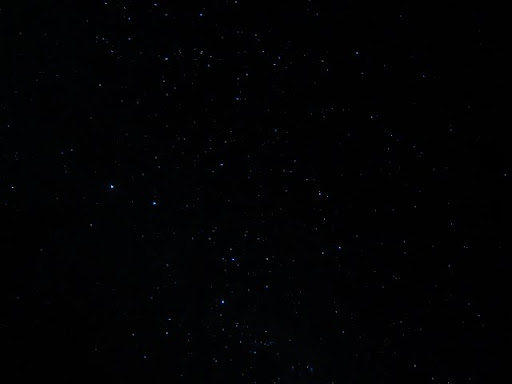 [/img]
actually, that's lost quite a bit of quality through uploading to the web - you can see loads more on the original & quite clearly make out the milky way.
peachos - Member
...the stars over here just can't compete to with what you can see over there in the middle of the outback miles from any civilisation. the southern cross is bottom middle.
Yup, make me homesick. 🙂
I loved it out west. (Mt Isa)
Here are a couple I took in Italy. 60 second exposure, no fancy mount.
[img]  [/img]
[img]  [/img]