UPDATE: Reviews section refreshed, redesigned, searchable: Go take a look
a man 3 centuries ago who built a wheel (or whenever, I have no idea when wheels were first invented)
Yeah, it was about 3 centuries ago. For thousands of years people had struggled with their carts and chariots, until some bright spark invented the wheel. Not sure, but I think it might have been some Scottish bloke.
well a quick wikipedia visit suggests I was only 2k out, which is nothing on the general evoluntionary scale of things but you go ahead and big your historical knowledge up there, go on.
So who was this Dunpol geezer then ?
[img] 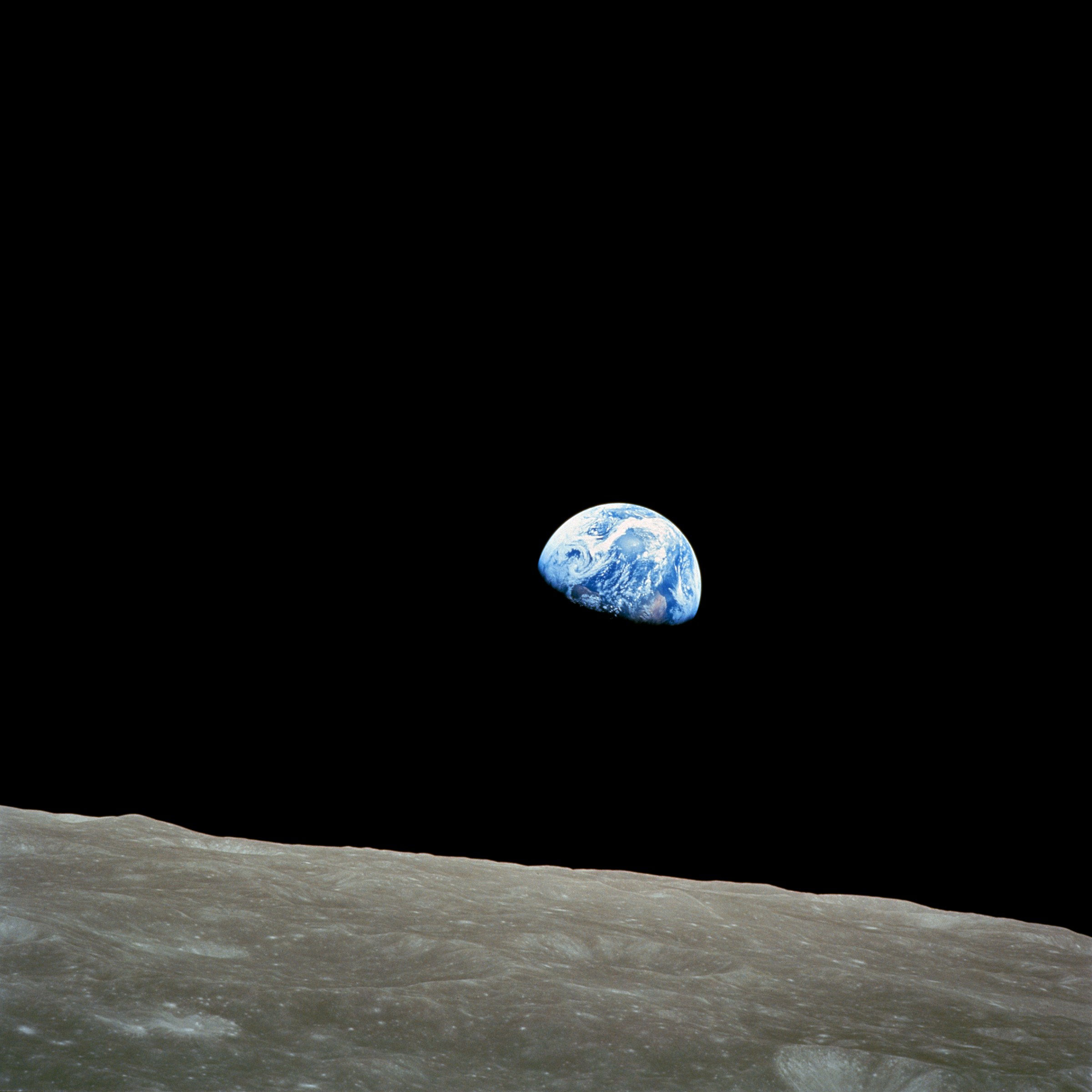 [/img]
[img]  [/img]
the ussr and america pumped billions into the space race, the commies won it with sputnik
huge waste of money when both countries had plenty of homegrown issues to solve at the time
but now satellites are part of our daily lives, mobile phones, gps, the www, 24hr news,google earth 😆
it took 40 years from the first satellite to the armada we have up there now
the op is too shortsighted to see the benefits of science - its his children that will see their lives changed by the scientists of today
but in our culture we expect results immediately, the media doesnt help, nor does the grant system, you have to big up your work to get your hands on the dosh
From my perspective the last 50 years hasn't seen many advances in 'thought science' that even come close to the advances in tech/engineering
hilldodger thought science and engineering are the same thing
someone has to come up with an idea to create the tech and the tech is required to explore the idea further
plenty of amazing leaps thought and tech just look at genetics
I can probably speak with a little authority about the failed British Mars probe: Beagle 2, as I designed the mission control system for it and was closely involved with it's operation.
I don't know if you watched wonders of the solar system last night but they were talking about arguably the most profound philosophical question: is the Earth the only living planet and mankind alone in the universe?
Mars is the easiest worthwhile place to look because it had water, there is meteorite evidence and it's actually quite close.
Beagle came about because ESA offered the UK an experiment on Mars Express. Colin is a world leader in the analysis of meteorites and knew that if he coul do his experiment on Mars he might prove the once existence of life there. Who would turn up the chance of that?
The UK is still world class at space technology despite goverment attempts to kill it off so UK industry scraped enough money together to keep the mission alive until the goverment was embarrassed enough to help.
To put it into perspective: the entire Beagle programme cost around 45 million pounds. Quite a lot less than the dome and about the same as the the Eden project. It's not that much considering what it was trying to do.
Mars landers have a fifty-fifty chance of surviving. Weight restrictions gave no capacity for extra air bags redundant computers or spare chutes. We were unlucky. If it had done it's experiment or just taken a few photos it would have hailed a great British success. But it was a great British success to actually get a spacecraft to Mars against all odds and we are proud of that.
Morning all!
I got bored last night, and CSI Sunday was on Five USA, so I went and enjoyed that instead.
the op is too shortsighted to see the benefits of science
No I'm not. That's completely untrue. I need to wear glasses to see properly, and thanks to Science, I can! 😀
What I'm criticising, isn't all Science, just the parts of it that don't seem to have any real benefit to Mankind; a fair bit of military technology, for example. Much of the Space Race utilised WW2 technology to develop weapons delivery systems. Most 'Rocket Science' is about developing weapons. Half the satellites in Space are for military observation etc. To suggest that stuff like mobile 'phones wouldn't have been invented if it weren't for the Space Race, is a fallacy. The tech and science were there anyway, it's the application of such that is open to criticism.
Loads of the satellites up there are simply floating junk now anyway. Most don't last more than a few years at best.
I have no problem at all, with Science being used to further Mankind's existence. I do have a problem with it being abused to satisfy national egos, and to develop ever more efficient ways of killing.
As for Beagle2: I can understand the reasons behind such a project, but I must question why it is deemed necessary to spend so much, for no calculable benefit. Truth is, as resources on Earth are becoming ever more precious, we look further afield to obtain the materials necessary to sustain out own greed. As has been mentioned, enormous sums of money are spent chasing rainbows, while actually solvable problems here on Earth are ignored.
It's about weighing up costs and benefits, I suppose. The actual success rate of Scientific Investigation, against what can actually be achieved with the resources we already have.
Nuclear power, whilst offering enormous amounts of energy for relatively small input, has brought the World to the brink of MADness, and the price of failure is incredibly high. The devastation caused to this planet by man's greed for power and energy is far too high a price to pay.
Of course, there has to be a balance between encouraging exploration, and preventing a waste of resources. A very fine line, and not an easy task.
Personally, I feel a lot of resources are wasted on projects that bring little or no benefit; Beagle 2 cost £45million, and was a complete failure. 50/50 success rate? Is it really worth it? That £45 million could have been put to much better use. Medical equipment/research that could save lives, perhaps.
Man spends too much of his time with his head in the clouds, and not enough time trying to keep his feet on the ground.
I do understand your point. Nuclear warheads aren't the most useful thing around, for example.
And has NASA actually found anywhere better than Earth yet?
Beagle 2: I'm not disputing that hard questions must be asked before spending tax money on science. But it was a rare chance to answer a very deep question about our existence. Honestly 45 million is small change compared with what NASA spend on equivalent missions.
Do you think lasers are useful? Without quantum theory, no-one would have thought of the idea.
As for nuclear fission, we all wish the weapons would go away, though arguably their presence has put an end to a series of world wars. But we are going to need the power plants unless you want the lights to go out in the near future.
Your problem always goes back to the military applications of science, do you know what the military spends?
Space exploration is definitely worth it, not only for resources but knowledge.
I can't decide if you picked up this line of questioning from a Christian or an Accountants internet forum Talkemada.
I can't decide if you picked up this line of questioning from a Christian or an Accountants internet forum Talkemada.
Neither, it's a question on part of his GSCE course and he's hoping we'll effectively answer his Easter homework assignment for him. 😉
There's a lot of very deep questions about our existence we could ask, but finding the answer doesn't always provide us with much.
And in space, we could explore the universe for 100,000 years and still find nowhere better than home.
Neither, it's a question on part of his GSCE course and he's hoping we'll effectively answer his Easter homework assignment for him.
😆
And in space, we could explore the universe for 100,000 years and still find nowhere better than home.
And we could find something that offers us something useful in 10 years.
Well, military 'need' has driven a fair chunk of Science; the Space Race/Star Wars was primarily about Cold War posturing with the veneer of 'Scientific Interest', and I think it's fair to say that a lot of Scientific projects simply wouldn't get the funding if it weren't for the possibility of military application.
The USA spends bucketloads of cash on UFO investigation (well they used to). With the argument that it's necessary to seek knowledge of something you may need to defend against. The chance of encountering other lifeforms is as likely as another lifeform obliterating our planet at any time, with some cosmic ray, to provide energy for their planet or whatever. IE, not very likely at all, or not something you could do anything about anyway even if you did know.
I see it like this: you have a finite amount of money. You have children to feed. You can either spend that money down the betting shop, or feed your kids.
Seems to me that Man is more intent on praying his Horse will come in, while his kids go hungry.. 😥
Just a thought - the money that gets spent on science etc - where does it go?
Isn't it just Keynsian stimulus with great fringe benefits?
Teach a man to fish etc etc.
And in any case, LHC and whatnot are exploring the fundamentals of our universe. The closer we get to figuring that out, the more likely we are to be able to produce say limitless free energy, or a Star Trek style replicator or whatever. If we don't explore, we'll never know if there's anything worth finding.
Seems to me that the internet seemed pretty useless to most people in 1969.
Hmm, seems that my Search for Intelligent Life (STI) on here has not been quite as fruitful as I'd hoped... 🙁
Some interesting points and observations however. I haven't come here with a completely closed mind, just a highly sceptical one. I remain unconvinced that 'All Science' is something to be 'believed' in without question.
Teach a man to fish etc etc
Yes, I like that. We have the resources, means and motivation to explore, so of course we should. We should however be mindful that such exploration may be fraught with unforeseen problems, and create previously non-existent issues.
'OOh look, Nuclear Power! Loads of cheap energy!'
'Great!'
BANG!
'Oops, now it seems that we've created a catastrophe of terrible proportions, that will take decades, if not centuries for the Earth to recover from, and blight the lives of millions'.
'Oh dear. Ah well never mind... ooh, what does this button do?'
But we are going to need the power plants unless you want the lights to go out in the near future.
Or maybe, we could actually reduce the amount of power we use, and find cleaner alternative forms of energy production, thus negating the need for such dangerous sources...
The closer we get to figuring that out, the more likely we are to be able to produce say limitless free energy
Or, alternatively, we could blow ourselves up in the process.
No such thing as a Free Lunch...
It's the Star Trek future.....a lot of people think it's inevitible.
When they talk about 'progress' that's where they think we are going.
Or maybe, we could actually reduce the amount of power we use
if you want to do that then spending all the "science money" on aid isn't really a good step.
You'd save millions of people, all of whom would require resources, food, shelter, power etc
that's kinda the flaw in your argument. If we chose to ignore science, stand still and put the funds into creating a utopia where everyone had a decent life and lived to 80 then we would almost immediately run out of resources and collapse into a society where everyone was fighting for basic survival.
Only by continuing to progress and learn new things can we have any hope at all of providing for the human race.
The population of the world 3000 years ago was around the same as the current population of England. If we keep growing at that rate then we need as much technological help as we can get.
If we're questioning spending money on science instead of hospitals and so on (not sure how you'd have hospitals without science, we'd be back to leper colonies and leaches, but never mind), why not also question why anyone spends money on arts, music, theatre, films, literature, and culture in general, not to mention mountain bikes, when it's all useless and should be spent on these mythical hospitals?
If we chose to ignore science, stand still and put the funds into creating a utopia where everyone had a decent life and lived to 80 then we would almost immediately run out of resources and collapse into a society where everyone was fighting for basic survival.
Really? Why?
Science, of course, has brought us ways of saving and prolonging life. Nature seems to have quite good ways of controlling populations; predators, environmental change, disease, etc. Science enables us to counteract these forces.
[url= http://news.bbc.co.uk/1/hi/sci/tech/8602394.stm ]Hmm, seems rampant Scientific Exploration is no longer going quite as unchecked...[/url]
Imagine if you took the Cold War period, took all the good stuff that was developed, and threw away the nasty war stuff. You'd be left with an awful lot of great tech, but it's development would have cost a fraction of what the war stuff did. Of course, War is a great motivator to develop and innovate, but isn't necessarily the only motivational force.
All this wonderful Science, but what do we do with it?
Talkemeda, have you got any experience of the way research is funded in the UK? Do you know the decision process used to decide what gets funded?
Really? Why?
Because if you take everyone out of poverty and give the entire planet happy comfortable lives with excellent health care then the population will explode at an even greater exponential rate than it is already, and very quickly drag us all back under again.
It's just not a sustainable ideal.
Besides do you really think it is just lack of money that creates poverty? Do you honestly think giving billions, trillions whatever to the world's poorest countries would end starvation and poverty?
Well, I'd imagine that someone comes up with an idea, presents that idea with all related data/info/hypotheses, to someone in charge of allocating funding, they weigh up that idea against others, and pick the one they feel has the best chance of success/validity/value. And then allocate funding as they see necessary.
Of course, where funding comes from may have a significant bearing on what gets chosen. The Defence Industry is a significant benefactor to scientific study and research, I understand.
Porton Down was established as a Chemical and Biological Weapons research facility. I'd imagine quite a bit of positive science comes out of the place, but I'd wager a bigger part of their budget is for producing weapons, rather than more benign solutions.
Because if you take everyone out of poverty, give the entire planet happy comfortable lives with excellent health care then the population will explode at an even greater exponential rate than it is already, and very quickly drag us all back under again.
Hmm. Interesting. Any stats/evidence to back this claim up?
Any stats/evidence to back this claim up?
How about the last 2000 years of history?
Any stats/evidence to back this claim up?
According to the US Census Bureau POPClock, around 131,940,516 people are born every year and only 56,545,138 die.
So the world population is currently expanding at around 75 million a year - though obviously it is exponential growth, so that rate is increasing all the time.
Now consider what happens if you decrease the number of people dying before they have children, while simultaneously increasing fertility and access to healthcare...
Ok, this is straying from the point a little, but..
In the more developed parts of the World, birthrates are stabilising or even falling, as people tend to have less children. More and more people are choosing not to have children, and Science has given us advances in Contraception, which may be denied many people in poorer countries. So, there could also be a case for Human population levels actually 'levelling off'. Certainly, population levels aren't climbing as rapidly in the more developed nations.
So should be cut back on medicine then? Not treat people? Problem is, who decides who is worth treating or not? enforced contraception/sterilisation? That takes us into a whole very uncomfortable and unpalatable world...
Interesting points though, and perhaps in some way even supportive of my own arguments. Is the relentless pursuit of, and blind faith in Scientific Discovery to be our undoing?
Also in the 'developing world' aren't high birth rates an insurance policy against childhood mortality ?
I'm sure I've read a WHO report that links increase in survival rates to decrease in birth rates - as communities become more able to 'bank' on their children reaching productive adulthood, they have less children and are able to concentrate their resources on them......
birthrates are stabilising or even falling, as people tend to have less children. More and more people are choosing not to have children
ONS say the current birth rate in England and Wales was 1.96 children per woman in 2008, the seventh consecutive annual rise and the highest it has been in 35 years.
population levels aren't climbing as rapidly in the more developed nations.
True, but those less well developed nations have a lot of catching up to do!
If you choose to "stop science" to help them catch up sooner, then how would we hope to feed, cloth and shelter them with our current technologies?
So should be cut back on medicine then? Not treat people? Problem is, who decides who is worth treating or not? enforced contraception/sterilisation? That takes us into a whole very uncomfortable and unpalatable world...
not at all. I'm just pointing out that universal health care and high living standard for everyone, while a very noble aim, does have very dire consequences in reality.
One thing I'm a bit uncomfortable with your comments with though, GrahamS:
It's quite a Western-centric perspective; are wein the West, with the power to potentially change things, right to deny such help to those in the Third World? Should we not look to keep our own house in order first?
As Hilldodger points out, there are reasons why birthrates in certain countries are high, and could it not be argued that these would be lowered with greater access to healthcare and contraception?
[Conspiracy Theorist] Easiest way to control populations is to deny basic healthcare/clean water etc to those who are the least economically and politically powerful, in order to ensure continued access to valuable resources to those with that power? Even go so far as destabilising entire regions, supplying rival groups with weapons, restrict aid etc, to further enable 'population control'? All part of an existing and carefully orchestrated plan? [/Conspiracy Theorist]
I'm just pointing out that universal health care and high living standard for everyone, while a very noble aim, does have very dire consequences in reality.
That's an easy thing to say, for someone who is relatively safe in the comfort of a powerful Western Nation.
Imagine the boot's on the other foot, and you're a peasant farmer in Sudan. aren't you equally entitled, as a Human Being, to the same benefits of Science as anyone else? Or is your life somehow worth less?
I'm a bit uncomfortable with your comments with though, GrahamS
I hope they are taken as they are meant: i.e. a rather callous reality check to counter your noble, but I believe, niave aspirations.
I don't "agree" with them, as such (as in "I don't feel comfortable about them or think that it is fair") but they are, I believe, the harsh and unfortunate truth.
You started me off by mentioning using less energy, and I can't see how you'd possibly manage that by stopping scientific research while supporting ever-growing populations and elevating the standard of living for billions of people.
....and could it not be argued that these would be lowered with greater access to healthcare and contraception? ....
not to forget education either!
It's kind of 'funny' that most aid seems to come with the strings of either political or religious alignment attached, just giving cash without support or guidance is of little use except in 'emergency situations'
I'm pretty sure there's no Answer, but talking about it from a rational and unbiased viewpoint has got to be better than ignoring it....
Hmm so basically you have reservations about what research we do (ie what gets funded) but you do not really know how any of the decisions about what we do research get made?
I've got an interesting example. A bloke discovers an obscure method of detecting very small changes in magnetic fields using photonics, through a blue skies funding initiative to explore photonics. At the time there were no identifiable end uses for the explorations into photonics. So the initial funding was just a wild stab in the dark, could have lead nowhere. Until the magneto optical discovery was made, it was quickly realised that there were lots of possible uses for this discovery, including the potential to detect malaria optically. This lead to further funding to develop a laboratory device, which then needed further testing to prove it works. Now its in its third round of funding to miniaturise the lab device to make it really useful as a portable device.
All because of blue skies funding.
Hmm so basically you have reservations about what research we do (ie what gets funded) but you do not really know how any of the decisions about what we do research get made?
So, enlighten me then.
I imagine a panel of 'learned' people sit round and make a decision on what gets the money...
I find it hard to believe that there is all that much 'blue sky funding'; I'd imagine the more potentially profitable ideas get the lion's share of most funding.
Company: 'Oh hai, we'd like to give you some funding for research projects'
University Lab: 'That's great, thank you!'
A little while later...
Company: 'Oh, remember all that money we gave you? Could you perhaps do a little favour for us?'
Uni Lab: 'Oh erm, we're not sure we can do that really..'
Company: 'Do you want funding next year?'
As I said, no such thing as a free lunch.
So, how much Scientific Exploration and Research is done purely in the name of objective investigation?
GrahamS; I understand what you are saying. It is an uncomfortable reality, sadly.
[url= http://en.wikipedia.org/wiki/Al-Shifa_pharmaceutical_factory ]Not helped, when Third World countries try to improve their lot, yet the West doesn't want to allow them to...[/url]
talkmada i still thin you are being shortsighted
your 'peasant' in sudan probably has a mobile phone that he may well use for more important things than ordering a pizza
and thanks to last years patent ruling now has access to aids drugs among other things
http://www.plusnews.org/report.aspx?ReportId=87438
and you missed my point about sputinks, the network of satelites that mobile networks rely on could never have existed if it wasnt for the early scientific pioneers
gps a completely militarily driven technology, now fitted in every ambulance in the country, really saving lives
its sad that governments are only happy to throw big money at military projects, but the benifits are unimaginable, in ww2 penicillin was turned from a useful fungal excretion to a mass produced life saver millions have benifited from
and i think that makes it ok(ish), darwins voyage on the beagle probably cost a sh!tload of cash, how long would it have taken us to reach the stage we are at now if he hadnt seen those finches?
the human genome project cost millions (not military)and has probably thrown up more questions than answers about life but its already changing medicine, can you imagine what it will have led to in 200 years
today we expect results immediately, part of our fast food,self checkout,high speed wifi mentality
science doesnt work like that it goes in fits and starts,in a non-linear fashion, each experiment is just another step and it may be years or centuries before we see the benefit
talkemada
i work at the institute of cancer research/ the royal marsden cancer hospital
we receive millions in funding from the government and
we also work with drug companies
your attitude is insulting, and ignorant, funding is heavily scrutinised, declarations of financial interest are required for any grant acces, patent application, scientific publication
heres a project carried out in my department
http://www.breakthroughresearch.org.uk/clinical_trials_clinical_researchers/clinical_trials/parp_inhibitor_trial/index.html
thankfully if you develop a cancer that carries a BRCA mutation there will be a drug you can treat it with, and it took millions to get drugs to this stage, and treatments of cancer requires xray machines, pet scanners- hardcore physics was required to develop these machines
and the complexity(and cost) of the machines and devices used in the lab would blow you away
Am I the only one here who doesn't buy into this utilitarian argument?
Science is worth doing for its own sake, not (just) because it might turn out to be useful.
I don't think I'd like to live in Torquemada's perfect society - "Put that book down citizen, and do something I deem to be more useful!" (or face the inquisition?)
talkmada i still thin you are being shortsighted
Maybe I need to go to the opticians... 🙁
Once again, to clarify, I'm not opposed to all Scientific Research and Investigation; I just think the time and effort devoted to certain projects could be better spent on more benificial ones.
As for mobile 'phones, GPS's, etc; so, none of that technology could have been developed outside of the Military Research Programmes? Really? Any proof of this? I appreciate it's Military Funding that has driven many of these projects, but would it not be better that we develop them without the death and destruction bit?
As for the Moon Landings etc; I fail to see many real benefits of such programmes, other than for one country to claim bragging rights. The USA was pumping billions of dollars into such things, while in it's own country, there were people fighting against racial discrimination and inequality. A Giant Leap For All Mankind...
Penicillin was not developed within any military programme. It is just coincidence that it's application became widespread during WW2.
Some discoveries have come about through military research programmes. SuperGlue was developed as a product that could be used to quickly seal open wounds on a battlefield, where other surgery was not possible or too far away.
Meanwhile, other avenues of research are sometimes restricted. Alternatives to oil-based fuels have been in existence for decades, but only now are we seeing their development. The development of such fuels has been stifled by powerful lobbies concerned with protecting their investment in the oil industries. And now we have wars over the control of oil...
Cancer research in the UK is funded primarily by charitable donations. Can you imagine how advanced treatment methods might be, if this form of research received just a small portion of what is spent on 'Defence Research'?
And even then, research isn't always that egalitarian; there is a discrepancy about the level of funding that research into diseases suffered more by those in the Third World receives, than that of the West. He who pays the piper calls the tune.
But seeing as you have no understanding of how these things are decided, who the hell are you to decide if it was worth funding or not? As kimbers said, you are ignorant of how this works, so I think you should spend some time finding out how science is funded before you open wide, currently you are just bringing shame on your house.
EDIT - Its simpler to say: you are talking utter sh1t about something you clearly know nothing about.

