But do you (mistakenly) only understand the term/definition of ‘drawing’ to be a very very specific and narrow category and method? And not to include ‘sketching’?
I don't really mind what it's called. Drawing is just an example..
but this illustrates ...
Scientific drawings are an important part of the science of biology and all biologists must be able to produce good quality scientific drawings regardless of your artistic ability.
Drawings not only allow you to record an image of the specimen observed, but more importantly, they help you to remember the specimen as well as the important features of the specimen. You will be required to look at a large number of specimens during this course and you are much more likely to remember them if you have to draw each one.
It's 2020 ... and I presume that was recent and it hasn't been important this century (at least).
The idea that sitting students in front of thousands of samples and making them draw them is relevant is an archaic way to teach. That isn't to say this doesn't work best for some students but it certainly isn't going to work well for others.
^ Yes, as I say it’s not my argument. I was just trying to understand what the argument consisted of. I wasn’t aware of the problem until I read your OP and was horrified that your career choice was blocked.
As for science illustration and that quote I’d be inclined to go to the issue and take it up with the guy who wrote it:
https://schoolworkhelper.net/how-to-do-scientific-drawings-for-biological-courses/
As an artist I’m not hung up on ‘cheating’ (in terms of technique or taking ideas. It’s a nonsense term 99% of the time.
As a moral being I don’t like the term to be misused. ‘Cheating someone’ by copying their schoolwork is really just deceiving yourself and (hopefully for the cheater) the examiner.
(cheating) is a commonly loaded term (ie you used it to describe the flash-fill in the fairground photo - which set off my ‘huh’ alarm 😉) . You may have just been being lighthearted/rhetorical/joking but it doesn’t pay to assume, I find. And even jokes can bely an underlying ‘value’ or attitude. You can maybe ‘enlighten‘ (PUN-DROP!) on that term ‘cheat’?
But do you (mistakenly) only understand the term/definition of ‘drawing’ to be a very very specific and narrow category and method? And not to include ‘sketching’?
I don’t really mind what it’s called. Drawing is just an example..
^ This, I don’t understand at all. I think the definition of ‘drawing’ is something to you that it isn’t someone else. Me for example.
I think that’s why you say you ‘can’t draw’ when you can actually draw things more accurately than a lot of people by the sound of it. And you have an incredible knowledge of perspective. But you seem to think that (Correct me if I’m wrong) given any drawing technique/style/level of accomplishment/ability only qualifies as ‘drawing’ if you stevextc think that you can’t do it or haven’t yet learned it/will take forever to learn it by any method whatsoever because ‘insert why I didn’t try this method’
A bit like me saying I can’t ‘ride a bike’ because I don’t/can’t yet/so far struggle with all of these ‘cycling’ techniques
1. Jumping gaps
2. Juggling while feet on bars
3. Downhill run in -.07 secs
4. Deliver 45 packages a day by fixie in New York traffic
5. Cycling in perfectly straight line along a railing
6. Hip-jump without using a technique
7. Wheelie uphill
8. Annoy drivers
9. Wear lycra
10. Not fit the popular misconstrued stereotype
Etc etc
I can’t do those and will never do them, so I’m not a cyclist and will never be a cyclist!
“Cycling is ‘magic‘ and some people just seem to be able to do without practicing or learning?<— This is the signal I’m picking up most.
The same can be said for handwriting… etc. because I think at least in part because it is viewed as a simple lack of effort unless you have a very specific condition with a name and label.
I had problems with writing as a child.
I was always very slow at it.
Always last to finish copying notes off the board. No hopes in dictation, every teacher that tried that got pretty angry. Would be able to write about a page in the time it took others to write two.
And come exams, I pretty much never finished one that wasn't multiple choice. No chance of "going back and check your answers whilst waiting at the end" was always scribbling furiously just to get near the end.
There were definitely times when it was seen as not trying hard enough, but most of what I wrote was correct, so the marks were there, so it was never really investigated.
The same can be said for handwriting… etc. because I think at least in part because it is viewed as a simple lack of effort unless you have a very specific condition with a name and label.
Labels are a nightmare. Assumptions also.
They are like erasers. People seem to prefer labels and assumptions over a desire for clarity and exploration. Confirmation bias and stereotyping cripples us as a species IMO.
You may have just been being lighthearted/rhetorical/joking but it doesn’t pay to assume, I find. And even jokes can bely an underlying ‘value’ or attitude. You can maybe ‘enlighten‘ (PUN-DROP!) on that term ‘cheat’?
Just joking .. I personally don't post process or do anything in processing I couldn't on slide or film but that's simply choice.
^ This, I don’t understand at all. I think the definition of ‘drawing’ is something to you that it isn’t someone else. Me for example.
I think that’s why you say you ‘can’t draw’ when you can actually draw things more accurately than a lot of people by the sound of it.
I think this goes right back to my OP.
I wasn’t aware of the problem until I read your OP and was horrified that your career choice was blocked.
A lot of career choices were blocked but because I'm not good at or interested in the subject and to some extent I ended up doing branches of geology I found easy because I'm lazy.
I'm not good at playing instruments but that would seem to be a good reason not to seek a career as a member of an orchestra.
There was a time when biology and paleo were hand illustrated but this is long in the past and is now an artificial barrier.
However like many here I also have terrible handwriting but I remember back at school my father challenging the deputy head and saying in 10 yrs time science all reports will be typed not handwritten.
The ability to handwrite a lab report is pointless today (or a last resort at best). Sadly for many reasons proper reports are being replaced by powerpoints but that's another story perhaps.
One of my mates at Uni lost an eye and this was recognised as a disability so he was given workarounds for things like stereomicroscopy. Other people just aren't good at seeing 3D... and they weren't. (Just like the magic dot patterns you can stare at...some people see something immediately and others never do)
Being labelled dyslexic (whatever that means or meant) I could ask for extra time reading a paper... (not that I did or needed) but being unable to draw the fossils recognisably and quickly I would be penalised. (Not only me) If being able to draw quickly was part of the actual discipline that would be understandable.
A lot of career choices were blocked but because I’m not good at or interested in the subject and to some extent I ended up doing branches of geology I found easy because I’m lazy.
Its generally not a good idea to follow career paths you aren't interested in, and I suspect most people do something for a living they find comparatively easy (you'd need to be pretty motivated to do something you were truly struggling with). However some of those people find it easy now, having practiced a lot, whilst others may have got there more quickly.
However like many here I also have terrible handwriting but I remember back at school my father challenging the deputy head and saying in 10 yrs time science all reports will be typed not handwritten.
The ability to handwrite a lab report is pointless today (or a last resort at best).
Even today most lab books are however handwritten and ultimately are the proper record of the data/result/experiment. It won't be unusual to have a little sketch or diagram of equipment, or where a particular sample came from etc. As someone who sometimes has to refer back to the original lab books from several years ago - I can assure you that bad handwriting IS a problem; even more so if the author is no longer around to translate it.
I don’t just mean biology or paleontology where anyone sensible would use a camera today…
I'm not sure they would (presumably its a bit tricky to use a camera to show what dinosaurs might have looked like?). Far from every microscope has a camera attached. Every phone might have a camera now - but many labs will not permit phones in labs for contamination/safety reasons. At university we often joked about biologists (who sat their exams in the same hall as us) needing their colouring pencils; but they were actually creating quite elaborate diagrams of cell walls, anatomy etc - often more clearly understood that an amateur photograph of an actual sample, or showing things across multiple scales.
Presumably geology student field trips today don't involve someone carrying a laptop and labelling the bits of the outcrop that were "interesting"? Its nearly 30 yrs since I took photographs of rocks, but I sketched the things I was capturing in a note pad so I could annotate those pictures later?
I might be misreading this but are you seriously jealous that your son is getting a good mark for his school work and you were criticised for yours? Are you disappointed that your son's teacher is recognising and encouraging his talents? Do you suppose that other students have not been congratulated for their eloquent written description of the subject? Do you think your son doesn't have a good grasp of the subject and is bluffing the teacher with some pretty pictures.but making a history or geography homework or paper and awarding a better mark because of the beautiful illustrations. [My kid is way way better at drawing than I am… he gets homework and comments about how he got a better grade because ….
To be honest to me this is akin to saying “your child is attractive or charismatic so I moved them up a group history”… or “your child has an ugly birthmark so we deducted a grade in their geography.
Only if the marks were awarded purely for the beauty of the work and not for their effectiveness at conveying the point the question asked them to - the point being that drawing in the subjects your think it shouldn't matter is not about the skill at capturing a likeness or accuracy of a shape it is about effectively communicating the learning points that are intended. Teaching has moved on a lot since the 80's (and of course not every teacher has), perhaps you need to too?
There are obviously some cases where the student is physically unable to draw something (perhaps because of a physical disability that affects controlling a pen) but there are also plenty of cases where an apathetic student throws out any old crap in two minutes rather than put some effort in. By your own admission there were subjects you were not interested in - and its the same for virtually all students. I'm fairly sure that there are very few teachers today who presented with a student who says, "Its not that I'm not trying, its that I don't know how to draw what you want to see" who will not take some time to try and help them perhaps master the art of controlling the pen, see how to break a view/image down into chunks that make it manageable - or in many subjects understand which bits of the drawing are most important (in many of the sciences the focus will be on following the style that is mandated such as using a pencil not a pen; using a ruler for straight lines; using annotations; drawing an appropriate size (e.g. a full page not a postage stamp) etc.). That might sound unnecessarily nitpicky - but I assure you if they ever get to publishing scientific research whilst their figures will be computer generated there is a similar process of the publisher defining exactly what is required and not being accepted until you comply.
Dyna-ti:
To design i dont need a picture or design to work to because ive designed it completely in my head, inside, outside, somethings it seem a bit like autocad, as we revolve and view from different dimensions.
Cougar:
… what do you mean, you can’t do this? What’s wrong with you? You’re just not trying, are you.
^ I’m still trying to work out what dyna-ti’s point is?
Isn’t it just declaring:
‘I just do things so anyone that can’t ‘just do things’ is redundant as far as I‘m concerned. I’m in the ‘highest .3%?’
Well, maybe that’s true. Yet pretty much everyone else has to work at stuff and make mistakes, and learn new things. Scary things. Things that are hard to do. Things you will be mocked for if you don’t learn them ‘fast enough’. Because learning is sometimes really hard to do - and so is practice, practice, practice. Most of us won’t get to that ‘highest’ place where you ‘just can do stuff’, not without sweat,blood, tears and a lot of investment in terms of time and money (and setbacks, debts, disappointments along the way)
It’s also hard sometimes finding where you’re going wrong. And so is the humility to realise ‘I’m not perfect‘, ‘I thought that I knew everything about things that I don’t know, but I didn’t’
And so also is the challenge of objective self-critique.
Because I find it difficult And that goes for learning foreign language as well as certain types (ie engineering) of drawing, music, mathematics. I’d say that all those are ‘languages’.
All ‘drawing’ is, is making a mark to convey something.
All ‘writing‘ is making text to convey something.
All ‘music’ is, is vocal or instrumental sounds (or both) combined in such a way as to produce beauty of form, harmony, and expression of emotion. the mathematical manipulation of sound frequencies and rythyms.
AI may soon make most everyone redundant. Even you ‘highest percentage’ people 😉
Yes, even code will learn to code.
But seriously...without the process and the learning, where is the fun?
It took me years to realise that my father was right when he said ‘there’s more than one way to skin a cat’. It’s a pithy phrase but it’s true.
So how many ways to ‘skin‘ a ‘resistance to learning new things in new ways’?
Or to ‘skin’ the fear and pride that comes with a massive comfort zone?
I’ll probably never ‘learn maths’ (even to GSCE standards, I got a D grade, and only that much with tears of frustration and utter feelings of failure in the eyes of teachers and parent)
It’s taken me until 49 years to realise that I have off the scale symptoms of ADHD. It’s taken me another 4 years on too of that to discover that learning to drum is helping with the symptoms. Massively. I did it on a hunch. At first I thought maybe ‘repetition’ and the simple (hahahah! I thought!) task of ‘holding a beat’ would help me quell the 60 random disparate thoughts I usually have to analyse/process every minute every minute. Maybe drumming will help. But I couldn’t drum or read drum music. Any music.
I played around on drums years ago when I and some friends built a recording and rehearsal studios. I’d jump on and have a ‘bash’ but no matter how hard I tried I couldn’t get my right hand and foot to do different things at different times. I also had no tutor. Anyway I wasn’t a drummer and couldn’t drum. It was just playing around. But no-one was criticising me. So there was no pressure.
Anyway I never took up drums. It was something people could ‘just do’ from what I could see. And I couldn’t. No matter how many times I sat there and ‘tried‘
(ie kept making the same mistakes, refused to seek learning. But kept on banging away like a monkey because it felt good anyway and anyway I wasn’t ever going to be a drummer)
Long story short. I bought a drum kit in April 2020 and spent about three hours a night watching tuition videos. I also FORCED myself to learn to play two simple beats twice every day for 10 minutes each. I suppose this is like the Pomodoro method?
So for twelve weeks twice a day I mapped progress methodically in notes. Logging any mistakes, noting what I’d eaten/whether had eaten/if had drank coffee prior. Made notes what I was thinking when I lost the beat, if I was distracted. If it was a physical discomfort or a mental ‘discomfort’ (worry, anxiety, the 10000 thoughts) when I dropped the beat.
So after a few weeks I improved my focus by a few tiny measures. Reliably. After 8 weeks I was playing to a metronome and my right leg and hand were now independent (to this level)
Early days.
Even today most lab books are however handwritten and ultimately are the proper record of the data/result/experiment.
Nowhere I have ever worked in the developed world has a lab book been a primary record of instrumentation output.
The only exceptions are Azerbaijan (as of 2 yrs ago) and around 1996 I found some people (I was supervising) tracing a digital output onto paper by torchlight.
The former was a lab that did work for different companies and for the state company the produced paper copies of digital output. The state company then vectorised the paper copies... This is simply screwed up because no-one will update standards.
The latter was because I had no told them to change a process from their usual client (AGIP) who's standards stated the paper manufacturer, pen and ink brand and type.
I might be misreading this but are you seriously jealous that your son is getting a good mark for his school work and you were criticised for yours?
I'm not jealous I am concerned he is being rewarded for showing little effort.
Are you disappointed that your son’s teacher is recognising and encouraging his talents?
He has a lot of talents, his most useful is writing the incorrect answer because that is what his ignorant teacher expects, even though he knows it is incorrect.
I'm not sure that is good at 11 though...
In this case he knew the teacher lacked understanding of the subject and bothered to confirm with me. However after I confirmed his understanding he said "but she will mark me down if I don't give the answer she thinks is correct"
Do you suppose that other students have not been congratulated for their eloquent written description of the subject? Do you think your son doesn’t have a good grasp of the subject and is bluffing the teacher with some pretty pictures.
I'm concerned he realises he doesn't need to bother having a good grasp of the subject as he can bluff marks.
Only if the marks were awarded purely for the beauty of the work and not for their effectiveness at conveying the point the question asked them to – the point being that drawing in the subjects your think it shouldn’t matter is not about the skill at capturing a likeness or accuracy of a shape it is about effectively communicating the learning points that are intended. Teaching has moved on a lot since the 80’s (and of course not every teacher has), perhaps you need to too?
Teaching obviously hasn't moved on then because ability to draw is simply irrelevant in most subjects.
I’m not sure they would (presumably its a bit tricky to use a camera to show what dinosaurs might have looked like?). Far from every microscope has a camera attached.
Not at all... however a camera (sensu strictu) is only one imaging technique. Typically this will include CT and photomicrographs and isotope data to determine its diet and provenance.
Thankfully the days of giving some idiot a pencil and crayons and whoever can draw best gets their deluded fantasy accepted fantasy are over.
Rather:
https://www.nature.com/articles/s41586-020-2190-3
Three-dimensional data are available on SketchFab: flesh model at https://sketchfab.com/3d-models/07b2b6bf4c464c09bd30daa629f266ff; scanned caudal vertebrae and chevrons at https://sketchfab.com/3d-models/chv-7-ca70592e5d07408980220d639bc1456f (Chv7), https://sketchfab.com/3d-models/chv-24-d917f541a7934492aaf0be7c5b97ad40 (Chv24), https://sketchfab.com/3d-models/ca-4-56e19d32f53043369ba23d5283279eef (Ca4), https://sketchfab.com/3d-models/ca-7-c2f551b61e294138954c4f2224bd3353 (Ca7), https://sketchfab.com/3d-models/ca-12-bb2f30fec9064645b2ff99be30f1ac92 (Ca12), https://sketchfab.com/3d-models/ca-16-3cd5f6713e1f43f5bf466471416f06c8 (Ca16), https://sketchfab.com/3d-models/ca-23-f34b71eaf4e54cb29a89a0f50730e70a (Ca23), https://sketchfab.com/3d-models/ca-24-4e21ecea81c8403484b9b7e3da7bd0d6 (Ca24), https://sketchfab.com/3d-models/ca-31-6d0748a851994d6d86b84803743b75a4 (Ca31) and https://sketchfab.com/3d-models/ca-41-34e5e6415f7d4fcea335e7120b9fe9b4 (Ca41).
There are obviously some cases where the student is physically unable to draw something (perhaps because of a physical disability that affects controlling a pen) but there are also plenty of cases where an apathetic student throws out any old crap in two minutes rather than put some effort in.
Hence my original question.... you recognise someone with no hands may take longer to complete drawing 15 specimens in an hour but someone who is just poor at drawing you regard as apathetic.
So a typical paleo-environment question ...
You have 1 hour to sketch the 15 specimens, label these with binomial names and discuss how the different morphologies are specialised to this particular niche.
Discuss the evolutionary pressures that drove specialisation with particular reference to convergent evolution.
So 15 specimens and 1 hour. The IMPORTANT PART is the paleo environment and how it drove morphological specialisations... so even leaving 30 mins for the actual question leaves 2 mins a sample, including labelling
That's all fine and dandy for those that can draw. Indeed they don't really need to understand the actual question if they can do 15 beautiful drawings in 30 mins they will at least scrape a pass.
On the other hand for those who can't draw 15 crappy drawings in 1 hour it's because they are apathetic.
^ I’m still trying to work out what dyna-ti’s point is?
Isn’t it just declaring:
‘I just do things so anyone that can’t ‘just do things’ is redundant as far as I‘m concerned. I’m in the ‘highest .3%?’
I don't think you are capable of understanding their point because you can't understand how they visualise. This seems to me to be a mental block...the opposite of Cougar and I being kept awake wondering how we perceive red vs someone else, we start off with an assumption that there is no reason everyone would perceive it the same way.
It makes perfect sense to me but I visualise in the same way they do.
A mechanical design comes fully formed and in 3 dimensions in my head and like dyna-ti the best way I can describe it is like an autocad model.
The major difference I think is we realise that people visualise things differently.
Thanks for responding Steve*.
*(My question about Dyna-Ti vs Cougar’s resoonse to him - You lost me there. I din’t understand the view on non-autistic people. I get the ‘I just know it all’ thing. Or partly. You assumed.)
I think that everybody deserves to be understood, however long it takes. I would have hoped that was clear in my discourse. Maybe you could help me make it clearer for you?
Here’s a post of mine from a page or so back
Labels are a nightmare. Assumptions also.
They are like erasers. People seem to prefer labels and assumptions over a desire for clarity and exploration. Confirmation bias and stereotyping cripples us as a species IMO.
As it stands, there seems to be a wee communication/attitudinal/comprehension/perspective problem on your part. (Delete as applicable)
That may not be a ‘problem’ for you or from your perspective - but if I were to take my neutral/diagnostic head of - then you'd seem here to be as rude af, from my perspective!
I’m putting in so much time and effort (Many nights now, and it takes me hours to comstruct these comments and think it all through, read and re-read your feedback/experience/formulate new questions tpfor you to help me try to understand. 10-4am in general. i’ve been enjoying it so much but remain frsutrated not to get any real questions back and some of mine are just ignored.
I even chose and completed those short drawing tutorials myself here - SO I COULD UNDERSTAND MY EXPERIENCE OF THEM and then (was my hope) COMPARE WITH YOURS once you had completed.
I shouted! There! For clarity! 🙂
Back to your understanding and experience of both learning and ‘knowing’ and how you see objects and concepts (as related to drawing)
- I’ll first simply re-ask the questions that you haven’t so far gotten around to answering. I wish to understand and compare and explore. That’s how I think. About everything. I don’t feel that you also think so much in that way, at this point.
All I’ve really gotten back on your views of (sic) ‘drawing’ (You refused to define it and don’t care for a definition. So far it seems to mean ‘stuff Steve can’t do’. But you gave me great clues about the ‘bushes and trees‘ blockage. We’ve yet to discuss that. I’ve given it a lot of thought.
^ This is something I’m struggling to understand. Help?? How do you not see I’m making an concerted and lengthy effort to understand your views/exoerience but you simply assume you know mine ,even going so far as to tell me what my opinion is? Irony?
You’ve given some (I think ropey) anecdotes (as they generally are) about ‘magic’ drawing savants - but I haven’t yet met one and I’ve basically lived and worked and studied with artists most of my whole life. Not saying they don’t exist, but even when I Google them, they’re not producing anatomically-correct or photo-realist stuff. Not without showing the workings.
Evidence would be good.
Anecdotes. I also have close friends and colleagues with dyslexia and ASD. ASD friend who invents and draws and paints amazing 2d animal-people (human forms, animal heads) in period costumes and settings. Better than I could (at my current level of ‘spontaneous’ (freehand) anatomy. We see ‘eye to eye’ on a lot of things. We both can (and do) in our own time spend hours absorbed observing insects, plants and other wildlife. She asks for help sometimes with sourcing materials, but, curiously - hardly ever for advice on technique. She is resistant to learning new skills unless the safety zone/buffer/experience-bridge is considerable
As I said, I’m like a dog with a bone. I want to understand everything as much as I can.
I stated that clearly and unambiguously. Why would you not absorb that intention?
Also (my hope) you’ll reciprocate at some point and share your views on how you ‘imagine’ it is that I draw/learn to draw, and maybe how I ‘see’ the world around me (towards my making a mark on a surface)
So we can determine if your views about the way I draw (and learned to draw) do actually correspond with my views/experience/the actual process. Or if you are mistaken.
the opposite of Cougar and I being kept awake wondering how we perceive red vs someone else, we start off with an assumption that there is no reason everyone would perceive it the same way.
Yet Cougar only assumed about me, not I about him. Why is that? I also answered his questions in full and some. I asked him if it was clearly stated? I await a response.
Cougar’s assumption about me is somewhat clear:
You had the ability but lacked the technical. I (we?) arguably have at least some of the technical but lack the ability.
I didn’t say I lacked the technical but had the ability. Nowhere. I said the more technical side was more difficult for me, because of attention deficit issues and poor understanding of geometry/perspective, although I have some as required to be able to draw to current levels. It just causes me ‘pain’ to do a lot of urban landscape work (or accurate architectural) because I have to put more effort into perspective have to do with landscapes or still lives. Both of which I’m always studying and improving. I didn’t ‘just know them’. I had an interest and an aptitude to study, and the will to ‘throw away/unlearn some bad habits that marred my progress. I am learning all of the time. Happy to learn.
I have ‘some ability’ to draw. Not ‘the ability’. Cougar also doesn’t I’m sure state (neither ask me) what form this ‘ability’ takes? He assumed that I ‘create’ everything?
He doesn’t seem to explore what he means by that, or else ask if I may (in my work) faithfully represent some things (including mechanical drawing, maps, technical illustrations, architectural, room plans, etc...clear diagrams, etc...
He doesn’t ask, and neither do you. But I do ask. And have been. And continue to.
So who of us here wishes to learn about the other? I feel pretty sore that you seem by now to think that of us three that you mention, that it hasn’t been me 😕
p7eaven
SO I COULD UNDERSTAND MY EXPERIENCE OF THEM and then (was my hope) COMPARE WITH YOURS once you had completed.
Right now my life is a series of hospital/gp appts and fitting in riding inbetween and a bit of light hearted STW.
^
Steve - I was being lighthearted. (‘Shouting for clarity’ 🙂). But the point stands.
And...I need to remember to use 😉 as well as the smile emoticon. I was being lightheartedly sarcastic and should have known to specify.
Right now my life is a series of hospital/gp appts and fitting in riding inbetween and a bit of light hearted STW.
Oddly, the same sort of situation here (minus the riding these days) All the best, hope all works out for you and yours.
So thinking about this I feel like this has drifted way from the OP and as Cougar mentioned there are "crossed porpoises".
The bit you? posted about the requirement for biology just reinforces this and seems anachronistic in an age where other things can be taken into account and technology can overcome.
Moreover some of the responses here are pretty shocking, despite all the claims of teaching reform a child who can't draw is just labelled as lazy.
Despite your enthusiastic belief some of us just are less able.
Being unable to draw well doesn't affect me, I have a computer.
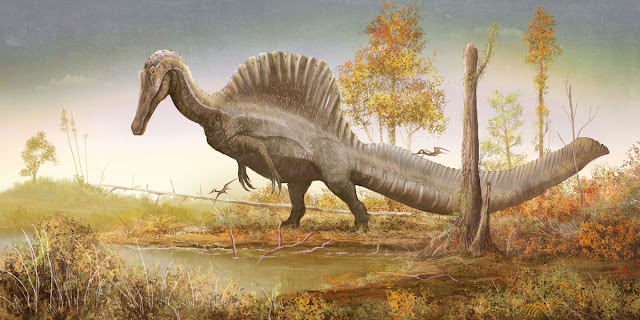
If you look back at the artists impression of spinosaurus I posted its incredible (to me) anyone could imagine that it was terrestrial. The whole drawing looks so strained (the poor thing looks like a beached elephant seal just trying to flop into its natural environment)... but this is a simple case of the best drawing wins. They even have drawn the tail so obviously made to propel the poor thing.
Today we scan fossils and build 3D models...
Just like in my everyday life I design something using a computer .. and the end output is a 3D model that can be printed or CNC'd. Not being able to draw it doesn't affect the process because its 2020.
Any microscope can have the eyepiece replaced... someone argued about letting people use phones in practicals? Again, it's 2020 ... its hardly rocket science to remove the advantage some have and disadvantage others have when it plays no part in their job/career in that subject.
If people want to learn to draw better that's great but they shouldn't be penalised in history, geography or whatever because they can't.
So thinking about this I feel like this has drifted way from the OP and as Cougar mentioned there are “crossed porpoises”.
Thank you for beginning to think about it. 😉
I agree we have some different purposes here. Of course we do. And thankfully some similar. But where and HOW they are ‘crossed’ is the part I don’t yet fully understand.
I have even taken (to my mind) great care throughout the thread to state and restate my purpose. I’m not sure where the comprehension is lacking?
Anyway. Here we are. Clean page. Let’s examine. You wrote:
The bit you? posted about the requirement for biology just reinforces this
There you go. Bang. Straight away you lost me.
Reinforces what? What did I post and why did I say I posted it?
Quote and I’ll hopefully clear up your misapprehension. Happily. Please, even!
Wait, have you got me mixed up with poly? I bloody well hope so because right now I’m feeling the sickly heat of being gaslit! Or else being a punchbag. Both?
Moreover some of the responses here are pretty shocking, despite all the claims of teaching reform a child who can’t draw is just labelled as lazy.
Maybe, you’d have to take it up with whoever posted those responses. Not me.
Background: I cared and taught for PMLD clients for 7 years (52W residential school) and worked with EBD and PD for another 3 years (the latter part time, volunteer). My career was to NOT misunderstand 40+ different clients.
Every day worked and liaised and co-operated alongside:
Speech/language therapists
Music therapists
Developmental psychologists
Occupational therapists
Educational psychologists
Art therapists
LD Teachers
Carers
I was training to deliver the TEACCH Method (for one example)
(Timesaver quote)
The TEACCH method was developed by researchers who wanted a more effective and integrated approach to helping individuals with autism spectrum disorders (ASD). TEACCH is an evidence-based academic program that is based on the idea that autistic individuals are visual learners, so teachers must correspondingly adapt their teaching style and intervention strategies.
I was also trained to converse in Makaton, use emotion thermometers, visual supoorts, choice boards. I never assumed any student was ‘lazy’ because they had a difficulty (that is not to say students are never ‘lazy’ but to be honest that’s an archaic and worthless term.
The very notion also that I don’t ‘get’ that atypical students/people don’t perceive things differently is just...funny! Especially as I’ve also invested hours here in this thread trying to discover (and explore) exactly how we all might perceive things differently!!!!
So no. Sorry. You’ve got the wrong guy if you think I make assumptions about people being lazy vs ‘able’ or whatever.
Despite your enthusiastic belief some of us just are less able.
Now hold on again just a minute, wtaf????
This feels like that time upthread when you accused:
It’s interesting to me that you don’t consider photography art in the same way
Even those words of yours blow me away!!! Many things you have said have blown me away tbh. The assumptions. So many assumptions. Again. I’m a photographer and painter. I consider both to be art. But here’s this guy asking me why I don’t????? I even addressed your assumption ie
I’m more interested that you’re telling me what I think
I’d still love your answer for that. You didn’t yet address it/respond.
Which leads me to...mate, who are you actually addressing? I never thought or said that. Nor did I think or say that you are ‘less able’. So, kindly stop it!
Am pleased to address and clarify anything you may have trouble understanding (either due to my bad writing or to your comprehension (both?) or to the fact that text + non-nested threads are normally unfit for purpose of discussion. Or a mixture etc etc. I’d prefer to ask and answer. I dislike assumptions. I dislike labels. They can wreck discussions. I stated that point further upthread
But unless you have some good excuse I do take offence at being entirely misused as a strawman for your...what? For you to retroactively take out your anger on your biology/science/paleo/bad teachers/other posters in this thread?
Again. You‘ve got the wrong guy. I’m the guy who wants to know how you (and also now Cougar, but he disappeared!) and I might (???) learn differently and draw differently. And what we’d find different/difficult/easy about a 10 minute drawing tutorial. Compare and contrast? You see?
And also what you understand about the process of learning (as opposed to ‘just knowing how to do it’.
I’d find that so much more fulfilling and fun than defending myself from your strawmen for hours. I already agreed that your being barred entry to your chosen career was ‘horrific’ what more can I say about that?
I’m not them and neither am I defending them or deferring to them. Anywhere. I only answer to what I actually post.
Fair?
Wait, have you got me mixed up with poly? I bloody well hope so because right now I’m feeling the sickly heat of being gaslit! Or else being a punchbag. Both?
Probably.... didn't look back... but it doesn't really matter who posted it.
I totally believe educators are still saying being able to draw is a requirement for biology.
Maybe, you’d have to take it up with whoever posted those responses. Not me.
I'm certain it wasn't you.... I'm just shocked at the attitude today and I see no point "taking it up" with someone who has that attitude.
What I'm most curious about though is why it's acceptable to on one hand say kids turning in bad drawings are just lazy but make all sorts of allowances for conditions that have a "name". Even when the actual experts mainly say the definition is actually totally rubbish but useful so people get the correct help.
that is not to say students are never ‘lazy’ but to be honest that’s an archaic and worthless term
So here we have happy dolphins.... this is really what I started off with. Nothing specific to drawing though I'll have a go when I get time and a pencil and stuff...
Meanwhile it seems many of us that can't draw can't write neatly either but we (or I) can do other things with different "controls". Some people for example find using a capstan lathe difficult but I can control that easily turning wheels... or say one of those old etch a sketch things.
What seems to break is the pen/brush....
But unless you have some good excuse I do take offence at being entirely misused as a strawman for your…what? For you to retroactively take out your anger on your biology/science/paleo/bad teachers/other posters in this thread?
It's nothing personal... I'm at crossed porpoises because I'm trying to understand a different thing and it's not so much WHO as why would many people think that.
As someone said earlier I thought quite poignant .. explaining how the pancreas works isn't going to make it work for a diabetic.
Sorry missed this...
It’s interesting to me that you don’t consider photography art in the same way
You were asking if I had studied lighting and composition amongst other things.
Feel free to critique the photo's but from my perspective these illustrate some understanding of lighting and composition.
Instead you answered that it is specific to drawing (or something).
ergo the two are different... so perhaps not .. "not art" (to use a double negative) but certainly different.
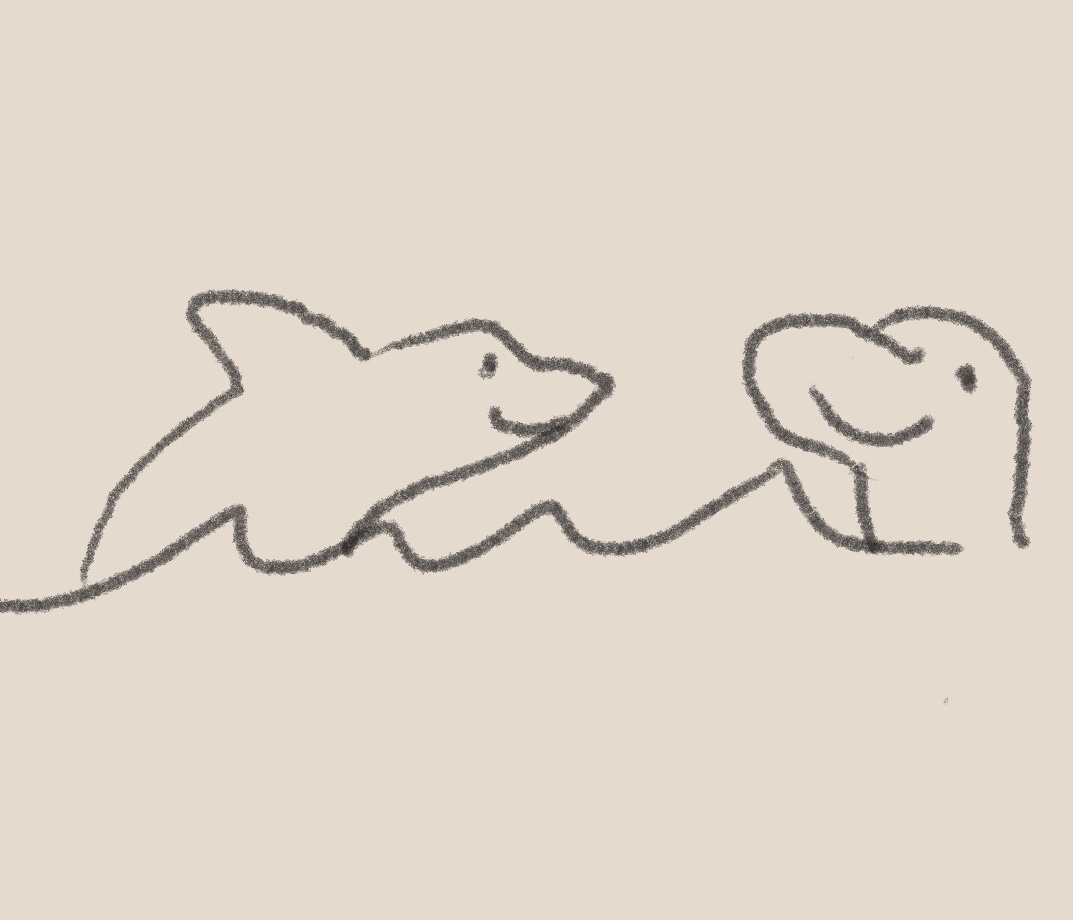
Back on track. Awesome. Will have a bash at those (excellent) Qs later (and shall try and be clear and concise*)
*I struggle with that at least as much as I do with drawing dolphins minus a reference 😉)
I’m at crossed porpoises because I’m trying to understand a different thing and it’s not so much WHO as why would many people think that.
I find that most erroneous/and/or prejudicial biases and/or assumptions are a combination of:
1. Misunderstanding or not being sufficiently aware of the ‘problem‘
2. Lack of knowledge/lack of desire to take a different/informed view and thereby challenge own assumptions
3. Projecting
4. Lazy stereotypes/confirmation bias/personal investment in a ‘way things are’ type narrative.
5. ‘Power’ struggle caused by self-interest (fear of redundancy etc)
6. ‘Tradition’ arguments (also unexamined assumptions)
7. Pride/insecurity
8. ‘Tribalism‘ (looking for a ‘side’ to take)
9. Antipathy/aversion/misapprehension towards learning
10. Actual physical learning disadvantage or disorder
The problem deepens and is compounded when we try and examine it yet then ourselves immediately in the same types of behaviour (ie 1-9 )
(Correction)
yet then ourselves engage the same types of behaviours and thought-processes (eg 1-9 )
You posted this to someone, but I was lost at that point. Am still lost tbh! 🤣
If you look back at the artists impression of spinosaurus I posted its incredible (to me) anyone could imagine that it was terrestrial. The whole drawing looks so strained (the poor thing looks like a beached elephant seal just trying to flop into its natural environment)… but this is a simple case of the best drawing wins. They even have drawn the tail so obviously made to propel the poor thing.
What did they win? I can’t see a link. How do we know it isn’t just a random painting of a dinosaur?
Just checking in.
... Cougar, but he disappeared!
I'm still here, the conversation just got very wordy and I've only loosely skim-read this page so far so it'll take me time to catch up.

What I’m most curious about though is why it’s acceptable to on one hand say kids turning in bad drawings are just lazy
I don't think anyone really did say or mean they were lazy (a quick check through the thread - you are the person who keeps using that word)
Assuming showing little effort is synonymous with being lazy it looks like you are balancing out people being called lazy for being "bad at drawing" though, with those that are good at drawing being critized for it:
I’m not jealous I am concerned he is being rewarded for showing little effort.
It sounds like your son will go quite far in education because not only has he learned the reality, he's learned the answer the tutor is looking for. You could probably learn something from him. or perhaps he learned if from you since much earlier in the thread you studied geology because you were lazy!
But coming back to this again:
What I’m most curious about though is why it’s acceptable to on one hand say kids turning in bad drawings are just lazy but make all sorts of allowances for conditions that have a “name”.
I don't think you really do want to know that anymore than you really want to know if you could draw better - you've made your mind up and want to argue you are right rather than be open to the possibility that with practice most of us can get better at most things, or that a sketch may be an effective method of communicating a concept, and worthy of marks.
Anyway I'm going to go back to arguing with people who don't listen but pay me for the pleasure.
Assuming showing little effort is synonymous with being lazy it looks like you are balancing out people being called lazy for being “bad at drawing” though, with those that are good at drawing being critized for it:
Drawing? Handwriting? Inability to understand simple calculus? Ability to run a marathon without insulin?
with those that are good at drawing being critized for it:
I'm simply criticising people whop happen to be good something assuming everyone finds the same things easy or hard.
As a side note to that the weight given previously to a technically good drawing over reality in places it should be irrelevant. On one side that is a course requirement to make accurate drawing by hand, on the other it is perversion of fact by artists impressions.
It sounds like your son will go quite far in education because not only has he learned the reality, he’s learned the answer the tutor is looking for. You could probably learn something from him. or perhaps he learned if from you since much earlier in the thread you studied geology because you were lazy!
I studied aspects of geology because I'm lazy. That is I studied disciplines that come easy to me because they are maths based. I was more lazy I'd just have studied maths or physics.
It seems from my perspective that you live in a different "reality" than the physical world. One where belief is more important than fact that it has taken the human race millennia to overcome that has previously been called religion.
We see this right now with COBRA and the government's assertion it is "following the science".
I don’t think you really do want to know that anymore than you really want to know if you could draw better – you’ve made your mind up and want to argue you are right rather than be open to the possibility that with practice most of us can get better at most things, or that a sketch may be an effective method of communicating a concept, and worthy of marks.
Why would I wish to draw better? It's the 21C ... I own more than one computer and more than one camera. I'm willing to have a go simply for p7eaven but there are 1001 other things WAY more important and interesting to me.
rather than be open to the possibility that with practice most of us can get better at most things
Who's arguing I can't get better?
In the first instance why should I or anyone need to get better for something totally irrelevant to what we do?
Do you think it would be acceptable that fine arts students were told they will be marked on their ability in higher maths ?
Q: Derive the Bernstein polynomial and explain how this applies to the sculpture you are about to do?
or that a sketch may be an effective method of communicating a concept, and worthy of marks
That is 2 separate things...
The ability to draw a perfect circle by hand is or was at least worthy of "extra marks" in a art contest.
In engineering it is preferable to use compasses or today a computer as it will be required to actually model and manufacture anything. Imagine of Pierre Bezier had been told he couldn't be an engineer as his hand-drawn curves were rubbish because he wasn't trying.
What did they win?
Essentially the right to lie in science.
The picture I posted is of an aquatic dinosaur... everything about it shows it to be aquatic but in the tradition going back to the crystal palace exhibition the sane interpretation was over-ruled by the "artistic impression".
essentially propagating:
Poly
It sounds like your son will go quite far in education because not only has he learned the reality, he’s learned the answer the tutor is looking for.
Or to put it another way.. if it walks like a duck, quacks and has a bill ... however many times someone draws it as a ferret and however great the artists impression is artistically it's not a mustelid
Essentially the right to lie in science.
The picture I posted is of an aquatic dinosaur… everything about it shows it to be aquatic but in the tradition going back to the crystal palace exhibition the sane interpretation was over-ruled by the “artistic impression”.essentially propagating:
We’re at cross porpoises again. My question was (and generally are) quite literal. So when I’m asking you ‘what did they win’ and enquire after a link – I want to know
1. The context of the painting (ie a link), date, where it was published
2. Who was the artist and what did they ‘win’
3. What metric are you/someone else using to decide that it was ‘best’?
4. What it has to do with the discussion.
ie I could just post any random kid’s (or adult’s) poorly-observed painting of a Peterbuilt truck that I found on the internet and then claim that it’s ‘evidence’ of a frustrated artist/mechanic trend/global conspiracy to stuff up the entry requirements for Vehicle Maintenance and Repair courses.
Not saying you are doing that - just that there is no verifiable context that can see, yet all the other links (to other artistic representations) you did give. That Spinosaurus one was the one that stood out most to me not just because it was more amateurish – but that you posted it without context/source/credit.
I’d want to examine the source and what they ‘won’. For context.
It feels like you’re arguing not for ‘no art/illustration/skills‘ in (scientific) illustration, but for ‘better skills’ in (scientific) illustration? And better standards from the (commissioning) scientists/editors? If so then we’d agree on that it’s obvious.
The picture I posted is of an aquatic dinosaur… everything about it shows it to be aquatic but in the tradition going back to the crystal palace exhibition the sane interpretation was over-ruled by the “artistic impression”.
When were paleontologists first aware that Spinosaurus aegyptiacus was likely an aquatic dinosaur? Why would they since then commission/sign off on pictures of a more terrestrial creature? That makes them bad paleos/editors/examiners etc surely?
But again, context and dates and details are essential in trying to make sense of something and why it went so badly wrong/down the wrong path as you claim.
I’m willing to have a go simply for p7eaven but there are 1001 other things WAY more important and interesting to me.
No please don’t . I guessed that a 10 min sketch/basic anatomical drawing exercise would be fun and interesting to later compare our cognition/way of seeing things/compare difficulties encountered during completion.
If it’s not fun/reciprocally informative for you Steve then please ignore the suggestion. I just wanted to understand how/if you ‘see’ the process differently (than me, for instance) and was my thinking that 10 mins on that could have revealed much more than any hours of text/typing/back and forth.
Trying to imagine how you enjoy (?) or have no trouble drawing a car but not (say) a shark (or mechanical shark such as the Jaws animatronic shark) was keeping me awake pondering. Because it made me think about why I also struggle with constructive drawing/anatomy and why you have a ‘block’ with learning to sketch organic subjects (?) yet not mechanical subjects. Or maybe you never tried sketching because you don’t ‘get’ why/how anyone would sketch? Etc etc etc.
Anyone else want to have go, here it was:

We’re at cross porpoises again. My question was (and generally are) quite literal. So when I’m asking you ‘what did they win’ and enquire after a link – I want to know
It's just general and that picture is just a google. As it happens it's part of a good article but that's totally by accident on my part.
When were paleontologists first aware that Spinosaurus aegyptiacus was likely an aquatic dinosaur? Why would they since then commission/sign off on pictures of a more terrestrial creature? That makes them bad paleos/editors/examiners etc surely?
Don't view this as a conspiracy, rather it's tow the line.
Aware it ate fish? Since the first isotopic studies ..
Aware it was aquatic? - not a specific date.... more mounting evidence but 2014 was a year it got harder to pretend... however there was never any evidence it was terrestrial. It was just due to drawings that it was taught that way.
The first samples were limited and in any case destroyed in the Allied bombing...
Actually (and somewhat by random) the picture is part of this blog post I didn't read at the time.
Although this is leaning towards non terrestial it still seems to be partially defending the artist line (there is a whole para on notes for artists)
http://markwitton-com.blogspot.com/2020/05/spinosaurus-2020-thoughts-for-artists.html
The thing here though is its not about the drawing or painting, like the Government with Covid it's about not asking the right questions and picking parts of scientific advice and ignoring others (perhaps due to lack of understanding).
An example of that is: (sic) just a made up conversation...
Boris: "Do you have evidence masks prevent infection of the novel corona virus"
Scientist: "No we haven't tested because it's obvious and we have other priorities"
Boris: "So you don't have evidence"
Scientist: "We don't have any evidence they don't"
Outcome: "Masks are harmful and cause the spread of coronavirus"
[This is all very stylised just to illustrate]
The funny thing is perhaps a lack of understanding could well be a "disability"
In this case having botched the PPE multiple times perhaps it's what he wanted to beleive. His orange counterpart had even crazier ideas... again either convinced or simply pretending it was science.
I guess one point of this is we all have different skills... in this case the "required skill" is listening to the scientists. (or previously economists)
Bringing it back on track a bit...
It's more than possible the people that like drawing fantasy dinosaurs don't actually understand much of the evidence. Perhaps a strange parallel considering but this is like creationists arguing fossils are created by the devil.
I'm not going to write a whole thing about how you tell the diet from isotopes. It's pretty definitive. Despite this spinosaurus is continually referenced as a "meat eating therapod".
It's huge paddle tail is excused a counterbalance so it can stand by the water (and catch fish)
Not mentioned in the blog but its been modelled and it is more efficient than crocodilian tails [Nature earlier this year]
Them main point is actually that we don't need artists impressions, we have computers and cameras.
My assertion is that artists impressions can actually be harmful to the science but that is just a distraction.
But to back up on everything....
The point is making some skills/talent that has nothing to do with a subject (at least contemporary) a pre-requisite.
We might as well test geography students based on how long they can hold their breath or history students should show a good level of flexibility and be able to touch their toes...
The assertion that biology/paleo students need to be able to draw isn't really linked to either reality or that an illustration can confer useful information. [As asserted by others]
In reality they don't need to draw... It's useful a physicist can hold a pen but noone told Stephen Hawkins he couldn't be a physicist and he found a way around it.
If you can't draw (or simply its quicker/easier and more accurate to use another method) then that is equally valid IMHO.
No please don’t . I guessed that a 10 min sketch/basic anatomical drawing exercise would be fun and interesting to later compare our cognition/way of seeing things/compare difficulties encountered during completion.
If it’s not fun/reciprocally informative for you Steve then please ignore the suggestion. I just wanted to understand how/if you ‘see’ the process differently (than me, for instance) and was my thinking that 10 mins on that could have revealed much more than any hours of text/typing/back and forth.
I don't mind I'm just doing stuff. I don't think it will help me draw but that doesn't matter if it helps you. As you say its 10 mins once I pens/pencils....
As it happens at the moment I'm concurrently
Trying to get access to a laser printer ...
Etching some brass and aluminium ...
Doing coats of paint of fork crowns...
Building another wheel... A rim arrived earlier.
Arranging blood tests and a Covid test as I can't have a colonoscopy without the negative Covid
Thanks for the link Steve. I notice that the blogger doesn’t credit/link that image either. To me that’s the very definition of bad practice in a scholarly/and or publishing sphere. Although this is becoming more and more common with the internet.
Still not seeing why/how
1. Biologist/paleos would (and if what you say is true, always have?) commission/ed fundamentally inaccurate and misleading artistic impressions? Even deferred to to them?
2. Being a (sic) ‘gifted’ scientific illustrator is a prerequisite for biology/paleo course entry? I was under the (maybe false) impression that a scientific illustrator (including paleo artist) was a vocation of its own?
https://work.chron.com/become-scientific-illustrator-17160.html
I don’t mind I’m just doing stuff. I don’t think it will help me draw but that doesn’t matter if it helps you. As you say its 10 mins once I pens/pencils….
I’m literally pleading you not to! Approx 99% of everyone I know say that they ‘can’t draw/play music/do equations*’ and ‘never will’ So I’ve got a huge number of options of people to annoy 😉
*Me included
Before I forget -
If only this had been available to you/us back in nineteensomethingsomething?
I wonder if someone might develop a similar resource for geology students?
Here’s an example of a ‘competent, well-labelled field sketch’
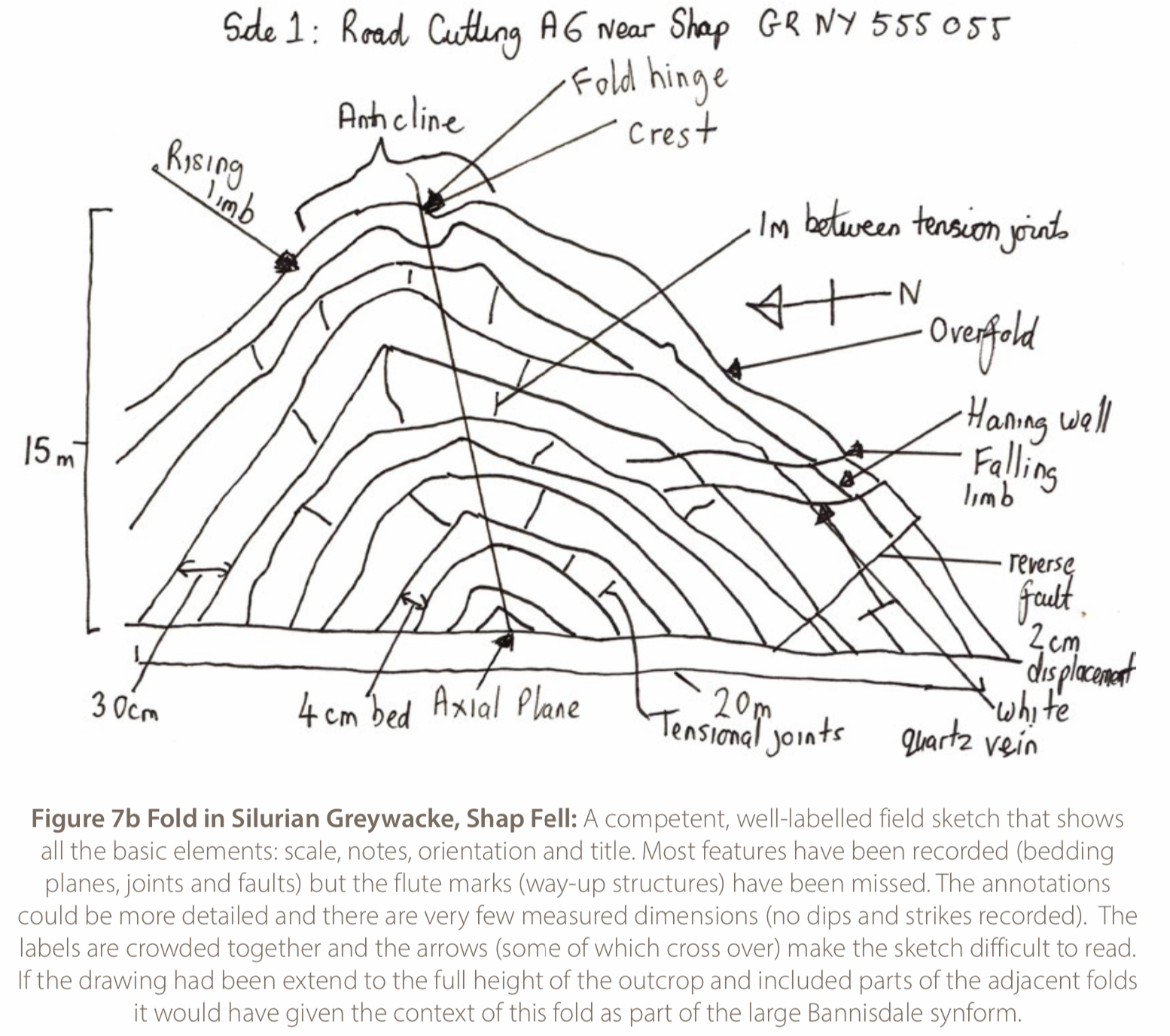
Surely a similar (to biorender?) app could be developed for students who have trouble with hand-eye co-ordination/motor skills (?)
It would have scales and labelling and a huge library of geological features in the same way?
1. Biologist/paleos would (and if what you say is true, always have?) commission/ed fundamentally inaccurate and misleading artistic impressions? Even deferred to to them?
It's not deliberately misleading, it's simply a function of taking the nicest drawing.
There then seems to be a reluctance to apply the scientific method until someone does a "nicer" drawing. I find this as bizarre as you.
2. Being a (sic) ‘gifted’ scientific illustrator is a prerequisite for biology/paleo course entry? I was under the (maybe false) impression that a scientific illustrator (including paleo artist) was a vocation of its own?
Yep and I have worked with many scientific illustrators and cartographers.
Hence why it seems so weird to have this as an entry requirement for biology in the 21C.
Biorender looks cool... the thing about the sketch is I don't actually know what's wrong or missing. I do in part since I know that cutting... and the caption also says the flute marks are missed.
However the geometry of the folds is a bit off from what I can see and no explanation why. Is it a fault missed, is it "poor drawing"? All of which I could tell from some photo's.
If I wanted to build a model from this (for example palinoplastic restoration where we incrementally remove folds and faults back to pre-tectonism) I strongly suspect the inaccuracies will prove a pain and need editing.
If this was "real" being honest and I wanted to build a model I'd jump in the car and just go and take a bunch of photos. Do a rough trace for labels on a mobile device then vectorise properly when I got back.
However imagine instead this is in the middle of a Brazilian jungle... not a 6hr drive away.
Even better would be to be able to draw/label over a variable transparency photo... (which is so easily done today).
Hence why it seems so weird to have this as an entry requirement for biology in the 21C.
^ (is skeptical)
It’s not deliberately misleading, it’s simply a function of taking the nicest drawing.
There then seems to be a reluctance to apply the scientific method until someone does a “nicer” drawing. I find this as bizarre as you.
It blows my mind that scientists/biologists have been so dumb/dishonest for so long.
Biologist- Here is your fee. Draw me an aquatic reptile. Here are the scale measurements, sketches/photographs and list of known and probable features..
Scientific illustrator - (draws a fat land mammal)
B - Hmmm. Not great. Let me ask someone else
SI2- (draws semi-aquatic beaverdinosaur)
B - That’ll do. Here is your fee.
Sack ‘em all. Better artists and biologists required. I really missed my calling (thanks ADD, also not recognised as a learning disability) Except it always stopped me learning/progressing to degree level/staying on task, still does. On the upside...hyperfocal and lateral-thinking skills are off the chart 😕
I've got no reason to doubt what Poly? posted...
Even a quick google
This justificati0on seems very weak to me... and is obviously going to put off someone who can't draw. (or just thinks they can't)
The drawing provides a permanent record of what
has been observed. There is a historic tradition within
biology of providing accurate records of specimens so that
the images could be used for future reference purposes.
Today’s taxonomists are often indebted to the illustrators
of the 17th and 18th centuries, particularly where the
‘type’ (reference) specimen may only exist as an illustration.
Even today, when digital photography can be used to
store images, artists are still often commissioned to record
biological specimens of interest by drawing or painting.
This is particularly true for flowering plants. This is partly
because all the features of interest can be combined in
one or several scientifically accurate, but aesthetic, images
with great clarity (see Figure 1).
Even better would be to be able to draw/label over a variable transparency photo… (which is so easily done today).
^ This did occur to me the other day. Tracing is just a technique of drawing. Us artists use it all of the time to this degree or that. Laypeople seem to think it ‘cheating’ and so mistakenly rule it out as an option. I would imagine many geology teachers and biology teachers are also laypersons in that respect.
Here are some listed requirements to pursue a ‘scientific illustrator’ as a career:
Admissions to master's degree programs are very competitive, as typically 16 or fewer students are accepted per academic year. Successful applicants have a bachelor's degree in science and a portfolio of work that includes both traditional and digitally-rendered examples. A personal interview is also required.
Undergraduate Preparation
College art courses should include drawing, life drawing, painting, color theory, graphic design and computer graphics. Undergraduate coursework in science should be of the same caliber as that required for science majors, including:
Anatomy and physiology.
Biology.
Cell biology.
Chemistry.
Developmental biology.
Vertebrate Anatomy.
Zoology.Source:
https://work.chron.com/become-scientific-illustrator-17160.html
(My bold)
As someone who has recently studied/continues to study drawing I know that tracing is just one basic tool/technique. It blows my mind that aspiring college-entrants are being barred from using such a basic tool of drawing in order to create a ****ing drawing/diagram!!!! Now I’m mad (again) at teachers/tutors who seem to know next to nothing not only about the subjects they are teaching, but also nothing at all about the subsidiary techniques they are required to employ.
The first thing I did in painting class was to trace the outlines and values (tonal areas) of a photograph of a classical bust sculpture. This was in order to quickly and efficientlydefine boundaries and proportions in order for the painting process* to begin. *What we were studying at that moment.
‘Drawing’ =/= ‘life drawing’
‘Drawing’ =/= ‘engineering drawing’
In the same way that
‘Cycling’ =/= ‘(insert advanced MTB technique)
‘Cycling’ =/= ‘Riding only a certain rail using only certain bike, using only prescribed methods, at a certain heading and not deviating more than Xmm‘)
?
I’ve got no reason to doubt what Poly? posted…
Even a quick google
I’m generally both skeptical and curious, with a (to many) annoying requirement for detail and context. So with that in mind, I looked at the link and read it.
A Level
GUIDANCE FOR BIOLOGICAL DRAWING
What equipment is needed?• Sharp pencil - HB is generally preferred, but H, 2H or B (for emphasis) can all be used according to preference.
• Pencil sharpener - A nail file may also be useful to keep the point really sharp.
• Eraser
• Ruler - For label lines.
• Plain paper
General PrinciplesWhen assessing biological drawing, marks are awarded for both quality of drawing and labelling. The latter may include annotation. The general principles described below apply to all types of biological drawing:
• Make the drawing large enough. If the specimen is a relatively large structure such as a plant or a section of
an organ, it should normally occupy more than half the available space on the page. In microscopy, individual cells drawn at high power should be about one to several centimetres in diameter.• Correct mistakes. If you make a mistake, use a good quality eraser to rub out the lines completely.
• Include a title. Include a title stating what the specimen is.
• Include a scale. Include a scale if relevant (see Labelling below). If you are drawing from a microscope, it is useful to state the combined magnification of the eyepiece plus objective lenses used when making the drawing, e.g. x100 (low power) or x400 (high power). Note, though, that this is not the same as recording the scale.Labelling
When labelling biological drawings, follow the guidance below:
• Use a sharp pencil.
• Label all relevant structures, including all tissues in the case of microscopy.
• Use a ruler for label lines and scale bars.
• Label lines should start exactly at the structure being labelled; don’t use arrowheads.
• Arrange label lines neatly and make sure they don’t cross over each other. It is visually attractive, though not essential, if the length of the label lines is adjusted so that the actual labels are right or left justified, i.e. line up vertically above each other on either side of the drawing.
• Labels should be written horizontally, as in a textbook, not written at the same angle as the label line.
• As previously mentioned, a title, stating what the specimen is, should be added at the top or bottom of the drawing.• Add a scale bar immediately below the drawing if necessary (see below).
• Use a sharp pencil only. Don’t use pens or coloured pencils.
• Use clear, continuous lines. A line which encloses a shape, such as a circle, should join up neatly without obvious overlap. Overlapping lines is a common error in hastily drawn sketches and is easily spotted and penalised by examiners.
• Don’t use any form of shading. This includes stippling, cross-hatching and shading. Students find this is a hard instruction to follow, and it is sometimes difficult to justify. Although shading may help to make the drawing look more realistic and/or to discriminate between areas of the specimen, it does not represent a permanent structural feature. Artistic impression is certainly not what is required.
• Accuracy is paramount. It shows good observation. Remember that observation is assisted by understanding, so a good knowledge of theory goes alongside good drawing. Pay particular attention to the outlines of structures and to the relative proportions of different parts of the specimen. Don’t draw what you think you should see, for example text book style drawings. Draw what you observe.
• Guidelines can help. Faint sketching of the main areas of the specimen which can later be erased may help. Some students find a simple grid helps them.
• Magnification and illumination. To help in the
drawing process it is often useful to use a hand lens or a magnifying glass for larger specimens and, for microscopy, both low and high power lenses when making preliminary observations. Field biologists usually carry a hand lens
as standard equipment. Dissection, and drawing from a dissection, is greatly aided by good illumination of the specimen by a lamp and by a tripod lens placed over the material where possible.
Nothing about fantasy dinosaurs or realistically-rendered 3D-looking diagrams and vistas (the jobs of a scientific illustrator (?), see separate requirements above)
The A Level guidelines you just linked to above also (of course) give examples of what they mean by ‘good biological drawings’
The following figures are good biological drawings. Figure 2 shows a drawing made from a heart dissection and Figure 3 shows two flowers during a fieldwork exercise
Figure 2: Drawing of the base of the aorta showing the aortic (semilunar) valve through which blood leaves the left ventricle of a mammalian heart. (Note the fibrous swelling at the middle of the cusps may not be present in some mammalian hearts.) This is a good biological drawing, fully labelled, and clearly showing detail from the dissection, although care should be taken to ensure lines do not overlap or are left incomplete. Also, a scale bar is not present.
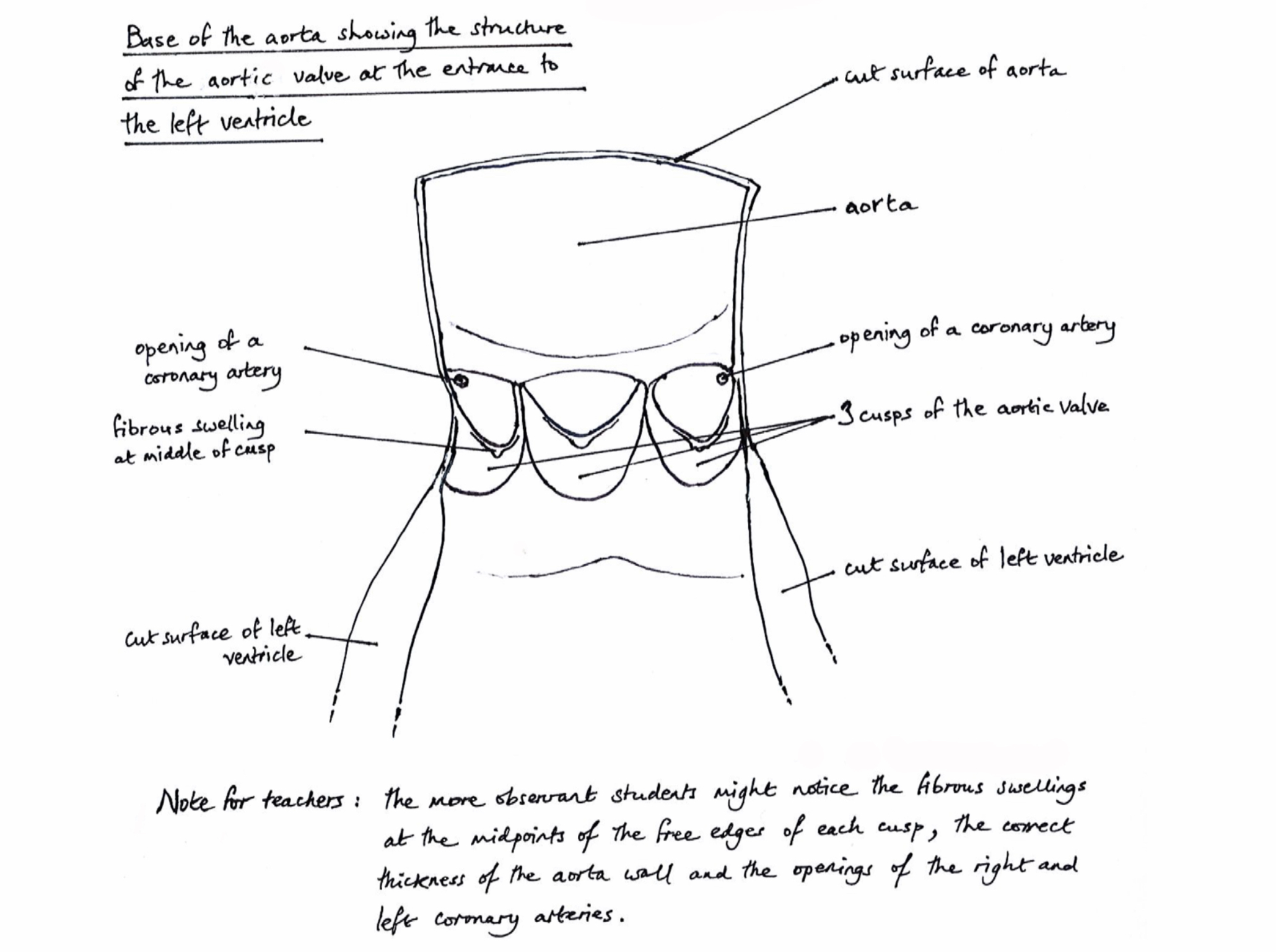
Figure 3: The difference in arrangement of the sepals in two species of buttercup, Ranunculus bulbosus and R. repens. Again, this is a good biological drawing, showing specific details of the flowers and labelling them accordingly. However, care should be taken to ensure lines do not overlap or are left incomplete. Also, a scale bar is not present.
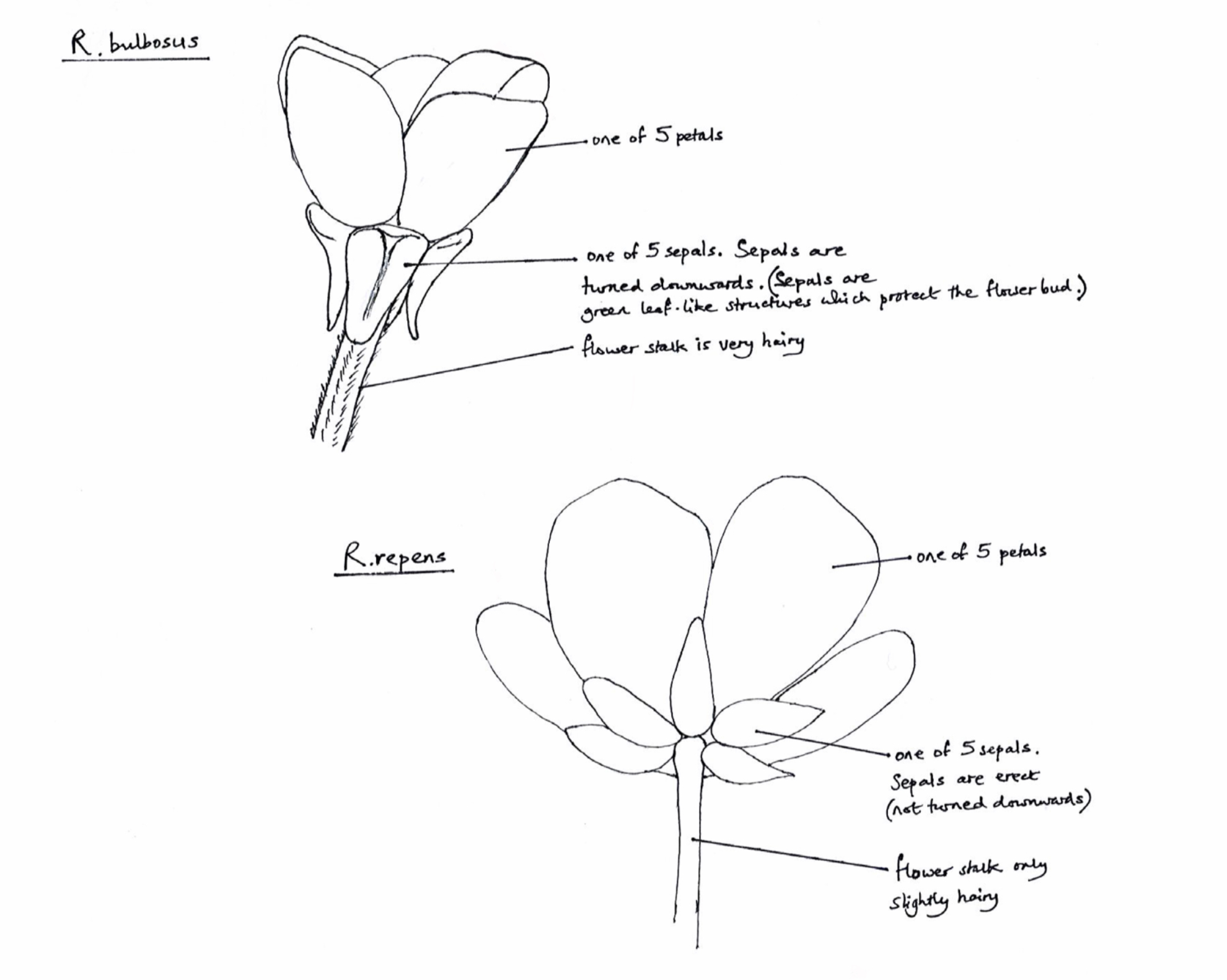
^ None of which examples or descriptions compare with the requirements I linked re the (profession) of ‘scientific illustrator’?
Of course, (ie) the above biological drawings may be difficult to achieve for some people for whatever reason/s - but with drawing tools such as grids, photos, tracing, etc it should be within the range of most? (Otherwise these days use biorender or similar)...
...but all of that is moot I suppose if a teacher/tutor/examiner is unqualified/misapprehended and somehow confused the (Masters Degree, artistic profession) of painting/rendering of photorealistic dinoramas etc...
...with A Level Biology Drawing as described above? Sack ‘em, because they can’t even read their own guidelines!
This justification seems very weak to me
But you didn’t quote the ‘justifications’, you only quoted (What I see to be) the addendum (ie the historical background) and somehow missed the ‘why bother’ part?
Why bother?
The ability to draw, label and annotate biological specimens
is an important and useful biological skill. These days students may well challenge the need for making biological drawings, particularly given the ease of using digital photography for record-keeping. So how can it be justified? The following points help to provide a rationale for developing biological drawing skills:
• Accurate observation and attention to detail is encouraged. Having to draw a biological specimen not only increases the amount of time spent examining the specimen, which in itself will aid learning, but requires a much greater level of accurate observation than a casual examination.
• Active recording aids memory. The educational philosophy behind this is neatly summarised in the well-known Chinese proverb:
I hear and I forget
I see and I remember I do and I understand
Confucius• The drawing* provides a permanent record of what
has been observed.
*as per guidelines. ie sharp pencil. Continuous lines. Labels. Scale. No shading.
You instead quoted only the end paragraph, which removes it from context. Because this last paragraph (from what I gather) describes the historical background of recording specimens *and* also differentiates ‘illustrators’, which I think I’ve shown is now a distinct profession from the days when a biologist would ‘ do it all’ (including often poor drawing and painting skills). Somewhat like in the days when a racing driver would not only drive a car but would build it, maintain and service it, and even help design and build the racetrack, while not being a ‘professional’ in any of these now distinct-yet-related professions in the way people are today.
....(addendum?) There is a historic tradition within biology of providing accurate records of specimens so that the images could be used for future reference purposes. Today’s taxonomists are often indebted to the illustrators of the 17th and 18th centuries, particularly where the ‘type’ (reference) specimen may only exist as an illustration. Even today, when digital photography can be used to store images, artists are still often commissioned* to record biological specimens of interest by drawing or painting. This is particularly true for flowering plants. This is partly because all the features of interest can be combined in one or several scientifically accurate, but aesthetic, images.
* Not biologists/biology students. Commissioned artists.
If your kid’s teacher was marking him/her higher in biology for their art/illustration/colour-theory/life-drawing skills achievements and not sticking to Biology Drawing guidelines, then again, I would be taking it up at the highest level available. Because our kid’s super-artistic (?) drawings/paintings wouldn’t help them (probably hinder them) at A Level or any degree level science (not art) subject. Especially if they hadn’t learned what the actual guidelines are, because they were being wrongly flattered/misled by a hopelessly uninformed and worse than useless teacher.
If that proved fruitless then I’d go public.
@stevextc - really, of all the fairground photos on the whole damn internet, did I choose one of yours to draw for Inktober ‘dizzy’??
(sorry for digression!)
Scientific drawings are an important part of the science of biology and all biologists must be able to produce good quality scientific drawings regardless of your artistic ability.
Drawings not only allow you to record an image of the specimen observed, but more importantly, they help you to remember the specimen as well as the important features of the specimen. You will be required to look at a large number of specimens during this course and you are much more likely to remember them if you have to draw each one.
Drawing a specimen requires you to pay attention to detail so that you can re-create it on the sheet. While doing this, your brain is recording these same features in such a way that you can recall them if necessary (for example in an exam). Simply observing pictures of specimens in a book or on a computer screen is less effective when it comes to remembering and understanding what you observed. All drawings done for this course must adhere to standard rules of scientific illustration. The following are some guidelines that you are to use when illustrating specimens:
This is what was quoted by someone else earlier. Just posting that before I answer any specifics.
What stands out to me is the assumption that drawing will somehow help me remember these.
As far as I'm concerned I remember nothing as my mind blanks out the entire trauma.
When assessing biological drawing, marks are awarded for both quality of drawing and labelling. The latter may include annotation. The general principles described below apply to all types of biological drawing:
From the A level (above)
In the same way that
‘Cycling’ =/= ‘(insert advanced MTB technique
So in that context it's like saying you need to do gap jumps to learn to ride a bike.
Assuming you survive then are you going to remember the rest of the terror of the gap jump?
Of course, (ie) the above biological drawings may be difficult to achieve for some people for whatever reason/s – but with drawing tools such as grids, photos, tracing, etc it should be within the range of most? (Otherwise these days use biorender or similar)…
None of which examples or descriptions compare with the requirements I linked re the (profession) of ‘scientific illustrator’
Exactly ... nor is it a case of NEEDING to do this which is my main point.
In real life drawing (as per the instructions) isn't required. Probably more than not required as actual photo's are expected in the real world. I've sent off dozens of paleo and palynolgy (pollen) samples since the late 90's and the reports always have actual photo's.
Field sketches get done from photo's by the scientific illustrators...
Accuracy or speed of being able to draw are pretty much defunct so giving marks for these is imho punitive to those who can't or take ages to get a single drawing looking anything even half decent.
Now I have to take some brass out of a ferric chloride bath.... wish me luck.
When assessing biological drawing, marks are awarded for both quality of drawing and labelling. The latter may include annotation. The general principles described below apply to all types of biological drawing:
From the A level (above)
In the same way that
‘Cycling’ =/= ‘(insert advanced MTB technique)
Eh?
They gave clear list and examples of what they mean by ‘quality of drawing and labelling’ in the context.
The context/classification is ‘biological drawing A level’ I don’t know how it could be any more clear?
^ If that to ‘biological drawing’ is equivalent to ‘advanced technique’ to ‘MTBing‘ (not ‘cycling’) then ‘advanced MTB techniques’ have a different classification/level to that which I understand. And anyway ‘advanced MTB’ may be ‘hopping a twig‘ for Jack vs ‘clearing a 30ft gap w/double backflip for Jill*
If the above (‘quality’) biological drawing example is prohibitively difficult and/or you haven’t got time/ability to learn to sketch such ‘from life’ (just one technique of drawing) then simply use other drawing techniques such as a grid, tracing a photo, camera lucida app, etc etc as a starting point?
Ultimately, if any whatsoever type of drawing technique method is simply impractical/impossible for you (including tracing from photo, camera lucida, etc) then I’d be surprised if allowances weren’t made. Maybe not. Dunno. Like I say, best take it up with a biologist/prof/examiner?
Whichever, I think it reprehensible that your way was barred liek that with no guidance, discussion, options etc(?)
For contrast - when someone asks me to teach them painting ‘but I can’t draw’ - then I say ‘OK...’
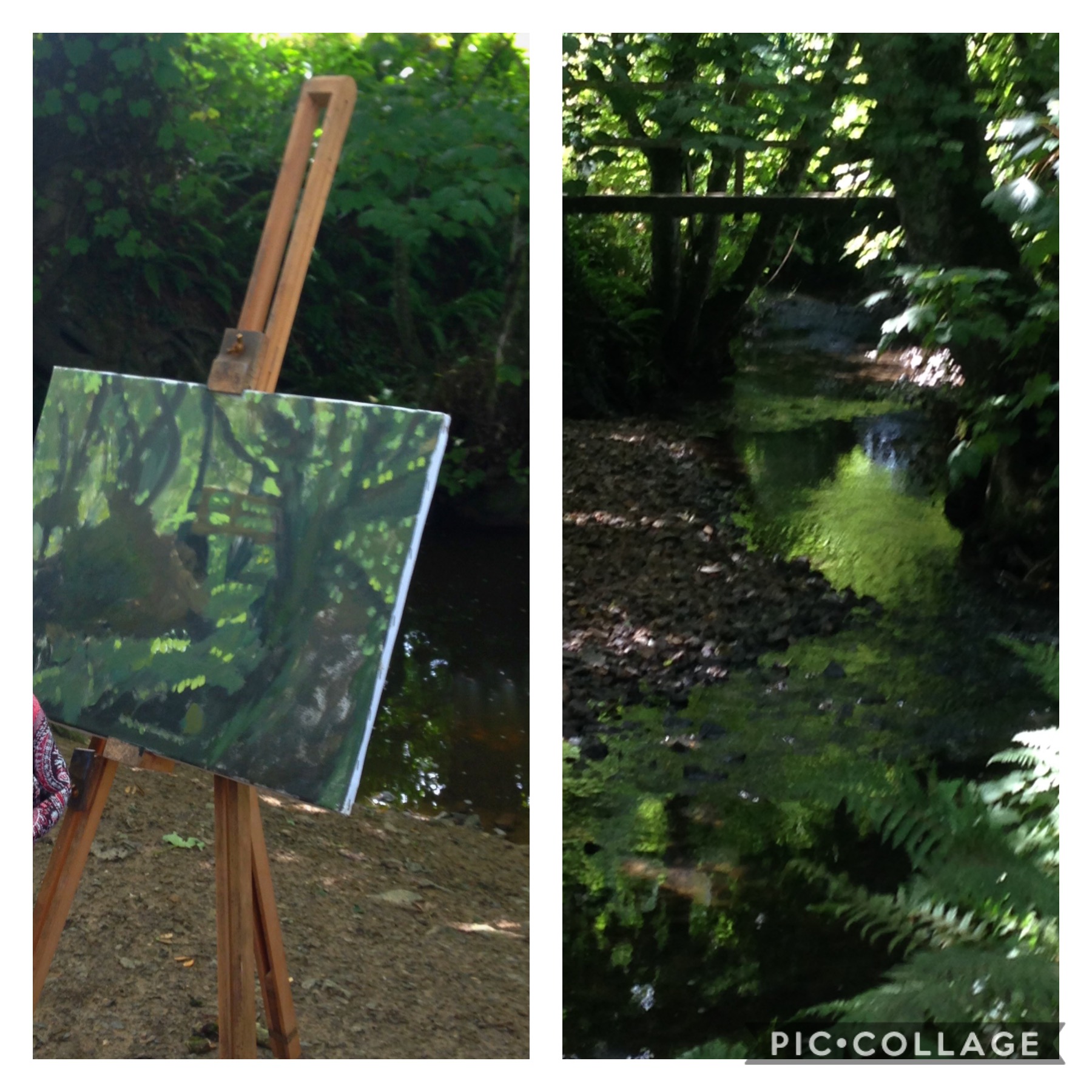
If someone asked me to teach them biology ‘but I can’t draw’ then I’d say ‘what kind of ‘drawing’ do you need to achieve in order to study biology...and how do we get there?
Standardised education is a big bugbear of mine (obviously). Not least because half of the time teachers don’t know what the **** their own guidelines are, especially for non-NT
really, of all the fairground photos on the whole damn internet, did I choose one of yours to draw for Inktober ‘dizzy’??
(sorry for digression!)
Possibly but probably not though mine is a copy/tribute to Cartier Bresson anyway...
They gave clear list and examples of what they mean by ‘quality of drawing and labelling’ in the context.
The context/classification is ‘biological drawing A level’ I don’t know how it could be any more clear?
^ If that to ‘biological drawing’ is equivalent to ‘advanced technique’ to ‘MTBing‘ (not ‘cycling’) then ‘advanced MTB techniques’ have a different classification/level to that which I understand.
• Use clear, continuous lines. A line which encloses a shape, such as a circle, should join up neatly without obvious overlap. Overlapping lines is a common error in hastily drawn sketches and is easily spotted and penalised by examiners.
• Accuracy is paramount. It shows good observation. Remember that observation is assisted by understanding, so a good knowledge of theory goes alongside good drawing. Pay particular attention to the outlines of structures and to the relative proportions of different parts of the specimen. Don’t draw what you think you should see, for example text book style drawings. Draw what you observe.
So those statements ?
Overlapping lines - a common symptom of being crap at drawing.
Accuracy is paramount - a common symptom of being good at drawing
relative proportions of different parts of the specimen - yeah something people that can draw do
[the point here is all these things are viewed as "hasty", "lazy" etc. and penalised AND this is meant to be biology not fine art being taught examined]
If the above (‘quality’) biological drawing example is prohibitively difficult and/or you haven’t got time/ability to learn to sketch such ‘from life’ (just one technique of drawing) then simply use other drawing techniques such as a grid, tracing a photo, camera lucida app, etc etc as a starting point?
Well exactly.... except you can't do that in practicals and exams.
The point is I could spend the entire 1hr practical trying to draw that and it would still be crap and penalised. I know people that can do that in < 1 min absolutely perfectly.
The practical isn't meant to be testing drawing ability but knowledge and understanding of biology.
…but all of that is moot I suppose if a teacher/tutor/examiner is unqualified/misapprehended and somehow confused the (Masters Degree, artistic profession) of painting/rendering of photorealistic dinoramas etc…
The confusion is deeper .. they are meant to be teaching/examining knowledge of biology (history/geography/whatever) drawing ability is irrelevant.
When I was doing yr1 paleo we would be given 10-20 samples in a 2 hour practical so basically a few minutes each.


The problem is for some of us the practical is simply an exercise in how crap we are at drawing.
For many of us the hurdle is the drawing so if Jack and Jill turn up for cycling proficiency and they are told they will be awarded marks for a no hands backflip it's irrelevant.
Whatever they learn about signalling and road position I'm pretty certain all Jack will remember from that day is terror and smacking his head into concrete.
If someone asked me to teach them biology ‘but I can’t draw’ then I’d say ‘what kind of ‘drawing’ do you need to achieve in order to study biology…and how do we get there?
My issue is why would you have to learn to draw at all to study biology?
It's 2020 ... after all
Trying to imagine how you enjoy (?) or have no trouble drawing a car but not (say) a shark (or mechanical shark such as the Jaws animatronic shark) was keeping me awake pondering. Because it made me think about why I also struggle with constructive drawing/anatomy and why you have a ‘block’ with learning to sketch organic subjects (?) yet not mechanical subjects. Or maybe you never tried sketching because you don’t ‘get’ why/how anyone would sketch? Etc etc etc.
Sorry, part of this explains the above.
Basically (and right now the STW ad shows a fallow doe under so I'll use that)
If I tried to draw that freehand then:
The lines wouldn't meet (by a long way)
Trying to adjust for them to meet... stuff just ends up in the wrong place.
I could print it out (as I'm sat on my computer) and then trace or put a grid over.
Much as that might work as a leisure activity it wouldn't work in a biology/paleo practical....
HOWEVER ... in REAL LIFE if I wanted to "do something" with that picture of the doe I'd just download and vectorise it.
As a example ...
Combination of techniques to produce this but ALL on the computer. The ferret is processed, vectorised, half deleted then mirrored. The shield is just pure maths defined. The chainring is processed and vectorised.
I've been trying to etch some badges from this and similar but where the resist (iron on from laser print) hasn't stuck I need to tart up by hand.
It's an absolute disaster for me to pick up a pen other than filling in black areas that already exist but just have holes. I can't even copy one side to the other... stuff doesn't meet, its the wrong proportions etc. etc.
I'm quite happy with this .. if I could just get the transfer correct.
So why would I even TRY and hand draw it. 1/2 hour on a computer vs a day to produce something completely rubbish by hand.
The confusion is deeper .. they are meant to be teaching/examining knowledge of biology (history/geography/whatever) drawing ability is irrelevant.
(assumes devil’s advocate stance)
With the greatest respect, do you know how and why biological drawings are created and used? For what purpose? In both teaching/learning and recording?
I find it crucial to fully understand a conflicting position if one is to argue against that position.
So in order not to attack strawmen, why not first make ‘their’ argument FOR them?
Why, how and where would biological drawings be important? In learning, teaching and recording?
Let’s say for instance if a (NT/non-savant) biology student had access to library of vector art which included every (so far discovered and observed) biological cell and feature. Ever conceivable diagram. pre-drawn and pre-labelled. Furthermore each 2d diagram/drawing also has a perfect 3d model and key.
How would that be an objectively inferior way to learn than current methods?
Would a student/biologist learn and remember less (and more slowly) by observing a construction rather than constructing from observation?
Also, as you claim to ‘just know things’ (advanced mathematics, geometry, perspective, ‘regional language’ etc...) and you ‘just know these things‘ without the prior requirement for learning - then this puts you in a very, very, very small category of ‘genius savant‘ (?)
But...how does your experience and knowledge of ‘the science of learning’ inform you about the learning process for most everyone else? So much so that you claim to know more (and better) about the science of learning?
With the greatest respect, do you know how and why biological drawings are created and used? For what purpose? In both teaching/learning and recording?
I read the arguments.... I don't think they are WHY though.
So in order not to attack strawmen, why not first make ‘their’ argument FOR them?
Teaching: "Cos that's how we did it". (and add in a smattering of your 10 points, resistance to change and lazyness to see it another way)
Learning: It's not a choice... as such it's dictated by teaching and examining. It might work great for some but doubtless very badly for others and OK for a load in the middle.
Recording: No... not in the real world
Let’s say for instance if a (NT/non-savant) biology student had access to library of vector art which included every (so far discovered and observed) biological cell and feature. Ever conceivable diagram. pre-drawn and pre-labelled. Furthermore each 2d diagram/drawing also has a perfect 3d model and key.
How would that be an objectively inferior way to learn than current methods?
Probably depends a lot on that specific student...
It's one way ... it doesn't need to be completed diagrams though... someone could drag and drop the parts of the cell for example.
So here's a off the wall idea.... what if instead of drawing a flower they make a virtual flower... from each cell up... [the Ranunculus bulbosus and R. repens. pics] to the circulatory system and ova.
Make the cells, clone them, grow the flower see how all this fits together... just like in a CAD model.
In the above there is a label "one of 5 petals" .. so why draw the other 4? The label makes little observation such as pentameral symmetry... (or not)...
I can't speak for EVERY student but that for ME would improve my understanding and learning considerably over being told "draw this".
Also, as you claim to ‘just know things’ (advanced mathematics, geometry, perspective, ‘regional language’ etc…) and you ‘just know these things‘ without the prior requirement for learning – then this puts you in a very, very, very small category of ‘genius savant‘ (?)
(advanced) mathematics, geometry, perspective are all the same thing.
The "beauty" of maths is it's self explanatory. You can go into an exam and know half the formulae or derivations but if you need to you can just derive a new one.
The genius savant thing is just how it looks for someone who thinks differently.
It's like magic or Clarke's 3rd law "Any sufficiently advanced technology is indistinguishable from magic"
To extend that to my regional language(s). It's about already knowing the basics and extending through context. My parents came from 2 different valleys with distinct dialect and certainly when I grew up the dialect from Burnley to Padiham to Todmorden to Accrington were all distinct.
when communicating with furriners from W. Yorkshire the base was the same but a few words are different but those are just picked up in the course of conversation.
But…how does your experience and knowledge of ‘the science of learning’ inform you about the learning process for most everyone else? So much so that you claim to know more (and better) about the science of learning?
My knowledge and experience suggests everyone learns differently.
HOWEVER … in REAL LIFE if I wanted to
“do something with”draw an image of the doe I’d just download andvectorisetrace it.
Just another method/technique of drawing (yet in digital format) - I use it all of the time, for particular applications.
So in order not to attack strawmen, why not first make ‘their’ argument FOR them?
Teaching: “Cos that’s how we did it”. (and add in a smattering of your 10 points, resistance to change and lazyness to see it another way)
Learning: It’s not a choice… as such it’s dictated by teaching and examining. It might work great for some but doubtless very badly for others and OK for a load in the middle.
^ To me that reads as if you just did the EXACT opposite to making their ergument for them. You instead just re-offered yiur argument/(strawman?). I asked you to ‘make their argument for them’
Let’s ask one of them and see what their argument is, and compare it with what you seem to think thwt their argument is?

