So I don't really understand why some things are classed as a learning disability and not others?
Is this a case of what can be measured or has a name or what can be improved vs can't?
Such as?
Such as?
Well what made me think initially is the Art thread...
Nothing on earth could make me good at drawing, handwriting or music.
I realised decades later I gave up a subject I really liked because I had to draw ...
Then the other week I was watching YouTube and Ben Cathro ... where he had some balance issues after a crash but they were testing to see if they were a result of the crash or just something he can't do anything about.
I got to wondering why for example if you can't spell or add up it's a disability but if you can't draw or understand music it isn't?
Lots of other examples....
Not being really good on a bike. Even after decades of practice I am only class myself as a 3 on a scale of 1-10 where 1 is can ride a bike and 10 is Danny Mac, Kris Kyle etc
I got to wondering why for example if you can’t spell or add up it’s a disability but if you can’t draw or understand music it isn’t?
You appear to have fallenen into the common trap of conflating dyscalculia and dyslexia with being shit at maths and spelling, rather than looking at what they actually entail. A move chiefly driven by ignorance, and people who are shit at spelling and maths trying to seek an easy way out.
Do a bit of research and you'll find out they are vastly different.
I'm crap at maths, but I'm very aware that it's very different from not being able to recognise the significance of number placement, getting confused between operators, not recognizing scale etc
Is it something about is a general level of competence in the population. E.g. Not everyone can sing and not everyone can dance but society (rightly or wrongly) expects a certain degree of knowledge in maths and writing to function. It doesn't expect everyone to sing so we don't think of the non singers (like me) as having a disability? There may be a affliction which stops me easily learning to sing but as there is no general expectation everyone can its not been researched or labelled?
"We have your mortgage application documents here, Mr Smith. If you you could just pop the date and a sketch of a goat at the bottom there..."
Nothing on earth could make me good at drawing, handwriting or music
Try a lot of good teaching/coaching and a lot of practice (along with desire to actually learn/improve) and you could be good at all of those things.
You are just currently not good at them but it is not a disability that is stopping you.
I’m crap at maths, but I’m very aware that it’s very different from not being able to recognise the significance of number placement, getting confused between operators, not recognizing scale etc
Pretty much sums it up. I’m horrendous at maths too. I get there, just very slowly. Not a disability, my brain just doesn’t work that way is how I see it. Everyone has talents and weaknesses whether they’re disabled or not.
expects a certain degree of knowledge in maths and writing to function. It doesn’t expect everyone to sing
You are not born knowing maths and english just as you are not born knowing how to sing well. Spend the same time on learning singing that you did on maths and english and you would be able to sing.
If singing was a requirement of modern life then people would be taught it and everyone would be better at it.
You may not be the best singer in the world but then you are also not the best mathematician.
A move chiefly driven by ignorance, and people who are shit at spelling and maths trying to seek an easy way out.
Erm no.. given I'm dyslexic (by diagnosis rather than life) and I can spell reasonably well just by making an effort and as far as I'm concerned maths is trivial*. OH is a SENCO and according to her I "must have dyscalculia because you never know what day or date it is" ... to me it seems like she just has a name for something and wants to assign it. She and the other teachers all had a math problem set by a math teacher they had all spent a week arguing over... it took me longer to write down the proof than the answer. (quite literally instantaneous) yet she say's I have dyscalculia?
To further exemplify I'm off the scale bad at music but I understand music theory because it's just maths.
If anything quite the opposite... if I was looking for a easy excuse I'd blame not being able to draw or do neat handwriting was because I switched hands as a child... but the truth is I'm just crap at drawing and nothing would ever change that.
This is what brought it up to me... even back in the 90's I could have asked for extra time in exams because I was diagnosed dyslexic ... but I was marked down for poor drawing in paleontology.
Extending the time would have made sod all difference.... or just made it worse even.
Yet even back pre-digital cameras existed... being able to draw was not "necessary"
It's an interesting question but I think you'd need someone who's studied the history of psychiatry (is that the right field?) for a detailed answer.
I'm speculating but I'd guess it centers around traits that make "normal" life difficult, and some degree of prejudice around which skills are valuable and necessary to a person. E.g. difficulties with language and social skills are far more likely to be noticed and diagnosed as a disorder than difficulty using a paint brush.
I can only speak for my own experience with autism but I've felt at a disadvantage most of my life in terms of learning social skills. I can practice them and can improve the same as any other skill, but there's certain barriers that don't feel like they'll ever go away.
I can't say the same for my non-existent musical skill because I haven't put in the practise and dedication required to learn them. I expect there's certain traits people exhibit that make them more or less likely to be good at playing an instrument, but it's difficult to separate from time spent mastering it. It also seems more likely that many of the people that don't succeed in learning music are either happy to carry on at whatever level they achieve, or find a new hobby, rather than talking to a doctor about why they're struggling.
Learning disabilities
A learning disability means that some ability that is important to learning does not function properly. It may not always impair everyday ability, but it makes learning more difficult.
Being learning disadvantaged is a different thing. This means that you haven't had opportunities to learn, whereas a learning disability means that you struggle to learn despite having opportunities.
db
Is it something about is a general level of competence in the population. E.g. Not everyone can sing and not everyone can dance but society (rightly or wrongly) expects a certain degree of knowledge in maths and writing to function. It doesn’t expect everyone to sing so we don’t think of the non singers (like me) as having a disability? There may be a affliction which stops me easily learning to sing but as there is no general expectation everyone can its not been researched or labelled?
That is how I see it....
Try a lot of good teaching/coaching and a lot of practice (along with desire to actually learn/improve) and you could be good at all of those things.
You are just currently not good at them but it is not a disability that is stopping you.
You are not born knowing maths and english just as you are not born knowing how to sing well.
Except I was "born knowing maths"... insofar as maths is a language, once I understood the language the only part I found confusing was when I started school and people who didn't "speak math" tried explaining it to me.
Similarly I have a friend who is a professional artist... noone taught him how to draw and in terms of painting he just learned how to use tools.
Art is by far my kids worst subject and he makes me look awful. Last night he did a line drawing that I could never do. Noone ever taught him and he is self confessed absolutely terrible but its immeasurably better than I could ever do.
kerley - if singing was a requirement we may have discovered there is a condition which prevents some people from learning it - let's call it "Dissing".
We don't know if Dissing is a condition as to my knowledge no one has bothered to investigate, its optional in our society. That’s how I understood the OP's question.
Nothing on earth could make me good at drawing, handwriting or music.
Be completely truthful, were you ever taught/engaged in study with the fundamentals before quitting*?
Take drawing as the example?
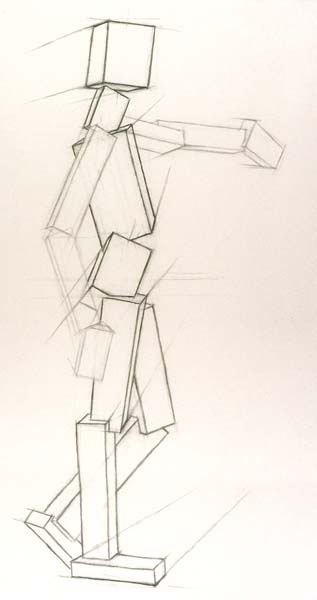
e.g ‘draw a cube’
*By ‘quitting‘ I mean both ie
1. practically (attempted two three times to draw a cube, couldn’t do it (or made a hash), so quit forever)
and
2. mentally (‘I just can’t‘, ‘I give up’, ‘I’ll never be able to’ etc)
Pretty much sums it up. I’m horrendous at maths too. I get there, just very slowly. Not a disability, my brain just doesn’t work that way is how I see it. Everyone has talents and weaknesses whether they’re disabled or not.
I'm the opposite (well sort of). My English skills are appalling, I was 25ish before I could (mostly) reliably use the correct version of their/there/they're, I still can't really work out when you'd use whose and not who's, and the fact there's two ways to spell Whether/Weather is a secret only reviled to me in my late 30s. In fact, the ONLY, and I do mean ONLY way I can spell "secret" is by googling Top Se and seeing what the first suggested answer it. I just did it now. I've been doing it for years, and I still can't get it close enough for spellchecker to fix it.
I was diagnosed with Dyslexia when I was about 9, looking back I'm not sure they got it right. They caught onto the fact I tended to pick out the shape of words, rather than the actual letters but I sometimes wonder if I'm just too impatient. I read at a really high rate, just really badly. As I've gotten older I've realised I've got the attention span of a caffeinated toddler and when most people my age are slowing down, I'm only getting worse.
Maths on the other hand comes easily to me, although ironically I've never learned by times tables, I've got a decent ability to turn a real world problem into a calculation I can solve quickly.
kelron
It also seems more likely that many of the people that don’t succeed in learning music are either happy to carry on at whatever level they achieve, or find a new hobby, rather than talking to a doctor about why they’re struggling.
Absolutely up to this... which is perhaps the moment that got me thinking.
I don't think until the last weeks at at nearly 53 I ever examined why I dropped paleontology.
I still love the subject and spend more time reading academic research around it than most things, I just couldn't get the grades in exams due to my lack of artistic ability and nothing was going to change that.
Erm no.. given I’m dyslexic (by diagnosis rather than life) and I can spell reasonably well just by making an effort and as far as I’m concerned maths is trivial*. OH is a SENCO and according to her I “must have dyscalculia because you never know what day or date it is” … to me it seems like she just has a name for something and wants to assign it. She and the other teachers all had a math problem set by a math teacher they had all spent a week arguing over… it took me longer to write down the proof than the answer. (quite literally instantaneous) yet she say’s I have dyscalculia?
Must try harder. You're missing a couple of s's there....😉
You are not born knowing maths and english just as you are not born knowing how to sing well. Spend the same time on learning singing that you did on maths and english and you would be able to sing.
I disagree. Some people simply cannot hear the things you need to be able to hear.
When I was about 7 or so, my school offered violin lessons. They apparently didn't want to waste their time on tone-deaf people so they had us to a test where we had to listen for differences in pitch between tones and combinations of tones. A bit of a questionable practice, perhaps, but about 2/3s of the kids failed it. I don't think any of us had had any musical tuition.
My wife did violin lessons and was utterly incapable. She just cannot process what she is listening to to be able to repeat or correct it. Same goes for my Mum. My kids have had the same upbringing, but one can sing and one cannot. So something is innate. But because being tone deaf isn't life limiting, they do not have a 'learning disablity' I suppose.
pjay
I was diagnosed with Dyslexia when I was about 9, looking back I’m not sure they got it right.
Yep.... same here.
In fact, the ONLY, and I do mean ONLY way I can spell “secret” is by googling Top Se and seeing what the first suggested answer it. I just did it now. I’ve been doing it for years, and I still can’t get it close enough for spellchecker to fix it.
Ah.... sounds familiar. Indeed I think this is linked to my handwriting.
The second I stop and think how to spell something I'm screwed...if I simply let my hand write it then I seem to be fine.
Some of the words are actually important to me... resto (not googling) and loose stool (not googling)... but if I write these scruffy I can just write them correctly...
db
We don’t know if Dissing is a condition as to my knowledge no one has bothered to investigate, its optional in our society. That’s how I understood the OP’s question.
YES!!!!!
I still can’t really work out when you’d use whose and not who’s
Apostrophes signify one of two things: either possession (Dave's socks) or that something is missing (don't = do n[u]o[/u]t).
In this case it's the second one, "who's" is a contraction of "who [u]i[/u]s". So if you need to use [whose / who's] then expand it out first, does "who is" work in this sentence? If yes then you need who's, if no then it's whose.
Exactly the same rule applies for "they're," it's a contraction of "they [u]a[/u]re." If they are fits in your sentence then it's they're, if not then it's one of the other two.
Must try harder. You’re missing a couple of s’s there….
I don't think I have never worked for a UK company.
In the last several years most of the math(s) has been with non English colleagues.
I got to wondering why for example if you can’t spell or add up it’s a disability but if you can’t draw or understand music it isn’t
Isn’t the drawing thing linked to dyspraxia?
over… it took me longer to write down the proof than the answer. (quite literally instantaneous) yet she say’s I have dyscalculia?
Sounds like you should be having the conversation with your wife about her desire to label you (or her attempts at banter).
but the truth is I’m just crap at drawing and nothing would ever change that.
you might never become divinci, like I might never become wordsworth but just because you won't be some sort of genius at it doesn't mean you won't get better with practice, coaching, repetition and the right motivation. It would be a "disability" if there was some physical/neurological process preventing you from translating what you see to lines on paper.
I genuinely believe I am to all intents and purposes tone-deaf - I can tell if a note is higher than another (provided far apart) but I have no sense of whether someone singing is in tune or not. I could believe this is a "disability" for my ability to sing; but it wouldn't stop be learning to read or play music if I was so inclined.
even back in the 90’s I could have asked for extra time in exams because I was diagnosed dyslexic … but I was marked down for poor drawing in paleontology.
Extending the time would have made sod all difference…. or just made it worse even.
Yet even back pre-digital cameras existed… being able to draw was not “necessary”
But it probably was necessary for a paleantologist. Just as being able to effectively communicate in pictorial form is important for biologist etc. They don't need to be artistically accurate, just get the message across.
Be completely truthful, were you ever taught/engaged in study with the fundamentals before quitting*?
Take drawing as the example?
e.g ‘draw a cube’
*By ‘quitting‘ I mean both ie
1. practically (attempted two three times to draw a cube, couldn’t do it (or made a hash), so quit forever)
and
2. mentally (‘I just can’t‘, ‘I give up’, ‘I’ll never be able to’ etc)
Certainly for music ... I SO tried and tried. Music theory is just math(s) so that is easy for me. Playing a instrument... not a chance.
A cube isn't "art" though it's geometry... isometric or plan...
I can draw a car, engine or bike well enough... it's just an engineering/technical drawing.
What would totally defeat me is drawing a recognisable person in the car or on the bike. [I don't mean a good drawing, I mean recognisable so you could tell who it is]
A cube isn’t “art” though it’s geometry… isometric or plan…
I can draw a car, engine or bike well enough… it’s just an engineering/technical drawing.
So you can learn to draw vehicles? But only in a technical sense? I’m trying to get a picture (!) of your methods and what you have so far actually studied at a fundamental level.
I’m ‘artistic‘ (music, sculpture, video, painting, visualising, conceptual etc etc) but not very good at learning fundamentals/discipline/basic drawing/music theory, in fact any cumulative fundamentals - because I have an attention disorder. So I have to work mega-hard at concentrating (at required level) on something for longer than a few minutes. Much longer and I begin to feel nauseous and like a cat trying climb out of a bag. I can switch tasks. I can hyperfocus on ‘research’ But the act of staying on task is the most frustrating thing for me. It was the same at school. So my learning ability is compromised and always has been.
But back to drawing...
Spend the same time on learning singing that you did on maths and english and you would be able to sing.
Nope. My Dad was in the choir at school, he's got perfect pitch, he's been a professional musician his entire life. My Mum was a music teacher and a pianist.
So naturally I was around music from a very early age. In my head, I can "hear" more or less any tune I want perfectly. I cannot sing it or hum it to save my life, I have zero pitch skill - I can, with difficulty, distinguish between a major and minor key.
Music WAS properly taught at my schools; in fact my secondary school had an excellent reputation for it and we did music theory and various instruments from the dreaded recorder to keyboard plus all sort of options and lessons.
My Dad took me to choir at the local church I think 3 times before realising that I was a) shit, b) not getting any better and c) hated it. There was literally no way I was ever going to improve at it, I cannot sing. Even now if I join in a rendition of Happy Birthday, I am so horribly out of tune and appalling that every dog for miles around will be howling.
Not sure if that's a disability or literally zero talent / skill in that area. I can identify with all the comments above about music / singing / playing instruments...
I can draw a car, engine or bike well enough… it’s just an engineering/technical drawing.
What would totally defeat me is drawing a recognisable person in the car or on the bike.
For what it's worth, I'm not dissimilar. I've got the brain for spatial awareness so I can easily visualise eg a wireframe cube. I could make a reasonable fist of putting that down on paper, maybe even applying perspective if I gave it a bit of thought. Anything "artistic" though and I wouldn't have a clue. I couldn't draw an animal where you'd look at it and go "yeah, that's a dog" with any confidence.
But it probably was necessary for a paleantologist. Just as being able to effectively communicate in pictorial form is important for biologist etc. They don’t need to be artistically accurate, just get the message across.
But is hasn't been since half decent cameras were invented...certainly over a century.
The microscopes are/were all connected to cameras...
you might never become divinci, like I might never become wordsworth but just because you won’t be some sort of genius at it doesn’t mean you won’t get better with practice, coaching, repetition and the right motivation. It would be a “disability” if there was some physical/neurological process preventing you from translating what you see to lines on paper.
So let me preface this by saying as far as I'm concerned there is a physical/neurological process but lets put that aside.
db has REALLY REALLY understood and he/she is probably explaining better than I am.
Some people will never find math(s) easy... this is recognised. I personally find it obvious, I find it hard to comprehend why some people can't just see the answer or solution.
For me what is obvious seems challenging to some people but I can acknowledge they just have a disorder of some sort even if there is no name for it.
Sounds like you should be having the conversation with your wife about her desire to label you
But that aside .. what I see is she goes on lots of training and the point of the training seems to be labelling people with specific known conditions in order to be able to help them.
p7eaven
So you can learn to draw vehicles? But only in a technical sense? I’m trying to get a picture (!) of your methods and what you have so far actually studied at a fundamental level.
I’m ‘artistic‘ (music, sculpture, video, painting, visualising, conceptual etc etc) but not very good at learning fundamentals/discipline/basic drawing/music theory, in fact any cumulative fundamentals – because I have an attention disorder. So I have to work mega-hard at concentrating (at required level) on something for longer than a few minutes. Much longer and I begin to feel nauseous and like a cat trying climb out of a bag. I can switch tasks. I can hyperfocus on ‘research’ But the act of staying on task is the most frustrating thing for me. It was the same at school. So my learning ability is compromised and always has been.
Cougar and Crazy-legs hit it ... so for me music theory is simple, it's just math(s).
I don't need to focus because to me it is obvious.
Regardless of practice though I can't translate that to practice.
But back to drawing…
For what it’s worth, I’m not dissimilar. I’ve got the brain for spatial awareness so I can easily visualise eg a wireframe cube. I could make a reasonable fist of putting that down on paper, maybe even applying perspective if I gave it a bit of thought. Anything “artistic” though and I wouldn’t have a clue. I couldn’t draw an animal where you’d look at it and go “yeah, that’s a dog” with any confidence.
My spatial awareness has always been quite good and decades of working in 3D has probably made it better. I can look at a map and pretty much memorise it.. draw a block diagram etc.
Mechanical stuff just fits together ... because it has a function I understand BUT I'd be happy if you could tell it was a dog rather than a cat...
If I drew a sheep/goat it would be a sheep goat just because it has horns... or a deer antlers.
If I missed out the horns/antlers etc. (doe/ewe) I'd be very pleased if you guessed the species.
Mechanical stuff just fits together … because it has a function I understand BUT I’d be happy if you could tell it was a dog rather than a cat…
If I drew a sheep/goat it would be a sheep goat just because it has horns… or a deer antlers.
If I missed out the horns/antlers etc. (doe/ewe) I’d be very pleased if you guessed the species.
Did you ever study the fundamentals of anatomy in drawing? How (in drawing) did you learn how to construct a car? For instance? From the start?
You appear to have fallenen into the common trap of conflating dyscalculia and dyslexia with being shit at maths and spelling, rather than looking at what they actually entail. A move chiefly driven by ignorance, and people who are shit at spelling and maths trying to seek an easy way out.
This +1
I'm an engineer (an actual engineer with letters after my name to prove it, not a technician, machinist, installer, welder, fitter, or repairman). But I cannot spell, it's just a complete inability for me. I had to go to the learning support portacabin for remedial lessons for years until they gave up. I ended up in the lowest 'set' for English one up from the bottom tier where you just weren't expected to pass until a teacher figured out I was actually good at the subject matter, I was just never likely to get that 10% of the marks given for spelling.
Likewise, I got 1st's in both semesters of engineering mathematics but cannot remember formulas for presumably the same reasons. I can derive Bernoulli's equations for flow through a venturi but ask me what they are off the top of my head and all my mind's eye sees is a grey fuzzy blank in the shape of an equation.

Apostrophes signify one of two things: either possession (Dave’s socks) or that something is missing (don’t = do not).
In this case it’s the second one, “who’s” is a contraction of “who is”. So if you need to use [whose / who’s] then expand it out first, does “who is” work in this sentence? If yes then you need who’s, if no then it’s whose.
Exactly the same rule applies for “they’re,” it’s a contraction of “they are.” If they are fits in your sentence then it’s they’re, if not then it’s one of the other two.
Ah Dude, you might as well explain the workings of the Pancreas to a diabetic. It won't help them produce enough insulin.
You appear to have fallenen into the common trap of conflating dyscalculia and dyslexia with being shit at maths and spelling, rather than looking at what they actually entail. A move chiefly driven by ignorance,
Things have moved on - the academically respectable view is that:
there is essentially no difference between a person who struggles to read and write and a person with dyslexia – and no difference in how you should teach them.
Controversy summarised here: https://www.theguardian.com/news/2020/sep/17/battle-over-dyslexia-warwickshire-staffordshire
was also a rare public skirmish in a conflict that has been quietly fought over the past two decades in classrooms, lecture theatres, select committee hearings and special educational needs tribunals across Britain. On one side an emerging collective of academic and local authority educational psychologists, pushing for educators to drop a definition of dyslexia they view as scientifically vague and socially exclusionary. On the other dyslexia advocates, some academics and the parents of dyslexic children, who vigorously defend dyslexia as a meaningful concept that has helped millions of children access support
Not sure if that’s a disability or literally zero talent / skill in that area.
With the opportunities you have had to be musical in some way it is probably a disability of some sort but like others have said being musical is not seen as a requirement so the scale of whatever this disability is will not be known. Absolutely zero talent (proven by lots of opportunities) could equate to disability.
Did you ever study the fundamentals of anatomy in drawing?
How (in drawing) did you learn how to construct a car? For instance? From the start?
I didn't learn I just do it.. I had a mate when I was doing my A levels and he could draw a photographic likeness of anyone... he didn't learn it he was just born that way.
Ah Dude, you might as well explain the workings of the Pancreas to a diabetic. It won’t help them produce enough insulin.
See, I don't get this. And please believe me, I don't mean this in an unkind way, I'm just trying to understand.
I know of course that some people have, well, learning difficulties. I understand that some people have issues like TINAS describes, and I've heard dyslexic people describe their condition as akin to letters jumping around on the page. I understand that many people just have bogie words, I have plenty of those too (the spelling of desperate and separate legged me up for years because in my accent at least they're homophones).
But this... you have the knowledge that whose and who's are two different words with two different meanings, and the self-awareness to acknowledge that you confuse them, which puts you way ahead of many who struggle with written English. But there's a rule to work it out. Swap the ' for an i, does it still make sense? I genuinely can't see how that could be problematic.
I mean, take "who's" out of the equation, would you confuse the use of "whose" and "who is"?
Ah Dude, you might as well explain the workings of the Pancreas to a diabetic. It won’t help them produce enough insulin.
good point.... but that's kinda my question.
Why don't we berate the diabetic for not keeping up when they are hypoglycaemic or the dyslexic that struggles to spell but if you can't draw or play an instrument it's because your not f***ing trying?
I didn’t learn I just do it.. I had a mate when I was doing my A levels and he could draw a photographic likeness of anyone… he didn’t learn it he was just born that way.
Interesting. I’m trying building a picture of not just how SteveXC learns to do things, but also a picture of your understanding of what the process of ‘learning‘ itself is.
So you never formally studied drawing? Sorry to press the point yet it’s key to what I’m trying to understand about what you’re saying.
By drawing I mean:
Form
Perspective
Anatomy
Values & lighting
Composition
1. Did you study any single one or any number of those fundamentals?
2. If so, for how long and by which school/method/guided/unguided and to which level?
Anecdotal stories of magical newborns who can seemingly photocopy 3D faces and replicate at scale as 2D images with a pencil are not TOO important at this point of my enquiry. But I’ll return to that. 😉
See, I don’t get this. And please believe me, I don’t mean this in an unkind way, I’m just trying to understand.
So I was told by a friend that people who like coriander tend to like grapefruit and people who dislike it tend to find quinoa has a bad taste.
It may or may not be true but as someone who loves coriander and grapefruit and can barely discern a taste in quinoa (let alone anything to hate) I still understand that some people just taste differently.
It's a bit like say how do you know that everyone perceives say Red the same?
We might acknowledge colour blindness because it has a name and is diagnosed but that isn't the same as everyone having the same perception of colours?
Interesting. I’m trying building a picture of not just how SteveXC learns to do but also a picture of your understanding of what the process of ‘learning‘ itself is.
You asked if I'd studied the fundamentals.
A more correct answer is I didn't study how to draw engineering parts or do maths.. I just learned it.
To me the question is a bit like asking "did you study the fundamentals of your regional accent?"
The answer is sort of "yes but not until I had actually learned it".
I happened to learn basic Norwegian and Danish many years after developing/learning my accent.
Studying that was fascinating but purely of academic interest. It didn't help me speak Northern... just understand where words came from and changed.
Despite being "artnostic" I can recognise a Caravaggio or pre-Raphaelite painting but it doesn't help me draw or paint and I can define mathematically the difference between a blues minor and a major cord... I can work out where to stick a capon but it doesn't actually make me able to PLAY.
You asked if I’d studied the fundamentals.
A more correct answer is I didn’t study how to draw engineering parts or do maths.. I just learned it.
So how did you learn (say) perspective and form? Or are you ‘winging’ it still?
You seem evasive to the terms ‘study’ and ‘fundamentals’.
To me the question is a bit like asking “did you study the fundamentals of your regional accent?”
Oh you studied it alright.
You studied and learned your regional language and dialect. From scratch. You had to learn it. You studied it from birth, just not in a structured/formal fashion. You spent your formative years (?) soaking that stuff in, minute by minute, day by day, year on year. Did you think it was magic? Listen, copy, repeat, listen, copy, repeat. Repetition, repetition, repetition, repetition. 1000s of hours ‘study’. You learned skills. Language is a skill. What if (also/instead) you’d been studying the fundamentals of drawing for, say, even 500 hours? How do you think that would effect your drawing skills?
If I say/do this then I get this result.
*edited.
I'm reminded of Victoria Wood's line: "There was no such thing as dyslexia in those days, you were sat at the back, with raffia."

