UPDATE: CLASSIFIEDS section refreshed, redesigned, searchable: Go take a look
Better tell the Chinese, they have been rushing to do it. In fact co-incided with their growth acceleration. Quick, it's a big mistake. Re-nationalise before its too late.
squirrelking - Member
I know the difference between GDP and GNI is skewed which is why I'm so in favour of nationalisation
So nationalise the oil assets, nationalise Diageo and Pernod Ricard's assets. Brilliant
Is that the same Chinese who's nationalised companies are investing in our new nuclear build? Hmm.
Nationalisation allows us to invest in capital projects that private investment won't touch because the return isn't quick enough without serious incentives.
Actually now I have no idea where this is going.
I can give you a clue :
teamhurtmore - MemberAnd particularly good to have French enegry companies invest in facilities that will generate returns well below their cost of capital. More fool them and we are the winners as we allocate our resources to better returns. Welcome those muppets with open arms......
From past threads I can tell you that THM will argue that EDF, the largest electricity supplier in the world, are a bunch of suckers getting shafted by UK consumers.
^lol
As said:
And particularly good to have French enegry companies invest in facilities that will generate returns well below their cost of capital.
What, may I ask, are you basing such profound bovine effluent upon?
He - back to the topic - will be suggesting nationalising education next and we know what a great job governments do in tha field too. Oh hang on...
He - back to the topic
Sounds more like "let's change the topic" to me.
But anyway........if you want to go back...........I was under the impression that during the Jurassic era everything was privatised. You know different THM?
This is the crux of the whole nationalisation problem. People complain that nationalised companies where in efficient and didn't work, well aye, you give something a monopoly on something and that tends to happen. I don't understand why we don't allow state owned companies to work in the market, so that they have competition.ernie_lynch - MemberBTW it's not widely known that when the legislation for the privatisation of the railways was drawn up there was a clause which specifically excluded BR from any franchise tendering.
Under those conditions there's no reason why nationalisation couldn't work imo. If it fails, well there's the market waiting to come in and take over..
*cough*East Coast*cough hack*British Energy*splutter*
But anyway, THM still hasn't answered the question.
Joe, the principle of contestable markets is kind of on those lines - ok not exactly p, but close. far more sensible.
Here you go squirrel - better alternatives. Simple enough?
Bonne nuit especially to all those lovely people at EDF. Now how do we close down Fettes.......
Is he a sinn fein/ira apologist then?
1) No
2) Better than being a Blair apologist like the other candidates. He's killed a lot more people.
Nationalisation allows us to invest in capital projects that private investment won't touch because the return isn't quick enough without serious incentives.
Hmm, EDF, Nuclear power station building in the UK, with extra Chinese "investment", getting a special rate on their returns as an incentive to build = UK population shafted once again.
People complain that nationalised companies where in efficient and didn't work, well aye, you give something a monopoly on something and that tends to happen. I don't understand why we don't allow state owned companies to work in the market, so that they have competition.
Under those conditions there's no reason why nationalisation couldn't work imo. If it fails, well there's the market waiting to come in and take over..
The big issue there being that you have to ensure a level playing field - so the government has to recoup loans made to nationalised industries for capital investment at market rates, which takes away a large part of the advantage of lower costs available to the nationalised sector.
The other bid issue to consider is what happens when those nationalised industries [b]do[/b] get into trouble, as the temptation is there for government to meddle to prevent large scale job losses etc. which they inevitably can't resist the temptation of.
Little know example being the Coal industry under Nationalisation, which in the Sixties had huge government debts (£ hundreds of millions) from the cost of purchase written off because of the costs of servicing the debt, then went on to have the costs of restructuring in the sixties met by government, and then more debts written off in the seventies.
Well the Eu has very clear objectives in terms if national freight and passenger markets - open them up to as much cross-border competition as possible. So a nice little conundrum for Jeremy to get his head around.
Details, details....
Details, details....
What's that reference to THM.........your inability to answer direct questions ?
Or having slept on it have you now thought of an explanation to explain why it is ok for French and German state owned companies to tender for UK rail franchises but not for UK state owned companies to do so ?
You might like to patronize Corbyn with comments like [i]"So a nice little conundrum for Jeremy to get his head around"[/i] but it's you that can't answer simple questions.
The other bid issue to consider is what happens when those nationalised industries do get into trouble, as the temptation is there for government to meddle to prevent large scale job losses etc. which they inevitably can't resist the temptation of.
Didn't stop them bailing out the banks did it?
Little know example being the Coal industry under Nationalisation
There are loads of modern examples of the govt being involved in propping up businesses whether it's bank bailouts or subsidising low pay through tax credits, workfare etc. I fail to see why a modern model of state ownership couldn't work. Is it really beyond the brightest minds in the treasury and BIS to figure out some way of common ownership of key infrastructure where operation and investment can be planned strategically without private investors creaming off the profits?
.....without private investors creaming off the profits?
WTF?
WTF?
Indeed. Bit of a radical idea. I'm obviously a communist. 😀
Yes Diaz, but in addition to championing cross-border competition in the rail market the EU have strong views on state aid too, especially if it distorts competition. So two powerful EU forces against rail nationalisation.. Still that's all in the details that politicians like to gloss over as we saw with a disregard for how capital markets (pre-emptive rights, takeover panel etc) work in practice. Still if you view them merely as casinos, you might be forgiven for not knowing how they work.
Scratches beard in confusion.....
Still if you view them merely as casinos
Super Casino's even.. <cough>Andy Burnham</cough>
Surely anything's got to be better than just to continue handing billions of pounds a year of taxpayers money to grinning, subsidy-hoovers, like....
[img] 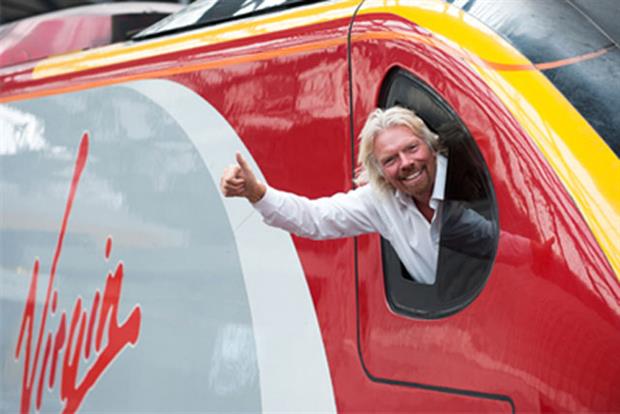 [/img]
No wonder he's grinning, as he buggers off to build himself another space ship. This is the man who referred to the West Coast Main line - the private monopoly run be himself - as [i]'a licence to print money'[/i]
All these people saying that what Corbyn is proposing is tantamount to communism, should note that every survey of peoples attitude to the railways always has a massive majority, even among Tory voters, saying they should be returned to public ownership
politicians like to gloss over
He says after completely glossing over the question why it's ok for foreign state owned companies to tender for UK rail franchises but not for a UK state owned company to do so, or why it's "Jurassic" not to want our infrastructure to be in the hands of foreign state owned companies.
There are loads of modern examples of the govt being involved in propping up businesses whether it's bank bailouts or subsidising low pay through tax credits, workfare etc. I fail to see why a modern model of state ownership couldn't work. Is it really beyond the brightest minds in the treasury and BIS to figure out some way of common ownership of key infrastructure where operation and investment can be planned strategically without private investors creaming off the profits?
Well it certainly was in the 60's 70's and 80's. British Leyland, British Steel, British Coal, British Telecom etc etc etc - all almost total disasters either for the taxpayer or for the consumer.
It amazes me how much support there is on here for public ownership when its been so comprehensively discredited over the last 30-40 years. Did you not live through the 70s?
As for Corbyn, he comes across as a likeable fellow, but more than 50% of the English electorate voted for parties further to the right than the Labour party under Ed. Corbyn may bring back some cultural purity to Labour, but I can't see how he'll bring electoral success.
Did you not live through the 70s?
You realise that nearly 30% of the electorate didn't, right? Not to make you feel old or anything.
British Leyland, British Steel, British Coal, British Telecom etc etc etc
AFAIK Corbyn is not suggesting that the car, steel or communications industries be re-nationalised. He's suggesting that the two industries where it has manifestly failed, rail and utilities, should be brought under some form of public control/ownership. And whilst I don't know the detail, I'm pretty sure he's talking about something a little more refined and modern than the old model of handing out state subsidies to failing industries.
The essential difference in those two industries are that they are essentially private monopolies, or effectively cartels.
In telecoms, car production etc you have genuine competition which drives development and keeps prices to consumers down - the holy grail that global capitalism always quotes. Try saying that about utilities or railways with a straight face.
Did you not live through the 70s?
I managed 2 years and 1 month. I wasn't politcally aware at this point! 😆
It's still not the point really though, because 1 form or state ownership failed/was deliberately sold off to cronies doesn't not mean that a viable model could not be formed.
Another idea, why does state ownership have to involve monolithic bohemoths? Why not different small state companies competiting with each other? (simple idea, but you get the point.)
I'm not against the markets, infact I think competition is necessary but when talking about renationalising, it'd be daft not to take into account the good bits of privatisation and develop the idea of state ownership further.
Giving everything to the markets has clearly failed if wealth equality is a consideration. Actually you could say it's the reason for the current shitfest that we are in. Put it this way if the privateers weren't hoarding so much cash and assets and it was in circulation the world economy would be in a much better position. Money is no good to anyone if it's tied up.
I wouldn't say the utilities have failed because of privatisation, they may be struggling due to the way they are full of useless dicks that don't know there arese from there elbow and have no idea about how to operate efficiently. I have seen first hand the most unbelievable waste of money from the nuclear industry to the gas and electric, National Grid was unbelievably shit and the people cretinous, but these are simply the people that have been there forever and still work in a silo mentality with no appreciation of the waste their actions are causing.
Utilities needs a massive kick up the arse but public ownership will ruin all the work that has been done to bring them in to some sort of responsible organisations.
I feel old anyway. But those not living in those times loose some of the context, I fear.You realise that nearly 30% of the electorate didn't, right? Not to make you feel old or anything.
And whilst I don't know the detail, I'm pretty sure he's talking about something a little more refined and modern than the old model of handing out state subsidies to failing industries.
I'd heard he was talking about [url= http://www.independent.co.uk/news/uk/politics/jeremy-corbyn-to-bring-back-clause-four-contender-pledges-to-bury-new-labour-with-commitment-to-public-ownership-of-industry-10446982.html ]bringing back Clause IV?[/url]
no he wasnt talking about bringing back clause IV, he talked about similar but different in principle
I'd heard he was talking about bringing back Clause IV?
A total an utter misrepresentation by newspapers who are showing their true colours. What he actually said, if you're capable of seeing past new labour propaganda is:
[i]'I think we should talk about what the objectives of the party are, whether that’s restoring the Clause Four as it was originally written or it’s a different one, but I think we shouldn’t shy away from public participation, public investment in industry and public control of the railways.'[/i]
Which is a long way from 'I'm going to bring back clause IV'.
British Leyland, British Steel, British Coal, British Telecom etc etc etc - all almost total disasters either for the taxpayer or for the consumer.
Well lets take two of your four examples, we'll ignore "etc etc etc". Firstly British Leyland. British Leyland is an exceptionally bad example of a nationalised industry as it was only ever part-nationalised, and that was only for half a dozen years or so years. If BL is any example of failure it is above all else an example of the failure of private enterprise and its lack of strategic investment.
British Telecom, or Post Office Telephones as it was before it was being prepared for privatisation, poured massive amounts of money into the Treasury coffers. If it hadn't been privatised it would be still doing so today - helping to reduced the deficit, instead we'll have to pay more in taxes (the tax burden was lower in the 1970s)
Although I've ignored coal and steel it's worth pointing that UK coal consumption is still very significant - about half that of 30 years ago. The difference is that it is pretty much all imported now, even though the UK has coal far in excess of its needs.
Is that the same Chinese who's nationalised companies are investing in our new nuclear build?
they're not nationalized companies (companies which were formerly private owned but then acquired by the state). they're state-owned enterprises that were always state-owned.
btw you need to pay compensation if you nationalize private property. nothing comes for free. unless you're a rail franchisee, in which case I suppose you get loads of free money...
Corbyn debates are such a barrel of laughs - the China model being a great example. Here is China accelerating its transfer of equity stakes in SOEs recently - not just because they will (according to the architect of the new plan and poss next central bank governor) be better run but because it will raise revenue for the government.
And we are having a laugh over exactly the opposite. Still it is the holiday season and this sure is amusing, good job none of it matters/is important.
Even today the Chinese market had its biggest gain in a (volatile) month due to reports to restructuring SOEs
I am not sure which is funnier this, or listening to Chelski fans singing along to the tune of the red flag!!!
Kona - and if Jermey is going to use taxpayers money to buy up these stakes, not a smart idea to announce it in advance is it? He'll learn in the end. Plenty of policians have been burnt by the markets before. He won't be the last!
I am not sure which is funnier this, or listening to Chelski fans singing along to the tune of the red flag!!!
I think the funniest thing is you not wanting to talk about EDF, the largest electricity supplier in the world, instead dismissing them as, quote : [i]"muppets"[/i].
[url= http://www.theguardian.com/politics/2015/aug/10/anyone-but-jeremy-corbyn-labour-leader-alastair-campbell ]Another voice from the war criminal wing of the labour party. [/url] Do they not realise that every time they open their mouths the likelihood of Corbyn winning increases?
Never mind Clause 4,would you vote for a man with this much steerer on show? Has he never seen Rule #45 ? http://www.velominati.com/the-rules/comment-page-8/
[img]  [/img]
Private Eye captured the humour of the moment pretty well
As for Corbyn, he comes across as a likeable fellow, but more than 50% of the English electorate voted for parties further to the right than the Labour party under Ed.
?!?
Turnout was only 66.1% -are you saying labour, greens, plaid cymru and snp only got no more than 16% of the vote? 😯
Has he never seen Rule #45 ?
That's Corbyn's appeal.
He doesn't care about Rule 45.
[quote=nick1962 said]Never mind Clause 4,would you vote for a man with this much steerer on show?
Indeed, shocking.
I see he rides a Trek.
George Bush Jr also rides a Trek.
Makes you think, doesn't it?
Not really they were all the rage many years ago. Pre-Cambrian stems or something like that..,,c
George Bush Jr also rides a Trek.
And didn't Lance?
Sorry. More than 50% of those who voted in England (where nobody voted for the SNP.)?!?
Turnout was only 66.1% -are you saying labour, greens, plaid cymru and snp only got no more than 16% of the vote?
It is also an example of failure of public investment. All it ever did was loose public money. In that respect its not a bad example, its a typical example.Firstly British Leyland. British Leyland is an exceptionally bad example of a nationalised industry as it was only ever part-nationalised, and that was only for half a dozen years or so years. If BL is any example of failure it is above all else an example of the failure of private enterprise and its lack of strategic investment.
But it was a disaster for the consumer. No choice, everything had to be rented, you couldn't attach your own phone to their system. Ok there have been technological advances, but privitisation was good for consumers in telecoms.British Telecom, or Post Office Telephones as it was before it was being prepared for privatisation, poured massive amounts of money into the Treasury coffers. If it hadn't been privatised it would be still doing so today
They were troubled industries on a world scale, admittedly, but public ownership did nothing to help them and cost the country.Although I've ignored coal and steel
and it will still be there if it ever becomes economic and environmentally acceptable to dig it out of the ground.it's worth pointing that UK coal consumption is still very significant - about half that of 30 years ago. The difference is that it is pretty much all imported now, even though the UK has coal far in excess of its needs.

