UPDATE: Reviews section refreshed, redesigned, searchable: Go take a look
AH, the NCR Century 100.. computing when you needed to keep a fire extinguisher handy!
GUIs and windowing systems for me. Seem like they've been around for ever, but where would we be with out Xerox.
I started my professional coding career using an 8 bit assembler language to code business apps like ledgers and costing systems.
tbh, everything after that has seemed like a major innovation.
"System 25 also pioneered in ICL use of Winchester-technology (35MB) fixed discs"
[b]35 whole megabytes[/b] and they weren't on removable platters like the older systems we supported where you could destroy a database by trying to carry the disk platters across the machine room to the cupboard whilst a bit drunk (ahem).
[img] 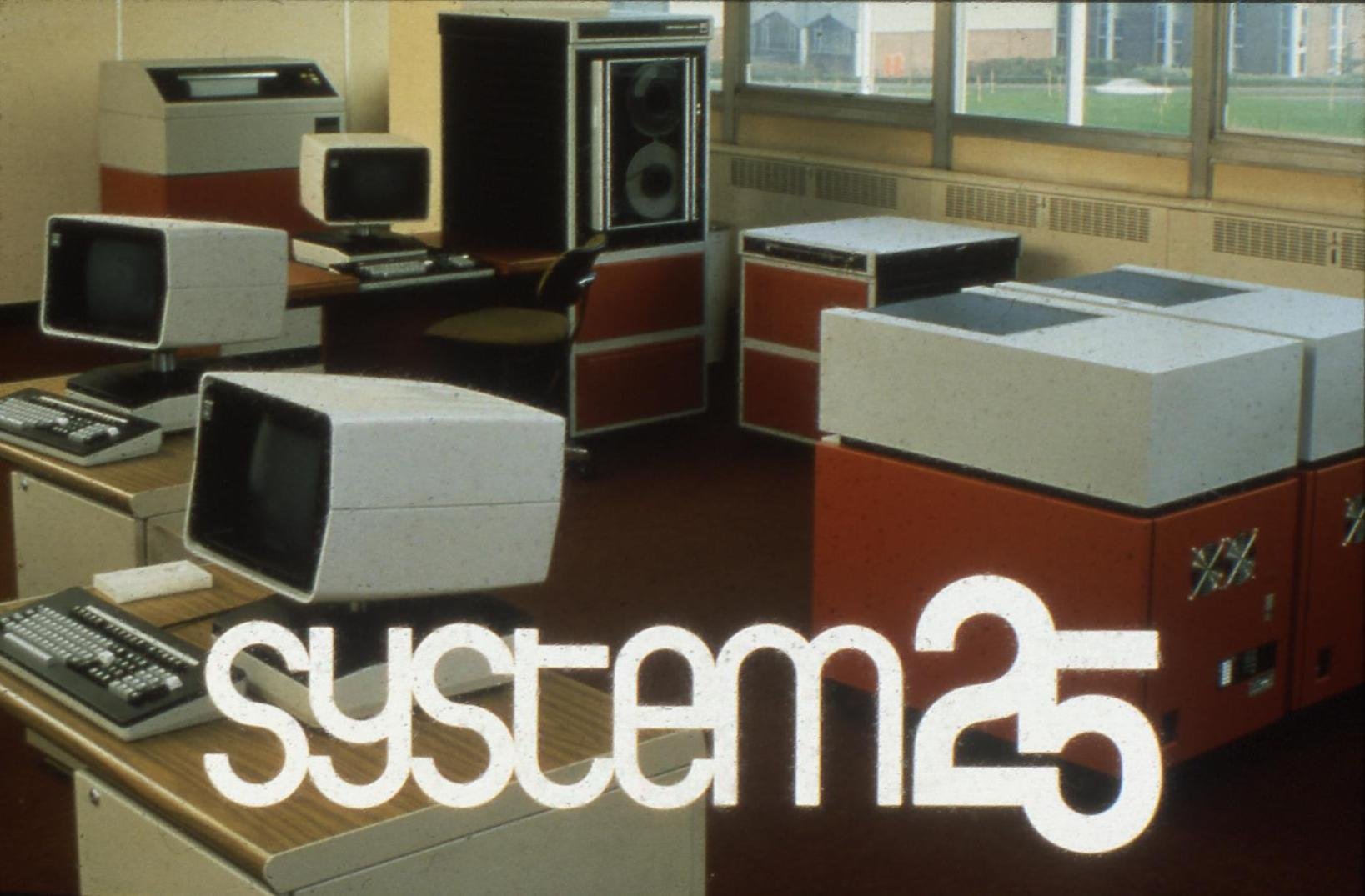 [/img]
[edit] those big cabinets at the front - they're the hard drives.
where would we be with out Xerox.
Someone else would have invented it sooner or later (or something similar, perhaps even better) I expect.
CraigW - Member
USB flash drives.
A lot easier for moving files around, instead of slow/unreliable floppy disks or re-writable CDs
I was going to say this myself, but it bears repeating. The idea that in one, tiny little plastic thing I can carry a decent-sized library together with all my work, and plug it effortlessly into any computer wherever I am, is not so much amazing as just infinitely usable.
So for me, it's got to be flash memory and what that's made possible.
[i]The idea that in one, tiny little plastic thing I can carry a decent-sized library together with all my work, and plug it effortlessly into any computer wherever I am, is not so much amazing as just infinitely usable. [/i]
There's quite a large proportion of the sort of people who have to install, maintain, take backups and ensure security on systems who would change the word 'usable' to 'scarey' in that sentence and not feel the need to change anything else in it.
I think it has to be the iPhone for me. There are loads of good suggestions up there, but I don't think anything has transformed computing from a workplace/technical paradigm into such broad consumer-adoption like the advent of smartphones and subsequent mobile devices. The fact that Joe Bloggs consumer has levels of exception beyond what most technology firms can actually deliver is testament to that.
On the software side - Desktop publishing revolutionised the Print industry.
Things that took lots of skill and many hours with camera and film in a darkroom could be done in seconds or minutes.
Long file names. Was a headline feature of Windows 95, but I know Macintosh System 6 (at least) already had them. Probably RiscOS and some others too.
Suddenly your "RPT1_1993.doc" could be "Accounts Report Jan to April 1995". Pretty big usability improvement.
Actually RiscOS has a few other interesting ahead-of-their-time type things as well:
- System wide font anti-aliasing (therefore realistic WYSIWYG rather than bitmap on screen, TTF on print as everything else had)
- app directories (which MacOS now uses to support multiple-architectures)
- file metadata rather than filename extensions to determine types
- UI driven almost entirely by drag and drop
Actually RiscOS has a few other interesting ahead-of-their-time type things as well:
Amiga OS had a lot of that, and pre-dates it. That was certainly ahead of its time.
American Government \ Military making the Internet available, initially to the scientific community and subsequently to the world at large.
http (as already mentioned) and the mosaic browser.
Windows GUI (think IBM X windows was the first, though probably wrong) but Microsoft obviously stole the show.
Integrated Office suite (Being able to cut and paste from documents to spreadsheets etc) rather that a disparate collection of applications from various providers whereby you had to export, massage and import data (if it was possible at all).
Digital Cameras (and phones with Cameras)
Tablets
This far in and finally a mention of RISC. Sadly no mention of all the British-designed ARM chips which make our modern e-world possible.
Google Acorn Electronics or Acorn RISC Machine.
Those of you old enough / been reading the obsolete computer thread might remember BBC Micro & Acorn Electrons.
Oh for our British pluck and 'cottage industries'.
Pissed off my Dad didn't buy the Acorn shares he was offered in ooooh 1985-6. Instead went of to Honeywell. What would that be worth today? Like early shares in Msoft or Apple.
Glad my Dad is still about after a fairly big heart scare last year.
American Government \ Military making the Internet available, initially to the scientific community and subsequently to the world at large.
PMSL / Spat G&T out at that one laddie!
CERN made what you now know as the internet available.
Expecting DARPANET / ARPANET / FOIL HAT WEARERS along any moment
Read history Boy! If you cannot read history suggest Wikithingy Tim Berners-Lee, CERN internet development. Fer Firks sake - stuff done at CERN is shared - that's one of it's principles - That's interesting. Let's tell folks.
Oh wait - it was made from reverse-engineered alien technology kept in hanger XX { not allowed to tell} and we never went to the moon. Phew glad my foil hat is on.
Come on, it's UNDO isn't it? I could take or leave most of teh rest but life definitley got better with undo..
I used to laugh back at ANSYS back at uni due to its totally backward sans-undo interface.
Fast forward five years and most of my working day is spent using the same software. Not quite so funny now...
MacBook Air – it lasts a working day without top-up juice 🙂
Appreciate not up there with http, but it makes a big difference to my working day.
Comic Sans I reckon. A font that was truly appropriate and usable for every context. 😉
mrblobby - Member
Actually RiscOS has a few other interesting ahead-of-their-time type things as well:
Amiga OS had a lot of that, and pre-dates it. That was certainly ahead of its time.
Yeah definitely, Amiga workbench was seriously impressive for its day. But which of those features did it have?
- System wide font anti-aliasing (therefore realistic WYSIWYG rather than bitmap on screen, TTF on print as everything else had)
Not until after RiscOS AFAIK
- app directories (which MacOS now uses to support multiple-architectures)
Maybe, not sure?
- file metadata rather than filename extensions to determine types
Maybe, not sure?
- UI driven almost entirely by drag and drop
Yes but AFAIK not to the extent of RiscOS where for example, you used drag drop to save files by directly dragging them to the folder you wanted (no file browser in the save window)
I did like the fact you could drag the entire workbench out of the way to get back to your game or app running underneath. Great bit of UI which made the most of how the hardware worked.
CERN made what you now know as the internet available
Don't be silly. Berners lee invented http, there's a lot more to the internet than that, and there was plenty going on on it before it was invented.
Comic Sans I reckon. A font that was truly appropriate and usable for every context.
Only ever to be used if you are an eight year old girl writing about unicorns. 👿
berners-lee asked our boss to write a http editor (we already did desktop hypertext editor).
He was turned down ;0)
...so Mosaic was born..
Risc OS (and Arthur before it) had the task bar way before Windows 95.
As for Acorn and ARM history and their battle with Sir Clive, worth a watch and chuckle...
[url= http://www.bbc.co.uk/programmes/b00n5b92 ]Micro Men[/url]
Not on iPlayer but YouTube has it currently

