and there are plenty of Christian scientists so it can certainly co-exist. Where the wheels come of is when the fringe Xtians such as Creationists assert that science is wrong because god
So to summarise then - creationists are nutters. Is that our consensus?
Which brings us back to how 'He' came to being.
A time traveller, he created himself, his time machine and accidentally the conditions for the big bang. Whoah. Is that the plot of that Dean R Koontz book by any chance?
Is it possible that there is a selective pressure that confers reproductive advantage to social groupings? Collective activity with others, and perhaps even the emergence of charismatic leaders might be advantageous to passing on genes.
I was thinking about evolution last night.
Some religious believers like Francis Collins accept evolution, but from a moral perspective, I think I would have trouble believing that a wholly good God would use evolution to run a universe.
It's wasteful, for a start, and involves suffering, death, and is overall an pitiless and ruthless process.
Hence I can understand why there is so much resistance to evolution in the US in religious circles; the rise of modern atheism is almost entirely rooted in the discoveries of Darwin and Wallace.
Is it possible that there is a selective pressure that confers reproductive advantage to social groupings? Collective activity with others, and perhaps even the emergence of charismatic leaders might be advantageous to passing on genes.
Yes, it is the case. Religious communities, especially traditionalist ones, have higher fertility rates than non-religious communities. I believe this is known as "The Religious Shall inherit the Earth" phenomena.
It's wasteful, for a start, and involves suffering, death, and is overall an pitiless and ruthless process.
It's a very 'human' view if the world to think those things are bad, you're applying human moralities and interpretations to things which are ultimately just 'stuff that happens' and then assuming that a god would share those interpretations.
A truely omnipotent being may be so far removed from such concerns that they are of no more importance to him than it is to you how many microscopic bugs you kill every time you wash your bed linen...
I think this fundamentally is my biggest issue with all religions depictions of a god, none of them are truely godlike, they're all bound by human ideals (and have changed over time with them) and reflect human nature (whatever that is). In my eyes this reflects human ego so much to the point that I can only explain religious gods as a human construct.
(Note I refer to religious gods specifically rather than the concept of a 'something' beyond our understanding if the universe)
Anyway I've drifted, I don't believe god and evolution are mutually exclusive. I do believe that the creation story and evolution are mutually exclusive.
That's where this gets blurred because evolution doesn't preclude the existence if a god, but it does preclude belief of the story if creation, which means at least part of the bible. If you can throw doubt in part of the bible, the very basis of the religion then you're on pretty shaky ground believing the rest if it. Which I guess is why some religious people are so defensive and deny evolution as they see it as an attack on the core principle rather than simply an explanation of a process which was previously not understood.
If you can throw doubt in part of the bible, the very basis of the religion then you're on pretty shaky ground believing the rest if it.
Not really, if you understand what it actually is.
so what is it?
I've never seen one before - no one has - but I'm guessing it's a white hole.
so what is it?
Collection of writings and stories that the authorities thought were relevant a very long time ago.
I've never seen one before - no one has - but I'm guessing it's a white hole
[s]so what is it?[/s]
Collection of writings and stories that the authorities thought were relevant a very long time ago.
That might be what you think it is, other people have different opinions... And therein lies the issue.
Ive stayed away from this thread today as its degenerated into an argument about the existence of a deity. Not my intention.
So i have been using my google fu to find out more about this subject. I found this.
One creationist-intelligent design argument goes like this: the human alpha-globin molecule, a component of hemoglobin that performs a key oxygen transfer function, is a protein chain based on a sequence of 141 amino acids. There are 20 different amino acids common in living systems, so the number of potential chains of length 141 is 20to the power141, which is roughly 10to the power183 (i.e., a one followed by 183 zeroes). These writers argue that this figure is so enormous that even after billions of years of random molecular trials, involving all the biochemical material on the ancient earth’s surface, no human alpha-globin protein molecule would ever appear, and thus the hypothesis that human alpha-globin arose by an evolutionary process is decisively refuted
Unfortunately and not surprisingly the only people arguing against evolution are creationist or supporting intelligent design.
So is that a claim that everything on earth evolved apart from humans who were invented by a god?
[quote=trailwagger ]Ive stayed away from this thread today as its [s]degenerated[/s] evolved into an argument about the existence of a deity.
hese writers argue that this figure is so enormous that even after billions of years of random molecular trials, involving all the biochemical material on the ancient earth’s surface, no human alpha-globin protein molecule would ever appear
Well there are a few flaws with that.
1) Why does the molecule have to appear fully formed instantly as a random event? Given that lower lifeforms don't have blood, they instead have other strategies for transporting oxygen, it is reasonable for me (as a non biologist) to suggest that our cells evolved the ability to produce simpler compounds over billions of years and gradually refined the process.
2) Who's to say it wasn't just a random event. Statisticians say something has a one in a million chance, but that doesn't mean you have to try a million times to see it happen. It might happen on the first go. Ask a lottery winner.
3) Sure, life is improbable, but what's the probability of a supreme being suddenly appearing and deciding to create an earth/universe? Anyone want to calculate that? No? Thought not.
[quote=trailwagger ]These writers argue that this figure is so enormous that even after billions of years of random molecular trials, involving all the biochemical material on the ancient earth’s surface, no human alpha-globin protein molecule would ever appear, and thus the hypothesis that human alpha-globin arose by an evolutionary process is decisively refuted
The easy counter to that (even assuming the maths is right) is survivorship bias as mentioned earlier on this thread: https://en.wikipedia.org/wiki/Survivorship_bias
Essentially we're only having this discussion because we happen to be on the planet where all the stars did align and such evolution did happen.
In reality I suspect there are flaws with the maths, because it's not just a random combination of stuff. Not only that, but that there are probably a lot of combinations which have similarly useful properties - on some different world the creationists might be arguing against the probability of some completely different life supporting combination arising.
These writers argue that this figure is so enormous that even after billions of years of random molecular trials, involving all the biochemical material on the ancient earth’s surface, no human alpha-globin protein molecule would ever appear, and thus the hypothesis that human alpha-globin arose by an evolutionary process is decisively refuted
And where is the evidence that it could not? How is that a decisive refuttal lol? Tell us? Youre obviously a bioinformatics expert.
oh wait
http://www.evolutionarymodel.com/alusrhaglobingenes.htm
alpha globulin does not pose a threat to the evolutionary model.
It seems that big numbers are the answer to everything. Throw a big enough number into the mix and even the impossible becomes possible.
Years ago scientists were claiming that the chances of just the right combination of conditions for life to emerge were so remote that life could only exist on earth.
Then they start to discover just how massive the universe really is and suddenly they start telling us that its probably teaming with life.
Chucking this link into the discussion, it has interesting info on 'dark DNA', DNA that should be in place otherwise the creature couldn't survive, yet still appears to function, and some info that perhaps clarifies the mutation/natural selection process:
https://www.businessinsider.com.au/dark-dna-could-change-how-we-think-about-evolution-2017-8
Also... the OP is lazy
http://experimentalmath.info/blog/2009/08/misuse-of-probability-by-creation-scientists-and-others/
copy and paste to troll? poor form.
lets quote the rest of the article...
the above argument fails to note that most of the 141 amino acids can be changed without altering the key oxygen transfer function. When we revise the calculation above, based on only 25 locations essential for the oxygen transport function, we obtain 10^(33) fundamentally different chains, a huge figure but vastly smaller than 10^(183), and small enough to neutralize the probability-based argument against evolution [Bailey].
More importantly, this and almost all similar probability-based arguments against evolution suffer from the fallacy of presuming that biological structures such as alpha globin arise by a single all-or-nothing random trial. Instead, available evidence suggests that alpha globin and other proteins arose as the end product of a long sequence of intermediate steps, each of which was biologically useful in an earlier context. Probability calculations such as the above, which do not take into account the process by which the structure came to be, are not meaningful and can easily mislead
Also... the OP is lazyhttp://experimentalmath.info/blog/2009/08/misuse-of-probability-by-creation-scientists-and-others/
copy and paste to troll? poor form.
lets quote the rest of the article...
I didnt get it from that article, i got it from the article that your article copied it from.
Years ago scientists were claiming that the chances of just the right combination of conditions for life to emerge were so remote that life could only exist on earth.Then they start to discover just how massive the universe really is and suddenly they start telling us that its probably teaming with life.
So scientists are willing to learn from experience and grow with knowledge? What is wrong with that? Surely that is entirely the point of doing what they do – to learn from and make assumptions based on facts as they become available.
It seems that big numbers are the answer to everything. Throw a big enough number into the mix and even the impossible becomes possible.
Well yes. Few things are impossible, some things just happen to be infinitely improbable.
A time traveller, he created himself, his time machine and accidentally the conditions for the big bang. Whoah. Is that the plot of that Dean R Koontz book by any chance?
Well, not quite the same, but close, is Michael Moorcock's 'Behold The Man': https://en.m.wikipedia.org/wiki/Behold_the_Man_(novel)
"In the novel, Moorcock weaves an existentialist tale about Karl Glogauer, a man who travels from the year 1970 in a time machine to 28 AD, where he hopes to meet the historical Jesus of Nazareth."
And why does every point made in a discussion have to be trolling? I happen to be genuinely interested in everyone's points in this thread.
Cougar - Moderator
Ooh, that's deep.
And full of elephants, no doubt. 😉
[quote=Tom_W1987 ]lets quote the rest of the article...
The thing is, both of those points are details which are obviously likely if you think about it just a little - I have no specific knowledge at all of amino acid structures, yet essentially came up with both of those as possibilities (from a mathematical perspective) in my post above which took me all of a couple of minutes of thought.
Anybody discussing such an issue who doesn't consider those details either has insufficient intellectual rigour to add to the debate, or is far too biased (possibly both).
So scientists are willing to learn from experience and grow with knowledge? What is wrong with that? Surely that is entirely the point of doing what they do – to learn from and make assumptions based on facts as they become available.
Thanks for explaining the role of a scientist to me, i feel much more enlightened.
Just for the record, once again.....
I am not religious.
I am not a creationist nor do i believe in intelligent design.
I am not anti science
I simply struggle to get my head around the probability of evolution creating the diverse nature it is claimed to have done in the timescale available.
maybe I've got PTNES.... post traumatic ninfan exposure syndrome.... so i apologise if you aren't trolling.
Thanks for explaining the role of a scientist to me, i feel much more enlightened.
Then why call into question the opinions of scientists then?
Honestly, if you want to be cool and ask questions about evolution don't read research from creationists.... its mostly post truth lies designed to decieve people with fancy terminology.. go and try and understand evolution coming from the viewpoint of lamarckist scholars of yore or something.
Also... look up epigenetics.
Then why call into question the opinions of scientists then?
I dont see a problem with challenging the established views of others, in fact i think it is an essential stepping stone on the path to enlightenment.
I am a bit confused. OP if we accept your idea that evolution is not the correct explanation of how we got here, then do you have an alternative explanation? How did we end up with our current morphology and location? I'm happy to reject evolution if a better theory comes along. What is it?
Honestly, if you want to be cool and ask questions about evolution don't read research from creationists.... go and try and understand evolution coming from the viewpoint of lamarckist scholars of yore or something.Also... look up epigenetics.
Thats kind of what i posted earlier.... only articles i can find that try to put some numbers on the probability of evolution are on religious sites which automatically brings the legitimacy into question
dont see a problem with challenging the established views of others,
You dont think scientists do that? Should we question the round earth theory as well? Shall we dupe people into believing that it may actually be flat and that arguments that say it is flat hold as much value as those that say it is round?
Thats kind of what i posted earlier.... only articles i can find that try to put some numbers on the probability of evolution are on religious sites which automatically brings the legitimacy into question
Youre clearly not stupid... go and do a bioinformatics degree and further our understanding. I mean that honestly.
..... its kind of nice that someone is interested in such an obscure subject that intersects maths and the biosciences.
I am a bit confused. OP if we accept your idea that evolution is not the correct explanation of how we got here, then do you have an alternative explanation? How did we end up with our current morphology and location?
Why do i need to provide a better explanation? Should i just believe evoltuion is the answer because no other explanation exists? Maybe we just havnt discovered it yet? If nobody ever challenges theories then we would belive all sorts of nonsense right?
I'm happy to reject evolution if a better theory comes along. What is it?
Why are you so ready to jump ship on evolution? Either you buy it or you don`t right?
If nobody ever challenges theories then we would belive all sorts of nonsense right?
Have you not stopped to think that scientists continually challenge theories? That's what they do. It's their job. It's what they are good at.
Why do i need to provide a better explanation?
You don't, I just wondered if you did have one. However I guess if you want to undermine something then it is easier to undermine it with a better alternative. Otherwise why should we believe it isn't true if you can't prove it isn't true?
Should i just believe evoltuion is the answer because no other explanation exists?
In the absence of any other explanation, then normally your answer is in front of your eyes.
Maybe we just havnt discovered it yet? If nobody ever challenges theories then we would belive all sorts of nonsense right?
Evolution gets challenged by evolutionary scientists all the time, they are constantly probing it's mechanisms and results. Again, if you want to challenge it, you have to provide a better explanation. So far this is the best one that fits the facts. Unless you have a better one, in which case I am all ears.
Why are you so ready to jump ship on evolution? Either you buy it or you don`t right?
Well I am no scientist, but the rudiments of science at school taught me that you follow the evidence, so I am ready to jump ship in the face of better evidence, that is exactly what defines science. Refusing to jump ship in the face of better evidence is called dogma, that is why lots of anti evolution websites tend to have a tinge of religion about them.
Why are you so ready to jump ship on evolution? Either you buy it or you don`t right?
[img]  [/img]
In fact scientists are constantly looking for more "proof" of evolution to either bolster [u]or undermine[/u] the theory. In science the concept of facts are more to do with "that which is best supported by current evidence". EG if it has no evidence then it is hard to push it as a truth, if it has lots of evidence then it gets closer to the truth.
(I speak as an accounting professional who spends a lot of time looking for "truth" in figures and company reports etc.. We use scientific principles, but it is not science as such, but we operate in a forensic way.)
I simply struggle to get my head around the probability of evolution creating the diverse nature it is claimed to have done in the timescale available.
It's a complex area, with a lot of science behind it. You either read all the science and study it, or you take other scientists' word for it.
It's a big problem we have in the modern world apparently - people reading a brief synopsis of some scientific principle, then doubting it because it 'seems implausible'. Well of course it does, because you don't understand it. You can only criticise what you understand.
Assuming you don't speak French - if someone showed you a copy of Moliere and told you it was great literature, you'd probably go 'ok I'll take your word for it'. You woudn't go 'I doubt that, it's just a load of gibberish, these aren't even words, it makes no sense!' - would you?
It's a big problem we have in the modern world apparently - people reading a brief synopsis of some scientific principle, then doubting it because it 'seems implausible'. Well of course it does, because you don't understand it. You can only criticise what you understand.
This ^^^^ cannot be emf-arse-ized enough.
@molgrips - you just wrote exactly what I was coming back onto this thread to write. I note this comment in the OP:
[quote=trailwagger ]I am no expert in the subject.
So if you're not an expert you need to learn about it. You need to learn a lot about it before you're in any position to dismiss the work of scientists who've spent years studying the subject.
Personally I know very little about evolution, but I know a lot about science, which leads me to believe what the experts on evolution are saying. I'm thinking that actually trailwagger needs to first learn about how science works. One important point is that a lot of stuff seems very counter-intuitive.
I dont see a problem with challenging the established views of others, in fact i think it is an essential stepping stone on the path to enlightenment.
No problem with that, but the price of admission is that you have to understand what those views are. In the present case that means understanding in some detail exactly what is the evidence and analysis as regards evolution, and not just saying "don't believe it, cos, innit".
Admittedly that type of anti-intellectualism seems to be accepted in a lot of places these days (the White House being the obvious example) but on STW we have higher standards 🙂
Or as aracer said more eloquently (and quickly) than me:
So if you're not an expert you need to learn about it. You need to learn a lot about it before you're in any position to dismiss the work of scientists who've spent years studying the subject.
Some more interesting DNA research has thrown up the fact that there are microbes within us that we have no idea what they are or what they do!
Something like 99% are unknown on any DNA database, so we're host to a whole shitload of tiny aliens!
http://www.sciencealert.com/more-than-99-percent-of-the-microbes-inside-us-are-unknown-to-science
They crawl within us! 😯
Personally I know very little about evolution, but I know a lot about science, which leads me to believe what the experts on evolution are saying. I'm thinking that actually trailwagger needs to first learn about how science works. One important point is that a lot of stuff seems very counter-intuitive.
I have no real scientific background, but I have an enquiring mind, and while anything that starts to involve math or figures causes my eyes to glaze over, I can intellectually grasp the underlying principles and what research is telling us, and I feel I can trust what that research is moving towards, because I'm pretty sure that all those scientists aren't devoting their entire lives just to yank the chain of Creationists, for the shitz'n'gigglz, innit.
While £3-4billion pounds seems like pocket change to some people/governments, 3-4billion [i]years[/i] is a sodding huge period of time, where incredible things can take place.
OP. I still think the root cause of your query isn't a failure to understand evolution, I think that's just the thing you're currently fixated on as a manifestation of the problem, which is that you're having a hard time wrapping your head around the maths.
Big numbers, permutations, probabilities and cause/effect are the actions at work. You don't seem to be questioning the fundamental explanation of how evolution works, but that you can't reconcile the complexity with the timescale. I truely believe this is where your questions come from, you're having issues conceptualising the 'bigness' of the factors involved. Humans are really really really bad at that and it only starts to make sense once you get into the maths, and even then it's hard work.
Our brains are terrible with visualising and conceptualising things above a certain size, and really awful when one of those things is time.
Tom W has mentioned a perfect example of how scientists are constantly testing and finessing the theory of evolution.
Epigenetics.
It is far from agreed that "traits" can be passed into the genome. THere is some strong evidence that what is effectively learned behaviour could be passed won, but the jury is still out, and a number of scientists are very much in the no camp.
I'm paraphrasing here as it's a little more complex but I think I've go the concept across.
You will not find that in ID or creationist camps. They have no model to test or to advance. It's just see what the evolution nerds have and try argue against it.
If you want to read something which sets out how human and indeed any other species evolution can occur then the Lenski experiment is a very good start.
timely NS article for the OP
Doh! I was just beginning to enjoy reading that then *WHAM*
I dont see a problem with challenging the established views of others, in fact i think it is an essential stepping stone on the path to enlightenment.
And rightly so. But you admit that you don't know much about the subject, yet are questioning the collective conclusions of generations of teams of people who are experts in the field.
Difficult, complex subjects often seem unlikely or implausible to the layperson. The thing you need to get into your head is that fundamentally [i]the universe does not require our understanding.[/i] It'll get on with being universy and working in its own way regardless of whether anyone understands it not. Questions like "why are we here" might not actually have an answer, and for some people that's problematic.
As others have commented, you seem to broadly understand the concept of evolution but are struggling rationalising timescales. The point I'm getting at here is that you not being able to get your head round the numbers [i]does not make the theory any less valid.[/i] The conclusion you should be reaching here is "I don't understand it so it must be difficult to understand" rather than "I don't understand it so it can't be true."
There's all manner of weird shit out there that at some point in the past we knew the square root of **** all about. Imagine trying to explain subatomic particles to someone in medieval times, or germ theory to a Victorian doctor. They'd think you were barking.
People like to understand things, and our brains trick us into naturally seeking simple explanations. Do we favour complex theories like evolution which are hard to explain and difficult to comprehend, or do we prefer something nice and simple like "god did it"?
Some time ago I did the sums for a thought experiment:
Suppose a team of scientists wanted to breed large mice, and kept going century after century.
Assuming that over a working lifetime of 40-50 years, each breeder only managed to increase the average mouse size by 1%, almost experimental error in biology.
Then, after only a million years, (or was 100,000?) these mouse descendents would be the size of elephants. That's what evolution can do.
Ohh christ - the biblical big hitters have arrived ^^^
Doh! I was just beginning to enjoy reading that then *WHAM*
Doh it's free thru work, I'll do a cheeky cut n paste on Tuesday
johndoh
By Colin BarrasWHO do you think you are? A modern human, descended from a long line of Homo sapiens? A distant relative of those great adventure-seekers who marched out of the cradle of humanity, in Africa, 60,000 years ago? Do you believe that human brains have been getting steadily bigger for millions of years, culminating in the extraordinary machine between your ears?
Think again, because over the past 15 years, almost every part of our story, every assumption about who our ancestors were and where we came from, has been called into question. The new insights have some unsettling implications for how long we have walked the earth, and even who we really are.
Learn more about the evolution of humans: At our Instant Expert Event in London
Once upon a time, the human story seemed relatively straightforward (see blue text in timeline, below). It began roughly 5.5 to 6.5 million years ago, somewhere in an east African forest, with a chimpanzee-like ape. Some of its descendants would eventually evolve into modern chimps and bonobos. Others left the forest for the savannah. They learned to walk on two legs and, in doing so, launched our own hominin lineage.By about 4 million years ago, the bipedal apes had given rise to a successful but still primitive group called the australopiths, thought to be our direct ancestors. The most famous of them, dubbed Lucy, was discovered in the mid-1970s and given arch-grandmother status. By 2 million years ago, some of her descendants had grown larger brains and longer legs to become the earliest “true” human species. Homo erectus used its long legs to march out of Africa. Other humans continued to evolve larger brains in an apparently inexorable fashion, with new waves of bigger-brained species migrating out of Africa over the next million years or so, eventually giving rise to the Neanderthals of Eurasia.
Ultimately, however, those early migrant lines were all dead ends. The biggest brains of all evolved in those hominins who stayed in Africa, and they were the ones who gave rise to Homo sapiens.
Sahelanthropus adds half a million years to our human lineage
Sahelanthropus adds half a million years to our human lineage
Didier Descouens
Until recently, the consensus was that our great march out of Africa began 60,000 years ago and that by 30,000 years ago, for whatever reason, every other contender was extinguished. Only H. sapiens remained – a species with a linear history stretching some 6 million years back into the African jungle.Or so we thought.
Starting in the early 2000s, a tide of new discoveries began, adding layer upon layer of complexity and confusion. In 2001 and 2002 alone, researchers revealed three newly discovered ancient species, all dating back to a virtually unknown period of human prehistory between 5.8 and 7 million years ago.
Very quickly, Orrorin tugenensis, Ardipithecus ramidus and Sahelanthropus tchadensis pushed a long-held assumption about our evolution to breaking point. Rough genetic calculations had led us to believe our line split from the chimp lineage between 6.5 and 5.5 million years ago. But Orrorin, Ardipithecus and Sahelanthropus looked more like us than modern chimps do, despite predating the presumed split – suggesting our lineage might be at least half a million years older than we thought.
At first, geneticists made grumpy noises claiming the bone studies were wrong, but a decade later, even they began questioning their assumptions. In 2012, revised ideas about how quickly genetic differences accumulate in our DNA forced a reassessment. Its conclusion: the human-chimp split could have occurred between 7 and 13 million years ago.
Not so chimp-like
Today, there is no longer a clear consensus on how long hominins have walked the earth. Many are sticking with the old assumption, but others are willing to consider the possibility that our lineage is almost twice as old, implying there are plenty of missing chapters to our story still waiting to be uncovered.The struggles don’t end there. The idea that our four-legged ancestors abandoned the forests, perhaps because of a change in climate conditions, and then adapted to walk on two legs is one of the oldest in human evolution textbooks. Known as the savannah hypothesis, it was first proposed by Jean-Baptiste Lamarck in 1809. Exactly 200 years later, an exquisite, exceptionally preserved 4.4-million-year-old skeleton was unveiled to the world, challenging that hypothesis.
“Ardi”, a member of A. ramidus, is a jewel in the hominin fossil record. She is all the more important because of the number of key assumptions she casts doubt on. Ardi didn’t have a chimp’s adaptations for swinging below branches or knuckle-walking, suggesting chimps gained these features relatively recently. In other words, the ape that gave rise to chimps and humans may not have been chimp-like after all.
And contrary to Lamarck’s hypothesis, her feet, legs and spine clearly belonged to a creature that was reasonably comfortable walking upright. Yet, according to her discoverers, Ardi lived in a wooded environment. This suggests that hominins began walking on two legs before they left the forests, not after – directly contradicting the savannah hypothesis.
[img][/img]
Rewriting our timeline
Although not everyone is convinced that Ardi was a forest-dweller, other lines of evidence also suggest we have had the upright walking story back to front all these years. Susannah Thorpe at the University of Birmingham, UK, studies orangutans in their natural environment and has found that they stand on two legs to walk along branches, which gives them better access to fruit. In fact, all living species of great ape will occasionally walk on two legs as they move around the forest canopy. It would almost be odd if our own ancestors had not.Whether before or after standing on two legs, at some stage our ancestors must have come down from the trees. We can depend on that, at least. Entering the 21st century, we knew of just one group that fitted the transition stage: the australopiths, a group of ape-like bipedal hominins, known from fossils found largely in east and south Africa and dating to between 4.2 and 1.2 million years ago. They lived in the right place at the right time to have evolved into humans just before 2 million years ago. Lucy would have showed up in the middle of that period, 3.2 million years ago. Since her discovery, she has served as a reassuring foundation stone on which to build the rest of our hominin family tree, a direct ancestor who lived in east Africa’s Rift Valley.
[img]
[/img]
Lucy (reconstructed, above) may not be our arch-grandmother after all
Stuart Isett/Polaris/eyevine
Then, in 2001, researchers unveiled a 3.5-million-year-old skull discovered in Kenya. The skull should have belonged to Lucy’s species, A. afarensis, the only hominin species thought to be living in east Africa at the time. But its face didn’t fit. It was so flat that it could barely be considered an australopith, says Fred Spoor at University College London, who analysed the skull. He and his colleagues, including Meave Leakey at Stony Brook University in New York, gave it a new name: Kenyanthropus platyops.On the face of it, the suggestion that Lucy’s species shared east Africa with a completely different type of hominin seemed only of marginal interest. But within a few years, the potential significance of Kenyanthropus was beginning to grow. After comparing the skull’s features with those of other hominin species, some researchers dared suggest that K. platyops was more closely related to us than any australopithecus species. The conclusion pushed Lucy on to a completely different branch of the family tree, robbing her of her arch-grandmother position.
If that wasn’t confusing enough, other researchers were making a similar attack from a different direction. The discoverers of O. tugenensis, the 6-million-year-old hominin found in 2001, also concluded that its anatomy was more human-like than that of australopiths, making it more likely to be our direct ancestor than Lucy or any of her kin.
Most of the research community remains unconvinced by these ideas, says Spoor, and a recent announcement that a human-like jawbone 2.8 million years old had been discovered in Ethiopia once more shored up Lucy’s position. “In many respects it’s an ideal transitional fossil between A. afarensis and earliest Homo,” says Spoor.
Even so, Lucy’s status as our direct ancestor has been formally challenged, twice, and Spoor says it’s not inconceivable that the strength of these or other challenges will grow. “We have to work with what we have and be prepared to change our minds if necessary.”
Tiny brains and alien hobbits
Intriguingly, in 2015, a team announced the discovery of the oldest known stone tools. The 3.3-million-year-old artefacts were found in essentially the same deposits as Kenyanthropus. “By all reasonable logic Kenyanthropus would be the tool-maker,” says Spoor. Perhaps that hints at a tool-making connection between Kenyanthropus and early humans – although there is circumstantial evidence that some australopiths used stone tools too. In any event, determining which hominins evolved into humans is no longer as clear-cut as it once was.Other important parts of the human evolution narrative were untouched by these discoveries, in particular, the “out of Africa” story. This idea assumes that the only hominins to leave Africa were big-brained humans with long legs ideally suited for long-distance travel.
But discoveries further afield have begun to chip away even at this core idea. First came news, in 2002, of a 1.75-million-year-old human skull that would have housed a brain of no more than 600 cubic centimetres, about half the size of modern human brains. Such a fossil wouldn’t be an unusual find in east Africa, but this one turned up at Dmanisi in Georgia, in the Caucasus region. Clearly, small-brained hominins had left Africa.
In other respects, the Dmanisi skull and several others found at the site did not threaten the standard narrative. The Dmanisi hominins do seem to be early humans – perhaps unusually small-brained versions of H. erectus, conventionally regarded as the first hominin to leave Africa.
A discovery in 2003 would ultimately prove far more problematic. That year, researchers working on the Indonesian island of Flores found yet another bizarre skeleton. It had the small brain and small body of an early African hominin, from around 2 to 3 million years ago. To make matters worse, it seemed to have been alive just a few tens of thousands of years ago in a region thought to be home only to “true” long-limbed and large-brained humans. The team named the peculiar species Homo floresiensis, better known by its nickname: the hobbit.
“I said in 2004 that I would have been less surprised if they had found an alien spacecraft on Flores than H. floresiensis,” says Peter Brown at the Australian National University, who led the analysis of the remains. The primitive-looking skeleton was, and still is, “out of place and out of time”.
There’s still no agreement on the hobbit’s significance, but one leading idea is that it is evidence of a very early migration out of Africa involving prehuman australopith-like hominins. In fact, the entire out-of-Africa narrative is in flux, with genetic and fossil evidence suggesting that even the once widely held opinion that our species left Africa 60,000 years ago is hopelessly wrong. Some lines of evidence suggest H. sapiens may have reached China as early as 100,000 years ago.
The hobbit was just one bizarre hominin, and could reasonably be discounted as a simple anomaly. But within little more than a decade of its discovery, two more weird misfits had come to light, both in South Africa.
[img]
[/img]
Australopithecus sediba has a bewildering mix of human and ape-like traits
Brent Stirton/Getty Images Reportage
Australopithecus sediba and Homo naledi are quite unlike any hominin discovered before, says Lee Berger at the University of Wi****ersrand in South Africa, who led the analysis of both. Their skeletons seem almost cobbled together from different parts of unrelated hominins. Significantly, the mishmash of features in the A. sediba skeleton, unveiled in 2010, is very different from those in the H. naledi skeleton, unveiled in 2015.A. sediba‘s teeth, jaws and hands were human-like while its feet were ape-like. H. naledi, meanwhile, combined australopith-like hips with the skull of an early “true” human and feet that were almost indistinguishable from our own.
“Our human history made great sense – right up to the moment it didn’t”
No other ancient species seems quite as strange – but, as Berger points out, very few other ancient hominins are preserved in so much detail. Perhaps that’s just an interesting coincidence. Or perhaps, he says, it’s a sign that we have oversimplified our understanding of hominin evolution.We tend to assume that ape-like species gradually morphed into human-like ones over millions of years. In reality, Berger thinks, there may have been a variety of evolutionary branches, each developing unique suites of advanced human-like features and retaining a distinct array of primitive ape-like ones. “We were trying to tell the story too early, on too little evidence,” says Berger. “It made great sense right up until the moment it didn’t.”
Earlier this year, Berger announced the age of the H. naledi remains. They are just 236,000 to 335,000 years old. Weeks later, news broke that 300,000-year-old fossils from Morocco might belong to early members of H. sapiens. If correct, the fossil extends our species’ history by a whopping 100,000 years.
H. naledi‘s relatively young age is also a striking example of how complex and confusing the human evolutionary tree might really be. Human brains didn’t grow and grow for millennia, with smaller-brained species falling to the wayside of the gradual evolutionary road. Instead, our species occupied an African landscape that was also home to humans with brains half the size of theirs.
We can only speculate on how (or whether) the small-brained H. naledi interacted with the earliest H. sapiens. Tantalising but controversial evidence from Berger’s team suggests that H. naledi intentionally disposed of its dead – perhaps a sign that even “primitive” hominins could behave in an apparently sophisticated way (see “Not so special after all“).
Another independent line of evidence suggests that different behaviour was not necessarily a barrier to inter-species interactions.
In the late 1990s, geneticists began to show an interest in archaeological remains. Advances in technology allowed them to sequence a small chunk of mitochondrial DNA (mtDNA) from an ancient Neanderthal bone. The sequence was clearly distinct from H. sapiens, suggesting that Neanderthals had gone extinct without interbreeding (“admixing”) much with our species.
But mtDNA is unusual. Unlike the nuclear DNA responsible for the bulk of human genetics, it passes intact from a mother to her children and doesn’t mix with the father’s genes. “Mitochondrial DNA is the worst DNA you can choose to look at admixture,” says Johannes Krause at the University of Tübingen in Germany.
By 2010, a very different picture was emerging. Further advances in technology meant geneticists such as Krause could piece together a full nuclear genome from Neanderthal bones. It showed subtle but distinct evidence that Neanderthals had interbred with our species after all. The behavioural differences between humans and Neanderthals were evidently not enough to preclude the occasional tryst.
Arguably, this wasn’t the biggest genetics announcement of the year. In their searches, Krause and his colleagues had examined genetic material extracted from a supposed Neanderthal bone fragment unearthed in a Siberian cave in 2008. To everyone’s surprise, the DNA in the bone wasn’t Neanderthal. It came from a related but distinct and entirely new hominin group, now dubbed the Denisovans.
To this day, the Denisovans remain enigmatic. All that we have of them are one finger bone and three teeth from a single cave. We don’t know what they looked like, although H. sapiens considered them human enough to interbreed with them: a Denisovan nuclear genome sequence published in 2010 showed clear evidence of sex with our species. The DNA work also shows that they once lived all across East Asia. So where are their remains?
Slap and tickle
Fast-forward to 2017, and the interbreeding story has become more complex than anyone could have imagined in 2000. Krause reels off the list. “Neanderthals interbred with H. sapiens. Neanderthals interbred with Denisovans. Denisovans interbred with H. sapiens. Something else that we don’t even have a name for interbred with Denisovans – that could be some sort of H. erectus-like group…”Although weird bones have done their bit to question our human history, it’s the DNA inside them that may have done the most to shake up our evolutionary tree. With evidence of so much ancient interbreeding, it becomes far more complicated to decide where to draw lines between the different groups, or even if any lines are justified.
“How do you even define the human species now?” says Krause. “It’s not an easy discussion.” Most of us alive today carry inside our cells at least some DNA from a species that last saw the light of day tens of thousands of years ago. And we all carry different bits – to the extent that if you could add them all up, Krause says you could reconstitute something like one-third of the Neanderthal genome and 90 per cent of the Denisovan genome. With this knowledge, can we even say that these species are truly extinct? Pushing the idea one step further, if most living humans are a mishmash of H. sapiens DNA with a smattering from other species, is there such a thing as a “true” H. sapiens?
Having dug ourselves into this philosophically troubling hole, there’s probably only one way to find our way out again: keep digging for fossils and probe them for more DNA.
Not so special after all
[img]
[/img]
Circular patterns that Neanderthals made with stalagmite pieces remain a mystery
Reuters
Our species, Homo sapiens, is special. We have achieved things beyond the capacities of all others in our family tree. Even with their wanderlust, the ancient humans that came before us probably never made it to the Americas, let alone reaching for the moon, of course. Ancient human species never learned to write, or compose symphonies, nor did they develop the scientific nous to explore their own evolutionary roots.But the distinction between our species and those that went before may not be quite as stark as we once thought. In 2014, for instance, researchers found a zigzag that had been etched in a shell 500,000 years ago. We had thought we were the only species to produce abstract symbols, yet here was H. erectus doing so more than 200,000 years before H. sapiens even evolved.
Researchers are also becoming increasingly convinced that Neanderthals had advanced behaviour, like using watercraft to reach islands or exploiting simple chemistry to start fires. Some suggest they carved a hashtag sign on to a rock in Gibraltar. In a cave in France, they built mysterious stone circles out of stalagmites (pictured above). Were these symbols too?
And then there’s H. naledi, with a brain less than half the size of our own. According to the team that excavated its remains, H. naledi might have deliberately disposed of its dead in deep, inaccessible cave chambers. Such behaviour seems strikingly modern, not at all the sort of thing expected of a hominin with a brain only marginally larger than a chimp’s.
H. sapiens still stands out as a truly exceptional hominin – but the deeper we dig, the more we see echoes of our sophisticated behaviour in some of our ancient relatives.
That's fascinating kimbers. I hadn't realised Lucy was found with her handbag.
I try & stay on top of both genomic & archaeological ancient anthropology & it is moves so incredibly quickly its scary.
An essay I wrote for an evening class is almost completely out of date 18months later.
I simply struggle to get my head around the probability of evolution creating the diverse nature it is claimed to have done in the timescale available.
so because you don't understand something you think it can't be right?
Tom_W1987 - MemberAlso... look up epigenetics.
Epigenetics is the study of heritable changes in gene function that occur without a change in the sequence of nuclear DNA. This form of inheritance allows the transmission of information from mother to daughter cell without the information being encoded in the nucleotide sequence of the gene, for example when a liver cell divides, the daughter cells do not start to express proteins specific to muscle cells.
Cheers Kimbers - a fascinating read - more so that they seem now able to identify that we have interbred with something they haven't even found yet.
more so that they seem now able to identify that we have interbred with something they haven't even found yet.
there will be plenty more where that came from
with the exception of Iceland theres no places that have sequenced even 1% of their population (even then in very abridged form)
+ to that that the fossil record is only a tiny fraction of those that lived and of those only a tiny amount yield useable DNA, it seems that teh definition of 'Human' contains DNA from whatever creature sat still long enough for us to shag!
So anyway, we're on 300 (lots of them impressively erudite) posts.
Are you buying it yet, trailwagger?
it seems that teh definition of 'Human' contains DNA from whatever creature sat still long enough for us to shag!
That sounds like Newcastle on a Friday night
+ to that that the fossil record is only a tiny fraction of those that lived and of those only a tiny amount yield useable DNA, it seems that teh definition of 'Human' contains DNA from whatever creature sat still long enough for us to shag!
Probably accounts for those who just sit around looking sheepish.
Oh, and Kimbers, that's a brilliant article, a fascinating read and I've learned more in the few minutes it took me to read it than I'd learned about human development over the last few years.
Thank you.
I second the other posts Kimbers, a fascinating read. Do you have any recommendations for further reading on the subject!
This forum flip flops between scientific orthodoxy and ideological orthodoxy with the randomness of quantum indeterminancy.
This is good
[img]  [/img]
But this is better
[img] 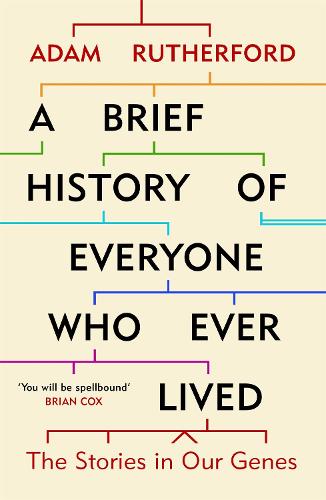 [/img]
Thanks Kimbers
I start Sapiens, but it's boring as hell. Like many American style popular science books (I know he's not American) it's incredibly long winded and takes forever to make a simple point over and over again with zero narrative flair. Reads like thesis instead of a story.
Yeah sapiens is definitely 'popular' science done badly
This is a much more gene focused read and while a little outdated its still a milestone for me
[img]  [/img]
Don't worry is nothing like god delusion!
Would also love to see Matt Ridley update this 20 years on.
I've not read it in years be interesting to see how it stacks up now!
[img]  [/img]
[i]Genetic takeover[/i] by Graham Cairns-Smith worth a gander, Kimbers. The crystalline origin of life, how we're all descended from rocks!
He was interested in the idea of inorganic information replication and whether it could template biological replication. Wildly speculative, but grounded in very solid concepts. He passed away recently - was a highly regarded scientist who was prepared to hang his balls out there with some very ambitious thinking.
I simply struggle to get my head around the probability of evolution creating the diverse nature it is claimed to have done in the timescale available.
numbers, is pretty good answer to that particular question TBH.
edit: consider your own family, you've 2 parents, 4 grandparents, 8 great grandparents. give it enough time going back, and you're into hundreds of thousands of people, and that;s just you.
How do you even define the human species now?” says Krause
this is not a problem limited to h.sap. Everyone "knows" what a species is, lots of people struggle to define it though
Excellent post Kimbers, really enjoyed reading that.
Excellent post Kimbers, really enjoyed reading that.
It's from last week's New Scientist. Human evolution is certainly a dynamic field but the evidence is limited and we need to be careful not to build too much on the shaky foundation of small or even single discoveries.
[b]... but I know a lot about science[/b]
This thread is full of gems, but this one stands out.
Great read! It's described as 'interbreeding' and sounds a bit lovey dovey - I wonder if it's more darker than that though? Conquest/ rape/sex slaves sounds more like the 'human' way of doing things 🙁
... but I know a lot about science
Not as much as Bez.....
Great read! It's described as 'interbreeding' and sounds a bit lovey dovey - I wonder if it's more darker than that though? Conquest/ rape/sex slaves sounds more like the 'human' way of doing things
possibly
youd assume that to raise children into adulthood and thus able to pass on their DNA to us that there were would have to be some sort of stable tribe/family to keep the kids alive, Id like to think anyway
Archaeology keeping us on our toes