UPDATE: Reviews section refreshed, redesigned, searchable: Go take a look
I can't see petrol being the answer though with electric so close
I don't think they are close. People have become used to rapid incremental progress in technology, as we've seen in IT/electronics, but battery technology isn't really like that. It needs a big as-yet unrefined or unknown technology to make it work.
We currently just can't store that much energy in a battery, which leaves three options:
1) Make a short range city car (Leaf, Up etc)
2) Fit a generator (Ampera, BMW i3)
3) Fit a shitload of batteries anyway and charge a high price (Tesla)
Re diesel - it's been said fairly often that making diesel has a high environmental price which might offset the efficiency saving from the better MPG.
Much as I like driving diesels, when I change the Passat I'll look very carefully at a turbo petrol and see what sort of real world economy I can get.
It was the Kyoto Treaty that drove us to Diesels really with the domination of CO2 emissions. All the environmental systems introduced to Diesels has done is turn visible smog into invisible smog which is far more damaging to the local environment. The future is obvously petrol hybrids.
I had read a technical document from Mercedes a few years ago talking about dual cycle Petrol engines where the compression ratio is varied through varying the stroke of the enigne using eccentric big end bearings. Under partial load they act like a diesel, under full load they revert to spark ignition, so best of both worlds with cleaner emmissions. Not sure if this is still under development or if petrol hybrids will scupper these.
In mildly-related news, I've just got 550 miles from £53 of diesel, in an Insignia.I'm becoming something of a Vauxhall/Opec stand-off fanboi.
I hired a 170bhp(?) diesel one for a long weekend away. I wanted to like it but found the interior layout frustrating along with the way it drove.
I could never be a fan of Vauxhalls.
On diesels in general- on foot or bike- I hate that 'taste' from diesel. A carbon soot, has a wierd smell when it hangs in the air. Horrible stuff. Then you get tight ****s blanking off bits to avoid a big bill but which puts even more nasties into the environment.
Well a current model Prius gets similar fuel economy to a similarly sized and powered diesel, but with much less CO2 and negligible NOx. I know people like to complain about batteries, but they are NiMH and as far as I understand most NiMH batteries are made from recycled sources so it's not as big of a concern as powering a whole car from Li-ion batteries.
Truck/bus engines are tested in a different manner, which is why for Eu6 they all have SCR systems already.
Obviously not tested that well judging by the cloud of shite that comes out the exhaust of all the 62-reg busses around my way. Private operator though, possibility they've taken off some of the emission controls.
Conversely, I was passed by a Cardiff bus today and I at first thought it was a large engined petrol car, it was that smooth and quiet. No noticable emissions.
There are moving at some pace, five years ago electric would never have worked for me, now as a private car supported with quick access to hire cars and train travel for work an Up would be fine, its just the cost thats put me off.
At this stage it'll be about increasing the market and that'll come in steps of increasing practicality and lower costs. Combine that with easier access to cars you don't own and better tech allowing us sit at home and [s]surf[/s] work.
Never go above 2krpm in a diesel.
Eh? So how are you going to do a safe, fast overtake then?
Oh, hang on...
I've never been a fan of Diesels. No doubt there are some very good ones like the six pots from BMW and Mercedes but the majority are clattery, smelly, hateful things with a tiny power band.
As for low down torque, modern petrol turbos have plenty. 350Nm from 2100 rpm in mine, which is maintained to 5000rpm with peak power at 6100rpm. That's a 4000rpm rev range
A modern Diesel - say a VAG 2.0 TDi will have slightly higher torque - up to 400Nm from slightly lower down say 1900rpm but by 3500rpm its getting out of breath and torque falls away, peak power will be at around 4000rpm. That's a 2000rpm rev range.
It's true that in the current generation the Diesels are still ahead on fuel economy but the gap is really starting to narrow.
Petrol electric hybrids will probably kill Diesels in the longer term
Except it weas governments and 'green' legislation and tampering with fuel duties that have persuaded many of us to switch to the dark side/pump.wilburt - Member
Chap on Radio Four this morning arguing for the restriction of deisels and even holding the manufacturers responsible for their unsuitability.
I could never really square the logic of this when it was rolled out in the 90s. Granted, there are nasty, invisible fumes - Benzene for one - that come out of petrol tailpipes, but the heavier particles from diesel linger in the local atmosphere far longer.
Well the fact is, beyond argument, that as far as Nitrogen Dioxide is concerned, petrol is much cleaner.wilburt - Member
I can't see petrol being the answer though with electric so close, the new Up is just about practical except the range.
That's a 2000rpm rev range
Not in practice. Whilst peak torque isn't available until say 2krpm it's quite driveable up from about 1200. Well mine is, anyway.
And the rpm numbers aren't important, you drive by wheel torque not engine torque. And because the gears are higher you end up with the same result at the wheel.
They might 'run out of puff' by 4krpm but that doesn't make much difference when you are doing 60mph in 3rd just the same.
There are moving at some pace
No, we're at a brick wall. We just have more cars available at that same brick wall.
I don't think they are close. People have become used to rapid incremental progress in technology, as we've seen in IT/electronics, but battery technology isn't really like that. It needs a big as-yet unrefined or unknown technology to make it work.
my take on that is fairly straightforward.
option 4) make the bloody thing lighter
autocar's e-up article:
It’s a surprise, too, how little the additional weight impedes the car. At 1139kg all-in, it is far from light, but there are palpable benefits in ride quality
1139kg!
Maybe if it weighed in around 600kg... Less demanding on the battery. Meaning it can be run at part charge and extend its life. Or have less battery to start with and cost less.
If car makers think that the ecological mark is a 1 ton plus electric car, they're missing it by a country mile.
Or maybe the problem is, they can make that car, but nobody will buy it because we all want expansive comfy electric loaded luxury transport.
@digga, thats true and was covered but the conversation didn't focus solely on blame. Maybe petrol will end up being developed, not really gonna fix the problem long term.
edit: re point above WEIGHT that for me is the often overlooked be key metric even if your focus is sporting cars.
4) make the bloody thing lighter
a) how? and
b) won't make much difference anyway. Most of the work done on a long trip is against air resistance.
You want a light electric car? Go get one:
[img] 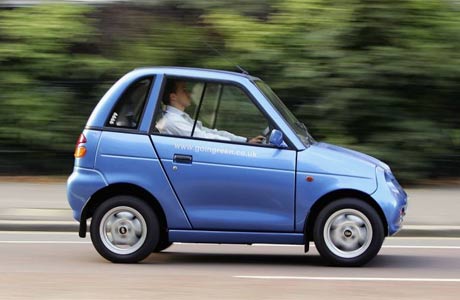 [/img]
The weight isn't all about comfy gadgets (since cars without them are still heavy). It's about occupant safety.
you drive by wheel torque not engine torque. And because the gears are higher you end up with the same result at the wheel.
Yep this is true, but that's an advantage for petrol rather than Diesel. Every gear in your gear box is a reduction gear so you are always multiplying engine torque but Diesels typically run longer gears cancelling some of the wheel torque advantage.
In a relatively torquey petrol you can drive it like a Diesel if you like, changing up at 2500rpm, but you also have the option to hold on the gear longer when you need to and using the power rather than the torque.
This is where Diesels with their low engine speeds suffer
Cruising on a motorway where you don't really need to change engine speed Diesels are a clear winner. The longer gearing is an advantage as it will allow you to run a lower engine speed for a given cruising speed. For everything else though petrol all the way.
This is where Diesels with their low engine speeds suffer
Well.. depends what you are talking about. In normal driving it makes little practical difference. Sure it's not as sporty, but then not everyone wants to race everywhere.
It's certainly not an actual issue. Put your foot down, power builds to the red line in my car. It's not like the old style PD engines - that was quite different.
Having been in a turbo petrol it was nice, and like I said I'd get one if I could be sure it'd give me decent MPG in practice. But I don't accept that diesels are 'horrible' to drive.
WEIGHT that for me is the often overlooked be key metric even if your focus is sporting cars.
Its becoming more of a focus for manufacturers.
The six previous generations of Golf are heavier then the previous one. The new one is a chunk lighter ,not a massive chunk but still.
We are a long way from driving 600kg cars but manufacturers are starting to factor weight into the equation
A technician in a Lexus garage told my father that Lexus are going to stop selling diesels because it is becoming too problematic to conform to all of the emission constraints.
I read a book once that said a fella was nailed to a cross, died and then came back to life turning water into wine and stuff*
* thats actually a lie. I've never read it.
I heard that Mazda, for the current 2, redesigned the wiring to save wire, and that saved several kg. They are making the effort.
Mamufacturers have been minimising wieght for years, it's the easiest way to reduce CO2.
Why do you thing nothing has a spare wheel anymore?
Mamufacturers have been minimising wieght for years, it's the easiest way to reduce CO2.Why do you thing nothing has a spare wheel anymore?
Because it can then be added as a cost option like my car is ?
The use of better materials is going to be the way to lose weight whilst maintaining decent safety standards, anybody seen the video of the Renault Modus cutting through a 90's Volvo on fifth gear some years back ?
a) how? and
Dunno, but (just pulling a couple of random examples because I used to own them):
Mk2 Fiesta was around 800kg, about 75% of a VW Up.
My mk1 Mondeo was only 100kg heavier.
I'm not exactly what this proves other than cars have got heavier and heavier, but it does show its possible to make a tin box with four seats weight a lot less than the Up, although I appreciate there are a bunch more safety regulations for recent cars to meet.
b) won't make much difference anyway. Most of the work done on a long trip is against air resistance.
An electric round-town car isn't going to be doing long trips. At sub 30mph average speed across towns, air resistance isn't the driving factor. It's start/stop at traffic lights/roundabouts/junctions, and that is [i]all[/i] weight.
Because it can then be added as a cost option like my car is ?
Already passed its Homolgation by then! And thus you get the cheaper RFL.
An electric round-town car isn't going to be doing long trips
Ah yes but for the electric car to be a real success it has to be capable of long trips as well, I think.
The thing is, people buy small city cars now because they are cheap. Electric cars aren't - so if you want people to pony up £25k then it needs to be a proper nice all round car.
it does show its possible to make a tin box with four seats weight a lot less than the Up
Yeah it's mostly safety driven. Have a look at the A pillars in a 20 year old car. Not only are they incredibly flimsy, but they are also really close to your head.
Seemingly DPF removal and sensor tampering is a booming business as it is much cheaper than fixing any problems.
I think DPFs and EGRs are probably going to do as good a job of phasing diesels out as anything else. They do seem to be a problem- I know as a result of the issues I've had with my EGR (which have, fortunately, so far been under warranty) I'll be buying a turbo petrol next time.
Mamufacturers have been minimising wieght for years,
Like hell they have!
Cars have been getting heavier and heavier since the 70s as people think they want more and more electrical gubbins, passive safety and other such extras bolted to them.
I assume you think power steering, big fat tyres, aircon, ABS, and umpteen electric motors weigh nothing? 🙂
DaveyBoyWonder - MemberA technician in a Lexus garage told my father that Lexus are going to stop selling diesels because it is becoming too problematic to conform to all of the emission constraints.
I read a book once that said a fella was nailed to a cross, died and then came back to life turning water into wine and stuff*
* thats actually a lie. I've never read it.
I wouldn't be surprised, Lexus were one of the last manufacturers to offer a diesel and they're not exactly diesel fans at Toyota either - they were one of the pioneers of hybrid petrols and will no doubt continue down that road.
PeterPoddy - MemberMamufacturers have been minimising wieght for years,
Like hell they have!
Cars have been getting heavier and heavier since the 70s as people think they want more and more electrical gubbins, passive safety and other such extras bolted to them.
I assume you think power steering, big fat tyres, aircon, ABS, and umpteen electric motors weigh nothing?
It's true actually, most of the current gen cars are very slightly lighter than the previous ones, whilst being slightly bigger at the same time - but equally yes they're much bigger and heavier than they were in the 70's, 80's and in most cases the 00's.
people think they want more and more electrical gubbins, passive safety and other such extras bolted to them.
Why so derogatory?
I 'think' I want these things? No, I really do want them. I want satnav and a decent entertainment system, and I sure as hell want safefty features!
PeterPoddy - MemberMamufacturers have been minimising wieght for years,
Like hell they have!
Cars have been getting heavier and heavier since the 70s as people think they want more and more electrical gubbins, passive safety and other such extras bolted to them.
I assume you think power steering, big fat tyres, aircon, ABS, and umpteen electric motors weigh nothing?
No I don't and I didn't say cars had gotten lighter either.
They have been minimising weight whist adding all the emmissions, safety frippery and gizmos that is required to sell a car now. If you built a car with todays manufacturing technologies to 1990's safety,emmssions, comfort and tech levels it would be a dam sight lighter than they were then.
Why so derogatory
Because I felt like it. 😛
I'm not the lazy one that won't wind a handle to open his windows..... 😆
A lot of the stuff they've been adding to cars in recent years is utterly pointless frippery that just adds expense and weight.
FWIW My diesel was the V6 2.7TDI in an A6 with an auto box, really suited the car (the newer 3.0 is supposed the be even better). I'd happily have another. I found the 2l 4cyl in my mates A3 a bit more laggy, have recently rented some Mk7 Golf TDIs which go very nicely on the motorway. I understand the large vs small engine sizes comment.
I really don't see diesels getting phased out not within 10 or even 20 years. How can they phase out diesel cars and leave all the trucks which throw out bucket loads of soot ?
Electric windows - might have a point, but it's useful to be able to open and close the other windows from the driver seat.
Aircon - very useful
Satnav/entertainment - great
Power steering - pretty useful
ABS/ESP - saves lives
Heated seats - could do without
Auto dimming lights - weighs nothing
Auto wipers - ditto
Airbags - save lives
etc etc.
I can't think of much that is heavy and useless tbh. Heated seats, maybe.
How can they phase out diesel cars and leave all the trucks which throw out bucket loads of soot ?
Because there'd still be less overall, obv. And petrol is hardly ideal for trucks.
Anyway - they should't throw out soot if they are working properly. Trucks should ahve DPF too.
In the far east esp Thailand most family cars, except lorries and trucks - diesel, are dual fuel with petrol and LPG. In other parts of Asia LPG is pretty standard with taxi.
I should have converted my Toyota Corolla here to dual fuel (24k) when I got it but now it's not worth converting after 48k on the clock. Per litre of LPG is half that of petrol so might work out if you drive frequently and added benefit of paying lower emission tax.
However, if I get a bigger car in future I will convert it to LPG immediately.
😛
How can they phase out diesel cars and leave all the trucks which throw out bucket loads of soot ?
you can't compare cars and trucks like for like. Trucks are doing far more useful work for the fuel they are burning than a car. A container ship kicks out more pollution than a car, the individual cylinders in the engine are big enough to drive a car around in - but the goods on the biggest ships are travelling at 1000miles/gallon/tonne. An artic truck might only manage 5mpg but its carrying goods at approx 200miles/gallon/tonne. The most economical car is carrying the drivers briefcase and sandwiches at around 0.5miles/gallon/tonne. So a cars pollution against necessary work done is massively in excess of that created by a truck.
Co-incidentally I was listening today to someone talk about the "above legal limits" pollution in London. They said that 64% of the pollution was from the buses and most of the rest lorries.
It seems to me if they made the buses electric that would solve a lot of our inner city pollution (move it to power stations 🙂 ) however that's a cost to the government. I looked this up and there are currently 4 diesel-electric buses on test in London and TFL are "looking" at wireless charging at bus stops.
Much easier to make the motorist pay!
tonyg2003 - MemberI looked this up and there are currently 4 diesel-electric buses on test in London and TFL are "looking" at wireless charging at bus stops.
We got some electric buses in the toon here in GeordieLand. I like it and very nice too. 😀
Oh so London is taking it really seriously then!
FFS Arriva North West have been operating 44 Volvo hybrid buses since March 2013.
Over 250 Hybrid vehicles are currently in operation on routes across the country. These include:
Arriva Yorkshire - Routes 163 and 166 Castleford to Leeds via Kippax, Garforth and Cross Gates
Arriva North East - Route 308 through Blyth town centre
Arriva North West - Route 10 between Manchester and Salford
Arriva North West - Merseyside cross river routes 407, 432, 433, 437, 464, 472 and night services 23, 37, between Liverpool and the Wirral via the Mersey Tunnel
Arriva The Shires - Route 71 from Maidstone
I looked this up and there are currently 4 diesel-electric buses on test in London and TFL are "looking" at wireless charging at bus stops.
God knows where - there are nearly 300 new Routemasters in service which are hybrid diesel, along with about 400 others. Target is 1000 in service by the end of next year. There are also 8 hydrogen fuel cell buses.
For the ULEZ, all double-decker buses will have to be hybrid and single-decker be zero emission (ie. electric) by 2020.
Much easier to make the motorist pay!
What motorist?
TfL spend a shitload of money on transport all the time. Did you not notice they just replaced all their busses? You have to admit there won't be much appetite for changing them again.
Ok what I meant (poorly worded I'll give you) is electric busses. The new Routemaster are indeed diesel electric but full electric is what London needs.
I cant see diesels being phased out in any less than 15 years really. Yes EGR and DPFs are issues but its because people dont drive them far enough, have the proper maintenance or use crappy fuel (has a lot to answer for)
My 10 year old BMW 320d gets 600 miles to a tank, hasnt got a dpf to worry about, drives well and as a 16v drives a lot like a petrol. My brother has an 08 plate BMW 123d (bi turbo 2L) and his tax is less than mine, smooth power delivery, relatively quiet, 58mpg+ and can be driven hard with 204bhp.
I remember hearing that VW had to drop the PD series of engine as they couldnt easily make them hit pollution regulations in parts of the world.
All the new Routemasters are hybrid, nearly all Wright buses are (manufacturer of the Routemasters), I know that there are some electric only buses but they're going through testing currently. When a bus cost nearly half a million you can't just throw the old ones away because their lifespan is over.
All EGRs and DPFs do is turn visible smog into invisible smog. The resultant invisible gas is highly polluting and damaging to the local environment and people. That's the issue that the world is waking upto with diesels. After all the technology that's been employed they're not actually any cleaner, and they can't be as you're dealing with the fundamentals of the products of the combustion process. Diesel is a less refined and dirtier fuel and you can never get away from that. The drive for low CO2 has driven the increase in diesels, but over the coming years we're probably going to see more emission rules come in that also look at restricting other harmful gasses and nasty chemicals that diesels pump into the air. This will drive the market towards small capacity efficient petrol engined hybrids. Buses and commercial vehicles might be different for practical reasons. Why would manufacturers continue ploughing R&D cash into Diesel engines over hybrid 'powertrains'? It'll take many years as the rise of the diesels did, but it's inevitable.

