
MegaSack DRAW - This year's winner is user - rgwb
We will be in touch
Morning all. I've acquired a D5100 with the 18-55 kit lens and am experimenting with aperture. Larger apertures reduce the DOF but not as much as I was expecting e.g a portrait at say f5.6 the subject is sharp but although the immediate background is blurred it's not that blurred. I was expecting to be able to take close-ups and blur the background into oblivion.
Is this a function of the lens or is there more to it?
To really 'blur into oblivion' you'll need a faster lens.
Something like the Nikon 50mm F1.8D AF Nikkor will give you a very nice prime lens with much blurryness without breaking the bank
[EDIT] Or you can fanny about in photoshop or something similar afterwards, but it won't be as good
Yep, need to be lower than F5.6. I've got an F2.8 which does the job for me, but as above a 50mm F1.8 will be a great addition to your collection.
a 50mm F1.8 should be the second lens that everyone buys, should be under £100
the 50mm 1.8 is great and should be under £100. If you want to go crazy close with macro, get a lens reverser for about £15 to go on the front of the 1.8.
You also get a shallower DoF at the telephoto end of the zoom; try zooming out and moving further away (though you'll also have a smaller aperture at this end, which will negate the effect a bit).
Other than that, yes, the 50mm prime is what you want. (I got the Canon equivalent for Christmas, it's lovely).
Thanks fellas. The kit lens will go to larger apertures (f3 point something IIRC) but the blurring is still not what I expected.
e.g if I take a portrait would it be unreasonable to expect to have a DOF of just a few cm and everything beyond that field totally blurred? The camera shows the DOF for a given aperture but the transition from sharp to blurred is very gradual - several metres.
Sorry for the noddy questions I am new to this.
Also, shooting at a longer focal length with wide aperture [from further away to maintain composition] will reduce the apparent DOF.
But that lens will be quite limited in what you can achieve bokeh-wise
Have a look at this http://www.dofmaster.com/dofjs.html - tells you what your DoF will be for different focal lengths and apertures
The maths to calculate depth of field is far beyond my feeble brain, and takes into account sensor size, focal length, aperture and probably what type of milk you had on your cornflakes.
You won't get shallow depth of field with the kit lens on a crop sensor camera. It just won't do it. To get the biggest difference betwixt subject and background, make sure you're at the 55mm end of the lens, with the aperture as wide as it will go (smaller f number) and get the subject as far away from the background as possible. Focus drops off gradually, so the further away something is from the focal point the more blurry it will be.
Then realise it's all futile and buy a 50mm 1.8. Bodging it in Photoshop is more effort than it's worth too I reckon.
You won't get shallow depth of field with the kit lens on a crop sensor camera. It just won't do it. To get the biggest difference betwixt subject and background, make sure you're at the 55mm end of the lens, with the aperture as wide as it will go (smaller f number) and get the subject as far away from the background as possible.
This. It's what I was trying to say, only far more eloquently and accurately than I managed.
Wot flyingmonkeycorps sed.
Aw shucks 😳
So, in summary, before spending any money, change to a different type of milk on your cereals and see if that helps 😆
I think you need a DX lens on the Nikon, its a 35mm with autofocus etc around 160 poonds.
We could also get into the whole debate about how zooming in doesn't actually make the background any more blurry, it just makes it so you are seeing a smaller portion of it, which makes it look blurrier. 😉
I'd recommend semi skimmed, the blur chunks with full fat are FAR too gloopy for me.
The 50mm 1.8 will work fine, though you may have to manual focus. I have one on my D60. Well actually it's on my F90, but it works on the D60.
Postie just delivered a 20mm 1.7 prime lens this morning, it's micro four thirds mount so works out as a 40mm in normal speak. It's tiny so will mean I can easily carry the camera in my Camelbak. Can't wait to have a good play with it.
I must admit to being intrigued by this micro 4/3 stuff. No money to experiment though 🙁
You can get a depth of field calculator app as well for phones - does what the linked site above does, but obviously more convienent when you're in the middle of a field and want to work out what settings to use.
With something like the 1.8 you often have to be careful the other way - you can easily get far to small a depth of field with a close subject - ie with a 50mm f1.8 on a crop sensor only 6cm are in focus at 1.5m and 3cm at 1m!
This

Is taken at f3.5 with an 18mm focal length, but still has a very narrow depth of field because the focal distance is so close - note that the nose is in focus, but the eyes aren't. You can see on the floor how little is in focus.
Postie just delivered a 20mm 1.7 prime lens this morning, it's micro four thirds mount so works out as a 40mm in normal speak.
Lucky man. I am fortunate enough to own a few cameras and some fancy L lenses but if I was only allowed to keep one camera/lens it would be my GF1 and 20mm 1.7.
...or for a real blurrytastic adventure, get a Lensbaby!
[IMG]  [/IMG]
How much blur do you want? Just taken this as I was curious. Focus was on the back of the main clump of snowdrops. The front foreground, which was 18-24" closer is progressively blurry. The scraggy looking lavender in the middle background is about three to five yards away, the car wheel about another five yards. Lens is the Nikon 18-55, at f5.6, 1/25s handheld, iso200, on my D3100. If I wanted the snowdrops completely isolated I could have stuck the camera lower and to the left so the first thing in the background would be the fence behind the car.
Lots 🙂 Your picture looks like one of mine.How much blur do you want?
Something like the 'A' picture of Gromit shown here: http://toothwalker.org/optics/dof.html
Long(ish) lens, wide aperture, background far away!
Yes, longer wider lens will help, but the main thing is organising the subject so there is nothing at close to the focus distance either in front or behind, like this?
[IMG] 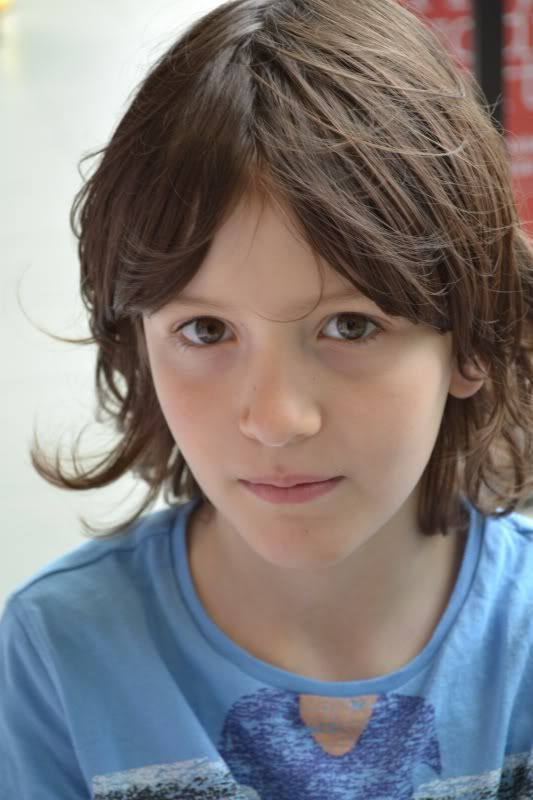 [/IMG]
Edited, posted B&W by mistake
The dof on this pic was achieved with an 18-55mm kit lens, but as said more can be achieved with a fast prime.
[img]  [/img]
I've just blagged myself a 50mm f1.7 Minolta off fleabay for my A55 for £65. Looking forward to trying it out at the weekend.
Got home from London today to find my little prime waiting for me - wow, just a little play in the lounge and the DOF is incredible. Will get some decent pics taken over the weekend.
Is this a function of the lens or is there more to it?
As said above you need a small f number, the 50mm f1.8 comes in at a good price. Great glass, crap body but what do you expect for 100 quid?
Big distance between subject and background will also help.
Another thing to remember is that to bokeh (blur) from the kit lens will probably look different from a pro level lens. Like everything in life, quality costs money. Now I've dipped my toe into the Canon L series, there's no going back, superb lenses.
eyes look just O.O.F in that portrait, gives me eyestrain trying to focus.
Not had chance to take the lens outside yet, but just a quick example of the DOF available - shot at f2.2 as f1.7 can be a bit soft. Not a perfect pic, so no critique required
[img]  [/img]
I have a Pentax digital SLR, so am able to take advantage of the lovely old lenses I find in charity shops - I have a 28mm and a 50mm 1.8 lens, which while being fully manual, work perfectly in my camera (once I used nail varnish to paint over the bit where the contacts on modern lenses would be so as to dis-confuse the camera - it was shorting the contacts and refusing to take photos before).
They were a couple of quid each, if I remember correctly 🙂
Have we considered subject-to-camera distance?
The DoF is determined by how close the subject is to the lens, whatever the focal length. Closer = shallower DoF.
A proper macro lens, for example, which can focus to about 1cm will give an incredibly shallow DoF at this distance to the extent that focusing can be really difficult with the lens wide open so it is necessary to use magnified manual focus and to stop the lens down to a medium aperture so that the subject falls within the zone of sharp focus.
Here is an example of a familiar subject, shot at f5.0, lens-to-subject distance about 2 cm, autofocus using a Sigma 50mm f2.8 macro lens on an APS-C crop sensor camera. The DoF is of the order of a couple of mm. The same lens, on the same settings with a portrait shot and the subject a few feet away would have a much wider DoF (inches/feet).
[url= http://farm5.staticflickr.com/4068/4337324691_646c348684.jp g" target="_blank">
[url= http://www.flickr.com/photos/stuartie_c/4337324691/ ]38/365[/url] by [url= http://www.flickr.com/people/stuartie_c/ ]stuartie_c[/url], on Flickr
I suppose it's proportionate distances that make the difference. If you're 10m from the subject and the background is 5m behind them (1.5x the distance to the subject) it's going to be less out of focus than if the subject it 5m away with the background 5m away (2x the distance of the subject).
Etc.
Effectively, a shallower depth of feels will be gained at the telephoto end of your lens like someone above said. For best results try and isolate the subject you are focusing on from anyhting directly behind them as this will put further distance between your focus plane and the nearest object your lens can focus on. For example, at your telephoto end on 2.8 aperture at the closest focusing distance for your given focal length, the further back your subject is, the more defocused it will be.
If you wish yo do this during daylight whilst still being able to use a 2.8 max aperture you might need to invest in a ND filter (i find an ND8 to be the most useable)
You won't get shallow depth of field with the kit lens on a crop sensor camera. It just won't do it
Yeah you can - as above. Being a long way away but zoomed in decreases the DoF, like this:
[url= http://farm6.staticflickr.com/5086/5280465608_48e5d1e6f0_z.jp g" target="_blank">
[url= http://www.flickr.com/photos/11569254@N06/5280465608/ ]sign[/url] by [url= http://www.flickr.com/people/11569254@N06/ ]molgrips[/url], on Flickr
Not sure why but I actually quite like this photo taken at f5.6 and 300mm focal length
Also the ratio of how close the subject is to the background of course makes the background blurry. And remember having a super narrow DoF can make it a nightmare to actually get things in focus. This pic was one of a load of hand held macro shots, most of which were pretty hit and miss. Normal camera shake in the front-to-back axis was enough to bring the centre of the flower in and out of focus continually. This is also f5.6 at 35mm
[url= http://farm6.staticflickr.com/5027/5577871992_4e379749a5_z.jp g" target="_blank">
[url= http://www.flickr.com/photos/11569254@N06/5577871992/ ]_0223383[/url] by [url= http://www.flickr.com/people/11569254@N06/ ]molgrips[/url], on Flickr