UPDATE: Reviews section refreshed, redesigned, searchable: Go take a look
the best cycle network we have,namely byways, bridleways and unclassified roads
Srsly? Here's part of that "network" near me, last night:
[img]  ?t=FQQVBBg9aHR0cDovLzI0Lm1lZGlhLnR1bWJsci5jb20vdHVtYmxyX21jMzgyM0NncXQxcnQ2M2twbzFfNTAwLmpwZxQCFgASAA&s=Ul-VOc-gjSh2eq_Zl0ISRSf8wOh1M-tugitHXatZRE8[/img]
Interesting Mr Agreeable. Most of those are in practice where I live.
And I do seem to have far fewer gripes than some people.
I wonder if we could do a survey of the number of near misses or issues people have versus where they live/commute...?
Lovely looking track 8)
I do seem to have far fewer gripes than some people
But I recall you saying on a previous thread that your wife won't ride on the same roads as you. It's the classic example of subjective safety.
Quite - pretty much all UK roads are more intimidating than US suburban streets which is where she grew up, so it's understandable in some ways.
She isn't as confident of a cyclist as me so is more likely to make a simple handling error; she's slower so can't keep up with traffic as well, and she's just not used to it. I grew up in a small town so I was riding bikes along quiet streets, I graduated to the town's main streets which were far quieter than the city ones but still working along the same principles, and I moved to the city when I was 19, already a fit cyclists, and full of confidence and youth. So I had the perfect introduction.
She grew up riding kids bikes on the pavements around very quite kids streets, then never rode as an older kid or young adult. Hence insecurity about going on roads now.
Going back slightly to the [i]"What would you do in your town?"[/i] question - here's a nice example of how it all goes wrong, the new transport strategy proposals for Durham:
[url=
]"Transport Innovation in an Historic City" by Roger Elphick, Head of Highway Management, Durham County Council (PDF)[/url]
Loads of good stuff here: congestion charges, pedestrianisation, bus priority, park and ride, reduced long term parking in centre, reducing through traffic, reallocating road space etc etc. [i]*applauds*[/i]
A 35 page presentation. Cycling is mentioned just once in a vague bullet point about "better facilities". 😕 [i]*sigh*[/i]
As [url= http://bikeyface.com/2012/10/18/serious-about-safety/ ]Bikeyface[/url] put it:
[img] 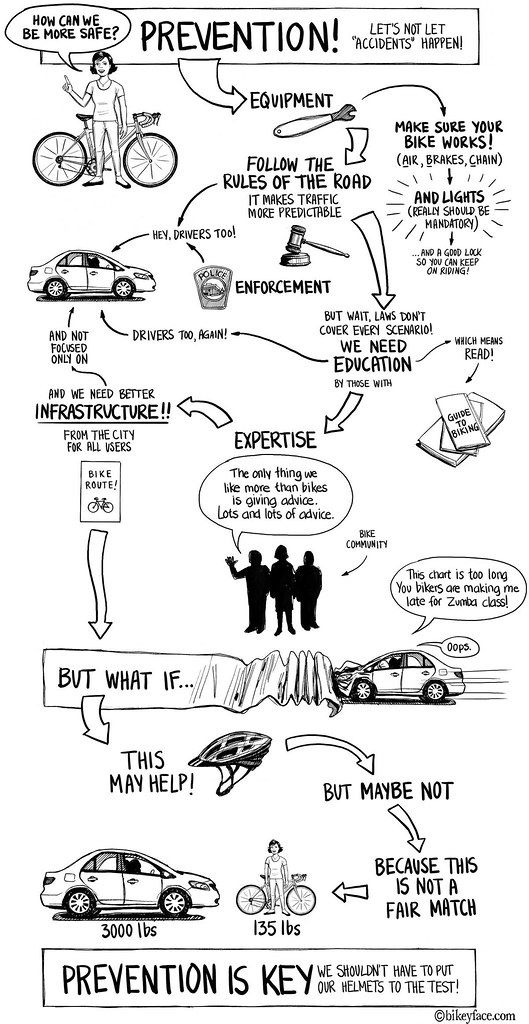 [/img]
pedestrianisation
At a talk by Sustrans founder John Grimshaw recently, he voiced the opinion that the widespread pedestrianisation of town centres in the 70s, with accompanying bike bans, caused a whole "lost generation" of cyclists, as people who would previously have cycled to get their shopping or meet up with friends were steered towards driving or taking the bus. He didn't cite any research in support but it sounds plausible.
Councils are very quick to give in to the anti-cyclists, or avoid the issue altogether, without realising the longer term harm it can do.
Yeah I'd agree with that. [url= http://newcycling.org/news/20120711/weve-written-cllr-nigel-todd ]One the Newcastle Cycle Campaign's objectives[/url] is to get bikes allowed onto the pedestrianised Northumberland Street.
[img]  [/img]
There's room, it would be a boost to the businesses and encourage utility cycling. The campaign have suggested trialling it with out-of-shopping-hours cycling and seeing how it goes.
Plenty of resistance to it.
Best they've managed is a concession that bikes might be allowed on a parallel road. 🙄
Often appears to me that perceptions of improved cycling and cycling achievements pertain almost entirely to utility cycling (for shopping, work etc)
Leisure cycling is where it's at for me, yet I see little campaigning focused on this. Most campaigns tend to be directed towards utility cycling on roads shared with cars and aimed at making life harder for motorists. Urban/city/large town utility cycling seems to feature more as well.
Shame really as the main temptation to leave the car for a bicycle is primarily leisure. Leisure cycling acts as a gateway to utility cycling.
For semi rural commuting I would want to use a direct route, which means using rights of way as opposed to tarmac roads, and to travel 25 miles in an hour(ish)- well it's 25 road miles on a motorbike, but that would be significantly reduced if rights of way were used. The only way I see this as being feasible is if electric bicyles regulations were changed to allow higher outputs as per Switzerland.
Are CTC, or anyone else, campaigning for this?
What's CTC's line on electric bicycles?
Leisure cycling is where it's at for me, yet I see little campaigning focused on this. Most campaigns tend to be directed towards utility cycling on roads shared with cars..
Sustrans.
Their routes are off and on-road and cover both leisure and utility for pedestrians and cyclists.
travel 25 miles in an hour(ish)
What you want there is a car. Or maybe just a moped.
There's room, it would be a boost to the businesses and encourage utility cycling. The campaign have suggested trialling it with out-of-shopping-hours cycling and seeing how it goes.
How would it be a boost to business? It's a genuine question. Are they saying people don't shop there because they can't ride their bikes or do they just go there a different way? Also, there;s not much you can buy and take home on the average person's bike (most don't have paniers etc).
How would it be a boost to business? It's a genuine question.
There are a couple of studies (I'll have a look for sources in a bit) that show that businesses that can be easily accessed by bike have greater numbers of people coming through the door.
Makes sense if you think about it. If you're out on a bike going through somewhere then you might pass an interesting shop or fancy a coffee. It's much easier to just stop and pop-in on a bike than it is from car.
[img] 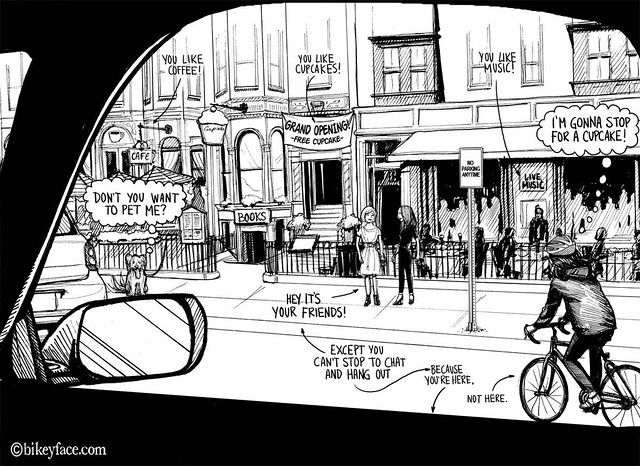 [/img]
http://bikeyface.com/2012/10/11/the-myth-of-the-open-road/
Plus of course (in the UK at least) cyclists are likely to have reasonable disposable income.
Leisure cycling is where it's at for me, yet I see little campaigning focused on this.
Sky Rides? The NCN? The Cyclist's [i]Touring[/i] Club? If you have the idea that all cycling campaigners are hair-shirt utilitarians, you probably need to find out what most of them actually do.
aimed at making life harder for motorists
Bit of a misrepresentation there. If you have fewer cars, surely driving actually gets safer, quicker and easier?
Leisure cycling is definitely part of the bigger picture, but without trying to make it into a viable mode of [u]transport[/u], it's never going to be more beneficial to society as a whole than people going hang-gliding. Or windsurfing. Or going to the gym.
These activities don't give you less clogged-up cities, or more welcoming streets.
Besides, a whole bunch of people driving their cars to bike somewhere (like I see on the Bristol/Bath Path very weekend) is a sorry sight in many ways.
How would it be a boost to business?
There's a few reasons. Less space given over to cars, cyclists and pedestrians are more likely to visit several shops, the environment becomes more pleasant.
Not to mention that car-based shoppers are the ones who are going to go to big out-of-town developments rather than the little high street shops.
I think the leisure side of things has been put above 'useful' journeys for ages. Hence the old railway line routes that don't really go anywhere, the pottering along the cana;, the cycling routes that just go round reservoirs, the parents who put the bikes in the car so they can ride around a park with the kids before driving home again.
It's treating the bike as a toy. For some of us it is a toy, but there will only be more bikes/people on bikes if we treat it as a convenient, cheap form of transport and build roads/facilities accordingly.
I think the leisure side of things has been put above 'useful' journeys for ages. Hence the old railway line routes that don't really go anywhere, the pottering along the canal..
Given my commute to work is an old railway line and a pottering alongside the Tyne, I tend to disagree 😀
Some routes can be utilitarian AND leisure. My route is part of the Hadrian's Cycleway leisure route, but also well used by commuters on bikes or foot.
Given my commute to work is an old railway line and a pottering alongside the Tyne, I tend to disagreeSome routes can be utilitarian AND leisure. My route is part of the Hadrian's Cycleway leisure route, but also well used by commuters on bikes or foot.
Of course they can be both, but the primary consideration when building the "Hadrian's Cycleway leisure route" would have been leisure. 😉
Here are a couple of good blogs about shopping and cycling that links to the relevant studies and figures etc:
http://www.copenhagenize.com/2007/11/cyclists-are-better-shoppers-than.html
http://spacingtoronto.ca/2009/02/18/study-finds-that-removing-parking-to-install-bike-lanes-or-widen-sidewalk-would-benefit-businesses-on-bloor/
This one covers UK examples of Edinburgh and Leicester:
http://www.sustrans.org.uk/assets/files/Info%20sheets/ff39.pdf
An important aspect is that local retailers are generally against pedestrianisation because they have a perception that people drive to their shop and must be able to park nearby. But the reality is usually different. People rarely drive to a small shop (unless it is very specialist) and a lot more trade comes from foot traffic than many retailers realise:
[img]  [/img]
(We're talking small in-town shops here - not huge out-of-town supermarkets).
the primary consideration when building the "Hadrian's Cycleway leisure route" would have been leisure.
😀
Ah but it wasn't. It's a Sustrans route. So the primary consideration was a good usable [b]sus[/b]tainable [b]trans[/b]port route. If it forms part of a larger Coast2Coast then all the better, but that isn't its main usage Monday to Friday.
I get the impression that in many places Sustrans and local authorities have gone for the easy wins (and fair play, if they'd held out for Dutch-style infrastructure at the time they started, they might not have got anywhere at all) so the NCN features lots of converted railway lines and the like.
Most of these routes are a mixed bag with some good stuff and some half-finished or convoluted bits. And of course it's all shared use. It's much easier to promote these routes as leisure facilities rather than serious transport. For example, a bit of crap gravelly surfacing is a safety issue on a commute, but it's all part of the fun to a hardened touring cyclist.
I get the impression that in many places Sustrans and local authorities have gone for the easy wins
Yeah they absolutely have. They are a charity and have to work with local authorities as best they can with whatever land they can persuade them to turn over.
It does lead to some less than perfect routes. The NCN72 I use is great, but the parallel route on the south side of the Tyne (NCN14) is a lot more disjointed and less direct.
But these are a foothold that they build on. They do what they can, demonstrate that people use it, then use that positive feedback to get more routes. We've just had a new route (NCN141) added as a spur to the NCN14 and the NCN725 is also linking up with it in Gateshead.
And yeah, it's all shared use, but then so is a great deal of the Dutch-style infrastructure too.
Ah but it wasn't. It's a Sustrans route. So the primary consideration was a good usable sustainable transport route
Like the Camel Trail? Which Sustrans describe as:
"One of the most popular [b]recreational[/b] routes in the country, ....
The traffic free trail follows the route of an old railway and is [b]ideal for family cycling [/b]as it is fairly level all the way and the [b]views of moorland, woodland and estuary are spectacular[/b]. The trail is also used by walkers, joggers and horse-riders."
Now, obviously if your commute took you along the same route then you may well use it, but it's not trying to be a car-free [u]road[/u] like the stuff in the Netherlands.
bails, come and ride the Bristol/Bath Path at rush hour on a weekday. Then ride it on a Sunday. It's absolutely heaving at both times but with completely different sorts of cyclists.
Sometimes it's a win/win. And it's all more people on bikes.
it's not trying to be a car-free road like the stuff in the Netherlands.
[b]My route (all Sustrans):[/b]
[img] 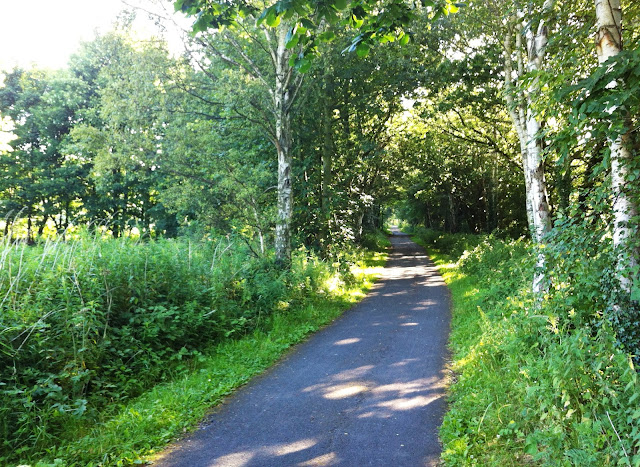 [/img]
http://singletrackworld.com/forum/topic/in-praise-of-sustrans-and-traffic-free-cycle-paths-photos
[b]A Netherlands route:[/b]
[img]  [/img]
http://www.aviewfromthecyclepath.com/2012/09/team-building.html
The two goals are not mutually exclusive.
Safe usable routes benefits all cycling. 🙂
Speaking of which, time I was on my bike...
@ Graham S
What you want there is a car. Or maybe just a moped
I ride a motorbike the 25 miles currently. Takes 30 mins or less. Quite happy to double that time providing I can use rights of way. That means a higher rated electric bicycle as allowed by swiss law.
I definitely don't want to drive to work as 2 wheels is more fun, commuting should be fun and it is on the motorbike. As you say a moped would do the job, but that needs to be an electric one (electric MTB) with assosciated access granted to Rights of Way.
Ta for info from all
How many people does anyone know that have been seriously injured in a car crash? Not many....1:30'000 chance of being killed on the roads seems OK to me. My personal risk will in fact be far lower as the overall risk includes high risk groups like motorcyclists, young drivers, and drivers with alcohol in their blood.
I'm not sure how you worked out your odds. This puts it at 1 in 200 (presumably these are lifetime figures)
[img]  [/img]
Personally I'm far more worried about the serious, life changing, injury than death and the 'seriously injured' stats are about ten times deaths. That's for each member of your family as well so you've got a few chances at it.
A 'safer form of transport' doesn't remove your risk completely either - 12% of road deaths are pedestrians and [url= http://www.cycling-embassy.org.uk/node/205 ]10% of those[/url] are on the pavement when they're killed. It's not just the stupid and reckless who are affected.
How many people you know probably depends on your age. My Mother has suffered with whiplash related neck problems for about 30 years after a rear end on an icy motorway (undiagnosed at the time). Mother of a close friend at University was seriously disabled in a wheelchair after an accident. A guy in my class at school who ended up as part of my sister's circle of friends was killed in a car about a mile from home. Girl in our street was run down and left walking with sticks getting off the school bus. My boss at work walks with a permanent limp after a motorbike accident. Best friend of a mate dead on a motorbike last year.
Personally I've had two potentially serious offs commuting in London, neither my fault, both when I'd been firmly 'taking the lane'. The second put me in hospital overnight with concussion.
bails, come and ride the Bristol/Bath Path at rush hour on a weekday. Then ride it on a Sunday. It's absolutely heaving at both times but with completely different sorts of cyclists.Sometimes it's a win/win. And it's all more people on bikes.
I don't disagree with that, or
The two goals are not mutually exclusive.Safe usable routes benefits all cycling.
But this is about the best standard of cycling facility that I have the joy of choosing to use or ignore: http://goo.gl/maps/8CpEk
That's a two way cycle path and pavement. It just ends in a couple of hundred yards and spits you out into a NSL road.
It's not really like :[img]  [/img]
There's a bit that I used to use here: http://goo.gl/maps/zkeaC
Again, it's a two way cycle lane, at least the pavement is separated by a strip of grass, but the bike side is narrower than the DfTs guidelines for a single way route. It's too narrow to pass confidently at speed. The grass on either side of the pavement and cycle path is wider than the cycle route, it could easily be three times its current width, but for some reason it's not.
I'm not 'anti infrastructure' and I'm wary of confusing support for utility cycling (good) with support for vehicular cycling (needed to survive on our roads, or at least the ones I use). I wish Mrs B or my parents or younger cousins could just hop on a bike and use it instead of a car/bus. But the first thing the GF said to me when she got a bike was "I'm not riding into town" (~2 miles) because it would involve crossing a 6 lane dual carriageway where there is zero cycling provision. And I don't blame her.
there is zero cycling provision. And I don't blame her.
Yeah I just had a quick look at that area on the Sustrans website and there really doesn't seem to be much about. There is the NCN 52, but it doesn't look like that goes where you want. As I sadi earlier, all I can suggest is that you join whatever local cycling advocacy group you have and add your voice to those pressuring your council for better facilities.
-
On another note, I found this on Twitter via Carlton Reid, a nice collection of tweets from people that I really, [i]really[/i] don't want to share the road with:
https://twitter.com/CycleHatred
🙁
[url= http://www.velovision.com/showStory.php?storynum=1248 ]An interesting summary of how the Dutch got their population cycling in relative safety[/url]:
- Reducing car access to city-centres and create car-free areas;
- Making parking in city-centres more expensive;
- Constructing cycle paths and reducing road space for cars;
- Facilitating cycling through cycle network planning, road design, signalling, parking and enforcement;
- Reducing maximum speed on the majority of urban roads to 30 km/h or less;
- Promoting cycling to encourage the use of bikes and discourage car-use.
The Netherlands has around 29,000km of segregated cycle path!
I'm not sure how you worked out your odds. This puts it at 1 in 200 (presumably these are lifetime figures)
That "infographic" is really quite strange. So a lottery win is a 1 in 14M chance which we know is correct for a given lottery draw. Then they say that a road death is a 1 in 2000 chance. Given my average is 500-600 car journeys a year and most people who commute by car would be at around the same level, you'd expect hundreds of thousands of deaths on the road each year. Probably more given there's supposedly 20 odd million cars and 45 or so million adults.
I call bollocks.
Indeed - I think it mixes some lifetime risks with some 'one time' probabilities.
However, quick google gives support for the 'death on road' stat -
"The lifetime risk of dying in a transport accident is remarkably high - with most of the risk coming from road traffic accidents. While the risk of dying in a road accident in any year in the UK approaches 1 in 20,000, the lifetime risk is 1 in 240."
Source - [url= http://www.medicine.ox.ac.uk/bandolier/booth/Risk/trasnsportpop.html ]http://www.medicine.ox.ac.uk/bandolier/booth/Risk/trasnsportpop.html[/url]

