UPDATE: Reviews section refreshed, redesigned, searchable: Go take a look
out of interest, what is your annual kwh gas usage? You are very much giving me the impression you simply won’t heat your house enough to deal with this problem.
ooh now youre asking, who can ever decipher energy bills. just logged onto my bulb account (*cough* pm me for £50 referral code *cough) and it says estimated annual usage 10,400 kw/h. that sound about right?
you may be right about house not heated enough but im trying to keep energy bills down. you could ask my wife if she could only talk through her parka and balaclava.
seriously though, i know its the right answer but i dont understand why a warmer house leads to less condensation. i believe condensation is formed when cold air meets something warm, so by that reckoning, say if the house walls were the same temp as the outside, then condensation wouldnt form.
same with the inside of car windows in the morning..... if the air inside the car is the same temp as the air outside, whats forming the condensation? surely itd be worse if the car was warm inside! (i know its not, but its one of those things that still baffle me)
and warm air behind a wardrobe say, or under the bed, is still just air not moving isnt it? so what does the temp of the air have to do with it?
The PPV works by driving out the damp moist air from the house.
i get that its effective, i believe you all, but wouldnt the PPV need a fair bit of grunt to shift the damp air out of every small orifice, such as beneath closed doors and then through a trickle vent at other end of the room say? and even from the hallway to the other end of the house, under the doors, through another room and through even further trickle vents? and it shifts it from behind wardrobes, under the beds etc, all with closed doors?
Your loft HAS to be dry and condensation free though or the PV won’t work.
pretty sure its dry, just coooold.
you might think the loft is cold, but its probably much warmer than outside.
again, why would it be? its above the insulation layer, why wouldnt it be the same temp as outside? it certainly feels the same temp when you go up there?
Or screwfix.
Also the fan should have an isolator on the wall outside the bathroom.
Thanks, that pipe seems cheap enough, i think ill buy one of those extractors and see if i can cobble up a direct pipe vent to outside. might just be awkward placement of soffit, so id need a bend of some sort.
just looked for isolator, cant see one. thought it was a switch in the airing cupboard maybe, but when i knock it off the fan still works.
thanks for your help and advice chaps, really appreciate all the info.
EDIT: back to that extractor, just rang em and they say theres only the humidity version left, im thinking that would be the ideal one to go for rather than timer, am i right? itll run all the time the humidity is in the air and knock off when its dry? can you set the humidity level do you know?
Most humdity fans are settable. We have also used the blauberg heat recovery fans and you can plug into them with a PC to control the settings with their free software. Very good. Not cheap though.
Here adjustable from 60-90% https://blaubergventilatoren.de/en/product/force-100\
Instructions https://blaubergventilatoren.de/en/product/force-100#downloads
Edit - note there is a force 100 and a force 100max - make sure you get the max.
https://blaubergventilatoren.de/en/product/force-max-100
Am i right in saying your problem isn't the walls as such, you stated where the damp was, it's all at low level, as I explained reckon you're getting cold bridging up through the floor and around the low level perimeter which may be as I explained full of mortar droppings from construction and therefore breaking the cavity. Was the cavity wall insulation blown in afterwards,if so it may not be down to that level hence the damp at skirting level.
This is an excellent point ^^^^^^^^^^^^^^^
Have had exactly this.
Am i right in saying your problem isn’t the walls as such, you stated where the damp was, it’s all at low level,
in the bedroom yes. it was green clothes in drawers under the bed, skirting boards, around air bricks. nothing on walls. maybe a little in window reveals too.
you’re getting cold bridging up through the floor and around the low level perimeter which may be as I explained full of mortar droppings from construction and therefore breaking the cavity. Was the cavity wall insulation blown in afterwards,if so it may not be down to that level hence the damp at skirting level.
not exactly sure what you mean, but ill try and answer. if you mean was the CWI a retrofit, then yes. it was my parents house and i remember them drilling holes in the wall and filling it in when i were a lad. so its maybe 40 years old now?
ok, lets say the CWI isnt down to floor level, and theres mortar droppings at the bottom. what can i do about this, nothing? just deal with the results rather than the cause?
good investigative work that man 🙂
EDIT:
Edit – note there is a force 100 and a force 100max – make sure you get the max.
https://blaubergventilatoren.de/en/product/force-max-100
just rang em and they said they dont sell the max, and google doesnt throw up any for sale either. whats the difference, why should i get the max, and do you know who sells it?
He means that something might be bridging across the cavity, either a cold bridge, or damp into the room.
Get one of those usb bendy cameras or one you can plug into you phone for a tenner, drill a hole and have a look.
It took three goes of wrigthyson describing it before any of us listened, apologies that man.
Get one of those usb bendy cameras or one you can plug into you phone for a tenner, drill a hole and have a look.
can certainly get one if need be, lets assume youre right and thats the problem......whats the answer? deal with it or fix it?
btw, i edited my last post as you were typing, blauberg max info ^^^
The max is the 123m3, the non max is only 98m3. We did get them from somewhere in france, but now we buy from the blauberg uk too. I'll dig it out, havent bought a max for a few months.
We fixed it by taking out a few bricks and vaccuming the gap and smashing up the mortar snots that were bridging.
Can also be caused by cavity wall insulation I have heard.
i dont understand why a warmer house leads to less condensation. i believe condensation is formed when cold air meets something warm
It's because you've got it completely round the wrong way.
Condensation is formed when water vapour cools and turns to water on a cold object(or, air).
You have lots of water vapour in your warm indoors air. Where it's touching your cold walls, it's condensing into liquid. If you make your walls warmer by adding more heat, once you get above dew point, condensation can't form.
The max is the 123m3, the non max is only 98m3.
sorry, bit confused. the first one you linked to (which isnt a max) also states 123m3.
We fixed it by taking out a few bricks and vaccuming the gap and smashing up the mortar snots that were bridging.
Can also be caused by cavity wall insulation I have heard.
again apologies, are we saying then that CWI is a bad thing if it can cause this? i was thinking the ideal answer would be to get rid of broken mortar and fit more insulation in there, but maybe not?
thanks for the science behind it scienceofficer 🙂
Cavity wall insulation can sometimes cause a problem by retaining moisture that penetrates through the exterior leaf wall. The point of the cavity is to allow moisture to drain down the cavity face of the exterior wall and either go to ground of be fed back out through the block work via a cavity tray located above a wall opening.
If theres a bunch of blown glass fibre or foam holding onto the water, it can bridge into the inner leaf, and also suck heat out of the building like you wouldn't believe. It also corrodes your wall ties.
It's recommended that exposed southwesterly facing walls in the UK shouldn't receive CWI because of this.
I love it when someone explains it! Cheers SO.
My apologies, I forgot the difference between the force and the forcemax. That blauberg uk site is just wrong to say 123m3, its only the max that is 123m3. Misprint I think. on the blauberg.de site its hows force100=98m3, forcemax100=123m3.
The point of the cavity is to allow moisture to drain down the cavity face of the exterior wall
Well the cavity is there primarily for insulation (heat moves better through a solid than air, so the air in the cavity is there for insulation) but ^ this also.
Some cavity insulation materials are better than others with regards to transferal of moisture and just because you've got cavity insulation does not mean that you're going to have problems.
Saxedpunk, it's not a bad thing per se but it can cause problems as highlighted above. Good luck with getting it sorted.
No. The cavity originated as a weather deflecting face. It's effectively two walls built very close together and the outer is there to protect the inner.
In most cavities there is significant movement of air - you can feel the breeze quite easily. Thermal performance is not exactly great from this, it's just better than a wet, cold wall that bleeds moisture through due to wind pressure.
More latterly in modern times its been regarded as an opportunity to retrofit thermal performance to a building where none was previously considered, and now modern houses have an enormous cavity to provide space for insulation and maintain a space between that and the exterior wall so the water doesn't bridge across.
Anyway, we're still talking about the same thing.
We don't really know enough about ex-punks building to do anything other than give pointers.
i believe condensation is formed when cold air meets something warm
As above, that is backwards. IF you heat the room (and thus walls) condensation won't form on them (but possibly will on the windows).
You have lots of water vapour in your warm indoors air. Where it’s touching your cold walls, it’s condensing into liquid. If you make your walls warmer by adding more heat, once you get above dew point, condensation can’t form.
I’d say it easier to reduce the humidity of the air, which lowers the dew point temperature it will condense, than to raise the temperature of the walls above the dew point of damp air.
Eg. 55% RH air at 18 deg has a dew point of 8.8 degC
75% RH air at 18degC has a dew point of 13.5 degC
Before fitting a PPV unit, humidity levels in our house were always up around 75-80%, now they are 55-60%.
Same for me Jambo.
wouldnt the PPV need a fair bit of grunt to shift the damp air out of every small orifice, such as beneath closed doors
It works though. I used to get mould in corners, behind chest of draw and water would stream down windows and bedroom wall now nothing, dry as a bone even on the windows. It works even with internal doors closed as they are not air tight so we can be sleeping in bedroom with door closed all night and wake up with no condensation.
The theory behind PPV systems is that they only have to have a slightly higher pressure than outside, so the inside air is being forced out of every orifice. I do not doubt it works.
I don't agree with the "extra heating" principle mentioned above several times. Extra heat means warmer air, warmer air holds more moisture, if you have a cold bridge then you'll make the problem worse once that warmer air hits the cold point.
I'd start with two investigations:
1. Why is your air so damp? It's been mentioned several times above , are you excessively drying clothes in the house without getting rid of the moisture properly, is your kitchen vented, does your bathroom vent correctly etc. Is the spin on your washing machine broken so that your clothes are excessively wet.
2. You mentioned that the moisture is being found at floor level, specifically the underlay is wet and mold is under the bed and appearing on skirting board. Humid air is lighter than dry air and therefore "should" rise, that's why mold often appears in the top corners of outside walls first. So why are you seeing it at floor level? I would lift the carpet and underlay and get some floor boards exposed. Then tape small pieces of tin foil to the floor boards (without the foil bridging a join). Now observe for a few more days, does the condensation appear on top of the foil? If so you have condensation and you need to work out why the floor is so cold, does it remain wet under the foil? Then you have damp from under the floorboards. I would also certainly lift some floorboards and have a look underneath to see if you can see some moisture or venting issues.
I would definetly be getting into the floor space, if your underlay is wet you'll only have a couple of years before the boards are rotten anyway. (I'm assuming you have floorboards and not a concrete floor because of the airbricks).
Good luck!
We have had similar problems in previous houses. Our solutions have included:
1. insulation of a North wall, lost a couple of inches but made a big difference to that room, have also just put foam board behind draws etc.. so warm (moist) air does not hit cold hard surface.
2. putting in good fans in bathroom and kitchen (biggest impact and put new good fans in to any house we are involved in),
3. dehumidifier moving around the house as required (this didn’t seem to need much to make a difference).
4. When weather is good, opening up the house, giving lots of air a chance to blow across it.
5. Log burner also has made a big difference to the house, guessing it sucks air out rather than the positive pressure fans pushing it out.
A few of the above have sorted in each place.
He said he doesn't have floor boards but concrete
I would still do the foil test on the concrete floor, I did it in my cellar and you can see the issue within a day.
I don’t agree with the “extra heating” principle mentioned above several times. Extra heat means warmer air, warmer air holds more moisture, if you have a cold bridge then you’ll make the problem worse once that warmer air hits the cold point.
i like that answer, it means i dont have to put the heating on more than i do already 😀
1. Why is your air so damp? It’s been mentioned several times above , are you excessively drying clothes in the house without getting rid of the moisture properly, is your kitchen vented, does your bathroom vent correctly etc. Is the spin on your washing machine broken so that your clothes are excessively wet.
no, we dry clothes usually by my favourite method of hanging near a decent dehumidifier in the utility room. seems to be a constant battle with my wife who likes the 'lazy' (to me anyway) option of tumble drying (one of those without a vent, condensing?).
we have new windows around the house, kitchen does get steamy when cooking so we open the windows a bit. im defo going to go for a fan in there now tho.
washing machine fine, clothes not excessively wet.
(I’m assuming you have floorboards and not a concrete floor because of the airbricks).
as has been mentioned its concrete and tile. airbricks are above skirting level. was going to say id lift the carpet but we're about to have a new one laid and dont want to mess it up. would foil on top of the carpet instead still prove the same, itd be wet on top if it was condensation?
EDIT: after typing that i thought, no, if it was condensation on top of foil on top of carpet, itd just evaporate wouldnt it.....
putting in good fans in bathroom and kitchen (biggest impact and put new good fans in to any house we are involved in),
if i can source and fit decent fans i agree, this will make the biggest difference to us in bathroom and kitchen areas.
as i cant find the above recommended fan for sale, anyone care to link to an equally as good fan? 100mm diameter and 120ish m3 air extraction?
i still havent ruled out PPV too, sounds like it really would make a difference, but im leaning on the side of seeing if the extractors work first, mainly cos of running costs. i dont like the thought of something else drawing constant energy to run the pump.
thanks
Decent bathroom fan with humidistat hard wired sorted our condensation issues. It kicks in at all random times not just when we shower. Has taken our average humidity level down to 55-60% from 75%+
Our heating is set to 18° 24/7 this helps too.
I'll reiterate an earlier point once again. Under the bed is stale unmoved but warm air, your resperation and heat when lay in bed will further increase the effects. The floor is of solid construction, it will no doubt be straight on to hardcore with (hopefully) a simple membrane but likely no insulation. Is this floor cold to the touch, if hazard a guess it's very cold, it's the same cold bridging effect. In modern construction we now insulate under solid floors and also around the perimeter where it abutts the external walls. All stuff that wasn't regs when your bungalow was constructed.
On another note is the whole house tiled then carpeted?
i still havent ruled out PPV too, sounds like it really would make a difference, but im leaning on the side of seeing if the extractors work first, mainly cos of running costs. i dont like the thought of something else drawing constant energy to run the pump.
I can't remember the exact figures, but I think it was estimated to cost about 30-40 quid a year to run the PPV. £3-ish a month for a dry house seemed worth it to me.
Do you have anything that measures humidity? A cheap clock and weather station with a humidity reading, while possibly not super accurate, might be a handy guide to helping you understand what you do that might be contributing to the moisture, and also to see the affect of changes you make.
Do your Windows condensate loads, or a little, or not at all?
I'm just thinking, is very high humidity the problem (I'd expect condensation in many places, especially windows)? If not, then it maybe points more to cold bridging at the spots where you do have problems.
This one'll shift 170m^3/he but looks quite big.
https://www.fastlec.co.uk/11946-vortice-quadro-medio-t-surface-centrifugal-fan.html
Just Google centrifugal fan and have a look through the options. We had a really effective Manrose one in our old bathroom but it was ceiling mounted and looks like it would be too big for your current mounting.
In the kitchen, you really need an extractor right near the cooker, rather than on an external wall (although that will be better than nothing.
My parents only have an extract on the outside wall and the level of condensation is pretty high. You can see all the steamy air coming out of the kitchen! I've been trying to persuade them to get a ppv system for the last few yrs.
Have you thought of selling and buying a smaller more energy efficient home? What’s the point of living there if you have to sit there with layers and layers of warm clothing on in attempt to feel comfortable?
Have you thought of selling and buying a smaller more energy efficient home?
To be fair a pretty over the top suggestion. What's a house move cost these days, what with all the fees, moving costs, solicitors etc, you could remedy the situation with that money.
As I said previously I went all in on my own 3 bed and did a full renovation to allievate some of the problems mentioned above. I appreciate it all costs but in my mind it is money well spent long term if you plan on staying. I'd even consider a remortgage if I hadn't got the cash rather than keep fighting the core of the problems.
That vortice fan looks good.
Its funny how this stuff goes. I asked around the office for the RH meter and the first thing that happened is I get three reports of properties with condensation or damp issues.
So to that end I am going to get the Vortice one in and test it. You have to be cautious as we used to get the manrose CF200H but the built in RH meter was rubbish, it either stayed on forever or never came on. Which, I am reminded by our electrical contractor, is why we bought the RH meter in the first place. The blauberg one was super accurate and works like a charm. However the flow rate on that Voritce has me chomping, watch this space.
Is this floor cold to the touch, if hazard a guess it’s very cold, it’s the same cold bridging effect. In modern construction we now insulate under solid floors and also around the perimeter where it abutts the external walls. All stuff that wasn’t regs when your bungalow was constructed.
On another note is the whole house tiled then carpeted?
yep, its a cold floor, concrete, tiles and carpets.
Do your Windows condensate loads, or a little, or not at all?
i never really notice but my wife says its quite a lot. not just the bedrooms in the morning but the lounge too she says.
dont have anything to measure humidity but im interested in what it is so ill look into that. anything cheapish that youd recommend?
This one’ll shift 170m^3/he but looks quite big.
yeah does look big, altho if it removes more moisture.......
In the kitchen, you really need an extractor right near the cooker, rather than on an external wall (although that will be better than nothing.
im going to go up in the loft tonight and see if i can suss out how difficult itd be to change the cooker extractor from one of those dead-end filter jobbies to vented to outside. i assume id need to go up in the roof with an elbow to horizontal outside? does condensation not drip back down the vertical bit?
thanks
Yes it can drip down again through the same effects, loft being cold and warm air passing tbrough. We now have to use insulated duct in any loft space extractions.
Yes it can drip down again through the same effects, loft being cold and warm air passing tbrough. We now have to use insulated duct in any loft space extractions.
Is that your area of expertise? I want to fit an powerful inline fan in my loft to pulll air from both kitchen and bathroom in my flat, there are ceiling vents in hallway and living room which are linked to what looks like grey plastic waste pipe in the loft and up out through the roof, Is there a ducting/valuing product that will allow me to tap into this pipe but not blow air back down into the living room vents? Like a flap that moves under fan pressure? I don’t think my lease allowed me to drill a hole in the wall so this looks like the best option.
(Sorry for the hijack but at least it’s on topic)
My area of expertise? I build things, housing projects to mega sheds and deal with regs daily. Jack of all 😉
if you want a measure of humidity Just have a look on ebay or amazon for clock and weather stations, they are only a few pounds. they won't be super accurate perhaps, but it doesn't matter if it reads 70% when its 75% as its in the ball park and its the change you are probably more interested in, being able to see if one or 2 rooms are really humid (a source?) and see if your fans or other work helps loads or just a little.
wrightyson, are you around the south east? We are always looking for contractors. Email in profile.
10,400kwh pa is low in my experience.
wrightyson, are you around the south east? We are always looking for contractors. Email in profile.
I'm based in Derbyshire, but will eventually have to spread my wings. I've been very lucky and not travelled any more than 15 miles in 20 years for work which is unheard of in construction.
Likewise if you ever head further north and need assistance I have countless quality subbies from steel fabrication to sparks to plasterers to brickies that we use regularly.
Google denby hall business park, that's what I manage, mostly....
10,400kwh pa is low in my experience.
you saying i dont have my heating on enough? are you my wife?
(well they certainly charge enough for it *grumble grumble grumpy old man content). 😀
been thinking about it overnight, changing the bathroom one from flexi up in the loft and back down the soffit, to slightly sloping straight out the wall......
if the soffit IS at fan level, preventing a straight run out, would i be better off making the hole lower and still using the flexi duct downwards instead of upwards?
was thinking of still trying to use solid pipe at an angle but not sure id be able to fix it all together in the tight space with an elbow say.....
*too late for the edit........
so this hygrometer say.......
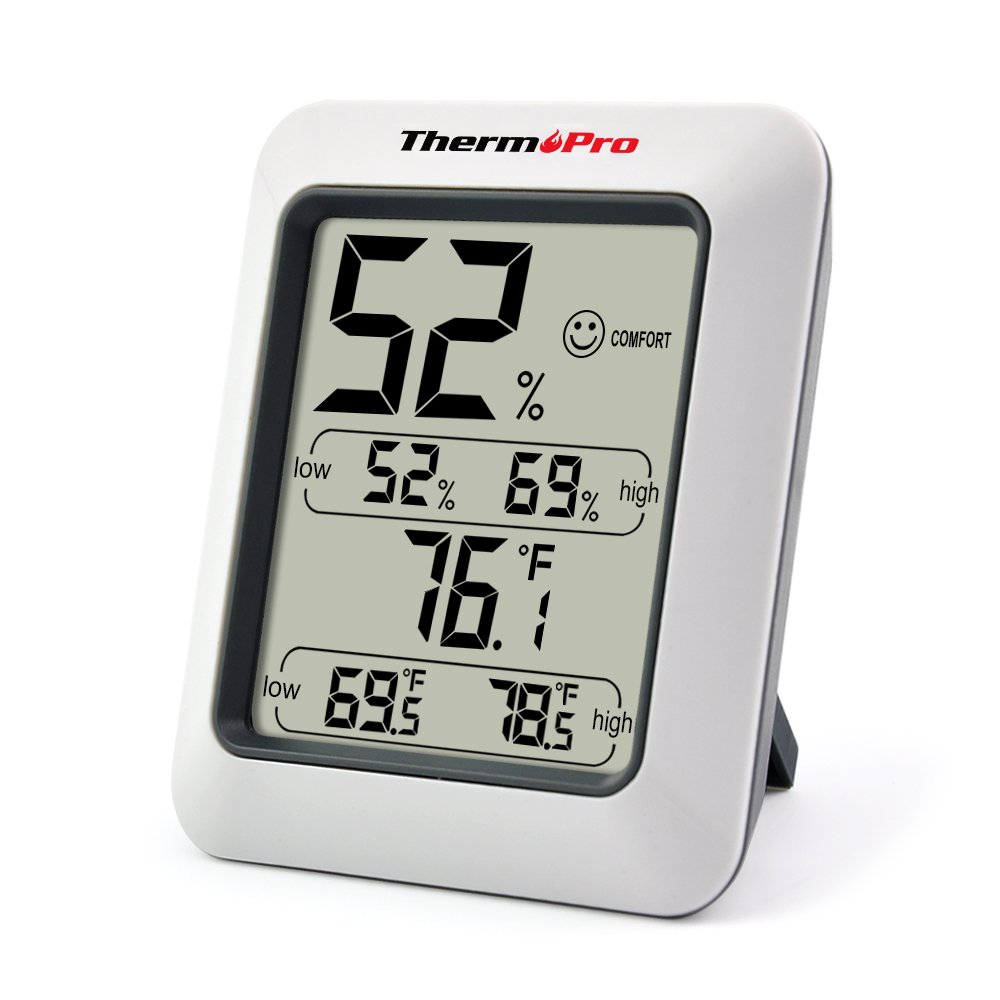
it has a low and high humidity figure (52% to 69%) with a 'big reading' of 52.
what would that tell me? is it a range over 24 hrs or somethings and 52 is what it is now?
been looking at a few and theres a lot of complicated equipment with lots of readings, weather stations etc. i just want something that i can stick in a room and it says x% dont i? and move it to another room and itd take a minute or so to change reading to new room?
thanks

