UPDATE: Reviews section refreshed, redesigned, searchable: Go take a look
I refuse to buy another new car until I can get something close to a tesla (hopefully Dyson will do this for us) for £30K
And the OP is correct Rudolph Diesel Born 1858 invented the engine we are still putting into new cars in 2019, if it wasn't for him we would be buying steam cars today.
At least Hitler's U-boats embraced the E-power
Also I am pleased car sales are down and Honda is closing - it serves the industry right for being greedy and lazy.
I find this thread interesting, I have read the article and most of the four pages of circular arguments that followed, there are some quite entrenched views from either perspective, but honestly I don't think anyone can really argue against the idea that cars have gone from being an extravagant toy for a few wealthy individuals, to a tool providing more freedom for the masses, to an environmental and social problem...
Personally I don't think we need to completely remove private car ownership, just make it less 'normal' the 80% of us that live in a major urban centres do need to reassess our ownership and use of cars as well as our willingness to fund and support more sustainable alternatives.
Anyone still arguing for a continuation of widespread private car ownership and use is essentially arguing for a decline in quality of life for the majority (IMO).
The thing that struck me was this graph on pg 2:
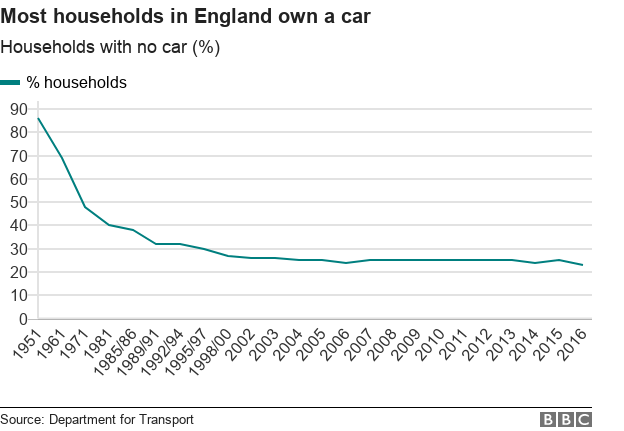
My parents were born in the early 1950s, so over the course of their lives car ownership has gone from a 15% minority thing to an 80% majority thing...
So it's happened inside the life span of a single generation... Is there any real reason why that trend can't that trend be reversed in a similar timescale?
I love these threads. As soon as anyone suggests reducing private car use a whole stack of people leap in with how they couldn't possibly do anything without a car and all this unrealistic lentil powered green nonsense couldn't possibly apply outside London.
Nobody is saying that every journey can be made without a car but a hell of a lot more could be. Yes, there needs to be higher quality, more frequent public transport outside London, it needs to cheaper to use (and car travel needs to become more expensive so that the marginal cost for each trip by car is higher than the public transport alternative).
When i was a kid my Dad commuted 24 miles from Chelmsford to Ilford by car and I remember it being a car share - 3 or 4 of them took turns to drive in. I'm sure a few people will chip in and say they do this but it's extremely rare now.
No one is saying everyone has to ride a bike for every journey, but a hell of a lot more trips could be made by bike if there was safe infrastructure for people to ride on comfortably. And not just in the city.
The UK average commute length is 10miles - most are far shorter.
70% of UK car journeys are under 5 miles.
Anyone can ride those sort of distances in a reasonable time and an e-bike means hills are no longer a barrier. Yes, there are a few wet days, but not nearly as many as you think when you start commuting by bike.
Transport is the largest contributor to UK carbon emissions and private car travel the largest part of Transport emissions. Car journeys under 10 miles make up 37% of car carbon emissions.
I do absolutely refute it. It’s a pack of lies.
I found the original quote which is in itself bollocks
For a guy who insists on having factoids to support everything anyone says that disagrees with whatever internet enabled opinion you hold, you spout a lot lot of unsupported opinions
You've googled the wrong thing and I know this because you talk about filters. Wrong tech, wrong Wikipedia website.
You confuse trivia with knowledge and understanding.
So I will leave this here for you:
Your next responses will be bollocks,lies, etc etc. When what you mean is I don't wish to believe it because it disagrees with my firmly held beliefs backed up by random web searches. So right back at you.
only a minority of pollution comes from transport”. So what? It’s still there, and a short journey to buy a pint of milk can be easily converted to walking or cycling.
If you live in city, have easy access to to a shop and are normally abled, true but try to step outside your own experience and consider how others live.
It also matters because transport is the low hanging fruit but everything else is the bigger problem we must address if we are to reverse the damge we are doing.
Transport is the single biggest contributor in the UK but not elsewhere and in the UK it is the single biggest contributor but still accounts for just under 1/4 of the total. Again low-hanging fruit to avoid the really difficult conversations we must have
If you live in city, have easy access to to a shop and are normally abled, true but try to step outside your own experience and consider how others live.
It's almost as if everyone has ignored that, has never suggested using a different approach in different areas, or that a significant number of people live in urban areas so that does apply to them. We should not dissuade people in urban areas to reduce their driving because people live in the country. We can do many things to make using private cars in cities less attractive and make the alternatives more usable and cheaper.
Or to turn it around why should I suffer air pollution, congestion, poor cycling infrastructure and a lack of open spaces because you have to drive to buy milk. step outside your own experiences and consider how others live.
Then consider who we survived all those years ago without the majority owning cars.
The comment about councillors trying to use public transport and failing is probably true everywhere in the UK except inner London.
Okay but where do you think most people live?
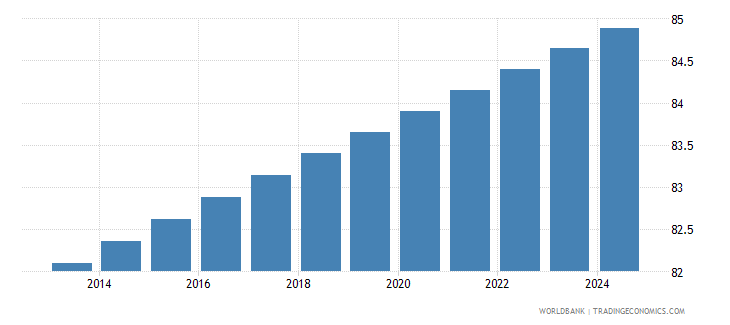
https://tradingeconomics.com/united-kingdom/urban-population-percent-of-total-wb-data.html
Well closing in on 83% in urban areas, think we should be doing something about car use in those areas? How about if what we were talking about here is what we could and should so rather than what exists today.
The UK average commute length is 10miles – most are far shorter.
70% of UK car journeys are under 5 miles.
Anyone can ride those sort of distances in a reasonable time
Well that isn't true.
A 20 mile daily distance is way beyond most people. If you have never ridden a bike for 20 years and then try to start commuting 10 miles each way, it's going to be very difficult. For some people, it's never going to be possible. Especially with the existing infrastructure.
Also, it's not just the journey that takes time, you need to change and ideally shower. All takes time.
I wish we had a proper cycle infrastructure and more people would use bikes but it's not going to happen.
They've build a massive housing estate close to me. Not a single shop. Have grand plans to have a 'High Street' to hang out and have a latte in, but apparently not for mundane things like buying food, or a paper. So people drive everywhere, funnily enough.
Well that isn’t true. A 20 mile daily distance is way beyond most people. If you have never ridden a bike for 20 years and then try to start commuting 10 miles each way, it’s going to be very difficult. Also, it’s not just the journey that takes time, you need to change and ideally shower.
And just as predicted. *Average* is 10 miles - theres a minority who do stupid distances - read the next fact. 70% of trips are under 5miles.
You don't need to change or shower after riding 5 miles at a relaxed pace and it'll take you under half an hour. Maybe a quick wipe with a flannel on the hottest days of the year but even if you are riding futher and are a smelly sweaty individual a shower and change is only 10 minutes (and you no longer need to do it at home so theres a time saving there)
Add ebikes into the mix and you're not going to need to change over a much longer distance or even when it's really hot.
I wish we had a proper cycle infrastructure and more people would use bikes but it’s not going to happen.
Why not? the budget for HS2 is 56Bn. The Autumn budget had £5bn a year for road upgrades for each of the next 5 year. In Feb 18 the Gov announced cities could bid for a share of 7m for cycling schemes. The return on investment for cycling infrastructure is massively higher than for road or rail https://cyclingfallacies.com/en/23/it%E2%80%99s-too-expensive-to-provide-for-cycling
70% of UK car journeys are under 5 miles. I work in Chiswick and cycle just under 5 miles each way into work. I've done it for nearly 25 years and when I started there there were 3 of us who cycled now about 10 do. But there are still 2 people who work for me who are inordinately proud that one drives a mile and the other a mile and a half each way, and rent parking in Chiswick to allow them to do it. Strangely both of them complain about not being paid enough.
But as I said before within 7-10 years there'll be road charging in the UK. It's happening in Australia on about those timescales, and in Canada too as fuel tax revenue falls with the take up of EV cars then that revenue has to be replaced. It will be coming to the UK, and the rest of Europe in about that timescale. So people will be forced to re-evaluate their personal transportation methods.
We can do many things to make using private cars in cities less attractive and make the alternatives more usable and cheaper.
Absolutely true. No argument there. Except we have to have the much more difficult discussions about what the alternatives are, whether they are any cleaner, or more viable in the long run.
Or to turn it around why should I suffer air pollution, congestion, poor cycling infrastructure and a lack of open spaces
What makes you think getting rid of cars will help any of that? We now know that diesel emmissions are far worse polluters of far more dangerous things than other forms of ICE and there will be more of them. EVs are not viable long term because contrary to edukator there isn't a scaleable viable way to recycle the lithium from the batteries, we can recover the metal, partly by burning the plastic around it. So we have to keep mining it, which is horrible for the environment and unsustainable.
Why should the entire population of the south east quadrant of the world suffer so London can have EVs?
Equally, where was your (multiple?) Bikes made? To what environmental standards? How did they get to you? On a ship powered by unicorn farts?
Those are the larger, far more difficult conversations we must have instead of being distracted by the whole cars are evil thing. It's a fig leaf for the fact that we have neither the collective will or the ability to address what is really going to kill us.
How did people get around before we had cars? Well if you were disabled you probably didn't live long enough to worry. Thank God we have to think about those people now.
Well closing in on 83% in urban areas
Which is different from inner London. Most urban areas don't have a tube system for a start.
What makes you think getting rid of cars will help any of that?
Because cars are the dominant source of poor urban air quality.
Add ebikes into the mix and you’re not going to need to change over a much longer distance or even when it’s really hot.
Where do you out the kid you are taking to school, the toddler you are taking to daycare, Tge bulky equipment you need for your job, the diapers you need to buy and the foodstuffs to make dinner on your bike/ebike? Biking as a primary form of transportation just isn't going to cut it for all but a select few (who tend to work in certain reasonably well paid jobs in areas with good resources).
Because cars are the dominant source of poor urban air quality.
A) they aren't
B) if you replace them with something else, which you will have to unless you are willing to have the much harder conversations referenced above, you will end up in the same place but with different things taking up the space..
Every "solution" to air quality and pollution we are willing to consider merely moves it somewhere else.
Biking as a primary form of transportation just isn’t going to cut it for all but a select few (who tend to work in certain reasonably well paid jobs in areas with good resources).
The select few who don't need to transport children to two different locations? You're undermining your own argument.
I used a trailer, btw.
A) they aren’t
Yes they are.
Every “solution” to air quality and pollution we are willing to consider merely moves it somewhere else.
No it doesn't.
Which is different from inner London. Most urban areas don’t have a tube system for a start.
Not a tube specifically but.... (Any one can fill in gaps I've missed)
Glasgow - Underground plus rail
Edinburgh - Tram
Newcastle - Light rail (over and underground)
Manchester - Tram and Rail
Liverpool - Underground trians
That is just my experience in the UK, down in Oz lots of good mass transit systems in all cities moving loads of people without touching cars at all.
I think it was Athens that electrified their bus network, there are heaps of systems in place
if you replace them with something else, which you will have to unless you are willing to have the much harder conversations referenced above, you will end up in the same place but with different things taking up the space..
Happy to have the hard conversations. as for space

Where do you out the kid you are taking to school, the toddler you are taking to daycare, Tge bulky equipment you need for your job, the diapers you need to buy and the foodstuffs to make dinner on your bike/ebike? Biking as a primary form of transportation just isn’t going to cut it for all but a select few (who tend to work in certain reasonably well paid jobs in areas with good resources).
More whataboutery
Just look at the girls face in that GSD video - it makes me well up every time i see it. I have no use for a GSD at all but my god would i love one. How much fun do they look?


Which is different from inner London. Most urban areas don’t have a tube system for a start.
Right, so we're back to "we shouldn't improve public transport because it's not very good at present"? We know that public transport isn't very good, e.g., no tube system outside London (and Glasgow and Newcastle), that's the whole point, it should be better. People take the most natural, easy choice when they decide how to get around. Like I said, for my friends in London it's public transport because it's relatively cheap (in time and money), reliable, easy to use, goes where they want to go. For me, and most other people, it's the private car, because in comparison to the rubbish alternatives it's relatively cheap (in time and money), reliable, easy to use, goes where I want to go.
If you live in city, have easy access to to a shop and are normally abled, true but try to step outside your own experience and consider how others live.
I said "A short journey to get a pint of milk", which kind of implies it's y'know a short journey. You can live in deepest darkest North Wales and still have a village shop less than a mile away. Spar isn't the preserve of the metropolitan elite for crying out loud!
In terms of disability, why on earth is "someone might live in the Highlands, 40 miles from the nearest shop and be disabled" an argument against improving public transport and building safe cycle routes?
As Simons-nicolai_uk said, it's not about banning all cars or making every single person travel every single journey by bike or foot. It's about getting some people to change some journeys.
Where do you out the kid you are taking to school, the toddler you are taking to daycare, Tge bulky equipment you need for your job, the diapers you need to buy and the foodstuffs to make dinner on your bike/ebike? Biking as a primary form of transportation just isn’t going to cut it for all but a select few
When the right infrastructure is there, you can use a bakfiets or cargobike if you need it.
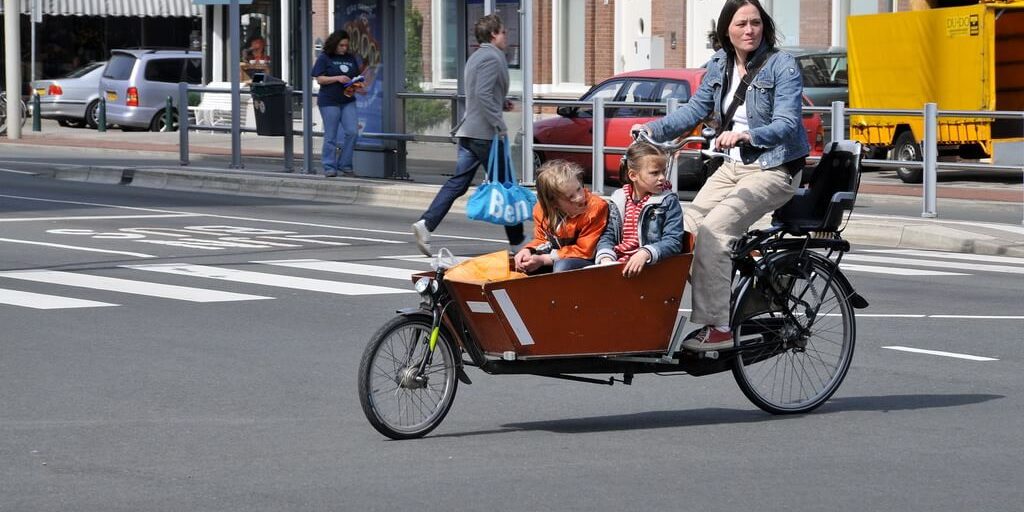
But no, I wouldn't expect a skip delivery driver to load 6 skips in one of those. Nor would I expect a building supplies delivery driver to carry 20 tonnes of gravel on one. But for SOME people, it could be a replacement vehicle for SOME journeys.
Also, just to go back to my earlier post, I think we've reached that point. https://singletrackworld.com/forum/topic/cars-are-killing-us-within-10-years-we-must-phase-them-out/#post-10523398
We are one week into a three month experiment to live without a car. I do plan to hire a car occasionally for visiting family or going to festivals (maybe), but we just don't need one for daily living as we live in a city.
Not having a car will mean that we have to make changes, but so far that means doing smaller, more frequent and local shopping. In the longer term it will mean less visits to trail centres or spur of the moment outings. On the plus side my level of activity has increased in the last week, life has slowed down a bit, and I have explored more of my local area than I have in the last five years. I fully expect to give up the car permanently at the end of the three months.
You can live in deepest darkest North Wales and still have a village shop less than a mile away.
This bit is a joke right? Please tell me it's a joke.
Why not they probably don't have the internet down there.... you can just milk whatever walks past
Why not they probably don’t have the internet down there…. you can just milk whatever walks past
Well they've been milking the pit closures for years.
Of course it's not a joke. There are shops selling milk in rural North Wales. You don't have to live in a city to have a shop a cycle-able distance away from you, was my point.
Of course it’s not a joke. There are shops selling milk in rural North Wales. You don’t have to live in a city to have a shop a cycle-able distance away from you, was my point.
All within a mile of a house?
All within a mile of a house?
He didn't say "all".
and here we go, best way to deal with a modern transport issue is to deal with the serious concerns of rural welsh shopping and driving from FNQ to Alaska with your boat and entire extended family
He didn’t say “all”.
Ah so he means.
You can live in deepest darkest Wales and can be over a mile from a shop.
All within a mile of a house?
I haven't been to them all! What a ridiculous line of argument.
I said
You can live in deepest darkest North Wales and still have a village shop less than a mile away. Spar isn’t the preserve of the metropolitan elite for crying out loud!
I didn't say everybody in North Wales, I just said it's possible to live in rural North Wales (which is most of it) and have a shop nearby. Do you really believe that NOBODY in rural North Wales lives within a mile of a shop that sells milk?
But...
This shows exactly what happens with these discussions. Someone says "we should make public and active transport better in cities" and someone replies with "but what about disabled people who need to travel a long way in/between rural areas?" And the discussion gets derailed.
Edit
well, yes, of course. Who ever claimed otherwise? Certainly not me.You can live in deepest darkest Wales and can be over a mile from a shop
Phase out cars?
Not going to happen. 😀
Ah so he means.
You can live in deepest darkest Wales and can be over a mile from a shop.
Your response to misrepresenting someone is to state the bleeding obvious? Poor form, Drac.
well, yes, of course. Who ever claimed otherwise? Certainly not me.
So what exactly were you getting at?
So what exactly were you getting at?
Was it not clear from the rest of the post you left out from your quote?
Was it not clear from the rest of the post you left out from your quote?
No. Hence why I asked.
i don't think finding milk in north wales will be an issue, finding petrol to fuel your car to get it might be.
No. Hence why I asked.
I don't see how it could be any clearer. I think you're proving the point that people like to argue extremes when talking about general situations.
I think it's a bit more fundamental than just swapping a school run car for a cargo bike, it is going to require a general shift in lots of people's lifestyles and some of their expectations.
First of all if you're doing stuff without a car of course it is going to take longer. By bike, bus or on foot you simply have to allow more time for people to get about. So perhaps that means a change to our increasingly long hours/presentism type working culture...
It's clear to me now that all of the technologies from the last hundred years or so which were meant to save us effort and improve productivity giving us free time back, stuff like like cars and computers, actually mean many of us now work longer harder hours, the common belief being that we can produce exponentially more...
British people are generally "time poor" and part of the equation that leads to that is the expectation that we'll just rip about in our cars between home, work and all our other commitments rather than taking any time over things, that's got to change...
A life without the same level of rush and panic sort of has to go hand in hand with reduced car use...
Drac:
My point was that even people who don't live in a city could potentially change how they make some journeys.
It was a counter point to cromolyolly's point that this sort of stuff is only a good idea if you're able-bodied and live in a city.
I gave the example of someone who lives in or just outside a village in North Wales travelling to buy a pint of milk from a shop. They don't live in a city, but it's still a journey that could change.
The select few who don’t need to transport children to two different locations? You’re undermining your own argument.
You did see the all but, yes? Or are you just being obtuse via literism?
Yes they are
According to actual sources, not wikipebelief, transport, power generation/supply and power intensive parts of the ICI sector are the largest single sources of pollution in urban areas. Which actually stop depends on the exact urban areas and the blend of activities. Transport includes, but is not limited to, cars. Heavy vehicles, like buses and trucks contribute pollution up to 5x their proportion if the sector. So no they don't unless you can find legitimate sources that say otherwise.
No it doesn’t.
Does too. EVs !over the pollution from the tailpipe to the smokestack. Stringent environmental regulations move production to places with none, or lax.
Happy to have the hard conversations.
Not singling you out in particular but no, we are most definitely not ready for those discussions yet. There evidence is overwhelming on that front.

