should be good, uri geller the secret spy?
Ace
Shame there's nothing on Brixmis...
Ooo,cold war jets. I is also excited.
Andy, check out an old thread of mine....
http://singletrackworld.com/forum/topic/when-wars-were-colder-planes-were-cooler
I'd also be excited if I could work out when it's on. Or has it been on & I've missed it?
Jets and subs... awesome 🙂
Sounds interesting. Will look out for it, thanks CFH.
Ta for the heads up.
[URL= http://i34.photobucket.com/albums/d114/browncloud/migs_zpsb8f7af91.jp g" target="_blank"> http://i34.photobucket.com/albums/d114/browncloud/migs_zpsb8f7af91.jp g"/> [/IMG][/URL]
Jets In The Cold WarThe jet engine was one of the most important inventions of the 20th century. A triumph of British engineering born out of conflict;
That would be British and German engineering then. And the German ones were much, much better, as they didn't just try to bolt a jet engine on a plane not very removed from a Spitfire.
I'm nominating Flasheart for arguably the best PSA ever 😀
Good spot.
Good shout, let the nerdery begin
That would be British and German engineering then. And the German ones were much, much better, as they didn't just try to bolt a jet engine on a plane not very removed from a Spitfire.
The tele will probably answer soon enough. But wasn't half the trouble with the German designs that they where far too complicated for the available manufacturing capabilities?
The tele will probably answer soon enough. But wasn't half the trouble with the German designs that they where far too complicated for the available manufacturing capabilities?
totally - too much time to get to production and too slow to produce. The british efforts were about speed and ease of production - the Sten Gun, for instance, was manufactured in a toy factory.
But wasn't half the trouble with the German designs that they where far too complicated for the available manufacturing capabilities?
More the acute lack of any resources as a result of being on the losing side.
And as a design platform for future planes (what the BBC blurb alludes to), the German technology was much more relevant. We might have independently co-invented the jet engine, but it's the German technology in regard to how to build a plane around it that was the thing that sets them apart. The first Meteors could barely do over 400 mph, compared to the Me 262's 530 mph. The Me262 also first few 9 moths before the Meteor.
/pedant
/geek
The Germans carried on developing new technology to the very end. Possibly if they had just used their resources to produce existing technology they may have lasted longer.
Whereas the Allies, particularly the USA, tended to concentrate on production of large numbers, e.g. The Sherman tank, designed to take on the Panzer IV, which it could but it was completely outclassed by the Tigers and Panthers. However, the decision was made not to retool production lines and to concentrate on producing large numbers of Shermans.
With the jets, the Allies responded to the Me262 with Meteors and Shooting Stars, which did not have the swept wing technology but were still superior to a piston engine fighter. A bit like the Sherman Firefly, not as capable as a Tiger but at least they had a chance of destroying one.
Tough on the crews who had to fight in the things mind.
The Me262 also first few 9 moths before the Meteor./pedant
/geek
And the Heinkel He178 flew nearly four years before the Me262 (1939 compared to 1943)...
#firstjetpoweredflight
#biggerpedant
#evenbiggergeek
I guess we should write to complain to Aunty then, in that case....
Looks fantastic.
Uri Geller, the controversial mentalist
😀
Whereas the Allies, particularly the USA, tended to concentrate on production of large numbers, e.g. The Sherman tank, designed to take on the Panzer IV, which it could but it was completely outclassed by the Tigers and Panthers. However, the decision was made not to retool production lines and to concentrate on producing large numbers of Shermans.
Its interesting that USA then adopted the German approach during the cold war.
Russian or Warsaw Pact conventional forces seriously out numbered American or Nato ones, but the NATO forces were superior in terms of technology.
Mind you if the cold war turned hot conventional forces might not have mattered.
Its interesting that USA then adopted the German approach during the cold war.
Very true. I think it was case that they could never of matched the Warsaw Pacts numbers ever, so they went down the high tech, increased capability route. I suppose the soldiers who had fought against the Panzers and got hammered, realised that a lack of numbers could be made up with superior equipment and they were the ones who developed the Cold War doctrine, strategy and equipment.
Also, after Vietnam the US public would not accept unnecessary casualties, so this has driven the super high tech military equipment we have today, drones etc.
Mind you if the cold war turned hot conventional forces might not have mattered.
The Cold War was hot - it's just that most of the millions of people who were killed were the Asians, Africans, Middle Easterners and Latin Americans killed by the superpowers' proxies.
Andy, check out an old thread of mine....http://singletrackworld.com/forum/topic/when-wars-were-colder-planes-were-cooler
Best thread ever! We should have another one as many of the photos are no longer there 🙁
Here's a Nimrod and a Victor for no other reason that I saw both recently at Elvington...
[img]  [/img]
[img] 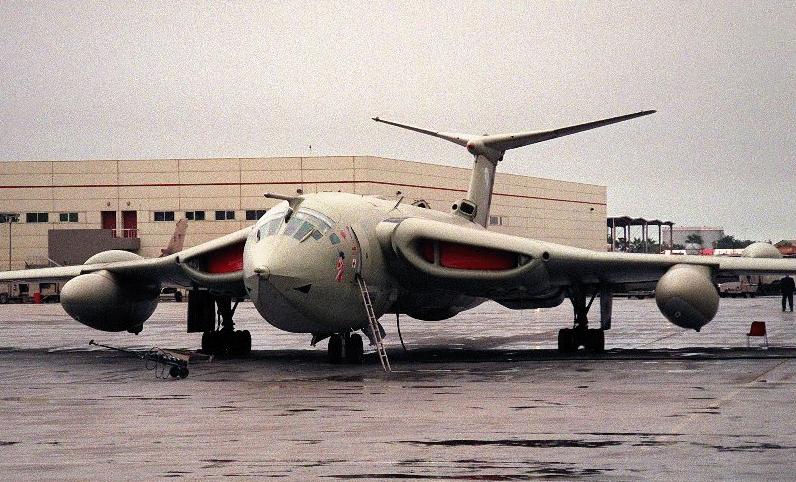 [/img]
... the victor looks very menacing up close!
Best thread ever! We should have another one as many of the photos are no longer there
Was reading through it again last night, and it certainly was a cracker! 🙂 Agree that it's sad to see so many pics no longer linking. Looks like this thread may well end up replacing it, but perhaps with a slightly broader remit, beyond just flying things! 🙂
Great stuff. Bloody love subs too. How about an Akula class...
[img]  [/img]
This looks like a good season.
I hope they investigate the Russians experimental planes and the like, some were way bonkers, like the massive seaplane thing they did..
the massive seaplane thing they did..
Ekranoplan!
[img] 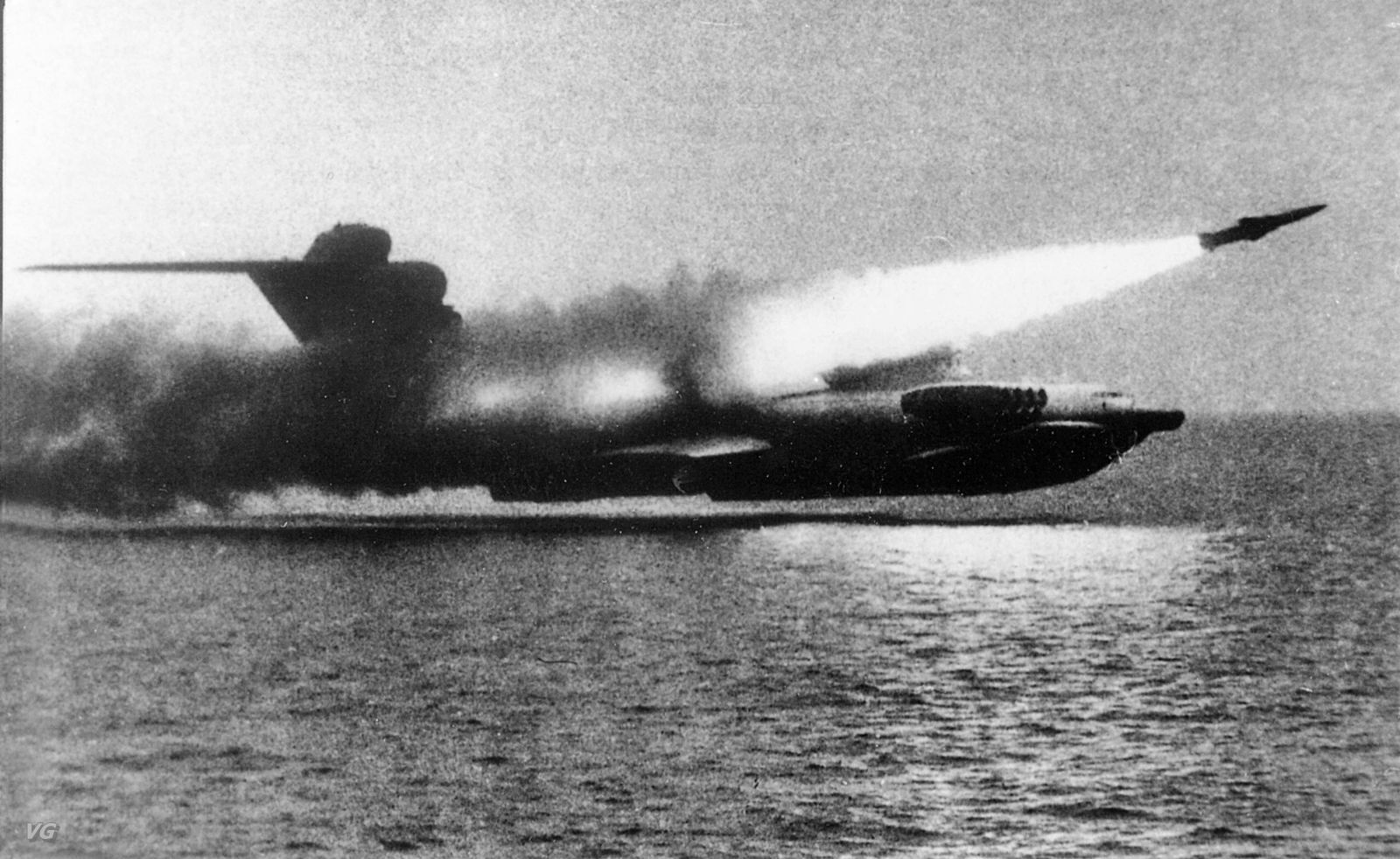 [/img]
The Germans can't lay claim to the jet engine. Whittle got the patent and was developing an engine from very early on on the war. The Germans got one flying first but it only lasted 6 hrs before the turbines melted as materials science was not advanced enough. They went for axial compressors, better but technology too far ahead of their grasp at the time. Whittle took a more measured approach and utilised centrifugal compressors which did the job fine back then given the current state of the art and materials limitations. Anyway, jet engined aircraft came too late to make an impact on WW2.
Those Russian jets in formation look great.
Bit sad to see them now...
[img]  [/img]
So when is it on? Did anyone answer the question posted earlier? having grown up in the latter stages of the cold war the sound of the 4 minute warning still turns my blood cold, really looking forward to it.
If anyone is interested, RAF Cosford near Telford has a really good Cold War section, my kids who are largely ignorant of the cold war were horrified at what they saw and genuinely couldn't believe how close things got.
I think they are just announcing a new season, I'm guessing schedule will come along later.
Are we allowed tanks too?
[img]  [/img]
the victor looks very menacing up close!
Wasn't the Victor the longest-serving aircraft that the RAF possessed? in service for something like fifty years IIRC, they still used them as tankers up to about 2003.
Britain's V Force was THE coolest squadron ever.
Victors, Valiants and Vulcans. What not to love.
I'm looking forward to this.
Cheers CFH. I assume you've flown them all 😆
That article says it was last updated on the 28th of May this year; are you sure it's not been and gone?
[url= http://www.bbc.co.uk/programmes/b03h8r3y ]Cold War, Hot Jets[/url] on the 8th of Nov 🙂
Brilliant! This is the most awesome PSA in the history of Singletrack, ever.
That would be British and German engineering then. And the German ones were much, much better, as they didn't just try to bolt a jet engine on a plane not very removed from a Spitfire.
Yes and no. The German engine designs were advanced in that they were axial flow, but they were fundamentally flawed in that their materials science was way behind us. German engines had very short lives, although a refined version of a wartime BMW engine still serves to this very day as the ATAR engine in French-built aircraft. British engines of the time were very different in design, lacking multiple compressors but were ballpark in terms of thrust and in a different league when it came to reliability. The Rolls-Royce Nene turbojet of the immediate post-war period was clearly closely related to the venerable Derwent which powered the early Meteor and was adapted by both the US and USSR to power the F-86 Sabre and MiG-15 respectively during the Korean war.
In terms of aerodynamics, we lagged behind German research considerably, with no supersonic wind tunnels. Contrary to popular belief, the swept-wing Me262 was designed as such in order to balance the centre of gravity, not to delay the onset of wing buffeting, but the theory was very much in place there by 1944. Once again, the Germans were hampered by poor materials science.
In combat, the Me262 wasn't quite as revolutionary as it may seem. Although they were undeniably fast, acceleration was very poor and they were often caught napping by high performance piston engined fighters like the P-51, Tempest and of course the late Spitfires. German airbases quickly learned to put up an umbrella of FW-190s to protect the jets from attack during takeoff and landing.
Wasn't the Victor the longest-serving aircraft that the RAF possessed? in service for something like fifty years IIRC, they still used them as tankers up to about 2003.
The Canberra has that beat, it was phased out in 2007. Technically, you could argue that the Spitfire, Hurricane and Lancaster remain in service with the BBMF...
What about the Shackleton? Based on a Lancaster with four Griffons and contra rotating props and only relatively recently retired from service?
Andy, check out an old thread of mine....
> http://singletrackworld.com/forum/topic/when-wars-were-colder-planes-were-cooler
Brilliant thread!
[URL= http://i924.photobucket.com/albums/ad88/RichMTB77/YumaF15Banking.jp g" target="_blank"> http://i924.photobucket.com/albums/ad88/RichMTB77/YumaF15Banking.jp g"/> [/IMG][/URL]
For me this is up there with the all time greats. Never defeated in combat
There is a trailer for it [url= http://www.bbc.co.uk/programmes/p01kch9x ]here[/url]on the BBC website, which says the trailer has been available since Saturday.
About 80%of what I watch are BBC documentaries I can't imagine I would of missed it, unless it was on when I was working away.
What about the Shackleton? Based on a Lancaster with four Griffons and contra rotating props and only relatively recently retired from service?
Kind of...the Shack was based on the Lincoln, which in turn was developed from the Lancaster. The Shack was retired in 1990, which would make the design 48 years old. The Canberra served for 55 years and was retired in 2006 - not 2007.
Also arguably pinnacle of cold war hardware...
[img]  [/img]
Plenty of wacky soviet derivatives too!
Nimrod was in service till 2011 I think and was based on the Comet which first flew in 1949. 62 years not bad for a design!
Ektranoplan !!
Russian Bonkerness at it's most bullish. Perfect. 😀
Along with materials science the allies were well ahead in petro- chemical's science in WW2. It's one of the reasons the engines could be simpler in design - better quality and higher octane fuels were available.
For me the best (ugliest) bit of cold war British engineering has to be the Lightning. Watching one as a kid at an air show was awesome.
You could also argue that Concord was every bit a symbol of cold war engineering and far more useful than the hydrogen bomb.
oooh, wonderful.
Cue the debates with mrs_oab about what we *are* watching....
On another note, my Uncle used to design Nuclear Warheads for us lot when he was based in Lossienouth, since moved to Saudi to take that phse further and enjoy his retirement.. 😉
Mental when you think of it, my Uncle a "potential" mass murderer!! 😯

