Going to try and restore an axe. A lot of the info I’ve read says to soak the axe head overnight in vinegar but I want to keep the handle - should I remove and refit after or just soak the whole lot? What is the easiest/best way to remove the handle?
What state is it in and what needs to happen? I’d start with a cloth and some autosol.
The head isn’t too bad, fairly rusty and some pitting. Given it a going over with a wire brush to get the loose stuff off. Handle is damp but drying it off the now.
Very similar condition to the one in this video
There are plenty videos on you tube showing axe restoration, although some of them go a bit OTT and end up looking like some kind of Valhalla tribute.
Personally I would use a polishing disc but without one I'd remove rust with brush , wire wool etc then possibly soak the head in coca cola which can remove more tarnish and leave a nice patina.
If the handle is sound and tight i wouldn't remove it. In fact when I've wanted to remove a damaged handle I popped it in the edge of a bonfire and burnt it out. The heat will probably destroy the wedge if it's aluminium though. Plus you'll then need a new handle and wedge to re hang it.
Traditionally you could soak the finished axe head/handle in linseed oil and allow to dry although there is some debate as to whether that is necessary, or if it actually does anything
What style of axe is it? There are lots of different shapes originating from various regions. Take a photo and do a Google image search to find out what you have. I've got a Kent pattern axe which is a great splitting axe, and a Rhineland axe that is very sharp for shaving, whittling and hedge laying
I definitely don’t want to go over the top as it’s going to be a gift to someone. Could I soak the head and the top of the handle in vinegar without damaging the handle? Not sure what brand or style it is yet but I’ll check tomorrow. It’s a short axe which was used for kindling. Would like to sand the handle back and treat with linseed oil I think.
I think vinegar would probably be fine although I'd be slightly wary that it would dry out the wood and potentially loosen the head if the wood shrank slightly. Im just theorising though and basing that on my treatment of conkers when I was a kid! I don't know for sure.. If I was to be super cautious I'd soak a rag in vinegar then wrap that round the head, avoiding the wood. Rewrap every 24hrs after another soaking
When I replaced a sledge hammer handle recently, I put the wedge in then stood the sledge in a pot of linseed oil for a few days, then dried it. Seemed to have the effect of swelling grain slightly
Honestly, wire wool, and WD40, it is, after all, a working tool, not a trophy, so patina is what it should have. Sandpaper on the handle to smooth it off and get rid of any splinters that might be present, then give the handle several coats of oil.
Then sharpen it. If it’s really blunt, then a medium file, then a fine file to give it a good edge. If all it’s going to be used for is chopping wood for kindling, that’s probably all you need. If it’s likely to be used for carving, then more serious work with diamond stones and very fine grade wet+dry paper on a block, then honing with a leather strop and honing blocks.
This is an old and badly abused Kent-style head I found stuck away in the shed, which I decided would be a good customising project, as I’d aquired a small cutting disc/whizzwheel.
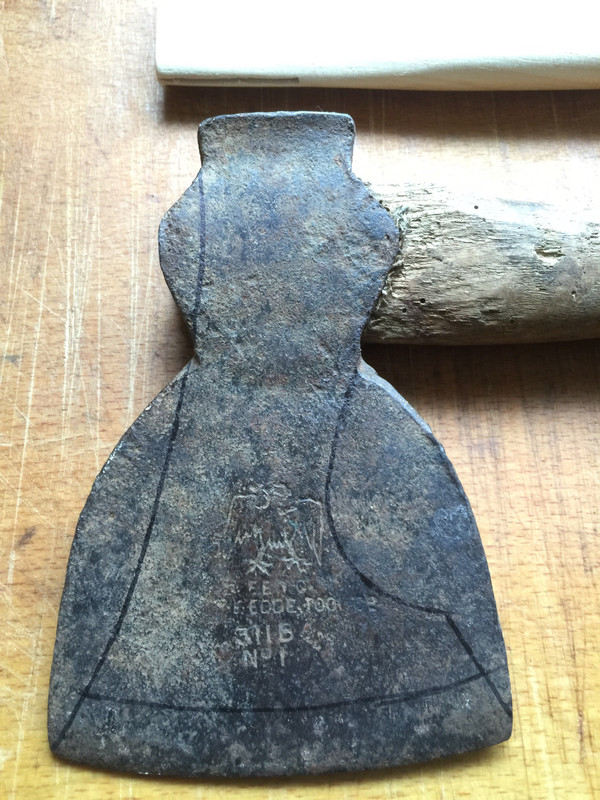
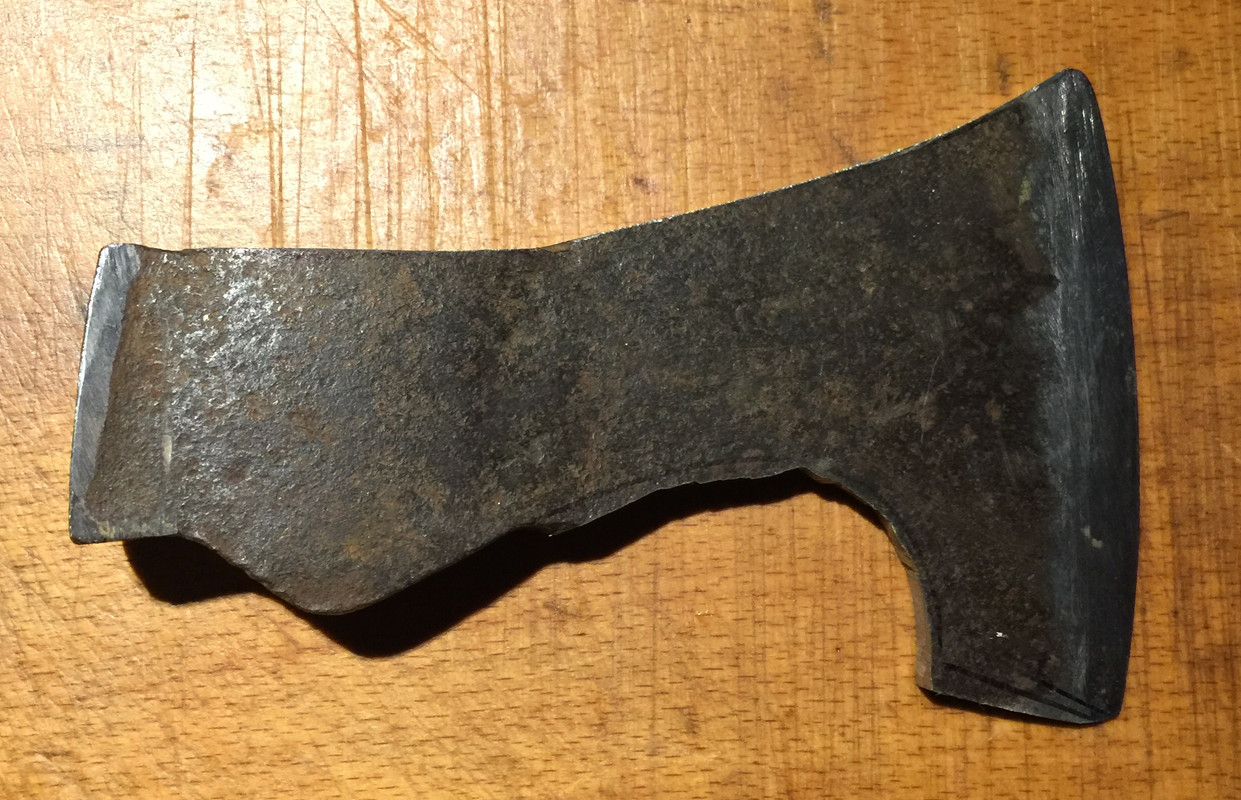
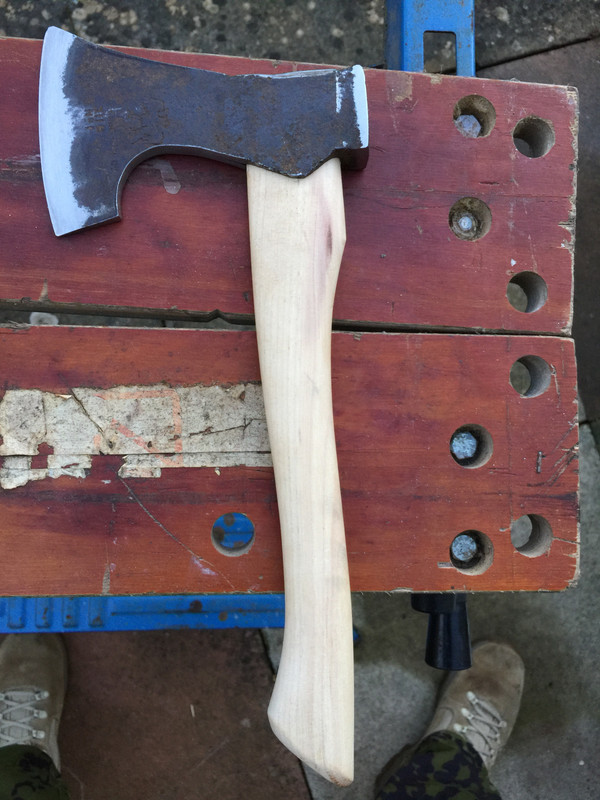
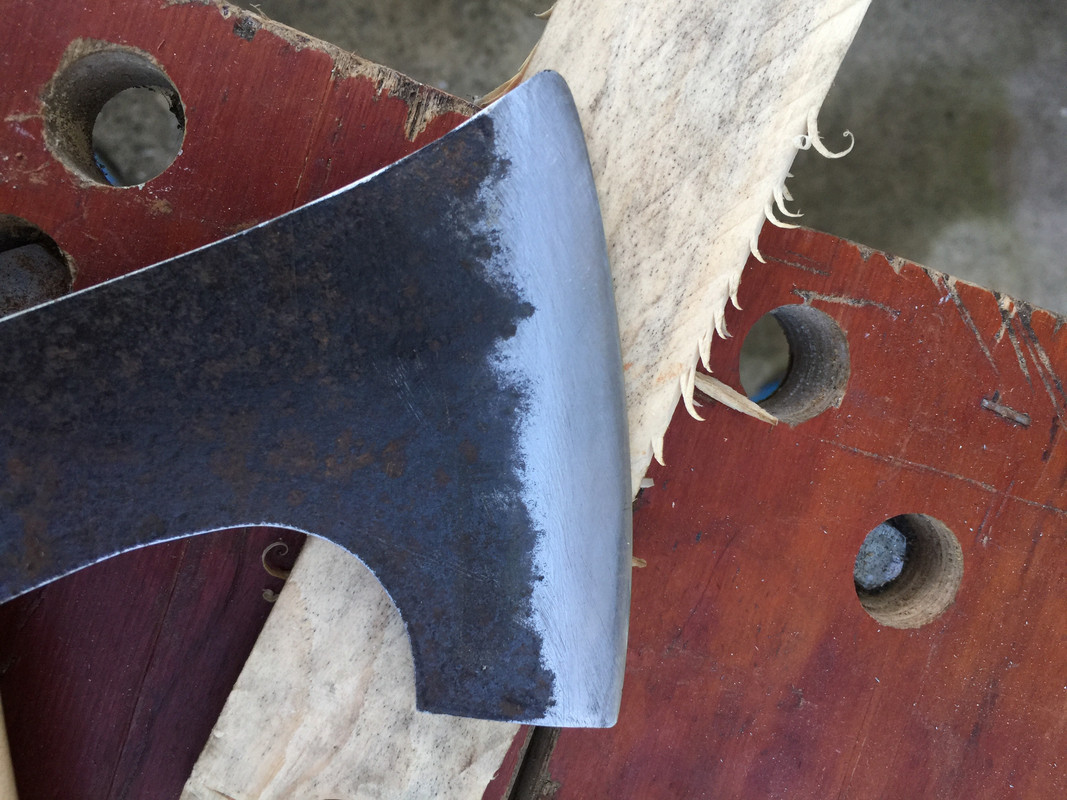
Sharp enough to shave hairs on my arm, but it’s intended for carving, hence the bearded axe shape, allowing me to choke the axe right behind the cutting edge.
As you can see, there’s still traces of rust in the pitting, but that doesn’t matter, it’s part of the character of the tool.
Yeah you really don't need to attack it with vinegars, pretty much any oil and a wire wool will make it look grand. The turps and linseed mix below would be ideal.
If you really really want to strip it with vinegar... Paint it with ketchup, its basically thick vinegar so you don't need to soak it. Wrap it in clingfilm to stop it drying out.
But honestly all it does is make all the rust a black sludge and the remaining steel a dull flat grey. Oil and wirewool will look nicer and you will need to use it either way.
If you want the handle to look nice get some raw linseed and real turps (because they both smell nice and don't have heavy metal drying agents) mix them 50/50 and with a new bit of wirewool give it a scrub, once it dries aply oil alone and leave it for a while before wiping off the excess.
Remember... Its an axe.
Thanks guys. A bit of research tells me the axe is a Smalcalda 600 TGL.
I’ll not use the vinegar and go with the oil and wire wool. There is a plastic cap type thing on the top of the handle - I would have thought it would be a good idea to soak the top of the handle with linseed oil but I can’t easily remove the cap.