UPDATE: Reviews section refreshed, redesigned, searchable: Go take a look
Can it be resourced, can it be purchased and does it offer good public outcomes? - are literally the only questions involved.
The challenge here is the insistence, particularly in defence, of buying 'British' which is in recent years is synonymous with overpriced and underperforming.
I get trade to stimulate the economy, but at what cost? I don't know enough about fiscal shenanigans but buying shite just to keep British firms afloat has an impact further down the line and doesn't seem to make sense to me. And usually ends up costing the taxpayer more.
The challenge here is the insistence, particularly in defence, of buying 'British' which is in recent years is synonymous with overpriced and underperforming.
The consolidation to BAe, plus a couple of others, definitely didnt help here.
Aside from the economic argument the other one is what happens in a crisis situation where everyone is competing for supplies and also long term what happens if the geopolitics change and you have lost the skills required.
Applies in certain other areas as well eg looking back to the pandemic how useful it would have been to have retained UK suppliers of PPE.
And usually ends up costing the taxpayer more.
It needs targetting. If only politicians could think strategically.
The example of BAe ^^ increasing manufacturing to support 155mm shell production to satisfy both the MOD and export markets.
The GCAP fighter project with Italy, Japan and UK could satisfy the founder countries and be exported to Germany and others.
Poland combined a SKorean chassis and BAe turret with a home-grown gun and fire control system in it's AHS Krab self-propelled gun.
You just have to be aware of your capability, talk to others and manufacture accordingly, without trying to build everything
Re the military procurement issue, and the necessity to equip our forces with drones. My immediate thought is Why? I understand in warfare then drones will be the way to go. But considering how slow we are at procurement, if today the MOD said we need X many units, then defence contractors are likely to take years to produce them. In those years technology will have moved on and on. By the time the services receive them then they'll be out of date. We are not currently in a conflict, perhaps what we need to be doing, is setting up the manufacturing capability so that when (and lets hope they never are) required we can switch on that manufacturing capability and produce 'modern' units. Ukraine has proved that it is possible to make them in great numbers. Perhaps we need to get our infrastructure right, so if we need them, then we can make the latest design quickly.
It's A LOT cheaper if you don't have to design people in to systems. Oxygen, escape systems, armour, kitchens, food storage, even seats
Perhaps we need to get our infrastructure right, so if we need them, then we can make the latest design quickly.
We're working on it, at least 120,000 drones this year,
(The Minister for Defence Readiness and Industry, Luke) Pollard told MPs that at the most recent Ukraine Defence Contact Group in April, the Defence Secretary had announced “the UK’s largest-ever drone package for Ukraine, delivering at least 120,000 drones this year, with deliveries already underway”, and that “the majority of this investment will be spent with UK-based companies”.
The minister named three of the UK-based firms in line for the work, listing “Tekever, Windracers and Malloy Aeronautics”, and said the spend would support “high-skilled jobs and strengthening domestic production capacity”. The approach, Pollard said, would help ensure that “rapid support to Ukraine also contributes to the long-term growth, resilience and scalability of the UK’s defence industrial base”.
https://ukdefencejournal.org.uk/british-firms-named-in-uk-huge-ukraine-drone-deal/
It's A LOT cheaper if you don't have to design people in to systems. Oxygen, escape systems, armour, kitchens, food storage, even seats
Drones are a force multiplier for sure, but there are still many things they cannot do. So there are still many pieces of equipment (crewed & uncrewed) that are required to support the human element of defence.
- Conducting close combat
- Secure and Hold ground - including urban areas
- Patrol communities - provide reassurance through physical presence / protect civilians
- Establish checkpoints - search people and vehicles
- Detain and process prisoners
- Conduct face-to-face engagement with local populations - negotiate with local leaders and communities / gather human intelligence (HUMINT)
- Conduct humanitarian assistance - Medical / Veterinary / infrastructure repair
- Recovering casualties (MEDEVAC) - CASEVAC yes, MEDEVAC no
- Maintaining law, order, and security in occupied areas
- Training, mentoring, and advising partner forces
And usually ends up costing the taxpayer more.
I can really only speak sensibly about airplanes but the export sales of the Typhoon is currently about £25B, the cost to the taxpayer for the RAF buying them is about £31B, so roughly 75% of the cost of them was directly funded by selling them. I read an article that suggested that every Typhoon built generates about £100M in tax revenue.
I see the London-centric, right wing press has reacted in an entirely rational, proportionate and not even remotely hysterical manner to Andy getting on a train to the capital. 😂
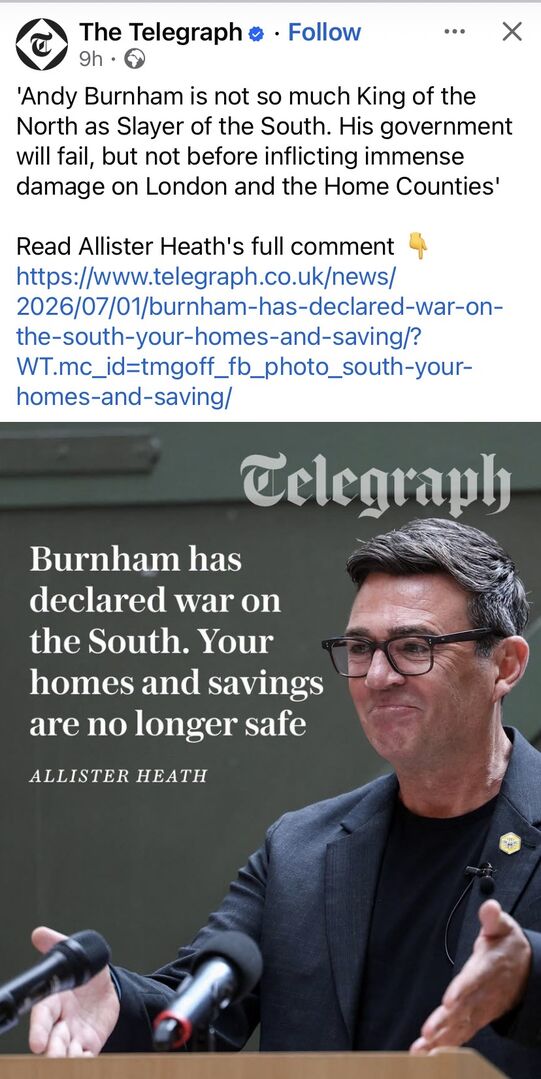
Heath's grip on reality is a bit tenuous though?
Ukraine has proved that it is possible to make them in great numbers.
I don't think anyone should look at what's happening in Ukraine and necessarily draw the conclusion that that is what the next war [that the UK or NATO is directly involved with] will look like. That war looks like that because of the inability of either side to either achieve or maintain air superiority. That in of itself is a legacy of the way that both the VVS (the Russian air force) and the UAF have trained, their doctrine, and the aircraft and weapons that were or are available to it.
Likewise Iran's use of drones is a direct result of sanctions placed on it that has meant it's air force is largely made form legacy US airplanes that are outdated. The effectiveness of their subsequent drone operations is more likely a result of the fact that the US forces are engaged in a stupid war that has no purpose and no well defined outcome that Iran is very effectively exploiting.
And usually ends up costing the taxpayer more.
I can really only speak sensibly about airplanes but the export sales of the Typhoon is currently about £25B, the cost to the taxpayer for the RAF buying them is about £31B, so roughly 75% of the cost of them was directly funded by selling them. I read an article that suggested that every Typhoon built generates about £100M in tax revenue.
I can't comment on the figures^^, but if UK companies can successfully manufacture something then the UK gets better value for money.
If the UK gets mired in poorly run projects then we don't
HMS Glasgow had its first panel cut in 2017, sea trials this year and in service 2027. HTF does it take 10 years to get a frigate built and in service?
SKorea built a 25% heavier guided missile destroyer from award of contract in only five years and they had to dig the cutting gear and steel out first.
Heath's grip on reality is a bit tenuous though?
It's ironic that the hysterical over-reaction from the press simply reinforces everything that Andy is saying about having London as the 'Centre of Everything'. They're sort of making his point for him to the vast majority of the country who don't live in the golden city on the hill.
He's on about spending a bit of time up the M6 instead of being based exclusively in Londinium, not moving the entire seat of power to Paris. It shows you just how totally ****ed the over-centralisation of power has become in this country, that this is being viewed as some kind of revolutionary act.
It should be just a standard thing, not even worthy of comment, that someone who is PM for an entire country doesn't spend 100% of his time based in the capital city. Yet up to now, a PM would only leave London to don a hi-viz jacket, make a speech and get a few photos at a factory or construction site in 'the provinces' then scuttle straight back to the capital, never to leave again until the next speech/photo op is grudgingly required
Interesting article (YMMV) about the tax gap, and perhaps a potential source of revenue for the Burnham Govt could pursue. Can't imagine it would be tremendously popular though.
https://taxpolicy.org.uk/2025/06/19/the-small-business-tax-crisis-40-of-tax-due-isnt-paid/
Can it be resourced, can it be purchased and does it offer good public outcomes? - are literally the only questions involved.
The challenge here is the insistence, particularly in defence, of buying 'British' which is in recent years is synonymous with overpriced and underperforming.
I get trade to stimulate the economy, but at what cost? I don't know enough about fiscal shenanigans but buying shite just to keep British firms afloat has an impact further down the line and doesn't seem to make sense to me. And usually ends up costing the taxpayer more.
Worth having a Google of " the Preston model" for a view of the successes that local procurement can bring. Obviously that's at a city/county level but I don't see why it shouldn't apply to the country too. The alternative is letting all of our industries leak out to other countries so that we have to spend too much of our money outside of the UK economy, which is always going to make us poorer.
Interesting article (YMMV) about the tax gap, and perhaps a potential source of revenue for the Burnham Govt could pursue. Can't imagine it would be tremendously popular though.
The cliché of men in white vans receiving payment in cash isn’t that far from the truth. This explains why the small business tax gap is hard to close. It doesn’t explain why it’s increased.
We believe there are two key factors: a decline in HMRC customer service to small companies, and an upsurge in avoidance and evasion which doesn’t really relate to small companies at all, but is technically allocated to them.
Sounds like it's the classic of increasing HMRC resource would probably more than pay for itself?
I'm always a bit suspicious of cash only businesses mind you...
We spend huge amounts on chasing benefit cheats and its a negative return ie enforcement costs more than savings. We have cut tax enforcement even tho thats a net benefit ie enforcement costs less than money recouped.
I suspect cash only businesses are not really significant as its small sums - its the big tax avoiders that is where the money is lost
We have cut tax enforcement even tho thats a net benefit ie enforcement costs less than money recouped.
5,000 new staff to HMRC to address that.
I suspect cash only businesses are not really significant as its small sums - its the big tax avoiders that is where the money is lost
You didn't read the article then?
That tax evasion does sound quite bad, but I suspect the problem with larger companies is they have better paid accountants and lawyers to find legal ways of avoidance (until the loopholes get closed)
Interesting article (YMMV) about the tax gap, and perhaps a potential source of revenue for the Burnham Govt could pursue. Can't imagine it would be tremendously popular though.
I think it worould be very unpopular and the Sun would launch a campaign about White Van Man being persecuted, but the fact is that the amounts here are huge:
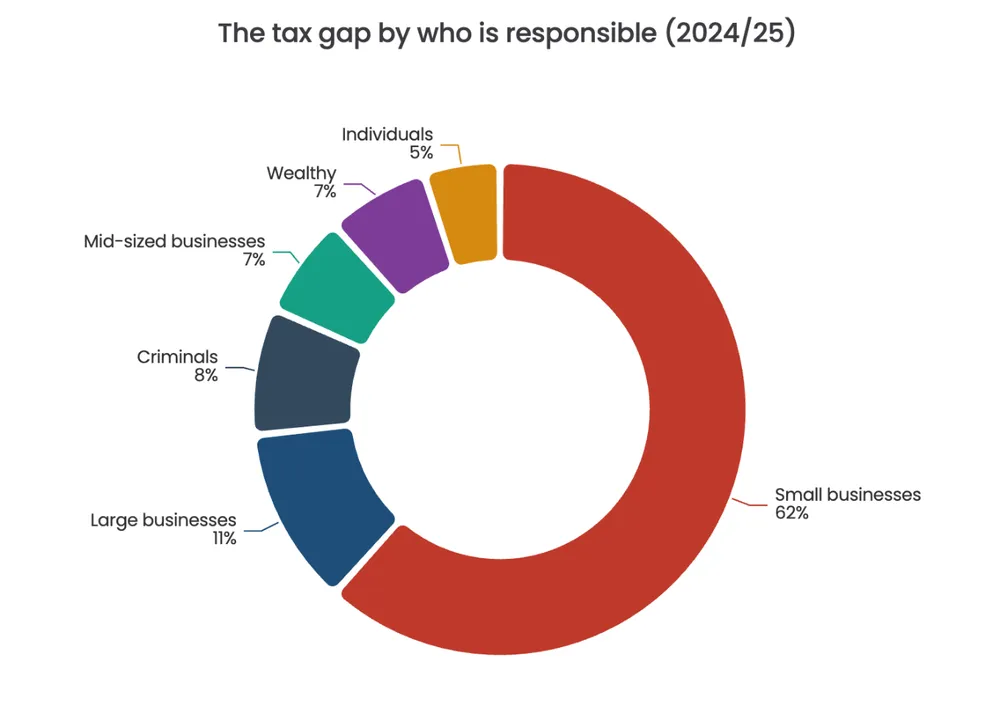
Across all taxes, small businesses fail to pay between £30 billion and £48 billion of tax. These figures are massive. Enough to fund significant tax cuts or additional expenditure
This also represent huge unfairness. I get emails every week from small businesses furious that they are undercut by competitors who don’t pay their tax. It’s an unfair playing field, tilted against the people doing the right thing
And it could be framed so that it was helping the white van men who do pay tax
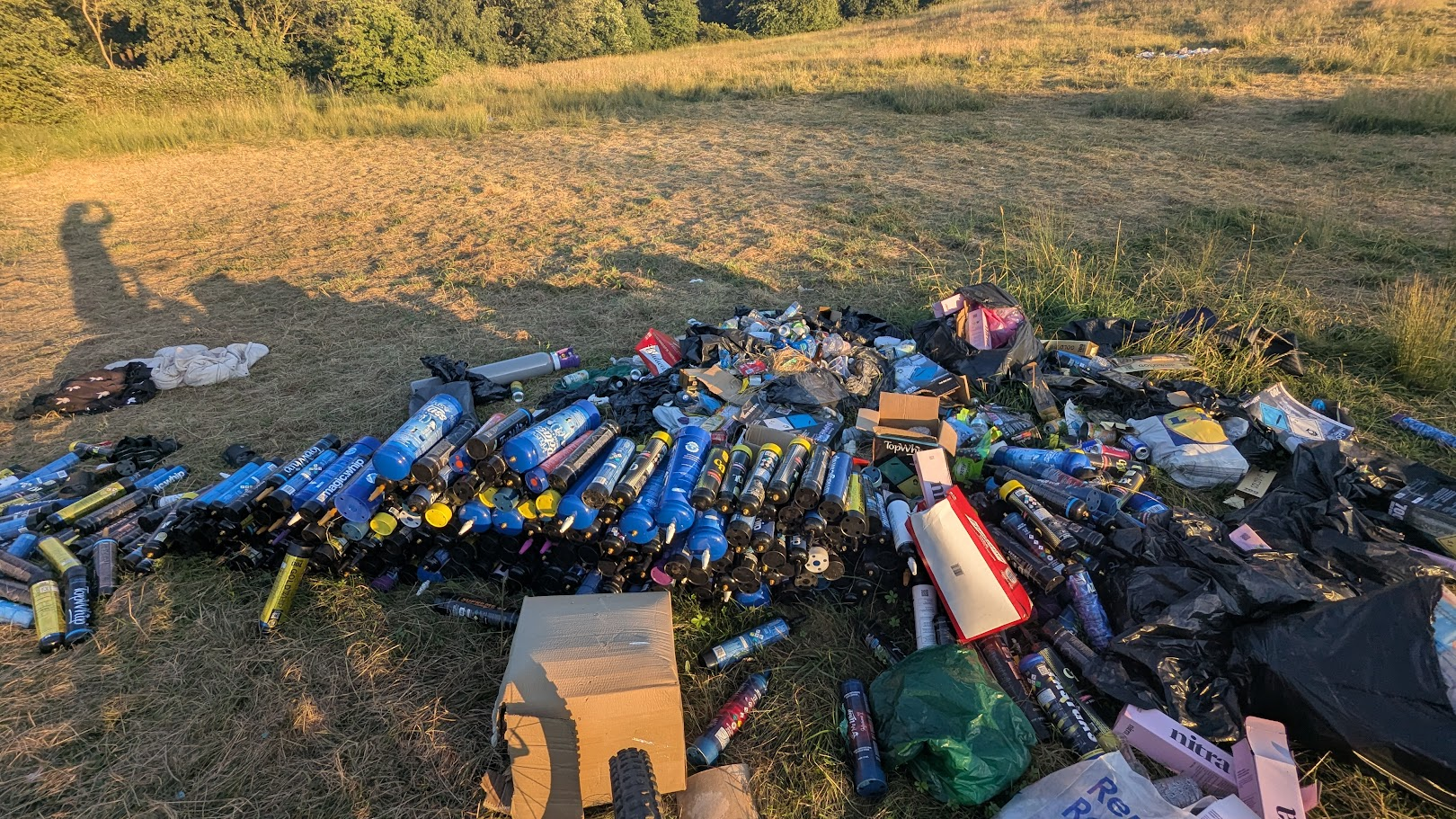
and Im sure the 'company' that dumped a ton of catering gas cylinders in a field I came across on last night's ride didnt pay tax either
How high up Burnham's priority list it will be I dont know.
But I do feel that Burnham is likely to get lucky with the timimg; Farage is looking increasingly exposed on this £5m bung, referal to standards of crypto/gold lobbying and only declaring 2 of his 5 houses......
meanwhile the Greens are seeing a dip in support as the hype around polanski wanes and gaza falls down the salience list
Just the thorny issue of Iran blockade inflation filtering through in the coming months!
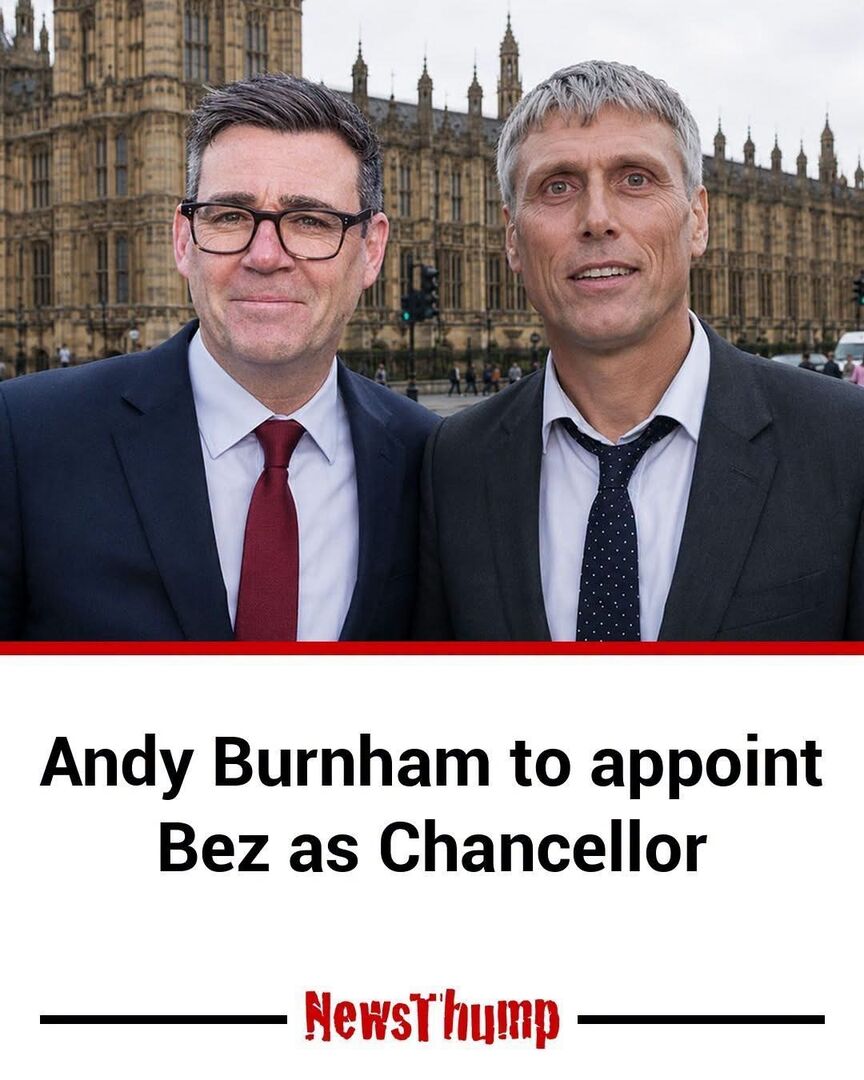
Liking the ‘room for higher business rates on warehouses’ comment. I presume that’s another name for an Amazon tax? Maybe he can also introduce an online advertising tax too to claw back some cash from google and Facebook.
Tax the big hyperscalers and pass on the gains to high streets. Who’d have thought it could be that easy?
But I do feel that Burnham is likely to get lucky with the timimg; Farage is looking increasingly exposed on this £5m bung, referal to standards of crypto/gold lobbying and only declaring 2 of his 5 houses......
Over in some more right wing corners of the Internet some people do seem to be having melt downs over Burnham. So you might not be alone in thinking the timings might benefit Burnham.
Liking the ‘room for higher business rates on warehouses’ comment. I presume that’s another name for an Amazon tax? Maybe he can also introduce an online advertising tax too to claw back some cash from google and Facebook.
Tax the big hyperscalers and pass on the gains to high streets. Who’d have thought it could be that easy?
the trouble is that any attacks on big tech will be immediately responded to with tariffageddon from trump , it will have to be done very carefuly
the trouble is that any attacks on big tech will be immediately responded to with tariffageddon from trump
Could also be a benefit. I think people in the UK would quite like us to stand up to Trump a bit more than Starmer did even if it means some negative impacts on some businesses/industries. It also strengthens the case for greater aignment with the EU and more business with China. Also Trump will be gone in a couple of years. Burnham can go into the next election (which I reckon will be next spring/autumn) with a narrative that he taxed US corporates to help the UK high street and stood up to Trump and his tech-bro oligarch mates. I don't see much downside with this approach if that's what he's planning.
And also Trump is faced with mid-terms which aren’t likely to go well for him despite vote suppression etc.
Im not so optimistic, tariffs are v bad news for the economy knocking chunks off gdp , which in turn means inflation cost of living will trump standing up to trump
and unless Burnham is riding >20pts clear in the polls theres 0 chance of an election before 2029
Ooops
Burnham wrote a piece for the Scotsman ( I can't read it directly) where he apparently said water and railways should be in public hands in Scotland and that he would end right to buy of council homes
Water and Rail are in public control in Scotland and right to buy was ended a decade ago
he also said his no 10 of the north would directly build council houses. Housing is a devolved matter
Looks like a lazy cut and paste of a similar piece he wrote for English papers.
do your research man!
duplicate
Burnham wrote a piece for the Scotsman ( I can't read it directly) where he apparently said water and railways should be in public hands in Scotland and that he would end right to buy of council homes
This?
First, essential utilities. All parts of the UK should be able to take greater public control of essential services such as water, housing, energy, and transport, learning from the model that has transformed our bus networks in Greater Manchester.We will set out 10-year plans to bring down the cost of these essentials to individuals, families and businesses.For Scotland, that means energy, housing and transport. It means taking the cost of bills, rents and buses seriously. It means making sure people are not left overpaying for the basics while their wages stand still and their communities are asked to accept less.
What’s going on with Burnham as regards Palantir?
do your research man!
It was made plain a month ago on the campaign trail
In Scotland, water is nationalised, and in Wales the sole water company is not for profit.
http://www.theguardian.com/politics/2026/jun/05/thames-water-should-be-nationalised-andy-burnham
Welsh water has been not-for-profit for 25 years. After being privatised back inthe '90s like a lot of others , it reverted to this model in 2001. Interesting article points out that bringing these back into public ownership is only part of the problem facing the sector.
Burnham bounce is looking to be worth about 5points, longevity of that is questionable, especially with built up Hormuz related inflation hitting in the next few months
Burnham does seem to have got lucky with farages teflon coating wearing off though, that could be worth a lot
5 points? As little as nothing.
The response to all this is so odd… every nuanced change in Labour policy is “a screeching uturn” under Starmer… along comes a new Leader and everyone is hoping for more policy changes.
What will the media do next? Talk about “more of the same” or “no mandate for the new leader’s policies”… or both?
theres a trend here where it may be getting better
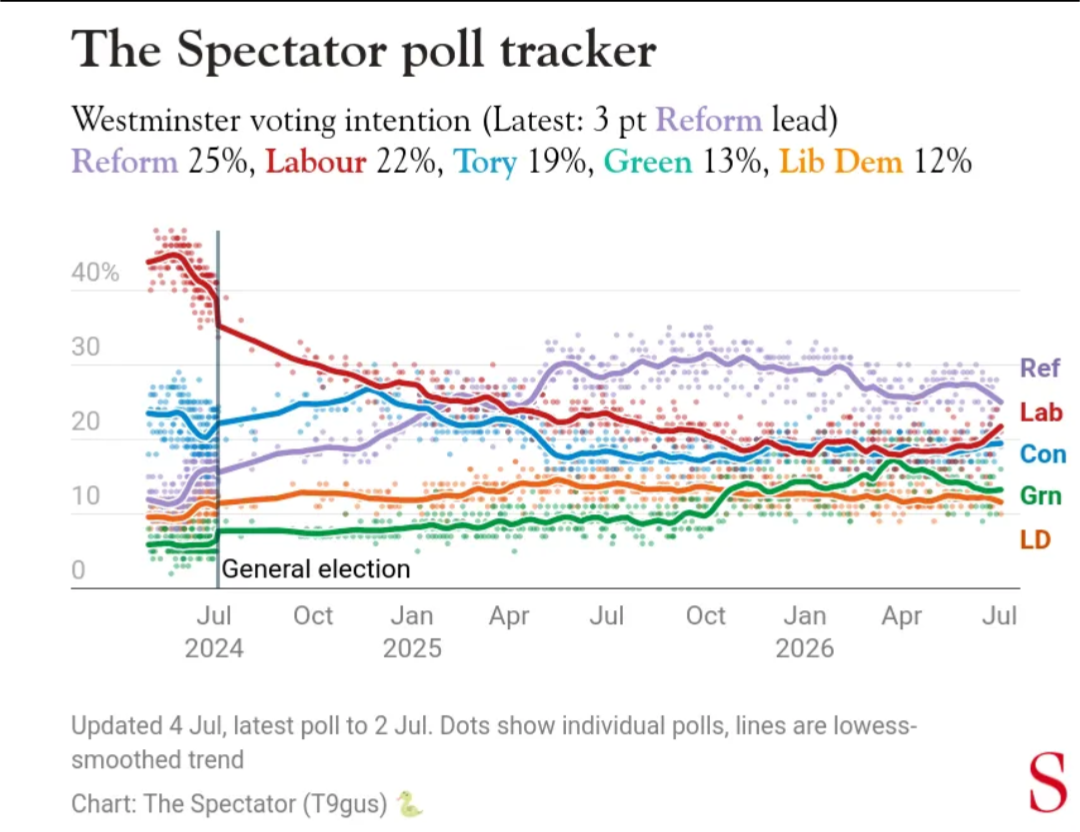
but he's not had to make any actual tough calls yet
do your research man!
It was made plain a month ago on the campaign trail
in which case its just a lazy piece from Burnham. Railways. Housing?
edit:
looks like thats the guardian stating the facts nor Burnham
As already posted by piemonster ^^, what he actually said was
First, essential utilities. All parts of the UK should be able to take greater public control of essential services such as water, housing, energy, and transport, learning from the model that has transformed our bus networks in Greater Manchester.
AND
For Scotland, that means energy, housing and transport. It means taking the cost of bills, rents and buses seriously.
Andy Burnham: Here is my pitch to Scotland
The Scotsman
The SNP's "lazy copy and paste pitch" is a disingenuous copy and paste from a Government threatened by more local governance
Burnham generously offers to let Scots “take greater public control of essential services such as water and transport.” http://www.snp.org/andy-burnhams-lazy-copy-and-paste-pitch-to-scotland/
housing and transport is already devolved. as is much of energy
housing and transport is already devolved. as is much of energy
Tbh TJ. You're repeatedly making a point that Burnham is lazy based on an article you stated you was unable to read that itself doesn't state that Burnham doesn't know these things.
housing and transport is already devolved. as is much of energy
The article is there, it just needs looking at, a bit like a Lalique crystal cruet set 😉
It isn't about "devolved", rather decentralisation, local control and public ownership (as applicable)
On housing,
For Scotland, that means more council homes and stronger towns. It means homes people can afford in Stirling, Greenock, Kilmarnock, Livingston and the Highlands.
On energy,
In Scotland, the opportunity is renewables. It is hydrogen and carbon capture.
It isn't about "devolved", rather decentralisation, local control and public ownership (as applicable)
1) - again this is already devolved powers
2) the relationship between the councils and Holyrood is devolved. Is Burnham really going to try to override Holyrood?
Housing is a devolved power. Water and Railways are already in public control
Scots government actually have a pretty good record on social housing
For what its worth I don't like the SNPs record on centralising and controlling stuff - but this is not in Westminsters power to change. Thats the point. Burnham is saying he will do stuff in Scotland that is not in his power or has already been done. I don't know why this is so hard to understand

