UPDATE: Reviews section refreshed, redesigned, searchable: Go take a look
JY - be serious for a moment. You know that was a genuine question because I was sure that you understand the basic maths. The quote that you asked for explanation ie the squeezed bit and the issue of being progressive. A flat rate tax system with a minimum threshold is progressive - FACT. Dont be silly about the everyone pays the same thing - they pay the same tax rate on taxable income but the effective tax rate increases as income increases. Hence it is a progressive tax regime.
The totally separate issue is whether this is makes certain people less or better off. Hence there is the valid debate as to whether it is less progressive than the current system....which others were dragged reluctantly to admit.
[b]Hence to natural bias of the authors - this is hardly going to be a left/center left agenda is it?[/b] And they are very open about this. Hence page 29 - "these proposals are not revenue neutral. The dysfuntion of the tax system is to a large extent an inescapable function of the amount of revenue it is trying to raise."
And their philosophical arguments, while interesting (?), present subtle differences (polite version) to exactly the same points raised by Michael Sandel at Harvard (whose lecture on the subject I was incidentally listening to yesterday morning while dog walking). Some would call it bias!! Sandel is not a fan of markets per se and far more influenced by Rawls (which somewhat interestingly they also quote in the middle of the report).
Buy it, you would love the read!
And funny that you mention Russia - there tax system is .....? And it raised or lowered the tax take?
[edit: lots of data and words !! but very little maths in fact. Very unusual given the topic. Makes it easy to read but frustrating if you want to see the basis for the calculations. Perhaps they should have put a simple table showing why the system is still progressive to kill that chestnut off at the start.]
However TJ, if Laffer is nonsense - why does the SNP want the ability to control corporate taxation? Why has no scottish government implemented tartan tax... ...i'll accept its an oversimplification but nonsense?
There are good resons for both of those things that asre nothing to do with laffer curves. Teh very fact you refer to these two issues to support your argument shows the poverty of your position
Its one of those myths / dreams of the far right that is at best far from proven and at worst is utter bunkum but that those who are on the right take as fact and treat as fact as it backs their position.
They hope that by carrying in treating this vague theory from the right wing fringes as fact it will be accepted as fact - well I and many others am not that gullible even if you are.
Laffer isn't nonsense, however, all the theory really says is that at 0% tax and 100% tax, tax income is £0, and that somewhere in between there is a point at which tax income is maximised. I think everyone can agree that that much is true.
Nope - maost sensible folk do not believe this to be true. tax take increases as tax rates increase. You might only get a 5% increase in take for a 10% increase in tax but the whole basis of the laffer curve that total tax take will start to fall at some point is a the very best unproven theory.
If the right wing want to be believed on this stuff they need to stop treating unproven theory as fact
the whole basis of the laffer curve that total tax take will start to fall at some point is a the very best unproven theory.
TJ - would you go to work for nothing?
If we imposed 100% taxation, then do you think people would still go to work for no reward?
Do you think they would be able to go to work for no reward?
No, of course not - so, the theory of the Laffer curve is solid - 100% taxation would lead to a fall in taxable revenue, and the tipping point is [b]somewhere[/b] between 0% and 100%
the argument you appear to be [i]trying[/i] to make, is that the latter curve tipping point is higher than anyone currently taxes, however that does not undermine the fact that the curve still exists, you're simply arhuing where the top of it is.
No I am not Zulu. I am saying its an unproven theory with no real data behind it that is taken as a truth by people like you as it backs up your ideas.
Its all about finding the point you want to make than making a theory to back this up.
Of course there is real world data
What happened when Thatcher lowered the top rate of income tax in the 80's?
did overall tax take increase, or decrease?
What about the magical 50p tax - did it increase or decrease the tax take?
Its quite simple - Higher income tax rates incentivise taxpayers to work less, retire earlier, emigrate, contribute more to pension or charity, convert income to capital gains, incorporate, and invest in tax avoidance.
Well one man I know saved £100 000 pa on his tax bill so that was certainly a large net loss.
You seem to be confusing anecdote with statistics TJ
Which was it, did total tax revenues go up, or down?
TJ - You are a modestly paid public servant right? Do you not think you might feel differently if you earned more than you do?
Yawn
Down of course reduce the rate of taxation reduce the tax take.
I am sure you will have some bogus distorted nonsense ready to show that the tax take went up as the rate fell - just make sure its actually vliid ie accounts for inflation,other taxation changes adn rising incomes and actually compares like with like
TJ - also widely used by HMRC, so there's an opportunity for you. You can consult for them and explain how they should make the calculations correctly.
Page 51 The Laffer Curve analysis : They would probably pay you £40k plus to sort it out - in fact a lot more.
[p.s. try to mention [b]taxable income elasticity[/b] at some stage in the pitch/interview process]
edit to make it easy: "TIEs are extremely important to policy decisions since they are critical in producing accurate costings of policies. If the response measured by the TIE is large then people will reduce their taxable incomes by a large amount in response to a tax increase. Increasing tax rates will result in a smaller increase in tax revenue than would have been expected because of this fall in taxable income. [b]If the TIE is large enough then it is even possible that the increase in taxes could result in a sufficient fall in taxable income to cause a net decrease in tax revenues.[/b]"
Bloody inconvenient all this economics isn't it?
mcboo - MemberTJ - You are a modestly paid public servant right? Do you not think you might feel differently if you earned more than you do?
Nope - I know I would not. I am not a selfish begger my neighbour type. I am a public servant. I beleive in public service. I am not motivated by avarice
So, on that basis - would you be willing to take a pay cut TJ?
If all NHS workers took a 10% pay cut, waiting lists would be a thing of the past, as we could afford to employ more staff!
if only those NHS workers earning enough to pay higher rate tax (who are, by definition, among the top 10% of wealthiest people in the country) took a pay cut, we could treat more people.
sounds fair, doesn't it?
It must be great to live in the lala land of THM and zulu et al.
At least Zulu is honest about what he is tho. I do prefer that to the pretence of THM
Pointless debating this with these folk tho. they only believe what they want to believe and will believe any old nonsense that supports their hatred of taxation
TandemJeremy - Member
I am sure you will have some bogus distorted nonsense ready to show that the tax take went up as the rate fell
Funny you should mention that....
In January 2001, Russia introduced a fairly dramatic reform of its personal income tax, becoming the first large economy to adopt a flat tax. The Tax Code of 2001 replaced a conventional progressive rate structure with a flat tax rate of 13 percent. [b]Over the next year after the reform, while the Russian economy grew at almost 5% in real terms, revenues from the personal income tax increased by over 25% in real terms. [/b]Besides this revenue yield performance, advocates also have credited the flat tax with beneficial changes in the real side of the economy. The Russian experience would appear to have been so successful that many other countries have followed suit with their own flat rate income tax reforms, and an increasing number of countries around the world are considering the adoption of a flat rate income tax.
Could have been completely un-related of course! Causation vs Correlation and all that nonsense 😉
Only on the numbers chosen in the discussion document. e.g. why is the magic round number of £10k the right threshold value, why is the round number of 30% the perfect solution? There will be a way of having the same simp lied flat tax system at say £9750 threshold and a 31.4% tax rate which actually means the deficit doesn't get worse. I have no idea what those numbers are - but they are largely irrelevant to whether a flat tax is a better system or not. What happens at budget time at the moment is they bugger about with all the thresholds and rates so nobody is clear who is better or worse off. With flat tax you increase or lower one rate which helps or penalises everyone by the same %age. With this variation involving a threshold you have two parameters to play with if you want to pretend to be more or less progressive.Lou - Its a giant tax cut, with proportionately more for the higher rate tax-payers, dressed up as a system change.
Read the report. We'd be down by 50 billion as a country. That's really going to sort the deficit.
For all the side arguments about what constitutes flat rate, progressive tax, or France, there's still no explanation as to how a further 50 billion pound deficit would help the country.
TJ - congratulations I think you might be the first person ever to suggest I am from the "far right". Laffer is just a straightforward economic argument similar to price elasticity models used by companies all the time and well proven - but applied to taxation. The underlying assumption has to be that those who would pay the most are able to do something about it, e.g. by evading tax, by avoiding tax through legal means, or by moving location. The wealthiest are generally most able to achieve those things, and most motivated to do so because the cost is greater. The unknown part is at what point is the tipping point achieved. But "Laffer" is already happening all around you, and you can put the blinkers on if you want but both in Corporation and Income tax worlds the people using legal mechanisms to avoid tax are those with the highest rates and biggest bills. So since you didn't answer my question - if Scotland had a significantly different tax rate to the rest of the UK do you think people would relocate to exploit the system to their advantage? Now is it possible that by reducing tax %age you can encourage enough inward investment to increase employment and actually get more £ overall?
TJ - you can hide behind the personal insults, the distortion of the truth and the failure to grasp basic economic principles such as elasticity and progressive tax systems if you want - but it wont change the facts. Perhaps JY sums it up best:
Junkyard - Member
TJ I tend to have similar views to you but really you dont help your argument or the left very much.
There are plenty of reasons to criticise/deabte this particular report without lying!!
poly - Member
TJ - congratulations I think you might be the first person ever to suggest I am from the "far right".
A frequent tactic when all else is lost!
poly - Member
Laffer is just a straightforward economic argument similar to price elasticity models used by companies all the time and well proven - but applied to taxation.
Sometimes simple things are hard to take!!
aha - back to the good old ad-hominem attacks TJ, quelle surprise
come on - what happened when Thatcher dropped the top rate - did the overall share paid by the top ten percent increase, or decrease?
they contributed 32% of the tax take before the cuts, they were contributing 45% of it afterwards.
there's your real world proof.
come on, shoot it down with actual data that supports your contention that the Laffer curve does not exist, rather than p- poor anecdote and ad-hom.
Tell you what - I'll offer you the best possible proof that the Laffer curve exits, that if you tax pepople too high, they simply leave and go somewhere else
[img]  [/img]
Where does Sean live TJ?
That beach and those trees don't look much like Musselburgh to me!
The underlying assumption
Thats the point. 🙄 assumption.
Lets try this one.
Benefits are sometimes fraudulently claimed - people work and do not declare it. would increasing benefit levels lead to less fraud and thus lower costs in the benefits system?
this is the logic followed by the laffer curve
.
So the adherents of the laffer curve should be arguing for increased benefits. But they don't - they argue for lower benefits.
Oh look, I go away for a few days and it's all the same. Same people having the same circular arguments as ever, and all on a relatively obscure bike forum.
It's nice and sunny outside. Go for a ride.
Time to leave this thread to the fantasists.
Poly
It would be interesting to debate some of that with you as there are several logical leaps in your post.
However the presence of THM and his frankly dishonest nasty patronising and deceitful postings ruins it.
Hahahahaha - thats got to be one of the worst ever TJ - you couldn't even muster up an Edinburgh defence
Tell me TJ - where are the other famous Scottish folk heroes?
[img] 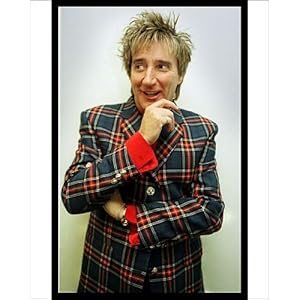 [/img]
Why did Rod leave?
Nowt to do with that laffer curve, was it!
In between the sideshow arguments, there seems to be some significant support (poly and others) for the flat tax rate based on "simplicity" and "fairness".
Its also clear that the proposal in the OP's report is unworkable due to the immediate £50 billion increase in the deficit. However, it will take far more than a 1.4% change to the rate to avoid this massive deficit.
However, if the principle of the "flat rate" is better, why not introduce it at a rate that doesn't produce the instant £50 billion deficit and therefore make it economically viable. This could be 40%, or even 50%, but it could be reduced in the future once the system has succeeded and the deficit that we already have (over £100billion per year) has been reduced. Obviously the base threshold would need to be raised to prevent an increased tax burden falling on the poorest in society.
How about a £18,000 tax allowance for everyone, with flat rate tax at 40% above that?
Or 50% flat rate tax, with a threshold allowance of £20k ?
Even the second option would only increase the tax bill for those earning over about £55k per year. Most people would benefit.
By my very rough calculations 😉 that should help prevent the £50 billion deficit, whilst still implementing the desired simplicity and fairness and combined with closing of the evasion/avoidance loopholes and reduction of the actual cost to collect the tax.
If it works, reduce the rate in 15 years.
aha - back to the good old ad-hominem attacks TJ, quelle surprise
Pot kettle black - I hope that doe snot make you rleive your awful experience with racism
Oh look, I go away for a few days and it's all the same. Same people having the same circular arguments as ever, and all on a relatively obscure bike forum.It's nice and sunny outside. Go for a ride.
Hey so you get back check it out then go to the extent of posting your dislike AGAIN....why did you just not bother reading them as you say this on every single thread? Can you not learn you dont like these threads:roll:
Roderick David "Rod" Stewart, CBE (born 10 January 1945)[3] is a British singer-songwriter, born and raised in North London, England, and currently residing in Epping
Well done you, you really did show him with that post
*sticks head in*
This still going on then? Okay I'll answer some of the points made to me now TJ has managed to expand his argument:
[b]TJ: [/b]Graham - TAXABLE INCOME PUTTING THEM INTO THE TAX BAND! not total income.
I have no idea what you mean by this. You stated that taxpayers in the high rate (40%) tax band are the top 10% wealthiest in the country and are automatically regarded as "rich".
I simply pointed out that they are actually (almost) the top 10% [i]individual earners[/i] in the country. That doesn't mean they are "rich".
You have to consider the number of dependants they have at home. Which is why the government, the IFS and [url= http://www.cpag.org.uk/povertyfacts/index.htm ]poverty action groups[/url] all use [u]household income[/u], not [u]individual income[/u] as a measure of relative poverty/wealth.
[b]TJ: [/b]earning enough money to put you into higher rate taxation puts you in the top 10% of the countries earners. (just about) That means you are rich. Ie better off than 90% of the country
First sentence correct. Second sentence incorrect.
You can, as I have shown repeatedly, be earning in the higher tax bracket and still have a household income that puts you [u]way below the average[/u] in the UK.
[b]Junkyard: [/b]you are altering form an individual to a family... ...that is not to say you dont have a point but it is a bit of a false comparison- individuals to groups to make your point.
Your relatively high individual earnings mean nothing if you've got 10 mouths to feed at home.
I use household income because that is how "wealth" is measured by the government and poverty groups.
If you only consider individual income, as TJ does, then you classify a household with one high earner and 8 dependants to feed and clothe as "rich", while next door a household with two average earners and no dependants is "average" - despite the fact that the second household has considerably more actual cash than the first one.
[b]TJ: [/b]Its pointless debating this with teh head in the sand right wingers
Bizarrely I think you believe I am somehow "right wing" for trying to properly define "wealth" and correctly identify those without.
TJ: Graham - TAXABLE INCOME PUTTING THEM INTO THE TAX BAND! not total income.
The example you gave you didn't include the allowances - so you are around £7000+ out in your calculation - an income of £42000 does not get you into the higher rate tax bracket and income of around £50 000 does. so your imaginary family would actualy not be 40% tax payers on an income of £42 000 pa
You also fail to include child benefits
Graham - I don't consider you one of the head in the sand right-wingers however I do believe you do not realise how well off people earning £50 000 pa are.
an income of £42000 does not get you into the higher rate tax bracket
The £42000 was your own figure from this statement: [i]"if you earn £42000 plus yo are one of the wealthiest people in the country - top 10% or so."[/i]
[url= http://www.hmrc.gov.uk/rates/it.htm ]Higher rate (40%) tax starts at £35k taxable income for 2012[/url] + a personal allowance of £7,475 gives ~£42k
You also fail to include child benefits
Didn't they stop them for higher rate tax payers?
however I do believe you do not realise how well off people earning £50 000 pa are.
I know that people earning 42k+ [i]can[/i] be well off. And I willingly concede that most probably are. But it very much depends on personal circumstances. An "average" couple on average wages can easily out earn a single 42k+er. A 42k+er can live in a household with well below average income.
Calling all 42kers "rich" regardless of household circumstances is very misleading.
Incidentally, [url= http://www.telegraph.co.uk/finance/personalfinance/consumertips/tax/9239563/A-million-more-to-pay-higher-rate-tax-due-to-Coalitions-Budget-changes.html ]I saw recently[/url] that there are now 4.1 million higher rate tax payers. Nearly 1-in-7 of all taxpayers.
Higher rate (40%) tax starts at £35k taxable income for 2012 + a personal allowance of £7,475 gives ~£42k
.Ah - sorry then my muddle. - I added allowances twice 😳
See Junky - you get so close to hammering one home, then go and spanner it over the bar:
currently residing in Epping
'Currently residing'? rather than 'living in'?
Does that say where he is permanently resident for Tax purposes?
how many homes do you think Rod Stewart owns?
Epping
Los Angeles
Palm Beach
Southern France
the fact that he's 'currently residing' in Epping says nothing - because when he goes to another one of his houses, he's 'currently residing' there, isn't he!
but the fact that he's able to tailor the amount of time he spends at each of his houses to avoid excessive tax bills, proves the point that if you tax people too much, they will go somewhere else - hell, one visit to Monaco proves the Laffer curve.
Tell you what, Lets put it in his own words:
[i]"I was a real little Red when I was 19," said Rod "Earn a few bob and it all changes though, dunnit?" He told Melody Maker in 1974, when Labour had pushed income tax rates to their highest since the war: "The Government thinks it'll tax us bastards right up to the hilt because we won't leave, but that's wrong because I will if I want to ... with a 90 per cent tax ceiling, it's just not worth living in England any more."[/i]
There you go - the laffer curve in one easy lesson!
shirley the answer is proper tax harmonisation- accross europe for a start
and more importantly global legislation to crack down on tax havens
of course camerons own family money was squirreled away from the nasty HMRC so hes hardly likely to push for that
[url= http://www.telegraph.co.uk/news/politics/david-cameron/9218119/David-Camerons-inherited-family-wealth-based-in-foreign-tax-havens.html ]http://www.telegraph.co.uk/news/politics/david-cameron/9218119/David-Camerons-inherited-family-wealth-based-in-foreign-tax-havens.html[/url]
shirley the answer is proper tax harmonisation- accross europe for a start
The state Europe is in at the moment I can't see anything like that ever happening.
and more importantly global legislation to crack down on tax havens
This would be good though. As would generally shutting all the loopholes properly. Tax only stands a chance of being "fair" if everyone pays what they are meant to rather than finding ways to avoid it.
(But then, how many of us happily avoid Duty on imported bike parts? Cameras? etc)
Dear God....
[img]  [/img]
glitchybump?
thought binners intervention would be worth seeing 🙂
thought binners intervention would be worth seeing
It was. 😀
A 42k+er can live in a household with well below average income.
How so? They might have more to spend it on but they still don't have below average income surely? And having lots of kids is a personal decision surely? Like deciding to have a lot of cars or boats. 😉
"I was a real little Red when I was 19," said Rod "Earn a few bob and it all changes though, dunnit?" He told Melody Maker in 1974, when Labour had pushed income tax rates to their highest since the war: "The Government thinks it'll tax us bastards right up to the hilt because we won't leave, but that's wrong because I will if I want to ... with a 90 per cent tax ceiling, it's just not worth living in England any more."There you go - the laffer curve in one easy lesson!
Yeah, talking about [i]90% [/i]tax rates.
Yeah, talking about 90% tax rates.
and TJ's point was that the laffer curve was fiction - which means that it cannot apply at [b]any[/b] level.
Ah ok hadn't read the whole thread. but note that Rod is basically saying 'I used to have principles, then I got rich and they went out of the window and self interest took over'.
'I used to have principles, then I [s]got rich and they went out of the window and self interest took over'[/s] grew up.
[i]'I used to have principles, then I got rich and they went out of the window and self interest took over'.[/i]
GOT IT !.
Grum.
You are Jesus.
Your relatively high individual earnings mean nothing if you've got 10 mouths to feed at home.
It does it mean you are high rate tax payer with lots of kids..are you still not a high rate tax payer if you have above a certain number of kids?
I use household income because that is how "wealth" is measured by the government and poverty groups.
Hold On a minute I need a while to think of a pithy line there what with you make a reasonable point and all
Ps do you mean wealth or income as they are not the same thing ?
If you only consider individual income, as TJ does, then you classify a household with one high earner and 8 dependants to feed and clothe as "rich", while next door a household with two average earners and no dependants is "average" - despite the fact that the second household has considerably more actual cash than the first one.
We can have other anomalies though I could earn a million and have such a high mortgage that I am less well off than someone on 20 k who lives at home with their parents but I don’t see how you can call me [cash] poor
It is interesting to debate whether individual or household is the better measure and I suspect either was we could highlight some interesting anomalies
See Junky - you get so close to hammering one home, then go and spanner it over the bar:
I thought you were referring to Scotland in your posts perhaps you should have been clearer. Thanks for a quote from Rod Stewart in 1974 …if that does not prove a highly debatable economic proposition then frankly I don’t now what will? Have you got anything from Alvin Stardust from the same period so we can be sure?
and TJ's point was that the laffer curve was fiction - which means that it cannot apply at any level.
what so if I say io disdagree with the laffer curve I am also disagreeing with the view thata 0 % tax rate raises zero tax.
Your logic system is is as interesting as your dictionary.
Just because your morals are in the gutter you dont need to elevate Grum to deity levels 😛
Z-11 so grown ups have no principles excellent view
> A 42k+er can live in a household with well below average income.
How so?
😯 Again? Okay.
[url= http://www.incometaxcalculator.org.uk/index.php?yr=2011&age=0&time=1&ingr=42000&calculate=Calculate ]42kpa means a net wage of £30,922m pa.[/url]
Whack that figure into the [url= http://www.ifs.org.uk/wheredoyoufitin/ ]IFS Where Do You Fit In calculator[/url] with a family consisting of 2 adults, 3 teenage kids (14-18), living in a below average council tax area of £1500pa.
Result: 3rd decile. Around 24% on the UK "wealth" scale.
[i][b]disdagree[/b] with the laffer curve I am also disagreeing with the view thata 0 % tax rate raises zero tax.
Your logic system is is as interesting as [b]your dictionary[/b].[/i]
What ?.
did he borrow yours.
😆
EDIT:
Sorry Junk.
YOU ARE Jesus.
Grum is the lord god almighty.
😆
Taking into account household size and composition (click here to see how), we have calculated your position in the income distribution. With a household after tax income of £777 per week, you have a higher income than around 96% of the population - equivalent to about 58.2 million individuals.
Taking into account household size and composition (click here to see how), we have calculated your position in the income distribution. With a household after tax income of £777 per week, you have a higher income than around 19% of the population - equivalent to about 11.5 million individuals
same person but now with a partner and 10 kids
Its not comparing like with like though and I forgot to take off tax and canno tbe bothered to re do.
So we now all know that kids are expensive
I still think you both have a point and are saying different things
i am happy to debate which is the better measure [ not really I am doing what Binners said]
are you still not a high rate tax payer if you have above a certain number of kids?
You are, it's just your fabulous wages don't go quite as far.
do you mean wealth or income as they are not the same thing ?
That is pretty much my point. One high income does not automatically mean wealthy household.
We can have other anomalies though I could earn a million and have such a high mortgage that I am less well off than someone on 20 k who lives at home with their parents but I don’t see how you can call me [cash] poor
True, but your assets would still mean you were "wealthy" and you'd still chart very highly on the IFS calculator. So not really an anomaly at all.
Sorry Junk.
YOU ARE Jesus.
Grum is the lord god almighty.
I look more like Jesus than he looks like God
[i]than he looks like God[/i]
😯
Errrr.
How would you know ?.
😛

