UPDATE: CLASSIFIEDS section refreshed, redesigned, searchable: Go take a look
Some more explanation here https://www.bikeradar.com/news/moots-prototype-750d-gravel-bike/
Meant to get the overall gravel tyre diameter closer to what a 29er MTB tyre is.
Wonder what new hub standards would be "needed"
If we'd been faster to take action and thrown Kirk Pacenti into a volcano in about 2007 we'd be in a much smarter timeline, sounds like we should do the same with Mark Slate? (apparently this is WTB's fault not Moots)
Just read a bunch of people saying that "it makes perfect sense because it's about the same size as a 29er wheel+tyre and apparently that's the best size". Ride a 29er you ****s. 29er isn't the ideal size, it's not the best size, it was adopted because it already bloody existed and now you're justifying changing from the most common wheel size in the world to a pointless new one and the best excuse you can find is "because it's almost the same as the old one". The good thing is, you can throw a lot of people in the volcano before it fills up.
Is this the old 630 / 27 1/4 wheelsize rehashed? If it is I'm quids in as I've got my dad's old bike in the loft which will be worth a fortune.
^ I have two!
Also, what's the rolling diameter of a 29' wheel?
Exactly.
To be fair the concept is sound.
That is literally the basis of the naming system we use.
750c is 750mm dia witha size c tyre
750b is 750mm dia with a size b tyre.
So whoever decided to use the ****ing french system in the first place is the person to blame.
Great idea!
Take a wheel size where you already have toe clip overlap on smaller sized frames and increase the diameter.
Get the person who thought of this a brain transplant!!
Does this mean that 27" (with a subtle rebrand) is going to be the 'goldilocks' wheel size in 4 years?
Just kill me.
Nah, it'll all be about direct drive reverse mullets.
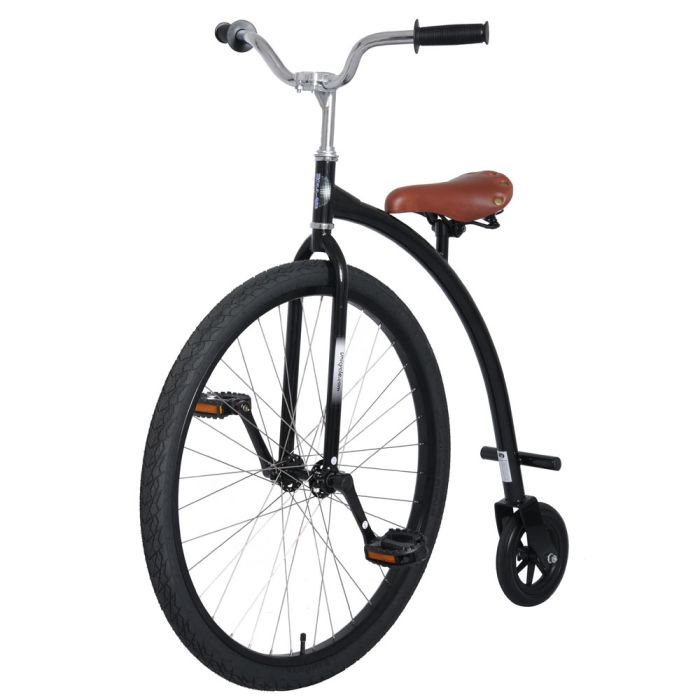
Great idea!
Take a wheel size where you already have toe clip overlap on smaller sized frames and increase the diameter.
Get the person who thought of this a brain transplant!!
Did you read the article?
I can see what they are trying to offer but why not just use 29"?
That is literally the basis of the naming system we use.
750c is 750mm dia witha size c tyre
750b is 750mm dia with a size b tyre.
The French system is the wheels outer diameter though (or is that what you meant?). So a 650b and 650c wheel fit in the same frame as they're both 650mm diameter, but don't use the same rim.
It made sense back in the days of drum and rod brakes as you could adjust them to any rim size and they didn't work anyway.
why not just use 29
The wheel rim is bigger than a 29er rim by ~40mm (diameter) so when you put a smaller gravel tyre on you get similar rollover.
It makes sense but they should go bigger imo, maybe not the 36er but 32" ish makes sense when agility isn't a big concern (it isn't on gravel)
Having recently acquired a modern 29er with a 2.6" tyre on the front it feels absolutely massive so there may be a limit on size, and it probably need wider bars to provide the leverage.
That said, I'm in favour of people trying stuff and improving it. It was hard, but we're all better off now (except financially) with the wheel size shift that happened in MTB.
He mentions custom bikes or tall people in the vid. TBH I don't mind if we have more options for different heights and tastes.
Would it not just be easier to make all the bumps in the trails smaller.
Would it not just be easier to make all the bumps in the trail smaller.
That's what they do with gravel roads. They have machines to make them smooth, that's why they are gravel roads not trails 🙂
I didn't know it was coming and I'm not gonna force myself to get all het up about it either.
As the clip suggests, it might be useful for lanky gits - but I honestly can't see it going much beyond a little niche thing.
700c will remain the gravel standard, with tyres maybe getting a little bigger volume and frame clearances a bit wider for those who want it.
It'd be interesting to see like-for-like speed tests with 700c over a set course. And do UCI regs limit gravel bikes to 700c for racing currently?
I wonder if there's a little clique of manufacturers who get together every year in secret and discuss what new "standard" they can unleash to get punters to buy into something new...
For a brief moment, before more coffee, I read it as 700D. That was an odd size.
Thing that pisses me off about all these things is, how can they all be 'standards' surely only the most common one can be THE standard?!?!?
Not going to buy it but glad it exists. We need the outliers pushing boundaries, otherwise we’d still be riding 26x1.9 tyres on bikes with 71/73 angles.
Had a Jones spaceframe with a 29x3 front wheels that just rolled amazingly. Started to falter once the roughness passed a certain point though without suspension. Can imagine on American gravel roads it would have been amazing.
It was hard, but we’re all better off now (except financially) with the wheel size shift that happened in MTB.
We're better off because bikes got better. Not because a 'better' wheel size came along.
Is a 165mm crank better than a 170mm crank?
Is a 35mm stem better than a 40mm stem?
Is a 2.35" tyre better than a 2.25" tyre?
Is a 760mm handlebar better than a 780mm handlebar?
Is a 27.5" rim better than a 26" rim?
The answer to all these questions is, it depends. Rim size should be viewed in the same way as any other minor tuning done on a bike. Something that may make one thing better but probably at the cost of making something else worse.
A big enough jump can be seen as a paradigm shift. For example, going from 26" wheels to 29" wheels or going from 130mm stem with 580mm bars to a 50mm stem and 800mm bars is something that can fundamentally changes the character of a bike.
With wheel sizes for some reason (I guess economies of scale) there are a limited number of options available. In fact, it seems that ideally there would only be one option available. If it makes old bikes obsolete then even better.
I think wheel size change, when the differences are in single figure percentages, is a tuning option rather than a new paradigm.
Going from 700c to 750d is a 6% increase in diameter. It's a tuning option that might be nice to have but not if it is going to result in the 'death' of 700c gravel bikes.
Having recently acquired a modern 29er with a 2.6″ tyre on the front it feels absolutely massive so there may be a limit on size, and it probably need wider bars to provide the leverage.
I dunno, I think it's just what you get used to, and once you're used to it then your optimum might shift.
My main bike now has a 29x2.6 front tyre (and 150mm travel), that would have looked bonkers in 1999, now when I ride it I wonder if a 2.8 would fit. If a 750x2.4 existed I might* even be tempted to reduce rolling resistance for XC days and keep the 29ers for fun.
*unlikely, I doubt the difference it much more than marginal and not worth the ~£500 it would cost, but I bet it becomes an option on XC/trail bikes if it gets any traction.
It was hard, but we’re all better off now (except financially) with the wheel size shift that happened in MTB.
Some of us still ride 26"!
The reason 650b gravel bikes exist is so designers could retain road geometry but use larger volume tyres
This looks like a way to necessitate MTB geometry (in terms of chainstay and front-centre length) but use gravel volume tyres (~40mm)
Why? It's not like the pebbles of gravel roads need more roll-over
BruceWee
FIs a 165mm crank better than a 170mm crank?Is a 35mm stem better than a 40mm stem?
Is a 2.35″ tyre better than a 2.25″ tyre?
Is a 760mm handlebar better than a 780mm handlebar?
Is a 27.5″ rim better than a 26″ rim?
The answer to all these questions is, it depends.
Dammit, I had 4 yes and 1 no and I thought I was doing really well
legometeorology
This looks like a way to necessitate MTB geometry (in terms of chainstay and front-centre length) but use gravel volume tyres (~40mm)
Knee-jerkery aside, it looks like a way to fit gravell-width wheels/tyres in MTB frames but take advantage of all the extra clearance
We’re better off because bikes got better. Not because a ‘better’ wheel size came along.
And a better wheel size was part of that. I think it catalysed a lot of development. MTB geometry had hardly changed, but bigger wheels meant we had to start messing about with it. This kick started a chain of development that led to better bikes overall. Of course, this could also be related to the increased popularity of cycling injecting more money in as well.
There was nothing optimal about 26" other than the fact everyone used it. It was only there because it's what was available right at the beginning. Now though we have a choice of two sizes. Especially where the benefits of 29 are clear - for short people and for hardcore riding where you might want the manoeuvrability.
Why? It’s not like the pebbles of gravel roads need more roll-over
Given the number of gravel bikes with suspension of some kind coming out, I'd argue that's incorrect for some roads. A significantly larger diameter (which this isn't) could provide a smoother, faster ride without the weight, complexity, cost and inefficiency of suspension.
There is no perfect size for wheels, however as I'm not a midget, if I was buying a gravel bike I'd buy one with the largest rolling diameter possible
Given the number of gravel bikes with suspension of some kind coming out, I’d argue that’s incorrect for some roads. A significantly larger diameter (which this isn’t) could provide a smoother, faster ride without the weight, complexity, cost and inefficiency of suspension.
The correct answer then is 700 x 50mm gravel tyres
but why not just use 29″?
This one goes to 30, it's 1 bigger.
And a better wheel size was part of that.
Going to 29" was part of that. That would be the equivalent of going form 580mm to 800mm bars.
27.5? That was going from a 35mm to 45mm stem.
700c to 750d is definitely in the later category. Fine as an option, not a paradigm shift, and no need for it to 'replace' anything.
If 27.5" had been introduced as just another tuning option rather than a paradigm shift, that would have been fine. There wouldn't have been the line of demarcation between New and Wonderful and Old and Worthless. And I'd be able to get CushCore, which has become pretty essential for my bike set up, for my 26" bike.
CushCore is something that I would put in the paradigm shift category. It allowed me to reduce my tyre pressures 22/24psi to 13/15psi and has absolutely transformed the character of my bike. And all without creating a new 'standard'.
A good rule of thumb is, don't create a new 'standard' for a tuning option.
Fine as an option, not a paradigm shift, and no need for it to ‘replace’ anything.
Yeah I agree with that. Options are good. 29ers were the niche option at first, with just a few manufacturers investing in a modest range of stuff.
A good rule of thumb is, don’t create a new ‘standard’ for a tuning option.
Hmm. 'Standard' in this context doesn't mean it's meant to be the only option. It's just a pre-set option. So wheel standards are 650b, 700c for example, not 674f or 649.5z or whatever. For bars and stems it's the same - we had 25.4 now we have 31.8 and 35. But we don't have 31.9 or 33.2 or whatever. The best example for standards for tuning options I can think of now is disc rotor sizes, where you get 140, 160, 180 or 200 (ignoring Hope for a moment) and not 150, 175 or 174 etc. The worst example would be seatposts.
molgrips
The best example for standards for tuning options I can think of now is disc rotor sizes, where you get 140, 160, 180 or 200 (ignoring Hope for a moment) and not 150, 175 or 174 etc.
You do get 183, 185 and 203 rotors though. 203/200 the most frequently annoying one.
Hmm. ‘Standard’ in this context doesn’t mean it’s meant to be the only option.
I think 'standards' based around wheels are a bit different though, just because it's difficult to change a single part of the wheel system.
Experimenting with different handlebars, stems, or seatposts normally just require you to buy one or maybe two new components. Even Drivetrain changes mean you can generally keep everything else the same and just change out 2 or 3 components.
Changing anything on the wheel requires at a minimum two new components, one of which may be the frame and/or forks. Basically a new bike is what is often needed.
They need to stop mucking about changing wheel size incrementally. Just bring 36" wheels to the masses.
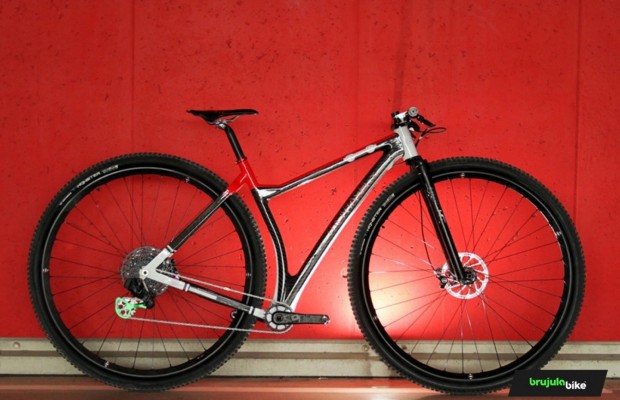
They need to stop mucking about changing wheel size incrementally. Just bring 36″ wheels to the masses.
And they keep the £400 rear mechs well away from the ground too
You do get 183, 185 and 203 rotors though. 203/200 the most frequently annoying one.
185 was Hope, as was 145, 165 and 205.
220 is also a thing and I think there may be a 155 in the murky past.
But then you have to ask how the rotors mounted; 3, 4, 5 or 6 bolt or centre lock? And the caliper? Hayes 68, 71 or seatstay, Formula, IS, Marzocchi Monster, flat mount or whatever other ancient nightmare you can come up with.
Quite a lot of reactions here.
To me this seems like quite a good idea. If you own a bike that is currently running 29er wheels and tyres then you can drop a set of these in to run road or gravel tyres.
Sounds like a good option for hard tail or monster cross owners which fancy an option for road, gravel or smoother trails.
I think it’ll be a niche. I don’t think we’ll see an appetite for 750d road or gravel bikes. Except maybe custom bikes for the very tall

