Is the treadmill on a gradient?
Its all to do with the inverse square law.
Treadmill makes very little difference since planes taking off are all about airspeed and not groundspeed. The planes propellor or jet push against the air to get going and not the ground. A flat surface with little friction (like a treadmill) has little impact on the planes take off roll. A rough surface with lots of fricion such as long wet grass would have a big impact in preventing the plane achieving flying speed.
In a car it would be different since it is actually the wheels touching the ground that drive the car forward.
The aircraft carrier example is also rubbish since the planes always take off towards the direction that the carrier is moving. This gives the planes say a 20knt headwind to work with. This means that if their flying airspeed is 200knt then the plane only needs to be doing 180knt groundspeed when it leaves the end of the runway to acheive the 200knt airspeed.
Planes would never take off when the carrier is reversing. Never good airmanship to take off with a tailwind. A tailwind does not impact on the airspeed needed to get flying (in otherwords the airspeed would still need to be 200knt) - it just means that the time to accelerate to 200knt would be greater, hence needing a much longer longer runway. For example of the carrier was reversing at 20knt then the groundspeed needed to acheive a 200knt airspeed would be 220knt and not 180knt as in the previous example.
Hope that makes sense.
Well, if the Ref says it can take off, then it can take off, no arguing surely !!
🙁
Treadmill makes very little difference since planes taking off are all about airspeed and not groundspeed.
But until the plane is in the air, then groundspeed and airspeed are the same, aren't they? If the treadmill/conveyor belt keeps up with the thrust, as it moves the plane, through its wheels, then the plane will stand still and not take off. There.
EDIT: hang on, that's not right. Oh dear . . . 🙁
Please tell me you are all trolling?
Aircraft use their engines to push the [b]AIR[/b] to move, it has nothing to do with wheels, treadmills or whether there are brackets in the equation.
If the treadmill matches the planes speed, then the only difference to conventional take-off is that the aircrafts wheels will be travelling twice as fast.
What if the wings are upside down?
I refer you all to my previous post, not trolling, but you have been gnomeslapped, good and proper.
If you read the original question (as explaine by druidh way back at the start). It has everything to do with the speed of the wheels and the treadmill. 😉
Again two versions of the question and peoples inability to read is what keeps this thread going and going.
You lot have no idea how to do proper physics!
To start, let's assume the plane and treadmill are spheres in a vacuum...
What if the treadmill was going backwards?
Christ no wonder the world is on the verge of collapse!
What conveyor belts for Bognor birdman 2012?
Cant believe people are getting so upset about this. 😀
Dont you just love that smug feeling because you *know* the answer!
African or European?
But if its a jet powered 'plane then surely the absence of prop-wash over the wing will reduce the lift and increase the takeoff roll length?
Speaking of propeller powered things on treadmills:
Octobike anyone?
[img]  [/img]
No it will not fly Unless it facing into a headwind of a storm. Oh and if it on a rynair plane it might get a bit smelly!
Good old rynair!
An aircraft can "take off" with out moving, That is why planes are "tied down" "filled with fuel" (extra weight) and turn tail into wind direction when there is a storm/HIGH wind warnings.
Wunundred! 😀
I love that this chestnut is back. It always makes me chuckle thinking about the lamentable lack of understanding people have about why an aircraft works. Some people just cannot make the leap of understanding between ground speed and airspeed. As cyclists, they should have an clear understanding. Anyone heard of a headwind...?
Example.
You are standing next to your steed of choice on a beautiful sunny but chilly autumnal morning. Nice day for a ride you think. That sun will be nice and warm, as you drink the last dregs from your pre ride coffee.
Then you mount up and start riding. You are riding on a perfectly normal flat road and you look at your speedometer. You are travelling at a very acceptable 20mph. But, bloomin'eck it's cold! Where has cold headwind come from? It must be blowing at 20mph.
Result: Windspeed 0mph; Groundspeed 20mph; Airspeed 20mph.
Next Example
This time there is a windspeed of 20mph blowing in the direction that you will be riding in. You stand next to your bike and think bhah, that's a cold wind. You set off in the direction of the wind. You again look at the speedo and notice that once again you are doing 20mph, yet the air around you is still, and you feel the warming rays of the morning sun.
Result Windspeed 20mph; Groundspeed 20mph; Airspeed 0mph
Final Example
The wind this time is blowing at 20mph from where you want to go to. You set off and because you are super human STW hero, you glance down at your speedo, and once again you are travelling at 20mph. But stone the crows, it's jolly windy you think.
Result: Windspeed 20mph; Groundspeed 20mph; Airspeed 40mph
Conclusion: you under stand that airspeed is different from groundspeed.
So, how does this relate to said conveyor and said aeroplane. A normal fixed wing plane requires lift in order to fly. This is generated from air flowing over the aerofoil (wing). Using the above example a plane requires airspeed (headwind) in order to take off. Got it, air flowing over the wing.
Next question. How does a plane propel itself?
1. By having engines driving the wheels on the runway.
2. Having engine(s) moving air from the front of the aircraft to the rear.
Anyone not agree that the answer is 2? Right, lets call this moving air 'thrust'. Thrust generated by the engine is entirely independent from the ground (be it tarmac, water, snow or in this case treadmill).
The plane moves through the air, be it on land or in the air by modulating the thrust provided by the engine. In order to leave the ground, the airspeed generated by the INDEPENDENT thrust must be sufficient to overcome gravity. Lift off occurs when the required airspeed is achieved. This has nothing whatsoever to do with ground (conveyor) speed.
Final example. This time the aircraft is a glider. Thrust (engine) this time is provided by another external force. A large tensioned elastic band. The glider is standing on a conveyor travelling at [i]n[/i]mph, but anchored from behind so that it cannot move forward under the force of the thrust. The wheels on the glider are revolving at [i]n[/i]mph. The anchor is released and the glider moves forward across the conveyor as a result of the thrust provided by the elastic band. The airspeed of the glider increases to the point where enough lift is generated for the glider to leave the ground. At this point the wheels of the glider are travelling at [i]n[/i] plus [i]take-off speed[/i] mph. [i]n[/i] can be any speed.
Anyone now not understand, or if you can provide a reasoned argument to the contrary, please enlighten me.
Didn't anyone post a link to the old thread?
The "old thread" there must have been "Wunundred!" of them over the last 5 years
Bloody hell Jerry, that's ridiculously complicated!
It really is no more complex than:
- ride bike on a treadmill = don't move
- get off treadmill and push bike (like thrust) = bike moves just fine, although wheels are going more quickly than bike
A car is the former, a plane is the latter. Simples.
I suspect most people are trolling, I struggle to believe they're genuinely that daft!
Its 26 isnt it?
No?
The planes propulsion being air I can understand, but think of it this way.
If you have a plane, on a treadmill, the treadmill is stationary and the planes engines are at 'tickover'
( please excuse the terminology)
If you then start the treadmill, surely the plane would move backwards?
You could then counter act that by throttling up the planes engines and bring the plane back to a stationary state.
Wouldnt it then be the case that as you increased the speed of the treadmill, you increased the power of the engines?
Then the plane still appears to be stationary?
I once met a man with a jet powered bicycle ( I kid you not, it was at the world wheelie championships at elvington). Shame we couldn't get him and his bike on a treadmill and see what happened.
Click on this link for a definitive answer.
[url=  ]Linky poohs.[/url]
[IMG] 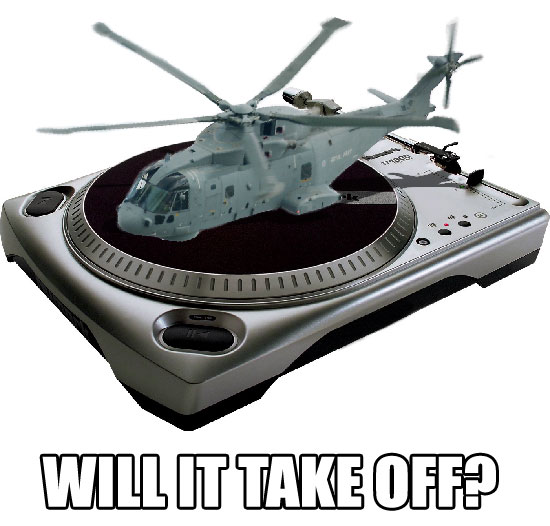 [/IMG]
Cheers Zulu. Proper made me giggle.
I asked the wife, she said it was all to do with the friction within the bearings/wheels that would be easily overcome by the thrust of the engines.
I have enjoyed the thread greatly.
Thank you.
Wouldnt it then be the case that as you increased the speed of the treadmill, you increased the power of the engines?Then the plane still appears to be stationary?
No, the thrust of the engines is far higher than the weight of the plane (obviously) so even if it was going backwards at 500mph it would (eventually) 'accelerate' to a ground speed of 0, then start moving forward (relative to the surroundings), and happily take off.
The conveyor belt really is totally irrelevant, all that is relevant is the thrust of the aircraft!
The answer is 42!!!!! (now what was the question..?)
[img]  ?w=200&h=300[/img]
If you then start the treadmill, surely the plane would move backwards?You could then counter act that by throttling up the planes engines and bring the plane back to a stationary state.
it wouldn't bring it back to a stationary state - it would continue forward from that point.
The anchor is released and the glider moves forward across the conveyor as a result of the thrust provided by the elastic band.
No, because the treadmaill would speed up as the glider speeds up.
.
I really don't know the answer to this by the way, I can think of rational explanations for both yes and no, so at the moment I am trying to define the question to myself more clearly.
.
As I understand it we have a powered treadmill which exactly matches the increase in ground speed of the aircraft and so the aircraft always remains exactly stationary relative to the ground?
andrewh... so if it has a groundspeed of zero, then the treadmill is not moving?
Also, think about this, what is the mechanism by which the treadmill is stopping the aircraft moving forwards even when the aircraft is producing thrust?
SO what we are stating is that the drag from the wheels is insignificant compared to the thrust from the engine that forward motion and therefore flight is inevitable?
I put this to the ultimate arbiter of all disputes in our house. She said that we could never know unless we actually looked in the box.
If the plane is pushed forward by a jet, this will cause the wheels to turn (freely, they are not powered). On a runway this moves the plane forwards. On a treadmill the 'ground' moves at an equal speed in the opposite direction and so the plane remains stationary with the wheels turning twice as fast.
uphillcursing... you'd kinda hope that the engineers who designed the wheels made sure than the wheel bearings weren't so draggy that they stopped the plane taking off...
andrewh... so, how do freely moving wheels have any effect on the body of the aircraft, and stop it moving forward?
Funkynick, clearly you have never ridden one of my bikes!That may be more to do with poor adjustment rather than design.
Shame is I am sober tonight and this is not half as much fun as it seemed last night.
Get a roting wheel and then pull the ground from under it in the opposite direction. It, and anything attached to it, will remain where it is.
If the plane starts to move forward the treadmill speeds up, the plane can never move.
Of course it can, BECAUSE THE WHEELS ARE NOT POWERED.
Right... toy car, on a conveyor belt. Can you push it forward, even if the conveyor belt is moving? Of course you can. That's how the plane works.
I do worry about some people.
andrewh... well, you have the conservation of momentum just about there... kinda..
Now you just need to understand that it's got pretty much bog all to do with this, as the aircraft has a source of forward thrust that does not rely on the ground one little bit. The ground can be doing what the hell it likes... moving backwards or forwards, the plane will still take off...
But if it's a very big conveyor belt, then you'd be on it too, so you'd be moving backwards. Then, when you push the car forward the net motion would still be zero!njee20 - Member
Of course it can, BECAUSE THE WHEELS ARE NOT POWERED.Right... toy car, on a conveyor belt. Can you push it forward, even if the conveyor belt is moving? Of course you can. That's how the plane works.
Haha! Well I know you're trolling, so I'll just ignore you!
Iit's down to thrust and drag, the treadmill won't have any effect on the aircraft as it's not providing any friction at the wheels
It's got nothing to do with friction at the wheels. thrust from the planes's engine will make it faster but the treadmill speeds up to match.
Lets ignor the wheels for the sake of clarity. Imagine a fuslarge with a jet engine sitting on the treadmill. The thrust pushes it 'forwards' the treadmill 'backwards'. However much thrust is generated the plane will not move as the treadmill sends it at an equal speed in the opposite direction. It can only take off it can out-accelerate the treadmill, which it can't because the treadmill speeds up to match.
The question really is, can enough lift be generated by a stationary plane? I don't know.
Sationary plane
[img] 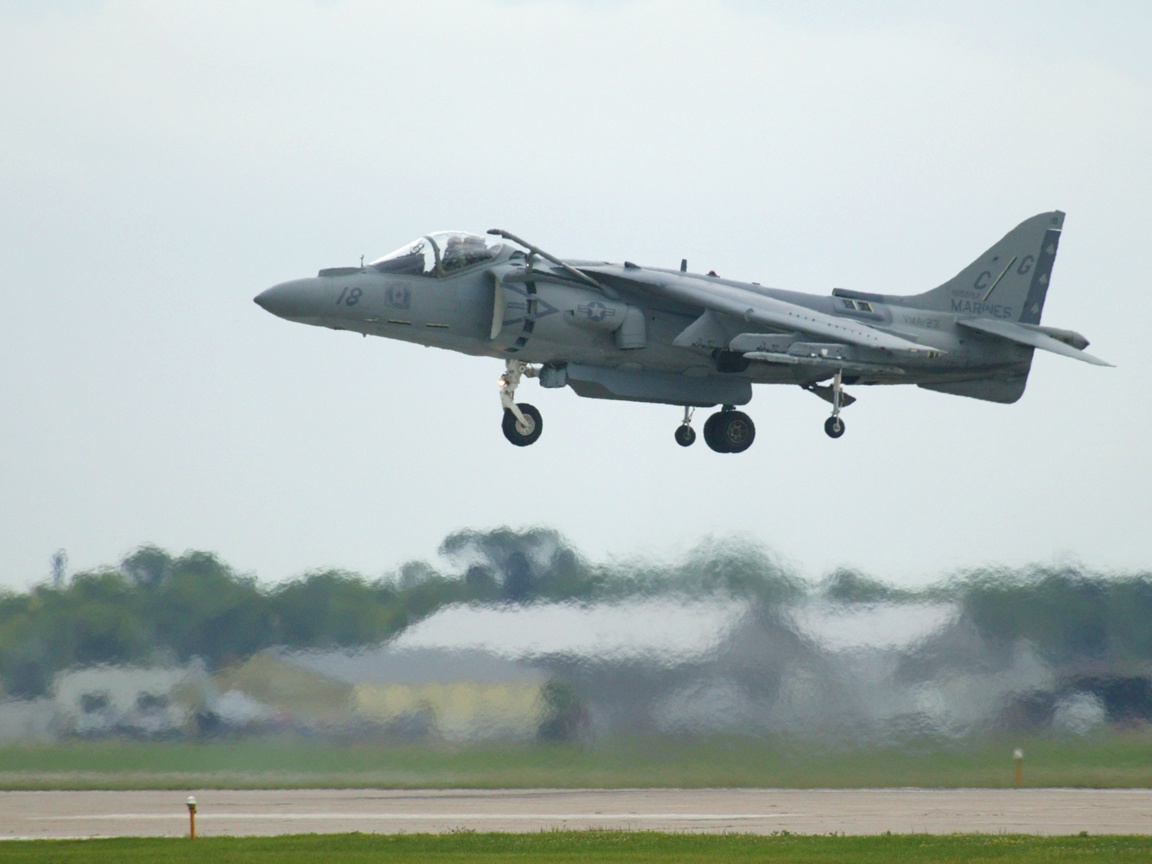 [/img]
Stationery plane
[img]  [/img]
Aaaaaaaargh... you can't ignore the wheels... the aircraft wouldn't be able to take off irrespective of whether there was a treadmill or not without wheels (or equivalent)!
Nope, that's it, you have to be trolling now.. *sticks fingers in ears* lalalalalalla
The question really is, can enough lift be generated by a stationary plane?
You'd want one of these, which could take advantage of the ground effect from the moving conveyor belt
[img]
 [/img]
And how is the treadmill resisting the thrust of the engines The wheels can spin freely regardless of any speed the treadmill is doing, Aerospce vehicles fly perfectly well without the need to generate lift ,the treadmill cannot counteract forward thrust produced by the expansion of the exhaust gasses unless the friction between the wheel on its bearing and landing gear is increased.
OK, lets have the wheels back on. It can't move forward if the ground is moving at the same speedin the opposite direction. More thrut just makes the wheels turn faster (by speeding the whole plane up, not powering the wheels) and the treadmill speeds up in the opposite direction.
If "forward" speed = [i]N[/i]mph then the treadmill will move the other way at [i]-N[/i]mph and the plane will be static with the wheels spinning at 2[i]N[/i]mph
Oh dear god... *bangs head against a wall*
you would be better assuming that the fuselage is levitating magnetically, i.e. there's no friction between it and the conveyor belt rather than imagining it just sitting on top.. (in which case it would not react as you describe anyway..)
If there is no friction then yes it would move forwards. But there is so it doesn't.
so where do you choose to draw the line? how much friction is required?
But what if it was a plane on shopping trolley wheels and the conveyor belt was moving side on and it was made of ice and a South African was passing a ball out the window?
But you're assuming friction increases with speed, which isnt the case. Imagine sitting on your bike on a treadmill and holding the sides of the treadmill. If you turn on the treadmill at 5mph you only need to hold on gentle to keep yourself in place (totally ignore the bike can be pedalled!!). You can pull youself forward with very little extra effort. Increase the treadmill to 50mph and you still only need to hold on with same force to remain stationary as [i]friction is constant[/i].
Take same situation with the plane - it would use only a very small proportion of its power to remain stationary, regardless of whether the treadmill was turning at 5mph or 500mph. That means that the rest of its thrust can be used for forward momentum, and as we all know - airspeed is what makes the plane fly...
Andrew you're the only one who's still not realised you're talking crap! How long will it take?!
Isn't this the 3rd time this topic has come up over the years?
[img]  [/img]
Andrew,
In some respects you are right. If as the question sometimes states the treadmill matches the speed of the wheels then the plane will always have a ground speed of zero (where the ground is everything that is not on the treadmill) and so is unlikely to have any significant airspeed. In practice this is impossible to set up but like all good theoretical questions practical considerations don't come into it. There was a joke above about considering perfect spheres in a vacuum. It's that kind of thing and is the trick part of the question for those not paying attention.
However, there is another version of the question which leaves out the details about the speed of the wheels and instead refers to the speed of the plane. In this case the treadmill is an irrelevance as the wheels will just spin faster than the treadmill allowing the plane to move forwardand gain enough airspeed to take off.
jonba,
the wheels and conveyor are an irrelevance in both versions of the question. Thrust, an external force to the wheels and conveyor still acts upon the aircraft.
Assuming 0mph windspeed, the groundspeed of the plane (the speed of the conveyor) would be 2 x airspeed.
If you overtake the last person in a race, then you are in what position?
1st place - you're lapping them.
If you overtake the last person in a race, then you are in what position?
Same as you were before, because you weren't in the race.
Andrew you're the only one who's still not realised you're talking crap! How long will it take?!
Probably depends how much encouragement we give him.
Isn't this the [s]3rd[/s] 495th time this topic has come up over the years?
Yes, about right!
the wheels and conveyor are an irrelevance in both versions of the question. Thrust, an external force to the wheels and conveyor still acts upon the aircraft.
Assuming 0mph windspeed, the groundspeed of the plane (the speed of the conveyor) would be 2 x airspeed.
This. As said previously, if the conveyor belt is moving at the same speed as the plane then it'll take off at 150mph as normal, but the wheels will be doing 300mph. It's completely irrelevant.
andrewh is making me laugh.
😀
Quality, wether intentional or not.
I think njee bike on a treadmill was a good example.
If you stand by the side of a treadmill and lower a bike on to it. You wont feel any force pushing you backwards. As the wheels will turn.
I suppose it would theoretically be possible to run the treadmill so quickly that that enough friction builds up in the hubs that the wheels cant match the speed on the treadmill and then you would feel the backwards force.
Not trolling, but have a sneaking suspicion that I am being a bit dim somewhere...
In this case the treadmill is an irrelevance as the wheels will just spin faster than the treadmill allowing the plane to move forwardand gain enough airspeed to take off.
That is kind of the point. If the treadmill accelerates to match the speed of the wheels then it doesn't move forwards and so gets no air-speed.
All the wheels do is stop the bottom of the plane getting scuffed so why would the speed of the treadmill have any effect on the plane taking off?
Must resist....
Can it take off IF the belt matches the speed of the wheels
is equivalent to
Can it take off with zero groundspeed
yes, it *could* easily take off, but the wheels would be spinning faster than the belt, which breaks the constraint (as happens in the vids).
Yes, its both stupid and impossible, but there you go.
Everyone else understood this from page 1 onwards...
"This. As said previously, if the conveyor belt is moving at the same speed as the plane then it'll take off at 150mph as normal, but the wheels will be doing 300mph. It's completely irrelevant."
If conveyer belt is moving at 150, then the plane will be moving at 150 relative to the treadmill, the wheels at 150 again realative to the treadmill. Relative to fixed point on ground aircraft is not moving, no airflow, no lift. No ground effect as speed over groud is required (not speed on conveyer belt). Jeez, why is there even a debate on this!!? Conventional plane will not take off if forward thrust matches speed of conveyer belt. Plane needs airflow over wings to generate lift.
Thrust vectoring assets are very different as they can genertae their own lift.
To quote Scroobius Pip -
"I've seen the world; I've seen the good and the shitty bits;
And all I've got to say is god damn, y'all are ****ing idiots."
😀 😀 😀 😀 😀
I thought we solved this last time by saying that we needed an enormous fan in front of the plane, rather than a conveyer belt?
dont make me find the old thread
Conveyor belt: designed to run in the direction of travel.
Treadmill: Designed to run against the direction of travel.
Basically the wheels and treadmill are an irrelevance: The way the plane picks up forward momentum is by pushing against the air pressure, not against the friction of the ground; the wheels are there to merely aid the movement of the plane, not to propel it. Therefore, the plane will take off regardless of what the treadmill is doing as the treadmill has no effect on the air pressure surrounding the plane.
As many others have said, the only effect the treadmill would have is to make the wheels spin faster than if the plane was taxiing on an ordinary runway.
Goddamn it druid, you bad bad man!
Here's another way for wallace to look at it, just in case he's not trolling.
The treadmill is stationary, the plane is stationary, the jets go on full thrust and it begins to accelerate. when it gets to 100mph, the treadmill suddenly switches on, instantaneously going at 100mph. what happens to the aircraft's speed relative to the air around it and the non-treadmill ground? Does it carry on accelerating? Or suddenly stop or start to go backwards?
You can have the airstrip made up of a bunch of treadmills in a row, all going at different speeds forwards and backwards, the plane will accelerate over them. The tyres will be under a bit of strain, but the plane will still accelerate in relation to the air and the earth (not treadmill) until the airflow over the wings generates more lift than the weight of the plane.
Or:
Can a plan land on a treadmill? Or a conveyor belt?
I'm still not sure what the question is.
Bit late to this and I struggle with long sentences, if the plane can take off coz "it's airspeed over the wings produced by the engines" then why don't planes just sit on a short runway with their wheel brakes on give it some beans and take off from stationary? Could save a lot of money building the next airport.
The myth busters episode doesn't seem right because the plane moved forwards, the "conveyor belt" was running backwards but the thrust from engines carried the plane forwards.
I'll stick with my original "no it won't" stance.
That's the spirit!!
Nedrapier - I do not disagree with you. In your scenario it will still accelerate.
However, the scenario in question dictates that the belt will match the speed of the wheels, therefore speeding up, and the thrust increases, therefore the aircraft will stay stationery, with the thrust used up to keep it stationery. No flight.
On running treadmill, you generate no forward momentum, so if you jump up, you would not leap forward relative to ground.