UPDATE: CLASSIFIEDS section refreshed, redesigned, searchable: Go take a look
Why??
Like this which looks like shit will just head for the seals
[img]  [/img]
Or
this which looks more sensible as shit will migrate away
[img]  [/img]
Am I missing some kind of new brilliant revelation and ought to be turning my shock over.
Proper suspension that, one pivot and a nice can crusher, makes me weep with it's simple elegance so it does!
Would it freak you out if I opened a packet of crisps upside down?
makes no difference what so ever.
i wouldnt care about the shit getting to the seals at all ... afterall they are seals ....
if i were to give 2 hoots about which way up my shock was it would be the marginally less unsprung weight on the orange as oppose the cannondale that would swing it for me ...
i wouldnt notice it when riding - neither would you -and id be willing to bet in a blindfold test on the same bikes no one on this forum could tell when the shock was turned round 😉
Upside down shocks/forks can sometimes self lubricate better as the oil inside is always on the seals. Unsure if Fox shocks benefit from this though.
Function aside, I agree on the "fugly" thing. Shocks should be the Proper Way Round.
I'd imagine that the shock simply doesn't 'work' the other way around. Either physically won't fit (probably the dials) or more likely the rider wouldn't be able to reach the open-propedal-lockout lever without getting off the bike and fidling with a well hidden away lever?
Joolsburger. This is going to have you wetting your pyjamas and giving you a sleepless night 😆
[img] 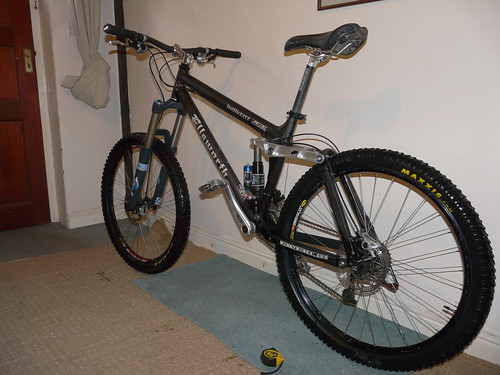 [/img]
That's just wrong
All I see is two ugly bikes regardless which way round the shock is fitted.
Does this mean all the shocks on forks are upside down? or is it just what we are accustomed to seeing? Take a look at the ellsworth, shock and fork the same way up.
"shock and fork the same way up"
position wise, but only one is the 'best' way around
The shock is upsidedown on the ellsworth, reducing the unsprung weight, but the fork is the 'wrong' way around, as if it were the other way around it would have less unsprung weight (eg like a maverick, dorados, shivers ..)
So are Dorados now to be called right way round forks instead of upside down forks?
[img] 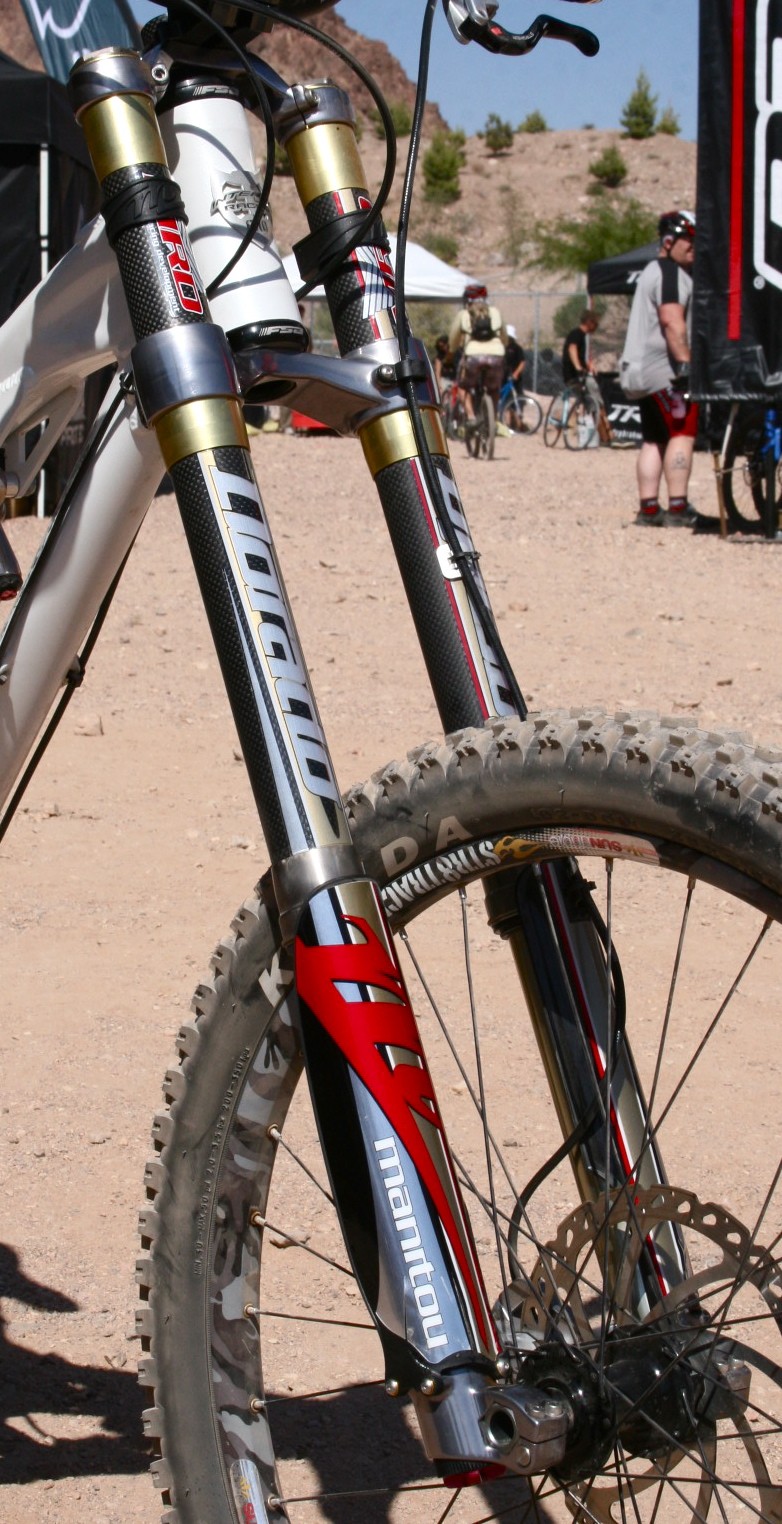 [/img]
[b]The shock on the rush is the right way up![/b] (in terms of unsprung mass)
Think about it, the damper is inside the 'shaft', the 'spring' is inside the air can. So the lightest end of an air shock is probably actualy the chunky end as its hollow!
Note that the DHX air has the low speed compression damper/adjustable volume resevoir is at the other end on the air shock, manitou mount this, more logicaly, on the shaft same end as on their (and fox's) coil shocks.
DHX air
[img] http://autobus.cyclingnews.com/photos/2007/tech/features/sea_otter_407/Fox_Racing_Shox_DHX_Air_cutaway.jp g" target="_blank">http://autobus.cyclingnews.com/photos/2007/tech/features/sea_otter_407/Fox_Racing_Shox_DHX_Air_cutaway.jp g"/> [/img]
DHX coil
[img] http://www.singletrackworld.com/2009/04/dhx_rc4_cutaway2-600x396.jp g" target="_blank">http://www.singletrackworld.com/2009/04/dhx_rc4_cutaway2-600x396.jp g"/> [/img]
As for which fork design has the lowest unsprung mass, it all depends where the damper is, if its a pushrod mounted at the top and diping into a bath of oil in the stanchions then the weight is all unsprung (marzocchi open bath forks) , if the shaft is from the bottom going to a cartrige at the top of the then its part of the sprung mass (most conventional forks).
The principal advantage of upside down forks is the loweres stiction as the seals are under a pool of oil, on the downside they obviously leak more and need regular services as a result.
Its usually done because the shock won't fit the other way round.Have a 2004 5 Spot.Originally came with a Romic shock (the right way round!) Changed to a Manitou air shock and had to fit it upside down as the top of the shock would hit the rocker.Am on the lookout for a Fox RP23 which would probably put it the right way round!
Thanx Max
nice point Andy M someday all forks will be that way up... Its only MTB the conventional forks persist.
'conventional' forks are much much much stiffer, and we demand light weight, if you want an upside down fork to be as stiff as a conventional one it would need to be very heavy (marzocchi shiver SC's) or very felxy for the same weight (maveric SUC's). Its only in downhill where they work as theres another crown to stiffen them up and weight isn't as big an issue. Arguably maitou could be much lighter if they went back to the conventional dorrado's.
I agree with the extra crown comment to an extent, but thats sugesting all the flex comes from the single crown and thats the same be it conventional or upsidedown.
Not sure Valentino Rossi or stefan everts will be swapping back to conventional any time soon.
Larger tube at the top where the leverage is, dirt falling away from the seals, it all makes sense, and as soon as Fox swap everyone will, and one day they will.
I thought they were potentially stiffer in triple clamp models only because the outer/slider overlap could be increased for any given a.c length because the outer could be made longer. At the probable expense of weight, mind.
Decreased chance of rock damage by leaving the stantions at the top of the fork would be enough to rule out me buying them for mtb use.
I don't think many of us would notice the reduction in unsprung mass or seal durability.
Another marketing ploy imo.
the only reason it's "upside down" on the 'dale in the first post is that it wouldn't fit in the other way. still does the same thing.
all the stiffness isnt in a single crown, its a combination of all of them
single crown USD forks - 2 points joing them together (crown and axel), about as stiff as overcooked spagetti.
conventional SC forks - 3 (crown, arch, axel)
USD tripple clamps - 3 (2 crowns, axel) which is why the maveric fork is about as stiff as you'd expect (compare it to the similar weight spesh e150 fork with its conventional design)
conventional DH forks - 4 (2 crowns, arch, axel) very stiff.

