UPDATE: CLASSIFIEDS section refreshed, redesigned, searchable: Go take a look
I've seen a few articles suggesting wider tyres are quicker or have lower rolling resistance.
I came across this website
[url= http://www.bicyclerollingresistance.com/mtb-reviews ]rolling resistance site for tyres[/url]
The tyre with the lowest rolling resistance is a 2.35
Can anyone help me understand? This is something discussed on GCN to for road bikes.
Yet it goes against everything I know.
Surely this can be sorted empirically?
2.8 tyres running at 15psi were unnaturally fast.
They also punctured remarkably easily so swings and roundabouts.
Why though. All I can see is a big sloppy tyre grabbing the floor?
(I'm about to suit up with 2.8s on a new + bike)
It depends. Supple tyres conform to the ground better so there is less vibration and the bike "flows" over the ground faster. Same as having suspension vs. rigid on rough terrain. If the tyre is stiff or really high pressure you don't get the advantage. Read Jan Heines blog, he explains it way better than me!
Think it depends on road surface too. A bigger tyre will roll smoother on a rough surface, is my understanding. A bigger tyre is also heavier and potentially less aerodynamic, so there's more to consider than the rolling resistance itself.
Yes, it depends. Having ridden a stony rough trail downhill on 2.35s at 35psi with someone on 3.0s at 15psi, he was rolling straight past me as I was pedalling, the difference was astonishing.
Probably slower on smooth surfaces though.
Okay I'm with this - but the GCN was referring to road cycling.
Something to do with contact patch shape?
There are two main factors - the friction between the tyre and the ground, in particular the contact patch and the energy losses created by the tyre carcass deflecting. Wider tyres have a wider, shorter contact area which is smaller than a skinny tyre i.e. less friction. A wider tyre also doesn't distort as much as a skinny tyre for the same pressure, so the energy losses are less. Off road, there are also losses due to the tyre distorting the soft surface - a wide tyre often doesn't leave as big an imprint. Wider tyres are heavier, so lose during acceleration, but once up to speed its in the favour of the wider tyre. Wide tyres can also be run safely at lower pressures, so offroad give you more grip on rocks and roots which really helps on climbs. Aerodynamics has negligible impact on the road - makers starting to look at 28mm tyres for road racing
The part of the tyre having to deform to the flat road surface is less ceived on a wider tyre so deforms less, which uses less energy
Mass spread over a larger tyre area equalling less kg per square mm? Would that not mean less friction?
Probably wrong! 🙂
Hysteresis innit???????
The point that many many miss is that the wider tyres only have lower RR if they are at the same pressure. In reality most people ride wider tyres at lower pressure so are used to thinking of them as slow. Plus, fatter tyres have more aero resistance as well.
You referring to me, molgrips? If so, I remember that myself, and was as astonished as you.
rone - Member
...The tyre with the lowest rolling resistance is a 2.35Can anyone help me understand? This is something discussed on GCN to for road bikes.
Yet it goes against everything I know.
It's true. I've been preaching this for over 50 years.
The reason it never caught on earlier is because racing doesn't improve the breed, but fashion follows racing, and therefore wheels got thinner and thinner as roads tended towards smoother.
The end result is that road bikes were not able to fit wide tyres. Also wide tyres tended to be more for industrial uses - eg trade bicycles had 26" tyres with 2" section, but they were coarse with thick sidewalls, the very opposite of supple.
For several years I've been running converted 29ers as road bikes using Big Apple 2.35" tyres. Freewheeling downhill beside other road bikes I have to trail my brakes to keep level.
In cycling magazines of the 1920s there would occasionally be an old hand bemoaning the lack of 2" tyres since WW1.
The tyre manufacturers are starting to recognise this and produce suitable tyres so it's easy enough to try if you have a 29er handy.
All you need is a supple tyre and a lower pressure than you'd think.
Comfort is much improved too.
However if you're an actual racer I suspect 2.35" may be a handicap at speeds where aerodynamics are critical.
You're comparing apples and oranges. Yes the rolling resistance is lowest for a 2.35, but thats also a tyre with no tread. If you look at the numbers you'll see that construction of the tyre has a much bigger effect than size. Unfortunately while I like the site, its also limited to its sample set, so not so useful as to draw a conclusion about how size etc. effects rolling resistance (at least off road - I must confess Ive never checked out the data for the dark side). I actually offered to send the guy that runs the site a free box full of tyres to test in various sizes and compounds to get a more useful data set, but he never got back to me 🙁
To a point I believe it, certainly never noticed any difference moving from 23 to 25 to 28, other than more comfort/confidence on descents.
However, DEFINITELY noticed the difference going from a 40 to a 32 on my commuter, even having fitted mudguards at the same time as the 32s it still feels faster. So I reckon the effect tops out somewhere.
[url= https://www.schwalbe.com/en/balloonbikes.html ]I think this mob have a suitably wide choice of tyres to pick from....[/url]
Feeling faster isn't necessarily the same as actually being faster though.
singletrackmind - Member
Hysteresis innit???????
It's not THAT funny.
singletrackmind - Member
Hysteresis innit???????
Laugh! I nearly bought one
As I understand it, it will depend on the surface. A perfectly smooth, perfectly hard road surface would give lowest rolling resistance with a very narrow, hard tyre at very high pressure.
In the real world, the rougher the surface, the lower the ideal pressure, and the wider the ideal tyre. At the same pressure, a wide tyre and a narrow tyre will have the same contact areas, so a wider tyre will have less sidewall deflection at the same pressure.
On a soft surface, you need a tyre pressure low enough that the road surface doesn't deform, so a wide tyre at low pressure will roll much faster.
On road, aerodynamic drag is much more important than rolling resistance, so narrow rims and tyres are faster.
On the subject and a bit more, these are worth a read...
https://janheine.wordpress.com/2014/01/01/tires-how-wide-is-too-wide/
https://janheine.wordpress.com/2014/01/05/wide-and-fast-tires/
https://janheine.wordpress.com/2015/02/17/tire-pressure-data-and-details/
https://janheine.wordpress.com/2010/10/18/science-and-bicycles-1-tires-and-pressure/
higher pressures result in more vertical change in direction.. having your bike and body going up and down over rocks and roots results in a change (decrease) in your forward speed. More control to boot.
Softer tyres deform to trail imperfections and require less vertical bike deflection.
According to a pinkbike article on the topic which I cant find.
For me, 2.4" tires at 20psi and a dad bod result in much quicker trail/race times than my old 2.0" @40+psi back when I was fitter, lighter and riding much more.
I understand that wider road tyres are also gaining traction for their aero improvements
The trend for wide road bike tyres is BS to sell you something new..
If wider tyres offered less rolling resistance on smooth roads I doubt the car manufacturers would be fitting super narrow high pressure tyres to cars when they game the pollution tests.
If you want to believe overwise carry on, by the way your helmet will aso explode after two years and any bike without discs is a danger to humanity.
The trend for wide road bike tyres is BS to sell you something new.
But if you've got to replace tyres anyway then you'd be buying something irrespective?
The trend for wide road bike tyres is BS to sell you something new..
A wider tyre is more comfortable, has more grip and is marginally faster and is marginally less likely to puncture. Why wouldn't you use one?
If you think you can compare a car and it's tyres to a bike and it's tyres you may want to do a bit of research....
I doubt the car manufacturers would be fitting super narrow high pressure tyres to cars when they game the pollution tests
Passenger car tyres are generally inflated to 30 to 35 PSI. Skinny bike tyres are often twice that, despite carrying less than 10% of the weight. Even narrow, low rolling resistance car tyres run much lower tyre pressures than most road bikes. Also, a narrower wheel and tyre will lower a car's aerodynamic drag enough to improve fuel consumption at highway speeds.
I've seen a few articles suggesting wider tyres are quicker or have lower rolling resistance.I came across this website
rolling resistance site for tyres
The tyre with the lowest rolling resistance is a 2.35
That test uses a flawed method though. What it's checking for is the lowest amount of resistance to sidewall and tread flex. That will be related to actual road/trail rolling resistance in part but to be fully representative you wouldn't use a smooth drum. Rolling resistance in the real world is related to a tyre's ability to do what many above have described, provide the micro-suspension that stops your bike and body weight being bounced over bumps and keeps you moving forward efficiently.
Once you factor in pressures needed to prevent pinch flats, a larger tyre with less pressure and a flexible casing does that very well.
Roads aren't generally that smooth, road bikes are light and easily deflected and the speeds are high so those vibrations and small impacts are happening with a fair bit of force. Any gain in ability to manage the road surface via the tyre deformation will mean a gain in efficiency. The difference is more easily noticed off-road but the gain is there for roadies too.Okay I'm with this - but the GCN was referring to road cycling.
This is worth a listen:
Hmm doesn't see very clear as usual.
Maybe letting my own bike roll down a hill with different tyres on may shed some light as I pass the speed indicator at the bottom.
As for the rolling resistance test site no being very accurate, do we have an alternative? Not that I've seen.
I tried a test off the back of that podcast with some 28mm Gatorskins at 200w. 120,100 and 80 psi. All three were 16.7mph. The difference in comfort was night and day though.
Non of the reasons given explain why car manufacturers with all their resources choose narrow tyres over wide tyres to significantly reduce rolling resistance.
Because we're talking about bicycles, not cars.
hols2 - Member
As I understand it, it will depend on the surface. A perfectly smooth, perfectly hard road surface would give lowest rolling resistance with a very narrow, hard tyre at very high pressure...
That's the nub of it. The ideal is a steel wheel on a steel surface, ie rails. They have the lowest rolling resistance. SImilarly a very hard narrow tyre on smooth concrete is pretty good.
However most of us live in a real world of roads with exposed aggregate, lumpy surfaces, slightly raised manhole covers, potholes, etc etc.
I wonder how many of the naysayers have actually ridden a bike with proper wide tyres.
BTW 28mm isn't wide. 🙂
Non of the reasons given explain why car manufacturers with all their resources choose narrow tyres over wide tyres to significantly reduce rolling resistance.
A fairly narrow car tyre is 175mm wide. A wide car tyre is twice that. They have a flat contact patch because the wheel stays close to vertical all of the time, so the contact patch is wide, hence they run fairly low pressures. A narrow bike tyre is less than 25mm wide. A wide bike for on-road is still less than 50mm wide. They have a round profile because the bike leans over massively when cornering, hence they run much higher pressures than cars. The considerations in a car tyre and bike tyre are completely different.
Too many variables in MTB imo.
With road I have the suspicion that its the 'tallness' of the tyre that makes the difference. ie a 28mm tyre is 5mm wider but also 5mm (ish) taller. So epicyclo when riding downhill your bigger tyres are faster because the circumference of the wheel is bigger not because of the width of tyre.
I was very disappointed when my Vittoria Corsa 25c tyres measured 23mm and with a 'tallness' to match the 23c Contis they replaced.
Non of the reasons given explain why car manufacturers with all their resources choose narrow tyres over wide tyres to significantly reduce rolling resistance.
Because modern cars do not use narrow tyres, they are all on wide tyres when you compare across the 150 years of motor vehicles. Road bicycles are still on skinny tyres compared to the whole history of bikes.
Here's a modern eco car and its tyres:
[img]  [/img]
Here's a 1930s racing car (and racing cars tend to have wide tyres for grip) and its tyres
[img] 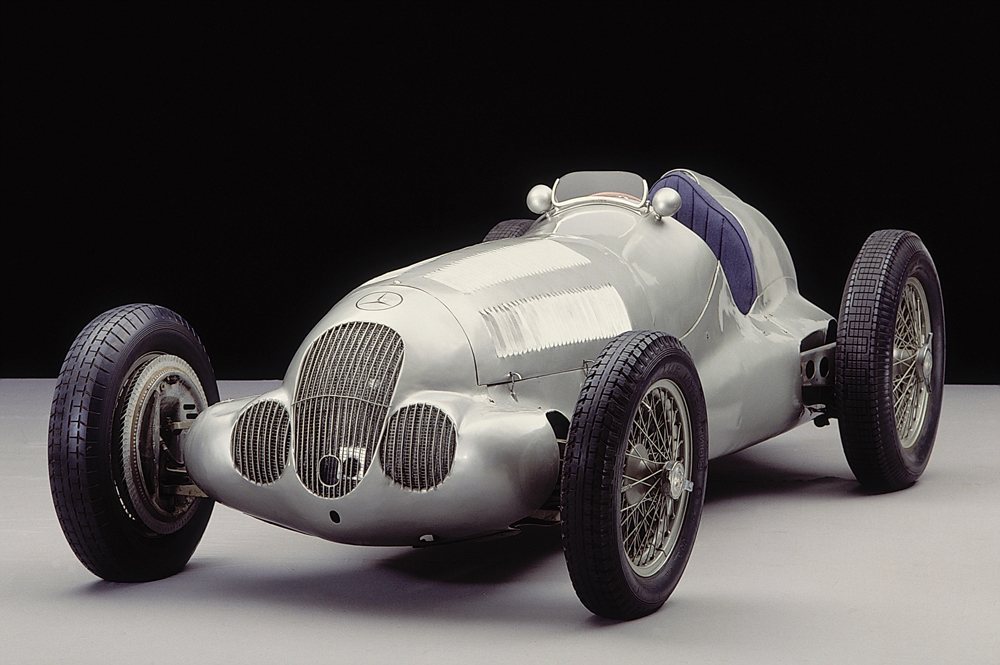 [/img]
Also, much of the efficiency loss when car tyres go past their optimum width for efficiency is due to increased aerodynamic drag, not rolling resistance.
I think comfort has a big part to play too.
You're more efficient when you're comfortable, you don't tense up as much and you pedal much more smoothly, for longer.
Less mentally tiring too, which makes you happier as well as faster.
Not when they are cheating efficiency tests. The manufacturers take a car that woyld normally have wide tyres and reduce its rolling resistance by fitting narroe tyres at above normal pressures.
If wide tyres dont add to rolling resistance why would rhey go to the trouble. Its not for aero fains because much of the testing is in a rolling road or low speed.
We also know that much wider tyres on the road offer considerably more rolling resistance but we are saying marginally wider offers less? Thats illogical.
I get it for comfort and grip off road or broken roads but on normal roads I dont think you'll reduce the rolling resistance over 23/25mm 100psi tyres by going wider or lower pressure.
I have no empirical data to bring to this debate 😉 However, I lent a mate of mine my Solaris Max running 2.8 tyres at 12 PSI last night. I'm normally a quicker climber than him, but he beasted me. Many other variables suggest this might not be statistically significant!
What was interesting tho - as this was his first ever ride on chubby tyres - was his insistence (and my refusal) they needed more air when he first sat on it, and his perception of how much quicker they climbed on the rooty/loamy trails we have here and how much trouble he had slowing the bike down once it got up to speed compared to his 650b bike shod with 2.3 tyres.
I was riding 29x2.35s. First time after riding 2.8s for five months. They certainly spun up to speed faster, but didn't seem to roll better when I was chasing on the descents.
Still in other news, how fantastic are tyres compared to what we had a few years ago.
cars != bicycles, stop comparing them.
I don't think you'll reduce the rolling resistance over 23/25mm 100psi tyres by going wider or lower pressure.
There is significant evidence that says otherwise [i]for real world road conditions[/i].
We also know that much wider tyres on the road offer considerably more rolling resistance but we are saying marginally wider offers less? Thats illogical.
It's not illogical at all, there's an inflection point, you don't/can't just extrapolate in one direction and assume everything follows that trend forever.
Too narrow and high pressure = greater suspension losses, and carcass deformation.
Too wide = greater losses to aerordynamics, weight and friction
In the middle is the variable zone where the optimum depends on the exact conditions in terms of surface, speed, pressure, and specific tyre casing construction.
The fastest tyres will be lightweight, supple casing tyres, of a size and pressure that allow you to minimise hysteresis losses and minimise suspension losses, while balanced against rolling friction losses and aerodynamic losses. It's that balance point in the middle, too far either way and you lose out.
One of the things that has clouded opinion over the years is that mostly 'big' road tyres were also sturdy overbuilt touring style tyres, whihc would never be quick due to their casings and compounds, so people equated big with slow, when it was actually that [i]type [/i]of tyre that was slow.
Build 30-40+mm tyres with the same casings as proper racing tyres and it's a whole differnt ball game. The crazy thing is that these tyres were available in the early half of the 20th century, and were being used to great effect, it's the weird 30+ year blip in the 70s(ish)-80s-90s and 00's where everything went super narrow for no good reason*.
Those kinds of tyres are now starting to become available again, although in limited ways, it's almost as if we're having to re-capture lost knowledge.
*mostly driven by racing and bad testing conditions. At high speeds aero has a much higher impact than for 'normal' road conditions,so they went narrower and narrower, fashion followed. Made worse by rolling resistance testing that doesn't replicate real world conditions**.
** smooth rollers are a terrible approximation of a road, they tried bumpy rollers to improve matters, but they're still a poor approximation, and the one thing NONE of the 'official' rolling resistance tests actually include is the 70kg jump of meat on top of the bicycle and how jiggling that around impacts speeds in the real world.
If wide tyres dont add to rolling resistance why would rhey go to the trouble. Its not for aero fains because much of the testing is in a rolling road or low speed
You answered your own question. Rolling roads are very smooth, so narrow tyres are indeed lower RR. See also track bikes.
However in the real world the advantages that a wide tyre can offer on rough surfaces outweigh the effect of the width.
Hysterical losses is really complicated to think about. It is not just the tyre that passes through the contact patch that gets hysterical. The sidewalls will bulge as they go past the contact patch. Plus probably some squirm resulting in road/tyre friction energy loss. With a wider tyre and a narrower tyre at the same pressure, I think more bits of the wider tyre will get hysterical, but they will deform less. The data suggest that the latter effect outweighs the former (up to a point).
Measured rolling resistance of GP4000S in 23, 25 and 28 sizes...
http://www.bicyclerollingresistance.com/specials/conti-gp4000s-ii-23-25-28
Not when they are cheating efficiency tests. The manufacturers take a car that woyld normally have wide tyres and reduce its rolling resistance by fitting narroe tyres at above normal pressures.
I don't know how these efficiency tests are done but if they're not on a normal road surface with all its imperfections then it is a deeply flawed test.
Make an essentially perfectly smooth surface and then the minimum rolling resistance comes from very high ground pressure - that's how railways work. As cars and bikes do not run on rails then the optimum pressure is lower. The lower the optimum pressure then the wider the tyre needs to be ensure you don't end up with increasing hysteresis looses due to sidewall flex.
Note that radial tyre construction allows increased sidewall flex for a given hysteresis loss so you can run lower pressures without being penalised.

