UPDATE: Reviews section refreshed, redesigned, searchable: Go take a look
chakaping, I saw that article which in part inspired me to start this thread but only glanced it and assumed it was a frame before the finishing/painting stages. I imagine then that like a lot of the Starling frame you can request a certain colour within certain limits, I like the idea of this custom type compared to Cotic's more traditional sales strategy however obviously Cy can produce a much higher quantity of frames/bikes
The Panigale is monocoque aluminium, certainly easier/cheaper to manufacture and more familiar in feel for average riders than the carbon airbox MotoGP derived idea.
Carbon is just another material, I don't dislike it, I just object to the evangelical move towards it when it's limitations have been visible in other arenas for so long.
deviant - Member
...Stoner was an outlier, nobody else achieved anything like that success on the Ducati despite the firm going through riders at an astonishing rate and flooding the grid with satellite bikes...
Stoner was more alien that even the usual aliens on the MotoGP grid.
I'd love to have seen him up against Marquez.
That Stanton always gets me....truly beautiful and dangerous for my credit card...stop it!
They ride well too! Loved mine.
The new Slackline is bloody brilliant; a bit less gnarr bit a tad easier to ride.
I don't get what the chat about motorbikes has to do with push bikes either.
That Starling to my eyes looks dreadful, at least to give Cotic their due they make decent looking bikes.
People talk about stainless steel, but are there any mtbs being built in it? Even stainless steel road bikes seem rare as hens teeth, probably because it is expensive with little positives.
Because what happens in MTBing tends to follow a path motorbikes took years earlier....disc brakes, suspension, hydraulics, bigger tyres, carbon, wide bars etc etc.....not always for the best in my opinion.
KTM use steel in their Moto3 bike frames and I think they're using it in both the Moto2 and MotoGP bike frames as well.
That Stanton's lush. The line through the top tube into the seat stays is just right.
Because what happens in MTBing tends to follow a path motorbikes took years earlier....disc brakes, suspension, hydraulics, bigger tyres, carbon, wide bars etc etc..
You could say most of the same about cars too though, no?
Hydraulic brakes, suspension and wide bars are a negative?
You know there are forums for CXera right?
I have a Reynolds 931 stainless steel hardtail 29er. It is a little flexible but is incredibly comfortable for my older bones and inspires confidence. It is my favorite bike for general trail riding.
It was a one off prototype that didn't get taken further. It would have been very expensive
That Starling to my eyes looks dreadful, at least to give Cotic their due they make decent looking bikes.
Agreed, on the first part at least. There are still a lot of 'man in the shed' features on the Coptic FS bikes I've seen.
Having seen a Starling in the flesh, it looks like something I made in my shed. That is not a compliment. Also the bike was welded on the piss.
Niche for the sake of being niche.
on the flip side a guy in our club has just got a swoop. Its very nice. But i know hes had / going to have issues with shock tune etc. as you say before its all part of the development.
However the rear cable routing across that pivot on the rocket is unforgivable imo. what were you thinking cy? ruins an otherwise purchase!
Having seen a Starling in the flesh, it looks like something I made in my shed. That is not a compliment. Also the bike was welded on the piss.That Starling to my eyes looks dreadful
Having also seen one in the flesh I thought it looked very well put together with a lot of attention to detail and way better than some mass produced stuff I've seen. I did not however have the opportunity to take it apart and measure/jig it to check alignment so I'll have to defer to your experience on that one.
[b][i]I [/i][/b]thought it looked really nice, eye of the beholder and all that, it'd be boring if there was only one type of 'correct' looking bike for everyone.
I haven't had a chance to ride one yet either, maybe I will at some point and ultimately I'm just as interested in the way things ride as I am about how they look.
andybrad, what issues with the shock tune do you mean? Is it an odd stroke/length? A big downside to these shed type builds is that a lot are very new so have issues but the kinks are ironed out eventually. I agree with the god awful cable routing on the rocket though, could look so much cleaner
I like the industrial look of the Starling I suppose, always preferred the no nonsense function over form look for something like a bike. The little touches like the bird silhouettes on the head tube brace are a nice touch though
A big downside to these shed type builds is that a lot are very new so have issues but the kinks are ironed out eventually
true, the test and development might not be as extensive and include as many different riders, but isn't that offset to some degree by the ability to make rapid in-life changes, and build new test frames much quicker than batch prototyping, or slower turn around on on-offs from the far east?
swings, roundabouts and all that...
Shock is a standard 216 x 63 (M/L Tune) - the travel is pretty linear and the shock he's got is a monarch debonair rc3 (its what I'd bought initially to put on my starling)
shouldnt be too hard to get it set up "right" - mojo have set my X2 up based on the work they did with the frame, so if we can work out how best to replicate the settings to the monarch, it'll be fine
[quote=buckster ]The 2.3" of rubber argument is almost valid. As each bike has 2.x" of rubber, then the frame material kicks in when defining the ride, has to. They do not feel the same to ride, they being carbon, steel, alu etc.
Except any vertical flex in the frame is completely overwhelmed by the flex in the tyres - and 1psi difference in tyre pressure makes far more difference to the ride comfort than the difference between the stiffest and flexiest frame. So comfort due to vertical flex in the frame is fundamentally irrelevant (as discussed, there are other things which do make a difference like seatpost flex).
Yes there is a difference in feel - that's down to sideways flex of the frame (and not necessarily characteristic of a particular material - that's also down to design).
aracer - MemberExcept any vertical flex in the frame is completely overwhelmed by the flex in the tyres - and 1psi difference in tyre pressure makes far more difference to the ride comfort than the difference between the stiffest and flexiest frame
Well now. I thought this too but I discovered it's not so simple, when I went from a rigid XC bike to a rigid fatbike. Same controls, same bars, 2.3 to 4.0 tyre which you'd think would obliterate any other difference, but suddenly I had terrible wrist fatigue. Ended up fitting a really soft bar to alleviate it.
And thinking about it, I went from an Mmmbop to a Ragley Ti- identical geo, different material and construction, identical build- and the difference was pretty big. Not comfort but handling- the bop amplified every bump and the rear end kicked around constantly at speed, the Ti was constantly more controlled and composed, had more grip too.
Not sure why tbh. It's like there's 2 different types of stiff/soft.
Stop being so aggressive Tom_1293489348573434!
Sorry but thats BS, Stoner loved the carbon frame and rated it over the steel bike - Rossi came along and wrecked it.The reason the Ducati is fickle isnt because of the frame material, its the large 90 degree v4 that places the weight too far back. They wont scrap the
design because it gives the bike a similar sound to their ubiqitous v2s. Hence they were the first to introduce the big canards in an effort to redress the issues with weight distribution.
Not entirely true. This article [url= https://motomatters.com/analysis/2011/08/08/the_trouble_with_the_ducati_desmosedici_.html ]here[/url] by the very knowledgeable Motomatters goes into detail as to what caused the issue between Rossi and the Ducati. In short, the riders (especially the older hands such as Rossi brought up on ali and steel framed bikes) were struggling to interpret the feedback given by the carbon chassis hence the large number of lowside crashes where they couldn't identify what was going on with the front. It also stresses that carbon can be made as stiff or flexible as necessary and that the tyres in MotoGP are much less flexible compared to the tyres used at the time in WSB that were much less stiff.
Further on, the article does go into detail about the L-twin being a bugger to 'fit' into a bike and the compromises that have to be made around position of the fuel tank and size of airbox. Lets not forget though that Ducati dominated WSB for quite a while so the L-twin isn't entirely rubbish (though in part this could be to do with their enormous budget!).
I do wonder if carbon push bikes are in the very early stages (compared to other sports/industries) and the notion of a 'dull' carbon frame may well disappear over the next few years.
I do think they'll struggle to ever look as pretty as a steel frame though.
On the subject of motorbike frames and KTM
http://motocrossactionmag.com/news/ask-the-mxperts-16
http://www.ktm.com/gb/enduro/125-exc/
[i]The modern frame design of the 125 EXC, comprising lightweight, high strength, chrome-molybdenum steel section tubes, combines maximum longitudinal stiffness with optimum torsional stiffness. It guarantees easy handling and precise steering behavior, as well as excellent ride stability. So the new frame not only shines with the new color, it also clearly represents the benchmark in terms of weight and stability. The frame color shines in the same orange as the KTM factory racing team, making the styling even more attractive. Thanks to the frame design and in conjunction with the rear PDS damping system, impacts at the rear wheel are absorbed and dissipated optimally. For MY 2016 the frame is protected by a robust frame guard.[/i]
And thinking about it, I went from an Mmmbop to a Ragley Ti- identical geo, different material and construction, identical build- and the difference was pretty big. Not comfort but handling- the bop amplified every bump and the rear end kicked around constantly at speed, the Ti was constantly more controlled and composed, had more grip too.
This. Mate of mine and I had a Ti and Carbon 456. Both had Revs at the same length, both had reverbs, the same nukeproof handlebars, same rims and hubs. Tyre were different but both high volume, tubeless and low pressure.
The difference in the ride feel the first time I had a go on the Ti was astounding- I'd been a sceptic until that point. It there's nice little trail int eh woods nearby that rewards being able to hold a line across roots on an off camber section- at the time I couldn't keep up with him down there, swapped bikes and suddenly it reversed. The bike somehow hugged the trail and hovered over it- I actually checked he wasn't running the tyres insanely soft but they were a good 5psi harder than mine.
Anyway- frame stiffness, in my experience, can make a difference. Not sure if you can say for better or worse without a specific case in mind.
You might as well just give up now - your real-life experience will be no match for aracer's physics!
Northwind - Member
...when I went from a rigid XC bike to a rigid fatbike. Same controls, same bars, 2.3 to 4.0 tyre which you'd think would obliterate any other difference, but suddenly I had terrible wrist fatigue...
I had that too. I put it down to the greater steering inputs from the tyre. It's twice the width, so it's reasonable to expect that any impact on it will require twice the force to negate it, ie your wrists are working much harder.
Using bars that were more swept back hasn't reduced that, but it does mean my wrists are at a more natural angle, and pain is no longer a problem.
epicyclo - MemberI had that too. I put it down to the greater steering inputs from the tyre. It's twice the width, so it's reasonable to expect that any impact on it will require twice the force to negate it, ie your wrists are working much harder.
Not sure how changing the bar would change that though?
Northwind - Member
Not sure how changing the bar would change that though?
I don't know why, but my theory is that it's at an angle where the wrist is at its strongest, so fatigues less. Pure supposition.
I think it's the slight self-steer on a fatbike Northwind. I had it with the wrists on my Wazoo, then less so on the Dune. Did you not change tyres near the time too? Or perhaps you just get used to it eventually.
Thread is about steel so a pic of a steel fatbike.
[img]  [/img]
[img]  [/img]
Now steel fatbikes.... Thin tubes, fat tyres. Just looks so right 🙂
Except any vertical flex in the frame is completely overwhelmed by the flex in the tyres - and 1psi difference in tyre pressure makes far more difference to the ride comfort than the difference between the stiffest and flexiest frame. So comfort due to vertical flex in the frame is fundamentally irrelevant (as discussed, there are other things which do make a difference like seatpost flex).Yes there is a difference in feel - that's down to sideways flex of the frame (and not necessarily characteristic of a particular material - that's also down to design).
Erm, Im going to ignore this unless you can prove it with published independent cleverness. That is to say anything that is not you/written by you deciding your theories are true
The difference in the ride feel the first time I had a go on the Ti was astounding- I'd been a sceptic until that point.
Yup. In the late 90s, I went to a Kona test day on the SouthDowns, I was riding a steel HT and had a go riding the Ti Kona over my then local trails, the Ti frame was as if I had found a way to cheat somehow!
If you want to Panda to frame flex surely it's gotta be bamboo....
[img]  [/img]
[quote=buckster ]Erm, Im going to ignore this unless you can prove it with published independent cleverness. That is to say anything that is not you/written by you deciding your theories are true
Feel free. You can also ignore gravity if you like. It doesn't require lots of cleverness, it's pretty much school level physics we're talking about - feel free to go and find the research if you like, I'm sure it's been done, but I CBA searching to prove a point in response to such a dismissive post.
Feel free. You can also ignore gravity if you like. It doesn't require lots of cleverness, it's pretty much school level physics we're talking about - feel free to go and find the research if you like, I'm sure it's been done, but I CBA searching to prove a point in response to such a dismissive post.
Lets be clear, I accept and know full well tyres impact the handling of any wheeled vehicle. What you seem to be implying is that any benefit perceived or otherwise to a steel frame is negated by the tyres
Are we posting pictures of fatbikes with thin steel tubes now then? Count me in, I've got dozens of these 🙂
[img] 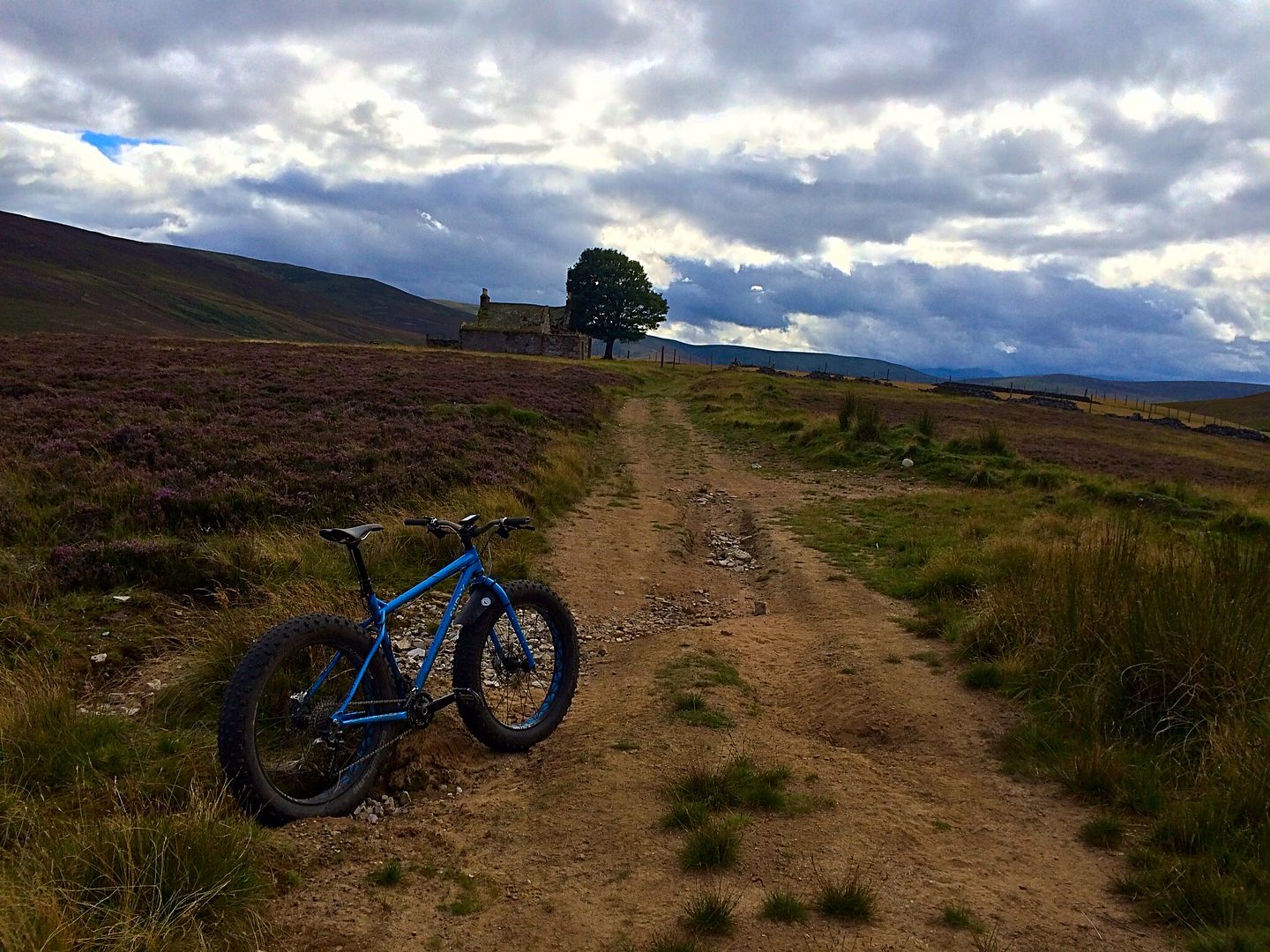 [/img]
[quote=buckster ]What you seem to be implying is that any benefit perceived or otherwise to a steel frame is negated by the tyres
I was very specific in what I said - as I always am when discussing this - and it wasn't that. How much vertical flex is there in a steel frame?
Reading Steve Jones' rant/interview with Starling's Joe McEwan, it seems like there's a lot of assumptions/jumping the gun going on.
I like steel bikes, I like built-by-man-in-a-shed bikes, but to time a few downhill runs and then declare steel as the reason seems a big leap.
It's a long low 65-degree slack 29er - there aren't many of those about.
Still nice though!
[img]  [/img]
[quote=Northwind ]Same controls, same bars, 2.3 to 4.0 tyre which you'd think would obliterate any other difference, but suddenly I had terrible wrist fatigue. Ended up fitting a really soft bar to alleviate it.
I should just reply to this one: you're talking about fork rigidity there, which isn't something I was covering - there certainly is significant vertical flex in a fork (mostly bending at the top of the crown AFAIK), and I wouldn't be at all surprised if a fat bike fork is significantly more rigid than one on a "normal" bike. I'm still surprised it isn't overwhelmed by the difference in tyre flex, but then it seems from other answers that there are also other factors at play - I never have and never will suggest that there aren't differences in handling between different frames, which might impact on wrist fatigue. It's all about the design rather than the materials used.
Though I'm also amused to note that in this discussion about the wonders of steel, the forks on the pics posted of fatbikes appear to be carbon 😉
It's completely irrelevant ,the future of the bike is electric.
Electric bikes aren't inherently direct
They can alternate tho
I'm conflicted on this one. Logically (and I do love a bit of logic) it's hard to believe that the differences in flex between different frames amounts to a hill of beans once you slap a 5" tyre on at 6psi. Yet there does seem to be something "different" to the way my steel fatbike feels. Springy? Lively? I don't know. I'll accept that it could all just be in my head though, or at least that I can't prove it's not.
Identical journey and findings. Loved the mmmbop, though it felt a bit harsh. Moved all the bits to the Ti version of the frame, same geometry, same tyres etc and it was a completely different ride.And thinking about it, I went from an Mmmbop to a Ragley Ti- identical geo, different material and construction, identical build- and the difference was pretty big. Not comfort but handling- the bop amplified every bump and the rear end kicked around constantly at speed, the Ti was constantly more controlled and composed, had more grip too.
Reading Steve Jones' rant/interview with Starling's Joe McEwan, it seems like there's a lot of assumptions/jumping the gun going on.I like steel bikes, I like built-by-man-in-a-shed bikes, but to time a few downhill runs and then declare steel as the reason seems a big leap.
It's a long low 65-degree slack 29er - there aren't many of those about.
I'd like to know what bikes it was up against. He suggests they were all modern 29ers - so maybe the new Trek Slash, the new Enduro 29, maybe the Jeffsy (Dirt do love a YT) but what else?
It could be the Starling had an advantage if the other bikes were either longer travel or shorter in reach, eh?
No significant difference in [b]vertical[/b] flex. There undoubtedly is a difference in lateral flex, and probably also in twist, hence it's certainly possible to feel the difference between frames when riding. Doubtless some people like the feel of a frame with some flex in, and others translate that feeling of lateral flex into an assumption of vertical flex (possibly subconsciously). Clearly there are also all sorts of other factors at play like the fat tyre self steering issue mentioned - I don't think anybody is claiming bike handling is a simple thing!
Though I'm also amused to note that in this discussion about the wonders of steel, the forks on the pics posted of fatbikes appear to be carbon
Probably a nod to weight shedding more than anything. Was in my case anyway. The steel fork on my fatbike weighed more than a sack of spuds so I fitted a carbon one.
I don't know why it's so hard for people to believe that the flex of a frame affects handling. And it's handling we're talking about, not comfort when pedalling for hours in essentially straight lines.
Consider a bike being cornered hard - you have upwards and lateral forces from the contact patches which are levering the wheels around the hubs. Those forces then act upon the frame from the axles. Meanwhile you have a rider putting most of their weight through the pedals, often a dropped outside pedal, generating leverage around the bottom bracket with big downwards and lateral forces. The wheelbase is more than a metre long. The bike weighs about 20% of what the rider weighs and is not a good shape for torsional or yaw stiffness.
So you have big forces acting on a long skinny lightweight structure. So what if the tyres have some give? Cars tyres run at equally low pressures and its unheard of for convertible versions of coupes to handle the same - the main reason being the reduction in torsional stiffness.
The Starling is a fairly light and long single pivot design - it will definitely exhibit more torsional flex than a multi-pivot steel bike like a Rocket or something with huge carbon tubes like the Slash. I wonder if Dirt had any Strange 29ers in for testing at the same time?
Rocket is linkage driven single pivot - the old 26" one was Horst link
It's also a lot heavier than a starling
PS- it does but its not unpleasant
^^Good post.
Apply those same forces and logic across different materials and the feel will change with each, has to. I had a Scott Endorphin that Scott claimed had 3/4" vertical compliance at the rear. I dont understand why other frame materials cant allow vertical compliance as well as flex
Edit: answered my own question, apparently they flex vertically and horizontally 1:1. Its all down to tube shape/size/geometry 🙂
http://fitwerx.com/stiffness-compliance/
http://www.sheldonbrown.com/rinard_frametest.html
Right. Got it now. There is a lot more to feel than vertical flex.
Thanks.

