I have got the above, so doing it the recommended way. One thing I am not sure is how I get the tyre to seat initially. From the stans video I just have to put the tyre on the rim, seat it and run round the bead with soapy water. Inflate and then add some sealant either by taking out the valve core or taking a small bit of tyre of the rim. The re inflate and go through the sealing process.
Is that right?
Cheers
That's my understanding from the video. not yet tried myself, just waiting to splash out on a new wheelset with stans rims.
In principle thats how it works. The rimstrip will make a transitional seal with the tyre bead as it migrates to the rim wall and creates the bead lock.
On some loose tyres, this can require more air than a track pump can deliver though.
Maximise your chances by:
Removing the valve core for maximium air flow to get the beads to seat.
Suspend the wheel off the ground
Make sure the tyre bead and rim socket are clean.
Only add sealant when you've got the tyre bead seated.
I don't bother with the rim strip and just use yellow tape.
I find the best way is to run round the bead of the tyre with diluted washing up liquid before fitting to the rim and then add the Stans solution and roll it around inside the tyre moving the wheel through different planes to get it well coated inside.
The tyres I use always seal and seat straight off just using a track pump for this method (various different Schwalbe - NN, RaRa, DD - all non ust)
If it's a new tyre I always mount it to the rim for an hour with a tube first so it was already been seated once.
Yes, although I've had no problems doing this with no UST tyres without the rim strip and just using the yellow tape and sealant. Just a track pump to inflate too.
Like Grum, I've not had to use anything over a trackpump with USTs. Regular tyres it really depends on the brand and sometimes, model.
CO2 is a cheap and quick way of getting that initial burst - get something that runs with unthreaded carts, they're pretty cheap on EBay.
Do it without sealant, then fill via the valve core and re inflate with track pump - CO2 will knacker your sealant more often than not.
If it's a new tyre I always mount it to the rim for an hour with a tube first so it was already been seated once.
Another good call that.
I had no problems using yellow tape and normal non-UST.
Single ply Minnions & Larsen TT went up with just track pump (didn't even need to remove valve core).
Inflating with a tube in first, then removing it leaving one bead fitted seamed to work well.
good tip to mount the tyre, I turn mine in-side-out for a while... seems to help
Thanks for the advice. I will give it a go tonight. I have used the rim strip as I am a bit concerned about the whole process! I am sure it would work just as well without. Also the bike is going to the alps so I want to minimise the chances of any problems.
Do people that just use tape + valves ever get leaks from around the valve? Looking at getting flow rims myself and had some valve leakage issues in the past with Roval Traversees (with just tape + valves). Using rim strips mean it can't leak at the valve but would rather not have the added cost and weight if the stans tape + stans valves don't have leaking issues (with the Traversees if I gently tapped the valve it would start leaking air and sealant before it resealed itself).
Just fitted mine this morning ..... although I didn't need rim tape on my wheels.
Went much as the video suggested - although when not using rim tape, but using push in valves, you don't need to drill out the internal rim valve hole as per their video.
having put tyres on and wet them around - you tap them with your palm, as on the video - which gets them evenly set and then when inflating with a track pump (floor standing hand pump) give the first few pumps pretty quickly (no valve centre in) to ensure they inflate and the beads pop in to place. Then remove pump, insert sealant through the valve (if you have the syringe) and then put valve centre in and re-inflate.
Then go through the process of shaking and lying flat, as per the video.
He does it with the wheel at 90 degrees to the floor, when shaking, but I found it worked better on my second wheel, when holding the wheel at about 45 degrees to do the shaking and then lying it down on the side closer to the floor for a few minutes before doing the other side.
Hope it goes well for you.....!
Job Done !
[IMG] 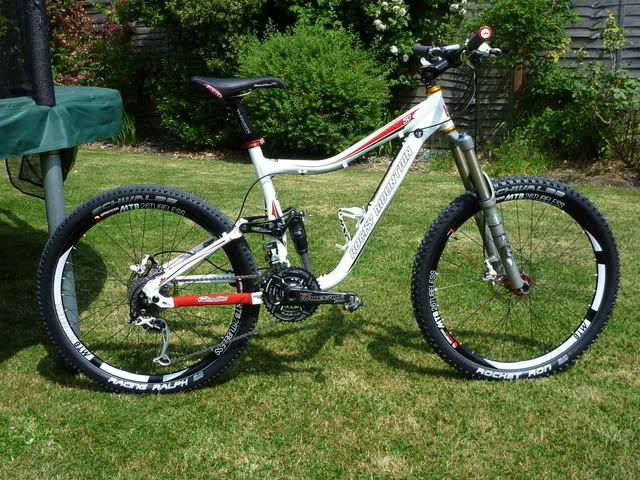 [/IMG]
nigelhorwood@yahoo.com