Props to them for going with their conscience, when a lot of other high end Aluminium frame producers have switched to Carbon (Intense and Turner I'm looking at you).
https://www.pinkbike.com/news/carbon-conundrum-pole-bicycles-ditch-their-plastic-project.html
Not a radically new discussion I grant you but I think it just confirms to me that my next frame will be alu on the back of this and other similar stories.
I think Turners are USA made - so no 'Ocean fill' 😯
I think Trek make some of their high end carbon bikes in the USA because the the resin or the fibre is not for export as it's military grade (or something like that).
Not sure where I stand ethically on Carbon fibre generally though. If a set of CF wheels outlast alloy ones times 100, but still end up as landfill, is that better than recycling alloy ones (say 10 times for arguments sake) with all the energy costs associated with smelting production and distribution etc?
And how much aluminium alloy in bike frames [i]actually[/i] gets recycled. Some of the responses to that article show the complexity in trying to assess lifecycle costs and environmental impact. It's certainly not as clear as Pole are trying to make out which makes it look like more of a marketing exercise.
(Intense and Turner I'm looking at you).
Read the Jeff Steber article in Singletrack 113 about why Intense only sell carbon bikes...
I'm currently flogging a 2012 Carbon frame, if it goes to a new home then it's going to run for longer.
Interesting that. I was reading an article recently, about a new carbon rim manufacturer. The looked at China, but decided to set up in Canada I think. They just weren't happy with the working practices in the Chinese factorys.
"ocean fill" 😯 that shit is unacceptable. Brands (particularly the high end ones) need to be more open regarding their manufacturing suppliers' environmental processes.
Would be interesting to compare the environmental impact of a Hope frame with that of an alu frame made offshore.
The hope one has a very nice finish....
If we really want to be environmental, buy a quality old steel bike and refurb it so it's got another 50 years left in it.
Is this you lot on your way to the trail centre?
[img] 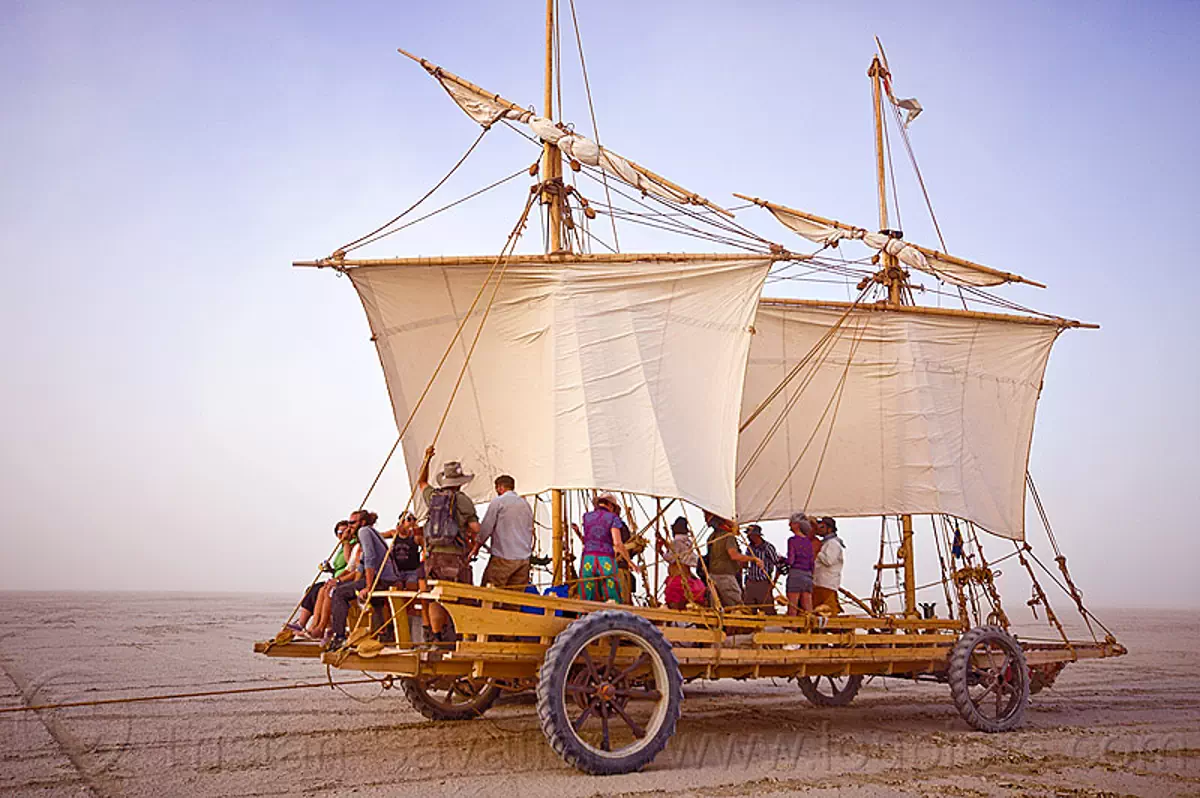 [/img]
You do know there is a large carbon fibre manufacturer in Nottinghamshire..
Plus carbon can be recycled but not necessarily back into cloth.
There's nothing tree-huggy about not wanting waste dumped into the sea.
They're now suggesting their website has been hacked by someone they've upset on account of this article.
I've never even heard of the brand before so I'm just going to give them credit for an awesome marketing wheeze.
[img] 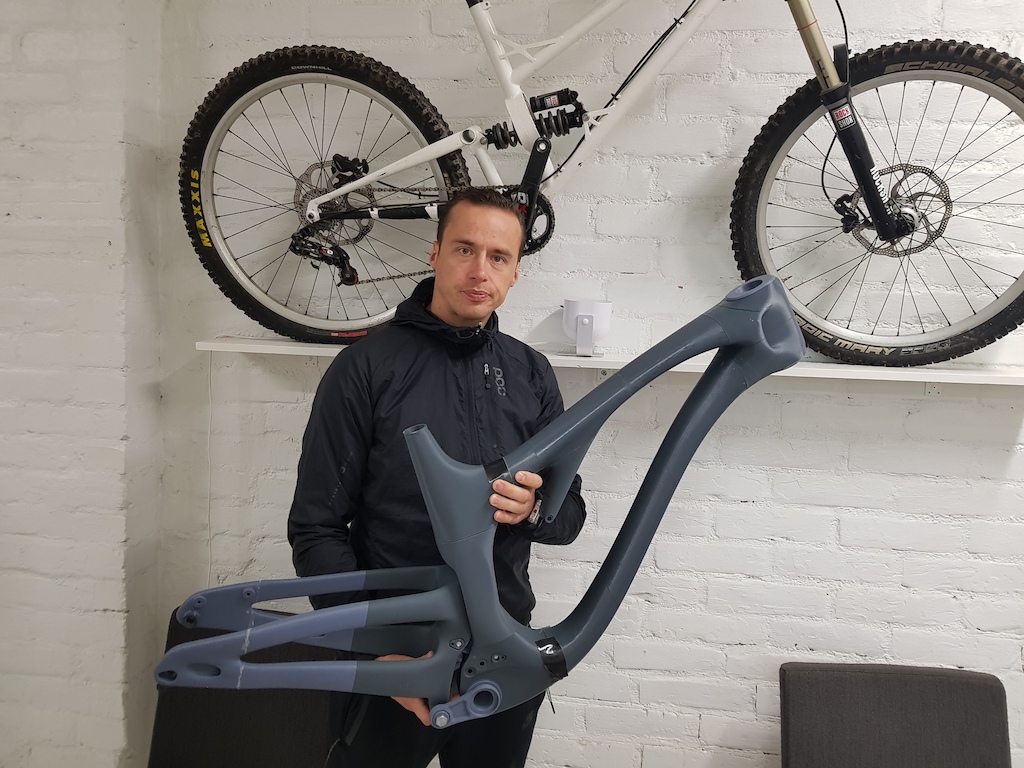 [/img]
I bet when he got to China the laughed at his prototype.
I think he has just realised he is holding the frame with the fatist head tube ever and that he wasted a lot of time and money on mocking up a cartoon bike. He can't yet see the funny side....
At least they are recycling Chris Porter's ideas.
Lots of comments that you can recycle carbon in the pinkbike article bit all seem to end in referencing an aerospace company near Boeing or similar. Pretty sure I could strip down an alloy bike and sling the bits in an appropriate skip at my local tip.
Having said that there is a dented santa cruz chameleon gathering dust in my garage...
Read the Jeff Steber article in Singletrack 113 about why Intense only sell carbon bikes...
Can you quickly paraphrase please Nick?
Three days in Myanmar has resulted in me having no surprise what so ever that they just lob everything in the river.
I'm not sure I buy the story in its entirety, feels like flexible ethics being applied.
Perhaps the problem is that a Finnish company's search for a manufacturer took them directly to the far-East (based on cost) and that's where they suddenly grew eco-ethical standards...
Could they find nobody closer to home, manufacturing composite parts, with more ethical practices? perhaps compliance with EU Regulations might be a minimum starting requirement.
I'm pretty sure Finland has a few boat builders...
As for the environmental credentials of the material?
I'm pretty sure last time we had this debate Aluminium came out a long way behind steel in terms of embodied carbon and associated emissions (I learned something from STW... No really).
I think Turners are USA made - so no 'Ocean fill'
Yes Americans are well known for prioritising protection of the environment...
It seems to be the received wisdom (at least on this thread) that composites are environmentally 'worse' than steel or aluminium, but has the study actually been done?
And if it is worse, is it not a technology that can be cleaned up?
It's whataboutery indulged in by folk who've never accepted carbon as being a suitable material for bicycle frames while they're killing the environment by replacing their flash cars and portable electronic devices on a regular basis and driving miles at high, fuel-inefficient, speeds in order to go for a short bike ride.It seems to be the received wisdom (at least on this thread) that composites are environmentally 'worse' than steel or aluminium
Could they find nobody closer to home, manufacturing composite parts, with more ethical practices?
He does indirectly reference that the labour of CF manufacture is the expensive part, hence having to move production to 'cheaper' countries.
It's whataboutery indulged in by folk who've never accepted carbon as being a suitable material for bicycle frames while they're killing the environment by replacing their flash cars and portable electronic devices on a regular basis and driving miles at high, fuel-inefficient, speeds in order to go for a short bike ride.
Now please don't think I am picking on you, but can you not see the irony in your opening with the "whataboutery" line and then sketching some imaginary STW users with flashy motors and heavy right feet, [i]who don't even ride very far[/i]?
😆
My two cents - I love my carbon road frames and to me the likely lifespan of 10 years or more (with me alone) justifies the eco-impact.
However the shorter working life of full-sus MTBs, the greater danger of terminal damage and the extra cost (amortised over a shorter period) mean I'll be sticking with metals.
I'd have preferred a steel main triangle a la Cotic, they have a lovely feel - but happy enough with alu.
Irony isn't what it used to be 🙁
I don't know enough about the subject to comment but thought I'd mention that alu Turners were built in the USA, all the newer carbon ones are from the far east, Taiwan I think.
However the shorter working life of full-sus MTBs, the greater danger of terminal damage and the extra cost (amortised over a shorter period) mean I'll be sticking with metals.
The odd thing is composites are much easier to repair, yes the manufacturer will tell you to bin it and buy a new one, but then why wouldn't they? They'd say the same if you took back a dented Al frame too.
I can fix a carbon frame in my garage to a standard I would be happy enough to ride on, but I definitely lack the tools or experience to do the same with steel, and most certainly an aluminium frame...
The only real barrier is cost TBH, of course a frame you can "economically repair" is arguably more environmentally responsible than hanging a dented one on the wall or taking it to the tip and hoping it gets recycled rather than chucked in landfill...
How many people actually get damaged frames (whatever its made of) repaired these days?
Who? Pole who?
Are they buying 10s of thousands of them or something?, otherwise , well erm I can't see what difference it makes. If Giant had said it maybe, but a company thats not even relevant in the grand scheme,.
As it stands ,it is a beautiful fluffy aren't we lovely ATTENTION GRAB.
Finally , thank god they didn't it looks gopping.
As it stands ,it is a beautiful fluffy aren't we lovely ATTENTION GRAB.
Having ridden with Leo I can honestly say that is not what this is about. One of the nicest people you could meet, making small batches of bikes, because he loves bikes.
I can easily believe that the environmental concerns would have been a killer for him, he came across as very smart, thoughtful, kind and unassuming.
He doesn't run a big company, and he's not a faceless organisation. He rides a bike very well, and just so happens to be pretty good at designing bikes.
cookeaa - You make some good points and I have had a carbon MTB frame repaired in the past myself.
However I've also dented quite a few alu frames in crashes and been able to happily continue riding them. I do think some of those would have been touch and go with carbon.
So from a pragmatic POV, I see carbon as being more of a risk of putting the bike out of action and causing me a major ballache (and heartbreak).
It probably makes pefect sense to a lot of riders though, particularly XC race bikes where the frame is a greater proportion of the overall weight.
And FWIW I've never met the Pole guys and their bikes don't do a lot for me, but it's good to have bike companies talking about stuff like this.
philxx1975 - Member
Who? Pole who?Are they buying 10s of thousands of them or something?, otherwise , well erm I can't see what difference it makes.
Presumably you are happy with me taking a dump on your doorstep as long as its just me and not thousands of people.
Pole were already getting a lot of coverage in Dirt & Endruo Mag plus bits here and on Pinkbike, I don't think this made much difference.
If Pole bikes were shorter they'd use less metal & they'd be more environmentally betterer 😛
Everything I'd read about carbon vs aluminium frames had led me to similar conclusions. As an engineer I'm happy to accept that a well executed carbon frame can outperform an alloy frame in every way but even if they were the same price I'm not sure I'd be happy about supporting the industry behind the carbon frame.
I appreciate my view is probably different to the norm as I run a manufacturing business and spend my time with people doing similar jobs to alloy frame-building.
It's interesting that one of the few, non-chinesium carbon bikes being made at the moment is the HB-160 and Hope very specifically made reference to the ethical considerations of making carbon in-house where they could control the whole process.
It also costs £7,500. I guess you can have anything in this world, if people are prepared to pay for it...
Not read it but assume its because re-welding all the cracked alloy frames was taking up too much of his time and fixing carbon takes five minutes with some glues and a wrap? 😆Read the Jeff Steber article in Singletrack 113 about why Intense only sell carbon bikes...
That frame is like some sort of nightmare.
scotroutes - Member
Irony isn't what it used to be
Superceded by steely and aluminiumy.
Well its worked as a good cheap advertising campaign
chiefgrooveguru - MemberEverything I'd read about carbon vs aluminium frames had led me to similar conclusions. As an engineer I'm happy to accept that a well executed carbon frame can outperform an alloy frame in every way but even if they were the same price I'm not sure I'd be happy about supporting the industry behind the carbon frame.
I appreciate my view is probably different to the norm as I run a manufacturing business and spend my time with people doing similar jobs to alloy frame-building.
Yours is an interesting and important perspective TBH.
We (western engineering/manufacturing) perhaps need to look at why is it that this sort of volume manufacturing of composites (for the cycle/sporting goods industry at least) are almost by default seen as a cost exercise rather than a quality one, and then placed outside the scope of western manufacturing businesses... IMO environmental issues like controlling waste streams and compliance with national/international regulations are tied up with a manufacturers quality systems, Pole have essentially written off Far-Eastern manufacturing on a manufacturing quality issue.
Perhaps I'm arguing for a bit of European/Western manufacturing protectionism here...
These are of course technologies and techniques developed in the US/EU/UK through transfer from the Aero, Marine and Automotive sectors over the last ~30 odd years. Those other sectors have not wholesale exported their composite manufacturing to the far-East, primarily I believe to keep some control over their quality and Reg's compliance.
The cycle industry initially got comfortable with Far eastern manufacturing throughout the late 80's, 90's and early 00's primarily through the fabrication of aluminium bikes, they could get rapid enough turn around to accommodate changes between year models, acceptable levels of quality and at a low enough price point that the brand owning companies could make a good margin.
Thus as composites became more popular for bike frames/forks it was seen as an obvious choice to apply the same formula to yet another quite labour and skills intensive form of manufacturing, even if it was to the detriment of a few "home-grown specialists" that initially developed the use of composites on bicycles.
cookeaa - We (western engineering/manufacturing) perhaps need to look at why is it that this sort of volume manufacturing of composites (for the cycle/sporting goods industry at least) are almost by default seen as a cost exercise rather than a quality one
Not sure that's true, the far east are market leaders in carbon manufacture.
We (western engineering/manufacturing) perhaps need to look at why is it that this sort of volume manufacturing of composites (for the cycle/sporting goods industry at least) are almost by default seen as a cost exercise rather than a quality one
from where Iv'e been this is more to do with do we want to make a duct and earn 10k or make a bike that they want to pay a few hundred quid, there is a shift however in automotive for low pressure high production rate (methods that dont lend itself to bikes readily)
I did some work with eco friendly composites iirc one of the guys at toyota also was doing it at the same time flax hemp etc and there were also a variety of naturally sourced epoxies (im also dumbing this down a bit as eco epoxy wasn't ready for prime time) but they were viable to some degree for sporting applications
the problem is im supposing that the taiwanese get good at doing something en mass and we go ok thats great , if you went out there tomorrow and said i want to do this, you probably wouldn't find anyone to do it outside of the prepreg molded route I know of one facility 3 d braiding and they cater for aerospace , we had several delegations from china at the AMRC always chasing a lower production cost or trying to discover new production methods, by the time id finished with all that a bike frame could be made here the same money as an ultra high end frame from taiwan, problem there is out of the 20 or so folks that say lets go for UK manufacturing they want you to do the grunt work prove it then give it to them for free....i can see why hope did it all in house
If someone brought out a biodegradable bike made of composites it would still cost a good chunk of money and then you would still need to sell it i doubt many would care about its eco friendlyness to make it viable
Ummm
we are helping society in the long term by adding more aluminum to the pool of material available to recycle.
This doesn't make sense. It would help society a lot more to make a frame from recycled aluminium - can't be that hard unless the purity of grade is hard to achieve. But to spin more aluminium production as a favour to society?? Please.
I'm doing society a favour in the long term by buying 5 bottles of water a day - adding more plastic to the pool of material available to recycle.
But to spin more aluminium production as a favour to society?? Please.
It's a bike frame, of course it's a favour to society. Not to the planet, though.
If you make 2million tons of something a year of one thing and only 150k tons of another at 14 times the cost of the thing you made 2million tons of which was the most environmentally friendly?
If you make 24 million tons of something a year of one thing and only 150k tons of another at 14 times the cost of the thing you made 2million tons of which was the most environmentally friendly?
Does it matter in the slightest the environmental impact of making a mountain bike?
If it's 100kg* of CO2, thats probably about the same as your car produces on a trip to Glentress from Manchester(~500 miles, ~180g/km) . And you'll drive arround a lot more than that over the course of owning that bike.
*Brompton claim 113kg which is the only one I could find so Im ballparking.
I'd guess it'd be reasonable to assume that UK/EU/US manufacturer's of CF produce a similar amount of waste to their East Asian counterparts.
What's their policy for disposal? Landfill? Or does viable recycling exist in this context?
If it's 100kg* of CO2
What about NOx and particulates?
... too soon?
We (western engineering/manufacturing) perhaps need to look at why is it that this sort of volume manufacturing of composites (for the cycle/sporting goods industry at least) are almost by default seen as a cost exercise rather than a quality one
Cost and quality go hand in hand. If you can't produce a product cheaply enough (or sell it for a high enough price) then you go bust. If you can't get your quality right you still go bust because you'll trash your reputation and sales will drop off and the replacement/warranty costs will sink you. You can't separate the two.
Carbon fibre manufacture is a labour intestine process and, once you've got the process down then it is a semi-skilled job. Labour is cheap over in China and Taiwan and the required quality can be achieved.
Laying up carbon in sheets and layers is not how it is done in the aerospace industry now....or the latest technique. Now individual strands are being laid down by robots and weaved directly together to create a 3D lattice rather than a 2D laminate structure. Alot lighter and stronger, but the machines and tooling is very very expensive. Might take a few decades for that technology to trickle down to bikes, or at least mass produced bikes.
If we want to be truly eco-pious then the answer is to buy an old British lugged steel bike made with 531 or up..
A proper repaint, built up with new wheels etc, and it'll look like new and be good for another 50 years.
It'll stop the needless slaughter of all those little bauxites and carbonites. 🙂
I think this is where Robot Bike Co have got the edge. They are using tubes which should have far less carbon wastage instead of going for some crazy space age shape
What about NOx and particulates?
... too soon?
Exactly, making the bike in the first place is far from the worst environmentally destructive phase of its life. The CO2 is just the tip of an iceberg.
You'll use thousands of litres of water to wash it.
All that degreaser, paraffin, IPA, acetone, chain oil, brake fluid, grease ends up somewhere.
All that litter on the trails (no one admits it but someone drops it).
Yes avoiding buying a new bike if possible will help, but you're kidding yourself if you think mountainbiking is a 'green' hobby unless you really do ride an old steel singlespeed bike from your door and dont own a car.
Now individual strands are being laid down by robots and weaved directly together to create a 3D lattice .
We did this for a company from Taiwan...they cried at the cost of the weaving head alone, oddly the automated technology was from a company in the next country along to Finland,