UPDATE: CLASSIFIEDS section refreshed, redesigned, searchable: Go take a look
[quote=TiRed ]More GCSE Physics;
v=u+at, so t = u/a and bikes can stop at about 1g but this is very hard to do, if you assume 0.5 g then
14 mph = 6.26 m/s, so t = 6.26/(0.5*9.8) = 1.3 seconds
18 mph = 1.6 seconds.
I doubt anybody can stop at 1g on a normal bike - the geometry doesn't allow you to get your CoG 45 degrees behind the front tyre contact patch which is what you'd require for that. 0.5g is the standard rule of thumb, and I'd be surprised if the policeman carrying out the tests could even manage that. Hence the figures being reported today are distinctly dodgy - the testing apparently found a stopping distance of 3m, but using standard equations of motion:
v² = u² + 2as
now if s = 3m, v² = 0, a = -(0.5 * 9.8)
u² = v² - 2as
u² = 0² - 2 * -4.9 * 3
u = 5.42m/s = 12.1mph
However the claim seems to be a speed of 18mph (8m/s), in which case:
s = (v² - u²) / 2a
s = (0² - 8²) / 2 * -4.9
s = 6.5m
Something really not right there - I'm assuming the defence will have their own expert witness to poke holes in that.
FWIW standard HC stopping distance calculation is 4.8m at 18mph, though I think that assumes 0.67g which isn't possible on a bike.
...actually let's calculate the required acceleration to stop in 3m from 18mph:
a = (v² - u²) / 2s
a = (0² - 8²) / 2 * 3
a = -10.7m/s²!!!!
Perhaps the most important question not asked -
Did he pass his cycling propeciency test at school? (I failed - but haven't killed anyone........yet)
He's not old enough for that...
I think the obvious thing the forum are missing is that if the CPS are charging with 'Manslaughter', they're pretty sure they can get a conviction. If they were less sure they'd have gone for 'Dangerous / Careless' as they don't get to have a second go if they don't get the guy with their first charge.
I wouldn't be surprised if a case is made that venturing onto the road with a vehicle knowingly constructed with missing brakes counts as a premeditated act.
I wouldn't be surprised if a case is made that venturing onto the road with a vehicle knowingly constructed with missing brakes counts as a premeditated act.
Whereas going onto the road with your phone and tablet switched and in use is some sort of weird accident?
It should be as simple as this;
1. Was he riding an illegal bike - yes (charged for whatever the charge is for riding an illegal bike)
2. Did the fact that he was riding an illegal bike cause the accident - no
3. Did the rider take the correct action to try and avoid an accident (slow down, swerve, shout etc,.) ??
If the rider had 25 meters to slow down/stop they could have done so. They decided to try and ride around or anticipate what the pedestrian was going to do.
Have the people here arguing against stopping on a fixed brakeless bike ever ridden one for a number of months and have any experience in stopping one?No. Probably not.
Thanks, I don't need to say anything else on that subject.
There's legal precedent here for the manslaughter charge.
If you're not from the south West you may be unfamiliar with the Bath lorry crash that led to 4 deaths. It was found that defective or ineffective brakes were a major contributory factor and the haulage firm owner and mechanic were charged with manslaughter.
Strip out the fact it's a bike and you have a road vehicle with knowingly ineffective brakes, as per the Bath case, so by definition the sentence should be similar :
If they were less sure they'd have gone for 'Dangerous / Careless' as they don't get to have a second go if they don't get the guy with their first charge.
Dangerous/careless what? I didn't think a dangerous cycling charge existed, which is why they've gone with manslaughter*. It would have to be 'wanton & furious'.
*Incidentally, I think the reason dangerous/careless driving charges exist is because drivers kept killing people but juries didn't want to convict for manslaughter because it felt too serious.
Strip out the fact it's a bike and you have a road vehicle with knowingly ineffective brakes, as per the Bath case, so by definition the sentence should be similar :
Would there be any difference between the brake issue being negligent or deliberate? AFAIK, the Bath case was negligence, and in this case, the act of removing/not having the brake was deliberate.
IANAL, etc....
grumpysculler - Member
For involuntary manslaughter the prosecution still need to effectively demonstrate 'gross negligence'
Nope...No negligence required, just an unlawful act that could reasonably be foreseen to put someone at risk of harm.
Only if the CPS were pursuing it as 'constructive manslaughter' whereby they would need to prove that the act was one with malicious intent...
What fits these circumstances best is 'Criminally negligent manslaughter' or 'gross negligence manslaughter' whereby malicious intent is not the driver but the accused's level of negligence...
And that's what they appear to be defending, claiming that a courier is an above average bicycle handler, noting all the actions taken to avoid the collision (shouting/swerving), etc. It sounds weak (because it is) but they aren't trying to demonstrate he wasn't negligent, merely he wasn't 'grossly negligent'
They'll probably go on to the fact that brakeless bikes, although illegal on the road, are actually quite common and that the mechanical standards for bicycles are essentially not enforced at present, and they'll probably mention the actions of the deceased in the moments leading to the collision, there will be some victim blaming...
All guesses...
Strip out the fact it's a bike and you have a road vehicle with knowingly ineffective brakes, as per the Bath case, so by definition the sentence should be similar
I think there is a notable flaw in that argument and suspect it is incorrect. But let's return to it once the trial has concluded.
^ For the Bath truck case, it involved four counts of manslaughter, and the foreseeable consequences of faulty brakes on a 32-tonne truck are somewhat different to that of a bicycle and rider that are prob. less than 100kg soaked through.
Anyone know why the Cycling Silk hasn't updated his site for months? This thread would benefit from a bit more legal opinion.
the foreseeable consequences of faulty brakes on a 32-tonne truck are somewhat different to that of a bicycle and rider that are prob. less than 100kg soaked through.
Yeah, that.
Yes. Its not an absolute black and white that below par braking equals deathtrap. There's a scale from child's scooter up to massive truck with a bicycle somewhere in the middle and arguably towards the lower end. Not trying to defend the cyclist just saying it isn't as clear cut as some are making out
Thanks, I don't need to say anything else on that subject.
To be honest, if you ride a bike on the road with no brakes, your opinion isn't something I'm bothered about hearing.
Just like any bellend that takes pointless risks with other people's safety.
kerley - Member
Have the people here arguing against stopping on a fixed brakeless bike ever ridden one for a number of months and have any experience in stopping one?
No. Probably not.Thanks, I don't need to say anything else on that subject.
If you're riding on the road put some f***ing brakes on your bike.
I was going to reply to your idiotic reply last night but thought better of it. This smug willie waving puts you in the same group as the defendant. You may be able to stop slightly more effectively than a non experienced fixie rider but still nowhere near as as well as if you actually had brakes.
Trying to infer that your fixie experience gives you braking superpowers makes you look a prize muppet rather than some kind of enlightened being.
Just like any bellend that takes pointless risks with other people's safety.
Trying to infer that your fixie experience gives you braking superpowers makes you look a prize muppet rather than some kind of enlightened being.
sometimes people are way too polite on this forum...
kerley - Member
Have the people here arguing against stopping on a fixed brakeless bike ever ridden one for a number of months and have any experience in stopping one?
No. Probably not.Thanks, I don't need to say anything else on that subject.
So it takes a number of months to learn to stop effectively on a fixie with no brakes? What happens if you run someone over and kill them within your training period? Can you just say you are on a provisional license and get away with it? Or can we just agree that riding a brakeless bike in heavy and unpredictable traffic is stupid willy waving of the most dangerous kind?
It should be as simple as this;1. Was he riding an illegal bike - yes (charged for whatever the charge is for riding an illegal bike)
2. Did the fact that he was riding an illegal bike [s]cause the accident - no[/s] [i]subject the victim to the risk of some physical harm resulting there from, albeit not serious harm[/i]- key point in the case
[s]3. Did the rider take the correct action to try and avoid an accident (slow down, swerve, shout etc,.) ??[/s]
FTFY. (Source: [url= http://www.cps.gov.uk/legal/h_to_k/homicide_murder_and_manslaughter/#unlawful ]CPS [/url])
What fits these circumstances best is 'Criminally negligent manslaughter' or 'gross negligence manslaughter' whereby malicious intent is not the driver but the accused's level of negligence...
What fits best, and what the prosecution are clearly going for if you read what they've said in court, is "Unlawful Act Manslaughter." Negligence only applies if the accused was otherwise behaving lawfully. In the presence of an unlawful act, you don't have to show negligence to convict.
kerley - MemberHave the people here arguing against stopping on a fixed brakeless bike ever ridden one for a number of months and have any experience in stopping one?
Rode and raced track, used to commute into central Lonond on a fixed. Riding fixed with no brakes is stupid and does not enable you to stop as effectively. It's a hipster affectation.
Reinforces my plan to get one of those Timber bells for bridleway-riding, definitely.
[quote=cookeaa ]
No negligence required, just an unlawful act that could reasonably be foreseen to put someone at risk of harm.
Only if the CPS were pursuing it as 'constructive manslaughter' whereby they would need to prove that the act was one with malicious intent...
Nope - as grumpy quoted in his previous post, there's a specific "unlawful act manslaughter" which doesn't require malicious intent http://www.cps.gov.uk/legal/h_to_k/homicide_murder_and_manslaughter/#unlawful
It's all down to the detail of the wording though - I note in particular "[b]all[/b] sober and reasonable people would realise would subject the victim to the risk of some physical harm" - so a difference of opinion is sufficient to avoid prosecution. I'm thinking just based on the posts on here that there is significant difference of opinion - and it doesn't really matter how valid that difference of opinion is so long as the people having it are sober and reasonable.
So it takes a number of months to learn to stop effectively on a fixie with no brakes?
Don't know, not what I said.
I also didn't say I can stop quite as quickly as I could with a front brake. But I can stop effectively nonetheless so don't need one.
If it makes you all feel better to throw around insults then carry on. Just remember you have never tried it so in a position of ignorance whereas I have ridden brakeless for 10+ years after 5 years of running a front brake. I also don't ride in London and the only thing I am likely to hit is a horse, cow or deer....
But I can stop effectively nonetheless.
Not under US Massachusetts's law you can't. The UK doesn't seem to have a prescribed minimum stopping distance for a bicycle - but it won't be ignorant of other jurisdictions either.
If you are involved in an accident of any form, and it may be a car turning right across you, for example, where you might be absolutely blameless, you will be found to have contributory negligence. Same as if you did not have a light and it was past lighting up time. That is likely to change the outcome of any case - including damages, considerably.
Whatever you may think, the law is clear. And you seem to have ignored my experience and that of others posted here who ride fixed, who ride in London and who have ridden brakeless.
But I can stop effectively nonetheless so don't need one.
No you can't. No-one on a brakeless fixie could because the measure for "effectively" is a bike with two working brakes. Fashion victims like you and the accused might think otherwise, due to your self-imposed "riding god" status, but you are demonstrate-ably incorrect.
and it doesn't really matter how valid that difference of opinion is so long as the people having it are sober and [b]reasonable[/b].
It would be quite easy to show that anyone that rides a bike with no brakes is not acting reasonably.
It obvious (and proven) that the ability to stop is improved by having a front brake, so anyone that takes it off for fashion purposes, is not being "reasonable"
whereas I have ridden brakeless for 10+ years
Why ?
Seriously, is there even one good reason not to have at least a front brake fitted.
Whatever you may think, the law is clear. And you seem to have ignored my experience and that of others posted here who ride fixed, who ride in London and who have ridden brakeless.
What's worse is there is only one possible reason to ride a brakeless fixie on the road and that's as a fashion statement.
But I can stop effectively nonetheless.
Are fixie riders still trying to defend fixies on here?
John Stevenson's abridged highway code for vulnerable road users -
On foot or on a bike? Don’t endanger yourself, don’t endanger others. Aside from that, do what the **** you like.
Riding a fixie around other people definitely fails the second test and IMO the first as well. I've ridden a fixie, and I've ridden a bike without a working front brake and there's no way I'd do it around city traffic or pedestrians. I've t-boned a turning car on my road bike with two working brakes.
Personally I don't even much like riding a drop bar bike in London traffic
What's worse is there is only one possible reason to ride a brakeless fixie on the road and that's as a fashion statement.
Well, you could be going to a training session on a velodrome and be riding from home / the station to the velodrome, that's one other possible reason.
A mate bought a track bike online from a seller in London and, as I was going down to London, I offered to pick it up for her. All arranged with the seller, I collected the bike. got the train home to Manchester and then rode it - very very carefully - the 3 miles from Piccadilly to the velodrome.
I'm an experienced track rider (although I would never choose to ride a fixie, never mind a brakeless fixie on the road) but even then I was incredibly wary of it and the ride was far slower than it would have been on my normal road bike.
Well, you could be going to a training session on a velodrome and be riding from home / the station to the velodrome, that's one other possible reason.
After experience of riding a brakeless fixie at the velodrome I'm not convinced I'd even do that, unless the station was very, very close. I'd expected some reduction in braking capability compared to a normal road bike but was still quite surprised by how difficult it was to stop a track bike and just how long it took.
Have the people here arguing against stopping on a fixed brakeless bike ever ridden one for a number of months and have any experience in stopping one?
This is the same lack of self-awareness that leads people to think "I can see they set this variable motorway speed limit to 40mph because of this blizzard but that's for all the shit drivers, not an awesome driver like what I am."
[quote=nealglover ]It would be quite easy to show that anyone that rides a bike with no brakes is not acting reasonably.
Beyond reasonable doubt?
In case I need to say it again, I'm on the side of those who reckon you need a front brake to stop effectively - and I've ridden (and own) a fixie with a front brake, so I have "tried it" and know that the front brake is important (if it matters at all I've also ridden a brakeless fixie, but only on a track, which is the only appropriate place for one, notwithstanding riding one very slowly for delivery purposes).
Well, you could be going to a training session on a velodrome and be riding from home / the station to the velodrome, that's one other possible reason.
My (limited) experience of velodromes is that outside tyres are a no-no. They want them unworn and clean.
nealglover » It would be quite easy to show that anyone that rides a bike with no brakes is not acting reasonably.
Beyond reasonable doubt?
I would say so yes.
Anyone that removes legally required safety devices (from anything) purely to look cool, is a complete idiot.
Doing so is entirely unreasonable.
I suspect you'll find some fancy lawyer can successfully argue otherwise - given the reporting from yesterday I reckon the line will be that an experienced rider is no more dangerous on one (because they have skillz 😉 ) than an inexperienced plod is on a normal bike. Before anybody suggests (as earlier) that the counter argument to that is that the collision happened, the plural of anecdote isn't data, and here we're arguing the general rather than specific. The point isn't whether removing the brake increases the stopping distance, but whether it can still be ridden safely (as safely as any other vehicle on the road) notwithstanding that.
Because I think the context is important here - it's not the removal of the brake in itself which introduces the danger to the situation. Hence the test in the manslaughter law isn't as straightforward as in a case where the illegal act is the only thing introducing the danger.
Well, you could be going to a training session on a velodrome and be riding from home / the station to the velodrome, that's one other possible reason.
My (limited) experience of velodromes is that outside tyres are a no-no. They want them unworn and clean.
This was my experience too. You shouldn't really be riding to a velodrome on a the bike you'll be using on the velodrome, unless you're expecting to very very thoroughly clean it and/or change the tyres as well.
My (limited) experience of velodromes is that outside tyres are a no-no. They want them unworn and clean.
Maybe for indoor tracks on wood. Outdoor on tarmac (eg Herne Hill) that's not the case.
The point isn't whether removing the brake increases the stopping distance, but whether it can still be ridden safely (as safely as any other vehicle on the road) notwithstanding that.
You've lost me there. We've established that the stopping distance from any given speed is longer so in any given situation it would be less safe than the same vehicle with brakes.
We're getting into contributory factors but that should also apply to motor vehicle modifications - overly tinted windows, suspension modifications (lowering/tracking etc/overwide tyres limiting turning circles?)
[quote=simons_nicolai-uk ]You've lost me there. We've established that the stopping distance from any given speed is longer so in any given situation it would be less safe than the same vehicle with brakes.
We're getting into contributory factors but that should also apply to motor vehicle modifications - overly tinted windows, suspension modifications (lowering/tracking etc/overwide tyres limiting turning circles?)
The point is that the longer stopping distance due to the illegal act hasn't itself introduced the danger. I note the case mentioned earlier where the chap with illegally dark windows was found not guilty.
Just as an aside, it's worth checking out the case law mentioned in http://www.cps.gov.uk/legal/h_to_k/homicide_murder_and_manslaughter/#unlawful <- quite a few of those mentioned are cases where the conviction was quashed.
http://e-lawresources.co.uk/Constructive-manslaughter.php is also useful with links to relevant case law. It appears that showing the lack of direct connection between the unlawful act and the death is also a successful defence.
nealglover » It would be quite easy to show that anyone that rides a bike with no brakes is not acting reasonably.Beyond reasonable doubt?
I would say so yes.Anyone that removes legally required safety devices (from anything) purely to look cool, is a complete idiot.
Doing so is entirely unreasonable.
The reasonable doubtedness of this is irrelevant. The offence will be one of strict liability - did you, or did you not ride a bike without a front brake. The concept of reasonableness doesn't come into it - that was up to Parliament or the Secretary of State when the law was designed.
All that needs to be proven beyond reasonable doubt is that no front brake was on the bike and that he knew there was no front brake on the bike.
There's a completely separate argument about whether it was reasonable or not, but the specific law in place takes that debate away.
Well, you could be going to a training session on a velodrome and be riding from home / the station to the velodrome, that's one other possible reason.
You know, someone has already thought of this - I have one.
[img] 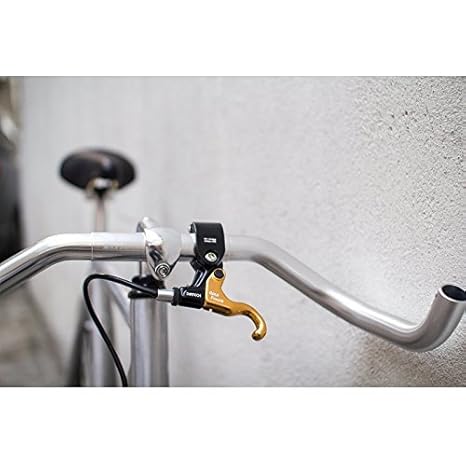 [/img]
I have one. Of course the track bike fork must be drilled for a brake, but if one is so worried about the aero effects of a hole, you can plug it.
All these people saying a skilled rider on a fixie can brake as effectively as if they were on a legally equipped bike seem to be missing the key point.
He failed to brake and hit her, so he's proved himself not to be that skilled rider and exactly the person the law on proper brakes was aimed at.
Whether he would have hit her on legal bike is another point, but I reckon he's lost his right to make that argument by failing on the legal requirement.
[quote=larkim ]The reasonable doubtedness of this is irrelevant. The offence will be one of strict liability
Not the offence he's been charged with, which is manslaughter, and the version we assume he's been charged with has a "reasonable person" test regarding the danger of the illegal act as one of its clauses (there is an absolute clause concerning the illegal act, but that isn't really in dispute).
[quote=csb ]He failed to brake and hit her, so he's proved himself not to be that skilled rider and exactly the person the law on proper brakes was aimed at.
Not at all - she might have walked out immediately in front of him* therefore meaning that even Hans Rey would have run into her.
* I appreciate that isn't the case here, just making the point that the collision in itself doesn't prove that he didn't have sufficient skill - and the point isn't even whether he had sufficient skill to stop, the suggestion appears to be that he considered the appropriate action was to avoid the collision by not riding through the bit of road she was in, which would appear to pass the "reasonable person" test.

