Tom Simpson recalls a time when the boss didn’t actually know best.
Words Tom Simpson
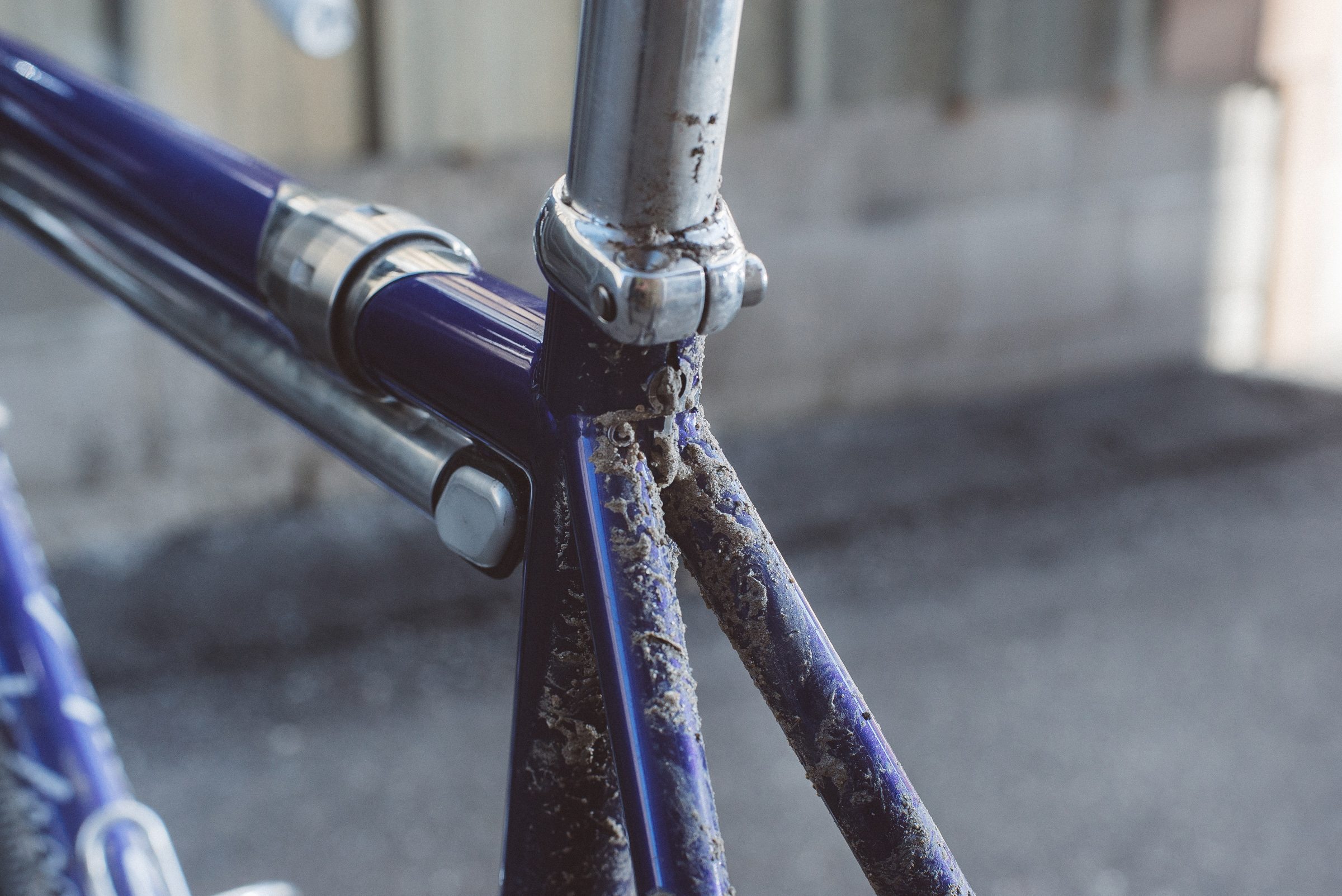
Recently, I seem to be encountering more and more seatposts that are stuck in frames. I’ve seen it countless times on road bikes for many a year. Some require the sword-pulling strength of Arthur himself.
The reason this happens to is that they mostly set and forget their seatpost for the life of their frame. It sits there festering as we fire nothing but salty water and traffic film at it, leaving it to bubble and corrode so badly, it cold welds itself to the inside of the expensive frame. Before too long, out come the saws and vices, and then a rather embarrassing trip to see me to ask what can be salvaged.
The reason I feel we are seeing more of these cases of destruction in the shop isn’t because there are more roadies, it’s because of the dropper seatpost. Why would anyone need to move the seatpost in and out of the frame when there’s anything from 120 to 240mm of adjustment at the push of a lever or button?
We used ride to the top of the hill, stop, get off the bike, slam saddle, do the seat clamp up again, and then enjoy the descent, all in the knowledge that in two to three minutes time we would be repeating the process.
This never allowed the dreaded galvanic corrosion/rust to creep in, and we never had to deal with the dreaded unholy bonding of tubes. But now, droppers are everywhere.
See, most folk never think to remove them to service them, so now we’re in the same boat as the curly bar brigade. My biggest gripe is that pretty much all are made of aluminium, which, when put next to carbon frames, creates an electrical current (science bro!) that causes galvanic corrosion. Without going to a seatpost doctor (now a standalone industry in its own right), you have a snowflake’s chance in hell of removal!
These cases of stuck posts and these few hundred words of waffle give me an excuse to retell one of my favourite things ever witnessed in a bike shop. My co-worker, who will be known as Molin McFailure, received a request from a customer to remove a stuck post. This was before the days of seatpost doctors and associated pulling machines, so some old school blunt force and creative thinking were still the tools for the job.
The bike wasn’t expensive, more sentimental value, a good fit for the rider, which allowed him to do everything he wished. After the usual grunting and clamps and leverage were used, things were starting to look a bit bleak, and some out of the box thinking was about to be applied. Molin sat at his Windows 95 computer and dialled up the modem to begin researching science and chemicals. He proudly came into the workshop and asked for the frame to be stripped of all parts, with nothing but the frame and seat post remaining, while he went to fashion a bathtub of sorts out of an old wheelie bin. Once we had our tub, he nipped to the local builders’ yard to acquire a bag of sodium hydroxide while I filled the tub with water. The plan was to leave the frame and post submerged overnight in an experimental mix which would slowly and safely ‘soften’ the aluminium post so we could remove it the next morning. There was a lot going on that (manic) day and Molin was a little distracted, but he finally lowered the frame into the tub at 5pm…
I was young and wouldn’t dare question the master of bike knowledge, but I was suspicious that he might not have got the facts quite correct. I got in especially early that morning, as I didn’t want to miss the moment of triumph.
I could still see the top of the post protruding out of the milky-looking water, the tip of the iceberg. Molin reached in with his rubber-gloved hand and grasped the seat post, and slowly, as he pulled the withered remains of what used to be a bike frame out of the depths, his smile began to fade and he became very panic-stricken.
The sodium hydroxide had indeed softened the aluminium, but Molin had been so excited/distracted the day before that he forgot it was //ITS// the frame //ITS// that was aluminium, and not the post, which was steel… The solution had eaten the frame and left what I can only describe as a pencil-thin black outline, a ‘shadow realm demon’ of sorts, as a clue to what this wretched hell spawn may have once been. The steel seatpost, meanwhile, looked brand new, with its new shiny silver finish! I struggled not to burst into fits of laughter, while Molin struggled not to burst out in fits of tears as he weighed up the price of a new frame for the customer.
In short: there’s always time to lube your post!



This is a benefit of buying a smaller seatpost than the seattube and using a plastic shim. You can lube the crap out of the outside of the shim/inside of the seatpost. It doesn’t matter if the shim sticks to the seatpost, that’s simple to remove.