We ask a race organiser to explain the situation and discuss the future of the UK Enduro scene.
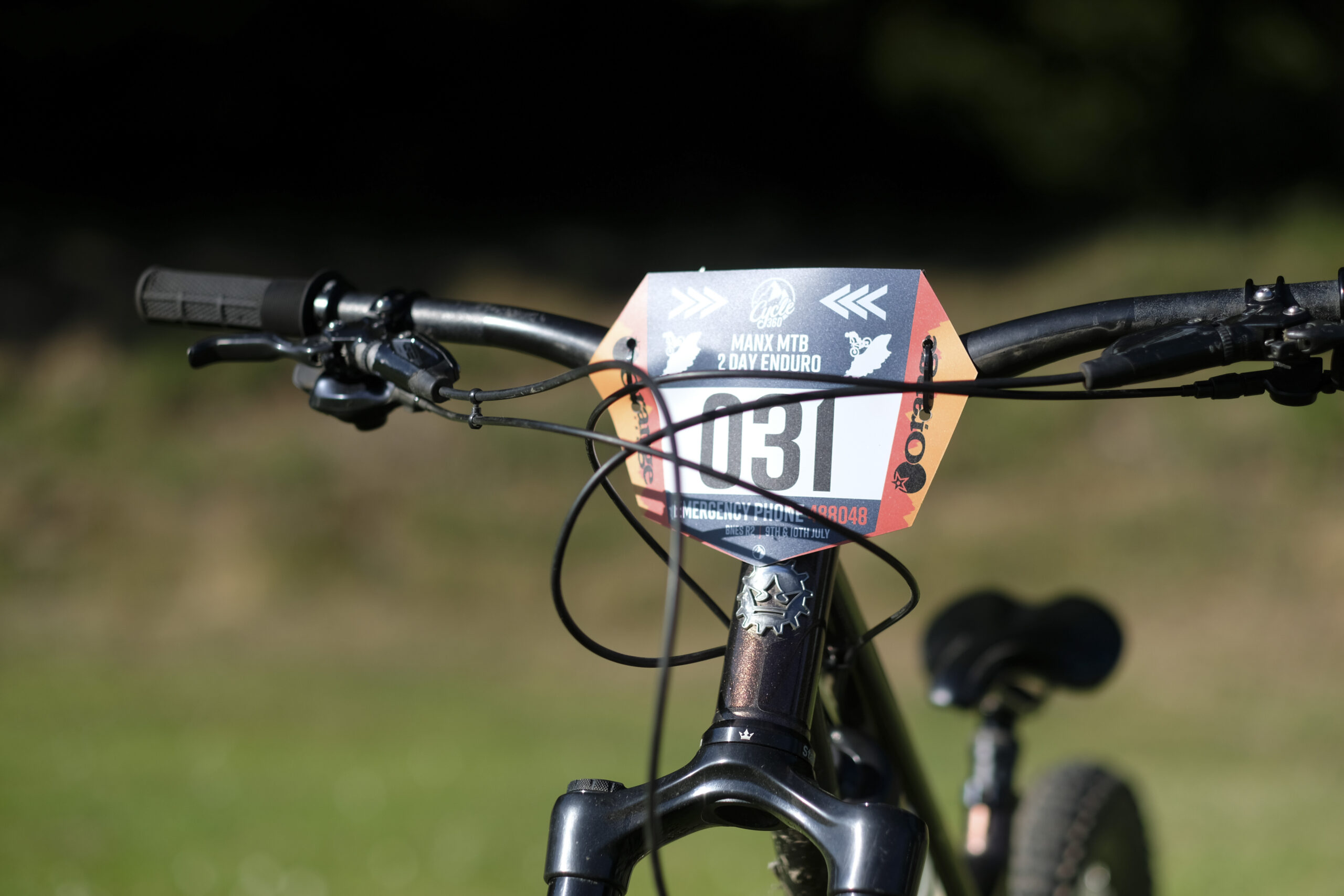
From the outside looking in, Enduro seems to be struggling. Each season we seem to lose another series. As an avid racer myself – and huge fan of the format – it is really sad to see. But is it all doom and gloom? Or has UK Enduro got an exciting future?
I spoke to Kev Smith from Focus Rides (organiser of the new Peaks Enduro Series) to get his perspective on everything from the issues facing event organisers, e-bike racing, livestreaming races to the potential return of enduro racing to North Wales.
Focus rides and Peaks Enduro
Focus Rides began as a coaching and guiding business based in Lincolnshire with its beginnings rooted in riding as a tool for maintaining good mental health to help others with mental health. Kev made the transition to hosting races in 2019.
Organising cross-country events, he soon realised that this type of racing was more about location than anything else. Recognising that riders weren’t massively hyped about riding in the flatlands of the east of England, Kev shifted focus to the Peak District.
This was a decision made by running two test events at Belvoir castle, one XC and one Enduro. Kev soon realised that XC was a hard sell and Enduro was probably the way forward. Having raced Enduro himself for a good number of years, he felt he had the experience to build the stages to suit everyone from grassroots to pros.
Last season, the Peaks Enduro was a success. This year, it returns with the 4th round of the Series being hosted as one of the British National rounds. Since the loss of PMBA a couple years back, the north of England has been missing a series of Enduro events, so it’s great to have the Peaks Enduro series as an option.
Costs
Race entries are expensive. Hosting a race is expensive. And the costs for hosting an Enduro race have also especially increased since the Covid era. Enduro itself feels to be especially expensive when compared to a lot of Downhill and XC racing. With Kev organising both XC and enduro events he was able to give a first hand account into why this is the case.
Simply put, there is more to sort out with Enduro.
Not only do five stages mean five times the amount of tape, more martials, increased land-owner costs, a bigger medic team (with a 4×4 to access more remote parts of the course). The timing system is also a bigger cost. Hosting multiple stages requires a more expensive chip timing system which can get as high as £3,000 per event.
The running cost is not quite as simplistic as saying that an Enduro race is like putting on five races all on one day, but you get the idea.
Then there’s the insurance costs. Not to mention loads of miscellaneous costs for things like chainsaw repairs.
I don’t think anyone is under the impression that a desire to make money is a key motivation for race organisers. If you need an example of dedication to UK Enduro racing: Kev lives in his van full time to ensure he can afford to host races.
BEMBA and BC
The British National Enduro Series is now run by BEMBA (British Enduro Mountain Bike Association) rather than British Cycling. Talking to Kev highlights that BEMBA is one of the main positive aspects of the UK Enduro scene.
Organising an official British Cycling event incurs a great deal more cost. From BC commissaires dictating too much in the way of stage design and race logistics, Kev feels that there is simply no real benefit provided from hosting events with British Cycling.
Kev explained that BEMBA is really helpful when it comes to advice and support for organising races. BEMBA allows enough freedom to allow race organisers to put on the event that is best for their venue yet still provides guidelines and a rule book to ensure events run safely and fairly.
E-bikes
The E bike side of mountain bike racing is an interesting one, whilst Kev cites the COVID bike boom as the main saviour of Enduro, he reckons that e-bikes are a close second.
Simply put, e-bikes “get people on the race track”. People who “wouldn’t have even thought about doing an event on a normal bike”. Expanding the categories and allowing access to more riders than ever before has had a huge impact in keeping Enduro racing healthier.
However, e-bikes are also one of the biggest challenges to race organising. Chipped e-bikes (ie. fiddled to go past the 15.5 mph assist limit) pose a significant threat to the future of e-bike racing. This threat not only pertains to race fairness, but also has serious legal implications to race organisers.
De-restricting your e-bike is a really daft thing to do. There isn’t any pride in winning a race through cheating. However, those that decide to cheat regardless are spoiling it for the rest of in more ways than they might think.
Kev explained that if someone rides a modified e-bike, then crashes, and causes a serious injury, the insurance company may refuse to pay out, arguing that the bike should not have been allowed to race. Without spending thousands of pounds on equipment, it’s near enough impossible to police this. Thus race organisers can be put in a position of uncertainty in regards to whether their series is covered by insurance for e-bike incidents.
It just takes a small number of selfish/deluded/cheating racers that can cause huge issues for the organisers and even shut down a whole race series.
Enduro as a spectator sport
One aspect where Enduro really struggles is viewership and fan experience. Even at a World Cup level, coverage is difficult to manage. I spoke to Kev about how he factors spectator experience into race organising and he has some exciting ideas.
Planning events with stages close together for easy on-site viewing is one thing that organisers do consider. Kev also mentioned implementing video footage into some of his events. The current plans for this year’s national round at Buxton involve using live cams and drone footage to stream racing into a trackside bar hosted by Buxton Brewery. Whilst this is a costly idea for race organisers, I think it is one that has the potential to significantly elevate the UK Enduro spectator experience.
Racing in Wales and Northern England
After completing a full season of the Welsh Enduro Series (WES) in 2025 I was especially sad to see it cancelled for 2026. With so much great riding in Wales, having no Welsh racing whatsoever for 2026 was a disappointing prospect.
However, after talking with the guys behind the WES, Kev revealed that he has organised an Enduro event in Llangollen in August, with another race planned at Llanfyllin in September.
There will also be an Enduro Series in Wales planned for 2027.
As for Northern England, the expansion of the Peaks Enduro Series into a wider Northern series begins to fill the gap left behind by PMBA and WES.
Kev also speaks of his interest in hosting a ‘Des Nations’ style event for UK Enduro. Inspired by motocross, this would be an event with teams from England, Wales, Scotland and Ireland competing against each other. We saw something similar in the Enduro World Series not too long ago.
Running a series
One trend you will have noticed in the UK Enduro landscape, is the rise of one-off events. ‘Ard Rock, ‘Ard Moors, Naughty Northumbrian, The EX Enduro and Bolly Skyline have risen to equal levels of popularity as national/series events. These one-off events do a good job at building excitement and buzz for racing.
Kev chose not to go down the one-off route. He believes that the benefits of running a Series outweigh the potential profit margin of a one-off event. A series can build a much stronger community.
I have experienced this community side of series style racing first hand and getting to know my competitors across a season is one of the things I love most about this sport. I’ve had conversations with riders at events and had the realisation that we both knew each other’s names because we were next to each other in the series rankings. A few of my good mates that I hang out with on race weekends I only know from racing a Series.
From Kev’s perspective, familiar faces that pop across a series are not just a nice friendly thing, but can also help his job. Knowing riders, and having riders invested in a series encourages people to share their point of view. If you have bought into a season, it’s in your interest to pass on constructive criticism. Kev says he is always happy to take on advice. “After all it’s not my race, it’s their race.”
By running a series across an area like the Peaks, Kev explains that you get to know the land and landowners better, allowing for better stages and as a result a better race.
Final thoughts
It was refreshing to talk to Kev and hear some positive messages about UK Enduro. Cost will always be an issue and the issue of chipped e-bikes are going to continue to pose a problem but on the whole there is room for growth. With passionate organisers like Kev, UK enduro should have an exciting future ahead. You just need to go out and race it.
Peaks Enduro Series 2026 dates
Round 1 – March 29th – Barlow – Entry Details
Round 2 – April 25th – Ladies & Kids – Barlow – Entry Details
Round 2 – April 26th – Mens – Barlow – Entry Details
Round 3 – May 23rd & 24th – Barlow – Entry Details
Round 4 – June 20th & 21st – BNES Round – Hope Valley – Entry Details
Round 5 – July 19th – Horseleygate Estate – Entry Details
2026 BEMBA British National Enduro Series Calendar
Round 1: 18th & 19th April – Tweed Valley, Scotland – Scottish Enduro Series
Round 2: 23rd & 24th May – Minehead, England – Southern Enduro Series
Round 3: 20th & 21st June – Peaks, England – Peak Enduro Series
Round 4: 1st & 2nd Aug – National Champs – Isle Of Man – Manx MTB Enduro
Round 5: 3rd & 4th Oct – Fort William – Scottish Enduro Series



“And the costs for hosting an Enduro race have also especially increased since the Covid era"
Are we still blaming Covid on random stuff or is there a genuine reason for this? It felt like enduro races were getting more and more expensive before that regardless. Is it a way of milking riders? Ard Rock for example – its fkn massive. Huge numbers of riders, huge amount of support, huge amount of demand and yet last time I checked, tickets to ride it were north of £100 aren’t they? Is it the demand, especially for Ard Rock, thats driving up prices for tickets and not (just) all the background/hosting costs?
Respect to Kev for keeping the scene alive.
£60 is not necessarily so expensive for an event, given the obvious challenges of organising this discipline in comparison to other bike events (I did a gravel race at the weekend that cost slightly more to enter). A quiet night out on the ale costs more.
But it does need at least one or two things that are excellent for it to appeal to most riders at that price, especially those entering solo, ie not with a crowd of mates – Daz, Baz and their full English ebike crew will always be up for some enduro-ing. £60 for enduro stages that felt big and hard would be great value. For more of a grassroots event, doing the best we can with small hills, then it’s a harder sell. Hope it’s a success, he’s clearly putting his back into it, and race organisation is hard AF.
I can’t say Ard Rock or enduros in general feel that expensive. My Ard Rock ticket was £77.50 for the Friday and Boltby cost £73 for the weekend. My biggest issue with entering others is how difficult they are technically and physically. Technical difficulty is harder to quantify but there should be no excuse to not publish accurate distance and elevation details for each event.
I think you need to separate races from festivals. I would argue that events like ard rock are more of a festival with a big stage, bands and various other entertainment going on. All these additional costs and have to be funded by entry fees. A race doesn’t have to have them
“Are we still blaming Covid on random stuff or is there a genuine reason for this?"
I don’t organise events but there was a lot of inflation post Covid, particularly for insurance – they’ve gone incredibly risk averse and want to squeeze everyone to the max for premiums (whilst also adding so much small print they avoid paying out in loads of cases). I cannot imagine the paperwork horror that is organising a race nowadays.
The essence of enduro was about covering distance, with transitions that had to be pedalled within a time limit and then if you managed that the race was won by racing mostly downhill and fairly tech trails blind or semi-blind. That strikes me as a very difficult format to do year after year – where do you find the new trails? And obviously it’s very hard to spectate or film.
I did a load of more local enduro races when it was popular about 10-15 years ago – where I leant that although I’m not too slow in general, people who are good at racing are bloody fast, and under the pressure of a race I seem to ride my worst! (I still use strava when I ride and often notice I’ll set PRs when I think I’m holding back and not riding too fast, just flowing).
With regard to derestricted E-bikes, I know Pedalhounds, my local series have a separate category. I’m not sure about the liability implications.It’s a well run series, most fun on a hardtail, it’s a shame they lost PORC and Aston Hill.
Agreed – I got fed up with travelling to ride events that didn’t justify the effort or expense – there was a Welsh Enduro that cost £59 and only had 4 stages and under 5 mins total race time. I’d love a £15 local mash up race with a few 1 minute stages, but I don’t want to drive 3 hours expecting a proper event to get that.
Until they got the BNES round I’d never heard of Peaks enduro. Good luck and hope they are able to put on decent races that fill the void in the calendar.
@ben_haworth can you add the BNES dates and links to the article as well please? It would be good to give that series more exposure.
The price of entry, for someone who enters a lot of running races, actually seems quite reasonable to me. Ignoring parkrun, a local 5k or 10k race is around £20. For that you’ll have 1 medic, some chip timing, a bit of tape, insurance and volunteer marshals. And even if they sell 200 place they won’t make much profit.
Enduro is much more complex, has much more risk and covers a lot more ground. £60 doesn’t seem bad to me at all.
What can you buy for £15 these days? You’re still going to need the same number of marshals, medics, timing stuff etc for a 1 minute stage as a two minute stage.
If there’s a feature or chute that’s a bit of a crash magnet, more marshals.
If a stage crosses an access track, (which is common on enduros I’ve done), more marshals again.
I always expected that commissaires brought cheap insurance as part of the deal?
SES is £95 this year…
Suspect the Cost of Living has added to all the prices for everything so that needs to be covered off.
Insurance is more expensive, medical/first aid is more expensive, marshalls that aren’t just volunteers are more expensive, any rider levies for using the land are more expensive.
Suspect COVID has helped this rise in costs, but the cost of living has continued and made everything cost more money.
Things just aren’t cheap now and organising an event has a lot of increased costs and those need covered. An enduro tends to need more of many things, so those costs also go up.
I don’t think the costs will reduce any time.soon which is a real shame.
For many people, events help with the hobby/sport, so having fewer events isn’t a great thing.
Have entries gone up as much as everything else?
Money isn’t the problem. Especially if you can buy £5k bikes. Getting riders to turn up is. Just not sure why people aren’t racing in the same numbers.
Really should re start but I’ll probably forget again. Just struggle to get the time or motivation to drive for hours.
And now there are even less events to chose from whereas 10 years ago I’d have a huge choice which reduces the likelihood of entry even more. Perfect storm
Not necessarily saying that’s what they should cost, just roughly what I think those events are worth.Appreciate there’s unavoidable costs, and I’m happy to pay if I know the riding justifies the expense.
Racing has absolutely zero appeal for me and it’s only partly to do with the expense. If I really wanted to do it I could, I just can’t imagine why I’d bother.
It seems like a good way to ruin a weekends riding for me.
@mark88 Good shout. 2026 BEMBA British National Enduro Series Calendar added now.
I have little interest in competition but races can be a great way of riding somewhere different, maybe somewhere you can’t usually access, and can be a good day out. Having said that the older I get the more I sway towards a nice uplift day with loads of runs and little climbing
This is it for me. It’s nice to get between the tape and give a race effort, but I really couldn’t care if I’m first or last. To me enduro is about going somewhere to ride their best trails, or with the likes of Ard Rock, getting to ride some interesting trails I’m not able to at any other time.
Rider apathy has grown since the COVID era…event numbers across most disciplines aren’t what they were.
I think some are returning to pre-covid levels and in some cases have grown, but overall, fewer people have an interest.
It is is also seen with most clubs, fewer people putting things on and fewer club riders out in club groups (however, they do seem to still be heading out, just in smaller groups).
If the numbers aren’t there it’ll be much harder to make events work financially, so fewer events will be held.
Hats off to all event organisers as it can’t be an easy job or role to be doing.
Round 5: 3rd & 4th Oct – Fort William – Southern Enduro Series
@Ben_Haworth I think that should be Scottish Enduro as the organiser.
I haven’t raced Enduro for years – Welsh Series about 8 years ago!
Kept meaning to enter their night enduro at Llandegla, but always forgot – shame to see that series end.
Daughter is interested in doing the Hope Women’s at FoD, so will have to ride that with her as she’s under 16.
With regard to cost, prices seem similar to some of the DH races that we enter. Entry prices for everything has gone up.
I will only enter a ‘race’ if its taking me somewhere new. I say ‘race’, as i am mid-pack at best. But festival events like Ard Rock are more appealing, as its tracks I wouldnt ride (being from the south coast) and there is plenty to do pre and post race, with food, entertainment and retailers. Therefore i think the £100 plus for a ticket makes it worthwhile.
Outside of this, I no longer partake in local events, as i dont find they offer VFM. £60 for a practice lap, a few hours sitting in a car park/field waiting for a start time, then 15 mins of racing doesnt do it for me anymore. Add to that some venues that arent open to public riding, yet a select few get to ride there….. and whilst i wont be challenging them, just seems a bit unfair.
Its a shame, as on paper, it sounds mint. A big day out on the bike, blind stages, big distances covered, the dream! Which is what we got at Enduro2 in meribel. Three proper big days. But i appreciate you wont get that in 99% of the UK.
I haven’t “raced" in years. I say “raced" because I reckon most people go for the day out and to ride somewhere different. You only go to race if you are one of the interchangeable half dozenish people who podium every time.The vast majority of riders are simply making up the numbers. When prices of events started creeping up is what did it for me. Other than a few events that use private tracks you can ride any of the stages of most Enduros for not much more than a parking fee at any other time.
Pre covid I loved riding enduro events . Did most of the tweedlove events , dunkeld, fair city and PMBA at kirroughtree . As people have said it was a great way of finding good trails in places I hadn’t ridden before , when I started I dont think trailforks was around . My first event was an eye opener in terms of off piste trails and how fit I was but the events gave me a motivation to improve my fitness and keep riding through the winter. I was always a back marker but had some great days out with a real sense of satisfaction at just finishing, the first 2 vallelujah events spring to mind .
It’s a shame those events dont happen anymore, I never begrudged paying the entry fees but once you added petrol and the odd overnight stay it wasn’t a cheap weekend and nothings got cheaper over the last few years for riders or organizers.
Im in New Zealand now and most riding venues will have an event run by the local club to raise funds for trail building and these are normally well attended and reasonably priced but no one is trying to make a living from it . The big events like the whaka in Rotorua are pretty expensive but there’s medals , food , event village etc so you can see where the money goes .
I actually think the bigger issue isn’t bikes, uplift, or organisers trying to make money — it’s the general culture in the UK around regulation, risk and ‘professionalism’ of stuff which doesn’t need to be a profession..
Pretty much everything here gets buried under layers of NIMBYism, “something must be done!!!” legislation, and professional risk-mitigation culture. By the time you’ve finished ticking all the boxes required to run anything, the cost has already exploded.
Think about what an enduro organiser has to deal with now: insurance, licences, VAT, professional accountancy, formal risk assessments, environmental consultations, permits, DBS/CRB checks (because horror there might be junior riders!), safeguarding policies, medical cover requirements, banking fees, making tax digital, mind boggling payroll systems, landowner fees, and often local authorities wanting their cut as well. 90% of it is expensive paperwork designed to prove you’ve thought about something rather than actually making the event better.
And most of it produces nothing tangible for riders. It’s just bits of paper that exist so someone somewhere can say the correct process was followed.
I think we all massively underestimate how much of everyday spending goes on these kinds of intangible compliance costs. Look at your own monthly budget — pointless and unclaimable insurances, licences, regulatory fees, service charges, stealth taxes, professional certifications, pointless workplace training courses — a huge chunk goes to “the man” for things that don’t actually improve your life or experience.
It’s the same story everywhere in the UK: the obsession with professionalising everything. Once you force organisers into formal training courses, certifications, consultants and compliance regimes, the cost base goes through the roof. Even something as simple as registering your own car as a minicab involves medical forms, permits, DBS checks, licences, inspections, and fees. You can’t even labour on a building site without a biometric ID card. My local carboot sale now asks vendors to buy ‘public liability’ insurance in case something falls off their stall onto someone’s foot – or some other ridiculous fantasy. It’s a big societal swizz.
Contrast that with places where grassroots scenes are still allowed to be… grassroots.
Fell running is a good example. You can still turn up to loads of local races, chuck a few quid in a bucket, run up a hill, and have a cup of tea afterwards. It works because the culture hasn’t been completely captured by regulation, professionalisation and shite yet.
There’s actually a brilliant podcast series called Sonic Fields that covers the evolution of the UK music festival scene. It talks about how things went from free festivals and small community events to massive commercial operations like Glastonbury and Leeds. A big part of that shift wasn’t greed — it was regulation, compliance costs, insurance, licensing, policing requirements, and land-use restrictions.
Once those costs arrive, small grassroots events simply can’t survive. Only large commercial ones can absorb the overhead.
Enduro racing has basically going through the same process now. Miserable little country, turning into an impoverished version of the United States.
And then there’s the other side of it: the general cost of living.
Never mind the cost of actually entering an enduro — every cost in my life at the moment just feels insane. That’s probably a rant for another thread, but it all feeds into the same thing: people simply have less spare money to do stuff.
I’m single and earn reasonably well (apparently the top 10% of the country), and I’ve honestly never felt so bloody poor.
This month alone my 4-year-old van needed a new clutch — £2000.
My flat’s building insurance has just come in at £400 for the year this week.
Water bill is about £70 a month.
Power bill sitting around £130 a month.
Council Tax is £180 a month (with a single person’s discount)
And that’s before food, fuel and everything else, never mind a fresh pair of brake pads.
I just don’t believe the government figures on the economy anymore because they bear absolutely no resemblance to what I see it actually costs to live. Inflation figures seem to have made zero sense ti ne,
I genuinely don’t understand how a lot of people are affording to do anything at the moment.
So when people say “why is enduro racing £100+?” — honestly I think the bigger question is how anyone has the spare money to race at all.
None of it really makes any sense.
That would be the prefect enduro for me!
apart from the running bit..