MTB legend asks if it is time to draw a line in the sand of when e-bikes become “too powerful”
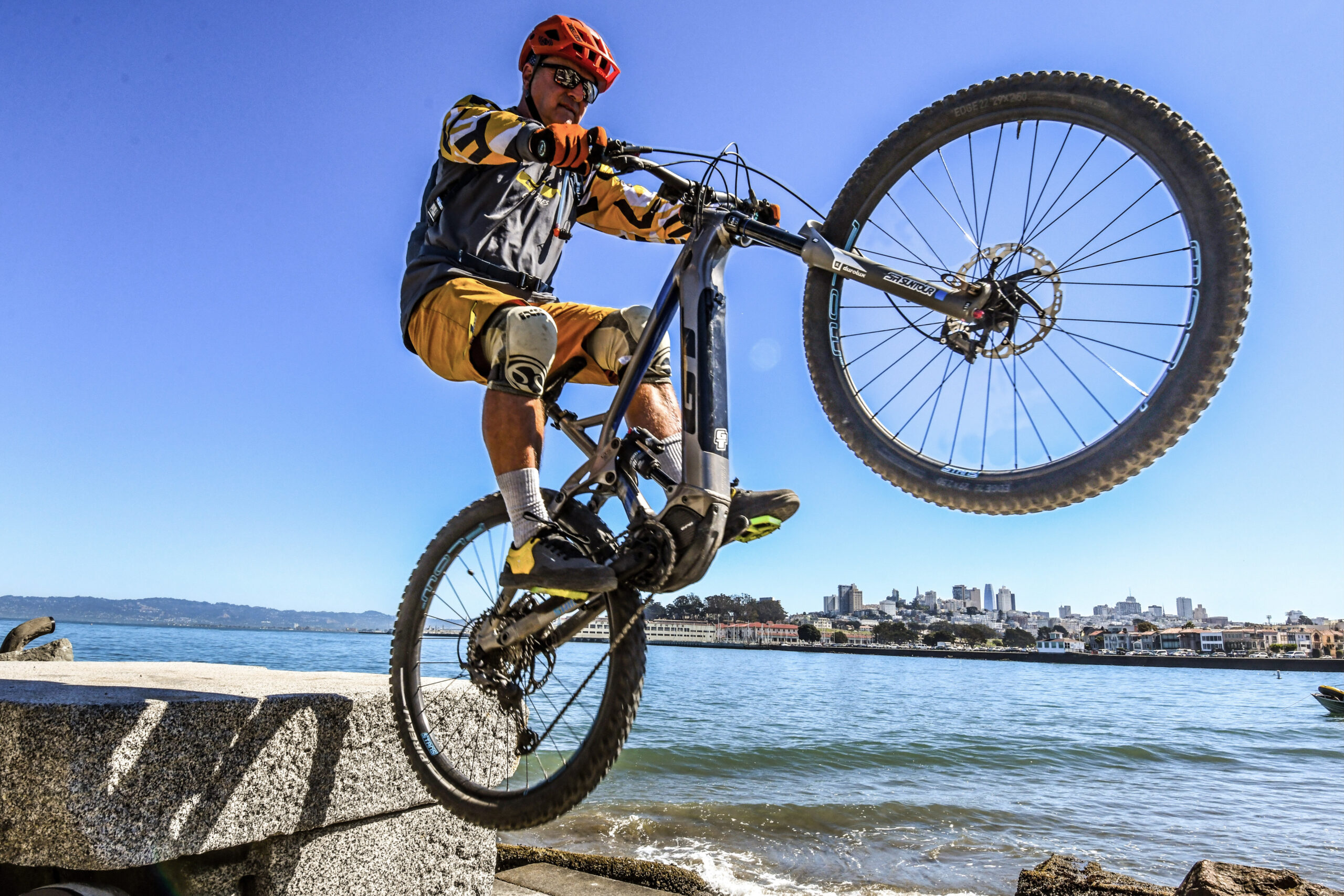
An Open Letter to the Bicycle Industry
To the leaders, builders, advocates, and riders who shape our industry,
I’m writing because I care deeply about where bicycles—and electric bicycles—are headed. We are at a crossroads. The decisions we make about language, power limits, and definitions will determine whether Class 1 e-bikes remain accepted as bicycles—or get grouped with much more powerful machines that don’t belong in the same category.
It’s time to define our language and it’s time to draw a line in the sand of when e-bikes become too powerful.
Words Matter
Today, the term “e-bike” is used to describe everything from a lightweight pedal-assist mountain bike to electric mopeds and full-blown electric motorcycles. That lack of precision creates confusion—and conflict—with land managers, other trail users, parents, and lawmakers.
If we don’t define our terms, others will define them for us.
Ideally, “e-bike” would mean one thing:
A Class 1 pedal-assist bicycle with a maximum assist speed of 20 mph [in North America – Editor] , no throttle, and a motor not exceeding 750 watts of peak power.
Instead, the label has expanded to cover vehicles with throttles, higher speeds, and significantly more power. That blurring of categories puts access at risk.
Clear Categories, Clear Expectations
We need distinct names for distinct machines:
- E-bicycle (EMTB): Class 1 pedal-assist only (20 mph max assist, 750W max peak power)
- E-moped: Throttle-equipped or faster than 20 mph or exceeding 750W, incl. Class 2&3
- E-motorcycle: High-power electric motorcycles well beyond bicycle-level performance
Clear labeling should be mandatory. Every electric vehicle should visibly state its category, assist speed, and peak motor power. This isn’t about enforcement—it’s about clarity and accountability.
The 750-Watt Line Matters
The 750-watt peak limit is not arbitrary. It helps determine whether a vehicle is treated as a bicycle or a motorcycle—and whether it remains welcome on trails and bike paths.
Maximum peak power and nominal (or average/rated) peak power are not the same.
A bike limited to 750 watts peak never exceeds that output. A motor rated at 750 watts nominal can produce much higher bursts of power. That difference is significant.
Class 1 e-bikes gained acceptance because they behave like bicycles: pedal-assist only, no throttle, limited speed, and moderate power. If we allow power creep—higher torque, faster acceleration, motorcycle-like performance—we shouldn’t be surprised when access disapears and regulations increase.
We are already seeing warning signs. In New Jersey, a bill was already signed that will require insurance, registration, motorcycle helmets, and will restrict trail access for electric bikes. In California, lawmakers are working to reinforce the 750W peak limit to improve safety and preserve trail legality. These debates are not theoretical—they are happening now.
A Call to Responsibility
To manufacturers:
Resist the temptation to chase bigger numbers at the expense of long-term access. Short-term sales gains could lead to long-term collapse.
To media and marketers:
Use precise language—even when it’s less convenient. Help draw and defend the line that protects this category.
To riders:
Ride responsibly. Understand what’s at stake. Don’t take trail access for granted.
To advocates and trade groups:
Defend Class 1 clearly and consistently. The industry must self-regulate until the laws are defined.
In order to protect what we have we must stop asking how much power we can get away with—and start asking how much power is too much.
— Hans Rey
What’s the problem with power?
Why is more watts a problem? Well, it’s nothing really much to do with mountain biking rider safety or trail erosion or even the forever in the background spectre of illegal de-restriction. It’s to do with pedal assist bicycles straying too far from their original remit and raisn d’être. Namely, to add a bit of extra motor power on top of the rider power going into the pedals.
Anyone who’s ridden a DJI Avinox ebike – such as the Amflow PL Carbon – will know that it doesn’t take very many rider input watts to get the motor ro give out its much hyped 1,000 watts of motor assistance. The experience is akin to using soft-pedalling of the cranks as essentially a throttle.
It’s this ‘support ratio’ issue that the bike industry is concerned about. Although 1,000w pedal assist bikes are still quite far off things like Surron e-motos in terms of power (minimum 12,500w of peak), there’s no denying that higher and higher wattage e-bikes have the potential to stray too far from regular bicycles.
Also, it should be mentioned that Hans Rey is a Bosch ambassador, so is not entirely without skin in the game, as they say.
Read more about the e-bike power struggle.

I think some people might be missing that there is no “current limit" for maximum power on an e-bikes. The DJI motor already delivers 1000w, and that follows the letter of the law… does a motor delivering 1200W? 2000W? 3000W?
Don’t worry Google AI doesn’t get it either (no surprise there):
To be classified as an EAPC under the EAPC regulations[footnote 1], the cycle must:
be fitted with pedals that can propel it
have an electric motor with a maximum continuous rated power not exceeding 250 watts
cut off electrical assistance when it reaches 15.5 miles per hour (mph)
EAPCs that comply with the regulations do not need to be registered, insured or taxed (Vehicle Excise Duty).
If an EAPC does not comply with the regulations, it is treated as a motor vehicle under the Road Traffic Regulation Act 1984 and the Road Traffic Act 1988.
a speed limit might be best, presumably a loaded cargo bike pulling a trailer will need more power to hold 15.5mph but only if the limiter can’t be chipped/beaten
Yes, yes, but what about actual power delivery? You get that 600-700W is pretty normal, yes? And now we have motors that can deliver 1000W. Does the legislation prevent motors that deliver more? How much more? Where is the current limit set out? If there is no limit, what are the possible downsides of not having a limit?
This is just repeating everything already set out above… give it all a read.
Thing that confuses me about this 1000W power – surely most users will be chipping them to assist over the 15mph? Otherwise, apart from huge assistance up steep climbs, all you’re really gaining is very fast acceleration up to the pedal assist limit? Just seems a bit pointless. Plus they are no more dangerous on the roads just because they accelerate quicker are they?! Or am I bring dopey as per?!
Having ridden with a DJI one and compared to a Bosch CX (600w) its a LOT faster up climbs. Its like the difference between a normal bike and an ebike.But also, I think DJI have made it suspiciously easy to derestrict by using a VPN app on your phone. Its very hard to derestrict modern Shimano and Bosch systems by comparison.
Surely the power limit doesn’t actually matter that much if the bike is limited to 15.5mph and still needs to be pedalled to get the power (as in no throttle)?
It does if you derestrict it.
Put it this way… if you could turn on a 15mph climb limiter on an motorbike, to be able to use it on cycle paths and trails with public access… how well would that be received by other path/trail users? What if everyone knew that for that motorbike switching off the climb limiter was a trivial job you could do from your phone?
Ignoring the 1000W of the DJI for a minute… what if someone brings a EPAC to market that delivers 8000W, but the assist cuts off at 15mph, and you have to turn the pedals to get the assist… clearly that would be making a nonsense of the category, wouldn’t it?
It takes some seriously hard pedalling to get my Gen 2 Levo close to 15mph once you’re heading up a reasonable hill and as it gets steeper there’s no hope. So more power will make a difference off-road even with a legal cut-off. There’s also the matter of acceleration – electric vehicles go from zero to fast very quickly and quietly, the more power, the more they surprise you. And off-road, the more power, the more trail damage. And if you can bypass the cut-out then that’s an even bigger problem.
Considering how much faster that old Levo is uphill vs the same reasonably fit rider on a normal bike, I think this escalation in power levels not needed – and if no-one rode a bike with more than my Levo’s power (which I think is about 600W – it’s definitely a lot more than 250W) then I can’t see anyone who’s an actual MTBer wanting more. If you’re an ex-MXer then you may have different wants, but wants that I don’t think are compatible with the shared spaces and cheeky trails that is so much UK MTBing.
Someone pointed out how much more polarised the US ebike situation is and suggested that it’s because their 20mph cut-out is so much quicker (in the real world in terms of relative speeds) than the European 15.5mph one. I think that could be a good point.
I’ve said it a thousand times before, not that anyone listens. Just make ebikes give assistance to speeds that an average MTB’er can ride to – 20mph on the flat would probably do just fine.
Mine are deristicted (no secret) – not because I want to blat around at 30mph on the flat, or 20mph uphill that everyone else crawls up (I spin the same gear uphill as a normal bike, just a tad quicker and a fair bit easier) Simply because the 15mph cut off is bloody annoying.
Here’s a thought – shouldn’t be hard to build in an inclinometer. Restrict them uphill, anything over a few degrees.
The speed limiter doesn’t have any effect on downhills, sensible speed on the flat, limited uphill. Job jobbed
Give me a break. Just buy a SurRon . 20 mph on the flat is a niche ebike.
Most ebikes are used as commuter tools. I’d guess 95% If you get caught here with that it’s a lot of fines and a crushed bike, and that’s the right thing. 20 mph on the mixed use paths where the vast majority are used is no a sensible speed.
Fine, no problem with that. It is possible to slow down though you know.
If 20mph on the flat isn’t acceptable, I think we should start restricting normal bikes to 15mph. Happy with that?
Flat gravel ‘shared path’, end of a ride, last leg home, not particularly fit, slightly fat, smoking biffer not trying ‘that’ hard, average speed 18mph, max 22mph on a niche….gravel bike.
I’m not sure how fast you actually think 20mph is
Normal people on normal bikes barely do 15mph on the flat. It’s clearly a long time since you’ve ridden a proper bike so I’d suggest trying it. Riding a normal mountain bike with modern grippy tyres at a sustained 16mph is hard work but worth it if riding with ebikers to make them suffer too. Even for roadies 20mph requires quite a lot of effort.
Yeah ok, I’ll give it a go one day
Your HR is 160 bpm. I don’t know what your zones are, but it looks like you’re disproving your point of 20 mph being easily achievable.
Ok, I was trying a bit.
Regardless of how much effort a not particularly fit me put in, the KOM on that section is average 25mph/max 27.5. The top 10 are all above 23mph average
I’m not sure of the argument here? If 20mph is so easy to attain and hold for any duration they why do we need even is in the first place? And if they do need to exist then the 15mph limit is surely fine as you can ride up to that limit and just give it a little nudge to get to 20 and be on your merry way
Need is a relative term. The same sort of argument is often used against 20mph speed limits in Wales. People give reasons why some times it is inappropriate to have a 20 limit because they could safely go faster or whatever… that the exceptions prove the rule and that driving at 20 is annoying and frustrating. But they miss the point. It’s not about you and what you can do, safely, fairly, whatever. It’s not about your need as an individual. It’s about everyone else, the community in general.
Raising the cut off speed on e-bikes would be bad for the community of people who use shared use paths. It would subject them frequent encounters with faster more dangerous cyclists on heavy bikes. Yes people exceed that speed on bikes, e or non e. But not that often and only in some circumstances. Raise the limit and high speed encounters would be the norm and not the exception. The walking, cycling, scooting, running, playing environment would be the worse for it… and cyclists would be even less popular than they are now.
Have you ever ridden an ebike?
lol, little bleedin nudge! I can’t even do that on my gravel bike!
“I’ve said it a thousand times before, not that anyone listens. Just make ebikes give assistance to speeds that an average MTB’er can ride to – 20mph on the flat would probably do just fine."
Yes, it’s possible to pedal even a chunky tyred ebike past 15mph but it’s bloody hard work getting it to 20 and holding it there for a good length of time without gravity or a tailwind helping – I know, my old commute involved a lot of this on my ebike. And if you’ve got the bike fitness to ride a bike that fast without help then there’s a reasonable probability you’ve spent enough time on a bike in shared spaces to have reasonable bike handling and road/people awareness skills.
Let every ebike run to 20mph and anyone with zero bike riding ability can hop on and cause even more chaos than on a bike doing 15mph. The extra speed is more likely to surprise pedestrians etc, there’s less time for decision making, longer braking distances and almost twice the kinetic energy to dissipate (possibly with squishy human crumple zones) in the event of a crash.
We’ve all seen inconsiderate roadies at some point trying to cane it down a shared cycle path a 20+mph, and we know it’s rarely a good idea. We don’t need every ebike doing that, it’s bad enough with all the illegal food delivery ones!
Probably a moot point regarding speeds anyway, as I can’t see the law getting changed any time soon.
In the mean time, I’ll carry on riding my Levo with no restriction and probably get a DJI powered bike next. It just makes the bike far more usable.
Just for the record – my fastest ebike time along the (almost identical) segment I mentioned earlier is quicker than my gravel bike, but slower than the faster meat riders on there.
I’ll carry on riding my Levo with no restriction illegally 😉