
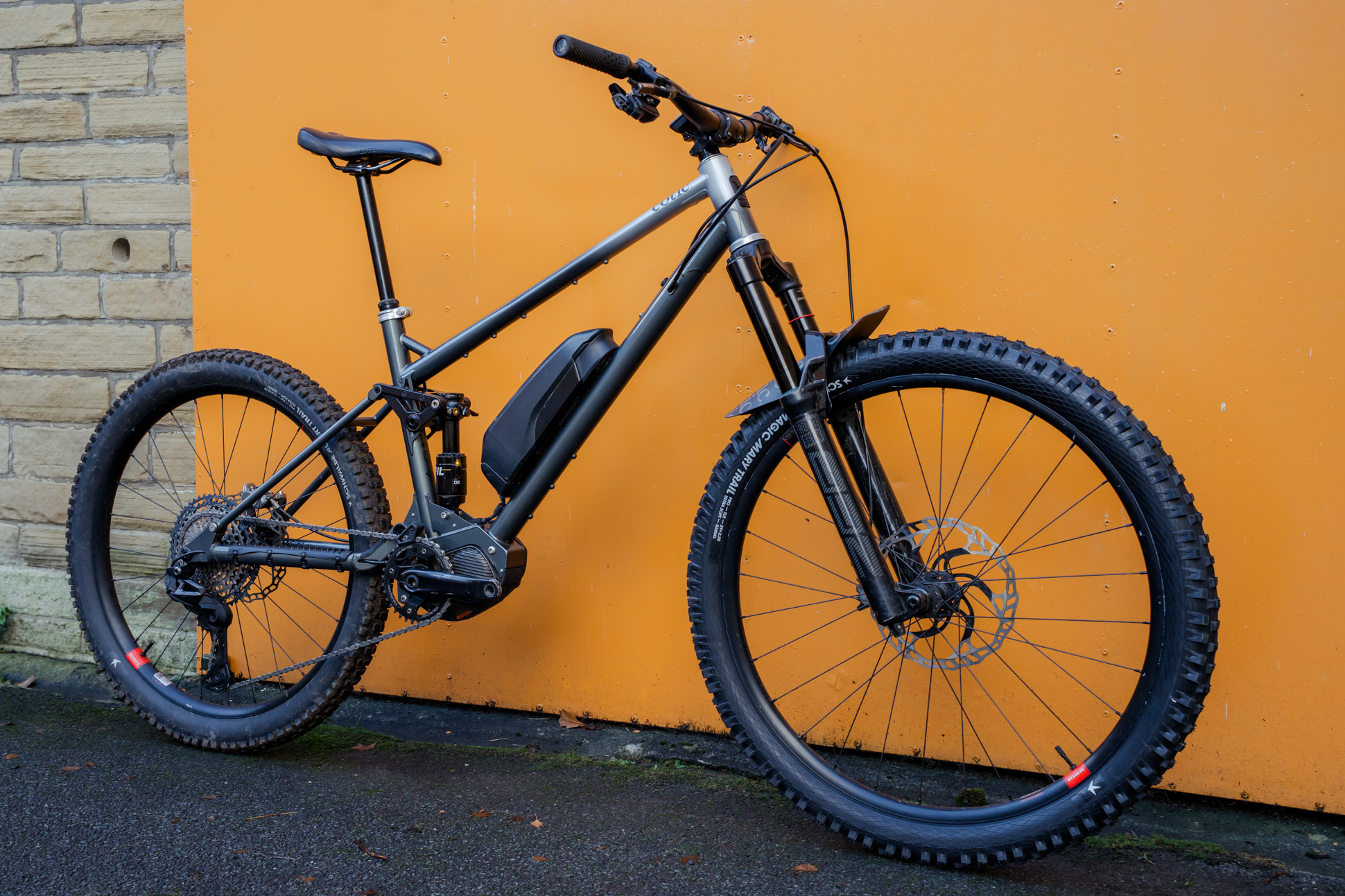
The Cotic Rocket looks like nothing else. And it outperforms every other eeb out there.
- Brand: Cotic
- Product: Rocket
- From: Cotic
- Price: from £8,799
- Tested by: Benji (and others) for a month
Pros
- Flexibility (in every sense)
- Sorted geometry
- Offers everything that actually matters
Cons
- Cost
- Unconventional aesthetic
Our rating
Yes, this bike technically launched in 2024. But it launched in November 2024. In other words, too late to factor in our end-of-year round-up stuff.
Also, back in November ’24, I only had a few hours playtime on the new Cotic Rocket. Enough to give me a sneaking feeling that it was easily the most capable Cotic mountain bike ever. As November 2025 approached, I requested the Cotic Rocket back in for a proper test period. I was not disappointed.




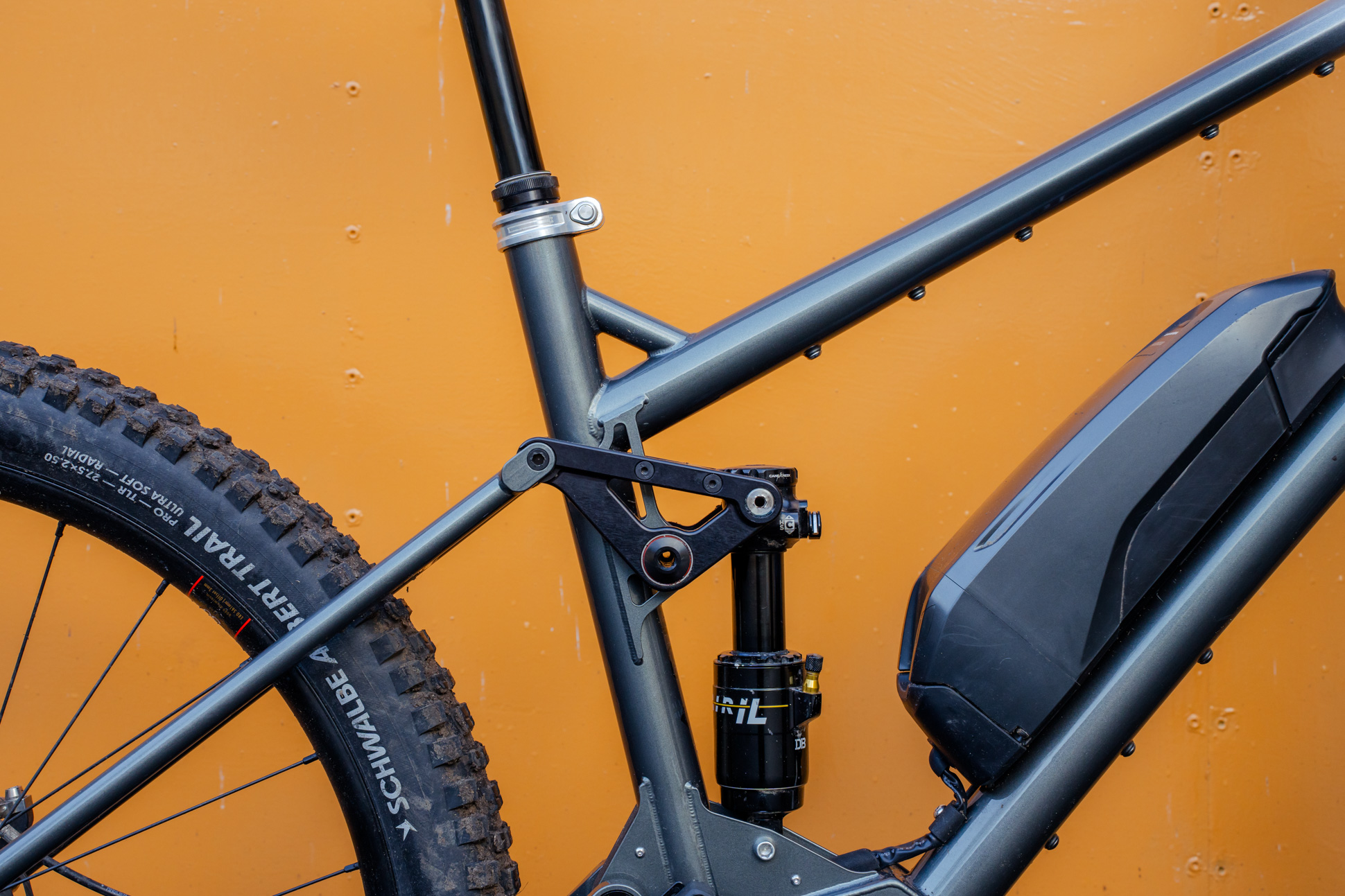
The claim that the Rocket is the most capable Cotic ever may sound rather unsurprising – seeing as it has a motor – but I’m not just talking about climbing capability. Although it is an extremely adept ascender; steeper actual seat tube, longer chain stays and grippy rear suspension in full effect. It is its capability on descents and traverses that is also a step up from any analogue Cotic I’ve ridden before.
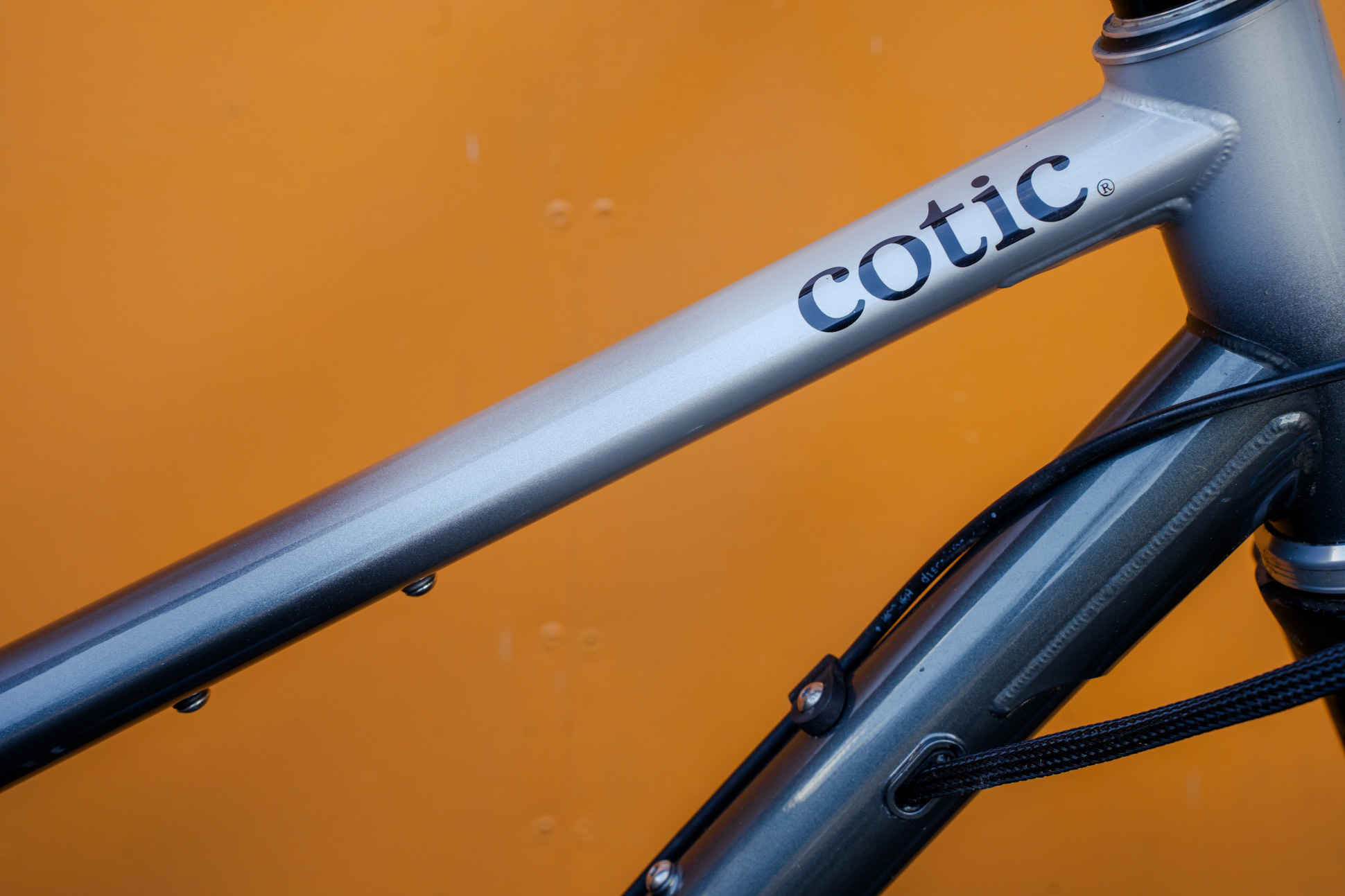
If you’ve followed Cotic over the years you’ll probably have noticed that it doesn’t really release bad bikes. It also doesn’t really release ‘safe’, conservative or retro-minded bikes either.
First and foremost a Cotic bike is designed to handle well. It is also designed to be easy to live with. You’ll not see any cabling passing through headsets on a Cotic.
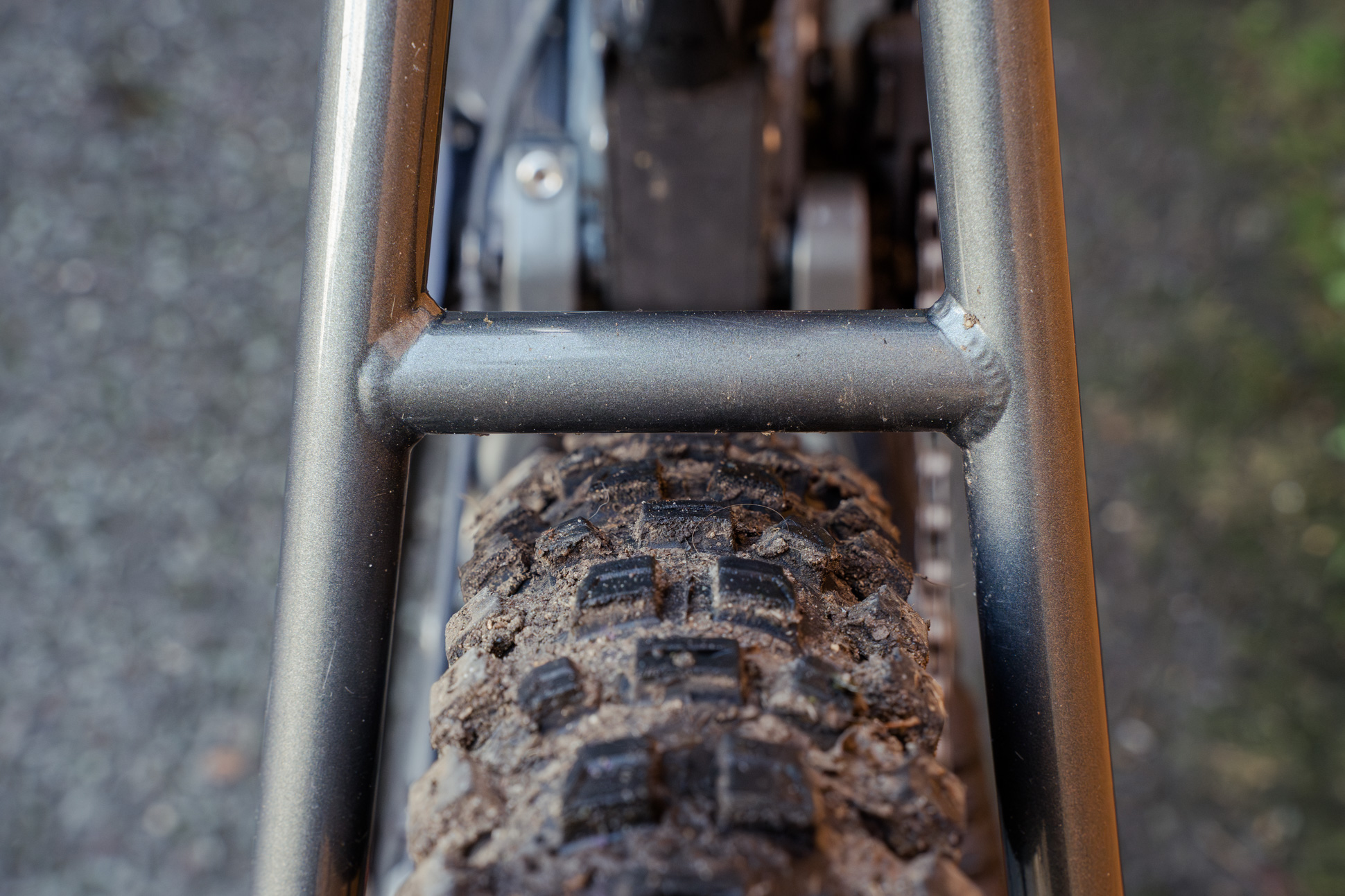
And it is absolutely because of its steel tube fabrication that it rides the fantastic way it does. Going from the Rocket back to other ebikes is revelatory. All other eebs ride feel ‘dead’ – in a chassis sense – compared to the Rocket. I’ve aways been of the opinion that the down tube is the single most important tube on a bike in terms of dictating ride feel. The fact the the down tube of the Rocket is not a drainpipe-sized bit of metal or carbon is significant.
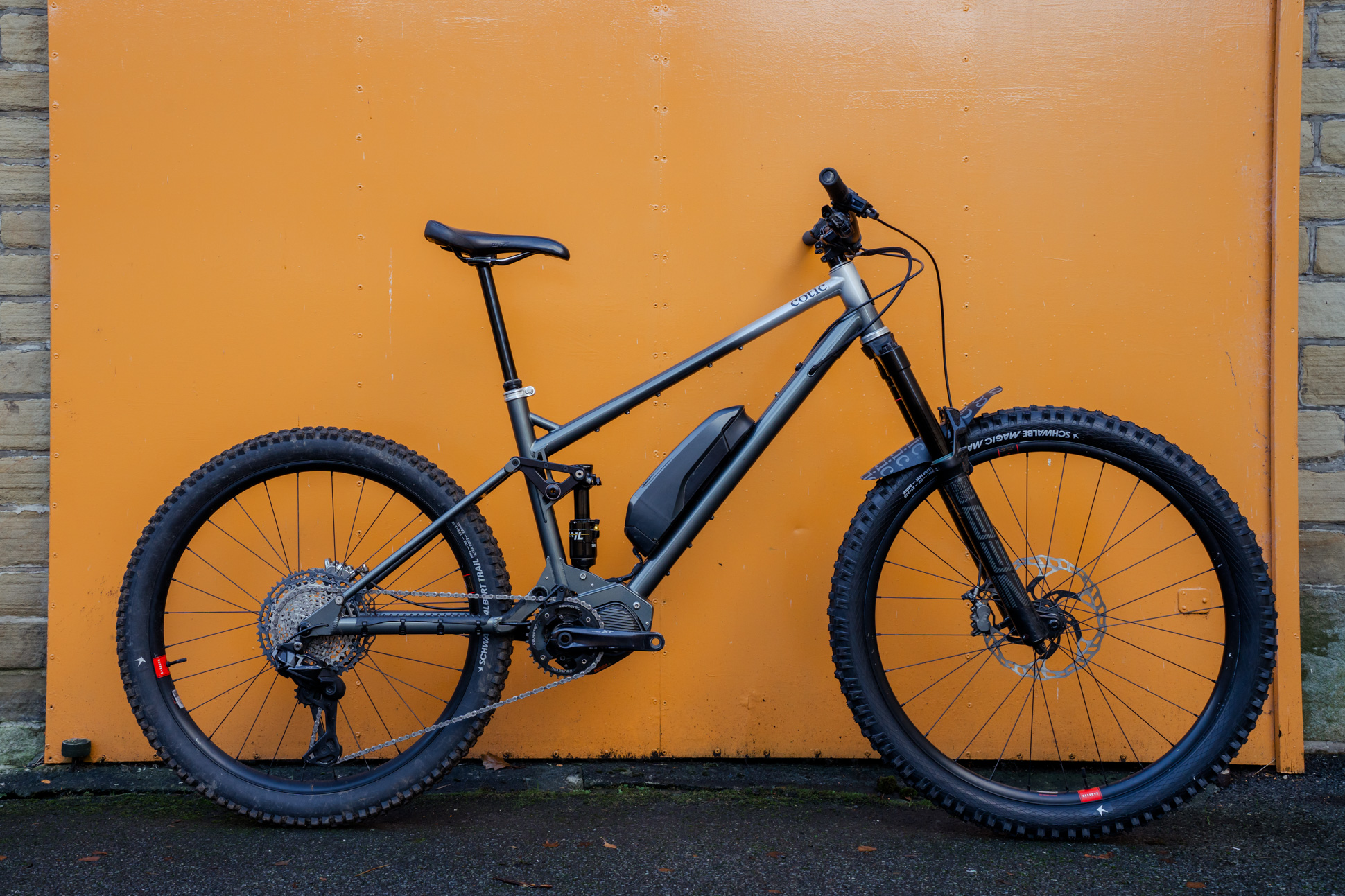
Anyone who’s been on any bike website with a story about the Cotic Rocket on it can’t fail to have noticed the haters. The main contentious aspect of the Rocket. That externally mounted battery.
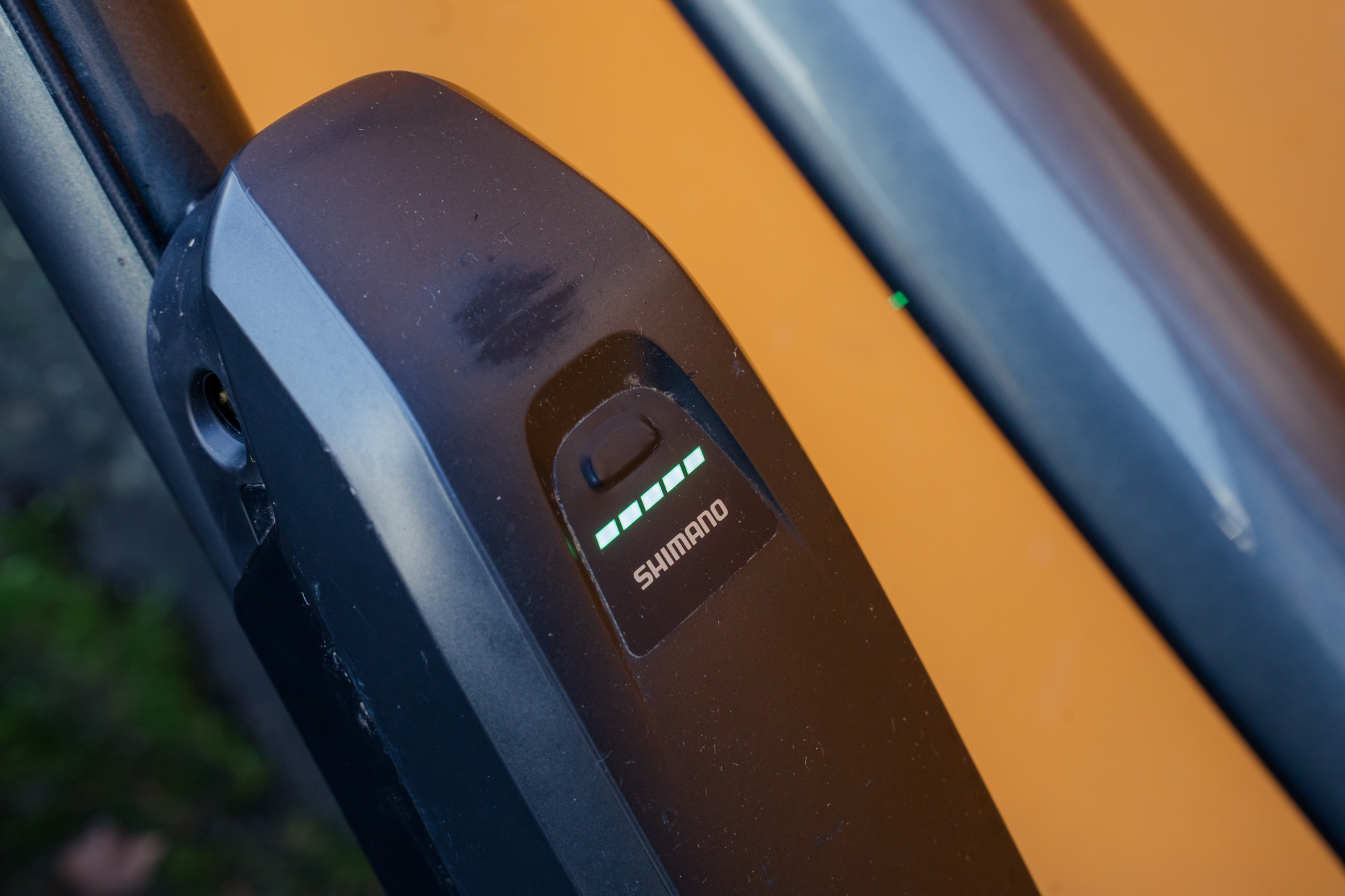
It is not an ‘old fashioned’ location for a battery. It is not a ‘cheaper’ location for a battery. It is not the ‘easiest’ location for a battery. Cotic has gone with an externally mounted battery because it is the best location. It is the best location from a flexibility point of view.
And I mean flexibility in every sense.
The easy-on easy-off nature of the external battery makes it possible to choose what battery to run (Cotic has 418Wh, 504Wh or 630Wh option). You have flexibility in terms of what weight-to-range ratio you wish to run. Run the lower capacity and have a considerably lighter bike. Or go all in with the 630Wh for big mileage days.
And not having a whacking great down tube means you can actually have some compliance in your frame. There is no point in a Cotic that doesn’t offer controlled chassis flex. Compliance is the whole flipping USP of the brand.
Aluminium e-bikes with internally mounted batteries housed in oversized down tubes are incredibly stiff. So are most carbon e-bikes with similar designs. Not all carbon ebikes, mind. Some are okay. But not everyone wants carbon fibre.
I’d actually say that having the external battery weight where it is on the Cotic Rocket is pretty much the ideal spot for it. A lot of brands may state that having the battery nearer the bottom bracket is beneficial as it’s “low and central” but I’ve not found that to be the case.
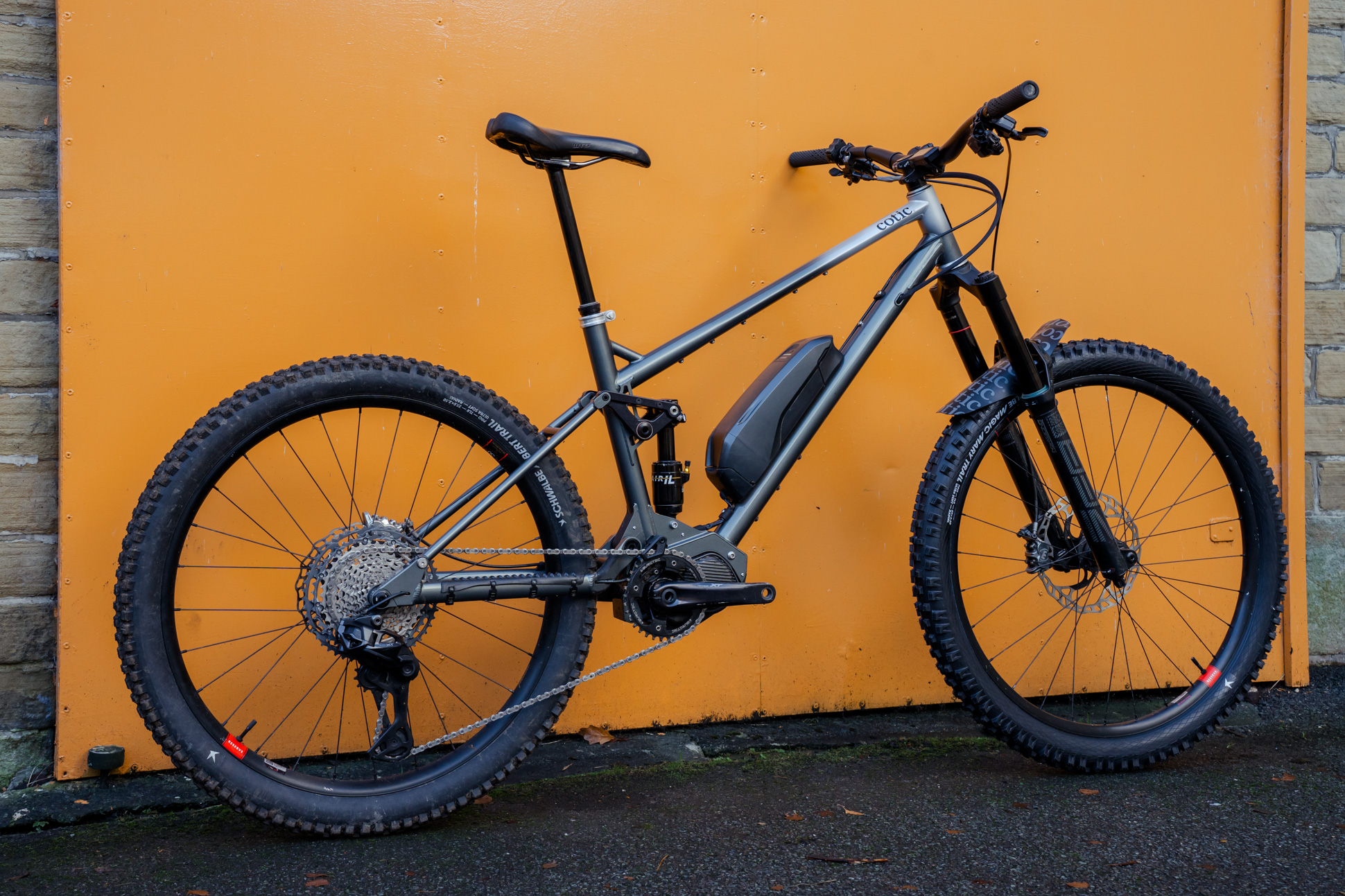
First of all, the BB is not the centre of the bike (the centre of the wheelbase is the centre of the bike). And secondly, low slung weight can make bikes handle worse; like you’ve got an anchor between your ankles. Having the battery weight basically at the midpoint between your feet (BB) and your hands (cockpit) is a good thing in my experience. It makes traction much more predictable and controllable and also improves the bike’s turn-in feel.
So yeah. I’m a big fan of the externally mounted battery. I have frequently bemoaned the move away from them.
Before we get on to the bike handling stuff, let’s go in to the motorspeak. The Shimano EP801 should probably have been given a whole new number name. It is not the same as the previous EP8. It has the same headline power numbers (85Nm of torque, 600 watts peak power) but it’s quieter both when delivering power and when coasting (there’s minimal rattle). Anecdotally the EP801 is way more reliable too.
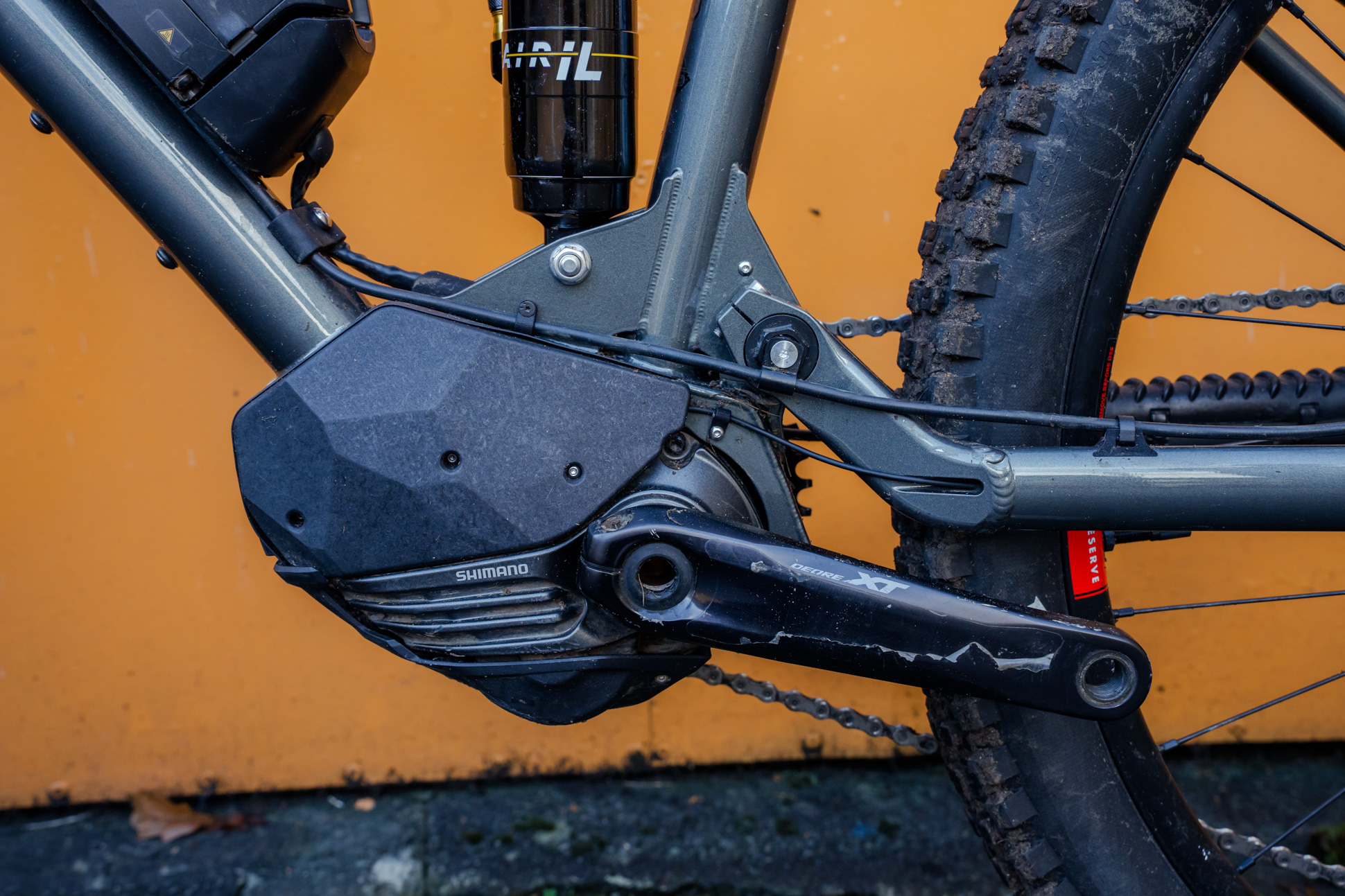
One thing that really stands out about Shimano motors is their fuel economy. For the same capacity battery and same Nm/watts stats, we get more range out of a Shimano system than any other. Obviously, ‘your mileage may vary’ (as they say) depending on a whole swathe of variables but for us, Shimano are the rulers of range. The modest 504Wh battery is very possibly all most people will ever need.
I don’t think there’s any magic to this fuel economy. I think it’s just a by-product of Shimano motors not giving you maximum assist levels as eagerly/early as other motor brands do. You do get 85Nm/600w, just not as frequently as, say, with a Bosch motor. I haven’t yet ridden an EP801 with the new ‘Race’ firmware, which may make things a bit more Bosch-y (with an attendant loss in mpg too no doubt).
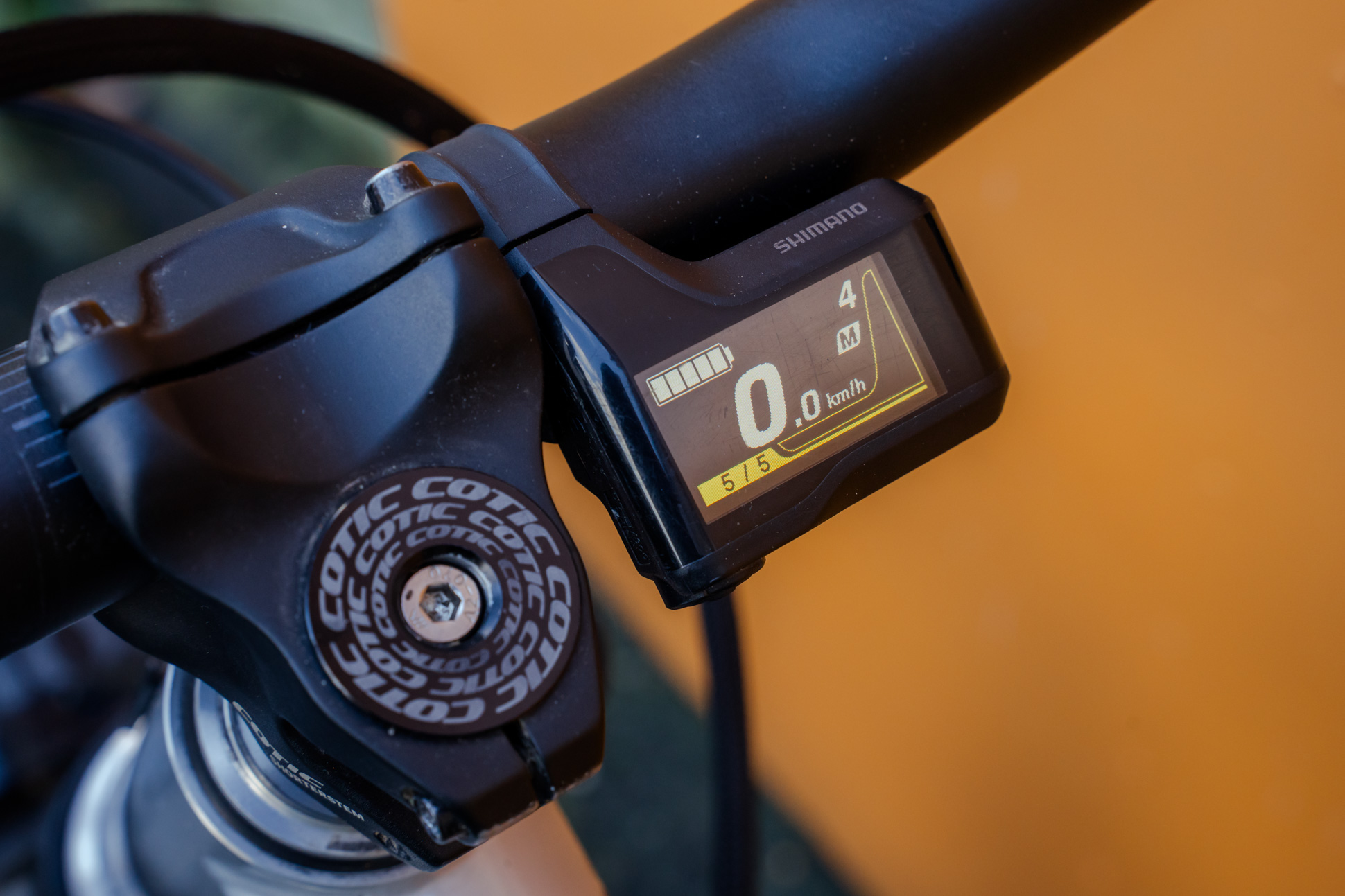
I like the Shimano bar remote. Simple, two-buttons. I kinda like the beside-the-stem display from a size and location point of view but I just wish the specced display would show the current time permanently (instead of defaulting back to current speed after a minute or two). The Shimano EN600 (I think) display with its customisable multiple screens would be a good option.
I will admit that I find the five-blocks battery level indication rather crude on the specced display. I also do wish that Shimano wouldn’t make the motor go into ‘limp mode’ quite so early in its battery depletion level.
On the whole though, I’m a big fan of the way Shimano motors feel. They feel much more like an extension of yourself, with no surprises, nor any underwhelming delivery.
The overall sensation of riding the Cotic Rocket was that it was very similar to the analogue Cotic RocketMAX but with even more calmness and grip. And more standover by virtue of the improved seatpost insertion from the revised rear suspension layout. Cotic’s Droplink suspension design has been… er, dropped. The new design (without a pivot passing through the seat tube and limiting dropper insertion) is called Rocklink.
The Rocket ducked and dived into all of the more challenging trails and pretty soon felt like the best bike I’d ever ridden, full stop. E or otherwise.
I rode the Rocket everything and anything. For most test rides I ran the 504Wh battery, with the motor in Boost mode, with mud tyres on front and rear. This setup was perfect for my standard 20km (700m climbing) local looping. Running a less OTT set-up (Trail mode and normal tyres) I could easily get over 1,000m of climbing out of the battery. It’s worth mentioning that ground conditions – and tyre dragginess – have a significant effect on an e-bike’s range.
I did also get hold of an additional battery (630Wh). This gave approximately 20% more range than the 504Wh battery. And due to the easy-swap nature of the Rocket’s battery location, it is possible to do some huge rides using both batteries. Either by circling back to the start point to swap batteries, or carrying one in a backpack. Without being overly cagey with the support modes (ie. keeping it to Trail with occasional Boost-ings) you can do 2,000+ metres of climbing.
Overall
In terms of what matters, the Cotic Rocket is a total winner. Great geometry – the best geometry from Cotic so far in my opinion. An impressively retained classic Cotic chassis feel. Super suspension. Good motor. Excellent range. Impressive overall weight for a capable full power eMTB (21.7kg for a larger size bike). Oh yes, it ain’t cheap. But that is literally the price you pay for getting things made in the UK. Regardless, the Cotic Rocket was easily the best eMTB of the past 12 months.
Cotic Rocket specification
- Frame // Reynolds 853 steel w/ alloy chain stays, 150mm
- Shock // Cane Creek DB Air IL G2, 185x55mm Trunnion
- Fork // Rock Shox Lyrik w/ custom damper, 160mm
- Wheels // Reserve Alloy MX
- Front tyre // Various
- Rear tyre // Various
- Chainset // Shimano
- Drivetrain // Shimano XT Di2
- Brakes // Magura MT7 Pro, 203/203mm
- Stem // Cotic SHORTERSTEM, 35mm, 35mm
- Bars // Cotic Calver
- Grips // Cotic Lock-on
- Seatpost // One-Up V3 Dropper
- Saddle // WTB
- Motor // Shimano EP801, 85Nm
- Battery // 504Wh (and 630Wh)
- Size tested // C5
- Sizes available // C1, C2, C3, C4, C5
- Weight // 21.7kg (504Wh battery)
Geometry of our size C4
- Head angle // 64°
- Effective seat angle // 76.5°
- Seat tube length // 450mm
- Head tube length // 130mm
- Effective top tube // 654mm
- BB height // 36mm BB drop (from front wheel)
- Reach // 495mm
- Chainstay // 456mm
- Wheelbase // 1,306mm


[opens the popcorn]
YES! Thank you Benji. I was tearing up reading that.