Barney Marsh looks into the tightly-knit British bicycle trials scene and asks if Danny MacAskill helped nearly kill it off.
Words Barney Photos as credited
Hey, this feature looks even better when viewed via Pocketmags; you get the full graphic designed layout on your device FOR FREE! It’s not quite as beautiful as the paper magazine but it’s better than a basic webpage.
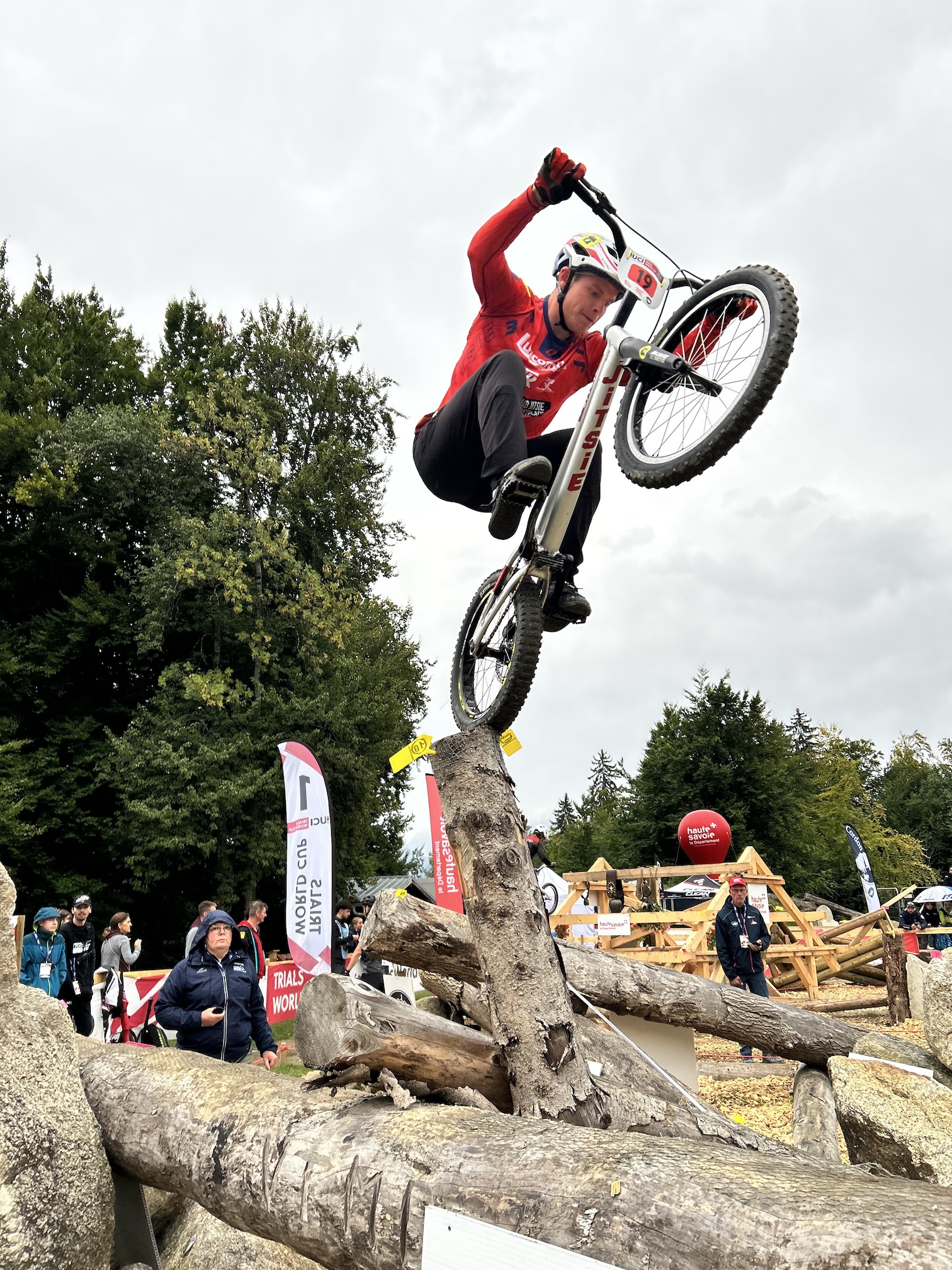
This was originally going to be an article about the Decline of Trials (with deliberate, portentous capitalisation) as a thing. It was going to document what I saw as the sport’s rise along with mountain biking and its slow and inexorable decline, before pontificating about what we could do to bring trials back into our warm embrace. And yes, all of these things are touched upon. But the more I delved into things, the more complicated it became. And maybe, just maybe, trials doesn’t want, or need rescuing…
So, what is Trials?
In the minds of the common idiot (i.e. me), ‘trials’ these days principally brings to mind an image of Danny MacAkrigg or someone riding a mountain bike (possibly electric) along a slack line between the towers of Notre Dame or somewhere, before daintily hopping onto a gym ball in the Louvre. This is, it turns out, not entirely accurate.
Wikipedia has a definition of ‘Mountain Bike Trials’ thus: “A discipline of mountain biking in which the rider attempts to pass through an obstacle course without setting foot to ground.” Very much like motorcycle trials, as made famous back in the (OK, OK, ‘my’ day) by that glorious, much-missed TV show Kick Start. Indeed, Wikipedia goes on to suggest that the mountain bike version was derived from motorcycle trials and originated in Catalonia in Spain, rather than developing as an offshoot of mountain biking trials developed in Europe, arguably a few years before Gary Fisher and pals in California thought to chuck a few bikes in our vague direction.
Robin Morewood, long-time trials rider, a director of the Biketrial Federation UK, and the father of Adam Morewood, one of the world’s top trials riders, concurs:
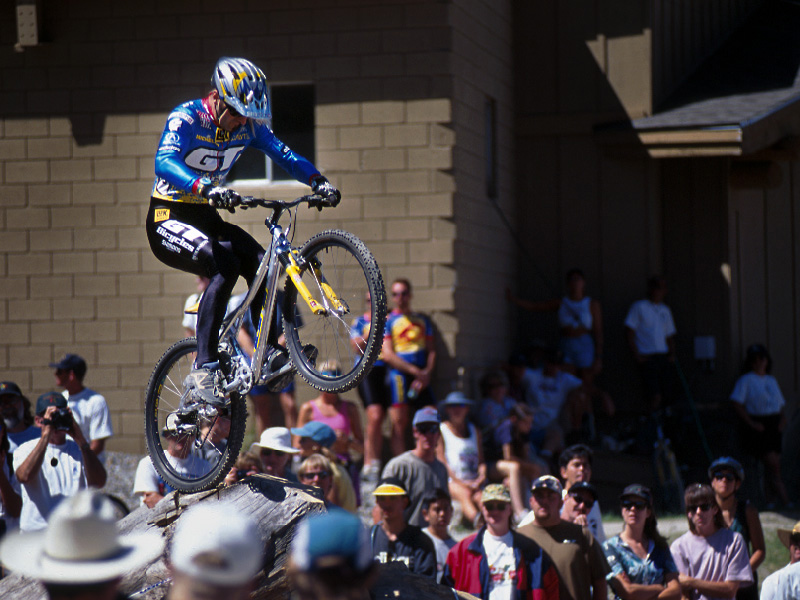
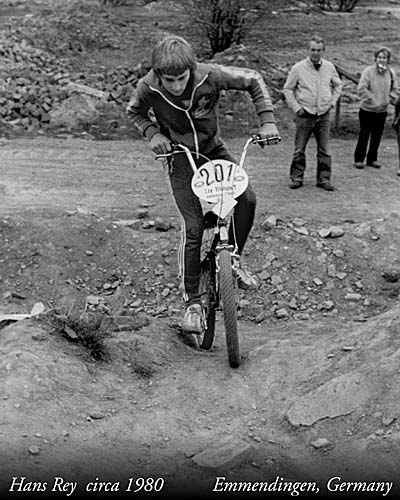
“A former Montesa motorbike trials rider, Pere Pi, built a bicycle for his son, and Montesa started selling them. They were the first company that did a trials bicycle. And it was based on BMX, really. They started to get imported into the UK about 1980, I think, and a few motorbike clubs started to run competitions for the kids. And you could only do it if you were a kid – if you were 17, you couldn’t do it! So this was independent of mountain biking. I remember going to a European trial in Belgium, probably ’84. Hans Rey was riding – this was just before he decided to move to the States. He went on a 20in bike to the States, but ended up with GT and mountain bikes, and then it all sort of kicked off.”
It’s kicking off
And kick off it did. As Hans Rey himself (a man who I suspect needs no introduction, but pioneer Freeride and Trials rider; German, Swiss, USA National Champion; NORBA and UCI World Champion; X-Games medallist; TV star and early content creation pioneer doesn’t really begin to cover it) told me, it was – at least in part – in response to brands realising that racing was only a tiny aspect of what people got up to on mountain bikes:
“In the mid-nineties, [bike companies] started to realise that a lot of the people who bought a mountain bike were not necessarily racing them, so people wanted to promote that fun factor. People started to get into technical riding – the trials guys were good for that – and videos like Dirty Tricks and Cunning Stunts or my Monkey See, Monkey Do, became bibles for trials long before the internet.”
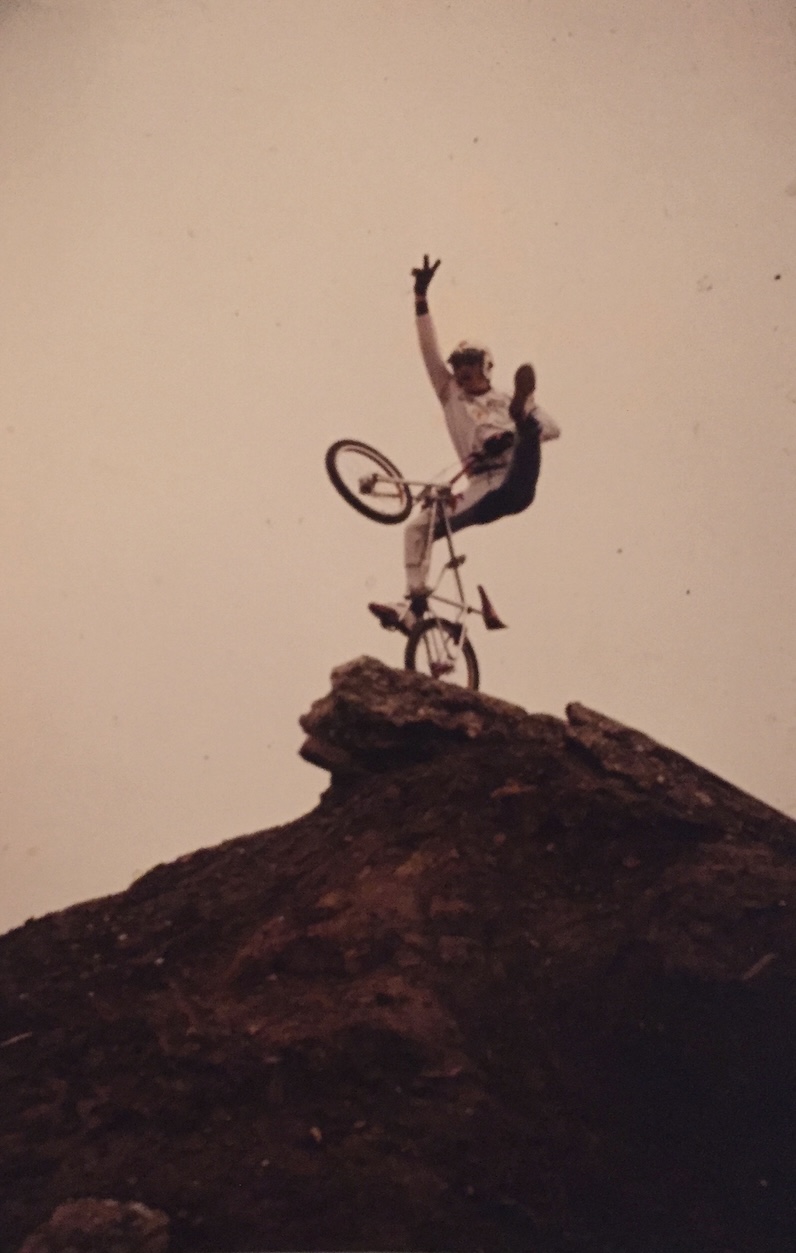
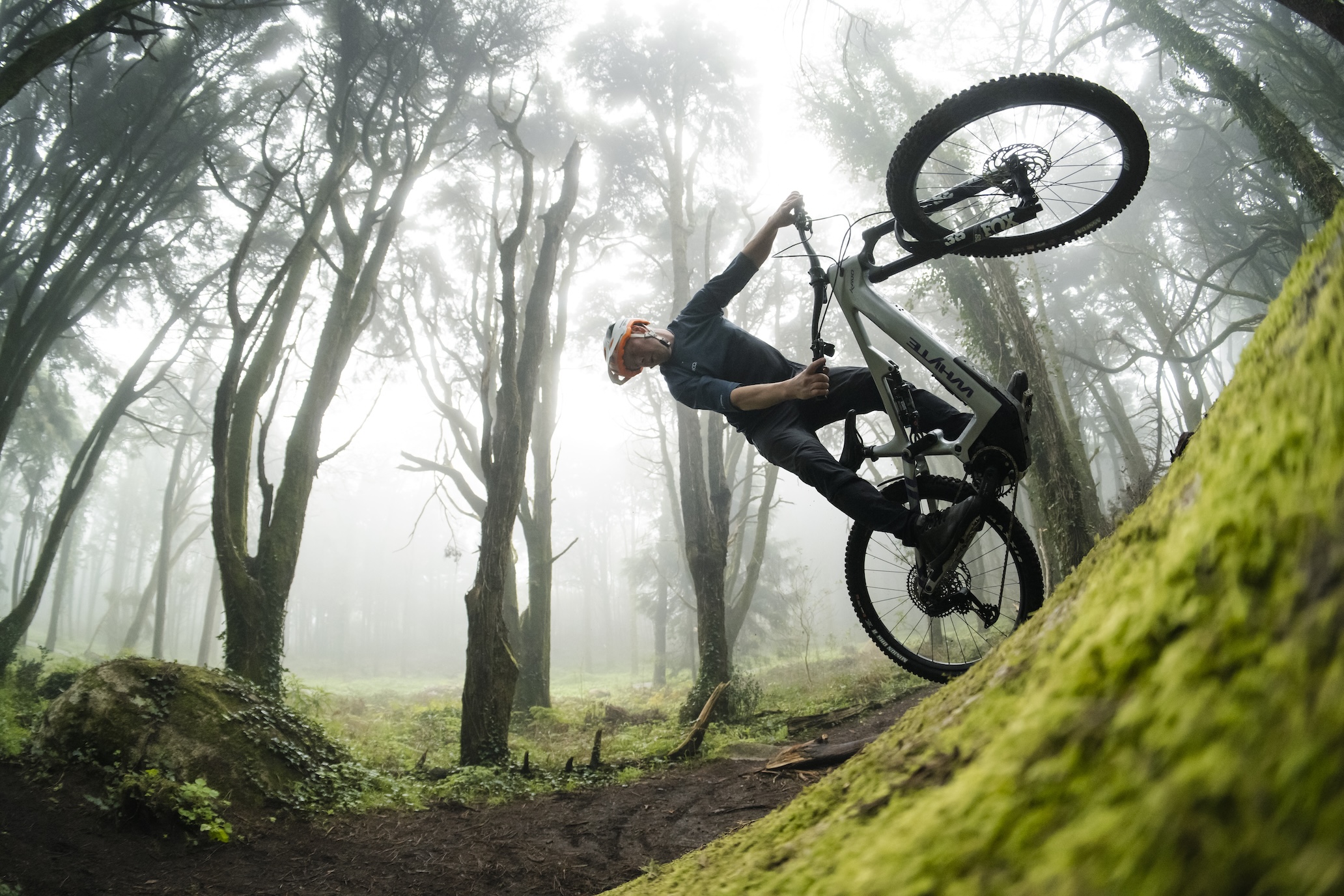
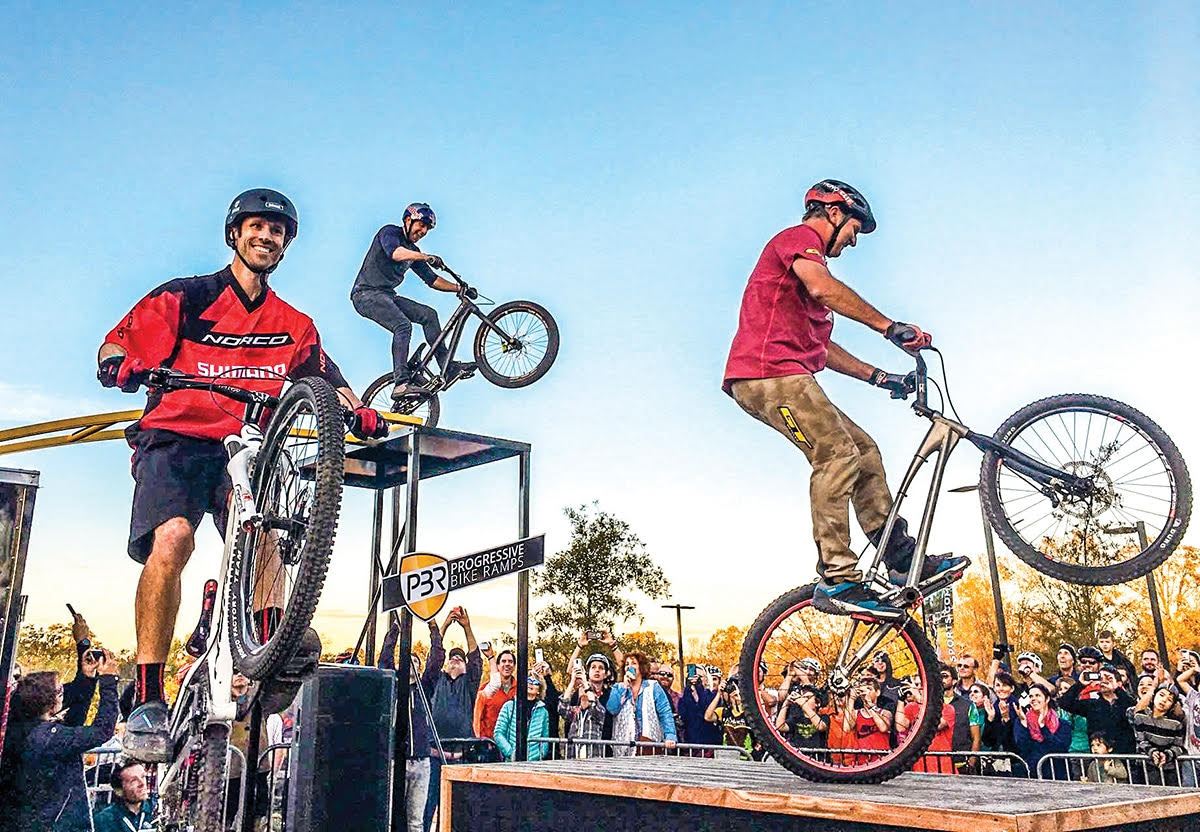
These days, alongside first-person shred videos and crash compilations, my feed is filled with videos of Danny MacAskill, Chris Akrigg and a host of other ridiculously talented types, hopping and skipping about on bikes that have no business being hopped and skipped about on. Walls are ridden up; trees are ridden down. The wrong number of wheels (anything less than two) is usually involved. Ridiculous precision meets astonishing skill in beautifully edited and shot, and frankly insane displays of physics-defying human dexterity.
And these videos are very, very popular, to the point that many of them are familiar to non-biking households. Danny MacAskill’s website claims 500 million views of his videos on YouTube alone. Chris Akrigg’s videos, too, have multiple millions of views. There are others. Hans, of course. Fabio Wibmer. Jack Carthy. And yet…
So, where is it all hiding?
I do consider myself relatively bikey. It’s not the only thing I’m passionate about, but it’s right up there. I ride several times a week, more if I can. Mountain biking of a variety of stripes, a bit of gravel, a smattering of road and some cargo-bike commuting. Heck, I even write articles about it. My social media feed is heavy on the bike stuff – but until I started researching this article, it was somewhat light on trials. Why? Is it simply the algorithm? Is it considered by our Robot Overlords not to be a part of the bike world I’m substantially immersed in? I’ve certainly seen a welcome uptick in trials videos on my Facebook and Instagram feeds recently, but a quick search of the internet doesn’t imply that there are competition trials meets around the country every weekend. What I’ve gathered is that there is a small, dedicated contingent of riders keeping the dream alive. But why isn’t it more visible? I don’t see kids in the local park practising trials to nearly the same extent that I see them in the local woods ripping the trails. Is it just me?
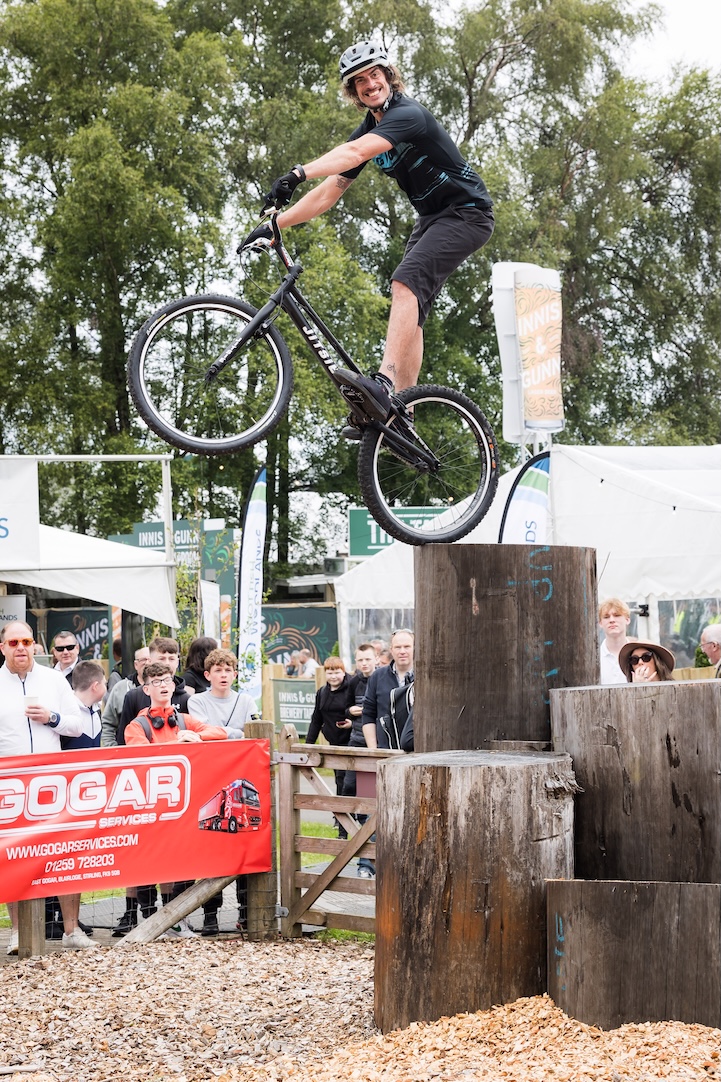
Well, as you might expect, it’s complicated
Let’s talk organisations. We’ll start with the UCI, the world’s governing body for cycling: trials on man-made features is a recognised UCI sport. Hurrah! But there’s another competing trials organisation, the longstanding Biketrial International Union or BIU, which operates a different rules and scoring system on more ‘natural’ features; it’s originally derived from a motorcycle trials background. The UCI started to ramp up its involvement around the turn of the millennium, and the rivalry between the UCI and BIU is such that the UCI has threatened riders, regardless of age, with fines if they hold a UCI licence and take part in the BIU competitions.
“There’s a UCI rule which states that, by having the UCI licence, you can’t do unauthorised events”, explains Robin. “I think it’s written more to protect against huge moneyed sponsors setting up rival series or even a pro road-racing series or something like taking off all the riders, with loads of money.”
And, of course, the long-standing BIU bears the brunt of this, despite hardly having Red Bull levels of cash to throw around. And then there’s the Biketrials Federation UK, which runs different competitions under both UCI and BIU rules as well as the National Trials Cup, which somewhat confusingly uses both, depending on what class you enter. But British Cycling doesn’t really want to know, presumably as trials in any of its forms isn’t a recognised Olympic sport (and British Cycling does love its Olympic medals).
Follow the (lack of) money…
“If you look at mountain biking as a whole”, says Robin, “BC puts money into cross-country, but they don’t put money into downhill or enduro. The moment BMX Freestyle went to the Olympics, suddenly there’s a team, and they get a salary, and they’re fully paid for.
“The UCI World Championship – they call it the Urban Games – has BMX Freestyle, BMX Flatland and Trials, all at the same venue over a week. 2024’s contest was in Abu Dhabi; I was the trials team manager, totally independent of British Cycling. All the riders got was a riding shirt to compete in. I got a polo shirt, and that was it. The BMXers had flights and accommodation paid for, a salary, a coach and a physio.
“And yet, in Abu Dhabi in the 26in category, we had a full British one, two, three podium and Daisy Craig is the Women’s Under 13 World Champion, but we got nothing. Jack Carthy, the 26in Trials World Champion, has been the World Champion ten times now [his Instagram feed pegs it at twelve – Ed]. And I think it’s [the lack of BC interest] purely down to trials not being in the Olympics, so there’s no Lottery funding, and all the other sponsors just want the Olympics.”
Don’t be sizeist
Robin mentioned the ‘26in category’ – let’s talk a little about that, as Competition Trials isn’t just ‘Competition Trials’. The UCI has two categories: 20in (also known as ‘modified’) and 26in (known as ‘stock’). In the dim and distant past, these might have resembled BMX and mountain bikes respectively, but in the modern era, things are really rather different.
Ali Clarkson is a Yorkshire-bred, Scotland-based trials rider, who rides stock trials – he was the first 26in rider to get into a UCI final, he’s been Expert British Champion, 2nd in Elite in the British Champs among many others, and has toured the world with Danny MacAskill’s Drop and Roll tour.
“My first year of competition [in the late 1990s] was on an 18in GT Avalanche cross-country bike. But as time went on, bikes became a bit more specialised though they still looked like bikes: saddles, gears – for competitions, we had to have at least six working gears for quite a long time. And around the time the UCI started to get more involved, competition bikes started to really go down a separate route – people discovered that higher bottom brackets and longer stems worked better, and street trials branched off.
“I do competitions on my street bike, which isn’t ideal. It’s a relatively short bike with a shorter wheelbase than a competition bike. And actually, the short wheelbase is one of the more compromising aspects. The longer the bike, the more you can fit up onto things and it generally works a bit better.”
Of course, those with half an eye will notice that the modern trials bike (whatever the wheel size) looks nothing like the modern mountain bike. In fact, their attributes have markedly diverged. The last ten years of mountain bike evolution don’t apply to trials at all. No saddle, low, low top tubes (why bother when you never sit down and it just gets in the way?), not to mention those stems and bars.
“The lower, slacker thing is completely the opposite for trials”, says Ali. “We’ve gone steeper at 74.5° head angles now. On competition bikes, the bottom bracket height is like 70mm above the axles. I struggle to ride modern competition bikes, and I’ve been a trials rider for 28 years! The more ‘streety’ bike that I ride now looks more like a bike – it’s a Story Continue, which is a Chinese brand kind of fresh into the West.”
It’s all rather confusing for a Luddite like me. On street bikes, at least, there’s a certain amount of crossover with more traditional mountain biking – Ali uses mountain bike brakes, mountain bike tyres and mountain bike cranks. And although the rims are only 26in – not exactly standard on many mountain bikes these days – they’re not trials-specific. So Ali’s street bike shares some similarities with mountain bikes – at least, the way mountain bikes used to be.
Going underground
And street is an aspect of trials which, to many, is thriving. Perhaps this is thanks, in part, to the viral videos we see so many of online – or perhaps they only exist thanks to a thriving underground scene that feeds them.
“Street trials is bigger than competition trials, I’d say”, says Ali. “Although you don’t really get many competition riders riding street, and you don’t get many street riders riding competition.
Hans agrees: “We just have all these different subcultures, and a lot of them combined represent trials as something substantial. For example, we have these competitions, and yes, they’re scattered, and there might be only one National Championship a year and then a few local events and some backyard champs – but then there are these meets where riders meet up and they do an urban session: there could be 100 guys meeting up in London some weekends.”
So we have a small, doughty competition scene – at which the UK seems to be punching above its weight to a spectacular degree. We have a thriving street scene, which has diverged from competition to the point that they’re relatively mutually exclusive.
Great Scott!
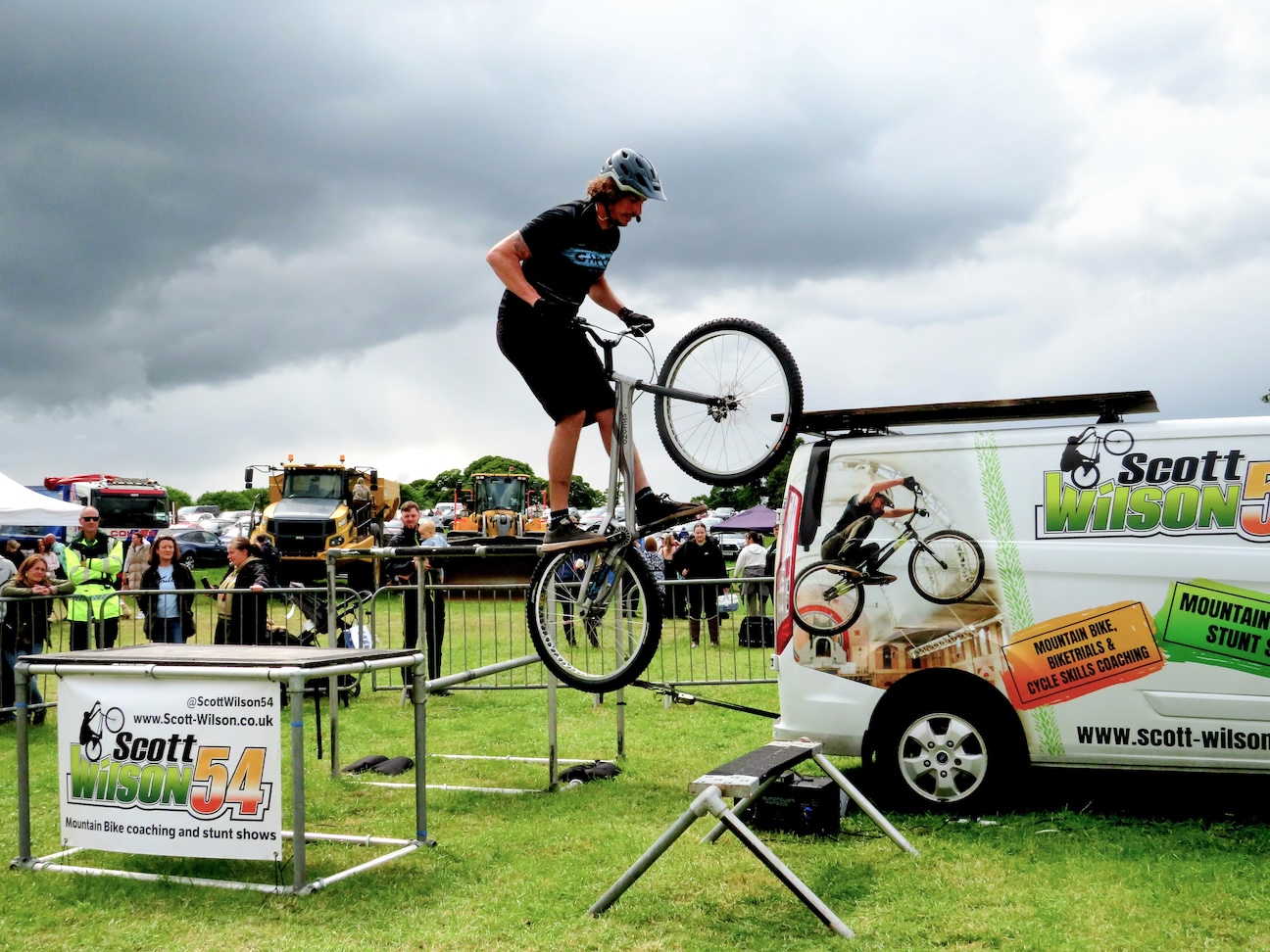
Scott Wilson has over a quarter of a century of trials experience. Coming from a motorbike background, he has amassed palmares including World, European and seven British championship titles, as well as performing at shows around the world (and in the 2018 Mary Poppins Returns movie). He’s also a mountain bike skills coach and an enduro racer – so he’s got toes in both oceans, if that doesn’t sound too anatomically unlikely.
“I think it is great that street trials is such a big thing now: you get a lot of riders who want to have fun, but they don’t want to do the competitions. Whereas in the old days, that’s all there was. So they’d go to a competition and be a bit miserable, whereas now they can go out and do street, and they can make edits. It’s two separate worlds really, but I still think it’s an overall positive.”
A lot of the techniques that we see on the video edits, of course, look amazing on camera – but they’re not necessarily applicable to competition in any case, as Robin explains:
“It’s not about getting through this obstacle in two minutes without putting your feet on the floor! They do some big manoeuvres, and they make it look stylish with a tailwhip or a backflip. A lot of pure trials riders say that the stuff Danny MacAskill does is a mixture of BMX and trials.
“He is fantastic at what he does, but it’s different. You get the same with mountain biking. There are those who specialise in competitions; you know, absolute fitness and everything else, and there are those who just go and enjoy themselves and ride the local trails – and that’s what the majority of people do, I think.”
So is the future of trials on the street? Was it ever thus? How can we tempt more people into the sport? It seems obvious that mountain biking has a vast potential pool of riders to lure into the joys of trials, whether it’s street trials (perhaps a natural entry point for mountain bikers) or competition. Here’s Scott again:
“From my experience, when I’ve been skills coaching, people will ask how they can learn a given technique – and I’ll explain that it’s from trials, and I can try to persuade them to give it a try, and perhaps they will. But in terms of building it up, I think we need a lot more standalone events.
“One thing I’d love to try is based on the motorcycle Scott Trial, which is basically one massive, five or six-hour loop with lots of different sections, but it’s marked on both time and observation, so once the first rider’s back, you have a cut-off time. I think that could be something really good to do.”
Dare we mention it?
And, of course, ebikes provide a clear avenue for growth. Not only are they the fastest growing segment of mountain biking, but the power on offer also offers increased parallels to the techniques favoured by motorcycle trials riders.
“Trying something like that on an ebike would be great”, Scott opines, “with a simple trials section, but there’s a bit of speed needed to run into it, and then a fast bit, another couple of little streams or another trial section and then do an enduro section – I think we’ve got to integrate it into mountain biking; bring it more into a sort of potentially compatible culture.”
Hans Rey has a similar idea, which streamlines the trials aspect to make it a little more easily digestible and mixes it in with more traditional mountain bike competitive elements.
“I came up with an event called Skills”, he says. “It’s kind of an ebike trials event, with very simplified rules – it’s not just hopping on the ebikes. It’s more pedalling – doing technical, challenging uphills and downhills. You’d ride these sections, but as soon as you have the first mistake, you get as many points – you’re earning points in this, you don’t get points deducted [like in typical BIU trials competitions – Ed]. So there’s a two-point gate, a five-point gate, and if you make it all the way to the end, you get ten points. But as soon as you have the first mistake, that’s it, you get as many points as far as you’ve gotten.
“These tracks could be permanent, almost like golf courses, where people can challenge themselves or each other. And there’d be some multiple choice sections too, where you pick a line: the two-point line, the five or the ten, and if you make it through, you get those points.
“I’ve been talking about this concept for five or six years. I finally did a little test event in Germany and everybody loved it!”
Like that, only slower and clumsier…
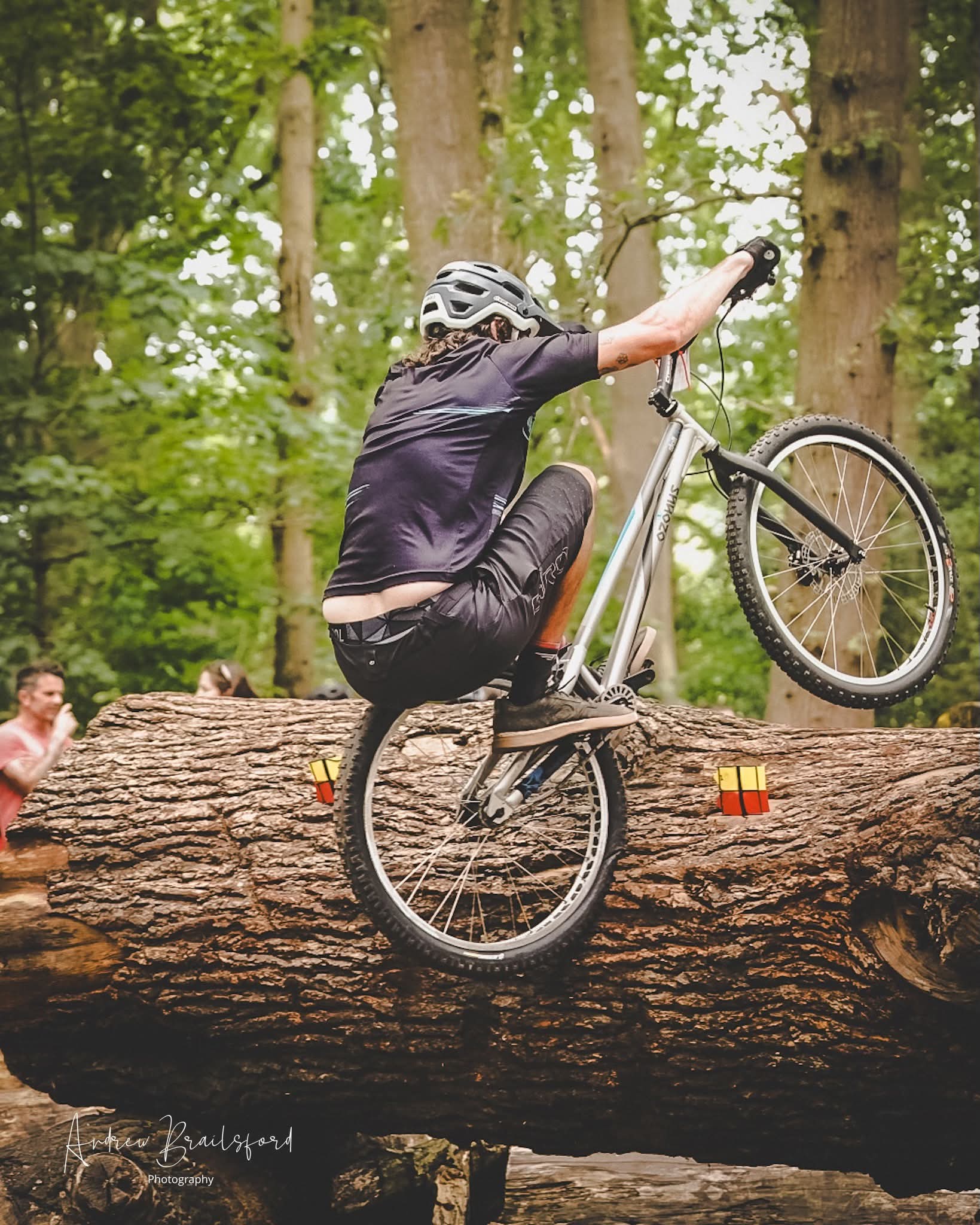
Hans brings up another point about modern competition trials, which is the potential cultural disconnect. It’s possible for many readers to see someone riding an unbelievable downhill or enduro track at colossal speed, for example, to imagine themselves riding the same thing – albeit at a far slower (in my case), or clumsier (ditto) or less airborne (hello, again) manner. But the superlatives levelled at trials riders almost defy categorisation. I can’t even imagine myself riding some of that stuff, regardless of the speed I’d do it at, or (to be frank) the number of mattresses I’d have to line the floor with to avoid serious injury.
“I think a lot of people are turned off by all the hopping”, says Hans. “Maybe we can find a format that simplifies the rules – as much as it’s impressive to watch these trials guys ride up an eight-foot wall and land on a little inch-wide ledge and stuff, it’s not something that people watching go like ‘Wow, I want to do that’.”
It is, perhaps, a cultural thing, this reticence. Mountain biking culture – and the brands themselves perhaps, in their relentless drive to sell us the latest things – have railroaded us down a particular avenue of bike design which favours one type of riding over another – certainly, modern bikes, as amazing as they are, aren’t exactly as nimble as older models, even if some luminaries in the trials world are showing that the increased on-tap power of ebikes can ameliorate a lot of the issues that trials has with modern geometry. Along with scads of talent, that is.
Hope for the hoppers?
But apparently, in some other countries – particularly Spain, the birthplace (if you recall) of mountain bike trials, there are far fewer cultural roadblocks.
“If we go to Barcelona”, says Robin, “we can visit ten bike parks within half an hour of each other, specifically built for trials. A lot of towns have trials areas, and there are clubs, and once a week they’ll run a trials school, and the kids come and they ride and they’ve all got a trials school jersey on. You go to a regional competition in Spain, and they’ll have 250 riders. In the UK, even at a British Championship with all the competition riders, we’ll get 50.”
So globally – or at least, in Europe – trials seems to be far from dying. The competition and street aspects seem to be really rather different – and mutually exclusive – but there is scope, capacity and desire to integrate trials more into an established mountain bike milieu. Modern mountain bike geometry, wheelbase and wheel sizes are never going to ingratiate themselves into traditional trials spheres, but, especially with the rocketing appeal of enduro in general and ebikes in particular, there’s definitely scope to include more trials-y sections in events. And with spectacular videos dropping online on a regular basis, maybe with a subtle cultural shift, there’ll be a few more people looking at them and fancying a go. We can only hope.

Go on then I’ll kick it off.
Trials just looks crap. Sorry.
In the late 90’s I was a teenager reading MBUK watching the Martin’s and Hans Rey do tricks on MTB’s and I thought it was the best. I lived miles away from any actual off-road riding so when I went exploring the urban wastelands, trials riding was the first thing I tried to do. On an undersized XC bike which broke all the time.
Then I switched from MBUK to Ride and Dig, saw Road Fools, and it was game over for hopping around on a spindly, fragile bike. BMX was, and continues to be, a million times cooler than trials.
Competition trials is even worse. Pogoing around on a bike that looks like a broomstick. I know it’s skilful and difficult but so is figure skating and I don’t watch that either.
I love what Akrigg and MacAskill do but it’s not something I’d ever try to emulate. They’re basically aliens which as you say makes them unrelatable to viewers.
Got to agree. A trials vid appeared on Pinkbike yesterday and I watched the first few mins. Impressive? Yes for about 20 seconds. Huge amount of skill? Yes. But writing a computer programme or rewiring a house takes a huge amount of skill too and they’re about as spectator friendly as trials is.
Plus the bikes are weird. Its on a level with bike football or those people who dance on bikes. Its basically just a circus act.
Big fan of trials, have been trying to learn the skills for the past seven years, I’m now fifty.
Glad to see it get some coverage on Singeltrack World. It’s too often an overlooked niche of mountain biking – I guess because of attitudes like those above.
To the above posters, if you have Instagram, watch the following post from scottish_bike_trial_official, featuring Ali Clarkson, I think it’s a more mountain-bike-like aspect to the sport. Do you find that better than the UCI style trials competitions?
Before I started watching Ali Clarkson on Youtube, I had the same dismissive attitude to trials as the posters above. It can take time to learn to appreciate, and trying to learn those skills helps.
The UK trials team have a really good presence in the world Championships right now, with Charlie Rolls winning a world champion title recently, and of course Jack Carthy with multiple titles under his belt. Oliver Weightman has also been featuring on the podium recently too, in fact we had an all-British podium recently with Carth, Rolls, and Weightman in 1st, 2nd, and 3rd respectively!
I’m not being dismissive of trials, I’ve been well aware of it for over 30 years and I started my formative years in MTB as a wannabe trials rider. I actually got quite good at it. My bunnyhops maxed out at a measured 38 inches but I could hop onto much bigger obstacles. I could do those 180 endo to 180 pull around things off big drops. I removed a few headtubes from old GT’s and Kona’s by doing drops to flat off garages and bus shelters. I still look out for a Pashley 26mhz on eBay.
Then I encountered BMX and was seduced by the entire culture. The mad, bad, dangerous people, the insane riding, the music, the style, everything. Trials has none of that. It’s got people in branded outfits doing back hops on logs.
The article is about the status of trials and asking why it’s not more popular so I’m not trying to be critical for the sake of it. I’m trying to remember what it was like to be an impressionable youth looking for something to latch onto and be obsessed with. Trials has nothing to offer but slowly hopping around on goofy looking bikes. It’s really no surprise that it’s gone underground.
I enjoy watching Ali, Danny and the others doing Street Trials but Competition stuff is cool to watch for 5 minutes but it does get pretty dull. Which is sad because the guys and girls doing it are incredibly skillful.
I built a 26″ DJ Bike so I could muck about and practice some trials skills about 4 years ago. I think there are some really useful techniques and that lot’s of it transfers and makes me a better mountain biker: which is nice ;o)
I’m still crap at trials skills but I’ve realised that I don’t have the time to practice that I’d need to be any good.
That’s the biggest difference for me between then and now. I used to ride every night and all weekend in all weathers. Zero chance (or desire) to do that now but that’s how you get good at stuff. Charlie Rolls has his own farmyard with an expert level trials course in it.
I only ride my BMX on jumps once every 2 or 3 months and I’m stuck at a permanently low level of ability. Going fast on a track and boosting jumps at a low level is still more fun than clumsily hopping around on an ugly bike. In my humble opinion.
Just to be clear, the meaning of dismissive I’m using is: showing that you do not think something is worth considering.
These are your dismissive negative superficial comments about trials:
Trials just looks crap.
BMX was, and continues to be, a million times cooler than trials.
Competition trials is even worse. Pogoing around on a bike that looks like a broomstick.
I love what Akrigg and MacAskill do but it’s not something I’d ever try to emulate. They’re basically aliens
It’s got people in branded outfits doing back hops on logs.
Trials has nothing to offer but slowly hopping around on goofy looking bikes.
clumsily hopping around on an ugly bike
But what’s weirder than your misunderstanding of the word dismissive, is claiming to have ridden trials on a daily basis and reached a fairly accomplished level in your youth, before going on to say there’s trials has nothing to offer young people.
Everyone else is rightly ignoring you. Unfortunately I’m not that smart.
It’s not something I know anything about, but there’s a nice article up on the BBC website at the moment as we have a World Champion apparently.
https://www.bbc.co.uk/news/articles/cvgvz14zkjvo
https://www.bbc.co.uk/news/videos/czjpz9vkvzwo
I’ve watched the competitions in the past. With a semi-decent commentator, and getting to see a number of riders attempt the same thing, sometimes in different ways its great amusement. Also enjoy the creativity of the Clarkson and more mtb focused Macaskill videos.
No I’ve never tried a trials bike but given my frequent poor attempts at hopping about on my mtb I imagine the level of skill, strength and pracitse to get to the point of being able to do anything vaguely interesting yourself is discouragingly high – especially comparaed to the modern beginner friendly plug and play nature of trail centre mtbing.
Interesting to see other’s comments on BMX – I wasn’t into any of this growing up and came to mtb in my 20s. I thought the BMXers looked dorkiest of all the cyclist subgenres I was aware of (and a poor attempt at mimicing dirt jumpers/slopestylers in an urban/skate park environment), with the exception of the bike polo nerds who were definitely at the bottom of the pile.
I find it similar to flatland BMX – takes years of dedication to get to a good level and great to watch for a few minutes and then just very samey and unless you actively do it yourself I can see how anyone really stays interested in it.
I too appreciate the skills involved… but it’s about as far removed from “riding" as someone balancing a chair on their nose whilst juggling is (imho of course).
I actually tried to get in to motorcycle trials; going as far as having tuition, buying two bikes and all the kit. Same as above… it felt like something to pass the time rather than something exciting and fun.
With the benefit of age and having spent my life on two wheels, I now understand that, for me, the joy of being on two wheels* is in travelling through the landscape and scenery… not messing about in a quarry!
*that’s pretty much any two-wheeled device 🙂
I agree with the comment about trials and flatland bmx, ages to master but not fun to watch.
But trials could be different, but the bikes look god awful these days, where have the 26inch wheels and florescent hydraulics gone? The small wheeled, stretched out frames with no seat and two freewheels so doesnt even pedal nicely. I think Danny is doing great PR cos his bike at least looks normal.
Reminds me of the pic from the Olympics of the Turkish shooter with no gear versus the others with too much or mad techniques!
**** normal.