Firstly bit of background…..I’m a big Turner fan ever since getting a Horst-Link 5-Spot 6 years ago, so much so that my son’s middle name is Turner! I’m also a big fan of the DW Link, having bought an early Ibis Mojo, and I agree with the hype that it is the “best” suspension design out there for all the reasons that have been discussed at length on various forums. I sold the Mojo after about a year as the medium frame was a bit too small for me, and I’d already cracked 2 rear triangles, so when Turner adopted the DW Link I was first in the queue for a 5-Spot, which I’ve been running for over 18 months. However, when Ibis announced the HD, I was very keen to try it, to see if it offered the best of both. I therefore got my local Ibis dealer (Head for the Hills in Dorking) to get 2-Pure’s demo in ASAP!
Now to the comparison of the 5-Spot vs Mojo HD, and some observations vs a standard Mojo.
I chose an area of the Surrey Hills I knew well, and that contained a decent mix of trails, from twisty singletrack, steep stuff, and a short section of rocky downhill, as well as plenty of climbing. For those that know the area, I rode around the Judge’s Seat area for much of the test.
I started off on the 5-Spot (a large), which is set up with Float 36, a CCDB shock, Mavic SX wheels, and Rubber Queen 2.2” tyres, which weighs in at 30lbs. I rode for an hour to get the feel of the bike again, as I’ve recently been riding my hardtail rather than full suss.
I then switched over to the HD (a medium), which was set up with Talas 36, Fox RP23 shock, Crank Bros Iodine wheels, and RQ 2.2” tyres. I was a bit disappointed to weigh the bike also at 30lbs given the carbon construct, and the fact that the 5-Spot was running a coil shock. The HD frame is listed as being over 1/2lb lighter than the 5-Spot, so I guess there is scope to build it lighter, but it’s never going to be a major difference.
The first thing you notice is that the HD feels slightly more sprightly when setting off up a climb or picking up speed – it’s not a major difference, and after a short while the weight kicks in to remind you that you’re not on a lightweight flyer.
The second thing you notice is that the HD is not as plush over small hits such as tree roots. This could well be down to the coil on the 5-Spot – I did think about switching the 5-Spot back to an air can, but decided I wanted to test them both as I would usually ride them. Ibis and DW say the HD has been designed around an air can and don’t recommend a coil, but I do wonder what the HD would be like with a coil, especially one of the quality of the CCDB. Interestingly I think Lopes has been running a Mojo + coil recently.
Once picking up speed, the HD feels a bit more planted than the 5-Spot, whilst still feeling very flickable and agile. I think this comes from the bottom bracket being around ½” lower than the 5-Spot; wheelbase of both bikes is very similar.
Dropping into some steeper trails, the HD gives more confidence to carry greater speed into the corners and rail through them. The head angle is about 1.5deg slacker on the HD, and the front end over ½” lower, which combined means your weight is over the front more, and you find you’re on the power quicker out of the corners.
Through undulating twisty singletrack, both bikes pumped well through the dips, but the Mojo seemed able to maintain more speed – a characteristic I remember of the regular Mojo.
Dropping into a high-speed rocky descent, both bikes feel very controlled and solid. The HD doesn’t necessarily feel it has 20mm more in travel, but also the CCDB doesn’t shine through as much here, so perhaps the two were cancelling each other out.
After a couple of hours on the HD I then went back to the 5-Spot and rode for about 15 mins, just to confirm my thoughts. This emphasised something I’d felt all through the test, in that on the 5-Spot I felt I was sitting on the bike, whilst on the HD it felt I was sitting in the bike, which I generally prefer. This is undoubtedly due to the higher BB and front end of the Turner, and whilst this could be changed with shorter-travel forks, this would emphasis even more the difference in head angle.
It’s worth noting that despite the talk about being able to throw an HD down a downhill course, it doesn’t give you the confidence to hit jumps and drops the way something like an Intense Slopestyle or SX Trail does, so it’s no substitute for a playbike or downhill bike.
As a comparison to the standard Mojo, the weight makes itself obvious when sprinting and climbing, and it doesn’t feel as nimble flicking from side to side, but on the positive side, the slacker angles give you more confidence on steep and/or more technical terrain, although putting longer forks on a standard Mojo may get you some of the way there – that would be an interesting test.
So which is better? For me, the HD wins as tested above, despite the suspension not being as plush, as it’s a more confidence-inspiring bike that encourages more speed into most situations. Throw into the mix you could run it with 180mm forks, or swap out the link and shock to run the rear at 140mm / 68deg head angle, then you have a bike that is also more versatile. It’s a bit disappointing it isn’t that much lighter, but then you have the regular Mojo for that.
Is it worth the upgrade? I don’t know – I’m still pondering that. There are more and more bikes on the market at around the 150mm travel and slacker head angles, so I’m keen to see what else is out there. However, as a bike to cover so many bases, the HD pretty damn awesome; I can imagine running it at 140mm around Surrey Hills one minute, then at 160mm for a trip to the Lakes, then sticking some 180mm forks on it for a trip to the Alps. There aren’t many bikes that could do that, let alone be an awesome ride at the same time!
I'm not reading that
If it was my choice? The HD as the Turner Gops
HTH
I don't think you can compare these two fairly without running the same rear shock. The CCDB is very well regarded, but also well known for being a fiddle to setup right. Are you sure, on a demo bike, it was?
We had the HD demo bike in our shop a while back but never got the chance to ride it. I've ridden the SL and found it to be a very nice bike indeed and our shop has sold loads of SL's with the riders being the "all day" types picking it over the Yeti 575 which we are dealers for. Still waiting for my demo DW link Turner arrive(grrrr) so I can't comment on that bike yet.
I don't think you can compare these two fairly without running the same rear shock. The CCDB is very well regarded, but also well known for being a fiddle to setup right. Are you sure, on a demo bike, it was?
The 5-Spot is mine, with the CCDB set up with help directly from Cane Creek.
It's a fair point, but as I noted, I wanted to test the bikes as I would end up riding them. The 5-Spot is a better bike with a coil shock, whilst Ibis specifically say the HD is designed around and air can.
2011 spot will have a degree slacker headangle and head tube that would allow an integrated lower race to drop the front end a bit (i think)...don't trade in your homer status yet heihei!
why did you need cc to help set up the shock ?
why did you need cc to help set up the shock ?
I dropped CC an email asking what they recommended on the DW Spot as a starting point. Seems to work damn well so haven't changed it a great deal.
interesting to see that mbr this month have dissed the dw link in favour of the horst link.....
Wow, I've had two Horst link bikes and now own a dw link, I wouldn't go back.
Which bikes did they ride?
Just wait for the new Turner RFX!
Which bikes did they ride?
specialized perchance ?
(or are they actually objective these days?)
interesting to see that mbr this month have dissed the dw link in favour of the horst link.....
'mbr' and 'interesting' in the same sentence? surely some mistake, TLR?
😉
although putting longer forks on a standard Mojo may get you some of the way there – that would be an interesting test.
I had a standard Mojo on test over the weekend - it came with Fox 140 forks but for me I felt it was too steep even though its only .5 of a degree more than my Pace - on day 2 I fitted some Rev 150's which are only 15mm longer axle to crown but for me the bike was transformed - came out at 27lbs
These may sway your decision:
Ibis Mojo HD - Large
2010 Fox Talas 36 RC2 160mm
Chris King Inset Headset
Thomson X4 70mm Stem
Race Face Next SL Carbon Riser Handlebars
Elixir CR Brakes 180mm/160mm
Shimano XT Cranks 34/22 w/ MRP Partycrasher Lite Bashguard
Candy Pedals
Sram X0 Shifters
Shimano SLX Front Derailleur
SRAM X0 Rear Derailleur
SRAM PG990 Cassette 11-34
KS I950R Adjustable Seatpost with WTB Silverado Saddle
ODI Ruffian Grips
2.30 Specialized Chunder (Front) 2.35 Maxxis UST Higrollers (Rear)
Mavic 819's w/ Chris King Hubs
Comes in under 30lbs. Surprised me too, I was expecting it to be around 28lb.
[img]  [/img]
[img] 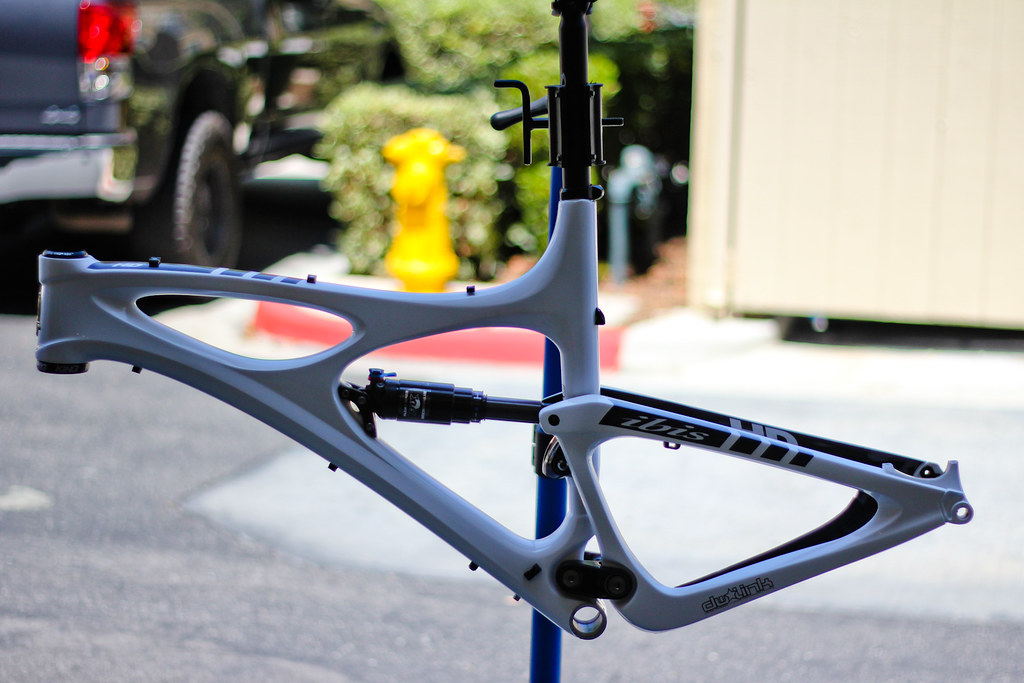 [/img]
[img] 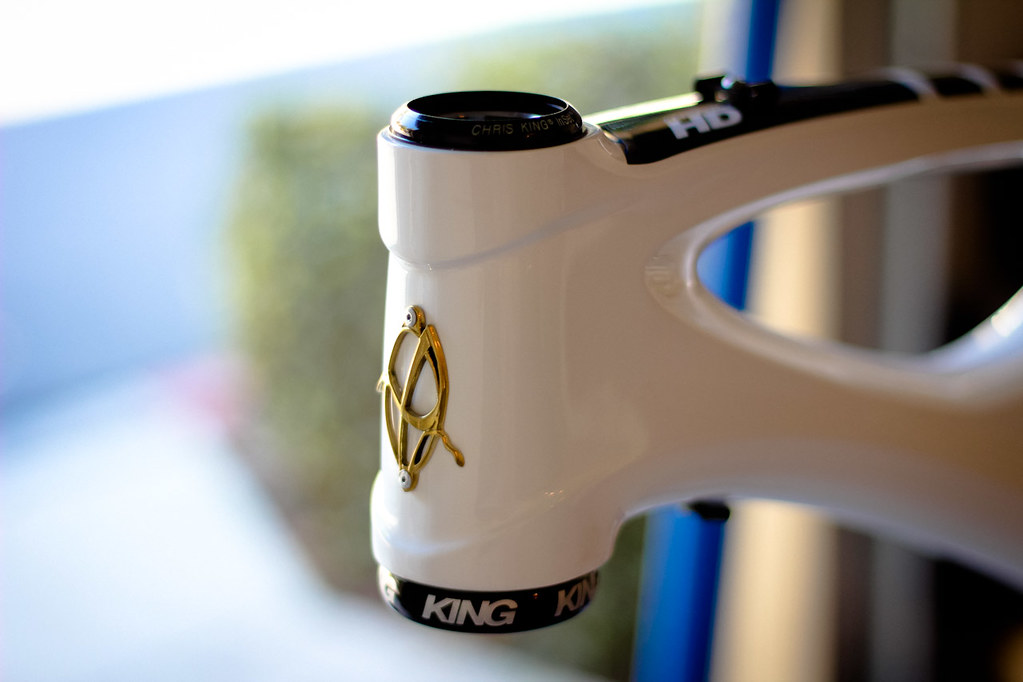 [/img]
[img]  [/img]
[img] 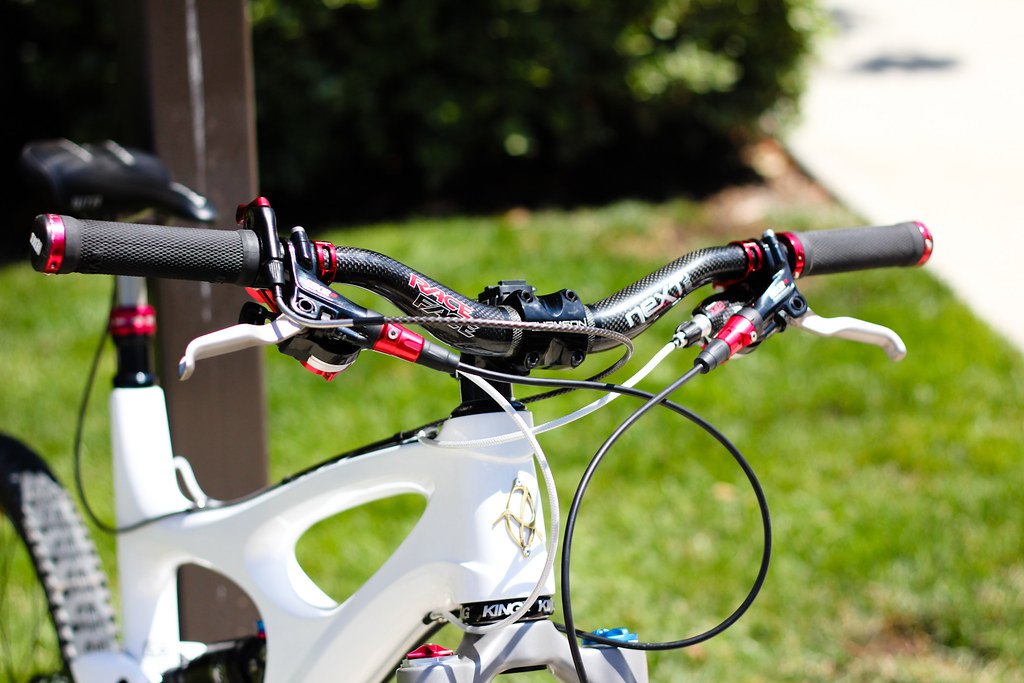 [/img]
[img]  [/img]
bacon - nicely specced 🙂
whereabouts are you in the usa ? weather looks excelent !
I'm sorry but how do you "expect" a build come in at 28lbs when it has an adjustable setapost (KSi), an XT chainset with bashguard, rims which aren't the lightest and various other bits that all add to the final all-up weight! The forks aren't in the same league as a set of Float 32's weight wise so it's a creditable weight for the build of components and in fact is a very nice bike indeed, your a lucky boy.
Yeah, I wondered that, my standard Mojo with Fox 32s, full XT, carbon Monkeylite bars, Formula Oro brakes, Hope Hoops on Flows, comes in at 28 pounds.
It's not a light build*, but I'd expect it to be about 30ish if I added a heavier frame, seatpost and forks.
*it used to be about 26 and it felt awful.
heihei - nice review, thanks for posting
b a c o n - nice bike...needs black or white forks tho'!
Yes come to think of it with an adjustable post and XT with chain guard I see what you mean. Not my bike by the way, someone of the forum I'm on here in So Cal.
Excellent post this - however I am getting more and more put off a mojo the more I read - I really really like these bikes and really fancied a HD 140 - Ive read some fantastic reviews on mojos and was hooked by the aprent stiffness and chuckability of the HD - but I spend about 75 percent of my rides going uphills so the weight is a real issue with me - what should I be looking at that not only climbes well but also handles like 140 HD ? - is as planted - and comes in under the 28 lb WITH a joplin type post ??
Only about a thousand bikes to choose from !!
Interesting to hear your thoughts on the HD HeiHei. I have a Mojo SL running 36 TALAS and a DHX 5. Find it very versatile. I'm more often thankful for the stiffness and point and go nature of the 36's than I curse for the bit of wallow and extra weight. Talking of which mine comes in at 28.6lb with dropper post, 2.4 rubber and 740mm bars. Have been thinking of changing to an HD for the extra versatility and increased stiffness. Worried about losing the sprightly feel of the SL though. Must book a test ride!
My Mojo SL with Rev 150s, gravity dropper, CK with flow rims, Formula The OneMY10s, 2.2 rubber queens and a 745 mm bar comes in at 27.5 lbw. Also rides much better with the extra weight than when it was 25.5 lbs
heihei - do you know/used to ride with Alex Hoffman, or does he know someone else who named their child after Turner?
Turnerguy - been a long long time since anyone has reported Alex near an mtb! Shame, he wasn't too shabby a rider.
I work with him - when he joined he saw my Turner screen backdrop and told me of a Turner nutter he knew who named his child after the bike.
Yep that's me! Small world! Maybe I should change his name by deed poll to Mojo! Still own my original HL 5 Spot though. Tell Hoffers to grow some balls and get back to biking and climbing!!
"Tell him to go back to being stig of the dump and building big holes in the woods"

