UPDATE: CLASSIFIEDS section refreshed, redesigned, searchable: Go take a look
Login and work from home.
Some of us actually [i]do[/i] things for a living 🙂
Love mine. Conti Winter Contact 830s. Turning off a main road onto a side road last year in an inch or so of slush, car two in front under steered into the kerb, back and round the corner with much wheel spinning. Car in front of me did the same. I turned the corner as normal. Ace.
Great things. Bought some for my wife's 3 series and was like night and day in the snow. So good that when we swapped cars to a 4x4 I still bought a set of winters for it. Spare wheels and tyres from mytures co.uk at a good price and 1 hours time swapping them over usually in November.
Have a set of alloys and winters with about 7 mm on them (continentals) that I must put on eBay for the 3series.
Is it that time of year already? Time to post up my video (now 3 or 4 years old!). Everyone knows that BMWs are crap in the snow. Not with winter tyres they aren't 🙂
I got a set a few years ago, prior to the first of the two snowy winters the uk got. I thought they might make a slight difference but probably that much, but I had a spare set of steel wheels and was curious.
Still can't believe the difference, incredible. I drive a 1.2 Fiat Panda and a few days after the snow hit I got all packed and set up and went out in the middle of the night before the snowploughs had had a chance to clear it, with the aim of seeing just what they were capable of (without driving off the road, of course). Apart from chickening out of driving through a three foot drift, I drove about 150 miles through the wilds of Co Durham, up steep steep hills around Hamsterley, three inches of snow on the A68, nothing stopped me (and I had a lot of fun!)
I'll have winter tyres on in winter on every car I own until the day I die. Incredible. And as you swap them over it's not actually ended up costing me anything extra.
(Although as that car was written off with them on (non weather related accident) I'll have to buy a new set, but still)
Go for it.
I've had 4x4's of different flavours for over 4 years now and never changed the tyres - had some god awful tyres in that time too - found Goodyear Wranglers to be ok, but please no-one ever buy Bridgestone Duellers
I can fully endorse what 'the artist etc' said I have bought 3 vehicles with the bloody things on and swapped them off for all terrains at the earliest opportunity. They have the worst grip of any tyre ever made!
How did I manage to 'quote' my post but not the artists?
How come they have such abysmal EU ratings? Noise and fuel kinda make sense, but my normal tyres were A for efficiency and wet braking and 68db, winter tyres seem consistently Es and Fs for both and louder.
Another one for winter tyres - we stuck some on my wife's focus that bad winter a few years ago. Epic and pretty much unstoppable, I was amazed.
We've got some Michelin M+S2's on the old ridiculous 'murican truck we now drive and again they have been fantastic (plus you don't have to stop and put chains on in the winter at the highway patrol checkpoints).
Thisisnotaspoon, Grip pattern and the softer rubber on the winter tyres. It's only like looking at the difference between mountain bike and road bike tyres isn't it
Vredestein wintrac extremes. Can't remember really where I left my summer tyres. In winter and in the wet and up tracks I need to be able to get places. And they last well too.
All seasons and full winters here on two cars in Scotland here. As said, the main difference is on cold, wet days for me, when they noticeably grip better and for longer. When we do get extreme conditions, I know thy can help me bail out if get home. I spent the last 5 yeas commenting down 8 miles of singletrack, un gritted or ploughed road.
[img] 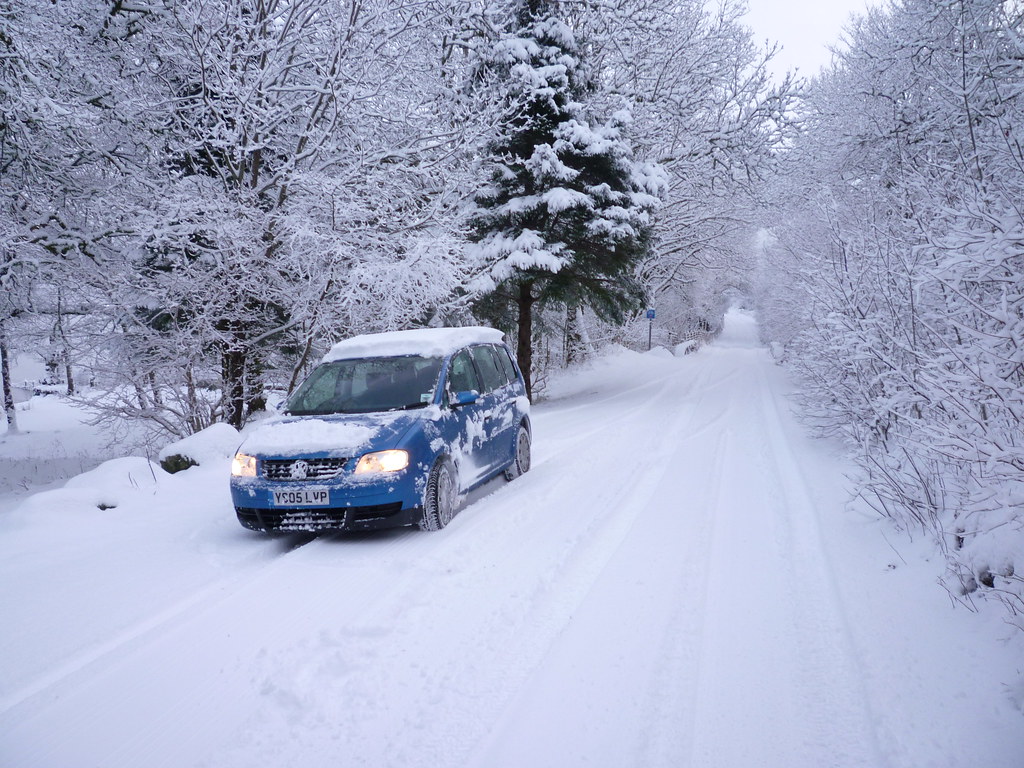 [/img]
[img] 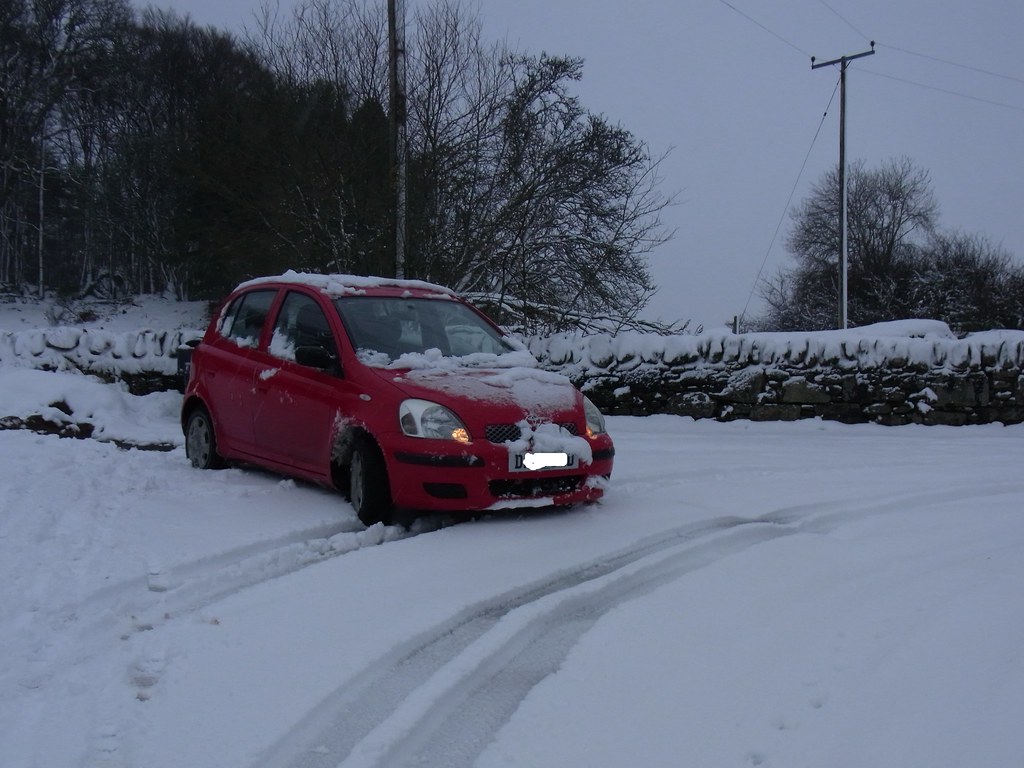 [/img]
Sadly I just bought a car with four good summer tyres on, so am reluctant to fork the cash for new winter tyres, but think I will....
Nokian WR G2 were much better on fuel and quieter than Dunlop sport. Good winters use silica compound which makes for low rolling resistance.
Tinas, I think I saw somewhere that the wet grip tests are done in warm weather which makes winters look really bad compared to summers. There's a video test of winters vs summers in 5 degree wet roads and it's a different story.
Re the extra cost- whilst your not using your normal tyres the wear is 'parked'/not happening so your extending the life of the tyre(s).
Its not just 'one or two days of snow'. WINTER weather is 3months. winter tyres are for cold temperatures. Tyres that work (i.e. grip) better when it gets colder.
This means it makes any marginal risk of loss of control less.
People associate winter tyres with 'snow'. No.
Road noise? Ever driven in rain, wet roads in winter? Aint exactly quite motoring as it is.
[b]All this means nothing to people who cut corners[/b] and run mixed ditchfinders on their car. The same people who will buy a Reverb dropper and new brakes for their bike and want the best mountain bike tyres. Bizarre because how many hours do you off road ride a week?
I wouldn't put my child in a car with mixed budgets.
I wouldn't be without them, I've had them on my last 3 cars and can testify to their effectiveness. Have had Continental, Goodyear and Pirelli and they've all worked well, fit them in November and keep them on till March(ish).
The only time I got stuck was due to lack of ground clearance when the snow was very deep!
They may not be very eco friendly, but I'd rather use a little more fuel that the alternative.
They may not be very eco friendly
Or they may be.
We run Michelin Alpins all year round on vehicles at work.
I went for all season Kleber, Quadraxers on our Berlingo.
I've heard people say 'I lost control due to ice'. Its more than likely you slid on snow. Ice is around but everytime I've seen snow coming down I've also seen people sideways countless times in that snow trying to make progress.
The funniest was on a ride- We saw a woman struggling in a snowy carpark so we pushed her and said 'gentle throttle' - she floored it and kept it floored 😯
I've heard people say 'I lost control due to ice'. Its more than likely you slid on snow.
There is plenty of ice around. I know because I've slid on it when there's no snow on the ground.
Also, snow and ice can go together on untreated roads. Our road isn't treated and every time we had snow in the last few years it partially melted in the sun and then froze solid, resulting in a persistent icy glaze.
I use vredestein W drive all year round on the Passat, mainly because with the mileage I do there's not enough tread left after one winter to be worth taking off and keeping for a second winter. A new set in about November lasts a year and saves the refitting and storage hassle for the other tyres.
For mileage that covers pretty much all of Scotland all year round I wouldn't be without them.
Yes Yes Yes. They are awesome in snow. They don't cost you anymore cash in the long run as they prolong the life of your normal tyres.
I first put them on my RWD Merc Vito and now a FWD Volvo, and I never got stuck in the worst road conditions we saw a few years ago. But more than their ability in snow and ice, is the grip and stability you get in the wet, particularly at speed on the motorway.
You won't regret it.
Blimey, how refreshing! The driving gods must still be doing 70 in a 30 zone on their way to work, knowing that its not speed that causes crashes - just other road users unable to predict their collective awesomeness...
When i went to ontario a couple of years ago, we noticed that nobody had any problems getting around (i believe winter tyres are law in ontario in the winter months) very few people used 4x4s, we noticed that too.
It wasnt a particularly snowy winter when i was there, but still the most snow ive seen in my life.
Conclusion: winter tyres make a difference.
Cb?
Of course, in Ontario the snow will be quite different...
Tinas, I think I saw somewhere that the wet grip tests are done in warm weather which makes winters look really bad compared to summers. There's a video test of winters vs summers in 5 degree wet roads and it's a different story.
Fair enough, that makes sense. Although, from the Michelin site, the tyres are tested under their supposedly best conditions.
How to measure braking on wet roads?
This test is done with a vehicle under standardised conditions defined by law: namely,
temperature, state of road surface, water depth, and speed.The conditions of the tests, according to European legislation, are:
Winter tyres tested between 2° and 20°C
Summer tyres tested between 5° and 35°C
Water depth between 0.5 and 1.5 mm
Braking performed on 4 tyres with ABS between 80 and 20 km/h (approx. between 50 and 12 mph)
I don't use winter tyres, primeraly as I don't have garrage space to store them over the summer, seconldy a big dose of scepticism having survived so far just on normal tyres and driving sensibly the few times I've been caught out by the weather, and a few people on here saying they use them all year round as they can't quallatively see a difference in summer but can see a difference in winter, when the qantative results show their performance dropping off a cliff in summer (it could be a childs face, etc).
a big dose of scepticism
Why sceptical? Surely as an engineer you can understand the concept of suitable materials for the task?
I use them because it's nice in winter to not worry about getting stuck; and the cost outlay is pretty small when you consider that both sets of tyres last twice as long - so you're not getting through tyres any faster.
If you are unsure go down to your local independant tyre place and get some part worns on from Germany. They will be £25/£30 each fitted (always worth asking them for their best pair, refuse anything that looks crap, they always have more in the back but want to shift the junk first) and get a decent brand.
Once you have done this you will prob just run on winters all year as the loss of grip in the summer is way less than the equivalent gains in the winter.
Why sceptical? Surely as an engineer you can understand the concept of suitable materials for the task?
"As an engineer", half my job is spent telling prople they don't need superfluous stuff.
But yes, I do see the point, and would probably have them if I had garrage space to store them over the summer. I just wouldn't keep them over the summer as i'm far more likley to drive sensibly or not go out at all with summer tyres if it's snowing/icy, than I am to not go out on a hot day because I've go winter tyres.
Sceptism- so you are an engineer who specialises in road tyres and different compounds/temperatures?
Do you need an old MG? 🙂
thisisnotaspoon - Memberi'm far more likley to drive sensibly or not go out at all with summer tyres if it's snowing/icy, than I am to not go out on a hot day because I've go winter tyres.
Wait, you'd not drive on a hot day on winter tyres? That's... hmm.
The main thing about winter tyres in summer is that yes, they perform less well than a summer tyre in the hot and dry. But that's the time when you least need that performance- so it becomes about trading some performance in ideal conditions, against performance in less than ideal conditions. That doesn't seem like a hard decision.
And they [i]can[/i] still deliver good performance- mine are much better than the no-name pish that most folks seem happy with. I can ask more of them than they have, but not by accident.
I don't use winter tyres, primeraly as I don't have garrage space to store them over the summer,
Merit Tyre (south, south eastish independant) offer a free tyre hotel if you buy from them and pay a few quid to swap twice a year. Seems a good solution to me, compared with buying and storing spare wheels.
I don't use winter tyres, primeraly as I don't have garrage space to store them over the summer,
I thought STW'ers all lived in old farm houses in rural Yorkshire? Shirley you can store them in your large shed next to the 10 bikes? 😀
hora - these threads have always descended into ego fuelled debates about one's driving ability being able to negate the 'need' for winter tyres. That type of sanctimony isn't being aired today...yet.
hora - these threads have always descended into ego fuelled debates about one's driving ability being able to negate the 'need' for winter tyres. That type of sanctimony isn't being aired today...yet.
I wouldn't drive anywhere near legal speeds in winter. I'll stop any winter tyre test pilots now:
NCAP tests are carried out at sane speeds in laboratory conditions. Airbags only fire once and quickly collapse. The day NCAP runs a test where you are hit partially sideways by another car at a combine speed of 80, lampost, etc etc - then it might calm people down.
garage ? pishy steel wheels just live out in the garden next to the fence shod in winter rubber.
Following this with interest. Wife has a Q5 and we live on a gnarly narrow steep road which gets quite exciting in winter we are told. Her Q5 has massive wheels but might get some 18s with proper winter tyres so she can get in and out.
Do you need an old MG?
Yup, but even that's been relegated to my parents garrage as I've not got room 🙁
The main thing about winter tyres in summer is that yes, they perform less well than a summer tyre in the hot and dry. But that's the time when you least need that performance- so it becomes about trading some performance in ideal conditions, against performance in less than ideal conditions. That doesn't seem like a hard decision.
I see your point but, the difference between the top and bottom of the wet weather braking ratings is 30%, and the tyres are tested under the conditions they're designed for (summer tyres in warm weather, winters in colder), and any manufaturer is going to try to test them under conditions that make them look good.
So on a wet summers day the winter tyre rated F or G for wet braking in winter, is going to be even worse than the 30% decreace in perfomance suggested Vs the A rated summer tyre.
That was my point, I doubt anyone would think that, but if you're going to suggest winter tyres are essential for safety when it's cold, then that points also valid in reverse. The counter being that the summer tyres sufferes a greater performance drop in winter than the winter tyre does in summer. But I'm unlikley to bother going out if the weathers that bad so there's a 0% chance of me crashing in those conditions anyway (Vs the 30%+ drop in performance and increace in crashing you may suffer in summer).Wait, you'd not drive on a hot day on winter tyres? That's... hmm.
The difference is my argument has numbers, yours has anecdotes about not crashing (I've not crashed either though).
I agree on them probably being better in winter, I disaree with them being left on in the summer.
Thinking about it- I fitted Conti winters last year. Left them on until circa June as they were old and blistering. I had no problems with grip at all. These were conti contacts not winglang/landsale/Semprit etc 'winters' though.
We have winters on the Yaris all the time. I don't see the point in changing them for the brief period each year that the weather might be "too hot".
without winter tires i would be able to sit at home most of winter - id get down to the bridge then block the road for anyone else wanting to get up the hill to the actual road - and i dont have a truck to tow stuck cars(like my neighbours range rover) out the way this year - hopefully he still has the general grabber steelies he bought last year after my frontera pulled him to the road.
Even my neighbours yaris with snow socks pissed on his rangey on rubber band summer tires.
but then i live somewhere we get proper winter - not surrey.
thisisnotaspoon - MemberThe difference is my argument has numbers, yours has anecdotes about not crashing (I've not crashed either though).
Here's some numbers, and some expert advice.
The trouble is, numbers don't really tell the full story I think. Planned hard stops miss the big difference in control you get with winter tyres- it's not about adding or subtracting X metres, it's about whether you stop in control at all. So you could end up comparing "stopping distance 35 metres" with "stopping distance- backwards through in a hedge" Whereas winter tyres in summer aren't going to do that. The worst case scenarios differ more than the best case scenarios.
And still, back to the basic fact that you're less likely to need it in the dry- everyone's got more grip and control, better visibility, etc.
I agree on them probably being better in winter
Only probably? It is obvious you have never tried them. It's true that they are not great in the summer but you would only notice if you were driving right on the limit. In the snow however, you immediately notice that you can actually drive at all!
The UK is quite backward compared to most of Europe and North America when it comes to winter driving. Winter tyres are considered the norm or even a legal requirement in many countries.

