Forum menu
After my last attempt, I got this on ebay.
Used it this am, it was well volatile and drid to the touch in minutes.
Can't be epoxy, Shirley?
I've sealed the unused remains to see what happens...
Not 2-PAC
[img]  [/img]
I think your post is missing a link or pic.
[img]  ?itok=M8XT2jaK[/img]
genuine article.
When is 2-pack not 2-pack?
Obviously 2 part paints involve a catalyst that you add before use and therefore come in 'two packs'. However you can also get pre-catalysed paints where the catalyst is premixed. So its in 'one pack' but the action is still a catalytic one and behaves in much the same way as a two-pack paint in action, rather than just curing/drying by evaporation. So they're two-part in their behaviour all thats happened is those two parts have been mixed before the pack gets to you.
I've sealed the unused remains to see what happens...
When I was using Acid Catalysed paints even after adding the catalyst the paint remained completely usable in the pot for a very long time. I don't really undertand the chemistry of it all - it would set so fast in use that with a brush you could feel the setting paint on the surface pulling on the bristles - when spraying it any overspray that missed the job would set mid-air and land as dust - I didn't need to put down sheeting to protect the floor - just hoover up afterwards.... But the catalysed paint in the pot was good for weeks.
[img]  [/img]
Cyanoacrylate, or similar? They're catalysed by water in the air or on the surface.
Well it solidified, into a near-gel, which broke up pretty easily. Looks ok on the rat bike too.
Have you missed something Al, sometimes there are biggies and smalls
[img] 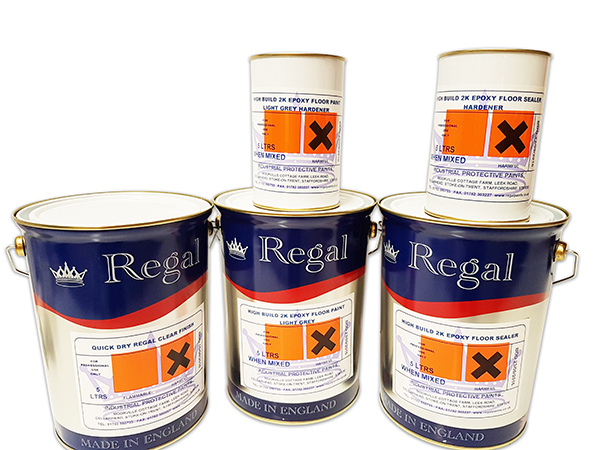 [/img]
If it was proper 2k I hope you wore the right mask.
Repeat exposure leads to permanent asthma and if you're unlucky/sensitised to it, a single exposure can hospitalise you.
Proper 2k paint is nasty stuff.
Interesting, I don't recall a warning about that on the tin.
Doesn't 2 pack paint contain cyanide?
(supposed to use air fed breathing gear?)
EDIT: Yep nasty stuff..
http://www.hse.gov.uk/mvr/bodyshop/isocyanates.htm
It's not cyanide, it's isocyanate, which is the same/similar stuff as got released in the Bhopal disaster.
2k 'paint' is basically a layer of plastic once it's gone off, I believe it's actully polyurethane.
You're right though, air-fed masks are best practice, you'll probably 'get away' with a non-air fed properly rated respirator for one-off use, but it all depends on how much you vlaue your lung capacity. When I was looking at painting my motorbike I did all the reading up and worked out that a basic mask/compressor set up was roughly the same price as paying someone else to do the paint, so I figured I'd learn a new skill...
sobriety - Member2k 'paint' is basically a layer of plastic once it's gone off, I believe it's actully polyurethane.
So is it the toughest lacquer I can apply myself without buying kit?
What are you laquering? ‘Tough’ depends on comparability with the material you’re coating and what your subjecting it to
When it's Tuvok from Star Trek? 😆
maccruiskeen - MemberWhat are you laquering? ‘Tough’ depends on comparability with the material you’re coating and what your subjecting it to
Bike frame, car alloys and panels...
And its a clear finish you're putting onto bare metal I take it?
Probably the most tenacious adhesion you'd get to metals would epoxy finishes and you'd maybe look at vendors for marine applications. Polyeurathane I'm more familiar with as a wood finish and the acid-cat finishes I've used were also formulated for wood - tough stuff though, typically used for floors and bar-tops. By comparison Powdercoat is only 'tough' in terms of it being a resilient material but its not firmly adhered to the metal.
With something like car wheels an other aspect is that you're hand-painted finish forms part of the bead and seal for the tyre - alloys are leaky enough without the additional lumps and bumps of brush-stokes - so you maybe need something to create a very thin film when applied. - Some polyurethane finishes for wood, for instance, are made to be wiped on with a cloth rather than brushed on.
That said non of your applications are especially 'tough' you just need something 'suitable' - in all those applications what people typically use is 'paint'.
I forget what the stuff was now but I bought paint (which they'll also sell as clear lacquer) formulated for metal coating from [url= https://make.works/companies/smithandrodgerltd/?r=paint ]Smith and Rodgers [/url]in glasgow a few years back.
They make and develop their own paints and finishes as well as source and supply all kinds of specialist stuff and their advice and products are as specific as you could hope for- and they'll recommend and blend for your particular applications - (the even let a friend of mine name a new product line they'd developed to meet her specification)
So if you told them you what you want in terms of what material its going on to - how clear, matt, gloss it needs to be, whether its for brush/roller/spray application or whatever and they'd mix up a tin to suit.
Thanks - it just going on the face of the alloy wheels, and over paint in all situations.
I just want something that won't scratch as easily as rattle can lacquer.
and over paint in all situations.
Ah - well that paint dictates what you'll use then