UPDATE: CLASSIFIEDS section refreshed, redesigned, searchable: Go take a look
[img] 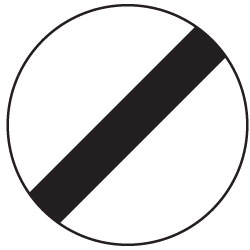 [/img]
[i]If you are on a dual carriageway and driving a car or motorcycle the national limit is 70 mph. If you are on a single carriageway and driving a car or motorcycle the national speed limit is 60mph.[/i]
To me it always suggests a bit of ambiguity, (you should really only be doing 60 but you can do 70 or possibly even 80, as long as you're not a dick) kinda thing and people I find don't actually know what the national speed limit is. What's the point of it at all? Why not do away with any ambiguity and instead have signs simply stating the speed limit?
It just means to me if I get pulled on the motorbike I'm less likely to go to jail.
However anything with 50> is as fast as you fancy in my books.
What would that sign look like? The limit is different for different vehicles.Why not do away with any ambiguity and instead have signs simply stating the speed limit?
Cost.Why not do away with any ambiguity and instead have signs simply stating the speed limit?
Why have multiple signs when you only need one?
Shouldnt leave any ambiguity.
If you dont know what the sign signifies, for the road you are on, and the vehicle you are in, there is an argument that perhaps you shouldnt be driving.
What would that sign look like? The limit is different for different vehicles.
There are plenty 50, 60, 70 signs out there - doesn't mean you are allowed to do that speed regardless of what you're driving/riding.
However anything with 50> is as fast as you fancy in my books.
Idiot.
To me it always suggests a bit of ambiguity,
No it's the opposite. As pointed out there's more than just cars and motorcycles on the road. If you put 70 then you're suggesting anyone can do 70.
people are supposed to learn what road signs mean and pass a test before they get a licence so there should be no ambiguity.
It's not really that difficult a concept, though, is it? Do you really need a sign to differentiate between single carriageways where you can do 60 and duals where you can do 70?
What would that sign look like? The limit is different for different vehicles.
This, NSL is 40, 56, 60 or 70 depending on what you happen to be driving at the time.
Which I always thought raised an interesting question on motorways, when the variable limit shows 60, what's the limit for HGV's?
To me it always suggests a bit of ambiguity
Eh?
You just quoted exactly what it means in your OP!
This, NSL is 40, 56, 60 or 70 depending on what you happen to be driving at the time.Which I always thought raised an interesting question on motorways, when the variable limit shows 60, what's the limit for HGV's?
You missed 50 mph (tailers, some motor homes etc on a single carriage way NSL)
HGVs just stick to their normal speed limit or the restriction, whatever is lower.
HGVs just stick to 'their' normal speed limit or the restriction, whatever is [s]slower.[/s]faster
If you changed NSL signs to 60/70, then you would have to install thousands of repeater signs to make it legal. NSL zones, 30 zones with lampposts, and bits of Dartmoor are the only roads where repeaters are not required. (NSL zones with lampposts can have NSL repeaters so you know it's not 30).
Shouldnt leave any ambiguity.If you dont know what the sign signifies, for the road you are on, and the vehicle you are in, there is an argument that perhaps you shouldnt be driving.
^+1
After every road journey I return with arguments that **% of the people I saw driving should not be driving.
the only ambiguity is the registration classification of a small number of vehicles. some otherwise identical vehicles could be limited to 60 and others 70.
56? is that new? wasn't in my highway code when I did the test.
80? my old flatmate seriously tried to convince me that the law had been changed to 80 on motorways for cars. genuine, not kidding. still get overtaken when he would do 80 indicated plus a speedo reading error margin.
good point, where did 56 come from?
Speed limits here:
https://www.gov.uk/speed-limits
There is a lot of them but it's quite simple really. They have just given a lot of examples which leaves helps remove any doubt.
It's the drivers responsibility to understand what vehicles they're driving and therfore what the national speed limit is for it. Just like you'd be expected to know the vehicle height so if you approached a low bridge you should know if it will fit under it.
I think the 56mph comes from the fact a lot of HGVs are fitted with a speed limiter. You see them with stickers saying irs limited to 56mph.
^+1After every road journey I return with arguments that **% of the people I saw driving should not be driving.
Agreed, scary percentage too.
What is the point of the national speed limit sign?
<troll>Indicates that it's time to change down to 3rd and stand on it.</troll>
56mph = 90KPH which is probably the max HGV speed in that there Europe.
56mph = 90KPH which is probably the max HGV speed in that there Europe.
This is the case I think. Apparently there will be limits on new vans soon- but the limit will be in line with European limits which means you can limit your van to 75mph, which shouldn't really make any difference to sensible drivers.
If you dont know what the sign signifies, for the road you are on, and the vehicle you are in, there is an argument that perhaps you shouldnt be driving.
Now would be a good point to mention that literally every time this topic comes up it turns out that at least one commenter doesn't realise the difference between a single and dual carriageway.
Hint: it doesn't matter how many lanes there are.
e.g.
This is NOT a dual carriageway:
[img] 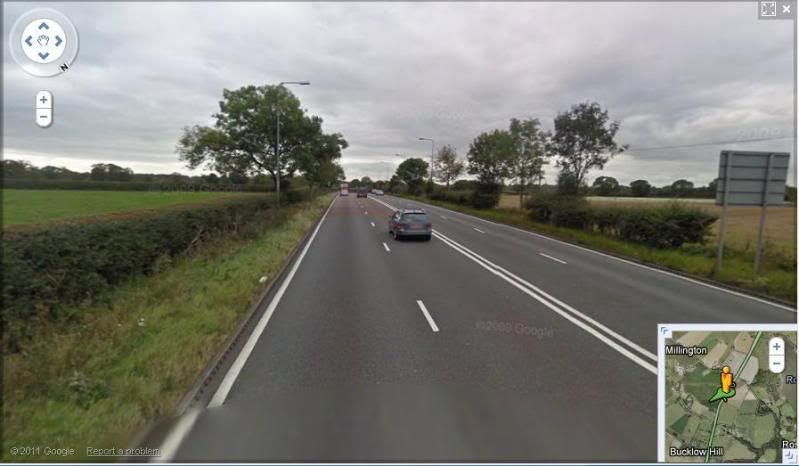 [/img]
This IS a dual carriageway:
[img] 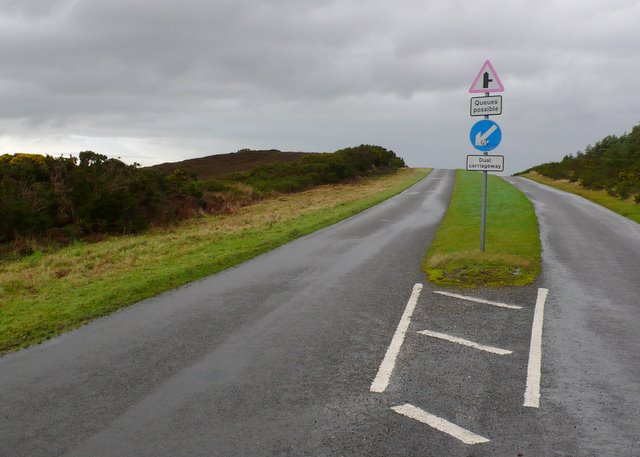 [/img]
that's not a limit. certainly not one in the highway code / law.
voluntary, self imposed restriction, by the haulage industry and/or truck mfrs to be consistent across Europe perhaps? and probably saves a few drops of diesel too.
If you dont know what the sign signifies, for the road you are on, and the vehicle you are in, there is an argument that perhaps you shouldnt be driving.
Whilst this is true, the sad fact is that plenty of people [i]don't[/i] know what it means.
The dual carriageway example Graham mentions is an excellent one. When I did the speed awareness course, I think I was the only one in the room (other than the people running it) who had a proper understanding of how a dual carriageway was defined and what the limits were. I reckon this is why monospeeders are so common. (It's also why I worry when I hear people say how useful the course was; this is basic stuff!)
There are plenty 50, 60, 70 signs out there
Really? I've never seen a "70" sign in the UK.
probably saves a few drops of diesel too.
Apropos of nothing; I remember 56mph being used in car adverts years ago, quoted next to fuel economy figures. I think it was considered to be the most economical speed, for reasons that I don't really understand (didn't they call it 'the urban cycle' or some such?).
Whether it was all Marketing pish or not I've no idea. I wonder if the fact that it's almost exactly 90kph has something to do with it, perhaps engines / gearboxes for the UK market were designed to be most economical on European roads?
Sorry, I don't have a point to this post, just thinking out loud.
Really? I've never seen a "70" sign in the UK.
Go to Wales, there's shedloads.
The NSL sign also means that the speed limit can be changed without spending billions replacing all the signs.
e.g. [url= https://en.wikipedia.org/wiki/Road_speed_limits_in_the_United_Kingdom#1973_oil_crisis ]between 1973 and 1977[/url], during the oil crisis, the national speed limit was lowered to 50 on single and 60 on dual.
(of course other countries took this as an opportunity to reduce car use and embrace the bicycle - but that's a different story!)
There are loads! I always assumed it was in places where the locals were too thick to be expected to understand what the NSL sign meant.
andyl - Membergood point, where did 56 come from?
Speed limits here:
https://www.gov.uk/speed-limits
There is a lot of them but it's quite simple really. They have just given a lot of examples which leaves helps remove any doubt.
It's a bit of a misnomer, lots of big heavy stuff is limited to 56mph, not by law, but it's give-or-take the most efficient speed, a sort of sweet spot between speed and air resistance.
The speed limit for them is usually 60mph and I don't believe there's any legal requirement for them to be limited at all.
Seen loads of 70 signs in UK. Scotland M74. A1M just north of M25. Wales. Vaguely recall 70 signs near Dartford Tunnel, but was a long time ago.
To me that is more ambiguous, since it suggests a 70 limit, but surely it means 70 only for those allowed to go 70?
The National Speed Limit is 30 unless otherwise stated. This is why you dont see 30 repeater signs. Motorways have their own rules.
The National Speed Limit sign is not a number as it depends on what vehicle you are driving.
If you dont know what the sign signifies, for the road you are on, and the vehicle you are in, there is an argument that perhaps you shouldnt be driving.
^This
Huge numbers of peple don't know the limit. Drove up the A9 to Inverness yesterday in a van doing exactly 60mph on the DC sections. The majority of cars were also doing almost exactly 60mph suggesting to me they thought that was the limit.
Very few overtakes seen on the SC sections and no dodgy overtakes. Seems most drivers now happy to sit at 50mph behind a truck whereas the old 40mph HGV limit promoted frustration and dodgy overtakes. 3 1/4 hours Glasgow in Inverness. Not losing many minutes compared to pre Av speed cameras. In fact eliminating the regular 10-15 miles at 38mph probably makes up for any time lost through AV speed cameras.
It's pretty much the best road sign around. Particularly on a good road with no traffic. And even more particularly on a motorbike!
I like that sign. Unfortunately in this day and age it means you can put your foot down and not get a speeding ticket until you see the next speed restriction sign
The National Speed Limit is 30 unless otherwise stated.
😕
The National Speed Limit is 30 unless otherwise stated. This is why you dont see 30 repeater signs. Motorways have their own rules.
THe NSL isn't 30mph except in built up areas.
The national speed limit for cars is not 30mph unless otherwise stated, it is 60mph on single carriageways, 70mph on dual carriageways - and in built-up areas (which are denoted by closely spaced street lighting) it is 30mph. There do not need to be signs or repeaters for built-up areas where there is appropriate street lighting because the lighting alone tells you the limit.
No - the national speed limit is (currently) a variable limit depending upon vehicle but 60mph for cars and other light vehicles. Where there are streetlights, the limit is 30mph unless otherwise indicated.
Seriously, some of you shouldn't be driving.
Rachel
Drac - From the gov Website:
A speed limit of 30 miles per hour ( mph ) or 48 kilometres per hour ( km/h ) usually applies, unless you see signs showing otherwise.
Dont get me started on built up areas. These do not determine speed limits
A speed limit of 30 miles per hour ( mph ) or 48 kilometres per hour ( km/h ) usually applies, unless you see signs showing otherwise.
Yeah you might want to copy and paste the bit below that too.
think I've seen some in scotchland tooGo to Wales, there's shedloads.
and huge numbers know but don't care, differentiating between the two will be tricky.Huge numbers of peple don't know the limit.
Dont get me started on built up areas. These do not determine speed limits
Really?
[img]  [/img]
--> https://www.gov.uk/speed-limits <
I wonder why they use National Speed limits signs in most areas with a speed limit 60mph or over for cars but but not those with a 30mph speed limit. Surely if the National Speed limit is 30mph it'll be the other way around, areas over 30mph would all have the limit in digits.

