UPDATE: Reviews section refreshed, redesigned, searchable: Go take a look
excellent photography and very thought provoking
[img] 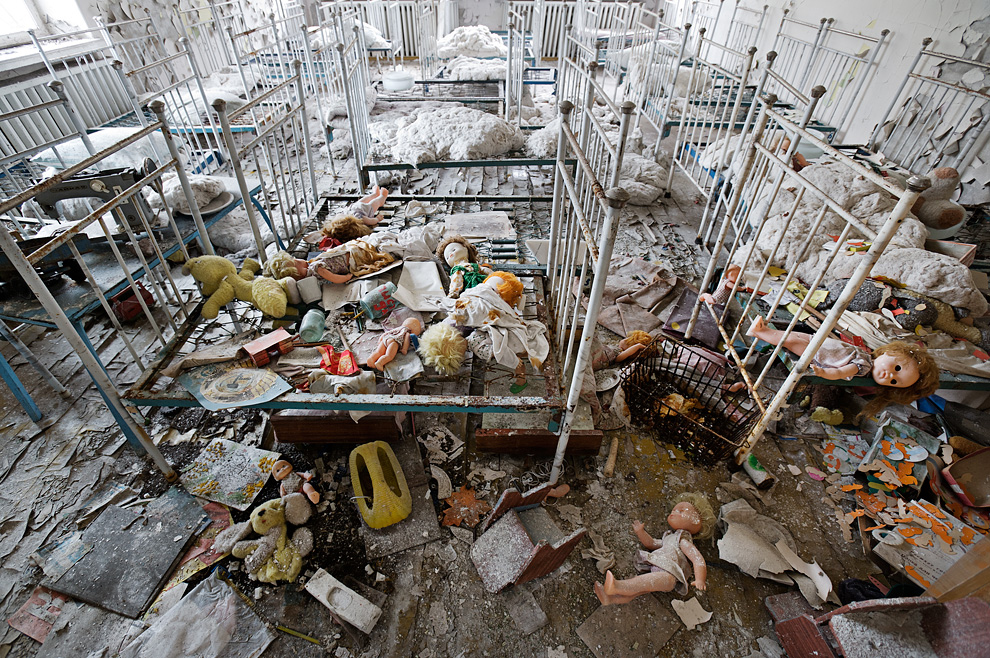 [/img]
[img] 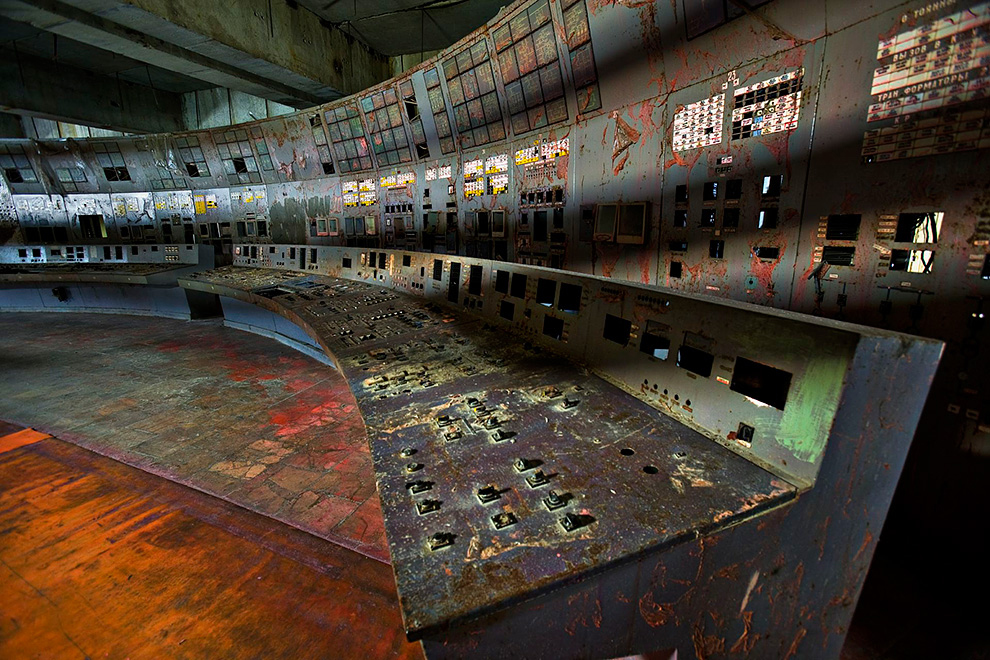 [/img]
http://www.boston.com/bigpicture/2012/02/gerd_ludwigs_long_shadow_of_ch.html
Same subject, different photographer http://www.urbanxphotography.co.uk/portfolio162692.html Still moving to look at
How is the wildlife that lives there?
That second pic.... like something from a James Bond film. Unreal.
SB
[img]  [/img]
1986 !!!!!!! That long since?????!!!!!
sobering and somewhat depressing.....
Don't worry, someone will be along soon to explain how nuclear power is completely safe and we're all a bunch of stone age pessimists for doubting how wonderful it is.
[url= http://www.bbc.co.uk/programmes/b01d26qk ]Superb programme about Fukushima on Radio 4 last week, [/url] well worth a listen.
[url= http://www.angelfire.com/extreme4/kiddofspeed/index.html ]More here[/url]
some good stuff in here as well...
zippykona - MemberHow is the wildlife that lives there?
Bit terrifying tbh
[img]  [/img]
Wildlife is thriving...
http://news.bbc.co.uk/1/hi/world/europe/4923342.stm
"Nothing with two heads," he says.
Radiation wasn't kind to the elephants of Chernobyl
and before that we had the windscale fire, and recently Fukishima.
and yet theyre still going to build more of the damm things, what we need is a reduction in usage of power,and more recycling and natural energy,from the wind sun and waves, along with hydro.
The man that came up with the Gaia idea supports Nuclear Power. Lots of high up Greenpeace types eventually become supporters.
Objective, rational risk assessment instead of scaremongering generally accepts it is a solution to our carbon fuel addiction.
STW editorial policy on this topic is not objective.
Recommend the 28days later site in general- some amazing pics in general never mind pipryat.
Scary how reslistic COD got it all a few years ago.
Ukraine still suffers from the economic drag of Chernobyl. Will prevent its entry into the EU.
My wife brought back some glass mosaic thing from 1 of her trips out there and I made her Geiger counter it before she brought it in the house. (really was pretty hideous and was looking for excuse to get rid of it!)
You could shoot lots of urban decay in Ukraine but there are beautiful bits like the Lavara as well.
Haven't clicked all the links but Northwind- wtf was that from??
Recommend the 28days later site in general
+1 for that.. I can spend hours looking at some of the stuff on there. Fantastic site.
althepal, it's a snork, from the PC game Stalker: Shadow of Chernobyl. Orrible.
There's an awful lot of bollocks spouted on this subject.
There's a massive difference in nuclear safety tech between Calder Hall in 1958 and today...for example, Chernobyl had no roof or containment over the reactor that western plants have. Moreover, Fukushima's accident was the result of coolant pumps being overrun with tsunami flood water. Not quite the same level of risk in the North Sea.
FWIW, I'd rather we discovered and implemented fusion power tomorrow and got the heck on with it. There have been more deaths from the pursuit of oil energy than there have been because of the nuclear industry.
A joke from that time.
Q. Why do Russians have extra strong zips on their flys?
A. Because if they don't, Chernobyl fallout.
I'll get my coat
Twenty six years after the Chernobyl accident, and am I the only one that's disappointed? Still no superheros.
Moreover, Fukushima's accident was the result of coolant pumps being overrun with tsunami flood water. Not quite the same level of risk in the North Sea.
No, not if you feel confident enough to totally dismiss any possible risk of the Cumbre Vieja volcano in La Palma causing a mega-tsunami which batters southern England.
From all the evidence I've seen it had very little effect in people or wildlife, though plenty do try to attribute all sorts of things to it without any real evidence or scientific proof.
what we need is a reduction in usage of power,and more recycling and natural energy,from the wind sun and waves, along with hydro.
So, are you going to help by turning off all unnecessary items such as your laptop? The amount of electricity that needs to be saved to avoid needing to build new nuclear (or worse, coal*) power stations is far in excess of what can be saved by non-invasive energy efficiency measures.
As for renewables, yes, great, pepper the landscape with windmills, but they still won't reliably generate more than a couple of coal or nuclear power stations. Solar has promise, and payback times in terms of embedded energy are surprisingly low even in the UK, but payback times in terms of money are lacking, making it very expensive indeed. Wave power is as yet unproven on any remotely large scale, and finally, we've already dammed just about any suitable valley for hydro, so no room to expand there.
*nuclear is infinitely safer than coal or oil in terms of deaths per TWh, and that's before you count effects of fossil fuel driven climate change
No, not if you feel confident enough to totally dismiss any possible risk of the Cumbre Vieja volcano in La Palma causing a mega-tsunami which batters southern England.
If this happens, I think we'll have bigger worries, TBH
Slightly near sighted view of renewables there zokes, like saying to people in 1900 that cars would never replace horses because there aren't many petrol stations. More than enough tech on the way to make renewables both viable and reliable. you just have to know where to look rather than looking at the current scene. this is where politicians regularly fall down too. hence poor fundingfunding for them overall
plenty of proof of many ten of thousands of deaths from Chernobyl at a bare minimum
No need at all for nuclear from any rational analysis. It can never be anything other than a very small part of energy usage worldwide
What scares me is that people can't see that climate change isn't an equal or greater threat (in economic or human terms) than nuclear power.
It's like the middle ages, people afraid of what they don't understand.
As it is, cut consumption or build nuclear. Or find a new technology.
Turn your pc off now.
Slightly near sighted view of renewables there zokes, like saying to people in 1900 that cars would never replace horses because there aren't many petrol stations. More than enough tech on the way to make renewables both viable and reliable. you just have to know where to look rather than looking at the current scene. this is where politicians regularly fall down too. hence poor fundingfunding for them overall
Perhaps, and I am aware that off-shore wind farms have the potential to generate huge amounts of electricity, but to replace a modern nuclear or coal-fired power station that puts out 2 GWe, you'd need a wind farm of about 1000 turbines all outputting their maximum power. The oft-discussed 'perfect storm' that makes such a shift problematic is the typical still, cold winter's day, where there is no wind but it's cold and dark, so everyone needs heat and light. But nonetheless, I would never advocate not building renewables, I simply state, as ever, that unless we cut our energy usage drastically, and by that I mean to a point that would seriously impact on our current lifestyles, we need more power than can be generated by renewables alone. And that's before we start having to use electricity for a greater proportion of our transport and heating requirements as gas and oil become more scarce.
I honestly think that solar power has a surprisingly large part to play in the UK, and may well generate more than most people imagine. I have a friend in Sheffield who has fitted solar panels to his house and has seen a huge reduction in his bills. But not many are far-sighted enough to wait 10-15 years for that reduction to become a profit.
Wave power is the one that TJ and others throw about the most, along with tidal turbines. Both do look promising, and I agree that in 10 years time they may well have a big part to play. But they are not ready yet, and may not be ready by then.
Finally, there really isn't anywhere else for more large-scale hydro, and on the smaller scale, the question of damage to local ecosystem vs superficial power generation does need to be looked at. Tidal barrages such as the Severn do have potential to reliably generate huge amounts of power, but they come at a huge natural cost. As Chernobyl has proved, worst-case nuclear does at least for the most part not affect nature.
I knew it wouldn't be long:
plenty of proof of many ten of thousands of deaths from Chernobyl at a bare minimum
C'mon then, lets see it. We both know that scientific proof does not exist, yet you trot this out every time. The fact that radioactivity takes so long to affect human health unless exposure is massive and acute makes any positive statement about this impossible to make. Any study will have qualifiers such as 'may' and 'could possibly be implicated in increased xyz' - as such, it's not incontrovertible fact.
No need at all for nuclear from any rational analysis.
We go through this every time. It is rational to assume that people will vote out a government forcing upon them drastic energy efficiency measures. It is rational to state that we cannot generate enough electricity to replace the need for fossil and nuclear energy from renewables, and it is rational to state that the localised risk posed by a very rare nuclear catastrophe is much lower than the very real global risk posed by climate change.
What is irrational is the discounting of one option because of a deep psychological fear a lot of people have over the very word 'nuclear'. If you go to hospital for a Magnetic Resonance Imaging (MRI) scan, the technique is actually Nuclear Magnetic Resonance (NMR), but they had to change it because of peoples' fear of the word 'nuclear'.
"Moreover, Fukushima's accident was the result of coolant pumps being overrun with tsunami flood water. Not quite the same level of risk in the North Sea."
No, not if you feel confident enough to totally dismiss any possible risk of the Cumbre Vieja volcano in La Palma causing a mega-tsunami which batters southern England.
Well the experts appear to dismiss such a risk
http://itic.ioc-unesco.org/index.php?option=com_content&view=article&id=1203%3Awhat-is-a-mega-tsunami-and-can-it-happen-today&catid=1340&Itemid=2021&lang=en
...and fortunately we don't appear to have any current or future nuclear power stations in the areas which would be hit by that anyway (no risk to the North Sea).
Of course in reality, Fukushima resulted from an earthquake followed by a tsunami - how likely do you think that is in the UK?
[i]plenty of proof of many ten of thousands of deaths from Chernobyl at a bare minimum[/i]
sources* please.
* credible
sources* please.* credible
There aren't any.
Fascinating. Assume it's a bit more real than the "famous on the Internet back in 2002" Kidofspeed stuff.
TBH I'm not going there to find out!
Well the experts appear to dismiss such a risk
Well it was an "expert" who came up with the idea and still maintains the hypotheses. It seems that experts aren't always right eh ?
BTW this sentence in the link : [i]"No such event - a mega tsunami - has occurred in either the Atlantic or Pacific oceans in recorded history. NONE."[/i] completely undermined the creditability of the article for me. A slack and lazy comment imo.
The claim that they have never occurred in the Atlantic or Pacific oceans in recorded history is hardly concrete proof that they haven't or can't occur in the Atlantic or Pacific oceans. It merely suggests that if such a thing has occurred then they are extremely rare in human terms.
plenty of proof of many ten of thousands of deaths from Chernobyl at a bare minimum?
is one of those vacuous statements that beg to be challenged. in this case by the iaea and the who (not the band) claim 47 directly attributable and a further 4000 predicted. world health organisation or tj? a hint, it's not you tj.
but seeing as i'm not tj, it's only right to point out the criticism of both the iaea (not objective) and the who (insufficiently separate from the iaea) in terms of their report and the fact that it concentrates on data (or what data they could gather) from within ukraine, belarus and ukraine. comparison beyond this can be gathered from the likes of unscear (see their 2011 report) but again, clear data given the time is difficult to ascertain.
so, plenty of proof? i think not. in fact, quite the opposite and within that an interesting interplay between various vested interests which obscures the human cost in terms of displaced persons etc almost completely
It merely suggests that if such a thing has occurred then they are extremely rare in human terms.
And as such, should we really base our energy policy around this unquantifiably rare possibility?
Ukraine still suffers from the economic drag of Chernobyl. Will prevent its entry into the EU.
How? Would have thought the ongoing economic effect of Chernobyl was practically meaningless in comparison to the tsunami of alcoholism, corruption, dodgy privatisations, political instability, organised crime and the long, slow path out of hell that the last 25 years has seen in Ukraine.
TJ - there's "plenty of proof" that nearly [u]twenty thousand [/u] people died in the japanese tsunami
How many people died from radiation exposure?
Millions, probably 🙄
Don't underestimate just how right TJ [s]thinks he[/s] is...
http://en.wikipedia.org/wiki/Storegga_Slide
The three Storegga Slides are considered to be amongst the largest known landslides. They occurred under water, at the edge of Norway's continental shelf (Storegga is Norwegian for "the Great Edge"), in the Norwegian Sea, 100 km north-west of the Møre coast, causing a very large tsunami in the North Atlantic Ocean. This collapse involved an estimated 290 km length of coastal shelf, with a total volume of 3,500 km3 of debris.[1] This would be the equivalent volume to an area the size of Iceland covered to a depth of 34 meters (111.5 ft).Based on carbon dating of plant material recovered from sediment deposited by the tsunami, the latest incident occurred around 6100 BC.[2] In Scotland, traces of the subsequent tsunami have been recorded, with deposited sediment being discovered in Montrose Basin, the Firth of Forth, up to 80 km inland and 4 metres above current normal tide levels.
As part of the activities to prepare the Ormen Lange natural gas field, the incident has been thoroughly investigated. One conclusion is that the slide was caused by material built up during the previous ice age, and that a recurrence would only be possible after a new ice age.[citation needed]
Facts and arguments supporting this conclusion were made public in 2004. Earlier it was concluded that the development of the Ormen Lange gas field would not significantly increase the risk of triggering a new slide. A new slide would trigger a very large tsunami that would be devastating for the coast areas around the North Sea and the Norwegian Sea.
Storegga caused the scottish tsunami
http://en.wikipedia.org/wiki/Tsunamis_affecting_the_British_Isles#Scotland_tsunami.2C_6100_BC
Scotland tsunami, 6100 BCThe east coast of Scotland was struck by a 70 feet (21 m) high tsunami around 6100 BC, during the Mesolithic period. The wave was caused by the massive underwater Storegga slide off Norway, which dates from around the same time. The tsunami even washed over some of the Shetland Islands. Tsunamite (the deposits left by a tsunami) dating from this event can be found at various locations around the coastal areas of Scotland, and are also a tourist feature in the Montrose Basin, where there is a layer of deposited sand about 0.6 metres (2.0 ft) thick.
At the time, what became the east coast of England was connected to the areas of modern Denmark and the Netherlands by a low-lying land bridge, now known to archaeologists as Doggerland. The area is believed to have had a coastline of lagoons, marshes, mudflats, and beaches, and may have been the richest hunting, fowling and fishing ground in Europe then available.[3][4] Much of this land would have been inundated by the tsunami, with a catastrophic impact on the local human population.[5]
[edit] England and Wales, AD 1014A widespread flood was reported in the Anglo-Saxon Chronicle to have occurred in western Britain, from the coast of Cumbria around to Kent, on 28 September 1014. This has been attributed to a tsunami, possibly caused by a comet impact.[6] William of Malmesbury stated that "A tidal wave... grew to an astonishing size such as the memory of man cannot parallel, so as to submerge villages many miles inland and overwhelm and drown their inhabitants." The event was also mentioned in Welsh bardic chronicles.[7]
[edit] Dover Straits earthquake, 1580On 6 April 1580, a 5.8 magnitude earthquake occurred with its epicentre on the sea bed close to Calais. Giant waves were reported at the time and hundreds of people were killed when ships were sunk by the waves and the low-lying coastal land around Calais was inundated by the sea. In Dover, part of the chalk cliff collapsed taking with it part of Dover Castle.
A contemporary French account states “in the city of Calais such a horrible and terrible earthquake came to pass that a great part of the houses fell, and even the sea overflowed into the city and did ruin and drown a great number of houses, and numerous persons perished, and a great multitude of beasts lost which were at pasture outside this city.”
In recent years it has been suggested that these waves were a tsunami, and not seiches. It is unlikely that the earthquake was strong enough to rupture the sea bed to trigger a tsunami, but it appears sufficiently powerful to have caused an undersea landslide that is quite capable of generating a tsunami as tragically happened in Papua New Guinea in 1998, killing around 2500 people.
[edit] Bristol Channel, 1607
Main article: Bristol Channel floods, 1607The Bristol Channel floods, which occurred on the morning of January 30, 1607 (New style), are suggested to be a tsunami caused by an earthquake, a landslide from the Irish coast or a freak combination of high tides and a storm surge. There is historical evidence suggesting a tsunami, including eyewitness accounts describing a wave as "mighty hilles of water" - with sparks - and a wave that travelled so fast that not even a greyhound could escape it.[citation needed]
There is an ancient, large faultline off the Southern Western tip of Ireland, which scientists say could have possibly have triggered a tsunami in the Irish Sea. The continental shelf of Ireland is also very steep, with a drop of about 100 metres, and scientists believe the 1607 tsunami might have been triggered by a landslide here, if not an earthquake.[citation needed] Scientists and geologists say that after studying the disaster they are more convinced that it was a tsunami, rather than a simple storm surge.[citation needed]
[edit] Lisbon earthquake, 1755The coast of Cornwall was hit by a three metre high tsunami on 1 November 1755, at around 14:00. The waves were caused by the 1755 Lisbon earthquake. The tsunami took almost four hours to reach the UK. The tsunami was also observed along the south coast of England and on the River Thames in London.[8] Contemporary reports say that there were three of these tsunami waves, and that the sea receded very quickly, then rose up. At St Michael's Mount, the sea rose suddenly and then retired; ten minutes later, it rose 6 feet (1.8 m) very rapidly, then ebbed equally rapidly. The sea rose 8 feet (2.4 m) in Penzance and 10 feet (3.0 m) at Newlyn; the same effect was reported at St Ives and Hayle. Although there is no record of the overall death toll, the 19th century French writer, Arnold Boscowitz, claimed that "great loss of life and property occurred upon the coasts of Cornwall".[9]
The tsunami also reached the city of Galway in Ireland, at a height of two metres, and caused some serious damage to the "Spanish Arch" section of the city wall.
I struggle with long sentences - do you have a synthesis of that?
Gwaelod
If a mega tsunami hits the western coast of the UK, which do you think should be the biggest cause for concern:
i) The theoretical risk that, in the event of a myriad of complex system failures, there may be a release of radiation that might, possibly, expose an unknown number of people to a low level of radiation which may, if you support the unsettled and unproven science which supports the LNT theory, cause a statistically signifiant increase in certain cancers, which may or may not be treatable.
ii) The absolute certainty that tens of thousands of people living in coastal areas and major conurbations will die from the direct effects of the Tsunami.
I know which would be my primary concern when the sirens started wailing 😐

