I bet the Sinclair C5 was awesome in battle. 😆
BB
Chuckle! Great Inventions of Our Time......Sinclair C5 😆
Still, Maggie did a terrific job, far better than those snivelling, statistic twisting, greedy, expenses claiming, service destroying, sell-of-everything to the highest bidder, warmongering runts we call 'the government' today....
VOTE ICKE!
start by working out how you do BVR combat with the GR9.
Tasking by the big bird in the sky - one of the points of which is after all to enable other aircraft to engage without revealing their presence by keeping their radars switched off.
seem to be overlooking the fact that we did have people on the mainland, etc etc etc.
Which is fine for intelligence on ships leaving port however, unless you've a sub waiting for them to come out, it doesn't help much once they're actually over the horizon. It's not like they just steam in straight lines to make it easy for you... The south Atlantic is a big place and there is a lot of water to cover between Argentina and the Falklands. Perhaps we could have done what the Argentinians did and use aircraft such as Boeing 707's for ocean reconnaissance. I'm not sure we could have relied on them not shooting them down however (Harriers shepherded Argentinian military 707's away from the task force on several occasions during the passage from the UK).
I was a naval intelligence officer in the post Falklands period (mid to late 80's) and so know what intelligence sources were available to us then, regarding ship movements etc. Without access to land based assets deploying from the Falklands themselves it would have been quite tricky to find even large ships like their carrier.
People have an often very unrealistic idea of capability etc. For example the Argentinean airforce's actions during the Falklands has an almost mythical quality now, however the reason so many of their bombs didn't go off or bounced over ships is becuase they were forced down to low level operations to reduce their very high casualty rate. Despite knowing that this was causing issues with the effectiveness of their bombs they still continued to do it (they eventually obtained new fuses from Spain to address the issue), because they thought the alternative was an increased casualty rate (although our forces worked out that if they'd used pop-up tactics for bomb release they'd have been a lot more effective and possibly with a lower casualty rate). Undoubtedly they were very brave but they did suffer badly from a number of things - not least from their politicians starting the war without proper preperations (they reacted to a political opportunity instead of invading later in the year as planned). This meant that the wrong forces were used in the invasion (raw recruits early in their conscription rather than those who were closer to the end of their period and therefore better trained, only 5 exocets delivered and not yet properly trained on the equipment, very limited in-flight refueling capability, no proper plans to make use of the runway at Stanley for fast jets - e.g. equipment to lengthen it, for fuel storage and most importantly to protect it from attack). The lack of in-flight refueling was the worst thing for the air-force - their Mirage's and Daggers were almost useless as they had so little fuel that they couldn't vary their approach to Falklands meaning that it was easy for the Harrier CAP to intercept them on the way in, with a corresponding high casualty rate. They were withdrawn for that reason (it was spun as defence against possible mainland attacks by the Vulcans even though they knew those were quite unlikely) until they got desperate later in the conflict and had to use them again. This left the aging Skyhawks to attack without air cover, hence the low level approach and the issues with bomb fusing. If the Argentineans could have refueled their fighters on the way then it would have been a very different air conflict over the Falklands - with the Skyhawks able to attack the ships while the Daggers and Mirages engaged the Harriers while carrying enough fuel to be effective.
Most military commentary I've seen things that we'd have been unlikely to lose the conflict even under those circumstances, but that a negotiated "draw" would have been quite possible.
Similar to the [u]SAS unit dropped onto Stanley airfield by Vulcan bomber,[/u]
😯
Jesus, you [b]really[/b] have no idea do you!
PMSL!
What's the similarity between Mrs.Spock and Port Stanley Airport?
They've both been ****ed by Vulcans........
for SAS insertion on to the Islands read Ghosts (history of the SAS)
it can only be described as a botched F*** up..
and there were no Vulcans involved..
it can only be described as a botched F*** up..
Doesn't that describe most insertions of the SAS?
SNAFU.
Doesn't that describe most insertions of the SAS?
No, Just the ones we hear about.
B20 aside, can you name another?
unless you've a sub waiting for them to come
How much technology does it take to lay up offshore
Thats what I said wasn't it? Given the carrier was apparently such a huge threat, and given that the Belgrano just wasn't under any interpretation. (NB: at this point could I just point out that Battle Cruisers were already redundant during WW2 and most played little or no significant part in the outcome, spending most of the war either being sunk or alternatively hiding from air attack in port.) So please don't try to tell me that our navy in 1982 was underthreat from this antique. So I think I might be forgiven for suggesting that the aircraft carrier was a more significant target. Or is this a new war fighting tactic? Lets attack something that isn't a threat at all, because that will quite obviously deal with the threat from the thing that was. Get a grip FFS Shyhawks etc still went on to play a significant part in the destruction of both men and material.
Now then moving on swiftly to the military derivative of the C5... specifically developed with stealth technology in mind and the ability to come in under the enemies radar. Unfortunately not deployed in the Falklands as it was deemed quicker to walk. It went on to find greater usage with special forces and covert ops where it was found that utilising said vehicle immediately lulled the enemy into a false sense of security and thus to drop their guard. Most effective when painted in Camoflage colouring and sporting excessivley large wing mirrors.
This was then named "the sinkie" by the SAS following "the pinkie" and "the dinkie".
As part of the combined attack that Argentina were attempting there is absolutely no doubt that the Belgrano was a threat. Ok it was from a earlier era however because of that it had much heavier gun armament than a modern ship would and, if allowed to get close enough to use them, would have been capable of causing havoc.
The Harriers or sub were of course capable of dealing with a vessel like that however bear in mind the following points:
- the Belgrano was escorted by two Type-42 destroyers armed with Sea Dart and those would have been a threat to the Harriers
- weather conditions in the South Atlantic often meant that aircraft couldn't operate
- if the sub had been told to leave the Belgrano and go look for the carrier (which was hundreds of miles away) then the Harriers would have been the only effective response - not good if they can't fly or were effectively engaged by Sea Dart
- Plenty of the ships and helicopters had surface attack capable missiles however, as with Exocet, they weren't realy expected to be used against a big old vessel with a fair bit of armour and it may have taken a lot of hits to disable the Belgrano
is this still rolling on?
argentina want a slice of the oil pie and are playing the only card they have. access.
simples.
if the sub had been told to leave the Belgrano and go look for the carrier (which was hundreds of miles away) then the Harriers would have been the only effective response - not good if they can't fly or were effectively engaged by Sea Dart
Steve...... c'mon these things were getting taken out by Swordfish biplanes in WW2 FFS you're just not going to convince me that it was any sort of threat. Type 42 destroyer either for that matter... mark you you are making an argument for nailing the destroyers, which would also have been a more valid thing to do. All this apart, and presuming there was only one submarine in the South Atlantic at the time, (No doubt someone will be along in a minute who was head of security at the MOD at the time and will share with us detailed info on their deployment, so we'll make this presumption before that), Reading any edition of Hornblower will tell you that you mustn't let the dago's distract you by sending out a decoy. you have to maintain a stiff upper lip and a tight sphincter and wait the buggers out.
CaptainFlashheart - Memberthe Yanks f'cked us over with the Falklands
American mercenaries lay buried in lime pits in many parts of the Falklands. With their service dogtags.
Make of that what you will.
Utter Bollocks.
I spent a long time down there in both a Squaddie, and Civvie capacity, and never once has this been mentioned by anyone- Bennys, sorry Stills, or anyone on MPA..or Kent, or Alice, or Bombilla..
But maybe someone in Shortys' diner down town said it.. or just a rumour going around in The Globe??
An if your a mercenary how do you have Service dog tags? - your not part of any service.
Beats me, then! This was something I was told by a couple of Islanders many years ago. There's some mention of it in Max Hastings' original book on the topic (Sunday Times, now out of print, I believe). So, as it comes as hearsay, it could be duff. I had no reason to doubt the storytellers, though.
Who knows!
Steve...... c'mon these things were getting taken out by Swordfish biplanes in WW2 FFS
Which is fine if you actually had some planes and could fly them - often not the case in the South Atlantic.
All this apart, and presuming there was only one submarine in the South Atlantic at the time
There were 3 UK submarines deployed in the South Atlantic at the time, however an layman like yourself might not be aware of the seriousness that we took the submarine threat ourselves and therefore a major part of that deployment was likely to have been in screening our carrier group.
One of the surprises of the campaign for the navy was the lack of threat from the submarines. In the 80's the RN spent most of it's time worring about Russian submarines so it's not a surprise that we assumed a high level of threat.
Also while in hindsight the Type 42's and their Sea Darts didn't do themelves any favours in the conflict, that wasn't something we were aware of at the time the Belgrano was being deployed as part of an Argentine attack on the British fleet. Probably the one people who did know where the Argentines themselves as they'd been exercising extensively against their own 42's in the build up to the war. In the early exercises the 42's did very well, only changing with the realisation that they were less effective against targets at low level.
Reading any edition of Hornblower
Now that I understand the extent of your military training I'll bow to your greater expertise...
While I thankfully wasn't in the Falklands myself almost everything we did for at least a decade after the conflict was a reaction to the lessons learned. Things like the drills we did for damage control, the materials in the uniforms we wore, the way we evaluated the threat level of enemy assets, the importance we put on early detection - were all day to day messages when I was serving. I've always had an interest in the Falklands for that reason as it seems closer to me than any conflict before or since (including the first Iraq war despite me still being in at the time).
eldridge - MemberUghhh - the Yanks f'cked us over with the Falklands
By supplying us with the very latest Sidewinder AA missile technology?
In WW2 US policy was admittedly self-serving and cynical
To argue that it was:
as anti-UK (and other European "imperialist" natons like France and the Netherlands) as it was anti German, anti Japanese.
is just daft
They didn't carpet bomb us like they did the Germans, and they didn't nuke us like they did the Japanese. And they only bombed the French and the Dutch out
Re.: the Falklands - my comments relate to their foreign policy, and based on memory rather than Wikipedia etc... at best the Yanks were ambivalent. IIRC there was some fairly protracted negotiations regarding the use of Ascension as a staging post, and I've heard it reported that they extracted a pretty high price for the use of their airbase on our island...all at a time when they were using the UK as an unsinkable aircraft carrier in the stand off with the Soviets... Not exactly a special relationship.
As far as WW2 is concerned, US foreign and military policy has been extensively debated in published literature. Yes they didn't carpet bomb or nuke their allies, but as you suggest their conduct was more self serving as it was at providing support to allies - and that is fine, if you're going to risk service lives and huge material resources. It's just that the cynical reality is rather diferent to the benign victors image that they like to project. Many senior figures in the US were vehemently anti-Brit.
Dropping the atomic bombs on a beaten and ready to surrender Japan was more about curtailing Russian territorial ambitions in Manchuria and Northern Japan (and also French and British desires to regain SE Asian territories)
Now that I understand the extent of your military training I'll bow to your greater expertise...
PMSL... the clues in the profile Steve 😯
The points are however entirely valid..... along with the fact that warships in battle are prone to catch fire..... not expecting that was a bit of a shock to us all.
You seem to be overlooking the fact that we did have people on the mainland,
If you recall, the SAS had no real maps of the airfield on mainland Argentina. Bizarrely only a Michelin map of the area!
Similar to the SAS unit dropped onto Stanley airfield by Vulcan bomber
Wrong!
I think you will find that the support artillery both from 29 Cdo RA and naval fire was directed by the FOO's of the Green Army attached to the Royals (The Royal Marines are not supported by the Navy but by the Army's Cdo Log' Regiment) and not Special Forces.
(Yes, I was Green Army too)
IF significant UK ships had been sunk what would have happened next?
If you recall, the SAS had no real maps of the airfield on mainland Argentina
I know they are called "aircraft" carriers, but I'm pretty sure they park them in the water....
Sorry Wrong!
Cdo log regt is an RM unit and hence navy.
Ord sqn are (were) a part of cdo log regt but RLC capbadge.
FOOs would have been navy and from 148 bty which is a part of 29 Cdo RA and certainly not loggies.
C'mon boys you are altogether taking this too seriously
IF significant UK ships had been sunk what would have happened next?
They were, the most significant being Atlantic Conveyor which created major logistical problems as all our Combat ready Sinclair C5's went down with it thus the much vaunted "yomping" that went on, also a severe lack of munitions which led to the artillery being down to the throwing of saucepans by the final element of the battle for Stanley
I was under the impression that Reagan offered Thatcher the use of a US Navy Carrier Group. Certainly the US provided more or less free fuel on Ascension Island.
Aye but everyone of those sauce pans was a direct hit.
Absolutely.... I beleive they now have a multiple saucepan launcher which is ****ing devastating, also a long range frying pan which is used for taking out high value targets without collateral damage
Combat ready Sinclair C5's
😆
Should that not be "without collesterol damage"
nickc - MemberI was under the impression that Reagan offered Thatcher the use of a US Navy Carrier Group. Certainly the US provided more or less free fuel on Ascension Island.
I wonder if they still have some left over, I drive a SAAB..........
without collesterol damage
Quite right... ahem ..misspelt (he lied trying to claim the credit)
I was under the impression that Reagan offered Thatcher the use of a US Navy Carrier Group.
That doesn't make sense. Regan promised Thatcher support but not that much support. Plus, even if he did offer Thatcher could not accept. Imagine the humiliation for prestige.
I mean if one or both our carriers were sunk. We'd effectively be without air support. Our submarines would have had to take on alot more work protecting against any Navy that dared leave port but the land battle would have been very bloody.
Only then, might we have lost the battle.
The Belgrano had to be sunk (sadly).
Is it true that the Irish Navy are intent on sending a Task Force this time?
[img] 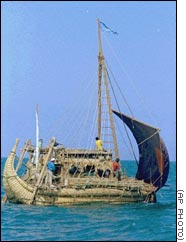 [/img]
No need, the offer to swap the Falklands for Ireland with Argentina still stands apparently.
combat ready c5s lmao.
The Cdo Log regiment, as with 29 and 54 , is / was made up of Army soldiers, not Navy, not Marines. They all support the RM Commando Brigade.
FOO's controlling the fire mission into Stanley were from 148 Commando Forward Observation Unit Royal Artillery. Army. Apologies if I suggested they were Cdo Log, as clearly 29 are RA.
Although I do like the idea that SF's were dropped onto Stanley airfield by a passing Vulcan bomber. As if he didn't have his hands full of other things, like bombs, at that time!
Dropping the atomic bombs on a beaten and ready to surrender Japan was more about curtailing Russian territorial ambitions in Manchuria and Northern Japan (and also French and British desires to regain SE Asian territories)
Sort of...however Japan wasnt ready to surrender, and the russian manchurian offensive was requested by the Allies and began AFTER the first bomb had been dropped.
The first atomic bomb on japan was justifiable on the grounds that it forced a surrender thus removing the need for a opposed landing on the Japanese mainland. The second less so but the Japanese where not going to surrender otherwise for sure.
My apologies, after some research it turns out there was unofficial reports that "in the event of the loss" of Hermes and Invincible, there was the offer of the use of an US Navy Carrier, rumoured to be the USS Eisenhower. Turned down for the obvious reasons, manpower, political fallout, unfamiliarity, and so on.
Reagan was in love with Maggie though, so not so massively far fetched...
TJ
The atomic bomb was never justified, nor was the use of those dastardly Sinclair C5's in the Falkland Islands (taken from A.Beevor - Leopoldo Galtieri,My Part in his Downfall fiber&fiber 1989), something that Sir.Clive Sinclair is still being hunted for by the War Crimes Commission in the Hague!
The Cdo Log regiment, as with 29 and 54 , is / was made up of Army soldiers, not Navy, not Marines. They all support the RM Commando Brigade.
Mate, honestly I KNOW that CLR is an RM regt (hence the name CLR RM). It contains a squadron of loggies previously called ordnance sqn now called logistic support squadron. CLR RM are based at chivenor, guess who was based at chivenor also?
BTW, who are 54?
(Not trying to be ****tish BTW)
The Vulcan raid on PS took one bomber, 4000 miles of ocean, 15 tankers & 17 air-to-air refuelings.
The point being that if Britain can hit The Falklands by air, they for sure, we can hit mainland Argentina.
The jump into the mid Atlantic I think you're refering to was made by Col H's replacement, David Chandler (it was a toss-up between him and Mike Jackson) who flew out 3 days after H's death.
I tink it was John Knott, the then Foreigh Secretary who let the cat out of the bag about Britain having SF troops on the ground in I think the Express Newspaper. That scuppered all ground opertaions within mainland Argentina before they'd begun.
[url= http://orbat.com/site/history/historical/falklands/ ]Here's the Orbat[/url] It was 9Sqn, although as I recall, 54RE were out there too, but there's no mention of it.

