am currently watching firefox on itv4 8) i know that the blackbird has one of the all time speed records,but no doubt there are now faster aircraft.what do you reckon is the current record holder (manned/unmanned).p.s you cannot say the space shuttle 😉
p.p.s here is a short video in remembrance to ernest borgnine r.i.p ernest 🙁
airwolf was the best helicopter ever 🙂
Any mig 25's still flying?
Love Firefox. watched it the other night.
Fastest planes currently are nasa/boeing SCRAM jet i believe. (but it cant take off and land on its own) it needs to be rocket assisted to a certain speed before the SCRAM jet fully functions if i recall
X15?
Mach 6.72. (4534mph)
Pretty quick.
[img]  [/img]
Not flying any more but still "in the world" as there are a couple on display in US of A.
I expect it's one we don't know about...
didn't a really fast unmanned plane crash into the sea recently?
X15 isn't still flying is it?
EDIT: Nope, last flew in 1970
Still the Blackbird, officially at least...
http://en.wikipedia.org/wiki/Flight_airspeed_record
[img] 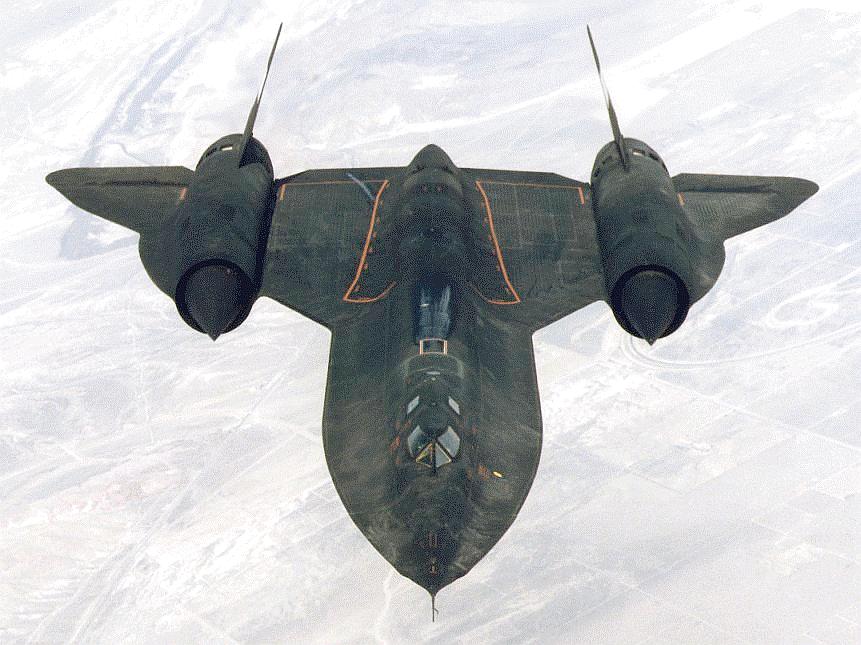 [/img]
Aurora innit
oops, sorry, I think there's someone at the door...
X-43 is the fastest airplane in the world. On 16 November 2004, the X-43 reached Mach 9.6 (7,000 miles or 11,265 kilometers per hour) according to NASA. The X-43 is an unmanned aircraft, which launches not from the ground but from a B-52 at about 40,000 feet (12.2 kilometers) in the air.
not maned though
[img]  ?height=255&width=320[/img]
Can we allow this thread to develop into a Blackbird love in?
Im sure I read something somewhere about them leaking fuel when on runways due to the expansion tolerances.
Any child/ young adult (and most adult adults too!) considering any career in Engineering should be made to read this book:
[img]  [/img]
http://www.amazon.com/Skunk-Works-Personal-Memoir-Lockheed/dp/0316743003
Simply one of the best engineering books every written imo 😉
I hadn't heard about fuel leaks in the Blackbird, but it might well be true-----the U2 had a lot of issues around fuel leaking when sitting on the runway.
Saw a Blackbird take off from a couple of miles away while working in Nevada years ago. That thing makes one hell of a noise on takeoff and gets speed and altitude very quickly.
Yep, Blackbird indeed did leak fuel while on the ground as when at altitude and speed this allowed for the expansion to seal the gaps, insane! Looking forward to seeing the Vulcan at Farnborough tomorrow (not flying) but still cool to stand next to it. 🙂
A chinook flew over work this morning. This is probably one of the coolest sounds an aircraft can make. That is all.. carry on with fast.
Every now and then something turns up and you think that alien technology is being used.
Blackbird is one of them.
Does the Blackbird count? It was retired years ago, so if the X-15 is a no so is the SR-71
Just makes you wonder why the Blackbird didn't just fly itself to pieces considering the tolerance gaps necessary. Must have been a blast to be an engineer at the Skunkworks!!!
I have always heard great things about the Farnborough air show--bet there are a lot of really cool planes to watch.
At the [url= http://www.museumofflight.org/cockpits ]Boeing Museum of Flight[/url] in Seattle, you can sit in the cockpit of a Blackbird. It is the only section left after a crash landing. They have a complete one too, of course.
"[i]A chinook flew over work this morning. This is probably one of the coolest sounds an aircraft can make.[/i]"
We get Chinooks here all the time - but today we had the Vulcan. Don't think I've heard that noise for 20+ years 🙂
Mig-25 for manned, still flying, not 'X-plane' though I'd imagine they'll be too shonky to fly at full tilt anymore.
Second the skunk works book - a brilliant read.
EDIT - there's a Blackbird at Duxford. And a ton of other cool stuff.
Hmmm..."flying today".
There are MiG-25s still flying, the F-15 is pretty quick too at 1,650mph. I think that an English Electric Lightning is about to be made airworthy again in the 'states, they're pretty darned quick too.
And do we mean manned or unmanned?
Yes the SR-71 leaked quite badly due to the thermal expansion tolerances. It wasn't a major issue as the jet fuel they used was actually quite hard to light.
Truly amazing aircraft New York to London in under two hours!
The X-15 was another amazing aircraft. It was decades ahead of its time. It was basically a resuable space plane. Above 100,000 feet it used manouvering rockets instead of its control surfaces for control. If the US had pursued it's development instead of the Mercury program they might have had the Space Shuttle in the 60's. Check out the "Dynasoar" project to see where it might have gone.
When I saw the Blackbird takeoff, I was working at the Nevada Test Site (of Area 51/Groom Lake fame)--I didn't personally have security access to the actual areas, but drove near it quite a few times. Had friends who worked there who never talked about it much----but made off-hand allusions to some very "unusual" aircraft flying out of there.
am enjoying reading your replies (some great aircraft mentioned).speaking about helicopters,i happened to be near beckhampton roundabout (near to avebury).i suddenly saw an apache longbow fly towards me,then stop behind some trees (practicing hiding behind cover most likely).they are pretty awesome helis (and they make a great noise too 🙂
Can we allow this thread to develop into a Blackbird love in?Im sure I read something somewhere about them leaking fuel when on runways due to the expansion tolerances.
Oh, absolutely; when they had one on the ground at the RAIT Fairford there were metal trays all around the underside of the plane to catch the drips, and you could actually watch fuel dripping from the plane. When they designed the
SR-71 and the YF-12A interceptor, (the armed version), the Skunkworks engineers not only had to work out how to work the metal, they first of all had to design the tools to allow them to work it, and weld it, too. Nobody had ever used titanium before. This was in 1962/63, remember.
Fastest manned aircraft? Probably Aurora, although it obviously doesn't exist. Like the F-117A didn't exist for something like eighteen years until its existence was finally admitted.
The SR-71 wasn't a military project; it was funded entirely by the CIA, and all the original pilots were spooks. Until the military threw a hissy fit and demanded a piece of the action!
have to admit I'm a big A12/YF12/SR71 fanboi.
must be something faster in service now (just off the books)... all sorts of rumours aren't there...
The SR-71 wasn't a military project; it was funded entirely by the CIA, and all the original pilots were spooks. Until the military threw a hissy fit and demanded a piece of the action!
Read a book about Area 51/Groom Lake (can't recall the title), but it went into quite a bit of detail about the friction between the CIA and the military around the area operations.
PJM1974 - MemberI think that an English Electric Lightning is about to be made airworthy again in the 'states, they're pretty darned quick too.
"Only" mach 2... But first in the world to supercruise IIRC, and a ridiculously good climber. Also they look fab, and that's good enough for me.
Thunder city in Cape town do the English Electric Lightning,little more than a rocket.
And over 100000ft unofficially
read the skunk works book, and you will learn that the aurora was the f117.
name was used in the budgets when it was stil secret.
have been in the seattle blackbird and saw the duxford one last week.
"Only" mach 2... But first in the world to supercruise IIRC, and a ridiculously good climber
I remember the "vertical take off's"
I remember reading something which said that the SR-71 was originally intended to launch reconaissance drones, then they realised there wasn't much point as there was basically nowhere it couldn't go. So fast it was virtually immune to missiles/tracking technology of the day.
the one in Seattle got the drone on its back.
read the skunk works book, and you will learn that the aurora was the f117.
Are you sure? The Skunkworks code name was ‘Have Blue’, and it's internal nickname was ‘Hopeless Diamond’, because no-one thought it would work. I've read the Skunkworks book a couple of times, and I don't recall Aurora being mentioned at all.
I remember reading something which said that the SR-71 was originally intended to launch reconaissance drones, then they realised there wasn't much point as there was basically nowhere it couldn't go. So fast it was virtually immune to missiles/tracking technology of the day.
That would be the M/D21 nice idea But didn't the the second test flight result in an accident when the drone cliped it carrier on separation?
D21 wound up being launched from under a B52 in the end didn't it...
Apparently the SR71 wasn't Immune to tracking, although it implemented 'Stealth' technologies it was regularly tracked by both civil an military systems but yep the tactic was if a SAM was launched it just accelerated and out-ran it...
The Engines are pretty amazing, that adjustable aero spike intake was intended to slow air enough for the engines to actually ingest, otherwise it would just blow itself out, apparently it actually became more fuel efficient the faster it went...
apparently they has plenty of single engine flameouts at high thrust and the plane would yaw to one side at circa mach3, while the poor buggers on board tried to restart an engine... Scary
I still like the fact that LBJ announced the YF12 as a partial cover for the A12/SR71, a Mech 3 interceptor would have been a pretty scary prospect at the time, apparently it worked in testing but just cost a bit too much per unit...
And Predating GPS it even had a stellar navigation system, an up-looking system that tracked the position of several stars to give a positional fix, rather than rely on ground references from 90000 feet up in the dark... Genius IMO, apparently it was quite accurate too...
p.s you cannot say the space shuttle
How about the X-37?
[img]  [/img]
[img]  [/img]
[url= https://en.wikipedia.org/wiki/Boeing_X-37 ]Wikipedia[/url]
Bloody awesome, supporting the development of space based weapons, and generally performing awesome orbits for months and months on end.
SR71:
The Engines are pretty amazing, that adjustable aero spike intake was intended to slow air enough for the engines to actually ingest, otherwise it would just blow itself out, apparently it actually became more fuel efficient the faster it went.
Don't forget that it was a ramjet/turbojet hybrid - the cone adjusted the internal air flow path to avoid the axial compressor at high speed. Very very very cool.
yes, I recall the "vertical take off" references at airshows when the Lightning did its run. Some RAF chappy giving you the low down over the tannoy mentions that there's more than one vertical take off jet in the force as right on cue the Lightning come barrelling down the run way at about 20 feet, stick goes back, afterburners go on and the ruddy thing goes up nigh on vertically like a rocket until all you could see was the glow from both engines somewhere way above you. Bloody brilliant stuff 😉
Loved that skunk work book, lent it to my Dad who had been in the RAF through 60's/70's/80's and into that sort of thing. He went and ordered 3 copies to hand out to spooky mates.
Also came across this while furtling around the web looking for SR71 info :-
[i]” There were a lot of things we couldn’t do in an SR-71 Blackbird (The Air Force/NASA super fast, highest
flying reconnaissance jet, nicknamed, “The Sled”), but we were the fastest guys on the block and loved
reminding our fellow aviators of this fact. People often asked us if, because of this fact, it was fun to
fly the jet. Fun would not be the first word I would use to describe flying this plane – intense, maybe,
even cerebral. But there was one day in our Sled experience when we would have to say that it was pure
fun to be the fastest guys out there, at least for a moment.
It occurred when Walt and I were flying our final training sortie. We needed 100 hours in the jet to
complete our training and attain Mission Ready status. Somewhere over Colorado we had passed the century
mark. We had made the turn in Arizona and the jet was performing flawlessly. My gauges were wired in the
front seat and we were starting to feel pretty good about ourselves, not only because we would soon be
flying real missions but because we had gained a great deal of confidence in the plane in the past ten
months. Ripping across the barren deserts 80,000 feet below us, I could already see the coast of
California from the Arizona border. I was, finally, after many humbling months of simulators and study,
ahead of the jet. I was beginning to feel a bit sorry for Walter in the back seat.
There he was, with no really good view of the incredible sights before us, tasked with monitoring four
different radios. This was good practice for him for when we began flying real missions, when a priority
transmission from headquarters could be vital. It had been difficult, too, for me to relinquish control
of the radios, as during my entire flying career I had controlled my own transmissions. But it was part
of the division of duties in this plane and I had adjusted to it. I still insisted on talking on the
radio while we were on the ground, however. Walt was so good at many things, but he couldn’t match my
expertise at sounding smooth on the radios, a skill that had been honed sharply with years in fighter
squadrons where the slightest radio miscue was grounds for beheading. He understood that and allowed me
that luxury. Just to get a sense of what Walt had to contend with, I pulled the radio toggle switches and
monitored the frequencies along with him.
The predominant radio chatter was from Los Angeles Center, far below us, controlling daily traffic in
their sector. While they had us on their scope (albeit briefly), we were in uncontrolled airspace and
normally would not talk to them unless we needed to descend into their airspace. We listened as the shaky
voice of a lone Cessna pilot who asked Center for a read-out of his ground speed. Center replied:
“November Charlie 175, I’m showing you at ninety knots on the ground.”
Now the thing to understand about Center controllers was that whether they were talking to a rookie pilot
in a Cessna or to Air Force One, they always spoke in the exact same, calm, deep, professional tone that
made one feel important. I referred to it as the “Houston Center voice.” I have always felt that after
years of seeing documentaries on this country’s space program and listening to the calm and distinct
voice of the Houston controllers, that all other controllers since then wanted to sound like that and
that they basically did. And it didn’t matter what sector of the country we would be flying in, it always
seemed like the same guy was talking. Over the years that tone of voice had become somewhat of a
comforting sound to pilots everywhere. Conversely, over the years, pilots always wanted to ensure that,
when transmitting, they sounded like Chuck Yeager, or at least like John Wayne. Better to die than sound
bad on the radios. Just moments after the Cessna’s inquiry, a Twin Beech piped up on frequency, in a
rather superior tone, asking for his ground speed in Beech. “I have you at one hundred and twenty-five
knots of ground speed.”
Boy, I thought, the Beechcraft really must think he is dazzling his Cessna brethren. Then out of the
blue, a navy F-18 pilot out of NAS Lemoore came up on frequency. You knew right away it was a Navy jock
because he sounded very cool on the radios. “Center, Dusty 52 ground speed check.” Before Center could
reply, I’m thinking to myself, hey, Dusty 52 has a ground speed indicator in that million-dollar cockpit,
so why is he asking Center for a read-out? Then I got it, ol’ Dusty here is making sure that every bug
smasher from Mount Whitney to the Mojave knows what true speed is. He’s the fastest dude in the valley
today, and he just wants everyone to know how much fun he is having in his new Hornet. And the reply,
always with that same, calm, voice, with more distinct alliteration than emotion: “Dusty 52, Center, we
have you at 620 on the ground.”
And I thought to myself, is this a ripe situation, or what? As my hand instinctively reached for the mic
button, I had to remind myself that Walt was in control of the radios. Still, I thought, it must be done
- in mere seconds we’ll be out of the sector and the opportunity will be lost. That Hornet must die, and
die now. I thought about all of our Sim training and how important it was that we developed well as a
crew and knew that to jump in on the radios now would destroy the integrity of all that we had worked
toward becoming. I was torn. Somewhere, 13 miles above Arizona, there was a pilot screaming inside his
space helmet. Then, I heard it – the click of the mic button from the back seat. That was the very moment
that I knew Walter and I had become a crew. Very professionally, and with no emotion, Walter spoke: “Los
Angeles Center, Aspen 20, can you give us a ground speed check?” There was no hesitation, and the replay
came as if was an everyday request. “Aspen 20, I show you at one thousand eight hundred and forty-two
knots, across the ground.”
I think it was the forty-two knots that I liked the best, so accurate and proud was Center to deliver
that information without hesitation, and you just knew he was smiling. But the precise point at which I
knew that Walt and I were going to be really good friends for a long time was when he keyed the mic once
again to say, in his most fighter-pilot-like voice: “Ah, Center, much thanks, we’re showing closer to
nineteen hundred on the money.” For a moment Walter was a god. And we finally heard a little crack in the
armor of the Houston Center voice, when L.A. came back with, “Roger that Aspen. Your equipment is
probably more accurate than ours. You boys have a good one.”
It all had lasted for just moments, but in that short, memorable sprint across the southwest, the Navy
had been flamed, all mortal airplanes on freq were forced to bow before the King of Speed, and more
importantly, Walter and I had crossed the threshold of being a crew. A fine day’s work. We never heard
another transmission on that frequency all the way to the coast. For just one day, it truly was fun being
the fastest guys out there.”
I've heard that story on here before, i still read it all again! Love it.
^ like.
Didn't Steve Austin crash an x1?
Can't believe that no-one's mentioned that it depends on how fast the conveyor belt is yet. This is STW isn't it...?
A chinook flew over work this morning. This is probably one of the coolest sounds an aircraft can make.
The Chinook is known as the Wacka Wacka in some circles (ooh, a chance to write [i]onomatopoeical[/i] 8) )
The [url= http://en.wikipedia.org/wiki/Virgin_Galactic ]Virgin Galactic [/url] plane can do 4000 km/h so a possible contender?
Re: the Blackbird I stayed in at the Riverside Inn in Downieville, California and the proprieter had some great tales about his time in the USAF including working on the SR71
http://www.downieville.us/About%20your%20host%20at%20the%20Riverside%20Inn,%20Downieville.html
Downieville is a great MTB destination!
It was probably me who posted it last time too, I am getting boring in my old age 🙂
There was another story about an SR71 asking Air Traffic permission to proceed to 50,000 ft and getting a response along the lines of "if you can get to that height you can fly there". The response was "we are decending from 80,000ft"
I cant find the actual report though
Loved that story!
There is an MoD airstrip in Kintyre, near Machrihanish that originally had over a 3km runway, one of the longest in Europe.
It was a NATO base that was heavily guarded by US Marines due to the fact the SR-71 would land there.
If you look at a map of it, it's right on the west coast of Scotland and points out over the north Atlantic.
The Blackbird could go there without risk of being seen/shot down.
Just picked up skunkworks for £2.84 posted on amazon bit of a PSA there.
For engineering/aviation books, these are properly ace reads
[img]  [/img]
[img]  [/img]
Most of the Macrihanish stuff is bunkum. The runway is only the longest in Scotland, 10,000 feet ain't that long. It did apparently have a seal team stationed there though and it is well situated to take advantage of the Atlantic!
Edited the above SR71 story to be easier to read, as it's a good one. Thanks for posting it Gee-Jay.
***
There were a lot of things we couldn’t do in an SR-71 Blackbird, but we were the fastest guys on the block and loved reminding our fellow aviators of this fact. People often asked us if, because of this fact, it was fun to fly the jet. Fun would not be the first word I would use to describe flying this plane – intense, maybe, even cerebral. But there was one day in our Sled experience when we would have to say that it was pure fun to be the fastest guys out there, at least for a moment.
It occurred when Walt and I were flying our final training sortie. We needed 100 hours in the jet to complete our training and attain Mission Ready status. Somewhere over Colorado we had passed the century mark. We had made the turn in Arizona and the jet was performing flawlessly. My gauges were wired in the front seat and we were starting to feel pretty good about ourselves, not only because we would soon be flying real missions but because we had gained a great deal of confidence in the plane in the past ten months. Ripping across the barren deserts 80,000 feet below us, I could already see the coast of California from the Arizona border. I was, finally, after many humbling months of simulators and study, ahead of the jet. I was beginning to feel a bit sorry for Walter in the back seat.
There he was, with no really good view of the incredible sights before us, tasked with monitoring four different radios. This was good practice for him for when we began flying real missions, when a priority transmission from headquarters could be vital. It had been difficult, too, for me to relinquish control of the radios, as during my entire flying career I had controlled my own transmissions. But it was part of the division of duties in this plane and I had adjusted to it. I still insisted on talking on the radio while we were on the ground, however. Walt was so good at many things, but he couldn’t match my expertise at sounding smooth on the radios, a skill that had been honed sharply with years in fighter squadrons where the slightest radio miscue was grounds for beheading. He understood that and allowed me that luxury. Just to get a sense of what Walt had to contend with, I pulled the radio toggle switches and monitored the frequencies along with him.
The predominant radio chatter was from Los Angeles Centre, far below us, controlling daily traffic in their sector. While they had us on their scope (albeit briefly), we were in uncontrolled airspace and normally would not talk to them unless we needed to descend into their airspace. We listened as the shaky voice of a lone Cessna pilot who asked Center for a read-out of his ground speed. Center replied: [i]“November Charlie 175, I’m showing you at ninety knots on the ground.”[/i]
Now the thing to understand about Centre controllers was that whether they were talking to a rookie pilot in a Cessna or to Air Force One, they always spoke in the exact same, calm, deep, professional tone that made one feel important. I referred to it as the “Houston Centre voice.” I have always felt that after years of seeing documentaries on this country’s space program and listening to the calm and distinct voice of the Houston controllers, that all other controllers since then wanted to sound like that and that they basically did. And it didn’t matter what sector of the country we would be flying in, it always seemed like the same guy was talking. Over the years that tone of voice had become somewhat of a comforting sound to pilots everywhere. Conversely, over the years, pilots always wanted to ensure that, when transmitting, they sounded like Chuck Yeager, or at least like John Wayne. Better to die than sound bad on the radios. Just moments after the Cessna’s inquiry, a Twin Beech piped up on frequency, in a rather superior tone, asking for his ground speed in Beech. [i]“I have you at one hundred and twenty-five knots of ground speed.”[/i]
Boy, I thought, the Beechcraft really must think he is dazzling his Cessna brethren. Then out of the blue, a navy F-18 pilot out of NAS Lemoore came up on frequency. You knew right away it was a Navy jock because he sounded very cool on the radios. [i]“Centre, Dusty 52 ground speed check.”[/i] Before Center could reply, I’m thinking to myself, hey, Dusty 52 has a ground speed indicator in that million-dollar cockpit, so why is he asking Centre for a read-out? Then I got it, ol’ Dusty here is making sure that every bug smasher from Mount Whitney to the Mojave knows what true speed is. He’s the fastest dude in the valley today, and he just wants everyone to know how much fun he is having in his new Hornet. And the reply, always with that same, calm, voice, with more distinct alliteration than emotion: [i]“Dusty 52, Centre, we have you at 620 on the ground.”[/i]
And I thought to myself, is this a ripe situation, or what? As my hand instinctively reached for the mic button, I had to remind myself that Walt was in control of the radios. Still, I thought, it must be done - in mere seconds we’ll be out of the sector and the opportunity will be lost. That Hornet must die, and die now. I thought about all of our Sim training and how important it was that we developed well as a crew and knew that to jump in on the radios now would destroy the integrity of all that we had worked toward becoming. I was torn. Somewhere, 13 miles above Arizona, there was a pilot screaming inside his space helmet. Then, I heard it – the click of the mic button from the back seat. That was the very moment that I knew Walter and I had become a crew.
Very professionally, and with no emotion, Walter spoke: [i]“Los Angeles Centre, Aspen 20, can you give us a ground speed check?”[/i] There was no hesitation, and the reply came as if was an everyday request. [i]“Aspen 20, I show you at one thousand eight hundred and forty-two knots, across the ground.”[/i]
I think it was the forty-two knots that I liked the best, so accurate and proud was Centre to deliver that information without hesitation, and you just knew he was smiling. But the precise point at which I knew that Walt and I were going to be really good friends for a long time was when he keyed the mic once again to say, in his most fighter-pilot-like voice: [i]“Ah, Center, much thanks, we’re showing closer to nineteen hundred on the money.”[/i] For a moment Walter was a god. And we finally heard a little crack in the armour of the Houston Center voice, when L.A. came back with,[i] “Roger that Aspen. Your equipment is probably more accurate than ours. You boys have a good one.”[/i]
It all had lasted for just moments, but in that short, memorable sprint across the Southwest, the Navy had been flamed, all mortal airplanes on freq were forced to bow before the King of Speed, and more importantly, Walter and I had crossed the threshold of being a crew. A fine day’s work. We never heard another transmission on that frequency all the way to the coast. For just one day, it truly was fun being the fastest guys out there.
Mig-25 for manned, still flying, not 'X-plane' though I'd imagine they'll be too shonky to fly at full tilt anymore.
They were never really capable of the speeds that the west initially worried that they could fly at. [url= http://www.airvectors.net ]Air Vectors[/url] (a very interesting site with write ups for a lot of interesting aircraft) reckons:
In operational service, the MiG-25P did not come close to meeting its range specification and could not be flown at Mach 3+ for any length of time. Belenko said that the redline speed of his Foxbat-A was Mach 2.5, and that at speeds of Mach 2.8 or more the engines tended to run out of control and burn up. There were tales in the West that Foxbats that did fly at Mach 3+ for an extended period needed an engine swap when they came back down.
[url= http://www.airvectors.net/avmig25_1.html#m2 ](Direct Link)[/url]
Rich_s - Member
Most of the Macrihanish stuff is bunkum. The runway is only the longest in Scotland, 10,000 feet ain't that long. It did apparently have a seal team stationed there though and it is well situated to take advantage of the Atlantic!
I've got a family member who was an officer in the RAF. He was based there.
He said there was many top secret flights there and the Americans were very secretive about it all.
when you have nothing to hide pretend, it confuses your allies and scares the enemy
raceface:
saw an apache longbow fly towards me,then stop behind some trees (practicing hiding behind cover most likely).they are pretty awesome helis (and they make a great noise too
Was riding a ZX-7R across Salisbury plain with one of them alongside, I looked at the pilot, the pilot looked at me. I rounded the kink that leads onto THAT straight. Looked at the pilot, he's still looking at me. I got my chin down and pinned it while he kept pace alongside. What pointless laddish fun! I'm not proud to admit (your honour) that we probably got up to at least 64, 65mph before I had to abort.
I like to think that if any speed trappery mujiggers had been out he'd have opened fire on 'em.
[img]  [/img]
Great photo carbon337!
Re SR71,
My Gran lived just outside Farnbourough, we were staying there in 1974 when the SR71 broke the transatlantic record, and landed at the air show. Flow right over the house. Nearly as good looking as Concorde.
Thinking about that groundspeed story, surely the difference would be accounted for in groundspeed = airspeed - windspeed, so at 80,000ft you could be traveling a long way but not so far over the ground due to the curvature of the earth? Or do they account for that? i.e. he was traveling through 1900 nautical miles of atmosphere once they'd corrected for the wind but only 1842 nautical miles on the ground.
Great photo carbon337!
Should have saved it for the next show us your shed thread!
another cool SR-71 tale
From Aviation Week & Space Technology
By Bill Weaver
Among professional aviators, there's a well-worn saying: Flying is
simply hours of boredom punctuated by moments of stark terror. And
yet, I don't recall too many periods of boredom during my 30-year
career with Lockheed, most of which was spent as a test pilot.
By far, the most memorable flight occurred on Jan. 25, 1966. Jim
Zwayer, a Lockheed flight test reconnaissance and navigation systems
specialist, and I were evaluating those systems on an SR-71 Blackbird
test from Edwards AFB, Calif. We also were investigating procedures
designed to reduce trim drag and improve high-Mach cruise
performance. The latter involved flying with the center-of-gravity
(CG) located further aft than normal, which reduced the Blackbird's
longitudinal stability.
We took off from Edwards at 11:20 a.m. and completed the mission's
first leg without incident. After refueling from a KC-135 tanker, we
turned eastbound, accelerated to a Mach 3.2-cruise speed and climbed
to 78,000 ft., our initial cruise-climb altitude.
Several minutes into cruise, the right engine inlet's automatic
control system malfunctioned, requiring a switch to manual control.
The SR-71's inlet configuration was automatically adjusted during
supersonic flight to decelerate air flow in the duct, slowing it to
subsonic speed before reaching the engine's face. This was
accomplished by the inlet's center-body spike translating aft, and by
modulating the inlet's forward bypass doors. Normally, these actions
were scheduled automatically as a function of Mach number,
positioning the normal shock wave (where air flow becomes subsonic)
inside the inlet to ensure optimum engine performance.
Without proper scheduling, disturbances inside the inlet could result
in the shock wave being expelled forward--a phenomenon known as an
"inlet unstart." That causes an instantaneous loss of engine thrust,
explosive banging noises and violent yawing of the aircraft--like
being in a train wreck. Unstarts were not uncommon at that time in
the SR-71's development, but a properly functioning system would
recapture the shock wave and restore normal operation.
On the planned test profile, we entered a programmed 35-deg. bank
turn to the right. An immediate unstart occurred on the right engine,
forcing the aircraft to roll further right and start to pitch up. I
jammed the control stick as far left and forward as it would go. No
response. I instantly knew we were in for a wild ride.
I attempted to tell Jim what was happening and to stay with the
airplane until we reached a lower speed and altitude. I didn't think
the chances of surviving an ejection at Mach 3.18 and 78,800 ft. were
very good. However, g-forces built up so rapidly that my words came
out garbled and unintelligible, as confirmed later by the cockpit
voice recorder.
The cumulative effects of system malfunctions, reduced longitudinal
stability, increased angle-of-attack in the turn, supersonic speed,
high altitude and other factors imposed forces on the airframe that
exceeded flight control authority and the Stability Augmentation
System's ability to restore control.
Everything seemed to unfold in slow motion. I learned later the time
from event onset to catastrophic departure from controlled flight was
only 2-3 sec. Still trying to communicate with Jim, I blacked out,
succumbing to extremely high g-forces. The SR-71 then literally
disintegrated around us.
From that point, I was just along for the ride.
My next recollection was a hazy thought that I was having a bad
dream. Maybe I'll wake up and get out of this mess, I mused.
Gradually regaining consciousness, I realized this was no dream; it
had really happened. That also was disturbing, because I could not
have survived what had just happened. Therefore, I must be dead.
Since I didn't feel bad--just a detached sense of euphoria--I decided
being dead wasn't so bad after all.
AS FULL AWARENESS took hold, I realized I was not dead, but had
somehow separated from the airplane. I had no idea how this could
have happened; I hadn't initiated an ejection. The sound of rushing
air and what sounded like straps flapping in the wind confirmed I was
falling, but I couldn't see anything. My pressure suit's face plate
had frozen over and I was staring at a layer of ice.
The pressure suit was inflated, so I knew an emergency oxygen
cylinder in the seat kit attached to my parachute harness was
functioning. It not only supplied breathing oxygen, but also
pressurized the suit, preventing my blood from boiling at extremely
high altitudes. I didn't appreciate it at the time, but the suit's
pressurization had also provided physical protection from intense
buffeting and g-forces. That inflated suit had become my own escape
capsule.
My next concern was about stability and tumbling. Air density at high
altitude is insufficient to resist a body's tumbling motions, and
centrifugal forces high enough to cause physical injury could develop
quickly. For that reason, the SR-71's parachute system was designed
to automatically deploy a small-diameter stabilizing chute shortly
after ejection and seat separation. Since I had not intentionally
activated the ejection system--and assuming all automatic functions
depended on a proper ejection sequence--it occurred to me the
stabilizing chute may not have deployed.
However, I quickly determined I was falling vertically and not
tumbling. The little chute must have deployed and was doing its job.
Next concern: the main parachute, which was designed to open
automatically at 15,000 ft. Again, I had no assurance the
automatic-opening function would work.
I couldn't ascertain my altitude because I still couldn't see through
the iced-up face plate. There was no way to know how long I had been
blacked-out, or how far I had fallen. I felt for the
manual-activation D-ring on my chute harness, but with the suit
inflated and my hands numbed by cold, I couldn't locate it. I decided
I'd better open the face plate, try to estimate my height above the
ground, then locate that "D" ring. Just as I reached for the face
plate, I felt the reassuring sudden deceleration of main-chute
deployment.
I raised the frozen face plate and discovered its uplatch was broken.
Using one hand to hold that plate up, I saw I was descending through
a clear, winter sky with unlimited visibility. I was greatly relieved
to see Jim's parachute coming down about a quarter of a mile away. I
didn't think either of us could have survived the aircraft's breakup,
so seeing Jim had also escaped lifted my spirits incredibly.
I could also see burning wreckage on the ground a few miles from
where we would land. The terrain didn't look at all inviting--a
desolate, high plateau dotted with patches of snow and no signs of
habitation.
I tried to rotate the parachute and look in other directions. But
with one hand devoted to keeping the face plate up and both hands
numb from high-altitude, subfreezing temperatures, I couldn't
manipulate the risers enough to turn. Before the breakup, we'd
started a turn in the New Mexico-Colorado-Oklahoma-Texas border
region. The SR-71 had a turning radius of about 100 mi. at that speed
and altitude, so I wasn't even sure what state we were going to land
in. But, because it was about 3:00 p.m., I was certain we would be
spending the night out here.
At about 300 ft. above the ground, I yanked the seat kit's release
handle and made sure it was still tied to me by a long lanyard.
Releasing the hea vy kit ensured I wouldn't land with it attached to
my derriere, which could break a leg or cause other injuries. I then
tried to recall what survival items were in that kit, as well as
techniques I had been taught in survival training.
Looking down, I was startled to see a fairly large animal--perhaps an
antelope--directly under me. Evidently, it was just as startled as I
was because it literally took off in a cloud of dust.
My first-ever parachute landing was pretty smooth. I landed on fairly
soft ground, managing to avoid rocks, cacti and antelopes. My chute
was still billowing in the wind, though. I struggled to collapse it
with one hand, holding the still-frozen face plate up with the other.
"Can I help you?" a voice said.
Was I hearing things? I must be hallucinating. Then I looked up and
saw a guy walking toward me, wearing a cowboy hat. A helicopter was
idling a short distance behind him. If I had been at Edwards and told
the search-and-rescue unit that I was going to bail out over the
Rogers Dry Lake at a particular time of day, a crew couldn't have
gotten to me as fast as that cowboy-pilot had.
The gentleman was Albert Mitchell, Jr., owner of a huge cattle ranch
in northeastern New Mexico. I had landed about 1.5 mi. from his ranch
house--and from a hangar for his two-place Hughes helicopter. Amazed
to see him, I replied I was having a little trouble with my chute. He
walked over and collapsed the canopy, anchoring it with several
rocks. He had seen Jim and me floating down and had radioed the New
Mexico Highway Patrol, the Air Force and the nearest hospital.
Extracting myself from the parachute harness, I discovered the source
of those flapping-strap noises heard on the way down. My seat belt
and shoulder harness were still draped around me, attached and
latched. The lap belt had been shredded on each side of my hips,
where the straps had fed through knurled adjustment rollers. The
shoulder harness had shredded in a similar manner across my back. The
ejection seat had never left the airplane; I had been ripped out of
it by the extreme forces, seat belt and shoulder harness still
fastened.
I also noted that one of the two lines that supplied oxygen to my
pressure suit had come loose, and the other was barely hanging on. If
that second line had become detached at high altitude, the deflated
pressure suit wouldn't have provided any protection. I knew an oxygen
supply was critical for breathing and suit-pressurization, but didn't
appreciate how much physical protection an inflated pressure suit
could provide. That the suit could withstand forces sufficient to
disintegrate an airplane and shred heavy nylon seat belts, yet leave
me with only a few bruises and minor whiplash was impressive. I truly
appreciated having my own little escape capsule.
After helping me with the chute, Mitchell said he'd check on Jim. He
climbed into his helicopter, flew a short distance away and returned
about 10 min. later with devastating news: Jim was dead. Apparently,
he had suffered a broken neck during the aircraft's disintegration
and was killed instantly. Mitchell said his ranch foreman would soon
arrive to watch over Jim's body until the authorities arrived.
I asked to see Jim and, after verifying there was nothing more that
could be done, agreed to let Mitchell fly me to the Tucumcari
hospital, about 60 mi. to the south.
I have vivid memories of that helicopter flight, as well. I didn't
know much about rotorcraft, but I knew a lot about "red lines," and
Mitchell kept the airspeed at or above red line all the way. The
little helicopter vibrated and shook a lot more than I thought it
should have. I tried to reassure the cowboy-pilot I was feeling OK;
there was no need to rush. But since he'd notified the hospital staff
that we were inbound, he insisted we get there as soon as possible. I
couldn't help but think how ironic it would be to have survived one
disaster only to be done in by the helicopter that had come to my
rescue.
However, we made it to the hospital safely--and quickly. Soon, I was
able to contact Lockheed's flight test office at Edwards. The test
team there had been notified initially about the loss of radio and
radar contact, then told the aircraft had been lost. They also knew
what our flight conditions had been at the time, and assumed no one
could have survived. I briefly explained what had happened,
describing in fairly accurate detail the flight conditions prior to
breakup.
The next day, our flight profile was duplicated on the SR-71 flight
simulator at Beale AFB, Calif. The outcome was identical. Steps were
immediately taken to prevent a recurrence of our accident. Testing at
a CG aft of normal limits was discontinued, and trim-drag issues were
subsequently resolved via aerodynamic means. The inlet control system
was continuously improved and, with subsequent development of the
Digital Automatic Flight and Inlet Control System, inlet unstarts
became rare.
Investigation of our accident revealed that the nose section of the
aircraft had broken off aft of the rear cockpit and crashed about 10
mi. from the main wreckage. Parts were scattered over an area
approximately 15 mi. long and 10 mi. wide. Extremely high air loads
and g-forces, both positive and negative, had literally ripped Jim
and me from the airplane. Unbelievably good luck is the only
explanation for my escaping relatively unscathed from that
disintegrating aircraft
Two weeks after the accident, I was back in an SR-71, flying the
first sortie on a brand-new bird at Lockheed's Palmdale, Calif.,
assembly and test facility. It was my first flight since the
accident, so a flight test engineer in the back seat was probably a
little apprehensive about my state of mind and confidence. As we
roared down the runway and lifted off, I heard an anxious voice over
the intercom.
"Bill! Bill! Are you there?"
"Yeah, George. What's the matter?"
"Thank God! I thought you might have left." The rear cockpit of the
SR-71 has no forward visibility--only a small window on each
side--and George couldn't see me. A big red light on the
master-warning panel in the rear cockpit had illuminated just as we
rotated, stating, "Pilot Ejected." Fortunately, the cause was a
misadjusted microswitch, not my departure.
Bill Weaver flight tested all models of the Mach-2 F-104 Starfighter
and the entire family of Mach 3+ Blackbirds--the A-12, YF-12 and
SR-71. He subsequently was assigned to Lockheed's L-1011 project as
an engineering test pilot, became the company's chief pilot and
retired as Division Manager of Commercial Flying Operations. He still
flies Orbital Sciences Corp.'s L-1011, which has been modified to
carry a Pegasus satellite-launch vehicle (AW&ST Aug. 25, 2003, p.
56). An FAA Designated Engineering Representative Flight Test Pilot,
he's also involved in various aircraft-modification projects,
conducting certification flight tests.
Apparently one of the very last SR71's built, designated the SR-71C, was a hybrid of an old YF12 aft section and the nose from an SR-71. Something was slightly off with it though and it wasn't quite straight. As a result it developed a bit of a yaw at high speed.
It was appropriately nicknamed "The Bastard"
Fantastic stories, guys, the airspeed check story never fails to make me smile.
I have read somewhere that back in the 60's when the SR71 was being designed Lockheed and the CIA knew that they would struggle to find enough quality manufactured titanium outside of the USSR, apparently those pesky ruskies were the leaders in titanium production at the time.
So the CIA knew they had to purchase it from them, (cant remember the bit about how they did it).
It goes on to say that only 15-20% of the titanium was of any use due to manufacturing flaws forcing the CIA/Lockheed to purchase a lot more from the Russians citing rumours that the Russians knew who it was for thus manufacturing flaws into the materials that were being ordered.
Quite amazing what with the cold war at it's height around that time.
Lots of good Concorde stuff here:
[url= http://www.pprune.org/tech-log/423988-concorde-question.html ]Concorde Tech stuff[/url]
Also, some great frame builders honed their skills in the cold war and immediate post era.
Greg Fuquay was an aviation specialist welder, IIRC.
My old man helped design bits of Lightnings - and TSR2, Concorde, Buccaneer, Harrier etc.
His favourite by a country mile was the Lightning. He's told me a great deal about some of the developments that were designed, but never implemented as the plane was apparently built for a ten year service life (but served for thirty years) and was always on the cusp of being replaced by something else that was invariably cancelled.
They were kept during the Cold War to intercept Soviet bombers heading our way. We knew that if the balloon went up, the Soviets would detonate an EMP over the North Sea and that our transistor equipped Phantoms would fall out of the sky, so the vacuum valve based avionics on the Lightnings would be robust enough to survive.
In the 1980s I heard some crazy stories about the types of aircraft that Lightning pilots had managed to get gun camera footage of. I disbelieved it of course, but only later once the MoD files were declassified did we discover that some US exotica had fallen victim to Lightning pilots in exercises - including a Lockheed U2 at 78,000 feet.
Seeing as talk has come round to the Cold War, mind if it resurrect this;
http://singletrackworld.com/forum/topic/when-wars-were-colder-planes-were-cooler
🙂
I had to sneakily touch the Blackbird on display in New York. Was my favourite aircraft all though my childhood.
Does the Shuttle count?
sorry it was the B-2 that had the Aurora code name in budget.
The Aurora of popular myth is the flying wedge thing with no wings and a pulse scramjet engine, isn't it?
Mol, correct. It's the black delta that gets reported flying up and down the North Sea, usually leaving a sort of smoke ring trail behind it, like a pulse jet, or scramjet. I remember reading a Telegraph feature about it, must be fifteen years or so ago.
http://www.abovetopsecret.com/forum/thread60763/pg1
Background
Does the United States Air Force or one of America's intelligence agencies have a secret hypersonic aircraft capable of a Mach 6 performance? Continually growing evidence suggests that the answer to this question is yes. Perhaps the most well-known event which provides evidence of such a craft's existence is the sighting of a triangular plane over the North Sea in August 1989 by oil-exploration engineer Chris Gibson. As well as the famous "skyquakes" heard over Los Angeles since the early 1990s, found to be heading for the secret Groom Lake (Area 51) installation in the Nevada desert, numerous other facts provide an understanding of how the aircraft's technology works. Rumored to exist but routinely denied by U.S. officials, the name of this aircraft is Aurora.The outside world uses the name Aurora because a censor's slip let it appear below the SR-71 Blackbird and U-2 in the 1985 Pentagon budget request. Even if this was the actual name of the project, it would have by now been changed after being compromised in such a manner.
The plane's real name has been kept a secret along with its existence. This is not unfamiliar though, the F-117a stealth fighter was kept a secret for over ten years after its first pre-production test flight. The project is what is technically known as a Special Access Program (SAP). More often, such projects are referred to as "black programs."
So what was the first sign of the existence of such an aircraft? On 6 March 1990, one of the United States Air Force's Lockheed SR-71 Blackbird spyplanes shattered the official air speed record from Los Angeles to Washington's Dulles Airport. There, a brief ceremony marked the end of the SR-71's operational career. Officially, the SR-71 was being retired to save the $200-$300 million a year it cost to operate the fleet. Some reporters were told the plane had been made redundant by sophisticated spy satellites.
But there was one problem, the USAF made no opposition towards the plane's retirement, and congressional attempts to revive the program were discouraged. Never in the history of the USAF had a program been closed without opposition. Aurora is the missing factor to the silent closure of the SR-71 program.
Testing such a new radical aircraft brings immense costs and inconvenience, not just in the design and development of a prototype aircraft, but also in providing a secret testing place for aircraft that are obviously different from those the public are aware of.
Groom Dry Lake, in the Nevada desert, is home to one of America's elite secret proving grounds. Here is Aurora's most likely test location. Comparing today's Groom Lake with images of the base in the 1970s, it is apparent that many of the larger buildings and hangars were added during the following decade. Also, the Groom Lake test facility has a lake-bed runway that is six miles long, twice as long as the longest normal runways in the United States. The reason for such a long runway is simple: the length of a runway is determined either by the distance an aircraft requires to accelerate to flying speed, or the distance that the aircraft needs to decelerate after landing. That distance is proportional to the speed at which lift-off takes place. Usually, very long runways are designed for aircraft with very high minimum flying speeds, and, as is the case at Edwards AFB, these are aircraft that are optimized for very high maximum speeds. Almost 19,000 feet of the runway at Groom Lake is paved for normal operations.
Lockheed's Skunk Works, now the Lockheed Advanced Development Company, is the most likely prime contractor for the Aurora aircraft. Throughout the 1980s, financial analysts concluded that Lockheed had been engaged in several large classified projects. However, they weren't able to identify enough of them to account for the company's income.
Technically, the Skunk Works has a unique record of managing large, high-risk programs under an incredible unparalleled secrecy. Even with high-risk projects the company has undertaken, Lockheed has a record of providing what it promises to deliver.
Hypersonic Speed
By 1945, only a small amount of jets had the capability of reaching speeds of 500mph. In 1960, aircraft that could exceed 1,500mph were going into squadron service. Aircraft capable of 2,000mph were under development and supposed to enter service by 1965. This was a four-fold increase in speed in two decades.
From this, the next logical step was to achieve hypersonic speed. The definition of hypersonic isn't as clearly defined as supersonic, but aerodynamicists consider that the hypersonic realm starts when the air in front of the vehicle's leading edges "stagnates": a band of air is trapped, unable to flow around the vehicle, and reaches extremely high pressures and temperatures. The edge of the hypersonic regime lies at a speed of roughly one mile per second - 3,600mph or Mach 5.4.
What is regarded by many as the most successful experimental aircraft program in USAF history, the X-15 rocketplane was created in response to a requirement issued by NASA (then NACA) for an air-launched manned research vehicle with a maximum speed of more than Mach 6 and a maximum altitude of more than fifty miles.
The X-15 program, which involved three test aircraft, went on to exceed all goals set and provided valuable data which has been used on many high speed/altitude aircraft of today, including NASA spacecraft, and most likely, the Aurora aircraft.
In the early 1960s, Lockheed and the USAF Flight Dynamics Laboratory began a hypersonic research program which would provide data on travel at hypersonic speed as well as more efficient shapes for hypersonic vehicles. From this program came the FDL-5 research vehicle, which beared an amazing resemblance to the North Sea Aurora sighting of Chris Gibson. Building on both the FDL-5 Project and Aurora, the aircraft which may have been seen over the North Sea could have been Northrop's A-17 stealth attack plane.
Possible forms of hypersonic propulsion that Aurora could be using include:
Pulse Detonation Wave Engines
Pulsejet Engines
Advanced Ramjets
Hypersonic RequirementsThere are three reasons why the North Sea sketch drawn by Chris Gibson is the most persuasive rendition of the Aurora vehicle. Firstly, the observer's qualifications, with which he couldn't identify the aircraft; which would have been instantaneous if the aircraft was known to the "white world". Second is the fact that the North Sea aircraft corresponds almost perfectly in shape and size to hypersonic aircraft studies carried out by McDonnell Douglas and the USAF during the 1970s and 1980s. The third factor is that the North Sea aircraft looks unlike anything else. No aircraft other than a high-supersonic vehicle, or a test aircraft for such a vehicle, has ever been built or studied with a similiar planform.
At hypersonic speeds, traditional aerodynamic design gives way to aero-thermodynamic design. In order for a hypersonic vehicle to remain structurally intact at such high speeds and stresses, the vehicle must produce minimum drag and be free of design features that give rise to concentrations of heat. The aircraft design must be able to spread the heat over the surface of the structure.
Thermal management is critical to high-speed aircraft, especially hypersonic vehicles. Skin friction releases heat energy into the aircraft and must be pumped out again if the vehicle is to have any endurance. The only way to do this is to heat the fuel before it enters the engine, and dump the heat through the exhaust. On a hypersonic vehicle, thermal management is very critical, the cooling capacity of the fuel must be used carefully and efficiently or else the range and endurance of the aircraft will be limited by heating rather than the actual fuel tank capacity.
So how will an aircraft reach such speeds? Conventional turbojet engines won't be able to handle the incoming airstreams at such speeds, they can barely handle transonic speeds. In the case of hypersonic propulsion, an aero-thermodynamic duct, or ramjet, is the only engine proven to work efficiently at such speeds. Even ramjets have drawbacks though, such as drag created in the process of slowing down and compressing a Mach 6 airstream.
To make a ramjet engine efficient is to spread the air over the entire length of the body. In a hypersonic ramjet aircraft, the entire underside of the forward body acts as a ramp that compresses the air, and the entire underside of the tail is an exhaust nozzle. So much air underneath the aircraft serves another purpose, it keeps the plane up.
The ramjets need a large inlet area to provide the high thrust needed for Mach 6 cruise. As a result, the engines occupy a large area beneath vehicle and the need to accomodate a large quantity of fuel means that an all-body shape is most feasible.
Structurally, the all-body shape is highly efficient. As well as being extremely aerodynamic, the average cross-sectional area being very large provides a great deal of space for load, equipment and fuel. This being inside a structure that is light and compact having a relatively small surface area to generate frictional drag.
The spyplane's airframe may incorporate stealth technology, but it doesn't really require it should its mission simply involve high altitude reconnaissance. Hypersonic aircraft are much harder to shoot down than a ballistic missile. Although a hypersonic plane isn't very maneuverable, its velocity is such that even a small turn puts it miles away from a SAM's projected interception point.
.
Choosing The Right Fuel
Choosing the right type of fuel is crucial to the success of Aurora. Because various sections of the craft will reach cruising-speed temperatures ranging from 1,000 degrees fahrenheit to more than 1,400 degrees fahrenheit, its fuel must both provide energy for the engines and act as a structural coolant extracting destructive heat from the plane's surface.At hypersonic speeds, even exotic kerosene such as the special high-flashpoint JP-7 fuel used by the SR-71 Blackbird can't absorb enough heat. The plausible solution is cryogenic fuel.
The best possibilities are methane and hydrogen. Liquid hydrogen provides more than three times as much energy and absorbs six times more heat per pound than any other fuel. The downfall is its low density, which means larger fuel tanks, a larger airframe and more drag. While liquid hydrogen is the fuel of choice for spacelaunch vehicles that accelerate quickly out of the atmosphere, studies have shown that liquid methane is better for an aircraft cruising at Mach 5 to Mach 7. Methane is widely available, provides more energy than jet fuels, and can absorb five times as much heat as kerosene. Compared with liquid hydrogen, it is three times denser and easier to handle.
Current Knowledge of Aurora
On 16 November 1998, a camcorder video was taken of a mysterious "fireball" in the sky. While this was very interesting, what was even more amazing was the aircraft which was seen shortly after flying at very high speed producing the mysterious "donuts-on-a-rope" contrails. Does this video, which is currently undergoing intense study at JPL, show the mysterious Aurora spyplane?
A newspaper article about this event was also written in the The Sun Herald newspaper.
Having occasionally being lost at 7 nm per minute at low level, I was once reassured by an ex B1 pilot that "you're not lost until you're lost at Mach 2". Fair point!
mikertroid - now I understand why the B1 did a flypast over Blackbush not Farnborough for the airshow a few years back 🙂
Flash, it seems entirely plausible that such a plane exists.. but then again what would it's purpose be these days, and why would it be so secret?
I'd have thought that it would be more useful having everyone know about it than not, in propaganda terms..?
Any plane with a 29er wheelset would be the fastest 😀
How do these high speed aircraft fare when taking off from conveyor belts?
I have no idea what the fastest plane is but I bet one of the ****ing things will be flying over my head this week. Farnborough airshow, what a pain in the arse!
Have just let a friend borrow my copy of the book, so cant check, but isnt there a SR71 pilot telling about a flight over Russia, where he can see the russian jets trying to intercept, being shot down by their own SAM?