I love this kind of stuff, especially when it could lead to the eradication of the damned 'c' word.
[url= http://www.independent.co.uk/news/science/cure-for-cancer-might-accidentally-have-been-found-and-it-could-be-malaria-a6693601.html ]Cure for cancer might accidentally have been found[/url].
This has been shown to work in mice with artificially implanted tumours - while this is common proof-of-concept research for experimental cancer it's a long, long road from this to something that is clinically effective in humans.
This is the second mainstream media article I've seen on this, both claiming 'this could work in 90% of cancers' and then providing nothing to back that spectacular figure up.
Haven't read the original articles, but it's really "science journalsim at it's worst" - headline grabbing article with no facts or detail 🙁
Okay, it might be bad science reporting but I am still interested in the process of discovery - accidental or deliberate. As a researcher in the humanities, I understand how hard it is to communicate findings to lay people; but this article reminded me of the excitement of discovery that must accompany such lab work.
I never take seriously claims for immanent cures (or anything else for that matter).
In concession to what you have said, though, I give you this:
[img] 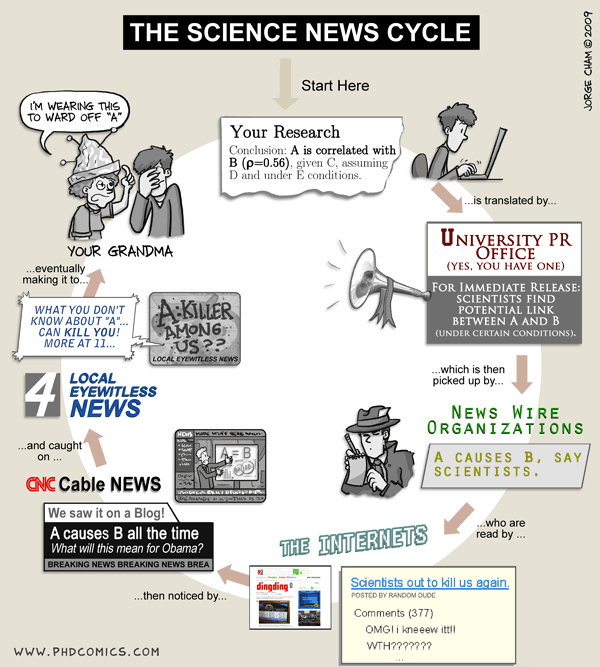 [/img]
Sounds like
[url= https://imgs.xkcd.com/comics/t_cells.pn g" target="_blank">https://imgs.xkcd.com/comics/t_cells.pn g"/> [/img][/url]