UPDATE: Reviews section refreshed, redesigned, searchable: Go take a look
Anything by James Holland.
I'm enjoying Stuart Maconie's The Pie at Night: In Search of the North at Play.
It's a companion to the excellent Pies and Prejudice.
Lined up next is Max Hastings, Operation Pedestal: The Fleet That Battled to Malta 1942.
(My mum and her family were on Malta with the British Army and this fleet saved their lives).
Also worth checking out are the sports/social commentarty books by Harry Pearson: The Beast, the Emperor and the Milkman: A Bone-shaking Tour through Cycling's Flemish Heartlands is about the Flemish one-day cycling classics.
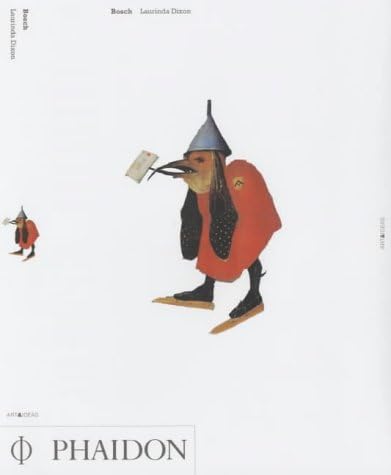
Bosch by Laurinda Dixon
Product Description
Hieronymus Bosch (c.1450-1516), one of the major artists of the Northern Renaissance, had a seemingly inexhaustible imagination. Known as the creator of disturbing demons and spectacular hellscapes, he also painted the Garden of Earthly Delights,...
Dixon presents Bosch as an artist of his times, knowledgeable about the latest techniques of painting, active in the religious life of his community and conversant with the scientific developments of his day. She draws on popular culture, religious texts and contemporary medicine, astrology, astronomy and alchemy - now discounted but then of interest to serious thinkers - in order to investigate the underlying meaning of Bosch's art.
A friend of mine recently lent me Prisoners of Geography, and I'm excited to read it too!
I haven't read a lot of books that fit into that category, but it sort of reminds me of Yuval Noah Harari's Sapiens: A Brief History of Humankind. Check it out, if you haven't yet. Was a great read.
Greg Egan, Permutation City.
Plight of the Living Dead by Matt Simon
Great book all about different forms of zombification in the insect world: fungi that take over ants, wasps that mind control beetles and wear their exo-skeleton as a suit of armour. Grisly but really interesting in that ‘ain’t nature amazing but absolutely terrifying’ way.
I'm currently reading Sapiens, and while it's interesting I'm finding myself getting increasingly wary of what the author's writing. He doesn't seem to have any problem building grandiose theories based on the flimsiest of evidence. Do any reading about ancient archaeology and you'll soon find out that nearly all finds end up with different interpretations, yet the author's always happy to present his interpretation as definitive while paying only lip-service to other possible meanings.
I'll finish the book - it's a very easy read and it does have a fair few bits that do make you stop and think - but I doubt I'll believe more than half of it.
As a fan of behavioural economics, this sheds an interesting light.
How to Make the World Add Up: Ten Rules for Thinking Differently About Numbers https://www.amazon.co.uk/dp/0349143862/ref=cm_sw_r_cp_api_glt_fabc_5X3TY4G3H23FWNG4BMJJ
Black Box Thinking by Matthew Syed. It's about examples of learning from success and from mistakes, or in some cases not learning.
I found this in one of those little free book exchanges by the side of the road recently, thought it looked interesting; and it's excellent - really gripping read.
https://www.amazon.ca/Man-Who-Would-King-Afghanistan-ebook/dp/B00699S9NQ
Pretty much anything by Michael Lewis - an amazing ability to make the complex understandable and interesting.
Moneyball is my favourite.


