UPDATE: Reviews section refreshed, redesigned, searchable: Go take a look
Now the word on the street here as always been, 'flues must be 50mm from any combustible material'. I've checked in the regulations and agree.
The first stove fitter we had agreed with this. Then so did the second and third. Must be true then.....
What the second guy said was that we could put fireboard in between the flue and the cumbustible which made everything alright.
That doesn't sound right to me. So before we bin him off, that's not true is it?
The only thing I can confirm is that every installer tells me something different. I'd look at the regs and make your own decision then tell them what you want fitted and how. Any doubts, speak to building control rather than the fitter. I have two more installers due out on Monday to give quotes - I hope one of them gives me some confidence...
I was planning on putting a wooden Lintel in the fireplace, but the installers have told me 3 x the flue width away from anything combustible. I am sure almost all the examples I have seen have been closer than this ?
Edit : Just to add a bit of colour to this thread, I am planning on getting this one...I was talked out of the Massive 12kw one that I first wanted.
[img] 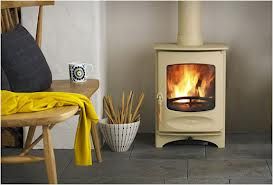 [/img]
righog- read part j carefully.
it actually EXCEPTS mantle shelfs from the 50mm from outer surface guidance.
i will eat my hat if you can get my oak mantle to go up in flames just from chimney heat.
unless you mean an actual wooden lintel instead of a mantle and in which case your mad 😉
righog- read part j carefully.
I am absolutely, sure this is good advice, and I have looked at it ( the same way I look at small print 😀 )
after having a look I decided that for once I would just let someone else fit it, pay the money and also get the chimney lined. But I am going to build the fireplace, and my plan for this would appear to be mad, I was thinking of a "huge" piece of wood.
[img] 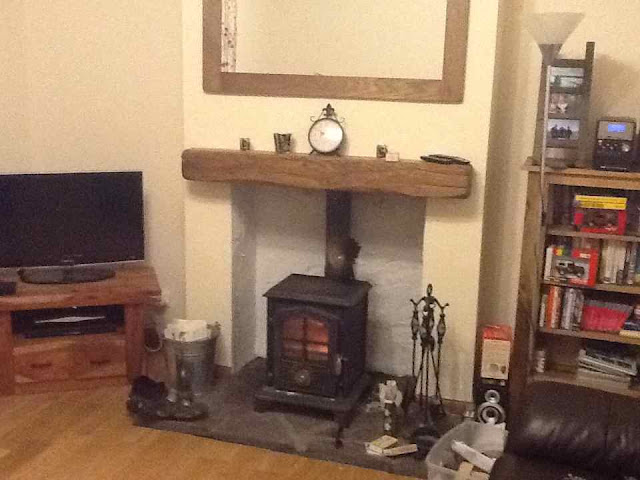 [/img]
heres one i made earlier 😉
piece of wood is bolted on as a mantle - its in no way structural.
I know it's boring, and bureaucratic, but anyone fitting a wood burner - remember you either need to use an installer registered on a competent persons scheme (most commonly HETAS), or submit a Building Regulations application for the work to be legal.
Also, you generally need permanently open combustion vent, & C0 detector!
FWIW, I'm a building control surveyor, and do apply the 50mm, have never heard the 3x flue thing, but would recommend using a fireproof board (masterboard etc) if the appliance and/or flue are very lost to a timber lintel over mantle piece, or anything else remotely combustible.
Have seen skirting boards charred and plasterboard start to crumble/fail from appliances too close to the wall, be careful!
*goes back to actual work*
you forgot to add "in england and wales" to your post there core.
Trail rat
That's very similar look that I am after, so a lot easier to do it your way. Thanks,
That surprises me a little. 50mm is barely enough gap to ventilate the stove. Unless you mean the distance from the chimney rather than the flue/liner? Diagram 19 (page 33) of Part J and Diagram 21 are pretty clear to me. You can halve the gap (by air rather than at the chimney) to combustibles by adding a heat shield. Though as Trail Rat suggests some aesthetic woodwork is exempt from those requirements.
"Fireboard" is only designed to stop a fire from progressing through a house, once, it is not designed to be resistant to cycles of heat. Certainly use cement board for around the fireplace to limit cracking etc.
No you can't put fireboard in as the combustible material is still within 50mm therefore doesn't comply. And don't generalise on 50mm either it is dependant on the flue that you use. All flue should be marked with a code which will give clearances.
The 3x diameter is reference to single skin flues.
Be careful.
[img]  [/img]
how i viewed the house before i bought it ..... does not conform to anything..... i just hope they never used it. im sure that wee stuffed dog is combustable......
not to mention EVERY bit of woodwork round that stove was no more nailed into place.
50mm to combustables applies to twin wall insulated flue systems,some systems specify more. Regs for single skin uninsulated are 3x width of flue pipe so 150mm pipe = 450mm free air gap, if you put a wooden beam closer than this over time the beam becomes very dry as it loses its moisture, if a chimney fire occured the flue pipe would glow red hot this would produce enough heat radiation to ignite the beam and possibly burn your property to the ground. This air gap can be reduced by 50% if a sheet steel heat shield is fitted with a 12mm air gap.
If in doubt download document j from planningportal.gov.

