UPDATE: CLASSIFIEDS section refreshed, redesigned, searchable: Go take a look
In preparation of impending snowmagedon tomorrow, last night I fitted the spare set of steel wheels with winter tyres to my wife's Clubman D.
Took the car for a drive after fitting them last night and all was fine. However, I ended up taking her car to work today and after driving for about 4 miles the tyre pressure warning light came on. Stopped at garage, checked pressures and all fine. Did the same check coming home from work and pressures still the same. I re-set the warning light this evening, took another drive and the light has stayed off. Fine.
However, what would have made it come on in the first place?
It does not have runflats.
Thanks.
Don't they need resetting when you change tyres or wheels? Which is why it was ok once you'd reset it? One type measures change from a start point rather than an absolute value.
I suspect that the original wheels have had TPMS (Tyre Pressure Monitoring System) fitted and the spares don't. In the absence of a signal from the monitors in each wheel valve the TPMS has caused the warning light.
This is the situation I'm in with me F56 Mini Cooper having bought and fitted some steel rims with winter tyres; I can live with the amber light on as the sensors are circa £65 each!
Does the mini come with a Tire Pressure Monitoring system? Here comes a tale of woe...
I'm in Calgary and when I moved here a few years ago I got an Mitsubishi (actual make is irrelevant). Come winter I did the "sensible thing" and purchased winter tires and on the advice of my colleagues I had them fitted to a second set of wheels. I used the local equivalent of Kwik-Fit. Almost immediately the warning lights came on and upon returning to the retailer I learnt that the probable issue was that the OEM wheels contain TPMS so the car now can't detect the pressures and triggers the alarm. I had two choices - live with the alarm or purchase a second set of TPMS sensors for the winter wheels at about $150 / wheel and then also pay for the engine management system to be re-configured for the new sensors.
In the long run it's been okay but at the time it was very frustrating. Further discussions (this is a big topic for water coolers in Calgary every Autumn) is that some cars don't have TPMS; some work (apparently) by measuring radius of wheel or similar but some, like mine, are a bluetooth style system with the sensor installed inside the rim. If you just swap tires then it's all fine but if you use a second set of rims then you can get the issue.
So... this might be the problem.
interesting stuff.
M, how do the "bluetooth" type thingies get their power?
The tyre pressure monitor except for the new model 14 plate or later uses the ABS to detect low pressure. You need to initialize the system when you change wheels or put air in. Check the manual as process varies across range. Most Mini dealers will reset FOC and check pressure / ABS code.
I have no idea. I think it's a battery and eventually they fail...
Grabbed this image off amazon where you can see it's part of the valve stem.
[img] 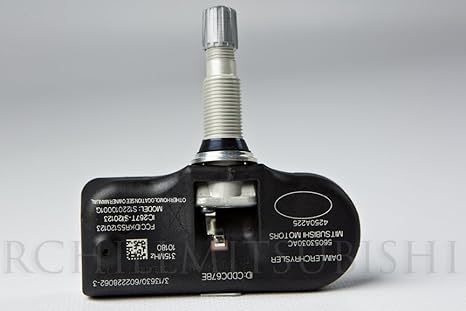 [/img]
What Tonyf1 says.
roughly this you will probably get a box with a tick rather than resetting in depending on year. it'll reset while driving after you initilise it. Sorry for the cheesy video 😀
I had gen 1 and 2 minis.
The pressure was actually monitored by a change in the diameter of the wheel. The lower pressure of a tyre causes a smaller diameter wheel, detected by the antilock brake sensor.
Just check the pressure then reset.
OK here goes! My Yeti has a tyre pressure monitoring system. It works using the abs sensors. When the tyre deflates the rolling diameter changes. This is picked up by the abs sensor and triggers the warning. It drops to about 20 psi before it triggers. I think all new models from 2015 have to have TPMS so for example a focus doesn't because it's already in production. Crazy rule!
I think it is the case that new [b]models[/b] since Nov 2012 must have TPMS as standard, but since Nov 2014 every individual new car sold must have it, regardless of how long that model has been on sale for. That's my understanding of the regulations.
The car I'm buying has a tyre pressure monitoring system that uses funky valves which is much more accurate than the rotational diameter system.
This is a good thing until you fit tyres without the right valve, at which point the car has a fit 🙁
Aren't the valves seperate from the tyre? Or do you swapping complete wheels?

