Forum menu
show off your skills... I want to pose a problem.
I have a space that is 110cm x 120cm.
I wish to cover the space with floor tiles.
I have 90 blue tiles 5 x 5cm, 50 white tiles 5 x 5cm and 100 red tiles 10 x 10cm
The pattern needs to be random and needs to be in a brick formation:
[img] 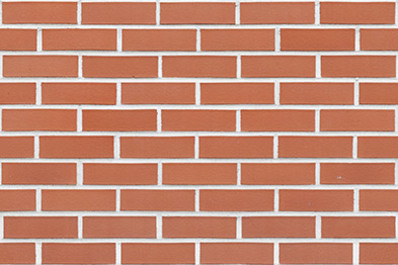 [/img]
as opposed to:
[img]  ?c=2[/img]
The space doesn't have to be filled to the edges, and some tiles could be cut if necessary
Is there an algorithm or even a piece of software that I can use?
Do you want random or disordered? A random sequence of rules may appear to have some order on a small sample. Which may not look as you wish.
Personally I would take some post-it notes and use them to experiment and come up with a pattern that I like the look of.
Red, white and blue tiles?
Make a Union Jack, or a Tricolor if you're feeling saucy.
Totally random will look a bit weird. Why not some sort of repeating pattern?
I'd get out the graph paper and sketch done ideas.
I have a space that is 110cm x 120cm.
It's only a small space Just keep doing dry runs until you get a pleasing result, random might look odd and organised might look odd too.
Think of it like a jigsaw, swap the tiles around until you like it.
Applying some sort of mathematical algorithm seems like over engineering the situation.
I've just laid some random patterned wall tiles. 5 different designs. I ended up just laying out the tiles on the floor and arranging by eye. Sometimes genuinely random patters doesn't look right - depends how it works out at the edges, and some patterns stand out more than others, so even though it might be truly random, more dominant pattern stands out more so you might want to thin out the density of those more dominant patterns, so you'll end up with differing numbers of tiles. And it is OK to have the same pattern tile together or corner on corner. So to get the best visual effect I think you're just better off laying them out on the floor, arranging them in a trial and error basis until you get the look you're after.
There isn't going to be an algorithm. But some interior design advice - you don't really want random because you might end up with something that looks really wrong - you could end up with all the colours on one side or something.
Best bet is as suggested above and either use post-its or the real tiles to arrange them pleasingly, then take a photo and work from that.
Look at bin packing algorithms perhaps?
I have 90 blue tiles 5 x 5cm, 50 white tiles 5 x 5cm and 100 red tiles 10 x 10cmThe pattern needs to be random and needs to be in a brick formation:
How can it be in a brick formation when some of your tiles are twice the height of the others?
Cut the red ones in to quarters, throw the entire lot into a bucket, give it a big shake and then lay them as you pull them out of the bucket with a half-tile starting every other row. Put the offcut half-tiles in another bucket and use them to end the incomplete rows randomly when you've finished (assuming a space that's the width of a whole number of half-tiles).
It'll almost certainly look like shit, but it meets your design brief.
no one willing to take on the challenge yet then? 🙁
How can it be in a brick formation when some of your tiles are twice the height of the others?
am I gonna havta introduce a third tile size?
maybe even a fourth?
shit's ****ed up if there isn't anyone here that can work it out
Like this?
[img]  [/img]
you only need 97 10 x 10 tiles btw
Random is much less random than you think. It's actually quite difficult to make a pseudo random sequence. Don't make it too 'overtly' random or it'll look falsely random. You should get runs on 3,4,5 of the same colour if it's truly random.
What brick formation? There are many.
Or by brick formation do you just mean no more than two tile corners should meet?
Oh sorry the brick formation has just appeared at the top of this post. It didn't come up earlier. I retract my query.
Looking at this in the vertical aspect:
To maintain the brick bond pictured you can only lay the tiles in continuous horizontal rows of either 10cm high or 5cm high tiles, the vertical joints in each row offset from the one below.
Ignoring colour, work out the total number of horizontal rows of 5cm high tiles you have that will fill 120cm width according to the quantity available. Do the same with the 10cm high tiles. Sketch all of these rows on a bit of paper and assign each row a number. Write down each row number on a separate bit of paper, screw them all up and ask a STW member to draw them out of a [s]hat[/s] helmet. The order you pick them out in will define the sequence of 5cm/ 10cm rows vertically.
Your 10cm high rows will be all red colour.
Mark each white and blue physical tile with an individual number, then write these numbers on separate bits of paper, and perform hat selection again to get the white/ blue colour sequence in the 5cm high rows.
QED
Of course if you don't have to tile to the edges, then the above is a lot of tosh, but then your floor will not be completely tiled.
Yunki - am I a winner?