UPDATE: CLASSIFIEDS section refreshed, redesigned, searchable: Go take a look
SaxonRider, with your canoe experience, the main thing you'll need to learn, apart from tides and sea conditions, is balancing a narrower boat. Your course at Cardiff will be in whitewater boats, where you lock yourself in so that you can put the boat on edge. A sea kayak is best paddled with a more relaxed fit, where you sit upright in the middle of the boat and let it move about a bit. The other difference compared to canoe is that on sea kayak tour, you need everything like camera, maps, snacks, to hand from the cockpit, as you can't move about the boat.
[url= https://live.staticflickr.com/8013/7281982372_7042acc845_h.jp g" target="_blank">https://live.staticflickr.com/8013/7281982372_7042acc845_h.jp g"/> [/img][/url][url= https://flic.kr/p/c6u4Ed ]IMGP3249[/url] by [url= https://www.flickr.com/photos/matt_outandabout/ ]Matt Robinson[/url], on Flickr
Living where we are really helps...
(yet) another vote for joining a club. Would be worth discussing any potential boat purchase with the club as well. The club I'm with wants for most club trips you to have an enclosed (not SOT) boat with deck lines so assisted rescues by the group are possible.
I started kayaking about 3 to 4 years ago after giving up winsurfing (serious foot injury). Initially bought a 14ft touring kayak with which I explored the local (flat) rivers, estuaries and harbours. Local area is the Solent so plenty of safe options but also took the boat to Dart and Salcombe. At that point paddling was limited to benign conditions and locations I could get to shore by myself if self rescue didnt work. It was the desire to do more coastal exploring in more committing conditions that lead me to joining a club so i could go on group trips. Also coincided with getting a 'proper' sea kayak (NDK Romany Surf in my case). Most of my paddling is now coastal exploring, Jurassic coast, trips over to the IoW etc. Not particularly interested in the Gnarr side but have tried a bit of playing in tide races and even small surf. Done a couple of club trips to North Devon and Pembrokshire: Little Haven and Solva for coastal, Milford Haven estuary for a bit more shelter.
Learnt to roll with the half day course and then pool sessions organised by the club. Its pretty reliable in the pool but only 50-50 in the real conditions you likely to fall in.

Might as well join in the corruption of the thread.
What Greybeard thinks saxonrider wants to do looks bloody lovely.
This is what I do, which is fun, but rarely lovely. First race back in March since September 2000 cannot wait.
[url= https://i.postimg.cc/RFNrjS72/F565-B597-5-E5-E-47-ED-AA5-D-8-A44-B4-DC5699.jp g" target="_blank">https://i.postimg.cc/RFNrjS72/F565-B597-5-E5-E-47-ED-AA5-D-8-A44-B4-DC5699.jp g"/> [/img][/url]
This is what I do, which is fun, but rarely lovely. First race back in March since September 2000 cannot wait.
And that is what I used to do in my youth. That and sprint racing.
A bit of kayak surfing and slalom for a bit of occasional off season fun.
Btw, the Descenso del Sella race in Spain is both fun and crazy on a beautiful river.
On the inflatable side, we needed a second canoe to take the whole family so I bought this just before Xmas
https://www.instagram.com/mr_evilgoat/p/CX_cCRVMR3x/?utm_medium=copy_link
It's a neris smart. It has an aluminium frame and inflatable sides. So has shape and paddles ok but folds down and is quick to assemble. Very tough fabric and can be used as a canoe or kayak and spray decks are available.
Amazing trip quite a few years ago. About 6 hour crossing. Set off at dawn from Rest bay and saw a whale/basking shark.

Deleted, Can't post photos, sorry...
I'm not sure there are that many opportunities for easy touring in Wales. I would love to be wrong though.
@kayak23 Rest bay to Lundy is 45 miles no? How did you plan that trip? How did you manage tides and currents?
How did you plan that trip? How did you manage tides and currents?
https://www.waterstones.com/book/south-west-sea-kayaking/mark-rainsley/9781906095772
Though I'm guessing he didn't bother with the book!
Yeah, I went with the author of that book. I just got up and paddled a boat 😂
How did you manage tides and currents?
We were incredibly lucky with the weather. It was like a mill pond there and back.
Which is lucky because I was cacking meself quite frankly. The sea gives me the willies.
Can't believe we haven't had this yet.
@kayak23 Rest bay to Lundy is 45 miles no?
I'm an idiot. Lee Bay, not Rest bay. It's below Ilfracombe.
Not sure why I had Rest bay in my head.
There's q beautiful hand made apache canoe for sale in the classifieds! 15ft tandem all the trimmings
Lee bay is still quite a paddle but not quite so epic. some from this summer:
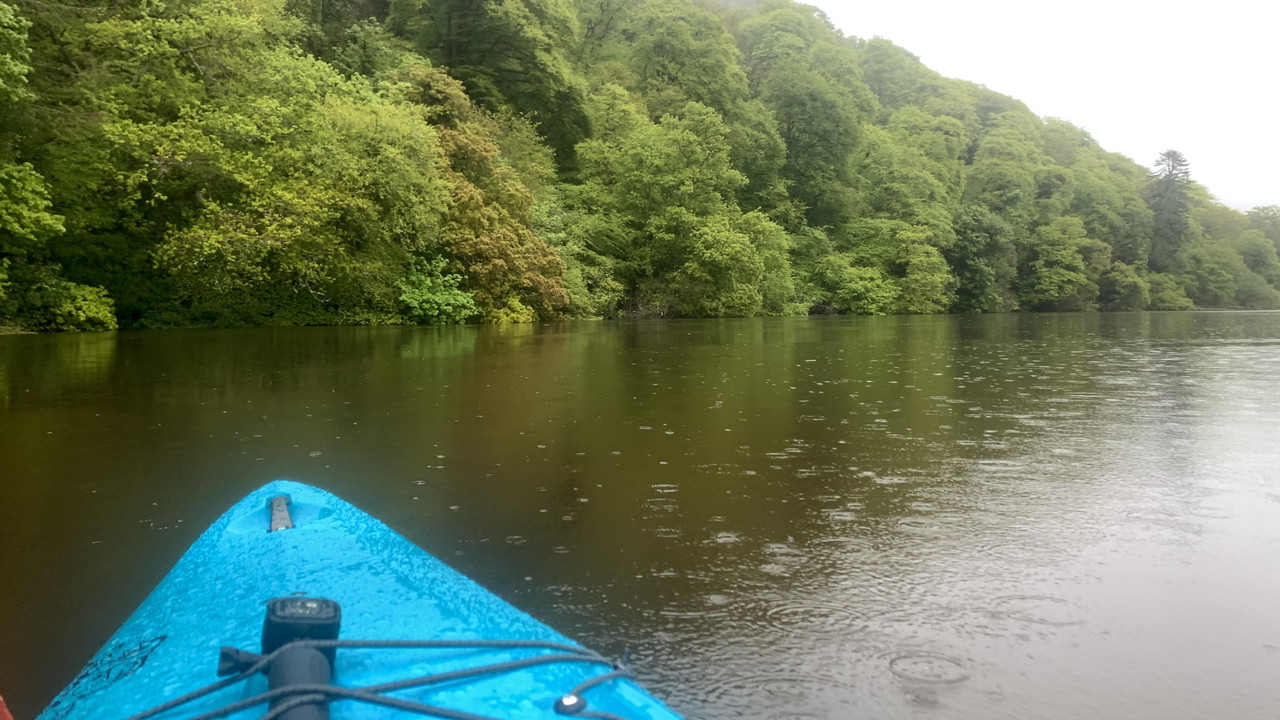
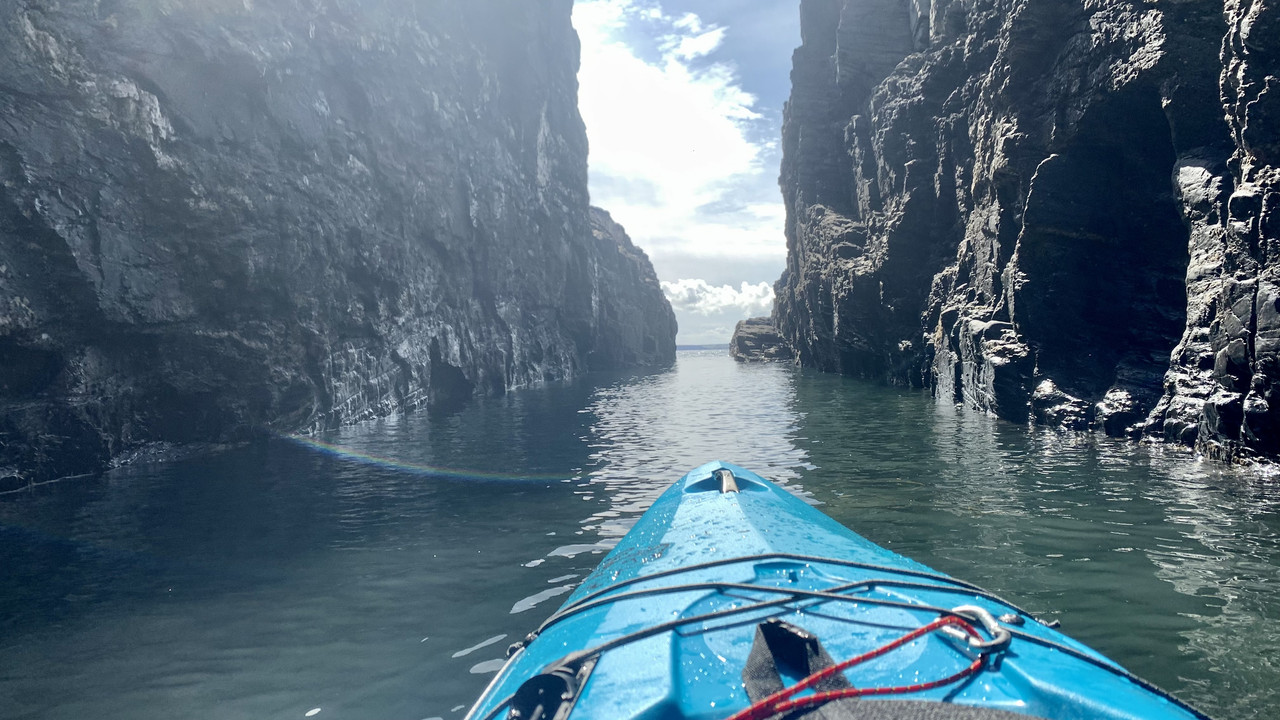

100% join a club.
I'd also add - if the above is the ambition, an inflatable kayak is likely to be less than ideal, perhaps even dangerous. I can't find a lot of stuff doing long-distance with exposure in inflatables other than by companies that are trying to sell their inflatables.
But if inflatable is the only option - then the training you get in a club will be the thing that keeps you safe 🙂
if the above is the ambition, an inflatable kayak is likely to be less than ideal, perhaps even dangerous
Can you expand on that?
They're slow, they're more affected by wind and waves than a hard shell, if they're damaged they lose structural integrity. Most have designs that inhibit effective paddling and they tend to have high primary but low secondary stability which is not ideal.
They're fine as "toys" (and I have one in the loft) but they have significant issues if you are trying to take them outside of a fairly narrow sensible useage window.
Well were talking about the drop stitch ones as pictured above. I'm not sure all of your criticisms apply to those.
I have a cheap one and yes it isn't ideal but it does work. Certainly easier and drier than swimming.
This all smacks of people suggesting expensive trail MTBs for people who just want to ride back roads and fire roads. Of course the context is different for water sports but if you just want to move across a modest body of flat safe water surely you can do that in an inflatable?
Aye, you’re right. But didn’t the OP say he wanted it for the sea?
Somebody else mentioned that a decent paddle is a good investment. I have the standard Decathlon one, can somebody recommend a decent upgrade. Happy to go second hand. Just for canal/reservoir duties.
. Of course the context is different for water sports but if you just want to move across a modest body of flat safe water surely you can do that in an inflatable?
You can of course, but as you suggest, it's very different being stranded out in the middle of a reservoir and not knowing what to do, then it is at the other side of Llandegla not knowing how to deal with a puncture.
Inflatables are great. I love the portability of my paddleboard, however the downside can be that folks get out into situations they didn't envisage maybe too easily.
I assume those dropstitch boats, much like most inflatables have more than one chamber.
At least that gives you something to cling on to should the worst happen, but you do have to be careful and know what the risks are.
It's not the same as mtb.
I can't compete with the pics above, but i have a great time paddling around the (generally quite sheltered) Solent, Southampton Water & Poole Bay. But even this only very still days (wind less than 10mph) in my sit on top.
Even so, I can only paddle upwind of friends with inflatables (like the decathlon one) or they quickly drift into my course.
Its amazing how quickly conditions (wind and chop) can build even around here. I wouldn't want to be caught anywhere i wasn't completely confident I could get to shore. Got a bit close to the tide race at sandbanks once at turn of tide, it went from flat calm to half metre with a strong tow in about 20m of paddling! So know your tides.
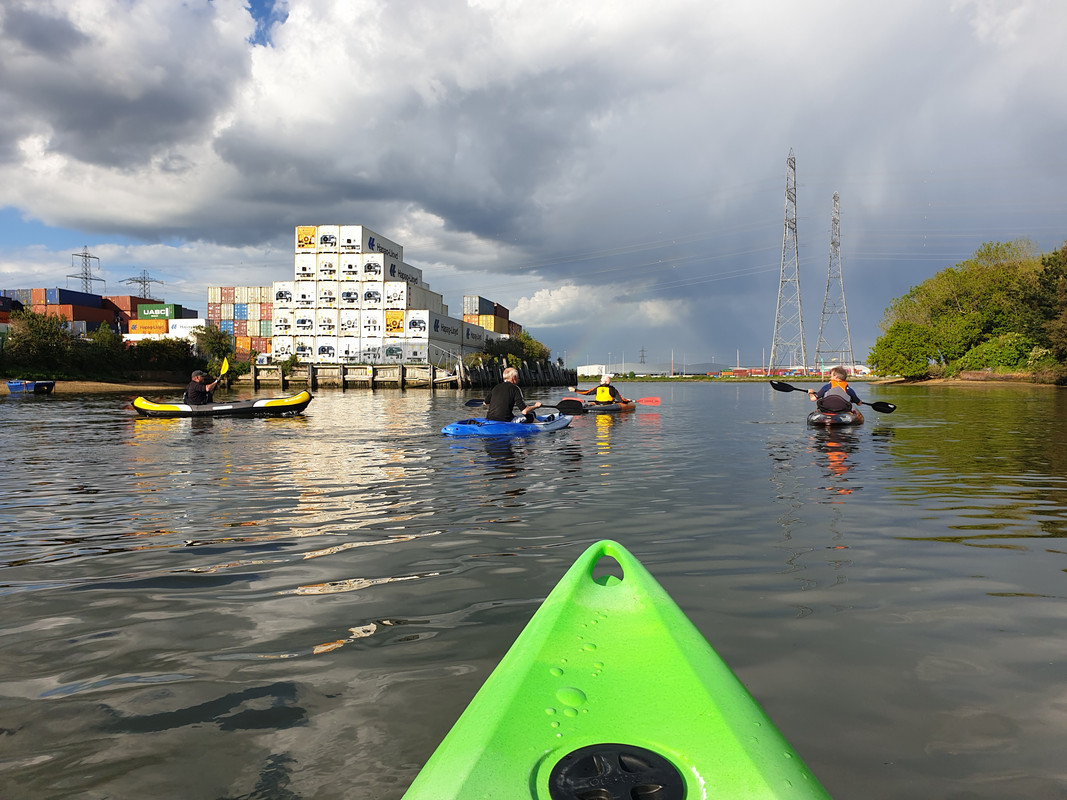
Well were talking about the drop stitch ones as pictured above. I’m not sure all of your criticisms apply to those.
I've not paddled a dropstitch boat but I've paddled an inflatable and I've got a couple of iSUPs and I'd be fairly confident that the assumptions hold up, I may be being harsh on the stability issues but looking at their hull shapes and having seen them paddled by others I don't think I'm too far off the mark.
The analogy to MTBs doesn't hold up though, especially if the boat is being used in the sea. There are feedback cycles in paddling that can very rapidly lead to bad outcomes that just don't exist in biking to the point that there isn't really an analogy that works.
If storage is a constraint then an inflatable is a way of getting round that, and a dropstitch is better than a tubed inflatable, but don't be under any misapprehension that they aren't a compromise and those compromises come with risks (as any choice of boat generates). As an experienced paddler I'd not take an inflatable out on the sea if there was any real tidal flow, any real wind unless it was mostly onshore or onto stretches of coastline where I couldn't get out of the water (and properly on the land).
Somebody else mentioned that a decent paddle is a good investment. I have the standard Decathlon one, can somebody recommend a decent upgrade. Happy to go second hand. Just for canal/reservoir duties.
werner
"This all smacks of people suggesting expensive trail MTBs for people who just want to ride back roads and fire roads"
Not at all. Firstly - the OP expressed a desire to do more than just faff about on a small lake or play on the beach. But to expand:
Expense: Second hand kayaks work out about the same as the cheaper end of inflatables (and I'd assume that second-hand inflatables are a risk people won't want to take, right?)
Safety: Everything here: "slow, they’re more affected by wind and waves than a hard shell, if they’re damaged they lose structural integrity" - I have *zero* appetite for safety compromises when it comes to kayaking/canoeing (other than using them to faff about on summer beach holidays on calm days). If you break your £230 walmart bike at BPW and knock yourself out then it's not that big of a deal - someone'll come down the trail behind you and help. If you're getting blown out to sea on an inflatable and can't muster several hours hard constant break-free graft to fight the wind then you're in *real* trouble. A solid shelled kayak helps immensely - because even well-trained experienced people take risks and the first time you find yourself out of your comfort zone (or worse - safety zone) you *really* appreciate every advantage you can get.
It's a wonderful sport. Absolutely fantastic. But unlike MTB - if you're going to countenance getting into the sea and doing multi-day point-to-point adventures then you need 1) training and 2) the proper equipment.
On an MTB you can get a shit helmet, no kneepads and a £30 throwaway of the wrong size, V-brakes with metal fatigue someone pulled out of their garage in the 1990's and throw it down the Snowdon Rangers path - I might even turn up to point and laugh.
Different for kayakers though. Playing on lakes and beaches - fine, absolutely knock yourself out. Even river trips in the UK - it's pretty safe. But the sea, once you've got out of the safety of the bay - you need to know what you're doing. So club, training, proper gear. 100%.
I read a few reviews of that particular boat mentioned earlier in the thread, and it does say that it's a completely different proposition to the normal inflatable sort so it's an area of interest for someone such as myself who doesn't have storage available.
If storage is a constraint then an inflatable is a way of getting round that, and a dropstitch is better than a tubed inflatable, but don’t be under any misapprehension that they aren’t a compromise
I'm not, don't worry.
Happy to go second hand. Just for canal/reservoir duties.
Vertical Element although it depends on how many miles/complexity you are racking up as to whether a good paddle really adds much. For basic pottering not sure I would bother but once it gets all day/messy water then it really helps.
I read a few reviews of that particular boat mentioned earlier in the thread, and it does say that it’s a completely different proposition to the normal inflatable sort
I fully expect it is it'll be far mor rigid which should make it quicker, it is narrower so will be easier to paddle effectively and is closed cockpit so it'll be a driver ride (albeit with no deck shaping to shed water) but, it'll be easier to capsize than a boggo inflatable/SoT and harder to get back in and upright if you do. It's not clear if there are any bulkheads in it and if not then there is the potential for a LOT of water to get in and no obvious way out so potential for getting bogged down. It will be harder to trim it to account for impacts of wind direction as it's closed cockpit but fairly floaty. If the solid keep sections front and back kink in storage it could have a fairly big impact on tracking. Based on the SUPs it'll be a fairly big job to inflate it too.
It's better performance wise but whether that better is actually beneficial to how you would use it is another matter. I doubt you'll self rescue in that (or certainly do it easily)so you would want to be out with someone else or on very sheltered water. Does that fit with what you're looking to do?
Somebody else mentioned that a decent paddle is a good investment. I have the standard Decathlon one, can somebody recommend a decent upgrade. Happy to go second hand. Just for canal/reservoir duties.
Mitchell blades, Celtic, select plus Werner and VE as mentioned previously. But look for a carbon shaft either glass or carbon blades, they will be much lighter and stiffer increasing power and reducing fatigue.
are VE back in the game? I thought they had ceased trading?
are VE back in the game? I thought they had ceased trading?
Not sure of the finer details but the owner had to cease business for personal reasons but sold it to Palm including all the factory hardware.
My current ww paddle is pre-palm but from what I have seen and been told of the post palm ones they are same quality and flexibility in being able to get one made up to your specific length/feather (even the website looks the same).
So not some dodgy buy the name and then produce crap and hope some poor sods buy based on that good name from 20 years ago.
so you would want to be out with someone else or on very sheltered water. Does that fit with what you’re looking to do?
For me, yes, I am highly risk averse so I am only likely to ever paddle in the safest places available. I looked quite hard for locations this summer for our inflatable that I could verify were safe enough and I basically ended up doing nothing other than the one little cove and a beach.
Now it's summer, time to give this a bump.
My wife suggested a bit of kayaking on a local river, so I'm thinking about the easiest and safest possible short trip around Cardiff. There's a stretch between Pontypridd and Cardiff between two weirs that would be great, but I'm paranoid about accidentally getting too close to the weir at Llandaff and being sucked over to our doom. There's a rowing club to get out at and I can't imagine I'd miss it.
Is being accidentally sucked over weirs a risk when the water's low?
Without seeing the weir in question it’s hard to say but low water doesn’t automatically mean more or less dangerous.
But in low flow conditions you aren’t likely to be swept over one by mistake.
It looks like a relatively slow flow weir.

I would say you should be ok but all weirs should be treated with maximum respect.
Just get out in plenty of time.
Radyr weir upstream is a hydro station and blackweir downstream looks fairly shallow sloping and mellow too.
But still make a judgement on the day and it's best to stay well away if you're unsure.
That's my thought. The boat club is way over on the left of that pic and it's a known easy place to get out.
EDIT although some people say you can use it, other parts of the internet say it's private.
Yeah, I wouldn't have thought there would be too much pull on that at this time of year.
Your boat would probably go aground on the lip, at that level, not that I suggest you try it. The flow will be minimal, and easy to paddle away from the weir unless there's a very strong wind (in which case I don't think you'd be paddling anyway). So, I agree with the advice to be cautious about weirs, but that weir at that level isn't a problem.
Life long kayaker here, all disciplines. You are right to be concerned about weirs and other constructions in the water. In that picture at that river level I would anticipate being able to paddle to the lip, have a look and then paddle away again if you wanted. At higher flows it could have some potential for trouble assuming you were to go over it, based on the angles of the slope/drop and the presence of the shingle banking at the base of the slopes. Its hard to judge distance in a picture but the pontoon looks extremely unlikely to be affected by flow to the point you could be swept to the weir, even at super turbo flow levels
Incidentally, if you are in an inflatable be very cautious around any construction, there is always little bits of rebar sticking out that can puncture a chamber!
@molgrips - the weir pictured is fine. However - stay *well* clear of any horseshoe-shaped weirs - danger danger.
I've been drinking, so no appetite to type. Just trust me 🙂
Also, particularly in inflatables, be mindful of strong wind.
I've got a fiberglass Canadian canoe and the higher sides mean any gusts can really ping me off course.
Wouldn't want that above a weir.

