Forum menu
Is there any scientific evidence for this, or is it thought to be bad for you in the way that butter or eggs used to be?
I've been working away a lot and tend to have a steak most nights- which has to be healthier than other menu options (pizza, burger, goats cheese something etc).
Depends.
Are you a dinosaur?
No.
Any kind of apex predator?
Actual meat - probably not.
'Processed' ie cured or preserved - yes.
I like to think I'm at the top of the food chain.
worth reading this
http://www.zoeharcombe.com/2015/10/world-health-organisation-meat-cancer/
I think it depends on the type of meat. Organic grass fed meat is going to be better than your mcdonalds meat which has been fed on grain
and
http://www.zoeharcombe.com/2017/05/red-meat-human-and-planet-health/
perchypanther - Member
Depends.Are you a dinosaur?
What happens if he's a diplodocus? I think your question lacks the necessary specificity to be pertinent.
I like to think I'm at the top of the food chain.
....in which case, eat whatever the hell you like.
Law of the Jungle innit.
I like to think I'm at the top of the food chain.
Which one? I'm a Chicken Cottage man myself
I think your question lacks the necessary specificity to be pertinent.
Merely the opening salvo in an investigatory chain of questioning.
Next question would have been "Are you a Diplodocus?"
Are you having chips everyday with your steak and accompanied with a nice bottle of red wine?
Daily Red Meat can be part of a 'healthy balanced diet' - well, in the UK at least, US beef can contain growth hormones, US says they're safe, EU banned them, US said it was purely a economic measure, EU says they're bad for you.
Depends on what else you're eating - I wouldn't live on Beef Burgers and Chips every day.
No alcohol. A few fries and watercress salad. And a big **** off steak.
[i]Merely the opening salvo in an investigatory chain of questioning.
Next question would have been "Are you a Diplodocus?" [/i]
You are Arthur Shappey out of Cabin Pressure and I claim my £5.
I suspect in our modern life we eat far too much meat. Meat is a far more efficient food and the switch from vegetarians to meat eaters was the key to us developing our brains and evolving further. If you look at any other meat eating animal in nature they will eat meat, then not eat for days or even weeks before getting hungry again and going out to hunt. I suspect in our caveman days we'd eat meat every couple of weeks, then forage on veg, seeds and nuts in between before going out and hunting again.
I suspect eating meat every day is not bad for you as such, but the volume of meat most eat and the quality (or lack of) is the problem.
"Are you a Diplodocus?"
Obviously he's not, they've got elephants feet so wouldn't be able to hold the steak knife would they?
Could a T-Rex actually get a fork from a plate to it's mouth though?
they've got elephants feet so wouldn't be able to hold the steak knife would they?
You wouldn't want a steak knife for an Elephants foot.
You'd want a Kebab Sword
Meat is a far more efficient food and the switch from vegetarians to meat eaters was the key to us developing our brains and evolving further.
I thought it was cooking food which made the biggest difference? You can get far more calories/goodness from cooked carrots than raw carrots.
wwaswas - Member
Could a T-Rex actually get a fork from a plate to it's mouth though
Put a fork on a plate, put your hands behind your back and, whilst keeping them there, get the fork in your mouth.*
Easy.
*be careful of the tines
You'd want a Kebab Sword
No i wouldn't. And for the record i never want to hear about your meat sword.
So, if I'm not a caveman, not a diplodocus or a T-Rex, have grass fed, medium rare steak everyday, not washed down with a bottle of red, I'll be OK?
You'd be better drinking half the bottle of red than none of it. Red wine's a health drink.
I'll be OK
Matter of opinion
[url= https://swizec.com/blog/week-17-what-happens-when-you-only-eat-meat-for-a-year/swizec/6534 ] What happens when you only eat meat for a year?[/url]
Yes
We have not evoled to eat such a meat heavy diet, in particular red meat. In general “we” eat too much especially meat and excersize too little
Cut out the carbs and just eat a rare steak, you’ll be fine.
Argentinians have been doing just that for 100 years or so, can’t see them complaining much.
So, if I'm not a caveman, not a diplodocus or a T-Rex, have grass fed, medium rare steak everyday, not washed down with a bottle of red, I'll be OK?
worked for me last hitch when there was a lack of chicken or palateable other meat .... and the veg was pretty rank too.
Dinner every night pretty much consisted of bbq medium rare sirloin.
didnt do my guts any good though , constantly bloated and when i needed to poo .... they were some giant poos.
but im not dead..... just being sure to mix it up this hitch now that white meat is availible again AND batatas doce are back in stock 😀
I think the biggest issue with red meat is the time it takes to process it. Eating it constantly would probably leave you in a constant state of bloatedness trying to get rid of it all the time.
We have not evoled to eat such a meat heavy diet, in particular red meat.
I think that's fairly contentious isn't it?
Is eating red meat everyday bad for you?
Only if it's still alive. Otherwise fill yer boots.
Might not be bad for you but could be for other animals if the food is being transported a long distance. New Zealand lamb FFS might as well melt the ice caps and shoot the polar bears yourself.
I think that this is one of those questions that presently lacks a yes or no answer, it depends who you ask. I think that it also depends who you are to some degree.
So, any recipes for polar bears?
[quote=onlysteel ]So, any recipes for polar bears?
I hear the liver is good 😈
tails - MemberMight not be bad for you but could be for other animals if the food is being transported a long distance. New Zealand lamb FFS might as well melt the ice caps and shoot the polar bears yourself.
Scaremongering. There are no polar bears in New Zealand 🙄
Scaremongering. There are no polar bears in New Zealand
But there are lambs. Makes you think.
the switch from vegetarians to meat eaters was the key to us developing our brains and evolving further
Hom Sap are not "meat eaters". We have the same gut as our primate cousins , ie a long one evolved for fruit and veg. There are enough brain size/development theories to fill a library from social grouping to tool use to walking upright to cooking their food. but probably not: "we started eating meat".
Humans have evolved to eat a huge range of stuff. Probably a key to our success. So arguing over a particular foodstuff on evolutionary grounds is probably rubbish.
Worth reading this OP...
https://www.nhs.uk/Livewell/Goodfood/Pages/red-meat.aspx
Personally I'd try a bit harder to find alternatives.
Fish? Chicken? Veggie stuff?
[url=
Predator[/url]
I had the chance to eat Polar Bear meat once - I didnt take it though
was being served in a bar on Svalbard
Humans have evolved to eat a huge range of stuff.
I'm struggling with your use of the word evolved there Molly. We're not wildly different to our chimp cousins tbh, and in turn not hugely more than the rest of the primates. There is a specialist in our recent past (Panathropus Boisei) that did evolve to eat very tough fibrous veg though.
Probably a key to our success
might be...
Job, jobbed. Have have good cutlery obvz..
[img] 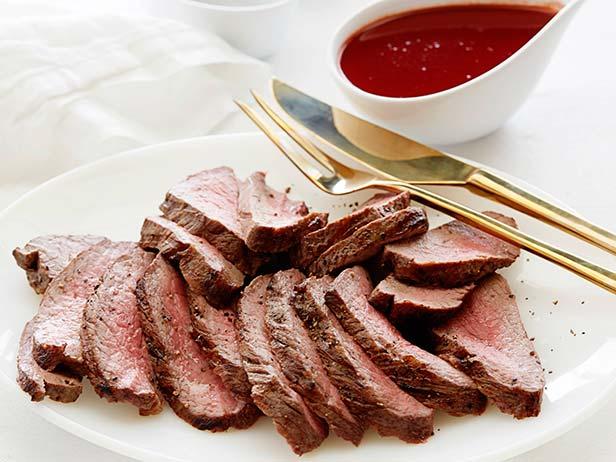 [/img]
hardly conclusive stuff, but I’d be inclined to mix it up if only for the sake of variety! FWIW I agree with the general notion that (pre) historically meat would’ve been an occasional, hard earned treat. I’m sure there are far worse vices though!The cancer risk related to the consumption of red meat is more difficult to estimate, because the evidence that red meat causes cancer is not as strong. If, however, the association between red meat and colorectal cancer was proven to be causal, data from the same studies suggest that the risk of colorectal cancer could increase by 17% for every 100 gram portion of red meat if eaten daily.
if nothing else, the amount of resource and energy that goes in to producing meat is much greater than fruit and veg! The amount of meat that we as a race eat these days isn't sustainable and everyone should be eating less meat.
Probably not that comparable to you, but some of the indigenous tribes in the Arctic will eat almost nothing apart from caribou for months at a time. Europeans who have tried this diet claim they never felt healthier. So a few steaks should be all good!
Is eating that much red meat bad for you? Maybe.
Is it bad for the planet? Definitely
Do you need to eat that much red meat everyday? No.
Is it bad for the planet? Definitely
Not as clear cut as that.
Intensively reared grain fed beef in the US - bad for the planet.
British hill farmed lamb on marginal land? Not so bad.
I can eat lamb raised on grass a few miles from my house. I can't eat lentils grown in the same country.
And what do you reckon the OP's getting served for his pub grub steaks?
Intensively reared grain fed beef in the US - bad for the planet.British hill farmed lamb on marginal land? Not so bad.
I can eat lamb raised on grass a few miles from my house. I can't eat lentils grown in the same country.
Unfortunately the evidence says otherwise. You could fly lentils or soybeans many times around the world before their carbon footprint even comes close to the most efficiently produced meat.
http://www.sciencedirect.com/science/article/pii/S0306919212000942
And it's really not as simple as intensive & distant = bad, natural & local = good. The vast majority of meat's carbon footprint is produced on the farm, transport is negligible in comparison. And animals that live for longer, eat less digestible foods, and move around more (those on British farms for example), will produce more carbon dioxide and methane per kg of meat than those that grow quicker, move less and are fed more calorific foodstuffs.
Obviously intensive animal farming has a lot of other problems too - pollution from pesticides and fertilisers, runoff of animal waste, over-reliance on antibiotics etc.
Yes - it is bad to eat red meat every day. I thought this was common knowledge these days.
Fish? Chicken? Veggie stuff?
You'll need to be careful where the chicken has come from after the recent contamination reports.
Unfortunately the evidence says otherwise.
Some evidence does, yes - but I've read it both ways. Animals can [i]sometimes[/i] turn otherwise useless land and feedstock into high quality protein effectively.
And what's the chance of the OP being able to source and exclusively eat that meat every night molgrips?
You must have missed when I asked you that above.
No, I just didn't answer it cos it's an obvious point.
I'm talking about meat vs non-meat protein across the world, not the OP's dinner. I don't think it's [i]necessarily[/i] the case that all meat is always worse for the environment. Undoubtedly lots of meat is, and you can certainly ship dried lentils around the world cheaply. But then, lots of veggie meals seem to be full of aubergines and nice tasty soft vegetables, I bet they have a fairly high carbon footprint too. Of course, I'm not saying that all veggie food is high carbon footprint just because some of it might be; but that's my point. Don't quote the stats for intensive grain fed beef when talking about meat either (as most vegetarians seem to do).
worth reading thishttp://www.zoeharcombe.com/2015/10/world-health-organisation-meat-cancer/
I wouldn't be quoting Zoe Harcombe for diet advice. She has a bit of a quack reputation in dietician circles with a lack of rigour when applying research information to her pet theories.
Depends on whether you wish to listen to the WHO or the STW!
I don't have access to The Lancet but there's a brief summary of findings in [url= https://www.medicalnewstoday.com/articles/315449.php ]this article[/url]
but some of the indigenous tribes in the Arctic will eat almost nothing apart from caribou for months at a time.
and suffer pretty poor long-term health effects; poor bone density, arterial calcification, parasite infections, and CHD levels that are about the same as a poor western diet.
I can't eat lentils grown in the same country
I thought so. But apparently not impossible...
Lentils are a notoriously difficult crop and have never been grown on a large or commercial scale in the UK. Low-growing and typically yielding no more than two lentils in each short pod, they need a warm, dry autumn to ripen for harvest. Yet they are thought to have been one of the earliest cultivated ‘legumes’ in the UK, with traces found on prehistoric site
“We’d always wanted to grow lentils but were repeatedly told it just wasn’t possible,” said Hodmedod co-founder Josiah Meldrum. “Then we met some inspiring German lentil farmers who told us to just plant them and see what happened. We did and it turns out lentils grow well here, the trick is keeping them weed-free and harvesting them – skills we’ve been learning over the last few years.”
Should be available online about now https://www.theguardian.com/business/2017/aug/31/raising-pulses-uks-first-commercial-crop-of-lentils-to-go-on-sale-in-autumn
I love a steak but would be a bit bored of it after a week...
I've been working away a lot and tend to have a steak most nights- which has to be healthier than other menu options (pizza, burger, goats cheese something etc).
No fish on this menu?
No chicken?
Only veggie option is goats cheese? Mushrooms, squash, etc...
No pasta with sauce or stir fry - much less meat
I don’t think pizza or burgers are fundamentally unhealthy - it depends on the establishment deep pan four cheese probably isn’t quite the same as a beautiful handmade Italian pizza where you see more tomato than cheese.
I'm talking about meat vs non-meat protein across the world, not the OP's dinner.
At the risk of looking like I'm trying to police the thread, I don't think that trying to muddy the water on a health issue is helpful to the OP.
It's probably not great for you, and it's certainly not great for the planet (and therefore everyone on it).
"Livestock based food production... causes about one-fifth of global greenhouse gas emissions"
http://www.pnas.org/content/111/33/11996
Please have at least a skim of the abstract.
I don't think that trying to muddy the water on a health issue is helpful to the OP.
Sorry. But threads drift, don't they - that's why they are called threads not Q&As 🙂
Please have at least a skim of the abstract.
I think skimming the abstract is the problem. Further down the text it says this:
"We base our calculations on annual 2000–2010 data for land, irrigation water, and fertilizer from the USDA"
So it's an analysis of current US food production which is undoubtedly wasteful and damaging in all sorts of areas, both meat and non-meat. However that's not to say that meat doesn't have a place in a sustainable future. So saying that 'meat is bad for the environment' isn't necessarily the whole truth. More like 'current meat production is often bad for the environment'. And of course our consumption habits have driven the 'bad' agriculture. This is what needs to change.
From the linked article above
https://swizec.com/blog/week-17-what-happens-when-you-only-eat-meat-for-a-year/swizec/6534
The key question is
how deadly were their farts? Whenever I eat too much animal fat I have farts that could kill a horse. Alas, there’s no mention of that in the paper.
eating a decent portion of red meat (>85g) every day will lose you on average 30 minutes of life per day or one [url= https://en.wikipedia.org/wiki/Microlife ]microlife[/url]. This compares with 10 microlives/day for smoking. These figures are based on real epidemiological data.
On the plus side >20 mins/day exercise wins you back 2 microlives.
I have met the originator of the microlife, and he was drinking red wine and eating meat at the time...
These figures are based on real epidemiological data.
Correlation or causation?
[url= http://journals.plos.org/plosone/article/file?id=10.1371/journal.pone.0088278&type=printable ]From this Austrian research seems the most "unhealthy" diet is vegetarian. [/url]
[img]  [/img]
If you eat meat every day, eat actual meat rather than cured meat or meat products, and don't eat Argentinian gaucho quatities of meat
That study themselves suggest that they cannot be sure that the poorer health outcomes of vegetarians in the study is because of their diet or from pre-existing conditions or other reasons. Here:
[i]Potential limitations of our results are due to the fact that the
survey was based on cross-sectional data. Therefore, no statements
can be made whether the poorer health in vegetarians in our study
is caused by their dietary habit or if they consume this form of diet
due to their poorer health status.[/i]
Correlation or causation?
It doesn't matter and is probably both, it's based on the hazard ratio, which is a measure of relative risk. It should be sufficiently disentangled from other risk factors for it to be useful to inform lifestyle choices.