UPDATE: CLASSIFIEDS section refreshed, redesigned, searchable: Go take a look
Blimey ransos, I'm confused now. I've always just thought I didn't believe in God. Now I have to decide if it's an absence of belief or a belief in the non existence of God.
Blimey ransos, I'm confused now. I've always just thought I didn't believe in God. Now I have to decide if it's an absence of belief or a belief in the non existence of God.
Do whatever works for you. 🙂
I just get a little frustrated when I'm told what I think. I wouldn't, for example, assume that all Christians believe the earth was literally created in six days...
"Belief" in this context always feels a bit too close to "faith".
I prefer "I am of the [i]opinion[/i], due to the continuing lack of evidence in it's existence, that there is no such a thing as god".
Otherwise, it's just talk.
[b]Ransos[/b] I don't [i]believe [/i] you are correct... 😉
And actually I think many or most people who would identify as atheists would disagree with you. But may be that is unknowable too!
Phew, looked like this latest one was running out of steam at one stage. Carry on...
Yeah, I wouldn't describe myself as religious these days unless I wanted to capture a particular spectrum of the vote, but I do always think "OK, there's no beardy man in the sky, the big bang happened, eventually the Sun and Earth formed and life evolved, but what gives all this the laws of physics? What was there before the Big Bang? Was there a time before the Big Bang?"
And because of that, if someone says that the thing before the Big Bang or that set the laws of physics up was God, and someone else says turtles all the way down, I'm not going to ridicule them or argue with them until I have some evidence to the contrary. (Obviously those that deny observable facts are numpties).
And actually I think many or most people who would identify as atheists would disagree with you. But may be that is unknowable too!
You think most atheists would disagree with the following?
i) All atheists have an absence of belief in god
ii) Some atheists believe that there is no god
I find that unlikely, to say the least...
"OK, there's no beardy man in the sky, the big bang happened, eventually the Sun and Earth formed and life evolved, but what gives all this the laws of physics? What was there before the Big Bang? Was there a time before the Big Bang?"
Brian Cox is currently on tour, you may find his lecture of interest...
Yeah, I wouldn't describe myself as religious these days unless I wanted to capture a particular spectrum of the vote, but I do always think "OK, there's no beardy man in the sky, the big bang happened, eventually the Sun and Earth formed and life evolved, but what gives all this the laws of physics? What was there before the Big Bang? Was there a time before the Big Bang?"
And because of that, if someone says that the thing before the Big Bang or that set the laws of physics up was God, and someone else says turtles all the way down, I'm not going to ridicule them or argue with them until I have some evidence to the contrary. (Obviously those that deny observable facts are numpties).
My trouble with this chain of thought though is you can always just add another level - What / who made the big bang and physics? - What / who made god? - What / who made the thing that made god and so on and so on....
because of that, if someone says that the thing before the Big Bang or that set the laws of physics up was God, and someone else says turtles all the way down, I'm not going to ridicule them or argue with them until I have some evidence to the contrary
The answer to some questions is "we don't know yet", and that's okay.
Obviously, the correct response to anyone claiming anything else isn't ridicule, but it's too big a leap, for me, to say "a god did it" especially when lots of things it was previously claimed were done by god have been shown to have non-supernatural causes/mechanisms.
Brian Cox is currently on tour, you may find his lecture of interest...
It's very good, as is his approach to religion. The current crop of prominent atheists are much nicer than the last lot, who were quite dickish.
It's very good, as is his approach to religion. The current crop of prominent atheists are much nicer than the last lot, who were quite dickish.
Yep, though I must admit I was hanging on by my fingernails, as it was far more in-depth than anything you get on the Infinite Monkey Cage. I was glad I'd read some popular science books before going to see it...
ransos - MemberYou think most atheists would disagree with the following?
i) All atheists have an absence of belief in god
ii) Some atheists believe that there is no god
We actually had a pretty good Heated Debate about this a couple of years back, I'm pretty sure TJ went into orbit. The language is poor imo, "atheist" commonly covers 2 pretty different positions- the absence of belief in god, and the belief in the absence of god. Ideally we'd have different terminology. As it is, we have at the extreme end "preachers of atheism" for whom it genuinely looks like a religion. People have suggested atheism (for the absence of belief) and antitheism (for the belief that there is no god). But I don't like that either.
A big part of it is the assumption that religion is some sort of default state- it's common for the religious to assume that atheism is a belief just like their faith, filling the box marked "religion" in people's heads, and to treat it the same. As if everyone were a mountain biker, a roadie, or an acyclist, and everyone is taking a position.
While atheists would tend to agree that atheism is the default state, and some people add religion. There's no absence for an unreligious person, no god-shaped hole in their character sheet.
So IMO, there doesn't need to be a word for the absence of religion at all. You need a word for things you opt into, you don't need a word for the blank sheet. I'm a mountain biker; before that I wasn't an acylist. Cycling is a thing you do, not cycling isn't.
And yes, "belief" is a very weighted term in this conversation.
miketually - MemberIt's very good, as is his approach to religion. The current crop of prominent atheists are much nicer than the last lot, who were quite dickish.
Agreed- though I'd say it's fairly understandable that atheism could be so adversarial in the past, and now doesn't feel such a need to be. We used to get the church elder coming round every couple of months to tell my mum off for not going to church, and explain how it wasn't fair to the children to deprive us of a proper christian upbringing, no doubt he thinks my dad was dickish when he kicked him into the street and threw a bible at his head. These days, he wouldn't be so dickish, because no arsehole would come round the house and hassle his wife.
molgrips - MemberOr does persecution by Romans give him legitimate refugee status?
Well I used this scientific age recognition software and it turns out despite claiming to be a baby born in the manger, he's 2022 years old.
philjunior - Member
the big bang happened.
Did it? hmmm? Prove it!
it's too big a leap, for me, to say "a god did it"
As possible answers go, it's not even a particularly satisfying one.
"The universe can't possibly have existed for ever, so a god must have created it."
"Who created god?"
"Oh, god's always existed."
It doesn't actually answer the question, it just displaces it elsewhere.
We actually had a pretty good Heated Debate about this a couple of years back, I'm pretty sure TJ went into orbit. [b]The language is poor imo, "atheist" commonly covers 2 pretty different positions- the absence of belief in god, and the belief in the absence of god. [/b]Ideally we'd have different terminology. As it is, we have at the extreme end "preachers of atheism" for whom it genuinely looks like a religion. People have suggested atheism (for the absence of belief) and antitheism (for the belief that there is no god). But I don't like that either.
My point was simply that you can't have the second position without also having the first position. Whereas you can hold the first position but not necessarily the second...I agree that the terminology is unhelpful
While atheists would tend to agree that atheism is the default state, and some people add religion. There's no absence for an unreligious person, no god-shaped hole in their character sheet.
There's an interesting debate to be had there: story telling/ origin myths are the norm across the planet. Why?
Did it? hmmm? Prove it!
Eh? You really need to read up on the scientific method...
ransos - Member
Eh? You really need to read up on the scientific method...
There are alternative theories.
[url= https://c5.staticflickr.com/6/5570/30946529420_8aa88e5dc0_z.jp g" target="_blank">https://c5.staticflickr.com/6/5570/30946529420_8aa88e5dc0_z.jp g"/> [/img][/url]
There are alternative theories.
I was referring to your demand for "proof".
ransos - Member
There are alternative theories.
I was referring to your demand for "proof".
I was referring to the statement, the big bang happened.
The answer to some questions is "we don't know yet", and that's okay.
Quite right.
the big bang happened.
Did it? hmmm? Prove it!
There's a huge amount of evidence to support the claim that it did. Physicists are at the "quibbling over the specifics stage".
I was referring to the statement, the big bang happened.
It's a lot easier than writing "it's the best explanation we have for a range of observed phenomena, including general relativity, cosmic microwave background and the Hubble constant".
If you're still insistent on proof, stick to maths.
There are alternative theories.
There are theories, and there are theories. A scientific Theory doesn't have the same meaning "theory" does in common parlance. It's not a guess or an idea, but rather it's the best explanation we have for something based on a lot of work and experience by a lot of clever people.
Dave down the pub might think that the universe was created by a giant pan-dimensional aardvark who sneezed us into existence two thousand years ago, that may well be a "theory" but it's not a Theory in the scientific sense.
If you've got any "theories" competing with the Big Bang that are actual scientific theories rather than some faith-based handwaving or the random burbling of a halfwit, I'd like to hear them.
There are alternative theories.
I don't think there are any serious alternatives to Big Bang, though whether inflation occurred is still less certain than many people think.
IIRC, some of the non-inflationary theories get rid of the need for dark energy.
as the current understanding. I get the feeling someone will come all one day and blow current perceptions out the water, particularly if we are ever to even get a start on the question of what came before.miketually - Member
the big bang happened.Did it? hmmm? Prove it!
There's a huge amount of evidence to support the claim that it did. Physicists are at the "quibbling over the specifics stage".
Anyhow. Point is that some people have certainty in their beliefs even in science, when, well science and philosophy actually start to merge once you get so far. I actually think that it's where religion broke down, well it did thousands of years ago. Religion started off as the speculative side of science and lost its way/got highjacked somewhere along the way. An interesting thought, in these post truth times.
When I say science in there i mean in a historical sense of pure curiosity and learning.. Not modern day science.
I get the feeling someone will come all one day and blow current perceptions out the water,
It's entirely possible. That's how science works.
I understand how science works! 😆
Someone probably will, but the current models will probably still prove to be useful even then.
Einstein's general relativity blew Newton's explanation of gravity out of the water, but we still use Newton's model in a large number of applications.
Once current perceptions are blown out of the water, I doubt whatever is discovered will have any bearing on Brexit negotiations.
Interestingly, former ABoC Rowan Williams was talking about the end of economic growth so God is maybe more in agreement with the Green Party than the Conservatives.
ransos - MemberThere's an interesting debate to be had there: story telling/ origin myths are the norm across the planet. Why?
The desire to fill the void of understanding basically. Exactly the same thing that drives science.
Why does the sun come up? No idea mate. Wow, what if it doesn't come up tomorrow? Scary shit dude.
Why does the sun come up? Well, obviously [i]something[/i] moves it... What's the biggest thing we have? A chariot? Yeah, but a chariot couldn't pull the sun, it's too big, and it looks pretty hot. Good point, it'd have to be a special chariot driven by a special bloke. Makes sense. Well that's a relief, we can count on it coming back.
(not coincidentally, for quite a lot of human history, it's been useful to be able to say "I am the head priest, the sun won't come up again unless you do what I tell you" Even now it's "Your kids won't get into the good school unless you join my club")
Why does the sun come up? Actually, the earth's rotating, the sun doesn't go down, it's just an illusion caused by the world spinning round. Oh OK, cheers Wayne, that makes more sense than Big Steve in his asbestos chariot.
The reasoning for stories and discoveries and inventions to fill in the blanks seems pretty straightforward... Sometimes religious people point to the near-ubiquity of creation myths and gods as proof that there must be [i]something[/i] but they don't seem so keen to ask why they're all so different.
Taking it a step back, the important point isn't about the big bang or cutting edge science. it's really that the forces of control that I identify where religion went wrong all those years ago are actually at play these days and have been through history. Digging down into science and god. There's similar forces at work. Ie power lust and control to the detriment of societies progress. Like I say there's parallels in this post truth society.
I think the religion point is fairly moot these days. When the likes of trump are fighting against even the survival of the species. People get themselves worked up over this when it's not really where the focus should be. Ie the focus shouldn't be on god and the existence or whatever, it's irrelevant always has been. Focus should be who's pulling the strings and for what reason.
Personally I don't think there's ever been a truly religious war that doesn't have power politics, territory and money as it's driving forces.
Religion is subterfuge (when looking at it on a larger scale, personally religious feeling I don't include, well unless you allow yourself to be controlled, then you're in the realms of the larger scale.).
There's an interesting debate to be had there: story telling/ origin myths are the norm across the planet. Why?
As usual - better minds than the likes of us have devoted many lifetimes to considering these issues rather than a few lunchtime forum posts. A couple of reads:
[img] 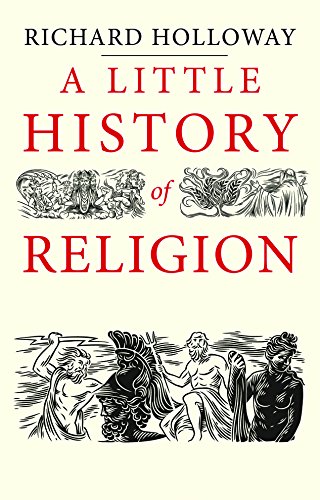 [/img]
[img]  [/img]
I've only just started the second one but in the beginning it talks about religion as a means not to simply subjugate people but its very conception being the evolutionary trigger that enabled large-scale co-operation of humans beyond the local tribal group. By giving people a common identity it allowed recognition and commonality even when people didn't know each other personally. Therefore it may well be the very genesis of ourselves as a . Massively ironic for the atheists on here 🙂
I suggest you read more 🙂
Wouldn't that be a socio-political trigger rather than an evolutionary one?
Therefore it may well be the very genesis of ourselves as a . Massively ironic for the atheists on here
Or it may not...
By giving people a common identity it allowed recognition and commonality even when people didn't know each other personally. Therefore it may well be the very genesis of ourselves as a . Massively ironic for the atheists on here
The same could be said for racism and xenophobia. Having an 'other' to compete with binds groups together.
Without the Cold War we'd not have has the space race and all the breakthroughs that brought. Wars have hugely progress surgery and medicine.
That doesn't make them a good thing that we should seek to promote.
Therefore it may well be the very genesis of ourselves as a .
.. as a civilised species, I meant.
Which would mean that without the idea of religion, we wouldn't have science. So yes ironic 🙂
Harari asserts that it was specifically that invention that allowed us to identify with groups larger than about 150 or so. Without it we'd still be hunter gatherers with next to no tech.
Wouldn't that be a socio-political trigger rather than an evolutionary one?
Can you separate biological evolution from social?
I've only just started the second one but in the beginning it talks about religion as a means not to simply subjugate people but its very conception being the evolutionary trigger that enabled large-scale co-operation of humans beyond the local tribal group. By giving people a common identity it allowed recognition and commonality even when people didn't know each other personally.
Bit of a shaky premise, that. You could equally argue that religion fostering a common identity is what propagated "othering" and subsequent religious conflict. Fighting for domestic resources is understandable in evolutionary terms, travelling abroad to kick the crap out of infidels, not so much.
molgrips - MemberI've only just started the second one but in the beginning it talks about religion as a means not to simply subjugate people but its very conception being the evolutionary trigger that enabled large-scale co-operation of humans beyond the local tribal group. By giving people a common identity it allowed recognition and commonality even when people didn't know each other personally. Therefore it may well be the very genesis of ourselves as a . Massively ironic for the atheists on here
Or, it may not. Self-evidently you don't need religion to share a common identity- in fact, you can share one despite deep religious divides. And equally self-evidently shared religion doesn't automatically lead to a shared identity. It's all very cum hoc even though cum inconveniently fails to hoc sometimes.
But tbh, I also don't see any irony even if you accept the premise? I don't think you'll ever find an atheist who doesn't accept that religion has been a big deal and continues to be for some people.
Or, it may not. Self-evidently you don't need religion to share a common identity- in fact, you can share one despite religious divides.
Perhaps I didn't make myself clear.
He's not saying you need religion - but you need the *ability* to have religion. So whatever happened to our brains to support abstract ideas like religion seems to have been significant. But religions were the first such big ideas that we had, which enabled society to then go on and develop other large scale ideas.
You could equally argue that religion fostering a common identity is what propagated "othering" and subsequent religious conflict.
Well there's a couple of chapters devoted to it which I won't repeat here. But essentially, there's always 'us' and 'them', even in apes. But with apes and apparently with early hominids, 'us' only refers to the small groups of up to 150 or so that can support personal relationships. Anyone outside your group of 150 is a 'stranger', but to consider these strangers as other than enemies, you need another axis. Which religion or other shared cultural traits can provide. He's arguing that religion is the original such axis, but not the only one of course.
I've only just started the second one but in the beginning it talks about religion as a means not to simply subjugate people but its very conception being the evolutionary trigger that enabled large-scale co-operation of humans beyond the local tribal group. By giving people a common identity it allowed recognition and commonality even when people didn't know each other personally. Therefore it may well be the very genesis of ourselves as a . Massively ironic for the atheists on here
Sums up my view of Religion and it's derivation as primarily a social code for living together. I see religion leading directly to the establishment of civilisation and the basis of the social and government structures we enjoy today. I have that book on a list to buy.
Which would mean that without the idea of religion, we wouldn't have science.
It's a shame that it's not had a similar effect on logic. Just think, if it wasn't for Alexander G Bell we wouldn't have telephones.
It may well be that religion kickstarted science, I don't know enough about it to validate that claim. But there's potentially plenty of other ways people could get together and collaborate. It may well be fair to speculate that we wouldn't be as advanced scientifically as we currently are without religion (or conversely we might even have been further advanced if people like Galileo had been allowed to get on with it), but to suggest that we wouldn't have science is propogandic piffle.
ABoC Rowan Williams was talking about the end of economic growth so God is maybe more in agreement with the Green Party than the Conservatives.
I sincerely hope not, economic growth is supposed to be building up my pension!
ABoC Rowan Williams was talking about the end of economic growth so God is maybe more in agreement with the Green Party than the Conservatives.
I sincerely hope not, economic growth is supposed to be building up my pension!
Sorry, Rowan/God says no.
Although, the CofE has lots of cash invested in all sorts of companies* so they're not putting their money where Rowan's mouth is.
*including some unpleasant ones
I see religion leading directly to the establishment of civilisation and the basis of the social and government structures we enjoy today.
Seemingly, the word for religion in ancient languages is "law," so you may well be right if we go back far enough.
From here; I thought this was interesting reading:
https://en.wikipedia.org/wiki/Relationship_between_religion_and_science
[i]The concepts of "science" and "religion" are a recent invention: "religion" emerged in the 17th century in the midst of colonization and globalization and the Protestant Reformation, "science" emerged in the 19th century in the midst of attempts to narrowly define those who studied nature, and the phrase "religion and science" emerged in the 19th century due to the reification of both concepts.[/i]
[img]  [/img]

