Simultaniously the idylic past they long for, and the future they fear.
Spanish towns and cities, especially those not so touristy, are very dense. The vast majority of people live in flats and English style housing estates are rare. Pampelona, Lugo, Burgos, Léon... are just a wall of typical 6 to 10 storey buildings as you approach. Fewer people have cars and it's quite possible to live without one as everything you need is nearby. Living in Sitges and working in Barcelona the car was a non-essential used only on occasional weekends for leisure.
From my limited understanding this is partly because of Spanish history. On its return to democratic government, they had a lot of ground to make up in terms of sufficient housing, so went on a big building spree - and I guess it was possible to just put in lots of high-density stuff all at once, rather than the low(er) density organic sprawl that's more common in the UK (and N America)
Exactly - with a dose of anything [insert politician you don't like] says is clearly bad!Simultaniously the idylic past they long for, and the future they fear.
On this forum several are upset that in-town Alpkit stores can't compete with Decathlon's superstores supplied by Decathlon running goods trains direct from China, but happily buy from decathlon.
Decathlon does fine in city centres: one of its London stores is in Kensington, one of the most expensive parts of town.
Agreed with your more general point that the "they" is really "us".
I would suggest Stirling is a 15 minute city.
Even the new development areas to the south of the city are getting new school, new shops, expansion of the business sites, park and ride (local and national bus services), cycling and walking routes, expanded healthcare, quality green space in planning. I'm current confident that the aspirations and plans will not be as good in reality, but the majority of it seems to be progressing well.
From my house it's 0 mins to green space, walking and cycling, 5 mins to school or shops; 10 mins to city centre, local hospital, and 5-15 mins to all sorts of employment, recreation, retail and services.
As someone who lives in a small highland town I understand the concept of fifteen minute cities. It certainly seems a long way away from the reality of a rural life. Shops are about 10-20 minutes walk, hospital is roughly the same for basic needs. Anything beyond basic it's about 2 hours drive to Inverness. Secondary school and local doctors are in the same place which is about 15min drive in winter, in the summer with tourist traffic on the one road in and out the same journey can be over an hour each way.
It certainly seems a long way away from the reality of a rural life
Yes, but to be fair, it's intended as an urban planning concept
It certainly seems a long way away from the reality of a rural life
Yes, but to be fair, it's intended as an urban planning concept
It’s not just that cities have most amenities within 15 minute walk, the conspiracy theory suggests that people will be forced to entirely exist in 15 minute cities. There will be no rural life.
I would suggest Stirling is a 15 minute city.
Even the new development areas to the south of the city are getting new school, new shops, expansion of the business sites, park and ride (local and national bus services), cycling and walking routes, expanded healthcare, quality green space in planning. I'm current confident that the aspirations and plans will not be as good in reality, but the majority of it seems to be progressing well.
From my house it's 0 mins to green space, walking and cycling, 5 mins to school or shops; 10 mins to city centre, local hospital, and 5-15 mins to all sorts of employment, recreation, retail and services.
I'm not sure it is! Your local hospital is now quite limited - it has no A+E, no maternity? - how much stuff is done there and how much do people from Stirling have to go to FVRH? Its University is not in the city, but must be a major part of the people movement - there's bits of the city you can get to it in 15 minutes but not all. I'm sure the average StU student will spend more than 15 minutes getting to lectures from home (unless they live on campus). Its heading in the right direction but then its small <50K people.
FVRH is 12 mins from my house, 16 on the bus.... 😉
You're right. But then is it realistic that *every* resource is within 15-20mins? Would we need multiple sites for the university, or every medical site to have maternity. I think for me the principle of a lot of, but not all, resources within short distance is ok.
Otherwise we get all dictatorial and unaffordable....
When Moreno proposed it he did include work and leisure in the 15 mins, (edit), if you were to take it to its literal and ultimate conclusion itd require oppressive control of the population. But Moreno was never proposing that. But yeah, people, was listening to a conversation the other day lead by some professor emeritus of gobshite from the university of facebook and the poor bastards he held in thrall, it covered cashless society, 15 minute cities, there are no Scottish people at scottish universities and a raft of other crap. Some people just like being right even when they've no idea how wrong they are.
Simultaneously the idyllic past they long for, and the future they fear.
Can more or less guarantee that the people posting those "remember when we were kids..." memes about how great life was in the 70's when you could sniff leaded petrol and we all walked to school wearing shorts in the snow and teachers gave you the cane for speaking out of turn and the local pub knew your order off by heart and "it never did me any harm guv" are the same people now outraged at the thought that it'd be nice not to need a car for *everything* you do and maybe some local shops that you could walk to would be nice.
But then is it realistic that *every* resource is within 15-20mins? Would we need multiple sites for the university, or every medical site to have maternity. I think for me the principle of a lot of, but not all, resources within short distance is ok.
I don’t think the idea was ever that everything has to be within 15 min, but it’s not unreasonable to say that e.g. there’s a shop, a cafe, a GP and a primary school within 15-20 min walk, and the safe walking and cycling routes to get people there.
Don’t forget that the health benefits of active travel largely come down to increasing people’s “incidental” exercise that they do on the way to or from doing something else, rather than them having to make specific time for exercise.
A special shout-out goes to the Co-op, many of whose shops should be natural hubs for 15 minute neighbourhoods, but which, for all its talk of encouraging customers to make the green choice, doesn’t do anything to e.g. provide bike parking.
I appreciate that 15min cities is an urban concept, but rural/remote dwellers pay the same taxes etc it would be good to see some development new models to provide services in rural areas , the hub and spoke thing isn't working.
I also wonder how much the effectiveness of 15 min cities correlates with higher income brackets
I believe the concept is 15 minutes on foot/bike/readily available public transport. 16 mins on the bus is good - but it can’t be 16 mins on the bus (especially including walking to bus stop) from everywhere in Stirling though?FVRH is 12 mins from my house, 16 on the bus.... 😉
no I think the concept (which is 15 minutes not 20!) is that all the services you commonly need are easily accessible without a car within 15 minutes. To me that doesn’t mean we need dozens of huge supermarkets but we need more that a dingy corner shop. It doesn’t mean everyone needs to be able to get to FV College or Stirling Uni but if the majority of their staff and students are travelling further then it’s not really achieving the target. Hospitals are difficult because there are always going to be specialist facilities. I don’t know how they’ve set up things since FVRH took over as the main hospital, I can see what’s happened the “other side” in Falkirk (technically a town but almost as big as Stirling) where the old dilapidated hospital has gone from offering a wide range of services to very few. They may or may not be better now - but certainly its increased car use on this side of FV to get to the hospital. I assume it will be the same your side.You're right. But then is it realistic that *every* resource is within 15-20mins?
in part that is because there might be <20 minutes bus services, but if they only run once every two hours or 9-6 and not on Sundays - they are pretty useless!
I don’t think so you just need enough affordable student accommodation within the right catchment area. There’s presumably a lot of staff in Dunblane (and its neighbouring hamlets like Kinbuck), BOA, Cambusbarron, Dollar and the nicer bits of Clax? Are they well served by public transport or do they all jump in their cars for their short commute?Would we need multiple sites for the university,
obviously it gets silly eventually but I think an average person should be able to go most weeks without needing to get in a car or travel more than 15 minutes on public transport. Now most weeks I don’t go to a hospital but some chronically ill people do.or every medical site to have maternity.
I think for me the principle of a lot of, but not all, resources within short distance is ok.
yes but I think you might have fallen into the trap of saying “I can do all that” so Stirling is a 15 min city. My point was actually your house is a 15 min house - and I suspect it’s part of the reason you chose to live there. I’m in a small town but in essence it’s also a 15 minute house - and I paid a premium for that luxury. My understanding of the 15 min city concept was to try and work the other way round - rather than spotting ideal locations for new (expensive low density) housing, encourage urban planning that minimises travel.
I appreciate that 15min cities is an urban concept, but rural/remote dwellers pay the same taxes etc it would be good to see some development new models to provide services in rural areas
You're making out that 15 minute cities is the main and only planning objective in Scotland. It patently isn't. If you want a 15 minute city, you're going to have to move to a city and not live in the countryside!
A special shout-out goes to the Co-op, many of whose shops should be natural hubs for 15 minute neighbourhoods, but which, for all its talk of encouraging customers to make the green choice, doesn’t do anything to e.g. provide bike parking.
All the new Co-op local stores round us (Derby area) have bike stands and maintenance stations
All the new Co-op local stores round us (Derby area) have bike stands and maintenance stations
In our 15 minute environment in London I don't think there's any shop I'd leave a bike outside unattended.
I also wonder how much the effectiveness of 15 min cities correlates with higher income brackets
Hmmmm
Where i live in Bristol is well into the lower half of the income distribution, and a fairly high-crime area, but it's certainly a "15 minute" area. While some of the expensive suburbs up the hill with massive houses don't seem to have a pub for miles.
On the other hand, there are rough estates on the edge of town which are miles from anything.
I guess it's related to the historical geography of a city - the old 'inner citiy' areas have always been 15 minute areas, and although they're getting richer they're still not exactly rich, while the sink estates out of town get the worst of all worlds.
"You're making out that 15 minute cities is the main and only planning objective in Scotland"
I clearly mentioned the hub and spoke model that's currently widely used for remote and rural areas
I also wonder how much the effectiveness of 15 min cities correlates with higher income brackets
I think there’s pretty good evidence that in urban areas, car ownership and miles driven correlate with income. Having said that, there’s always the potential that when an area becomes nicer to live in (because it’s got good facilities, or it’s become an LTN) then it’ll also become gentrified. If we’d not privatised most of our social housing this would be less of an issue, mind you,
All the new Co-op local stores round us (Derby area) have bike stands and maintenance station
I’m in the Home of the Co-op™ and the three shops near me don’t have any cycle parking, though the biggest has some railings outside.
This is an interesting look at where the conspiracy theory seems to have grown from.
Indeed, this was a factor.
Same here. But in the 20 years since the baker, butcher, grocer, hardwarestore etc all closed. The coop has now gone as well… after all the small places had to give up. Small corner shop and petrol station versions of the big supermarkets are what we have now. Still in walking distance, but not nearly the same product the specialists provided. Car culture innit. I don’t think this can be reversed in many places, but new ways of encouraging walkable shopping, services and recreation need to be found. A good start would be for more supermarkets to have an obvious pedestrian entrance that isn’t just walking through a car park.
A good start would be for more supermarkets to have an obvious pedestrian entrance that isn’t just walking through a car park.
Funnily enough this has come up in the local AT group - there’s an argument that supermarkets in urban areas should face the pavement with the car park in behind (and as others have said, housing above them). But this seems to be beyond the imagination of supermarket management or planning depts…
Retail with housing on top isn't some wild idea - there's loads of it around. You just need to push your councils harder - or maybe the land just isn't valuable enough to bother.
https://maps.app.goo.gl/59SF81ns9Nxt69gv7
there’s an argument that supermarkets in urban areas should face the pavement with the car park in behind
…and solar panels above the car park.
Retail with housing on top isn't some wild idea
Spanish towns and cities, especially those not so touristy, are very dense. The vast majority of people live in flats and English style housing estates are rare. Pampelona, Lugo, Burgos, Léon... are just a wall of typical 6 to 10 storey buildings as you approach. Fewer people have cars and it's quite possible to live without one as everything you need is nearby. Living in Sitges and working in Barcelona the car was a non-essential used only on occasional weekends for leisure.
From my limited understanding this is partly because of Spanish history. On its return to democratic government, they had a lot of ground to make up in terms of sufficient housing, so went on a big building spree - and I guess it was possible to just put in lots of high-density stuff all at once, rather than the low(er) density organic sprawl that's more common in the UK (and N America)
TBH from history Franco/his policies basically forced people out of the countryside into the cities.(Really simplifying it.)
There’s lots of deserted villages in the middle of Spain (and even near me tons of old ruins tucked around.)
I think they also sort of used to it, the crowds of people piling thru the streets(all ages) on fiestas would put a lot of tourists off 🙂
What I have noticed is a lot of people will use the old family houses for the weekends or summer and the family will all meet up for bbq etc.
There was also a thing before the big property crashes of owning a house/flat on the coast.
So people from Madrid will decamp for a month to the coast.
After the earthquakes they built more and I have a feeling the size/rents are reasonable compared to the U.K.
I’ve a feeling there’s a lot more council housing here and everyone’s not buying.
(Sneaky update) Ah it’s even more interesting than that
What is a VPO property in Spain?
VPO homes are State-subsidised properties available for first-time buyers, lower-income households and vulnerable residents who would not otherwise be able to afford their own home. Prices are typically between 30% and 50% lower than the market figure for a similar type of residential property. Where these are new builds, value-added tax (IVA) is 4% for a VPO, as opposed to 10% on the open market. If VPO homes are pre-owned, Transmission Tax (ITP) – which is set by regional governments – is usually a few percentage points lower than for mainstream homes. The latter attract ITP ranging from 6% to 11%, whilst for a VPO, this can be between 4% and 8%.
(Edit: written before the sneaky update but it doesn't change anything I said)
Owner occupancy in Spain is high, about 80% I think, and property to rent is often private. You might find rents reasonable but in relation to local saleries they're really not. Foreign money distorts the market making it difficult for locals to buy or rent. A lot of young people still live with parents (and sometimes granparents) as they can't afford to move out.
The North coast is popular with people from Madrid escaping the heat in Summer, it's about 10°C cooler. There are caravan sites around Gijon with caravans crammed in on tiny plots near black beaches of industrial slag. A sort of shanty town Madrid on sea.
Bourg Saint Maurice is just starting a new housing project which has favourable conditions and prices for young people living and working in the area to buy. A young woman working for the minimum wage at the riding school locally is buying a flat on a similar scheme.
A good start would be for more supermarkets to have an obvious pedestrian entrance that isn’t just walking through a car park.
Funnily enough this has come up in the local AT group - there’s an argument that supermarkets in urban areas should face the pavement with the car park in behind (and as others have said, housing above them). But this seems to be beyond the imagination of supermarket management or planning depts…
If 90% of your customers arrive by car why would you not gave a main entrance on the car park?
Ou rMark's and Spencers food shop used to have dual entrances. One to the car park and one to the pedestrian precinct. The precinct entrance is now locked due to shoplifting. Giving them an alternative exit was too expensive in either losses or extra security. This in a leafy suburb so I imagine a common problem.
The aircraft fuel tank one is particularly hilarious to me, as its closely related to my work. Its as if these people have no concept of scale at all.
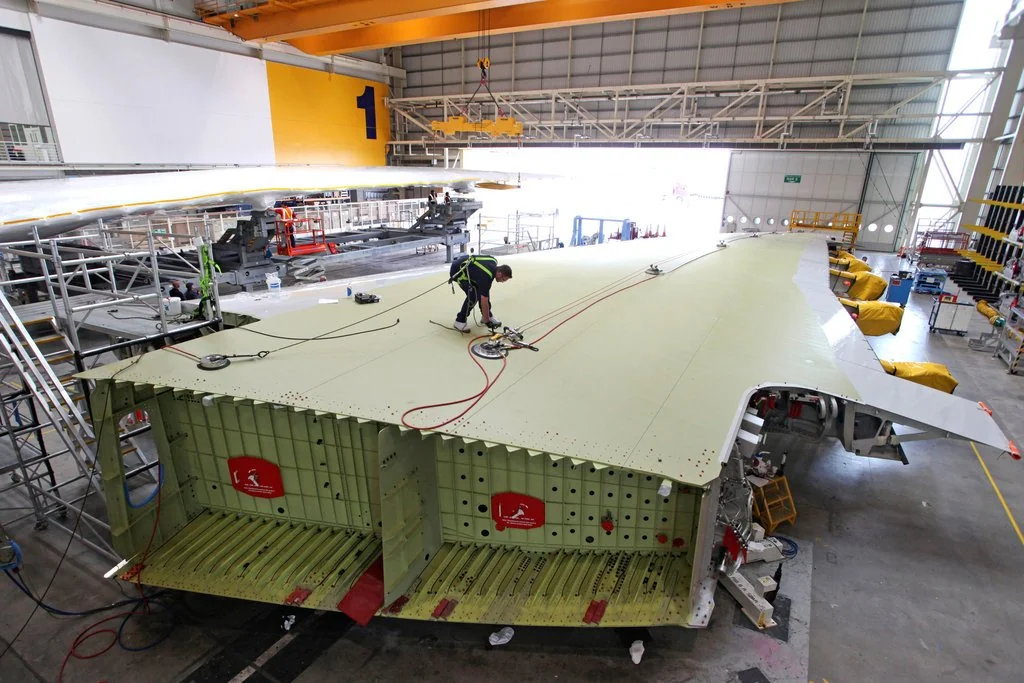
FYI, the wing, IS the fuel tank. Not tanks inside the wing... the wing is the fuel tank. Those red panels are where you climb between each section from here at the wing root right to the other end. A380 shown but every airliner is the same. 737/A320 wing tanks still big enough to climb around in.
So its no wonder the chem-trails are so long....
Retail with housing on top isn't some wild idea - there's loads of it around. You just need to push your councils harder - or maybe the land just isn't valuable enough to bother.Land where i am is dirt cheap. They're selling 3500-4000sqm plots on the edge of a nice suburb of town, with utilities, access, bus routes and planning for large family homes, for about £50-60k. Just found one near where i used to live in the UK, 8000sqm starting at £75k at auction, no services, no planning, no guaranteed access, no permission for change of use (it's essentially a field for grazing).
They are building houses/flats/duplexes on top of shopping complexes here. Many of them even have gardens.
Telegraph being Telegraph 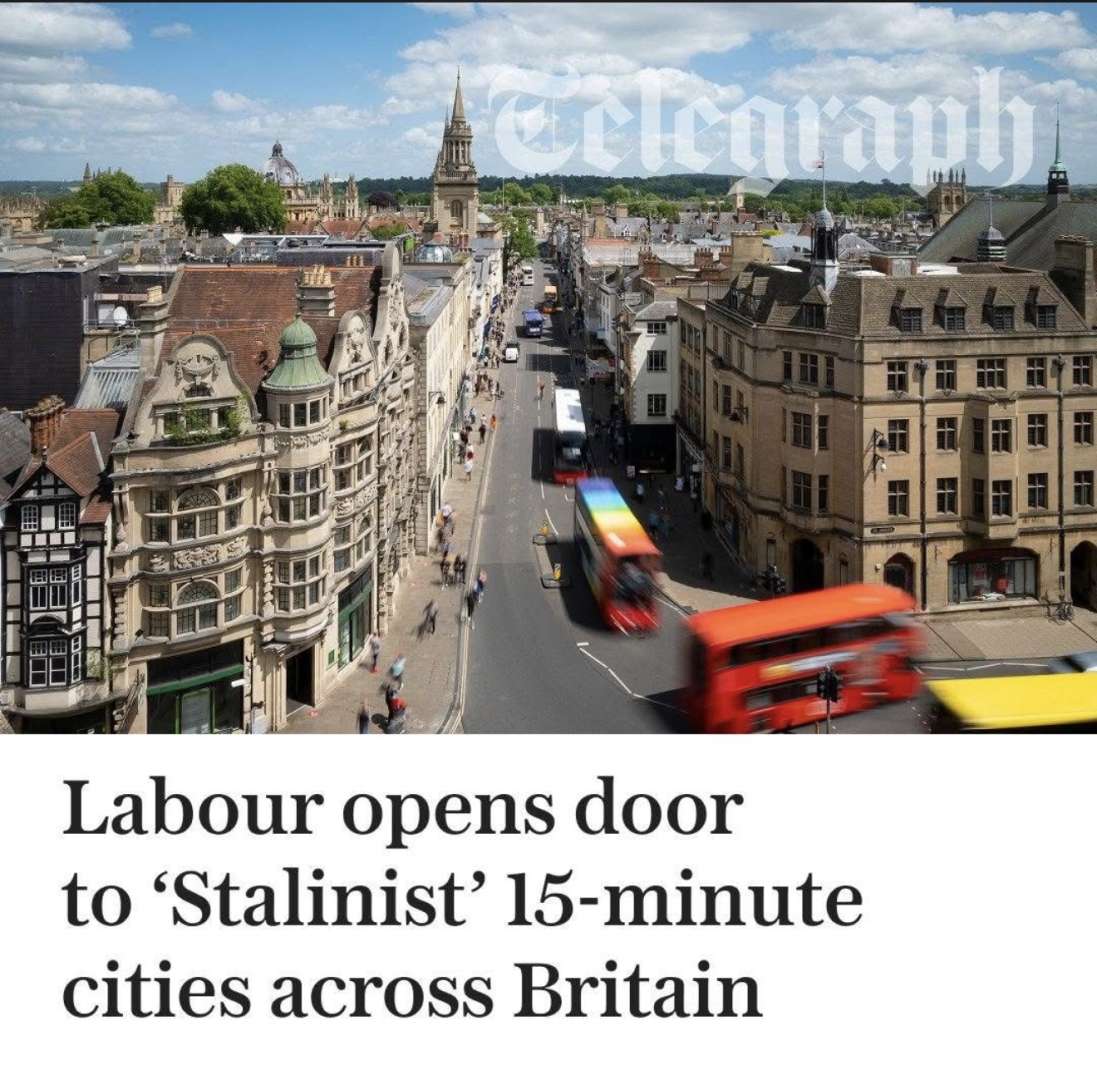
The same Telegraph running a “save our pubs” campaign to encourage the state to help keep your local open?
A good start would be for more supermarkets to have an obvious pedestrian entrance that isn’t just walking through a car park.
My local Asda, which is a short walk away from where I live, has two entrances, once of which faces the road it's on, with a larger entrance round the back facing its car park. Unfortunately the front entrance closes at 5pm every day, so I barely ever get to use it.