UPDATE: Reviews section refreshed, redesigned, searchable: Go take a look
Sorry for no comment on this yesterday.
Had a really busy day - had some work to do, then had to go through my website and then was reading as much about this as I could.
The image in question was of the logo on a building.
The blog was on my website but I have now removed all posts and effectively shut down my blog. I ended up going through my site to ensure there were no more possible violations, All other images were from unsplash etc and I have ensured that all image credits are given as required.
I dont think its a good idea to just ignore this but I will be replying with an offer of the original license cost (£35) x3.
I feel this would be a reasonable offer and think it will be looked upon as being reasonable should this escalate.
I really can't afford to pay this as I haven't had any income at all since last November and have been supporting myself with savings, but there is a part of me thinking I just want this to go away. The amount of £500 seems punitive and I suspect if this went to a small claims court that they would be awarded the original license fee that they missed out on. That seems to be the general consensus from the forums I have looked at. The idea is to recoup their losses - not to punish.
This was a really stupid mistake and the stress this is causing is awful.
I probably won't be able to be back on here until later tonight or maybe even tomorrow.
Thanks for all the comments and help.
So, unfortunately, the image may well have a copyright attached - the licence fee isn't for using a logo, but someone's image that happens to feature a logo. I've been there myself (using an unlicensed image – it was included in a visual for a website and accidentally was used on the live site). It was a long time ago, but IIRC we argued that we ordinarily paid for licences (we used Getty Images lots back then and it was a genuine oversight). We managed to get the fee halved IIRC. I doubt they will accept just the original fee (otherwise that's what everyone would do every time) but fingers crossed you can come to an agreement with them.
I have a question.
Someone took a photo of a logo of a building.
Someone else lifted that photo and stuck it on Pintrest.
Someone else again - the OP - saw it on Pintrest and used it on their blog.
How were they supposed to know any different?
"How were they supposed to know any different?"
As far as I'm aware (and I have only a passing interest/knowledge of this as my work as a teacher gives me a fair bit of 'fair use' leeway) it's on the end user to do their due diligence.
hunterst
This was a really stupid mistake and the stress this is causing is awful.
I make far worse mistakes pretty much weekly but luckily, most of the time, there aren't financial implications.
Keeping my fingers crossed for you that they accept the offer in good faith and keep us updated. <Thumb up>
"How were they supposed to know any different?"
Copying an image without permission (and without checking any license conditions) is *always* dodgy. There are some situations where it's ok, but as a general rule, you just can't republish someone else's work without permission.
Another point to make is that most amateurs will happily allow non commercial use of their pics if you ask. I wrote a blog about an attempt on the Cuillin Ridge in a day. I used 2 really good pics that weren't mine which I had seen on other blogs/websites. I emailed both photographers and asked them then credited the pics. One by an unknown photographer, Alexis Gilbert another by Simon Caldwell.
A quick google shows Alexis has quite a few on Geograph.
The reality is that most people think that if a picture is in the public domain, ie on the internet then it's fine to use for whatever purpose they see fit, the vast majority of people have no real concept of copyright theft where pictures are concerned as millions of pics are shared and re shared on a daily basis, it's only really when professional photographers work is used that troubles occur and is often the first instance where people realise that what they have done is illegal.
Just suppose - can you use an image and manipulate it, does it then still remain copyright or is it now mine?
Say, IDK, I got a picture off say an album cover of a guitarist, cropped the image to show only them, recoloured it to make it a recognisable but silhouette outline (IDK again, maybe they are well known for playing a Fender Jag) and then got that printed onto a t-shirt.
Just suppose – can you use an image and manipulate it, does it then still remain copyright or is it now mine?
@theotherjonv that is where you get into the more murky areas of derivative works. The high level summary is 'probably not' particularly in your example.
Section two on the link below explains it best but the key message is "Legally only the copyright owner has the right to authorise adaptations and reproductions of their work - this includes the making of a derivative work."
https://copyrightservice.co.uk/copyright/p22_derivative_works
one of them was about the history and evolution of the logo of a long established brand.
What about contacting that company direct. Explaining you are doing a study on their brand and ask if it is ok to put their logo on your blog.
As long as it is nothing nasty about the company, and not for commercial purposes, they might well agree.
Then mail Alamy and tell them you have the company permission. Obviously saying when you got that permission doesn't need to come into it.
Pinterest is just image theft protected by the power of venture capital money.
I think that people forget that publishing an image on a website is like copying a movie and putting on the notice board of every house on the planet.
From what I’ve heard, agencies like Alamy are happy to settle for a reasonable amount that matches an ordinary licence fee. Infuriatingly, the photographer is very unlikely to see any percentage of the monies collected! The agencies consider their work in chasing down copyright infringements so onerous that they have to keep all the money for themselves. Another way hypercapitalism makes life more shit.
Then mail Alamy and tell them you have the company permission. Obviously saying when you got that permission doesn’t need to come into it.
Again, the image file itself is copyrighted, irrespective of its content. The creator owns the rights to that image, even if it contains a logo.
I really can’t afford to pay this...This was a really stupid mistake and the stress this is causing is awful.
You must not worry about this. It's like the supermarket sending you a "penalty charge notice" for overstaying in the car park. No-one is going to arrest you or seize your home.
Before offering to pay - how about just replying to say "thank you for your email. I don't understand all of this but I have deleted the image completely, thank you, goodbye"?
I think I would 100% do the above. If there is no longer any evidence of the image being used by you online, and of course it was never for commercial reasons, I can’t see there is much chance of it being pursued. I’d then let them know it has been permanently removed.
I would wait for a reply on this before making any offer. Or just remove it (as you have) and wait to see if you hear any more.
I had this a few years back after accidentally using an image on a website. We removed the image immediately and forgot about it. Never heard anything more.
Anyone remember this... from 2019!?
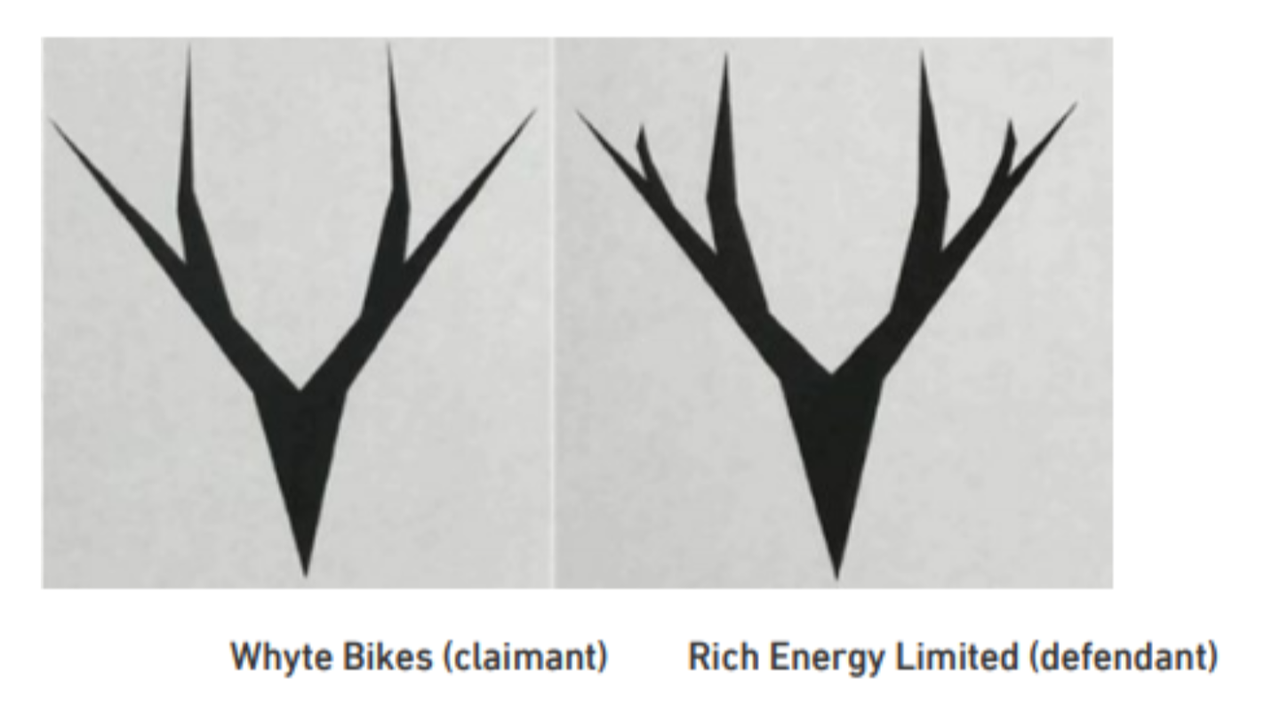
Copying an image without permission (and without checking any license conditions) is *always* dodgy.
So presumably the original authors of photos like the Distracted Guy meme are rolling in royalties?
I understand what you're all saying, as a (shit) photographer myself I have a vague handle on copyright. But lifting images is normalised, stuff on the Internet gets copied, forwarded and posted with gay abandon. It's not difficult to see how the OP got caught out.
Photographer of distracted guy photo has said he's not interested in taking any action.
Which took me all of 30 seconds to google, BTW. There's a lot of information readily available on the internet for anyone who wants to find out stuff.
Question.
If a user or contributor sends a picture they say I can use on my website (I'm asking for permission if you like) and it turns out to be lifted from say Alamy or just random from the net. Who is liable? How far can you check, or just never use images ever, to be on the safe side ?
If a user or contributor sends a picture they say I can use on my website (I’m asking for permission if you like) and it turns out to be lifted from say Alamy or just random from the net. Who is liable? How far can you check, or just never use images ever, to be on the safe side ?
Strictly speaking, yes, you would still be liable.
Although in that case 'Oh, I'm sorry, {someoneelse} informed me the were the copyright owner and provided me with permission to use the image. I'll take it down right away, and forward on the details of {someoneelse}" would probably be enough for most companies. Moreso if you then ask about licensing the image for continued use.
Quickest way to check is a reverse image search on anything you plan to put online. If it brings anything up other than the person who gave you permission at the very least clarify.
Highsmith v Getty
This seems to be the norm for the massive photograph outfits.
I photographed an image/etch from an old encyclopedia from the 1930's. Quite liked it as an image when made totally B&W.
Did a search on it and Alamy or Getty one of them had the exact same image, claiming it as theirs.
Now, the question is, is mine and theirs just a photograph of the same old image from a book. The actual original image is years out of copyright and inside the public domain.
But I guess the action of taking a new photograph of an old thing (image) makes only a new photograph, irrelevant of what the content is? But the new image of the old thing is a new image. Albeit, that you cant tell the difference about the content when they are side by side 🙂
Would they come after me, because I took a picture of the same etch, same as someone else has done and submitted it to one of dubious stock image firms. Just because they £££££££££££
But I guess the action of taking a new photograph of an old thing (image) makes only a new photograph, irrelevant of what the content is? But the new image of the old thing is a new image. Albeit, that you cant tell the difference about the content when they are side by side 🙂
Not all photographs attract copyright. It is not the content that matters, but the intellectual creativity that goes into making the photo. But you will require deep pockets to challenge that, so it is not really practical.
Logos will probably have copyright protection themselves, but the brand owner is likely to be more relaxed about this type of use (that is not use in relation to selling goods and services) than a photographer for whom use of images is the basis of their income. And the argument that the use is covered by a defence becomes a bit clearer. So taking your own photo is a good idea, but will not necessarily get you off the hook, it all depends on the context in which the image is used.
Which took me all of 30 seconds to google, BTW. There’s a lot of information readily available on the internet for anyone who wants to find out stuff.
Maybe you could use it yourself to better understand what a random example is.
My point was, there are many thousands of images that have been doing the rounds on a near-daily basis for years. People post and forward them constantly, perhaps with slight tweaks. Side-eye girl, hell yeah baby, triggered woman, nope/yep dude in the hat, etc etc and indeed etc. (NB for the hard of thinking: just more random examples.) I've seen my own photograph posted to a group by a complete stranger, we had a bit of a chuckle about how bizarre that was. No-one intends to commit copyright theft, chances are that without threads like this it wouldn't have crossed most folks' minds.
If someone who uses an image of a building on a personal website can get an invoice for £500, the photographers of these images must be millionaires by now. Right?
Why not? Is perhaps the law more nuanced than "YOU USE PITCHER GEIF MONIES NOW!!"? I know that legally ignorance is no defence but it seems mad to me that a private company can issue what is clearly a punitive fee for people using copyrighted images by accident. Why stop at £500, why not £5,000, £50,000? Because the former is a figure people are likely to roll over for and the latter something which will definitely be challenged? Parking companies got stood on for this, but are allowed an increased charge as a deterrent; where's the deterrent here when the OP was oblivious until the snotty email?
I'm all for artists being paid. But I can't help think this could be resolved more civilly. "Dear sirs, you probably aren't aware but you've used one of our images. The licensing fee for this image is £35, alternatively we must request that you remove it from your website." It feels like a racket.
there are many thousands of images that have been doing the rounds on a near-daily basis for years.
..... and how are "we" supposed to know/find out who owns the copyright to a certain image if it isn't stated?
"Maybe you could use it yourself to better understand what a random example is."
And maybe you could have worked out the answer to your question(s) quicker than posting them.
What the relevant articles make clear is that yes, if your image is regularly used and you didn't specifically licence it for general use, you could potentially sue multiple people for copyright violations, and you could get rich as a result. Unless you're actively selling/licensing the image, however, you'll struggle to demonstrate any loss.
Copying and republishing an image doesn't happen "by accident" any more I cut and pasted your words "by accident". (and that is indeed a potential copyright violation on my part, but I'll claim fair use if STW tries to come after me for it - I presume they claim copyright on all material posted here, but I haven't checked T&C).
I don't think you have any general right to know who owns the copyright. You can't copy and republish stuff without permission. If you can't get permission, don't copy. It's really not very complicated.
Assume all images / movies / music / books are copyrighted unless otherwise stated. People seem to think photography is different because unauthorised usage is so widespread. Doesn’t change the fundamental rules though.
Royalty free images from a library are incredibly cheap now, so no, photographers are not millionaires. Ignore the headline price the libraries quote if you see an image you’d like to use, they’re always available at a fraction of that cost if you ask or buy a cheap credit pack from someone like iStockPhoto.
Is it not kind of like brinkmanship though?
I mean if it ended up in court would the copyright holder not have to prove damages /lost income.. Otherwise what are they suing for?
In the case of the OP there's probably no provable damages, as opposed to someone selling prints of an artists work... The artist is selling their own prints so there is a clear damage /loss there?
Nope all they have to prove is that they own copyright and it's licensable, if you've used it without a licence being granted ( your responsibility to prove you have one) then the copyright holder will win as a licence fee is owed. You can't just use copyright covered material without permission for free.
I don’t think you have any general right to know who owns the copyright.
Then how am I supposed to ask permission to use an image?
Genuine Q
Maybe you can't. Like I said, if you don't have permission, don't copy (republish). That's all you need to know.
(The theft analogy is misleading in some important ways, but if you see a - whatever, say a bicycle - leaning on a wall, you can't just take it to use as your own, and the owner has no responsibility (legal or moral) to register ownership in order that you might be able to contact them and offer to buy it off them. It's not yours, just leave it. If it's abandoned or whatever of course you might act differently, but let's assume it looks like it might be owned. Similarly, with content on the internet. It's not yours, don't copy and republish.)
The licensing fee for this image is £35, alternatively we must request that you remove it from your website.
This simply does not work as it fully encourages the ‘ask for forgiveness rather than permission’ approach.
Used an image for three years and get found out? Well that’s three years of free usage and the offender will just take it down and go and lift another photo off the internet. The value of imagery is already diluted enough thankyou.
The normally accepted fee for purchasing a retrospective licence is 3x the standard single image licence fee. To me this has always felt acceptable from an individual. Larger companies will always cost more as they have higher overheads when it comes to chasing unlicensed image use (for example just the fair licensing software is a grand a month). Sure, 500 is a bit high, but they always take less. Same as parking firms take less for quick response any payment.
So you are saying the court would allow a punitive fine rather than only the 'loss of' licence fee of £35 or whatever?
Discussing what a court would do misses the point. To find that out you would have to go to court. Which is unlikely. OTOH, a copyright library will think it worth spending £thousands chasing £tens of damages "pour encourager les autres".
how are “we” supposed to know/find out who owns the copyright to a certain image if it isn’t stated?
I don't know who owns the nice Spesh locked up at the station but I know it's not me!
and how are “we” supposed to know/find out who owns the copyright to a certain image if it isn’t stated?
well if you can’t find the owner with proper due diligence then it’s known as an orphan work:
you are then expected to register your use with the IPO, pay them a license fee which they will pass to the rightful owner if they ever come forward. The have an admin fee (about £20) and the license fee (depends on use - could be hundreds). The orphan work license conditions require you to label / caption the work such that if the artist were to find it they would know there is a license fee waiting.
I found the book with the etching I liked. 1888 Sunday at Home.
So if I took a picture or scanned can I use it ?
Just found it on Getty, Istock etc. being peddled £35 and other licenses.
Surely this is Public Domain not some implied ownership.
I get, if I never had the (original) even that's a copy 1888) and I wanted a copy, I would need to buy a photograph of etch done by someone else who also at some point had access to the book.
It's the implied ownership of old works by just taking a photograph .
I bet they would not comprehend that someone had an original.
And why should I have to prove myself to them, when they feel like popping up out of the blue.
Irks me, that does. 🙁
Sometimes, it feels like .... On the web CC0 on everything.
I mean if it ended up in court would the copyright holder not have to prove damages /lost income.. Otherwise what are they suing for?
Dilution of originality value or loss of control of what you create is damages, no? Not like losing an arm but there has to be rules on 3rd party use of created work. If there wasn't creative businesses and artists would just get ripped off all the time.
FWIW I've been on both sides of this one. I've created work with copyright stated and assumed that has been used online w/o permission and I've had to send a demand to remove it. Also had commercial companies using aspects of the work w/o permission that had to be discussed for fair ongoing use. On the other side of it a long time ago I used an image on a webpage draft, published the page and forgot about it. A few years later I got a licence demand email for the image use. I could have fought it or avoided it but tbh it was a fair cop, my mistake and I paid up. Wasn't a lot and I can't disagree with the principle.
So if I took a picture or scanned can I use it ?
Yes. Someone taking a picture of an old work does not make it any less in the public domain. The only copyright that would exist is on any photographers picture of the old work.
You don't even need to prove anything. "I took a photograph of the original book which contains this etching myself, therefore I own the copyright on my image. The original book is over 70 years old meaning the content is now in the public domain"

