UPDATE: Reviews section refreshed, redesigned, searchable: Go take a look
Yeah, I've done some bits like Mr Nana. Might put some photos up to prove it if I remember tomorrow. Rather put off by my mate falling down a crevasse - luckily he didn't pull me in too but it put us off a bit!
I'd love to climb some proper mountains but I think that constantly sh1tting my pants would spoil it for me and everyone else.
Have a look at this video of Ueli Steck -
What he's done over the past few years is almost unbelievable. Eiger North Face, Heckmair route (used to take days) in 2:47mins 😯
Kilimanjaro in 2008. I did it to remember a friend but otherwise wouldn't have bothered.
[img] 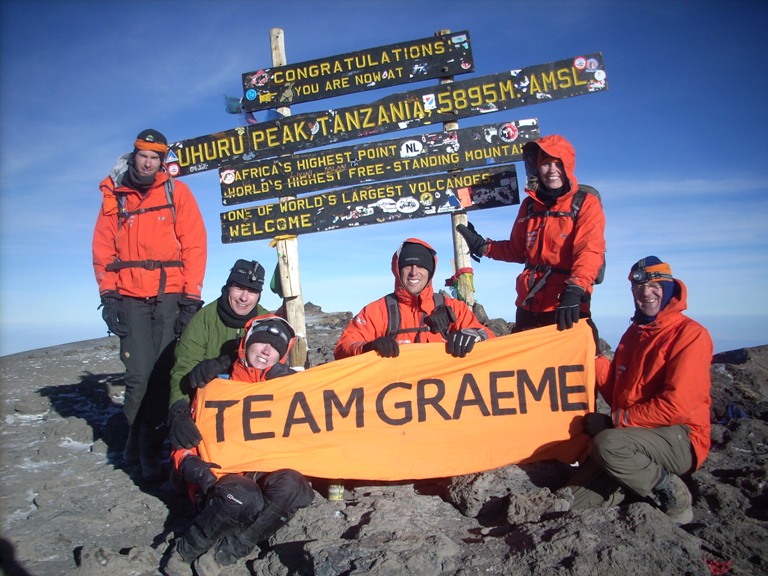 [/img]
As has been mentioned above, much better stuff in Scotland
[img]  [/img]
or Norway
[img]  [/img]
[img]  [/img]
That is really cool Stevomcd.
Reckon you'll try the North face of the Midi at some point?
Wow!
For me - mt Fyffe in S NZ, a couple of Munroes (Ben Lawyers and Ben Glas) and a few peaks in Wales so a bit lame. Have also fell run up a few smallish mountains in SW Ireland.
Definitely going to do more - love mountains.
What is the best way to learn Alpine climbing? (not UK climbing...)
Best way to learn Alpine climbing is read Mountaincraft and Leadershop and start in the UK. The UK has everything (apart from glaciers), it just doesn't go on for as long. You can however practise bivvying anywhere you like. Just do something like all 13 1000m peaks in North Wales in two days, climbed by the rocky bits. Just make sure you get up at 2am each morning and wear uncomfortable plastic boots 🙂
Just to re-iterate, the UK is NOT lame for climbing. Just smaller 🙂
too support molgrips comment about uk mountains:
[img]  [/img]
Oh yeah and more fun to do all 14 3000's in wales in one day.... get used to those long days and nights out. See my experinces here: [url] http://hike4henry.blogspot.com/ [/url]
Molgrips is right.
I think the traditional way to learn Alpine mountaineering is either to join a club and get to climb with someone experienced or read a few books and go for it. If you do the latter and survive a few seasons you've probably got the hang of it!
Welsh 3000s should be done in less than 12 hrs. We intend to go back next year and see if we can beat 9.46 🙂
Personally I love it and didn't find climbing scary except when uncontrollable things happen (rockfall, avalanche or crevasse danger, see above) Most things you can make a judgement about as in "ok this rock is loose but secure enough to hold this move", etc. The other objective dangers don't fall into this category hence no more Alpine climbing for me. (can't rule out some Alpine rocky ridges tho')
Scottish winter scrambling is ace.
[img] 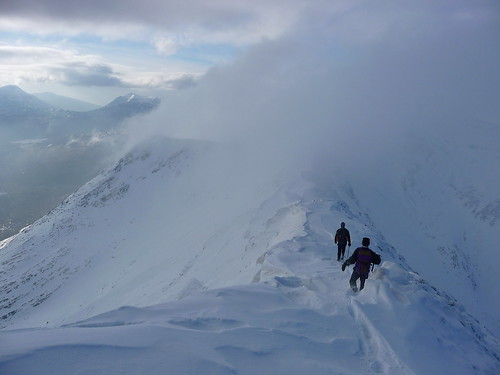 [/img][url= http://www.flickr.com/photos/30189432@N00/4341870036/ ]
what dangers are inherent in Alpine climbing that you just can't do anything about then?
I'm a newbie into the mountains, done 11 Munros including Nevis, only two in winter though.
My plan is to get some climbing in this winter in Scotland, then do Island and Mera Peaks in Nepal for my 30th next year.
As above, Scotland has everything you need to learn to alpine climb, apart from altitude and glaciers.
For example, here's some Scottish stuff:
[img]  [/img]
[img]  [/img]
[img]  [/img]
[img]  [/img]
[img]  [/img]
[img]  [/img]
and stuff from further afield:
[img]  [/img]
[img]  [/img]
[img]  [/img]
The person complaining about it being boring ploding just need to get out and do some proper climbing 😛
For me - [b]mt Fyffe in S NZ[/b], a couple of Munroes (Ben Lawyers and Ben Glas) and a few peaks in Wales so a bit lame.
I hope you took a bike up Mt Fyffe? Be a right waste to do that lovely bike ride as a walk!
On foot, I've done a few easy bits (one of the easier gullies on Ben Nevis, various Munros in winter, icy scrambles in the Lake District, but nothing involving hard climbing, as I suck at it.
Joe
what dangers are inherent in Alpine climbing that you just can't do anything about then?
Altitude, glaciers, and the sheer scale of things. Glaciers have their own set of rules that aren't complicated, you just NEED to know certain things. Likewise altitude.
The sheer size and distances involved are also a factor. It can take you a day to walk in and a day to climb, then a day back easily for a single peak, which it doesn't in the UK unless you contrive a longer trip. You have to be aware of this and the associated logistical issues. Given the altitude you might be at, this could compound matters - you'll be more tired climbing for 12 hours high in the Alps than you would be for 12 hours in the UK for instance.
Then there's stuff like the sunshine - in the summer, it's extremely sunny so you'll get sunburned if you don't take care, even when on snow. Particularly UNDER your chin is at risk from reflected snow. Also it's very cold at night but the sun warms things, so you get a lot of rock/ice falls because of this. And the sun also melts the snow, which is why you need to get up at 2am to be off the mountain by 10 or 11am, otherwise you'll be wading in slush and slipping off the mountain.
Also your mobile won't work, you're a long way from a road etc etc.
Otherwise, it's pretty easy 🙂 In many cases it's a big fun challenge just getting to the summit of something, whereas in the UK most summits are just easy, so you have to pick some cliff or other to make it interesting.
Oh, and in the Alps there are many bars scattered through the mountains at convenient locations 🙂
EDIT: note that the above list of issues is far from comprehensive!
Indeed Scotland can be a bit of a hoot. Aonach Eagach, Feb just gone:
[IMG]  [/IMG]
Lol, it looks like you're hanging lifelessly from a rope in that pic 🙂
That just about sums up my mate (the bloke in the pic) 😆
He was actualy decending hence the funny angle.
glenh, which route off the Glacier Blanc is that?
I really miss climbing... 🙁
what dangers are inherent in Alpine climbing that you just can't do anything about then?
Mostly, these days, things falling on your head - the Alps are crumbling quite badly, lots of rockfall and yes, you can minimise your exposure to it, but sometimes big things fall off, like most of the Walker Spur wasn't it? Ditto seracs, some routes are exposed to them, again you can minimise risk by avoiding those routes and staying away in the heat of the day, but there's always some risk of that happening regardless, you can just be very unlucky. Weather - again you can make judgements based on forecasts and reading the conditions, but if you get caught high and exposed by a big storm, it can kill you. That's less likely to happen in Scotland where the scale is simply smaller.
Equipment failure - doesn't happen often, but consequences tend to be bad when it does. Human error - because of the scale of the routes, you tend to be moving together a lot with minimal safety back-up on easy ground. If one of you slips or something goes wrong, then the consequences can be serious, whereas in the UK, there's less pressure on you to move fast.
The less experience you have, the more likely you are to find yourself in a high risk situation without being aware of it ime. Brits have a bad reputation in the Alps for carrying too much and moving too slowly and also going out on days when they shouldn't. If you're young, the BMC runs subsidised alpine training courses under the Jonathan Conville Memorial Trust see:
http://www.thebmc.co.uk/Feature.aspx?id=1166
The BMC also has an excellent series of instructional DVDs that are better than any skills book I've seen including one called Alpine Essentials.
The likes of Plas y Brenin run alpine training weekends in the UK where you can learn some of the basic skills you need to climb in an alpine environment. Courses are a great way to learn the basics. Good short-cutting skills book is Extreme Alpinism by Mark Twight. He's as mad as ****, but talks a lot of sense based on a huge amount of experience.
Anyway, mountaineering's ace, but arguably significantly higher risk than most mountain biking, though it all depends on what you're climbing, the conditions, your ability etc.
Sorry, blah blah blah...
It's only higher risk if you really push yourself. If you are well prepared, understand things and don't go too extreme when you are not really ready for it, you'll be fine.
The consequences for failure are worse tho...
molgrips - Member
It's only higher risk if you really push yourself. If you are well prepared, understand things and don't go too extreme when you are not really ready for it, you'll be fine.The consequences for failure are worse tho...
Being well prepared and understanding things don't go well with being a novice. The problem is, beginners, through their inexperience, can get themselves into situations they don't recognise as dangerous and the consequences can be significant.
The tradditional apprentice to a more experienced climber has a lot to recommend it. Means getting into your local Mountaineering Club and making a few contacts/friends which is no bad thing.
B.A.Nana - south ridge of the pic du glacier Blanc. AD+, but pretty easy for the grade, just a short tricky pitch near the start. Other than that its fairly straight forward and quite short. Very nice route though. 🙂
PS the one below that is the traverse of the aiguille during sialouze which is considerably harder and more exposed!
ooh my perfect alpine day:
Early sunny morning start from hut
Easy snow and rock climb to a high summit with stupendous views
Snowboard the power face down to the snowline.
Mountain bike singletrack through the forest down to the valley
Beer and grostl in a hut
Romp in the flower-filled meadow with buxom Swiss milkmaid
😀
Being well prepared and understanding things don't go well with being a novice
Well they should - if you are a beginner with half a brain, you'll know when you don't know something. Only do something you are absolutely sure you can manage - this goes for pros as well.
Or in other words, do your research.. and build up slowly 🙂
buzz-lightyear - Member
ooh my perfect alpine day:Early sunny morning start from hut
Easy snow and rock climb to a high summit with stupendous views
Snowboard the power face down to the snowline.
Mountain bike singletrack through the forest down to the valley
Beer and grostl in a hut
Romp in the flower-filled meadow with buxom Swiss milkmaid
Hard to pick fault with 😆
Except the cost of having your equipment dropped off and picked up by Sherpas or helicopter 🙂
So - you guys got me thinking. I really really really want to do a big ( 20 000+ft) mountain before i finally get too old and feeble. Must be unguided. I'm not a dangler but don't mind a scramble. No issue at all with long trips self supporting.
So where? Perhaps off the altiplano in Bolivia? One of the big ash cones? That means altitude training in the bars in La Paz ( one of my fave places)
My dad did a Himalya when he was 65 and he only has a lung and a half so its got to be possible 🙂
TJ. I've had a failed attempt at Aconcagua. I think that fits your requirements?
If you've got a month free and don't mind a lot of sitting about acclimatising it's worth considering.
Love the mountains....
Have mainly done the foot slog stuff though.
Mt Blanc via Cosmiques hut, Mt Elbrus, Matterhorn, Mt Elbrus,Mt Kinabalu,Mt Cook. Would love to do Aconcagua next year but finances may not allow.
Loads more trekking than acual mountaineering...EBC,Annapurna circuit, GR10,GR20, blah blah
From the footage I've seen, Aconcagua looks a bit of a rubbish tip. Why not pick on one of the trecking peaks in Nepal and do yer own thing. We did Fluted Peak and Tent peak like this a few years ago.
Cheers chaps.
Highclimber, is that Riglos? If it is then the climbers descent path is a fantastic mountain bike descent! We rode it last year, techy as old f... but great.
We went up the less frequented of the two "tourist routes". There was no rubbish. As it's a national park it's quite well policed. Toilets are available up to and including base camp. At the higher camps you need to keep an eye out for human eggs 🙂
It isn't a pretty hill. Rubble and scree mostly. These things are cool though..
[img] 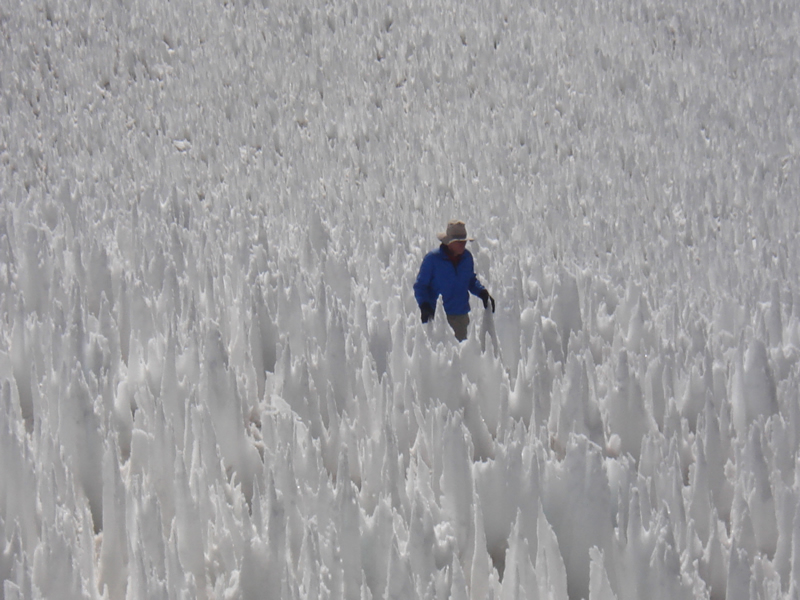 [/img]
Buchaille Etive Mor in 2007, having completed curved ridge. A great day out.[img] 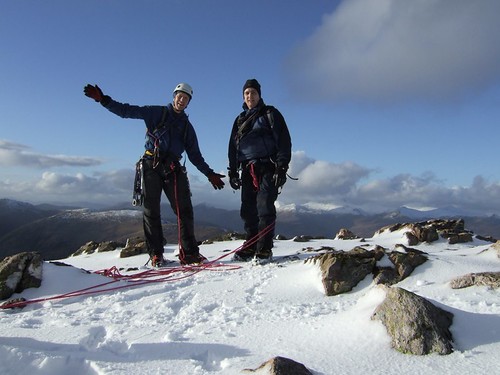 [/img]
TJ, the trekking peaks of Nepal would be your best bet for 20000ft+. No permits required, so can be done with no heavily organised trip with big costs. There is a guide book available and in theory you could do it with friends or a reasonably priced organised trip. 'Trekking peaks' is a bit of a red herring tho, they are mostly mountaineering routes, not walking. Kilimanjaro might be another option, I'm not sure what the height is tho.
dont do killi (5895m), bit easy (apart from the last day) and a bit sanitised. i did it with 'world challenge' back in 2007 and at the time really enjoyed it. but looking back the money would have been better spent going to the himalayas and doing some proper climbing. i want to do island and mera peak at some point 😆
So - you guys got me thinking. I really really really want to do a big ( 20 000+ft) mountain before i finally get too old and feeble. Must be unguided. I'm not a dangler but don't mind a scramble. No issue at all with long trips self supporting.So where? Perhaps off the altiplano in Bolivia? One of the big ash cones? That means altitude training in the bars in La Paz ( one of my fave places)
Huayna Potosi is a nice, not particularly technical mountain - snow stomp followed by a slightly exposed summit ridge - go acclimatise on some of the peaks around Condoriri. You can base in La Paz, which is an astonishing city, but you know that already.
Or a big Ecuadorian volcano - Cotopaxi is quite beautiful and pretty straightforward. Or maybe Cordillera Blanca, Peru.
No peak fees, easy logistics, amazing countries.
Some cracking technical routes on some of the so-called 'trekking peaks' in Nepal. The permit allows you to climb any route on the mountain.
[url= http://books.google.co.uk/books?id=HLSNGzzP82gC&dq=the+trekking+peaks+of+nepal&source=bl&ots=EqVkhP1EFD&sig=-xnRq0o09Rly2ENOOfkix4i0-n8&hl=en&ei=LrBaTN6pMdCL4QbD7OWsAg&sa=X&oi=book_result&ct=result&resnum=5&ved=0CDoQ6AEwBA ]the trekking peaks of Nepal - Bill O'Connor[/url]
By the looks of it, I was mistaken about the permit, but they are cheap, apparently.
Yes they are cheap(er), but more importantly, straightforward to organise.
There's plenty in the ~6k meter/20k feet range. Fill yer boots...
Very interesting to read about beginners' inability to identify when they're in danger. Sounds familiar. On a mountain biking trip to the Alps we walked straight into an incredibly precarious situation without even realising it, and by the time we'd realised the true situation it was impossible to go back, so we just had to carry on plowing forward in an extremely risky area, with none of the necessary equipment. A long, fast slide on steep ice/snow into some rocks was the result. The mistake wasn't born out of arrogance or overconfidence - I've got a very careful attitude when on mountains - just sheer lack of awareness of the risks involved.

